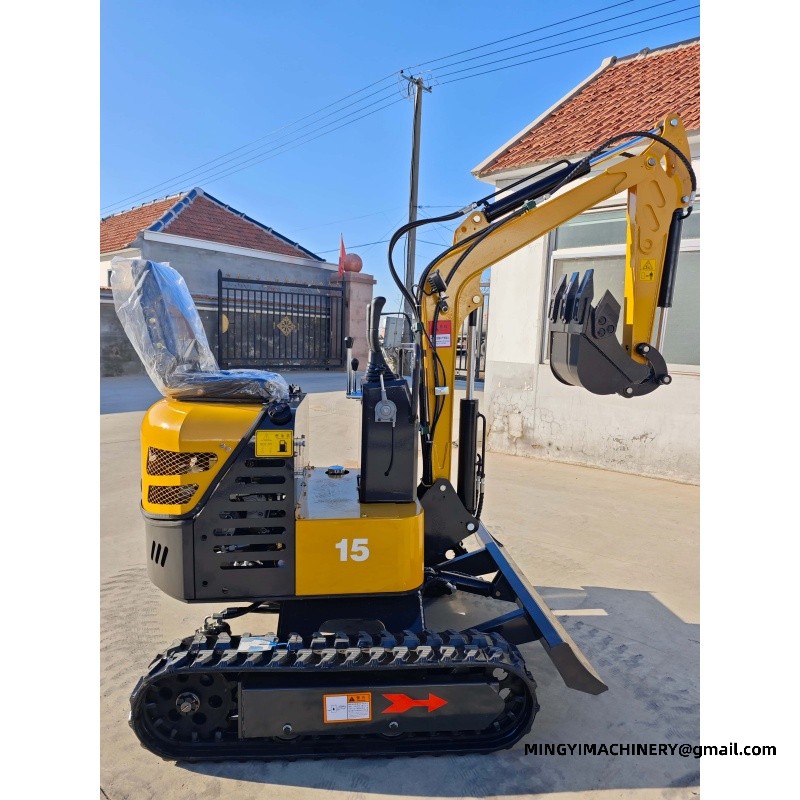
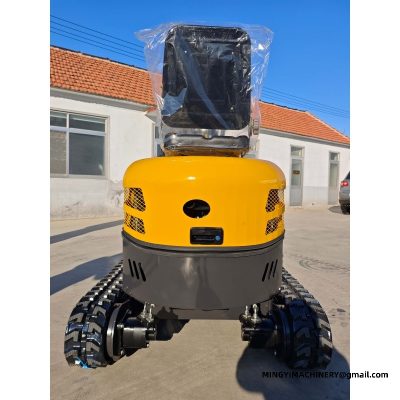
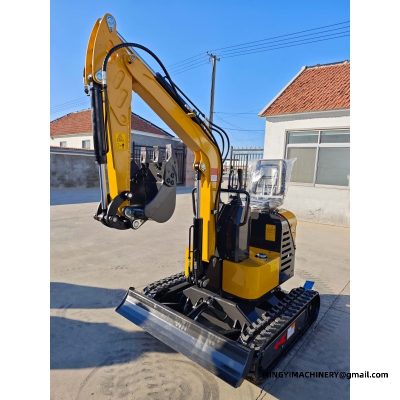
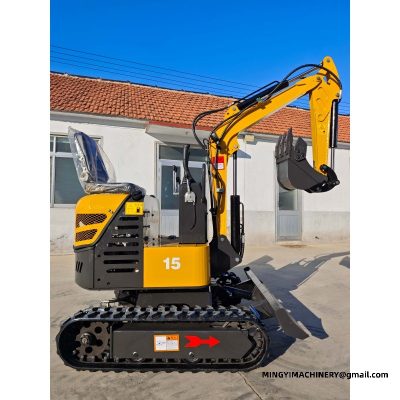
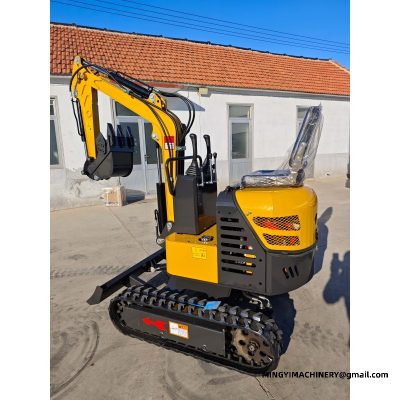
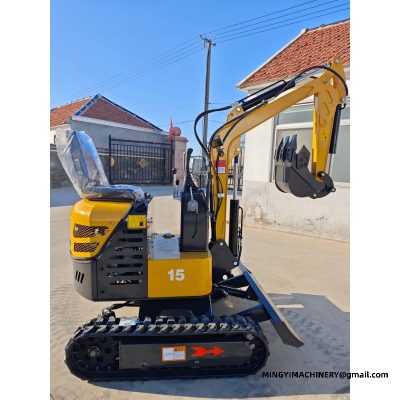
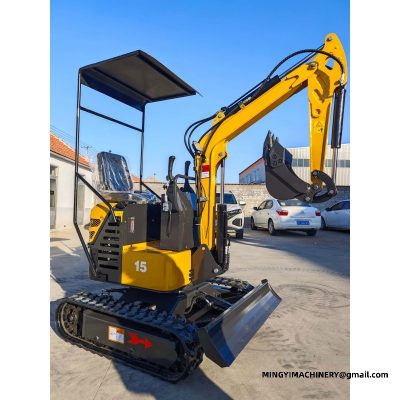
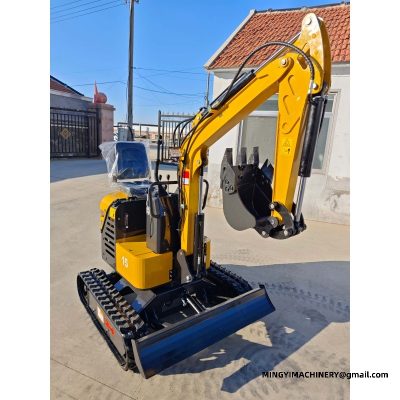
Wholesale buyers order in volume and need the same machine, the same specification and the same parts list across every unit. A figure that looks good on a single machine is worth little if the second container differs from the first.
MINGYI supplies compact crawler excavators to trade buyers, dealers and rental companies. Machines are built to order, which allows a repeatable specification to be agreed once and then applied across a whole consignment.
How wholesale supply is organised
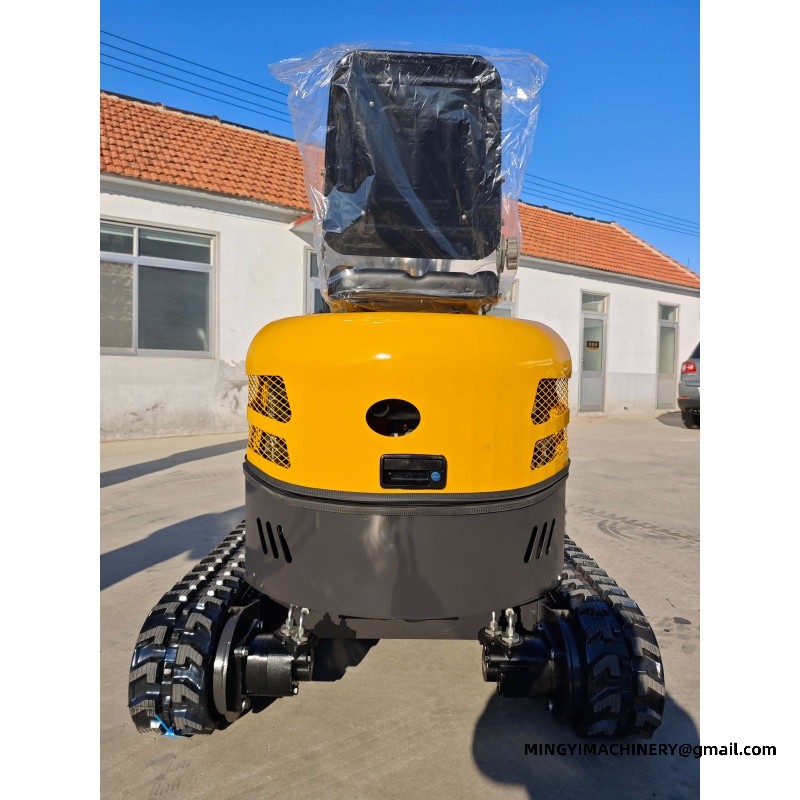
A wholesale order starts with a specification sheet rather than a figure. Model, engine, undercarriage, cab form and attachment set are fixed in writing, and every unit in the order is built to that sheet.
Repeatability is what the trade buyer is really buying. When a dealer can sell ten machines that are identical, servicing, parts and resale become predictable, and the dealer's own customers see a consistent product.
Specifying a batch order without inflated options
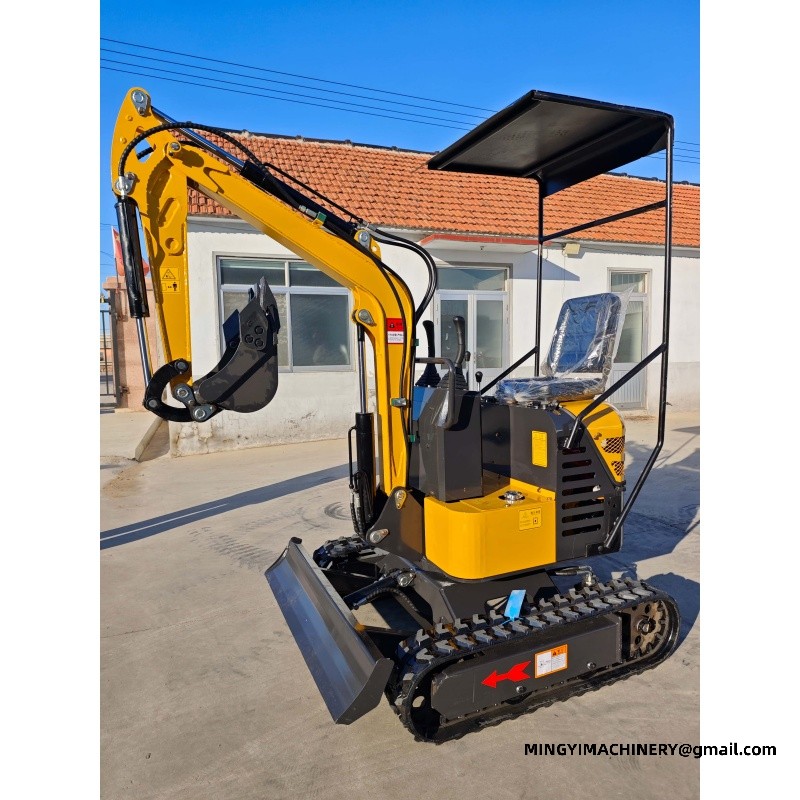
Volume orders tend to grow in the specification as each addition looks small on its own. Keeping the sheet close to what the market actually needs usually proves better than loading every unit with options that few end users ask for.
Attachments, couplers and spares are listed against the machines in the consignment rather than packed generically. That discipline is what allows a wholesale buyer to split an order across several dealers without having to re-kit the units.
Wholesale supply is a question of discipline more than of headline figures. A buyer who fixes the sheet once and holds to it receives a fleet that sells, services and repeats without surprises.
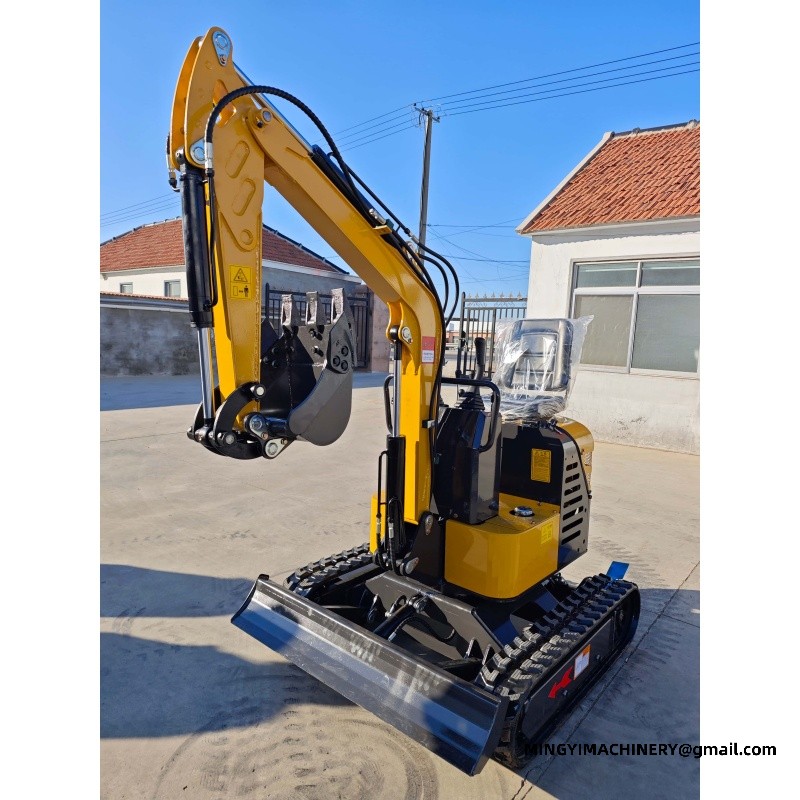
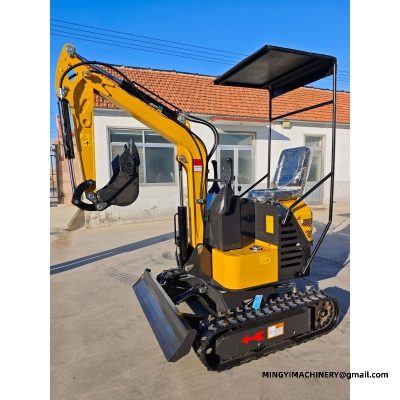
Canopy or enclosed cab on a wholesale mini excavator supply A canopy keeps the machine light and the operator aware of the surroundings, which suits short jobs in warm weather. A fully enclosed cab is specified where rain, dust or cold are part of the working year, and it can be added to the excavator as a retrofit rather than only at build time. The cab decision follows the climate and the hours. Operators working a full shift in this class of machine benefit from a sealed cab with wipers and heating; operators stepping on and off every few minutes usually prefer the canopy for the visibility and the quick exit. Interior and light demolition with wholesale mini excavator supply Interior demolition is an access and a weight question. The unit in daily use that fits through a doorway and works on a suspended floor does jobs that would otherwise be done by hand or by a larger machine that cannot enter. Dust, debris clearance and floor loading all argue for a compact machine indoors. A machine of this size spreads its weight over a wider track footprint than a wheeled machine of similar capacity. Boom configuration for wholesale mini excavator supply A swing boom lets the machine dig parallel to its tracks without repositioning, which is what makes trenching beside a wall or a fence practical. On the equipment on site this is often the option that decides whether a job is possible at all. Extended and offset boom configurations change reach and working range. The machine itself with a longer arm reaches further but lifts less at full extension, so the specification is set against the deepest and furthest point on the job list. Quick coupler practice on wholesale mini excavator supply Couplers are specified early because they affect the arm and the hydraulic kit. Adding one to the model in question after delivery means new pins, new hoses and a fitment session; adding it at build time is a line on the sheet. For a fleet that shares attachments between machines, a common coupler standard matters more than the coupler brand. The machine in that duty that picks up the same tools as the larger machines keeps the rack usable across the yard. Operator technique for wholesale mini excavator supply Output on a compact machine comes from placement rather than power. An experienced operator keeps the unit on the job working inside the swing arc, positions once and digs a full run instead of repositioning for every bucket. The second habit is tool discipline. Running a machine built for the work with the right bucket width for the trench means less spoil, less reinstatement and a cleaner job than a wide bucket and a lot of trimming. Orchard, vineyard and farm use of wholesale mini excavator supply Ditching, fertilising and drainage on farmland suit the equipment in service because the work is spread over a large area in short bursts. The machine travels behind a pickup and works where it stops. Farms also use the excavator for general maintenance - clearing a watercourse, repairing a track, loading a spreader. One carrier with a few attachments covers most of the jobs that would otherwise wait for a contractor. Working this class of machine in confined spaces Clearance above matters as much as around. Door heights, pipework and overhead services set the limit for the unit in daily use indoors, and measuring them first avoids a machine that arrives and cannot be used. Ventilation is the other indoor constraint. Running a machine of this size inside a closed structure needs air movement, and that is a planning item rather than something to discover after the first hour. Hiring versus owning the equipment on site Availability is part of the decision. Owning the machine itself means it is there on the day the ground is ready; hiring means competing for the same machine at the same time as everyone else in the season. Ownership brings obligations that hiring does not. Storage, servicing, insurance and an operator are the items to set against the hire rate before deciding which way the model in question should be supplied. Running the machine in that duty in a rental fleet The specification that rents best is usually the simplest one to explain at the counter. The unit on the job with rubber tracks, a canopy and a coupler covers the majority of weekend and short-term hires. Fleet buyers also weigh transport. A machine built for the work that a customer can tow on a normal licence and a standard trailer is a hire that does not need a delivery truck, which changes how often it goes out. Matching the equipment in service to ground conditions Soft ground is a flotation problem, not a power problem. The excavator on wide rubber tracks crosses lawn, sand and cultivated soil that would stop a narrower machine or a wheeled unit of the same capacity. Hard and abrasive ground reverses the specification. On rock, demolition rubble or sharp gravel, steel tracks with rubber blocks on this class of machine survive conditions that cut a rubber belt quickly. Attachments that turn the unit in daily use into several machines The base machine is a carrier; the tool on the end of the arm decides the task. A machine of this size fitted with a toothed bucket digs, and the same machine with a breaker, an auger or a grab does work that would otherwise need a second unit on site. Most of the daily variety on the equipment on site comes from the attachment rack rather than from the machine itself. Bucket, breaker, auger, ripper, rake and grab cover the large majority of the work a contractor will see. Municipal and public works with the machine itself Municipal crews work on streets, footpaths and parks where the public is present. The model in question is specified because it occupies little space, works inside a small exclusion zone and can be moved on a standard trailer. Drainage repair, tree planting, footway reconstruction and cemetery work are all within the range of the machine in that duty. The jobs are small individually and continuous across the year. Hydraulic circuits on the unit on the job Auxiliary hydraulic lines are what let a machine drive a tool rather than only a bucket. A machine built for the work specified with the right circuits and flow runs a breaker or an auger without an add-on power pack bolted to the frame. Specification data for the equipment in service Buyers comparing the excavator usually start from four numbers - weight, digging depth, reach and transport width - because those are the ones that decide whether the machine can be delivered and whether it can do the job once it is there. These are the reference figures for this class of machine. MINGYI confirms the final build sheet, including engine and attachment choices, against the destination and the job list before production. Flow and pressure are matched to the tool, not to the machine size. Asking for the attachment list first means the unit in daily use leaves the factory with circuits that suit the heaviest tool the buyer intends to run. Hydraulic specification is easier to settle at build time than to correct later. A machine of this size delivered without auxiliary lines can still dig, but every additional tool becomes a retrofit project.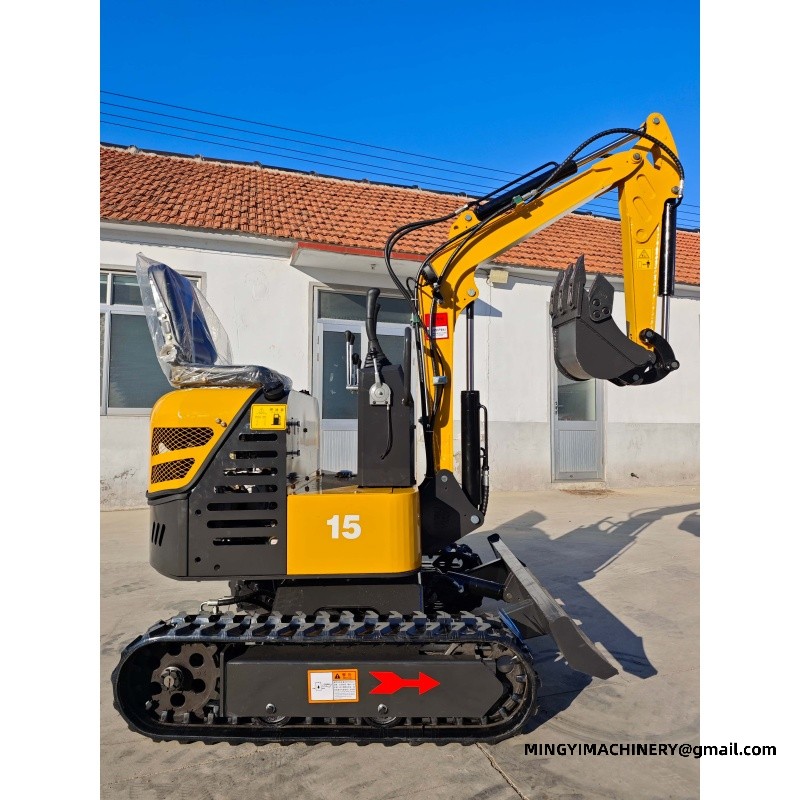
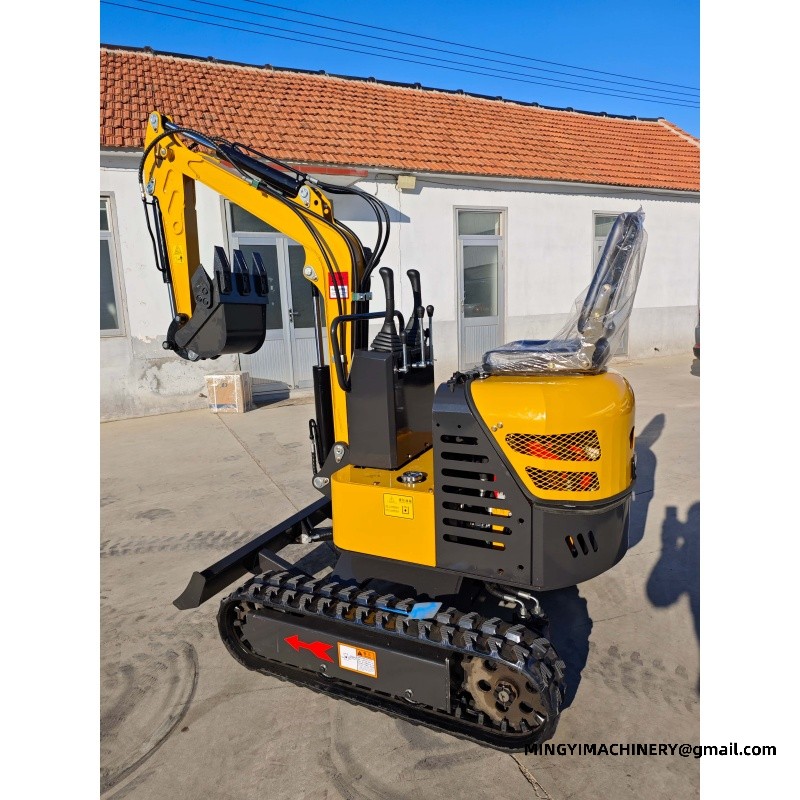
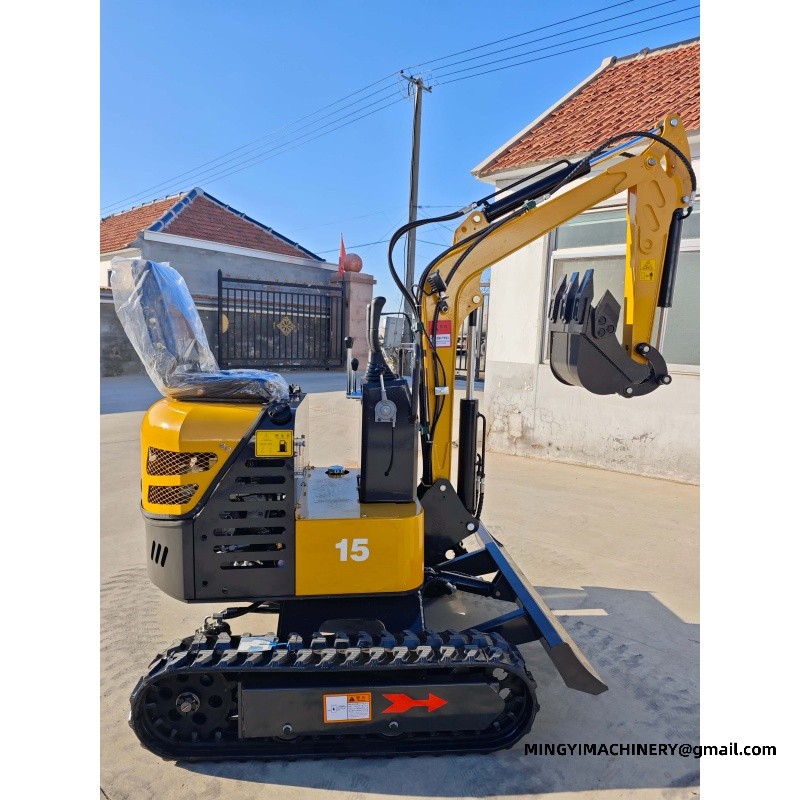
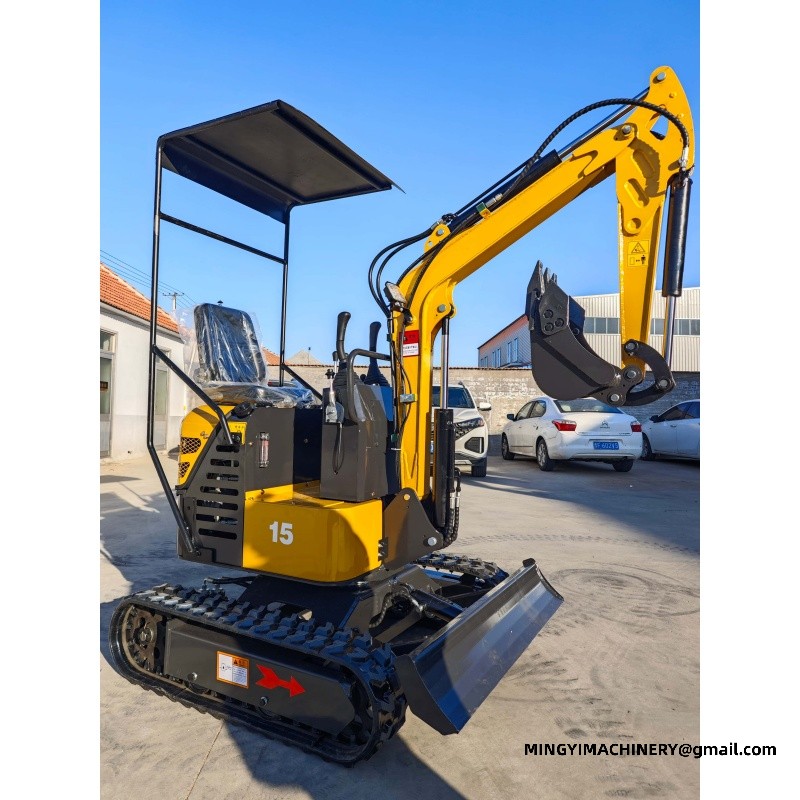
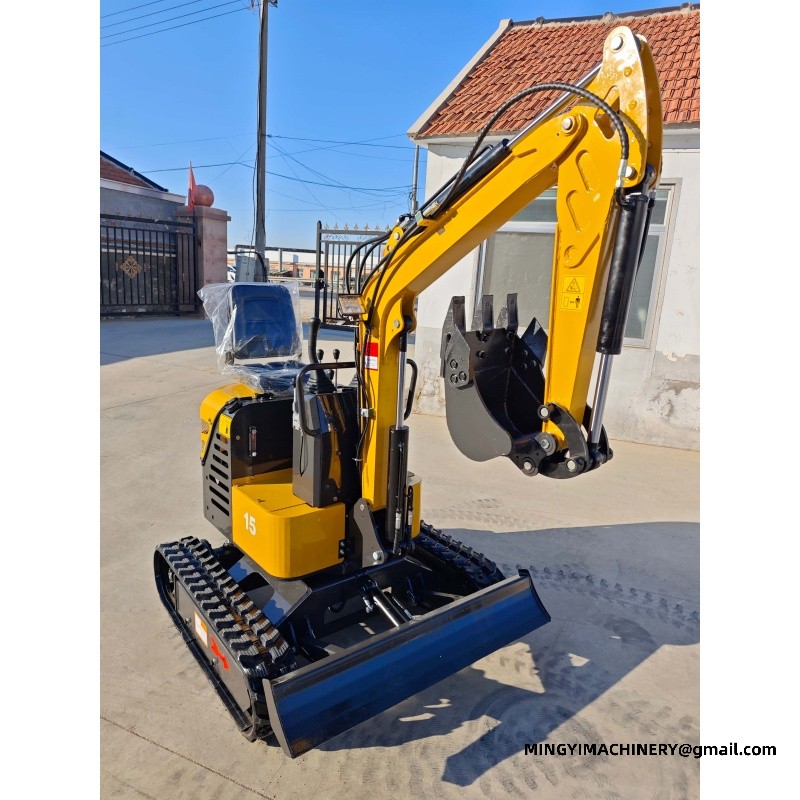
Reference specification — mini excavator range 09W 13W 30-1W 20-2L Operating weight 1100 kg (2425.08 lb) 1300 kg (2866.01 lb) 2900 kg (6393.41 lb) 1900 kg (4188.78 lb) Transport size (L×W×H) 1800 × 750 × 1970 mm 2200 × 930 × 2250 mm 3000 × 1250 × 2780 mm 2600 × 1300 × 2344 mm Max digging depth 1250 mm (49.21 in) 1630 mm (64.17 in) 2200 mm (86.61 in) 2100 mm (82.68 in) Max digging height 2800 mm (110.24 in) 2750 mm (108.27 in) 3400 mm (133.86 in) 2880 mm (113.39 in) Max dumping height 1700 mm (66.93 in) 1960 mm (77.17 in) 2400 mm (94.49 in) 2100 mm (82.68 in) Max digging radius 2570 mm (101.18 in) 2900 mm (114.17 in) 4000 mm (157.48 in) 3215 mm (126.57 in) Max digging distance 1869 mm (73.58 in) 2100 mm (82.68 in) 2800 mm (110.24 in) 2460 mm (96.85 in) Minimum turning radius 1000 mm (39.37 in) 1300 mm (51.18 in) 2000 mm (78.74 in) 1587 mm (62.48 in) Travel speed 3 km/h (1.86 mph) 3 km/h (1.86 mph) 5 km/h (3.11 mph) 5 km/h (3.11 mph) Gradeability 30° 30° 30° 30° Fuel consumption 1-1.3 L/h (0.264—0.343 gal) 1-1.3 L/h (0.264—0.343 gal) 2-3 L/h (0.528—0.793 gal) 2-3 L/h (0.528—0.793 gal) Fuel tank capacity 8 L (2.11 gal) 10 L (2.64 gal) 16 L (4.23 gal) 16 L (4.23 gal) Hydraulic oil tank 16 L (4.23 gal) 16 L (4.23 gal) 20 L (5.28 gal) 18 L (4.76 gal) Dozer blade lift height 180 mm (7.09 in) 180 mm (7.09 in) 420 mm (16.54 in) 180 mm (7.09 in) Dozer blade drop depth 210 mm (8.27 in) 210 mm (8.27 in) 210 mm (8.27 in) 210 mm (8.27 in)
Q. What does the equipment on site involve?
A. Buying from the factory shortens the chain between the production line and the working machine, and that is the whole idea of factory-direct supply. OEM and ODM build options cover colour, decals, engine choice, cab layout and attachment packages, confirmed on the build sheet before production. MINGYI builds the 08, 12 and 18 models covering the 0.8 to 6 tonne class, and the machine itself is where that range meets wholesale.
Q. How are machines packed and shipped?
A. Complete units travel in containers on timber cradles; CKD packing parts the machine for volume. Documents, marks and routing follow the order, and the destination port decides the packing plan.
Q. Does MINGYI supply attachments with the machine?
A. Yes - buckets, breakers, augers, rakes and the rest of the working set ship with the carrier, matched to the hydraulic flow and the coupler. For wholesale the package is confirmed on the build sheet, so machine and tools arrive together and start work together.
Handover and getting familiar with the model in question
Operators who come from a different machine need a short conversion. The controls on the machine in that duty follow the usual pattern, but the response, the sightlines and the stopping distance are learned by doing rather than by reading.
Pre-delivery inspection before the unit on the job leaves the shop
Inspection is a list, not a glance. Before a machine built for the work is released the fluid levels, belt tension, electrical connections and safety decals are each ticked off, and anything that fails stays in the shop rather than travelling with the machine.
E-mail : sales@mingycn.com
LINE ( ID ): mingyicn
Related pages
mini excavator odm factory · mini excavator oem manufacturer · Wheel Loader for Material Handling: Forks, Grapples and Circuits · Mini Excavators









