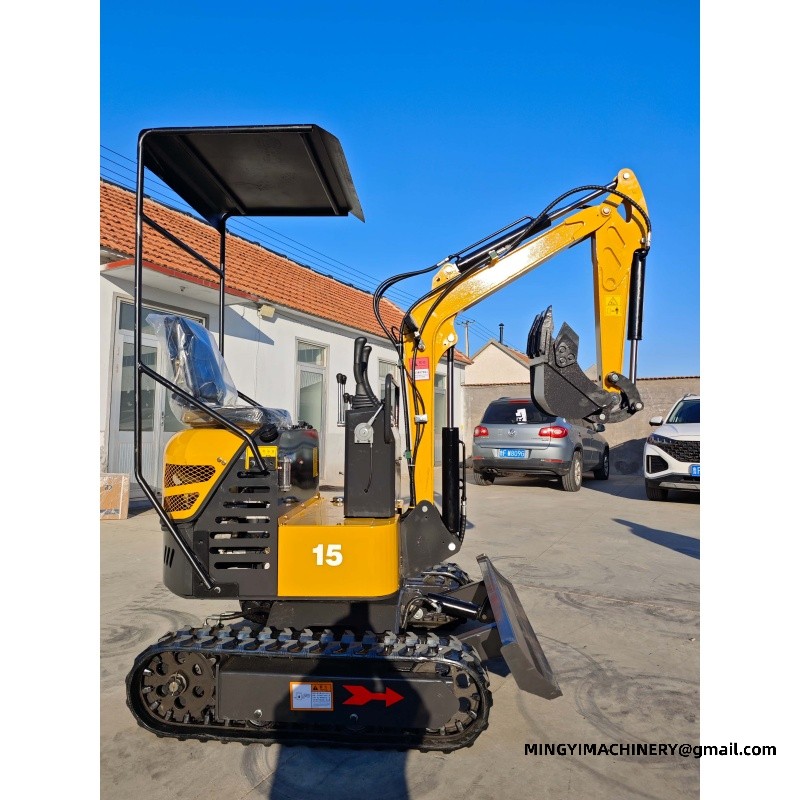
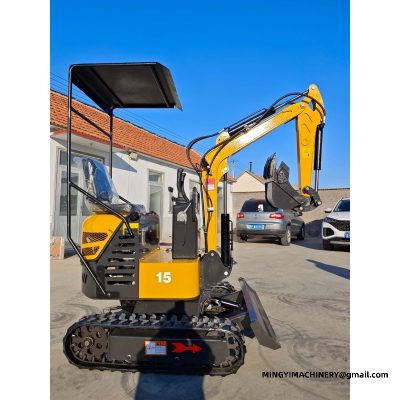
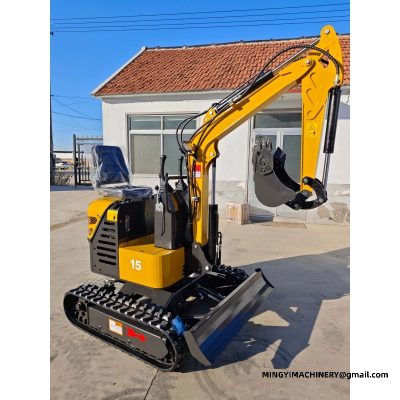
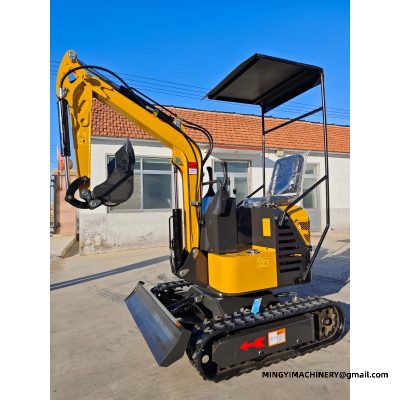
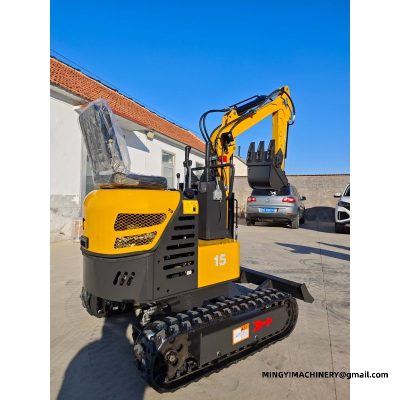
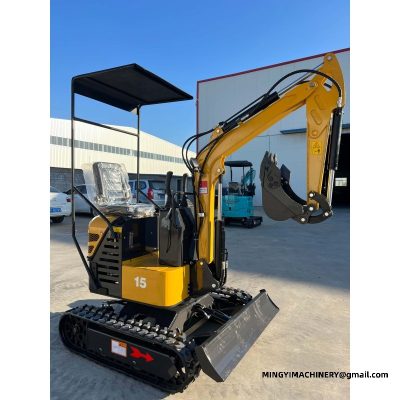
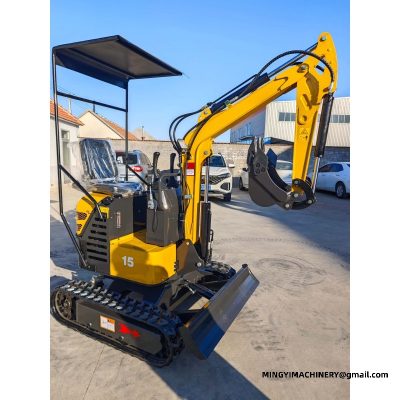
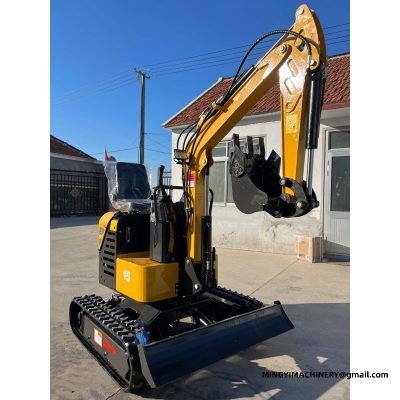
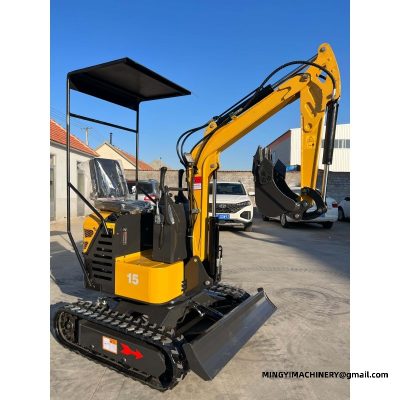
Much of the work on a clearance site is lifting and sorting rather than digging. Cut timber, brush, stone and scrap all have to be gathered and moved before the ground can be opened.
A grapple on a compact excavator turns the carrier into a handling machine as well as a digger, so one unit clears the plot and then starts the excavation.
Clearing and sorting material with a grapple
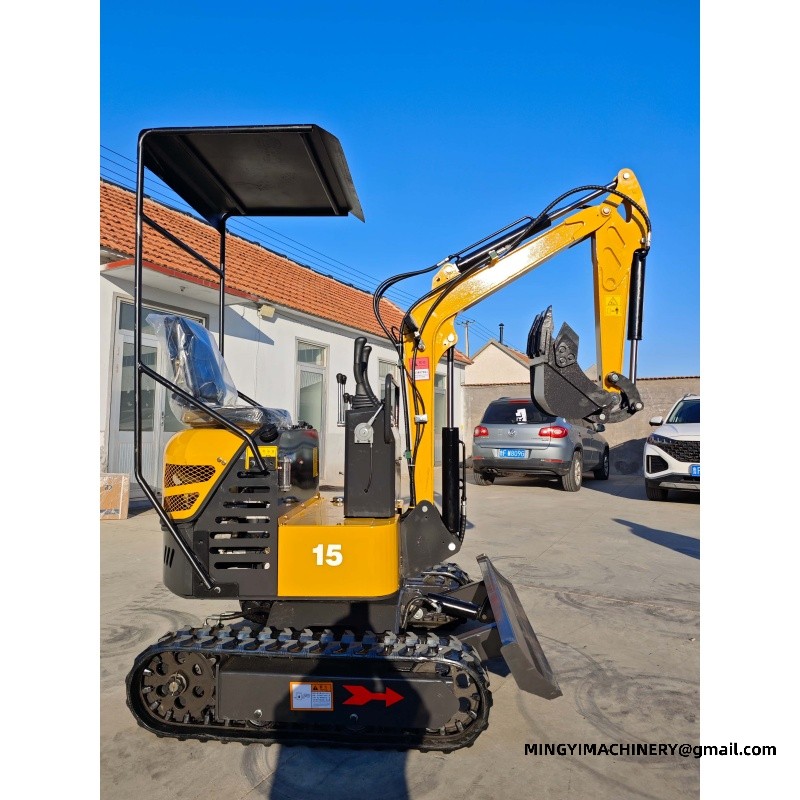
The fixed or rotating grapple picks up odd shapes that a bucket cannot hold: branches, offcuts, rubble and bundled waste. The operator stacks them where the truck can reach without driving over the site.
Because the grab works above ground, it can lift material out of a confined area over fencing or planting, which keeps the machine on the track and the finished surfaces untouched.
Grapple selection for land clearance and recycling
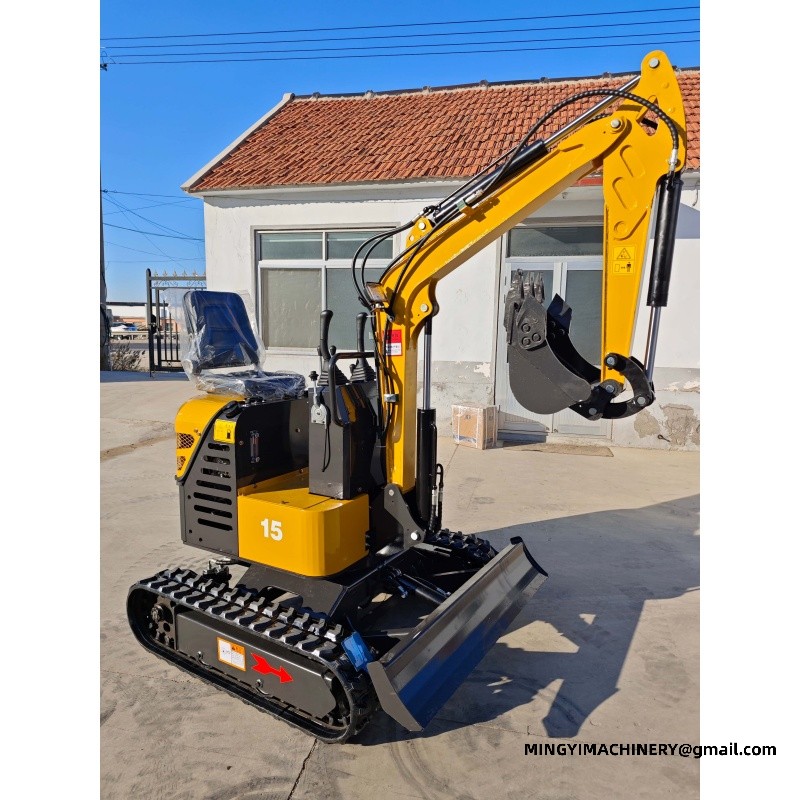
A grass and tree grabber suits vegetation work, while a plant grabber is used where roots and stock have to be lifted without damage. Both mount on the same coupler as a digging bucket.
Rubber tracks are common in gardens and on paved yards, and steel tracks with rubber blocks where the machine works on demolition debris or rough ground.
Buyers usually decide the grapple type, the coupler style and the track option at the ordering stage, because the fixing on the machine follows from that choice.
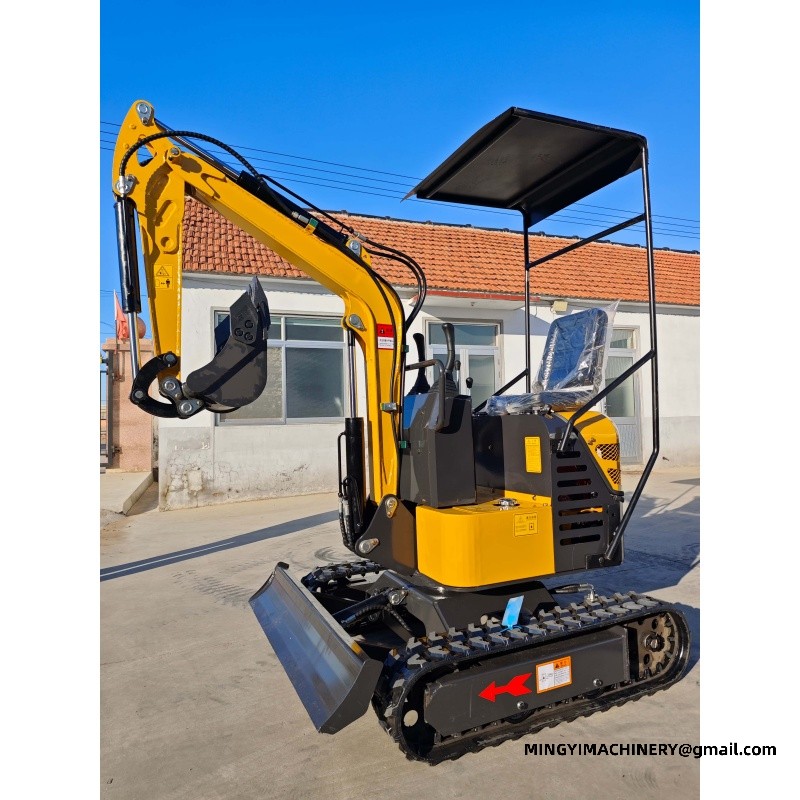
Acceptance checks when a mini excavator with grapple arrives A function check before the machine goes to work is worth the hour. Running through the controls, the travel and the attachment circuit on the excavator confirms it is set up as specified and ready for the site. Documentation should arrive with the machine. Parts list, service schedule and any certificates for this class of machine are what the workshop needs later, and they are much easier to obtain at delivery than in month six. Trenching work with mini excavator with grapple Service trenches are the most common reason the unit in daily use is hired. Water, sewage, cable and gas runs are narrow, shallow and often close to existing services, which is exactly the work a full-size machine cannot do safely. Depth control matters more on service work than speed. A machine of this size working beside live services is chosen because it can be placed precisely and stopped instantly, which is what the job actually requires. Noise, dust and working near occupied buildings Work near housing or occupied premises brings constraints that open sites do not. Start times, exhaust condition and how often the equipment on site needs to reverse are the practical limits that neighbours notice. Dust control is often part of the same conversation. Water, timing and work sequence reduce what leaves the site, and agreeing them in advance keeps the machine itself working rather than stopped after a complaint. Export packing and shipping of mini excavator with grapple Export documentation, decals and paint are settled before packing. Asking for them with the machine in that duty order avoids a second handling session and keeps the machine on the booked vessel. Buyers who import regularly plan the spare parts with the machine. The model in question ordered with a wearing-parts kit arrives ready to work rather than ready to wait for the first service interval. Working on slopes and uneven ground with mini excavator with grapple Slope work is a stability question before it is a traction question. Knowing the gradient the unit on the job is rated for, and working across rather than straight up where the ground allows, removes most of the risk. Ground that looks level often is not. A machine built for the work crossing a filled trench, a soft edge or a hidden void behaves differently from one on undisturbed ground, and those are the places worth walking before driving. Hydraulic circuits on a mini excavator with grapple Auxiliary hydraulic lines are what let a machine drive a tool rather than only a bucket. The equipment in service specified with the right circuits and flow runs a breaker or an auger without an add-on power pack bolted to the frame. Hydraulic specification is easier to settle at build time than to correct later. The excavator delivered without auxiliary lines can still dig, but every additional tool becomes a retrofit project. Working this class of machine through the seasons Seasonal planning smooths the workload. Machines that are busy for a few months and idle for the rest benefit from a service slot in the quiet period, and the unit in daily use prepared in the off-season starts the busy months reliably. Heat and dust are as limiting as rain. Air intake condition and cooling cleanliness decide how a machine of this size behaves in a dry season, and both are checked in a minute rather than repaired later. Attachments that turn the equipment on site into several machines The base machine is a carrier; the tool on the end of the arm decides the task. The machine itself fitted with a toothed bucket digs, and the same machine with a breaker, an auger or a grab does work that would otherwise need a second unit on site. Attachment lists are best written before delivery. Specifying the model in question with the tools the job list needs avoids the work and delay of adding hydraulics later, and a quick coupler makes the swap a few minutes instead of a workshop job. Specifying the machine in that duty against a job list The practical way to specify is to write the job list first: the narrowest access, the deepest trench, the heaviest tool and the surfaces the machine must cross. The unit on the job is then matched to those four numbers. Useful information to send with an enquiry includes working width, required digging depth, ground conditions and the attachment set. Those four items let the factory specify a machine built for the work that fits rather than a generic build. Daily checks and maintenance on the equipment in service Daily maintenance on the excavator is a short list: engine oil level, coolant, track tension, hydraulic oil level and a look at the hoses. Ten minutes at the start of the shift prevents most of the failures that stop a machine. Greasing is the second item. The slew ring, the boom and arm pins and the bucket linkage on this class of machine take grease daily in dusty work, and the intervals shorten further when the machine is used in water or mud. Road and paving work for the unit in daily use Road repair generates short, interrupted jobs - a patch, a drainage connection, a kerb line. A machine of this size is economical here because it travels on a small trailer and starts working minutes after arriving. Patching and reinstatement favour a machine that can work in a lane closure. The equipment on site occupies less road than a full-size excavator, which reduces the traffic management needed and the length of the closure. Running the machine itself in a rental fleet Rental fleets buy for utilisation, not for a single job. The model in question with a quick coupler and a common attachment standard is hired more often because it suits more of the calls that come in. The specification that rents best is usually the simplest one to explain at the counter. The machine in that duty with rubber tracks, a canopy and a coupler covers the majority of weekend and short-term hires. Working the unit on the job in confined spaces Confined sites are decided by dimensions. Overall width, tail swing and the space needed to work the arm are what let a machine built for the work operate inside a building, between walls or in a courtyard. Ventilation is the other indoor constraint. Running the equipment in service inside a closed structure needs air movement, and that is a planning item rather than something to discover after the first hour. Specification data for the excavator Where this class of machine is being specified for a job list, the table below gives the factory figures that matter most: what the machine weighs, how deep and how far it works, and what it measures on a trailer. Figures are factory figures and are confirmed on the build sheet for the unit in daily use. Where a job sits between two models, the larger machine usually takes less time than the smaller one spends on rework. The second habit is tool discipline. Running a machine of this size with the right bucket width for the trench means less spoil, less reinstatement and a cleaner job than a wide bucket and a lot of trimming. Stability is the third. The equipment on site working across the tracks rather than over the corners keeps the machine steady and the undercarriage loaded evenly, which shows up as track life at the end of the season.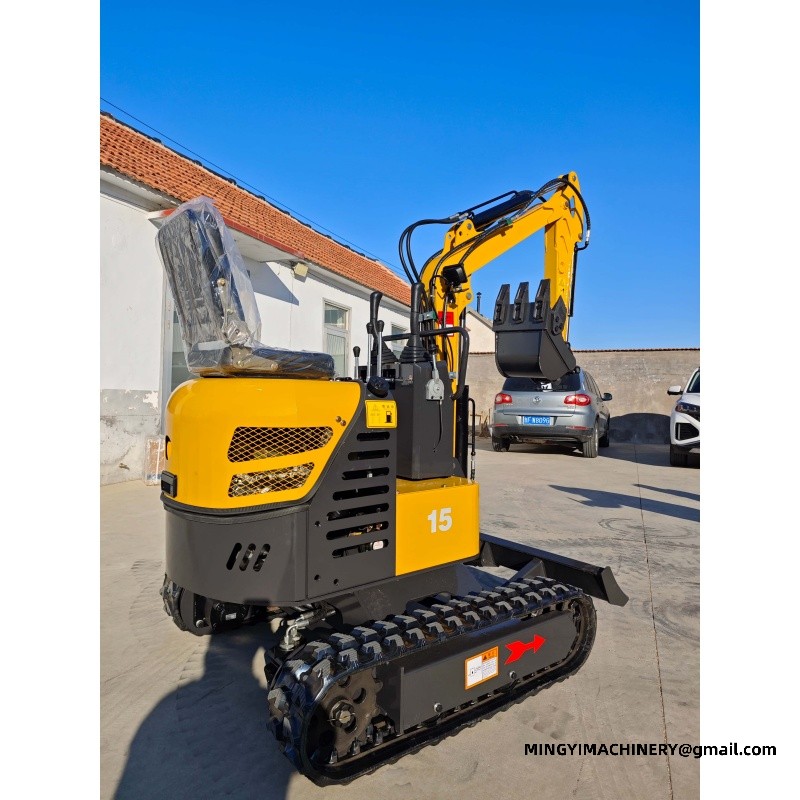
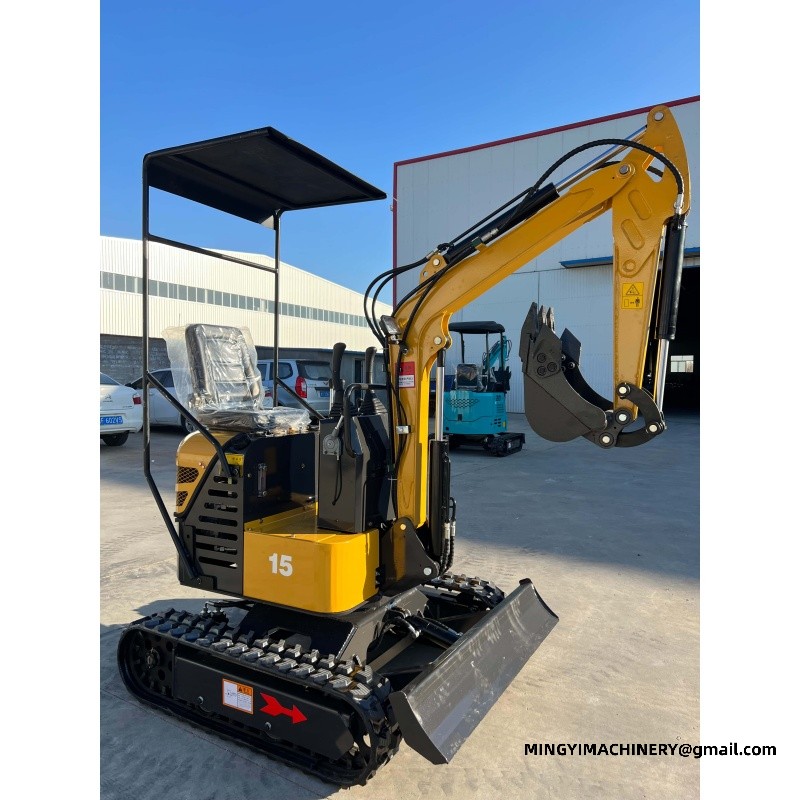
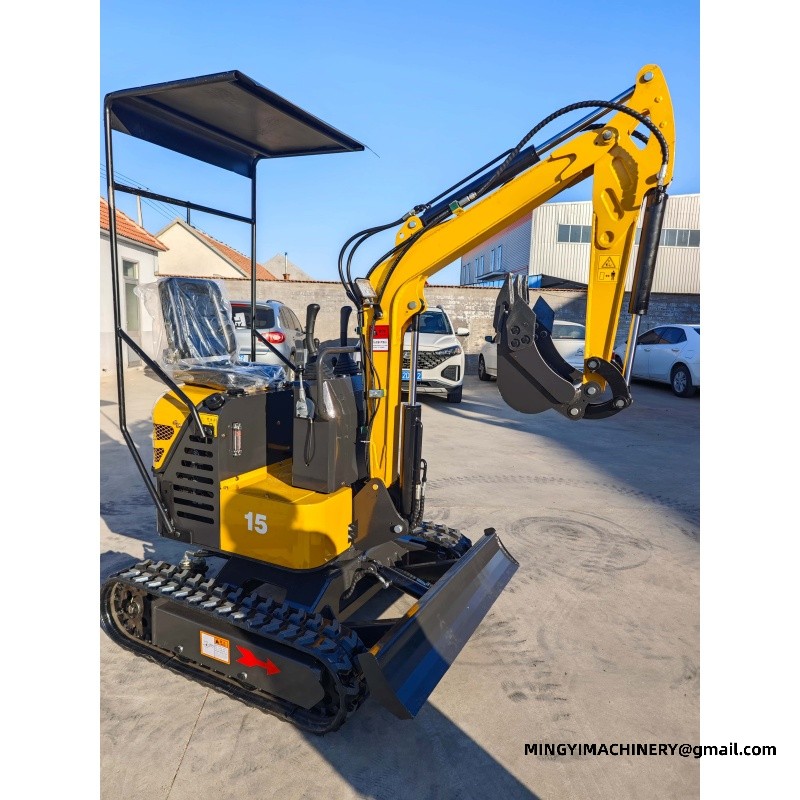
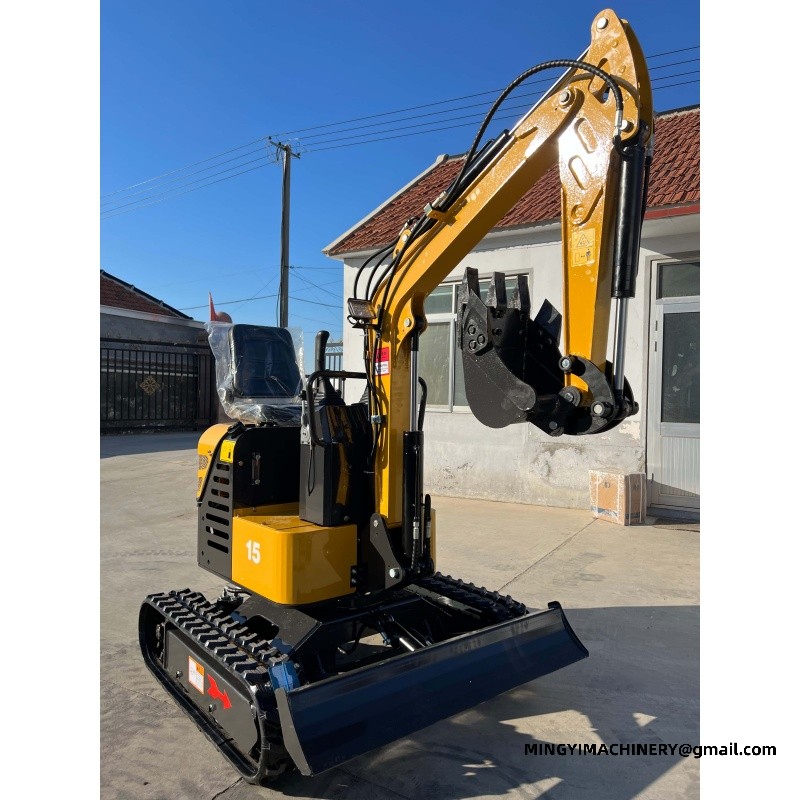
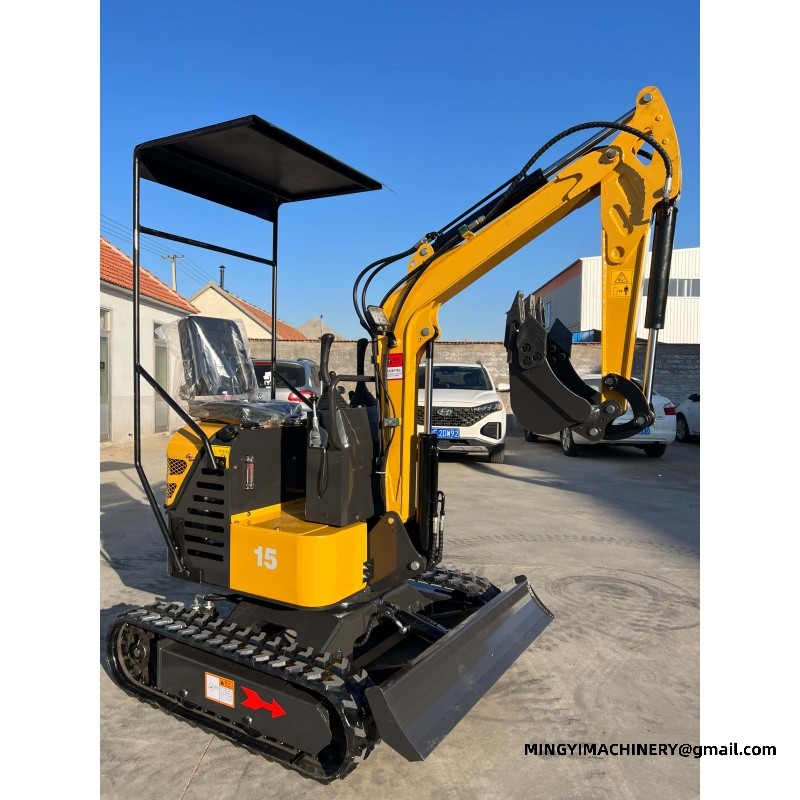
Reference specification — mini excavator range 20-1W 30-1W 30-2W 20-2L Operating weight 1800 kg (3968.32 lb) 2900 kg (6393.41 lb) 2700 kg (5952.48 lb) 1900 kg (4188.78 lb) Transport size (L×W×H) 2550 × 1100 × 2200 mm 3000 × 1250 × 2780 mm 3000 × 1100 × 2700 mm 2600 × 1300 × 2344 mm Max digging depth 1800 mm (70.87 in) 2200 mm (86.61 in) 2200 mm (86.61 in) 2100 mm (82.68 in) Max digging height 2820 mm (111.02 in) 3400 mm (133.86 in) 3000 mm (118.11 in) 2880 mm (113.39 in) Max dumping height 2050 mm (80.71 in) 2400 mm (94.49 in) 2000 mm (78.74 in) 2100 mm (82.68 in) Max digging radius 3050 mm (120.08 in) 4000 mm (157.48 in) 3800 mm (149.61 in) 3215 mm (126.57 in) Max digging distance 2300 mm (90.55 in) 2800 mm (110.24 in) 3050 mm (120.08 in) 2460 mm (96.85 in) Minimum turning radius 1450 mm (57.09 in) 2000 mm (78.74 in) 1750 mm (68.9 in) 1587 mm (62.48 in) Travel speed 5 km/h (3.11 mph) 5 km/h (3.11 mph) 7 km/h (4.35 mph) 5 km/h (3.11 mph) Gradeability 30° 30° 30° 30° Fuel consumption 2-3 L/h (0.528—0.793 gal) 2-3 L/h (0.528—0.793 gal) 2-3 L/h (0.528—0.793 gal) 2-3 L/h (0.528—0.793 gal) Fuel tank capacity 16 L (4.23 gal) 16 L (4.23 gal) 16 L (4.23 gal) 16 L (4.23 gal) Hydraulic oil tank 18 L (4.76 gal) 20 L (5.28 gal) 20 L (5.28 gal) 18 L (4.76 gal) Dozer blade lift height 180 mm (7.09 in) 420 mm (16.54 in) 230 mm (9.06 in) 180 mm (7.09 in) Dozer blade drop depth 210 mm (8.27 in) 210 mm (8.27 in) 280 mm (11.02 in) 210 mm (8.27 in)
Q. What is the machine itself used for?
A. Attachments turn one carrier into several machines: dig on Monday, grade, lift, mow or drill on Tuesday without the machine leaving site. The quick coupler makes the changeover a minute job at the trench edge, and mechanical tools need no hydraulic lines at all. The model in question is one of the pages buyers land on when comparing machines for grapple, and the factory treats it as a specification conversation rather than a catalogue line.
Q. How is the attachment fitted and swapped?
A. Through the quick coupler on the dipper: seat the tool, lock it, plug the hydraulics where the design needs them. Mechanical attachments need no lines at all, so a bucket-to-rake change is a minute job at the trench edge.
Q. What about colours and branding?
A. OEM colours and decals are part of the build: private-label machines carry the buyer brand on the standard MINGYI platform, and the grapple order confirms colours, marks and documents before production starts.
Documents that travel with the machine in that duty
Keeping the documents together is part of ownership. The manual, the service record and the build sheet for the unit on the job belong in one folder, and the machine is easier to sell later when that folder is complete.
Later additions and retrofits on a machine built for the work
Later changes are easier when they were anticipated. Asking for the extra hydraulic circuit or the heavier mounting plate on the equipment in service at build time adds little and leaves the option open.
E-mail : sales@mingycn.com
LINE ( ID ): mingyicn
Related pages
mini excavator with grapple bucket · mini excavator with ripper · Wheel Loader Snow Blower: Hydraulic Circuits and Winter Duty · Mini Excavators









