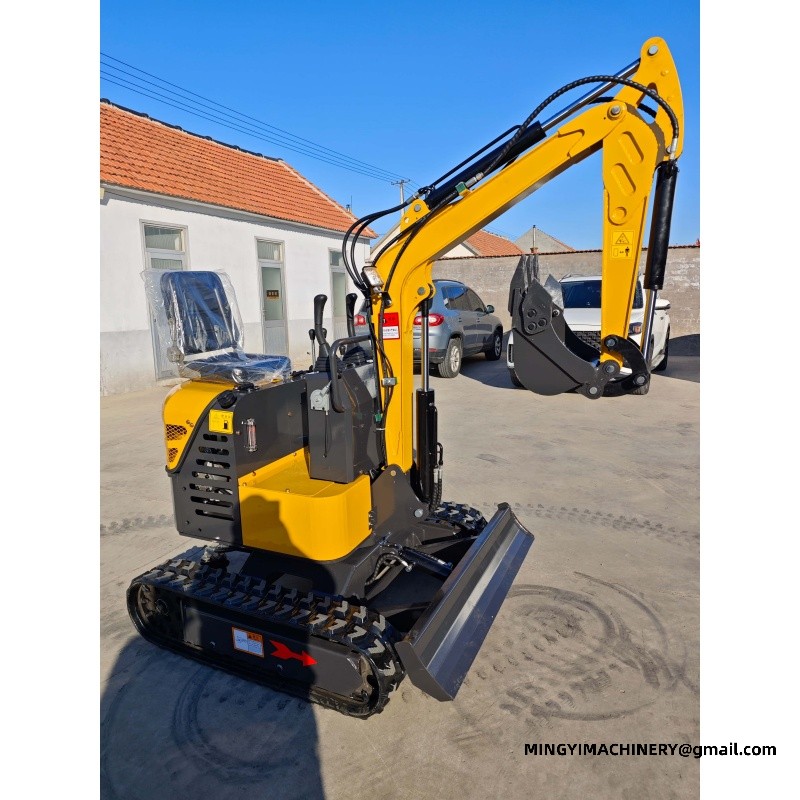
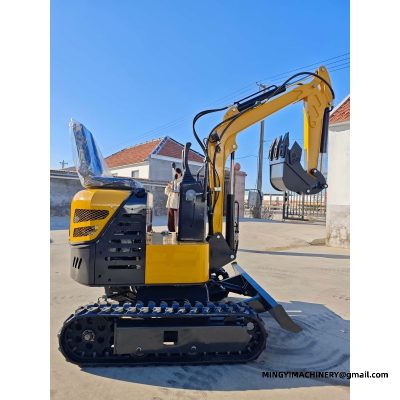
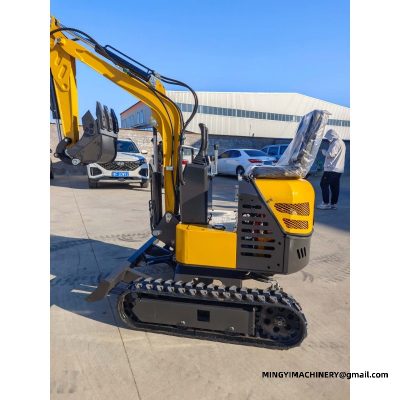
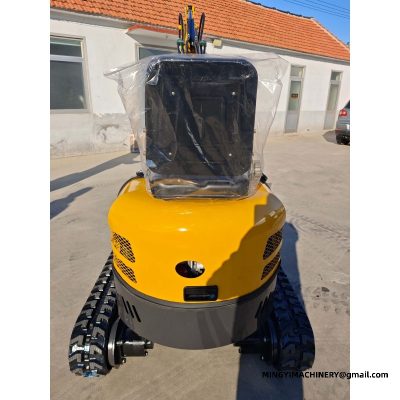
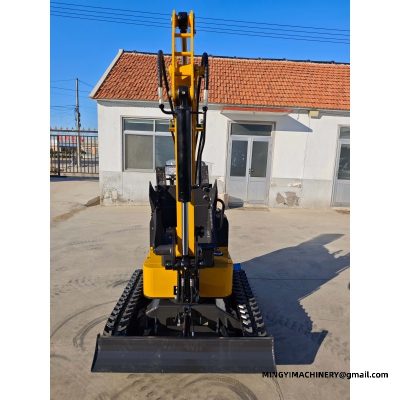
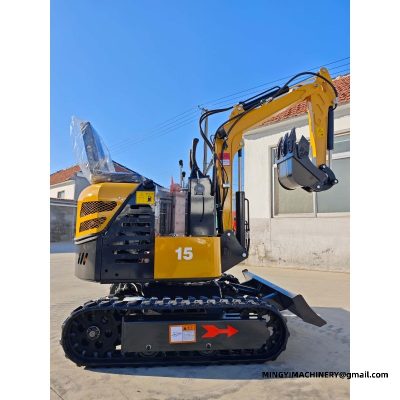
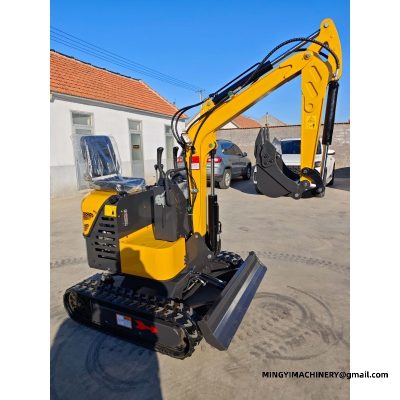
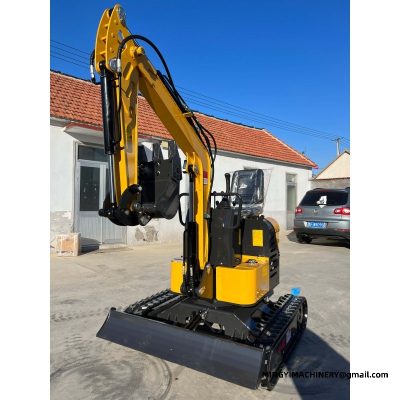
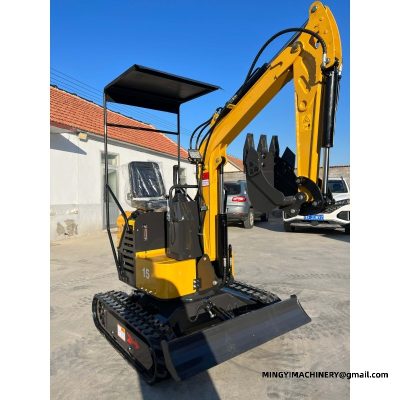
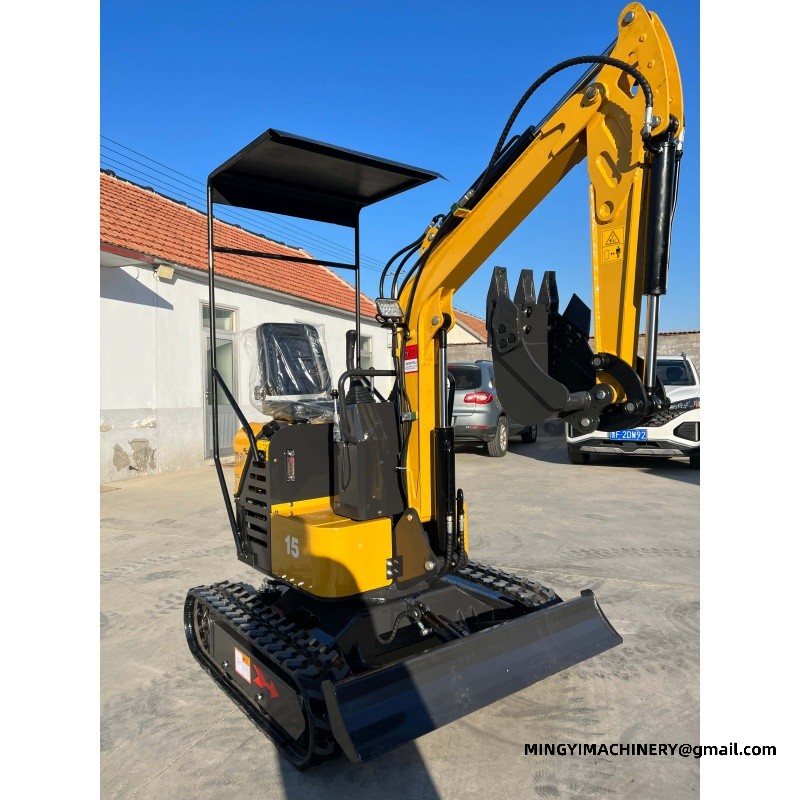
Some ground refuses a bucket. Compacted subsoil, old tarmac, root-bound ground and thin rock all have to be broken before they can be excavated, and a ripper mounted on a mini excavator does that work at the end of the boom.
MINGYI supplies the ripper as an attachment for its compact crawler machines, sharing the same coupler as the digging bucket. The operator uses it to open the surface and then changes back to the bucket to remove the loosened material.
Breaking ground with a mini excavator ripper
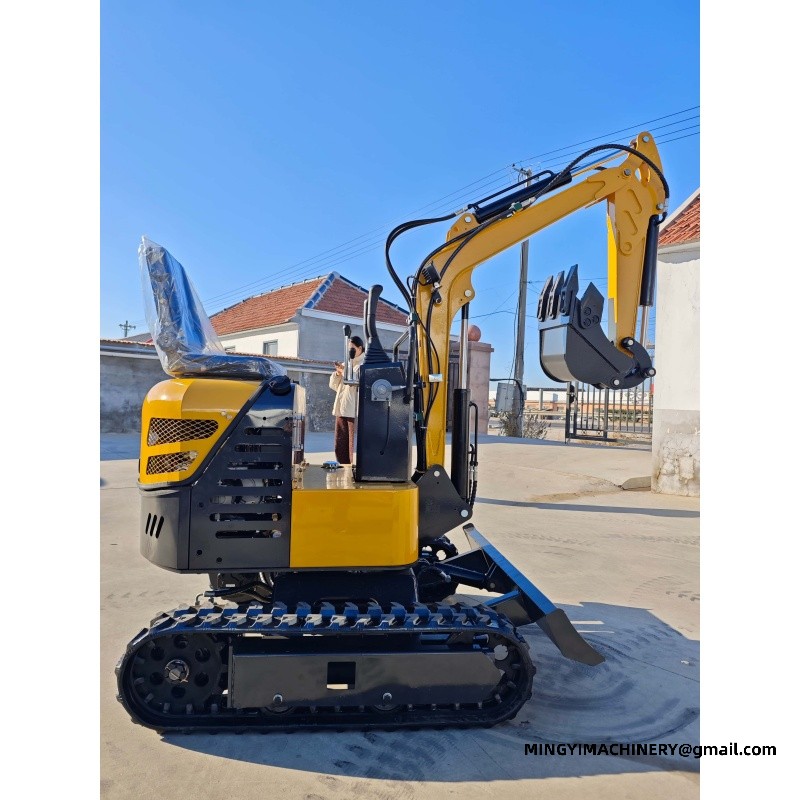
The ripper works by drawing a single shank through the material rather than lifting it. That concentrates the machine's effort on a narrow line, which is why a compact unit can open ground that would stall it if it tried to cut the same material with a full bucket.
The operator tracks the shank across the area in parallel passes, then lifts the loosened material with the bucket. Where the layer is shallow, the ripper is often quicker than a breaker, because there is no impact and no spoil to clear between blows.
Ripper work in landscaping and utility projects
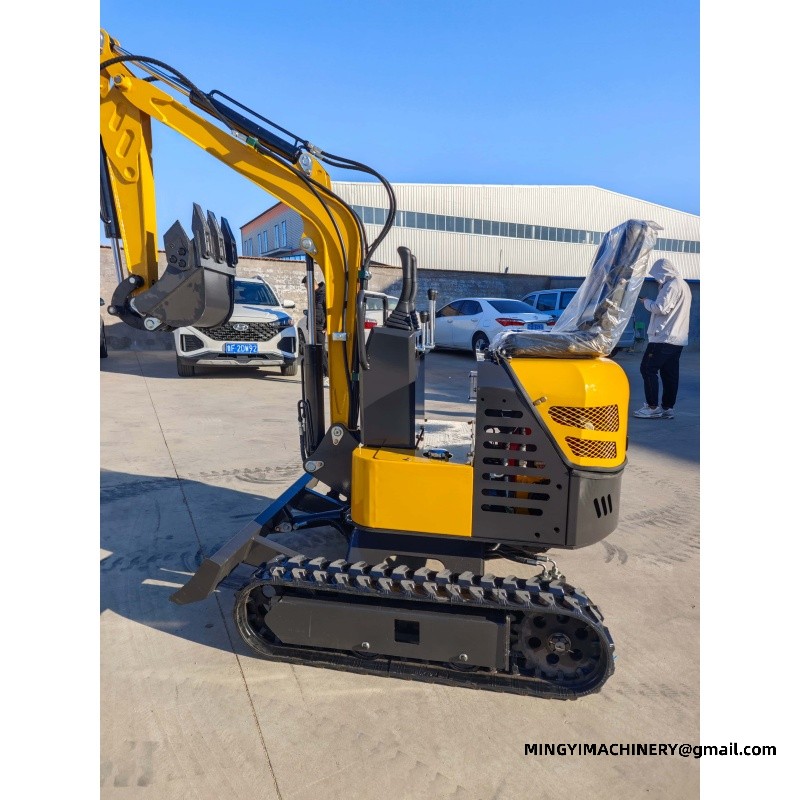
Landscaping crews use the ripper to break up compacted subsoil before a planting bed is formed, and to lift old turf and paving that has rooted through. Utility crews use it to open a line before a trench is cut alongside a service.
The ripper is normally ordered with a bucket and a coupler rather than on its own, so the machine can break and clear in the same setup. Buyers who work frequently in hard ground often add a breaker hammer to the same list.
A ripper extends the range of ground a compact excavator can work in, and it takes far less time than moving to a heavier machine. Specifying it with the coupler at the ordering stage keeps the change between breaking and digging to a moment.
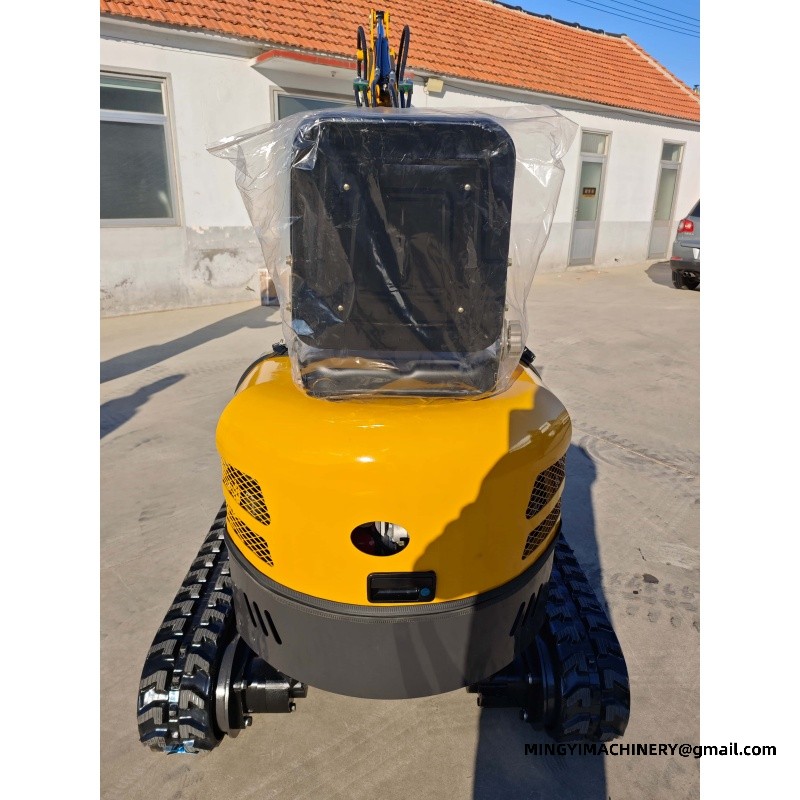
Working on slopes and uneven ground with mini excavator with ripper Ground that looks level often is not. The excavator crossing a filled trench, a soft edge or a hidden void behaves differently from one on undisturbed ground, and those are the places worth walking before driving. Planning the direction of travel helps. Working so that the this class of machine is stable under load and not required to turn on a slope is a decision made before the job starts, not a correction made during it. Noise, dust and working near occupied buildings Enclosure and machine condition both reduce noise. The unit in daily use with intact panels, sound mounts and a maintained exhaust is measurably quieter than the same machine with loose guards, and the difference matters on restricted sites. Dust control is often part of the same conversation. Water, timing and work sequence reduce what leaves the site, and agreeing them in advance keeps a machine of this size working rather than stopped after a complaint. Landscaping and ground care with mini excavator with ripper Landscape contractors use the equipment on site for planting holes, pond excavation, grading and retaining work. The machine is light enough to cross finished lawn and narrow enough to work between established trees. On soft landscape work the surface is the constraint. The machine itself on rubber tracks crosses turf without stripping it, which is why the same jobs are not given to a wheeled machine. Engine options behind mini excavator with ripper Power unit selection is settled against the service network the buyer already uses. MINGYI offers Kubota D722, Kubota D902, YANMAR, Changchai, Laidong, Runtong, YARMAX, Youpu 2V80 and Youpu 195, so a fleet running one brand of engine can keep the same filters, the same parts supplier and the same mechanic. Two buyers can order the same the model in question and receive different engines. The decision is rarely about peak power; it is about which parts counter is closest to the site and which engine the local mechanic already knows. Lifting and material handling with a mini excavator with ripper Lifting with a machine built to dig needs a plan. The load, the radius and the ground under the unit on the job all matter, and the safe figure is the one on the chart rather than the one that looks possible. Ground condition under the machine is part of every lift. Soft or uneven support is the common factor in handling incidents, and checking it takes less time than recovering the machine in that duty that has settled. Getting mini excavator with ripper through a narrow gap Access decides the machine before output does. With a machine built for the work the limiting dimension is usually the widest point on the way in, so measuring the gate, the corridor and the turning space first saves a wasted delivery and a second visit. Contractors who buy the equipment in service normally have one job in mind that nothing else reaches. The purchase order follows the access measurement, not the other way round, and the build sheet is then settled around it. Track choice for the excavator Rubber tracks suit paved and landscaped ground because they spread the machine weight and leave the surface intact. Steel tracks with rubber blocks are specified where the ground is rougher or the working day is longer, and the choice can be made per machine rather than accepted as a factory default. Track type changes what the machine can cross and what it leaves behind. Buyers specify rubber for lawns, driveways and municipal work, and steel with rubber blocks for sites where sharp material would cut a rubber belt in a week. Orchard, vineyard and farm use of this class of machine Ditching, fertilising and drainage on farmland suit the unit in daily use because the work is spread over a large area in short bursts. The machine travels behind a pickup and works where it stops. Farms also use a machine of this size for general maintenance - clearing a watercourse, repairing a track, loading a spreader. One carrier with a few attachments covers most of the jobs that would otherwise wait for a contractor. Working near live services with the equipment on site Digging near water, gas and cable is a precision job. The machine itself is used here because the operator can work in short controlled cuts and because the machine can be positioned without driving over the run being exposed. The risk on utility work is not machine power but machine placement. The model in question that fits the working width leaves the surrounding ground undisturbed, which keeps the trench stable and the reinstatement small. Municipal and public works with the machine in that duty Municipal crews work on streets, footpaths and parks where the public is present. The unit on the job is specified because it occupies little space, works inside a small exclusion zone and can be moved on a standard trailer. Drainage repair, tree planting, footway reconstruction and cemetery work are all within the range of a machine built for the work. The jobs are small individually and continuous across the year. Interior and light demolition with the equipment in service Interior demolition is an access and a weight question. The excavator that fits through a doorway and works on a suspended floor does jobs that would otherwise be done by hand or by a larger machine that cannot enter. Dust, debris clearance and floor loading all argue for a compact machine indoors. This class of machine spreads its weight over a wider track footprint than a wheeled machine of similar capacity. Specification data for the unit in daily use Buyers comparing a machine of this size usually start from four numbers - weight, digging depth, reach and transport width - because those are the ones that decide whether the machine can be delivered and whether it can do the job once it is there. Every value shown is as built for the equipment on site; options such as cab, side swing or a telescopic undercarriage change the transport dimensions and are confirmed at order stage. Daily maintenance on the machine itself is a short list: engine oil level, coolant, track tension, hydraulic oil level and a look at the hoses. Ten minutes at the start of the shift prevents most of the failures that stop a machine. Track tension is the item most often neglected. The model in question run with slack tracks wears the undercarriage and can throw a track on a turn; run too tight, the same components wear from the other direction.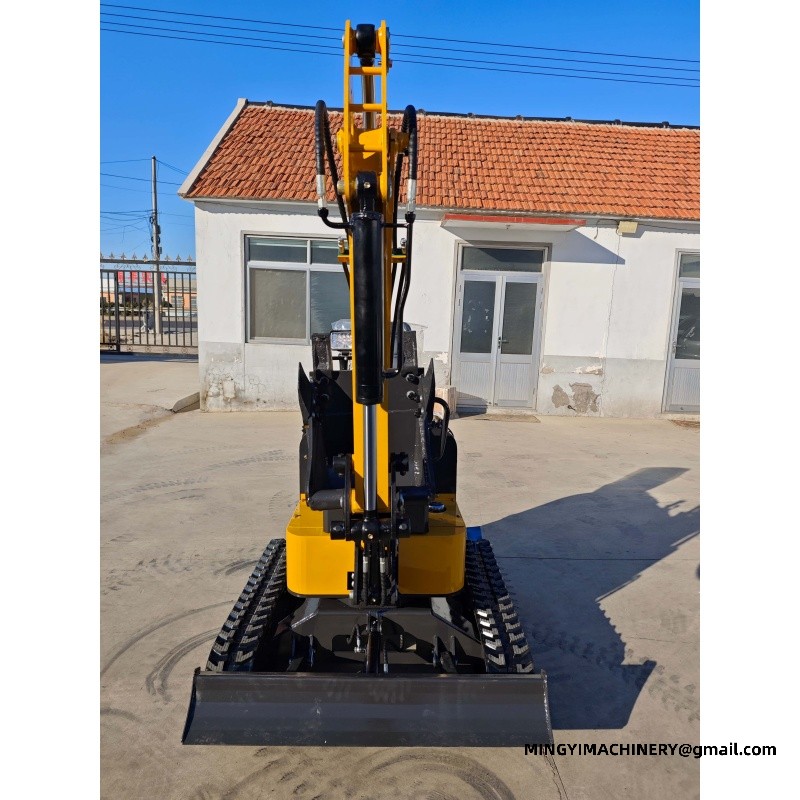
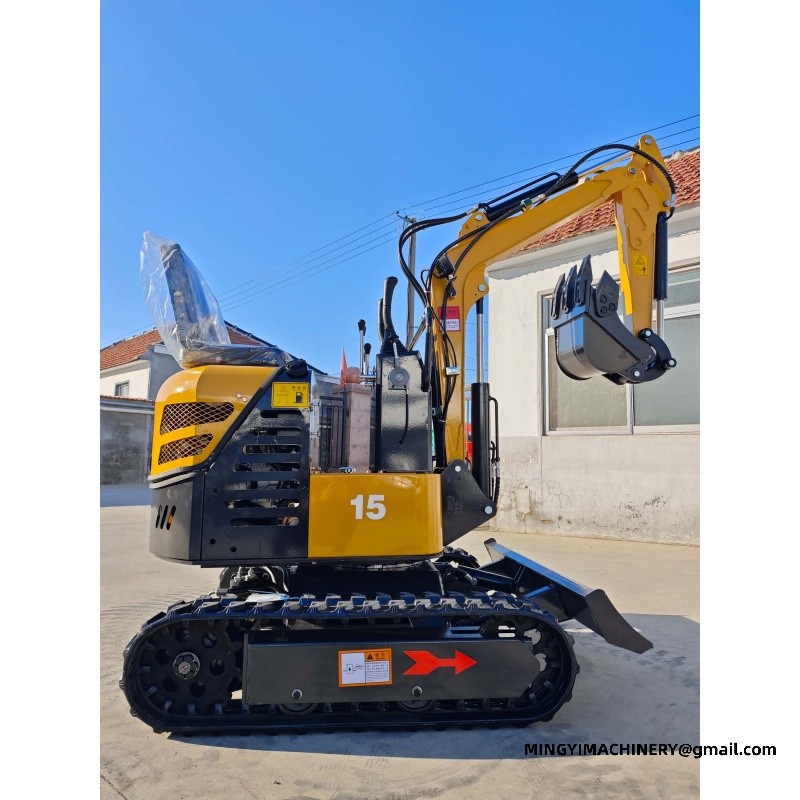
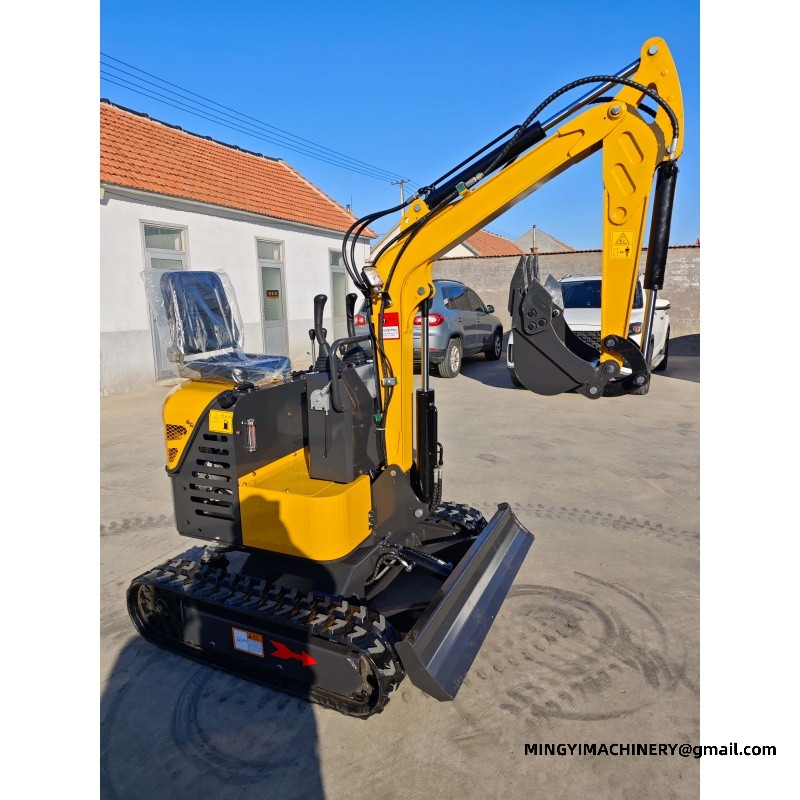
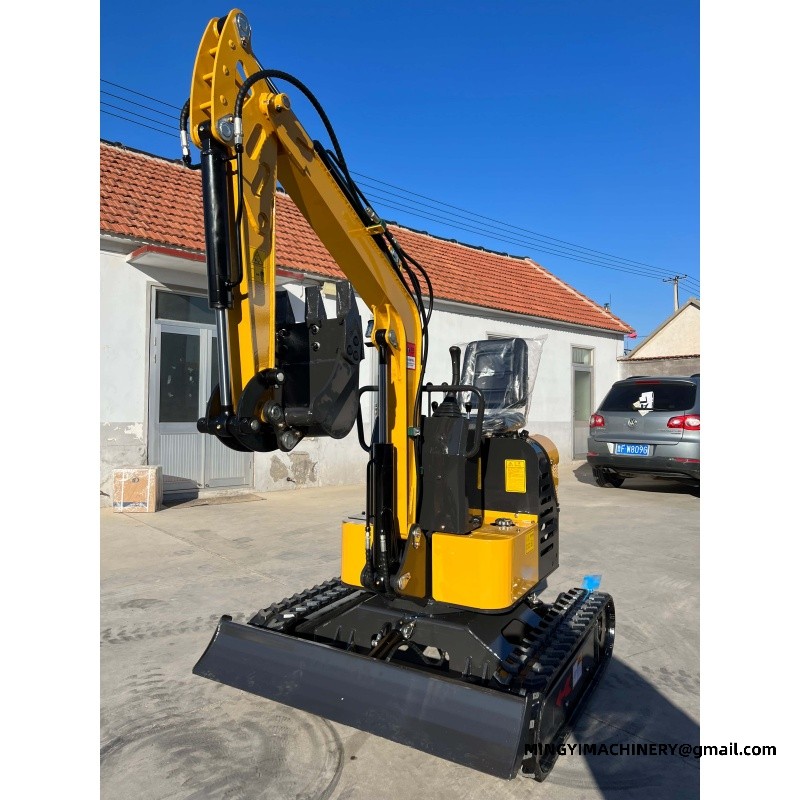
Reference specification — mini excavator range 09W 20-1WL 30-1W 09L Operating weight 1100 kg (2425.08 lb) 1900 kg (4188.78 lb) 2900 kg (6393.41 lb) 1100 kg (2425.08 lb) Transport size (L×W×H) 1800 × 750 × 1970 mm 2550 × 1100 × 2200 mm 3000 × 1250 × 2780 mm 2300 × 720 × 1870 mm Max digging depth 1250 mm (49.21 in) 1800 mm (70.87 in) 2200 mm (86.61 in) 1400 mm (55.12 in) Max digging height 2800 mm (110.24 in) 2820 mm (111.02 in) 3400 mm (133.86 in) 2800 mm (110.24 in) Max dumping height 1700 mm (66.93 in) 2050 mm (80.71 in) 2400 mm (94.49 in) 1880 mm (74.02 in) Max digging radius 2570 mm (101.18 in) 3050 mm (120.08 in) 4000 mm (157.48 in) 2490 mm (98.03 in) Max digging distance 1869 mm (73.58 in) 2300 mm (90.55 in) 2800 mm (110.24 in) 2000 mm (78.74 in) Minimum turning radius 1000 mm (39.37 in) 1450 mm (57.09 in) 2000 mm (78.74 in) 1400 mm (55.12 in) Travel speed 3 km/h (1.86 mph) 5 km/h (3.11 mph) 5 km/h (3.11 mph) 3 km/h (1.86 mph) Gradeability 30° 30° 30° 30° Fuel consumption 1-1.3 L/h (0.264—0.343 gal) 2-3 L/h (0.528—0.793 gal) 2-3 L/h (0.528—0.793 gal) 1-1.3 L/h (0.264—0.343 gal) Fuel tank capacity 8 L (2.11 gal) 16 L (4.23 gal) 16 L (4.23 gal) 8 L (2.11 gal) Hydraulic oil tank 16 L (4.23 gal) 18 L (4.76 gal) 20 L (5.28 gal) 16 L (4.23 gal) Dozer blade lift height 180 mm (7.09 in) 180 mm (7.09 in) 420 mm (16.54 in) 180 mm (7.09 in) Dozer blade drop depth 210 mm (8.27 in) 210 mm (8.27 in) 210 mm (8.27 in) 210 mm (8.27 in)
Q. Who chooses the machine in that duty?
A. Attachments turn one carrier into several machines: dig on Monday, grade, lift, mow or drill on Tuesday without the machine leaving site. The quick coupler makes the changeover a minute job at the trench edge, and mechanical tools need no hydraulic lines at all. Read the unit on the job together with the engine, track and attachment pages: jobs around ripper are decided by how those choices line up, not by any single number on the sheet.
Q. How is the attachment fitted and swapped?
A. Through the quick coupler on the dipper: seat the tool, lock it, plug the hydraulics where the design needs them. Mechanical attachments need no lines at all, so a bucket-to-rake change is a minute job at the trench edge.
Q. Which models does MINGYI build?
A. The 08, 12 and 18 models cover the 0.8 to 6 tonne class with engine, track, cab and attachment options across the range - dealer programmes can mix models in one shipment, and each ripper machine is confirmed on its own build sheet.
Later additions and retrofits on a machine built for the work
Retrofitting is limited by the base machine. Before anything is added to the equipment in service the hydraulic flow, the mounting interface and the stability allowance have to be checked, because those limits are what decide what is sensible.
Storage and long idle periods for the excavator
A stored machine should be brought back carefully. Before this class of machine returns to work the fluids, the brakes and the controls are checked, because months of standing change more than a weekend does.
A second operator for the unit in daily use
A machine that only one person can use is a single point of failure. Training a second operator on a machine of this size takes a day and removes the dependency that otherwise governs holidays, illness and busy weeks.
E-mail : sales@mingycn.com
LINE ( ID ): mingyicn
Related pages
mini excavator with post hole auger · mini excavator with concrete breaker · Wheel Loader Snow Pusher: Frame Loads and Cold-Weather Starting · Mini Excavators









