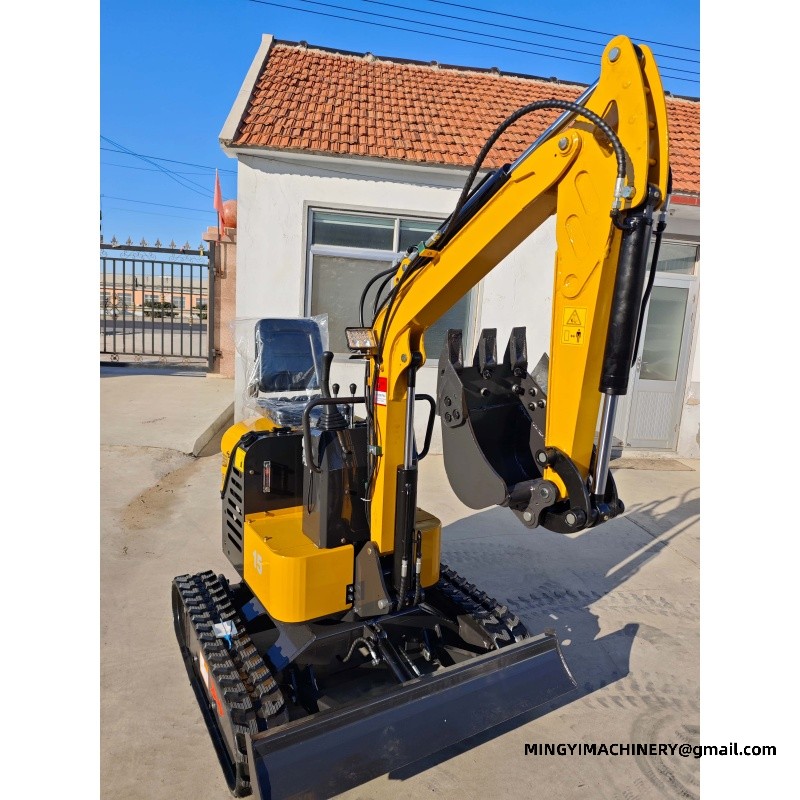
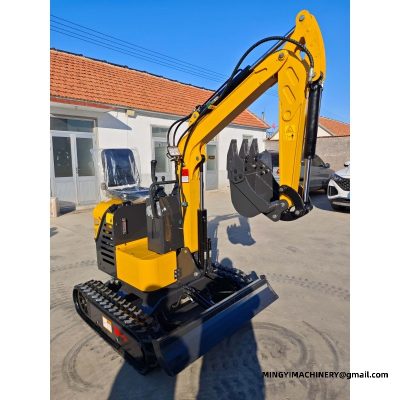
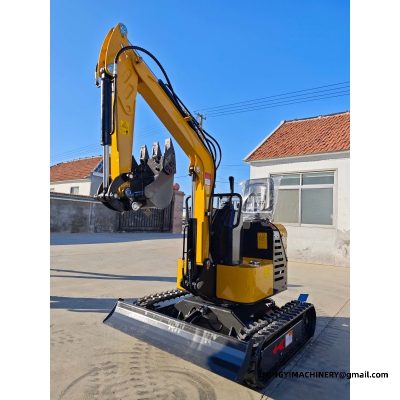
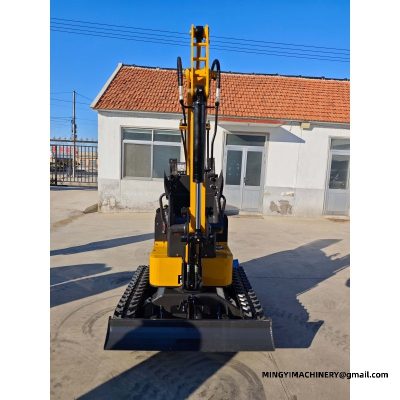
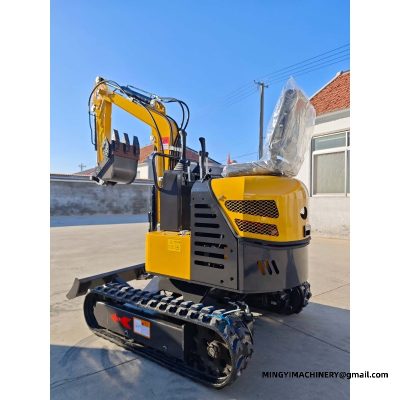
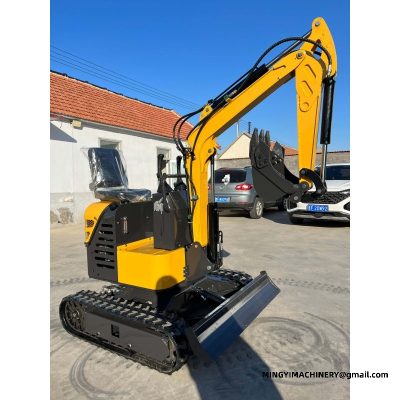
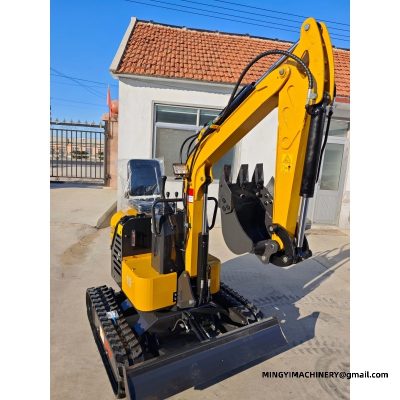
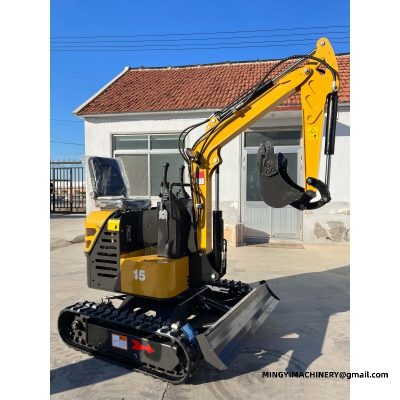
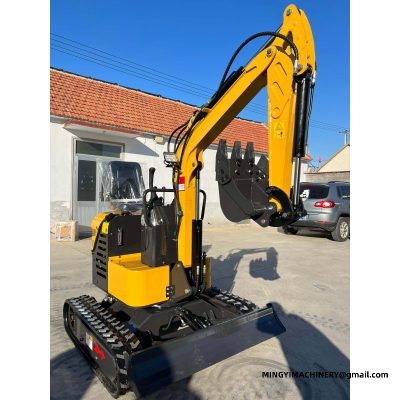
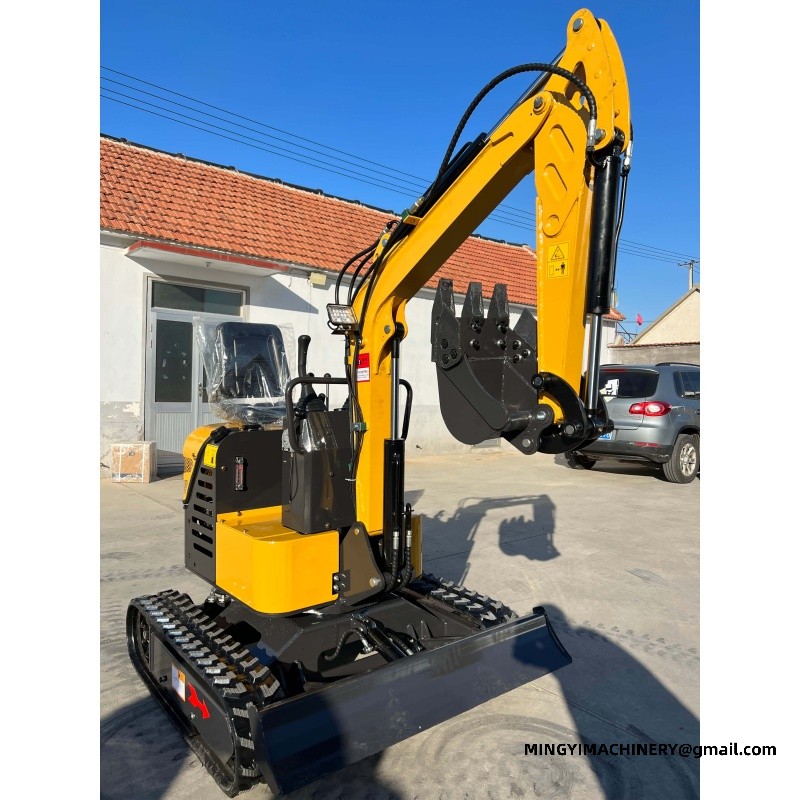
A mini excavator paired with a breaker hammer is the standard combination for breaking concrete, splitting rock and cutting asphalt on small sites. MINGYI supplies these machines with the breaker matched to the carrier, so the hydraulic output of the excavator and the demand of the hammer line up from the first hour of work.
Machines across the 0.8 to 6 tonnes range can be ordered with a breaker as part of the package, together with the coupler needed to switch between digging and breaking. This page covers what the combination is used for and what to confirm when ordering.
Breaking work the pair performs
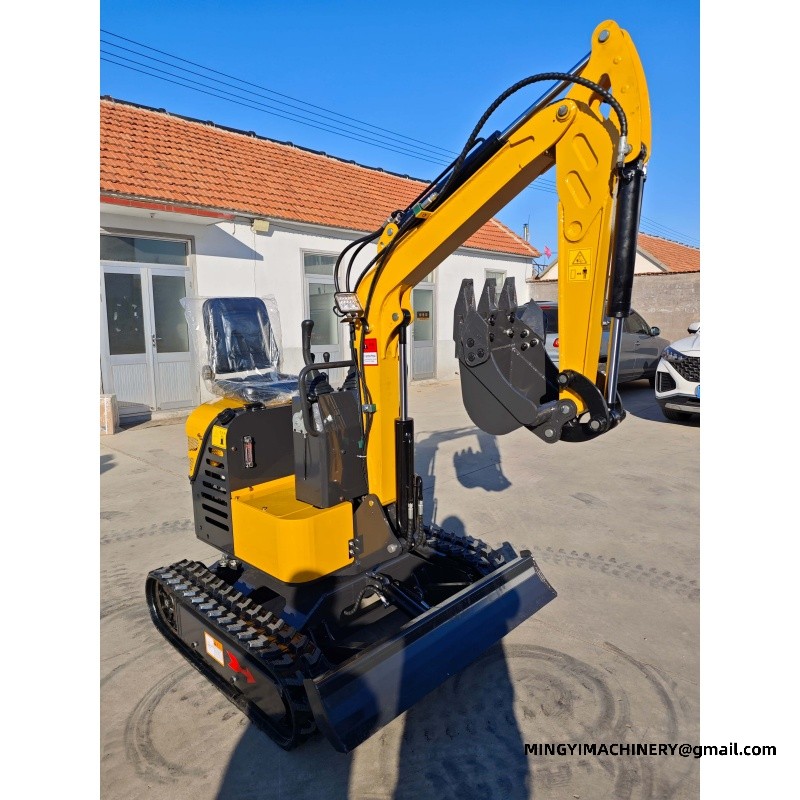
Typical targets include old farm yard slabs, foundation footings, rock encountered in a trench line, frozen ground, and pavement that has to come up before repairs can begin. The breaker also handles secondary breaking, reducing oversized lumps that the bucket cannot otherwise lift or load.
Because the hammer work usually sits between digging phases, the changeover matters as much as the breaking itself. A mechanical or hydraulic quick coupler lets the operator move from bucket to breaker in minutes, keeping the site sequence intact instead of stopping for tooling changes.
Matching the breaker to the carrier
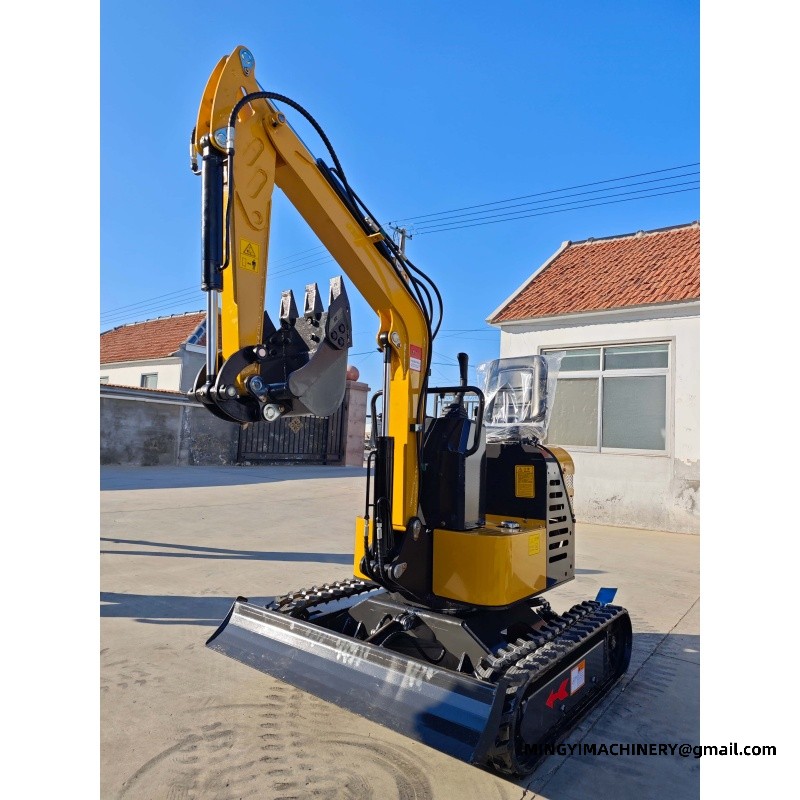
The breaker has to suit the weight and hydraulic flow of the excavator, and this is part of the specification MINGYI settles with the buyer before assembly. Oversizing the hammer strains the carrier, while an undersized one turns simple breaking into slow work.
Buyers should also confirm the dust conditions on their sites, since chipping concrete is abrasive work, and state whether a steel pipeline or just a short hose run is preferred. These details are recorded against the machine so the delivered package works as intended.
Send a description of the material you break most often, whether concrete, soft rock or pavement, and the duty cycle you expect. Mingyi Machinery will configure the excavator and breaker as one working set and supply the service information needed to maintain both.
Lifting and material handling with a mini excavator with concrete breaker Stability changes with reach. A load the excavator handles close in becomes a different proposition at full extension, so the working radius belongs in the plan before the lift rather than during it. Ground condition under the machine is part of every lift. Soft or uneven support is the common factor in handling incidents, and checking it takes less time than recovering this class of machine that has settled. Trenching work with mini excavator with concrete breaker Service trenches are the most common reason the unit in daily use is hired. Water, sewage, cable and gas runs are narrow, shallow and often close to existing services, which is exactly the work a full-size machine cannot do safely. Trench quality depends on the bucket width and the operator, not on machine size. A machine of this size with a narrow bucket and a swing boom cuts a clean run along a boundary without disturbing the ground either side of it. Getting mini excavator with concrete breaker through a narrow gap The first question on most job lists is whether the machine can reach the work at all. The equipment on site is chosen against the narrowest point on the route - a garden gate, a doorway, a gap between two walls - because a machine that arrives and then cannot pass loses a day, not an hour. Access decides the machine before output does. With the machine itself the limiting dimension is usually the widest point on the way in, so measuring the gate, the corridor and the turning space first saves a wasted delivery and a second visit. Operator technique for mini excavator with concrete breaker Output on a compact machine comes from placement rather than power. An experienced operator keeps the model in question working inside the swing arc, positions once and digs a full run instead of repositioning for every bucket. Stability is the third. The machine in that duty working across the tracks rather than over the corners keeps the machine steady and the undercarriage loaded evenly, which shows up as track life at the end of the season. Trailering and moving mini excavator with concrete breaker Loading practice matters as much as the numbers. The unit on the job is driven up ramps under its own power with the boom lowered and the tracks aligned, and secured at the points the manufacturer specifies. Detachable components reduce transport length. A machine built for the work built with a removable arm section or a folding step fits a shorter trailer and may avoid an oversize movement permit. Working near live services with mini excavator with concrete breaker Digging near water, gas and cable is a precision job. The equipment in service is used here because the operator can work in short controlled cuts and because the machine can be positioned without driving over the run being exposed. Utility crews specify the excavator with a narrow bucket and good visibility for exactly this reason: the machine has to stop at the service, not at the edge of the operator's view. Hiring versus owning this class of machine Availability is part of the decision. Owning the unit in daily use means it is there on the day the ground is ready; hiring means competing for the same machine at the same time as everyone else in the season. Ownership brings obligations that hiring does not. Storage, servicing, insurance and an operator are the items to set against the hire rate before deciding which way a machine of this size should be supplied. Quick coupler practice on the equipment on site A quick coupler is the single option that changes how a machine is used day to day. Fitted to the machine itself, it turns an attachment change from a two-person workshop job into a task the operator does alone in minutes. For a fleet that shares attachments between machines, a common coupler standard matters more than the coupler brand. The model in question that picks up the same tools as the larger machines keeps the rack usable across the yard. OEM and fleet customisation of the machine in that duty Distributors and rental fleets usually need the machine to look like theirs. Paint, decals, seat colour and attachment branding can be specified on the unit on the job at build time rather than applied after import. Customisation also covers the specification sheet. A fleet buyer may want every machine built for the work delivered with the same coupler, the same engine and the same tool kit so training and parts stock stay simple. Engine options behind the equipment in service Two buyers can order the same this class of machine and receive different engines. The decision is rarely about peak power; it is about which parts counter is closest to the site and which engine the local mechanic already knows. Engine choice is also an emissions and documentation question for some markets. Listing the available units with the excavator enquiry lets the factory confirm what can be supplied and documented for the destination country. Attachments that turn the unit in daily use into several machines The base machine is a carrier; the tool on the end of the arm decides the task. A machine of this size fitted with a toothed bucket digs, and the same machine with a breaker, an auger or a grab does work that would otherwise need a second unit on site. Most of the daily variety on the equipment on site comes from the attachment rack rather than from the machine itself. Bucket, breaker, auger, ripper, rake and grab cover the large majority of the work a contractor will see. Specification data for the machine itself The figures below are the factory figures for the models most often matched to the model in question. They are the numbers to check against the site: the depth the work needs, the reach from one position, and the width of the narrowest point on the route in. Every value shown is as built for the machine in that duty; options such as cab, side swing or a telescopic undercarriage change the transport dimensions and are confirmed at order stage. Municipal crews work on streets, footpaths and parks where the public is present. The unit on the job is specified because it occupies little space, works inside a small exclusion zone and can be moved on a standard trailer. Noise and surface protection matter on public work. A machine built for the work on rubber tracks across paving, with a sealed cab for the operator, suits the conditions better than a larger tracked machine.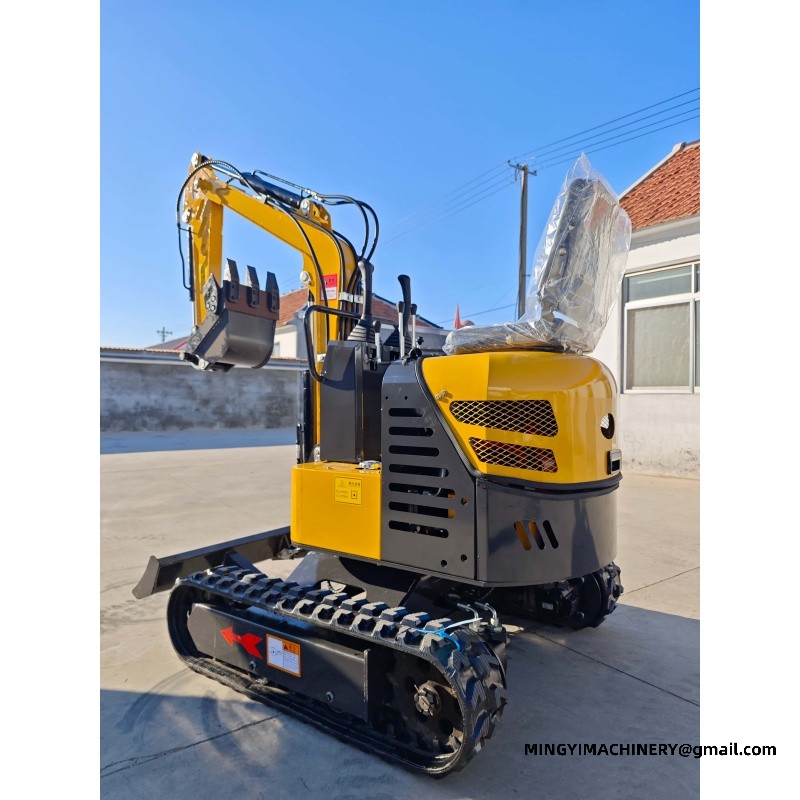
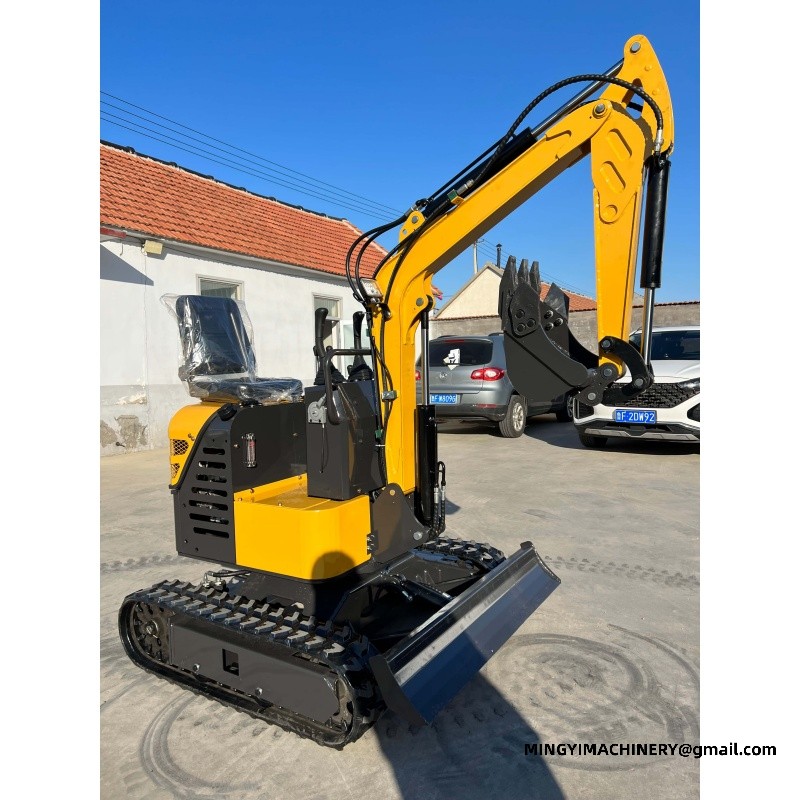
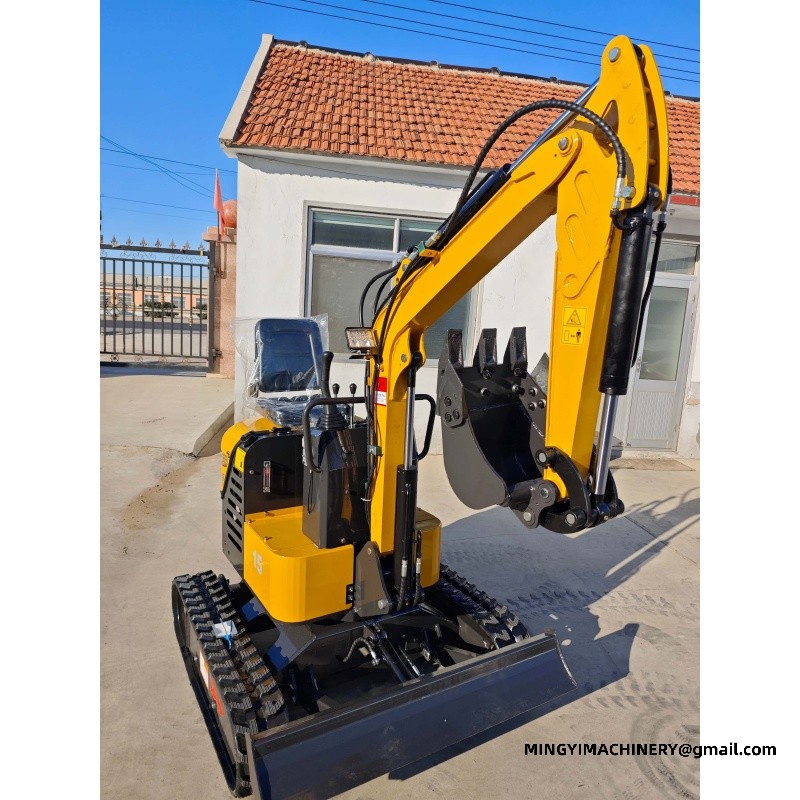
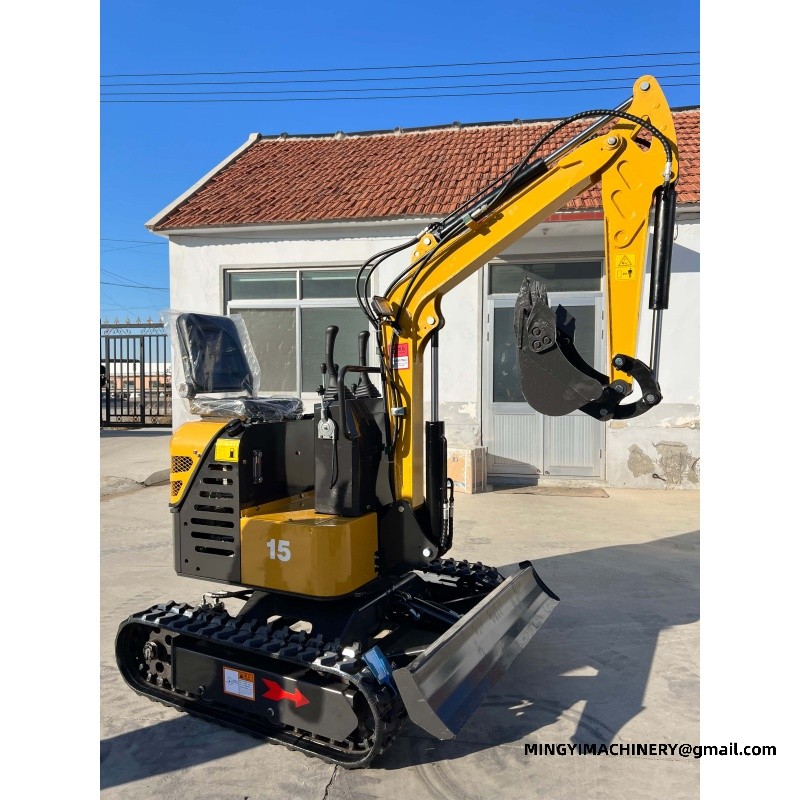
Reference specification — mini excavator range 12W 20-1WL 30-1W 30-2L Operating weight 1200 kg (2645.55 lb) 1900 kg (4188.78 lb) 2900 kg (6393.41 lb) 2400 kg (5291 lb) Transport size (L×W×H) 2200 × 930 × 2250 mm 2550 × 1100 × 2200 mm 3000 × 1250 × 2780 mm 2800 × 1500 × 2500 mm Max digging depth 1630 mm (64.17 in) 1800 mm (70.87 in) 2200 mm (86.61 in) 2200 mm (86.61 in) Max digging height 2750 mm (108.27 in) 2820 mm (111.02 in) 3400 mm (133.86 in) 2900 mm (114.17 in) Max dumping height 1960 mm (77.17 in) 2050 mm (80.71 in) 2400 mm (94.49 in) 2100 mm (82.68 in) Max digging radius 2900 mm (114.17 in) 3050 mm (120.08 in) 4000 mm (157.48 in) 3330 mm (131.1 in) Max digging distance 2100 mm (82.68 in) 2300 mm (90.55 in) 2800 mm (110.24 in) 2700 mm (106.3 in) Minimum turning radius 1300 mm (51.18 in) 1450 mm (57.09 in) 2000 mm (78.74 in) 1555 mm (61.22 in) Travel speed 3 km/h (1.86 mph) 5 km/h (3.11 mph) 5 km/h (3.11 mph) 7 km/h (4.35 mph) Gradeability 30° 30° 30° 30° Fuel consumption 1-1.3 L/h (0.264—0.343 gal) 2-3 L/h (0.528—0.793 gal) 2-3 L/h (0.528—0.793 gal) 2-3 L/h (0.528—0.793 gal) Fuel tank capacity 10 L (2.64 gal) 16 L (4.23 gal) 16 L (4.23 gal) 16 L (4.23 gal) Hydraulic oil tank 16 L (4.23 gal) 18 L (4.76 gal) 20 L (5.28 gal) 18 L (4.76 gal) Dozer blade lift height 180 mm (7.09 in) 180 mm (7.09 in) 420 mm (16.54 in) 230 mm (9.06 in) Dozer blade drop depth 210 mm (8.27 in) 210 mm (8.27 in) 210 mm (8.27 in) 280 mm (11.02 in)
Q. What is the equipment in service?
A. An attachment widens the range of jobs a single compact excavator can specification and win, which is why the working set matters as much as the base machine. The quick coupler makes the changeover a minute job at the trench edge, and mechanical tools need no hydraulic lines at all. MINGYI builds the 08, 12 and 18 models covering the 0.8 to 6 tonne class, and the excavator is where that range meets concrete breaker.
Q. How do I know which attachment my machine can run?
A. Compare the carrier hydraulic flow with what the attachment asks for, and the lifting moment with what it weighs at full reach. Lower-flow carriers still run buckets, rakes and mechanical tools; hungry attachments call for the high-flow option, and MINGYI confirms the pairing before the order ships.
Q. Which models does MINGYI build?
A. The 08, 12 and 18 models cover the 0.8 to 6 tonne class with engine, track, cab and attachment options across the range - dealer programmes can mix models in one shipment, and each concrete breaker machine is confirmed on its own build sheet.
Reading the early symptoms on this class of machine
Temperature and pressure are the two things worth watching. The unit in daily use that runs hotter than it used to, or whose pressure has drifted, is reporting a problem that is still simple to fix.
Planning the season around a machine of this size
Seasonal work rewards a machine that can change duty. Through the year the equipment on site may move from one task to another, and the attachment list should be chosen for the whole year rather than for the first job.
E-mail : sales@mingycn.com
LINE ( ID ): mingyicn
Related pages
mini excavator bucket options · mini excavator for demolition · Front End Loader Log Grapple: Section Widths and Pin Geometry · Mini Excavators









