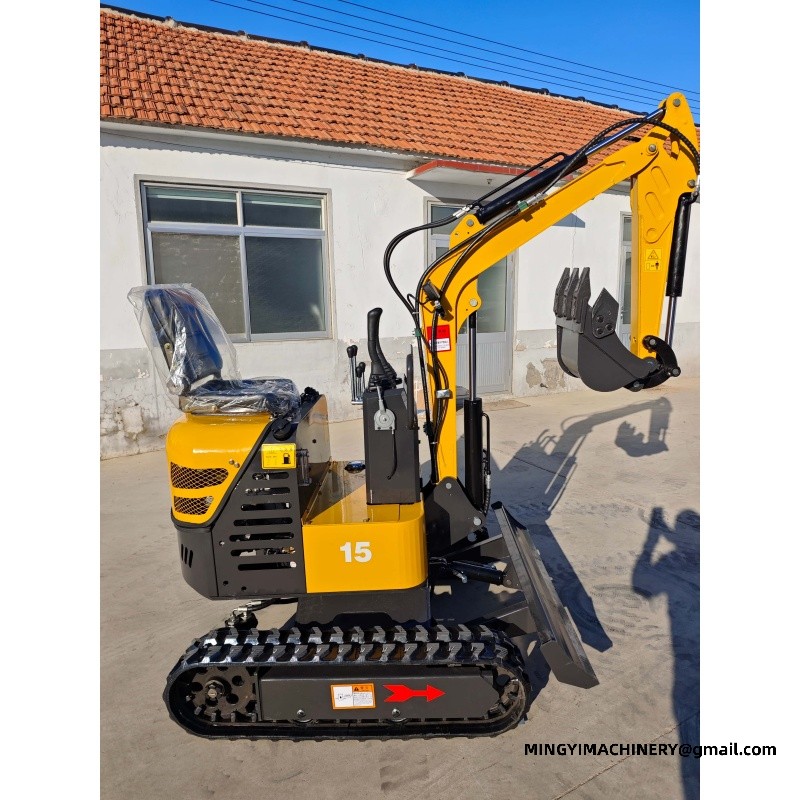
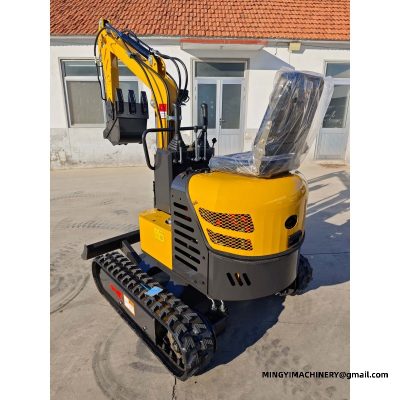
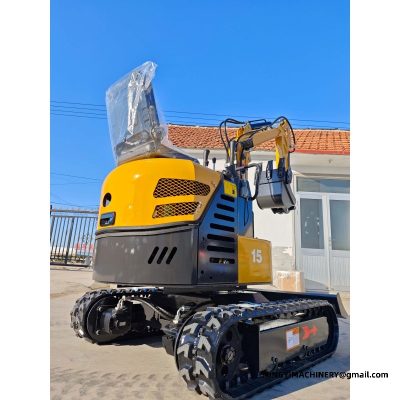
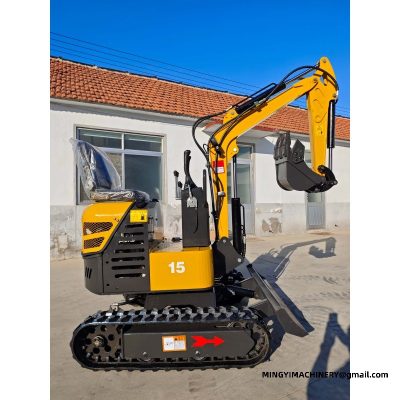
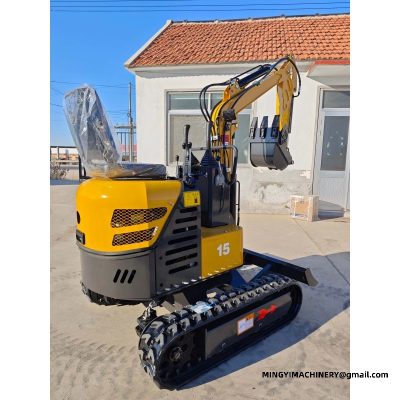
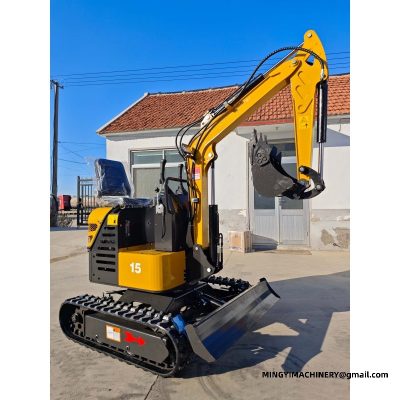
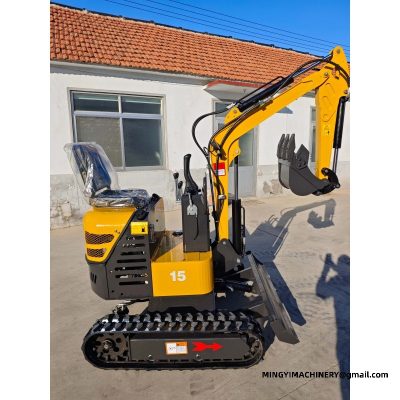
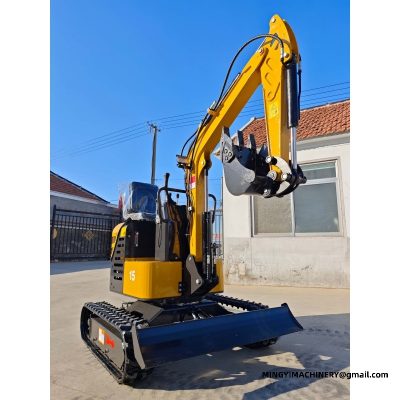
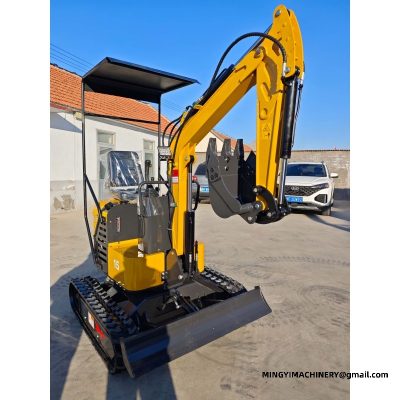
An orchard asks for a machine that is narrow enough to pass between rows and gentle enough not to cut up the ground under the trees. A compact crawler excavator in the mini class suits that combination better than a larger machine that cannot enter the block.
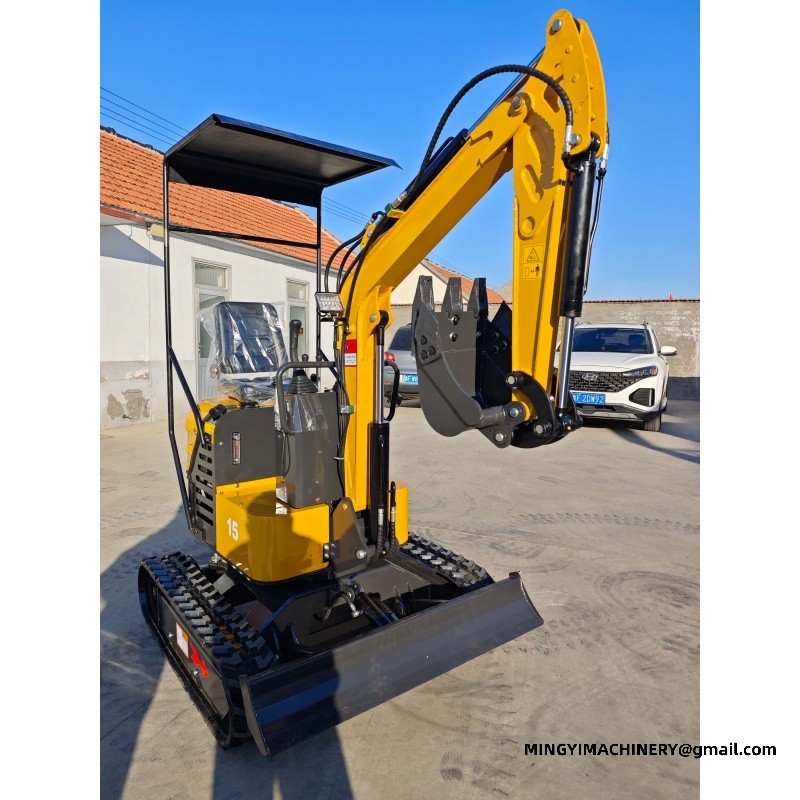
MINGYI builds mini excavators that orchard owners use for trenching, drainage and general clearing, with the specification set to the row spacing and the soil on the site.
Orchard duties for a compact excavator
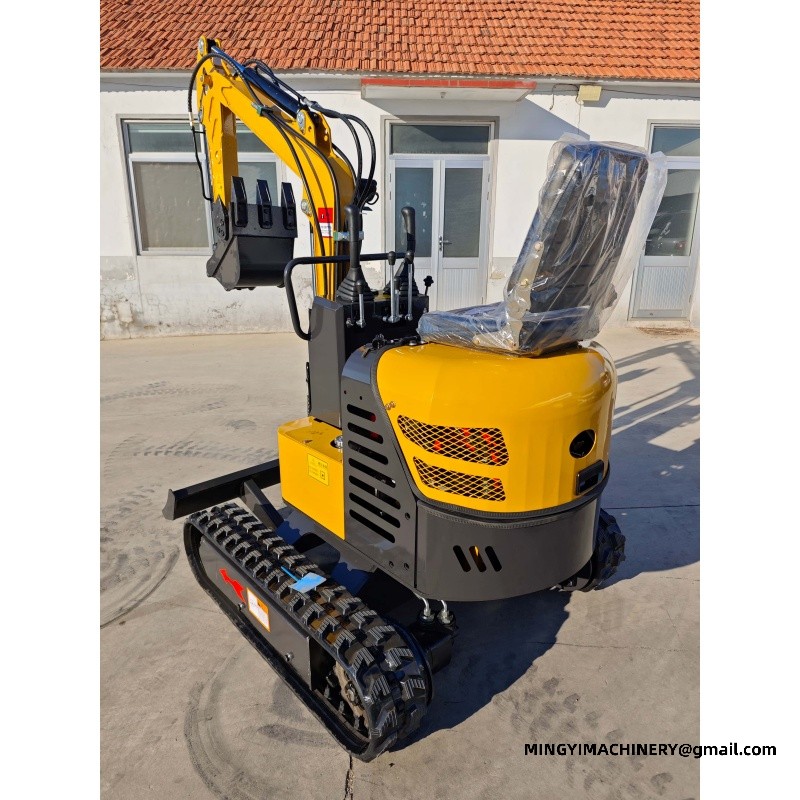
The work in an orchard is a mix of small, repeated tasks. Digging drainage runs between rows, clearing fallen timber, shaping terraces on sloping ground and opening planting pits are all handled by a machine that can move without damaging the trees.
Because the rows are close, the machine spends much of its time turning and repositioning. A compact tail swing helps here, letting the excavator work under branches without the counterweight swinging into a trunk.
Track and attachment choice between orchard rows
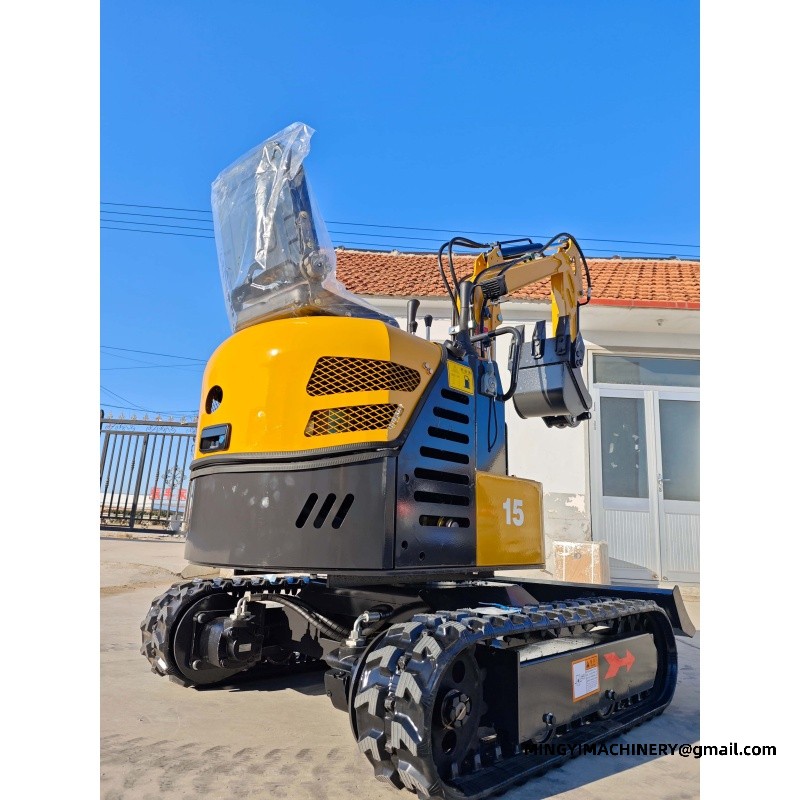
Rubber tracks are the usual choice in a working orchard. They spread the load and leave the grass and the soil surface in better condition than bare steel, which matters when the machine crosses the same ground several times a season.
Attachment choice follows the season. A tilting bucket shapes and levels between trees, an auger opens planting or post holes, and a grab or rake clears prunings and debris without a second machine being brought in.
An orchard machine is judged over a whole season, not a single job. Matching the tracks, the tail swing and the attachments to the way the block is worked keeps the excavator useful from pruning through to harvest.
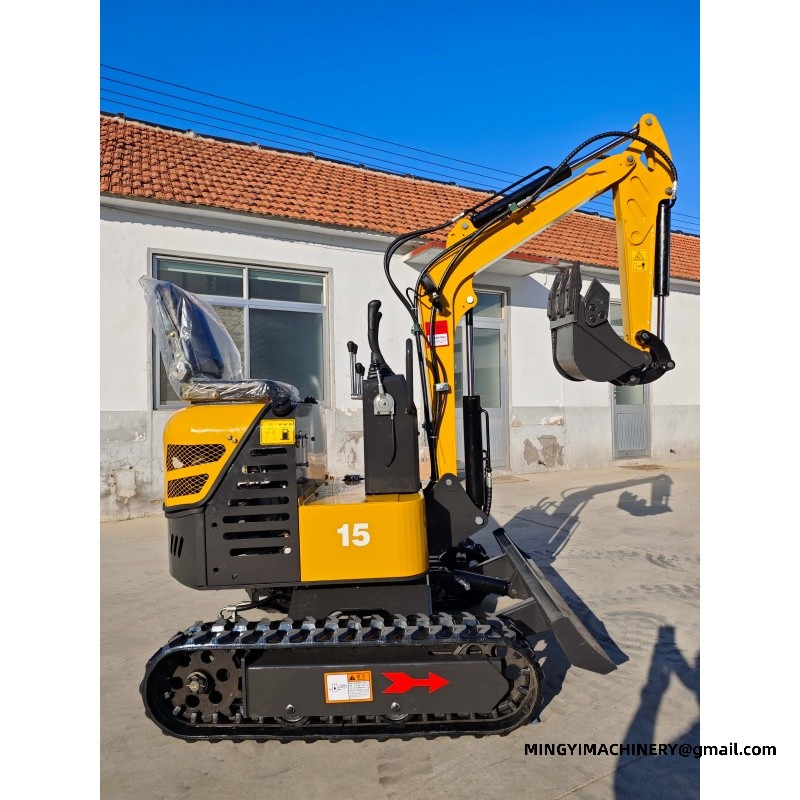
Working on slopes and uneven ground with mini excavator for orchard work Slope work is a stability question before it is a traction question. Knowing the gradient the excavator is rated for, and working across rather than straight up where the ground allows, removes most of the risk. Planning the direction of travel helps. Working so that the This class of machine is stable under load and not required to turn on a slope is a decision made before the job starts, not a correction made during it. Matching mini excavator for orchard work to ground conditions Soft ground is a flotation problem, not a power problem. The unit in daily use on wide rubber tracks crosses lawn, sand and cultivated soil that would stop a narrower machine or a wheeled unit of the same capacity. Mixed sites are common and argue for a compromise specification. Most buyers choose rubber for a machine of this size and accept the wear, unless the majority of the work is on material that will damage it. Running mini excavator for orchard work in a rental fleet Rental fleets buy for utilisation, not for a single job. The equipment on site with a quick coupler and a common attachment standard is hired more often because it suits more of the calls that come in. Fleet buyers also weigh transport. The machine itself that a customer can tow on a normal licence and a standard trailer is a hire that does not need a delivery truck, which changes how often it goes out. What owners should plan for beyond the mini excavator for orchard work Purchase decision is the visible part of the effort. Fuel, filters, tracks or tyres, the operator and the transport between sites are the items that decide what the model in question actually demands over a few seasons, and they are worth listing before the order. The useful comparison is demand per working hour, not demand per machine. The machine in that duty that works more hours a year spreads its standing takes over more output, which is why utilisation usually matters more than the invoice figure. Getting mini excavator for orchard work through a narrow gap The first question on most job lists is whether the machine can reach the work at all. The unit on the job is chosen against the narrowest point on the route - a garden gate, a doorway, a gap between two walls - because a machine that arrives and then cannot pass loses a day, not an hour. Contractors who buy a machine built for the work normally have one job in mind that nothing else reaches. The purchase order follows the access measurement, not the other way round, and the build sheet is then settled around it. OEM and fleet customisation of mini excavator for orchard work Distributors and rental fleets usually need the machine to look like theirs. Paint, decals, seat colour and attachment branding can be specified on the equipment in service at build time rather than applied after import. Documentation can be prepared to suit the importer. Manuals, parts books and decal sets for the excavator can be supplied with the buyer's own branding where the order size justifies it. Operator technique for this class of machine Output on a compact machine comes from placement rather than power. An experienced operator keeps the unit in daily use working inside the swing arc, positions once and digs a full run instead of repositioning for every bucket. Stability is the third. A machine of this size working across the tracks rather than over the corners keeps the machine steady and the undercarriage loaded evenly, which shows up as track life at the end of the season. Working the equipment on site through the seasons Weather decides which days are productive. Rain turns some ground unusable and cold changes how the machine itself starts and warms up, so planning the wet months around maintenance is more useful than planning around output. Heat and dust are as limiting as rain. Air intake condition and cooling cleanliness decide how the model in question behaves in a dry season, and both are checked in a minute rather than repaired later. Landscaping and ground care with the machine in that duty Grass cutting heads, rakes and tillers extend the unit on the job into ground care. The same carrier that digs a border in spring can cut and clear the same area later in the season. On soft landscape work the surface is the constraint. A machine built for the work on rubber tracks crosses turf without stripping it, which is why the same jobs are not given to a wheeled machine. Trenching work with the equipment in service Service trenches are the most common reason the excavator is hired. Water, sewage, cable and gas runs are narrow, shallow and often close to existing services, which is exactly the work a full-size machine cannot do safely. Depth control matters more on service work than speed. This class of machine working beside live services is chosen because it can be placed precisely and stopped instantly, which is what the job actually requires. Working near live services with the unit in daily use The risk on utility work is not machine power but machine placement. A machine of this size that fits the working width leaves the surrounding ground undisturbed, which keeps the trench stable and the reinstatement small. Utility crews specify the equipment on site with a narrow bucket and good visibility for exactly this reason: the machine has to stop at the service, not at the edge of the operator's view. Specification data for the machine itself Where the model in question is being specified for a job list, the table below gives the factory figures that matter most: what the machine weighs, how deep and how far it works, and what it measures on a trailer. These are the reference figures for the machine in that duty. MINGYI confirms the final build sheet, including engine and attachment choices, against the destination and the job list before production. Road repair generates short, interrupted jobs - a patch, a drainage connection, a kerb line. The unit on the job is economical here because it travels on a small trailer and starts working minutes after arriving. Breaking out a failed slab and backfilling the same hole in one visit is normal work for a machine built for the work. The breaker and the bucket come off the same coupler, so the road is reopened the same day.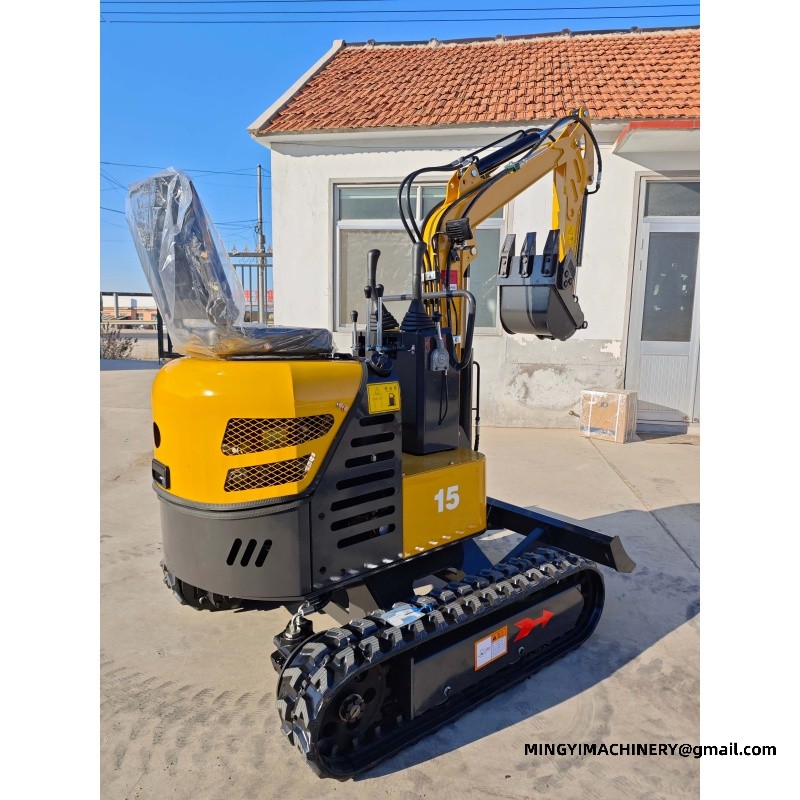
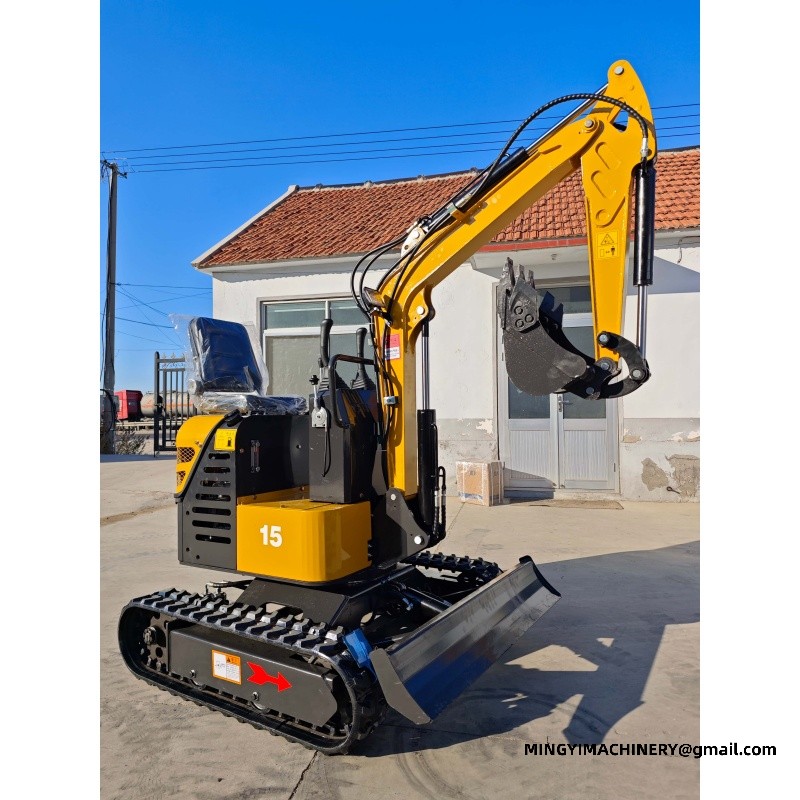
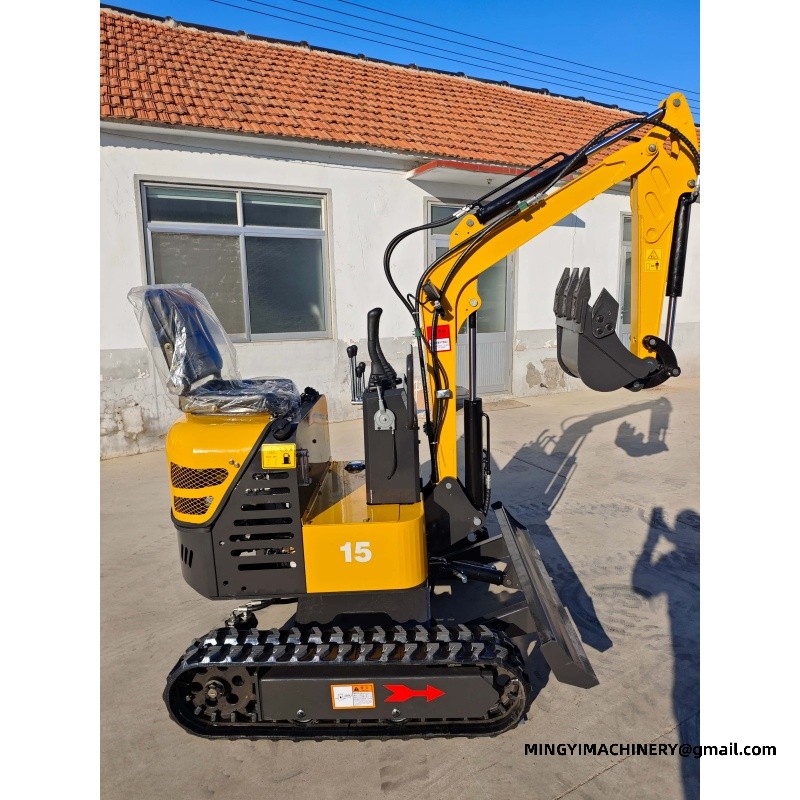
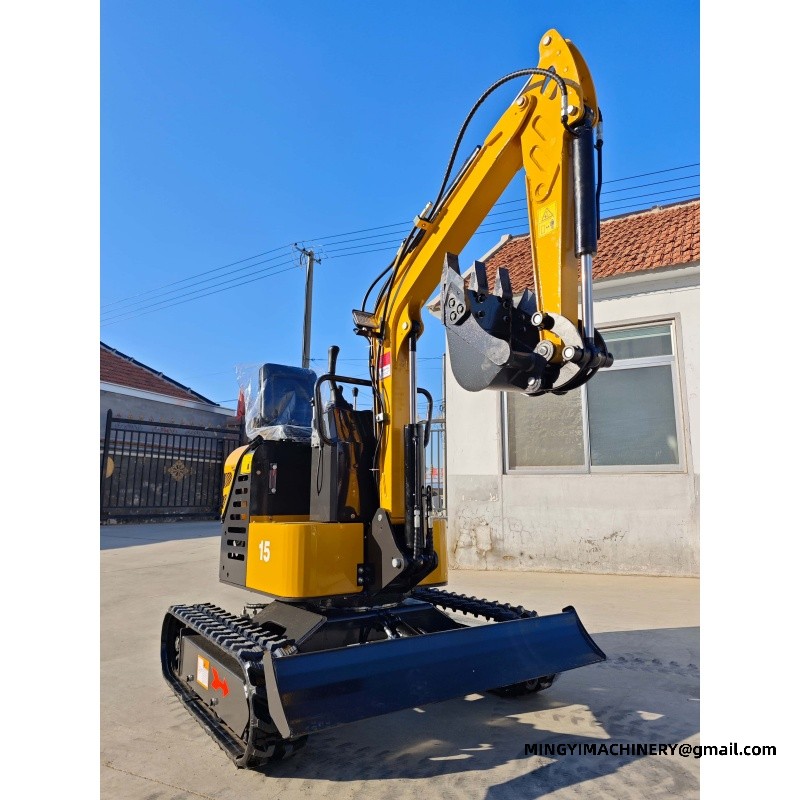
Reference specification — mini excavator range 12W 20-3W 15L 25L Operating weight 1200 kg (2645.55 lb) 1900 kg (4188.78 lb) 1400 kg (3086.47 lb) 2200 kg (4850.17 lb) Transport size (L×W×H) 2200 × 930 × 2250 mm 2550 × 1100 × 2200 mm 2200 × 930 × 2250 mm 3000 × 1300 × 2700 mm Max digging depth 1630 mm (64.17 in) 1800 mm (70.87 in) 1700 mm (66.93 in) 2300 mm (90.55 in) Max digging height 2750 mm (108.27 in) 2820 mm (111.02 in) 2750 mm (108.27 in) 3100 mm (122.05 in) Max dumping height 1960 mm (77.17 in) 2050 mm (80.71 in) 1960 mm (77.17 in) 2050 mm (80.71 in) Max digging radius 2900 mm (114.17 in) 3050 mm (120.08 in) 2900 mm (114.17 in) 3900 mm (153.54 in) Max digging distance 2100 mm (82.68 in) 2300 mm (90.55 in) 2300 mm (90.55 in) 3100 mm (125.05 in) Minimum turning radius 1300 mm (51.18 in) 1450 mm (57.09 in) 1450 mm (57.09 in) 1800 mm (70.87 in) Travel speed 3 km/h (1.86 mph) 5 km/h (3.11 mph) 3 km/h (1.86 mph) 7 km/h (4.35 mph) Gradeability 30° 30° 30° 30° Fuel consumption 1-1.3 L/h (0.264—0.343 gal) 2-3 L/h (0.528—0.793 gal) 1-1.3 L/h (0.264—0.343 gal) 2-3 L/h (0.528—0.793 gal) Fuel tank capacity 10 L (2.64 gal) 16 L (4.23 gal) 10 L (2.64 gal) 16 L (4.23 gal) Hydraulic oil tank 16 L (4.23 gal) 18 L (4.76 gal) 16 L (4.23 gal) 18 L (4.76 gal) Dozer blade lift height 180 mm (7.09 in) 180 mm (7.09 in) 180 mm (7.09 in) 230 mm (9.06 in) Dozer blade drop depth 210 mm (8.27 in) 210 mm (8.27 in) 210 mm (8.27 in) 280 mm (11.02 in)
Q. What is the equipment in service?
A. Agricultural digging protects the asset under the machine as much as the work in front of it: soil structure, roots and irrigation lines all decide how the digger is set up. Between farms the machine moves by trailer, and the transport pages cover ramp and tie-down practice. For orchard work applications the practical route is to send the job list to the factory and let the build sheet answer it - which is exactly what this page invites.
Q. Will it damage crop ground?
A. Not when set up for it: rubber tracks and a light footprint are why the farm pages pair track choice with boom reach. Plan the runs along the headland and the field looks the same after the machine as before.
Q. Does MINGYI supply attachments with the machine?
A. Yes - buckets, breakers, augers, rakes and the rest of the working set ship with the carrier, matched to the hydraulic flow and the coupler. For orchard work the package is confirmed on the build sheet, so machine and tools arrive together and start work together.
A second operator for the excavator
Different operators suit different work. The person who is quickest with this class of machine on open ground is not always the one who is safest in a confined space, and having both available is a genuine advantage.
Pre-delivery inspection before the unit in daily use leaves the shop
A machine should be inspected while it is still on our floor rather than after it lands. For a machine of this size that means the engine is run to temperature, the hydraulics are cycled through full travel, and every function is checked against the build sheet before the crate is closed.
Wear items and spares worth holding for the equipment on site
Wear items are predictable once the machine has settled in. After the first service interval the pattern on the machine itself is visible, and the parts that were replaced become the parts that are kept.
E-mail : sales@mingycn.com
LINE ( ID ): mingyicn
Related pages
mini excavator for farm use · mini excavator for landscaping projects · Wheel Loader Manufacturer: Five Figures to Ask For · Mini Excavators









