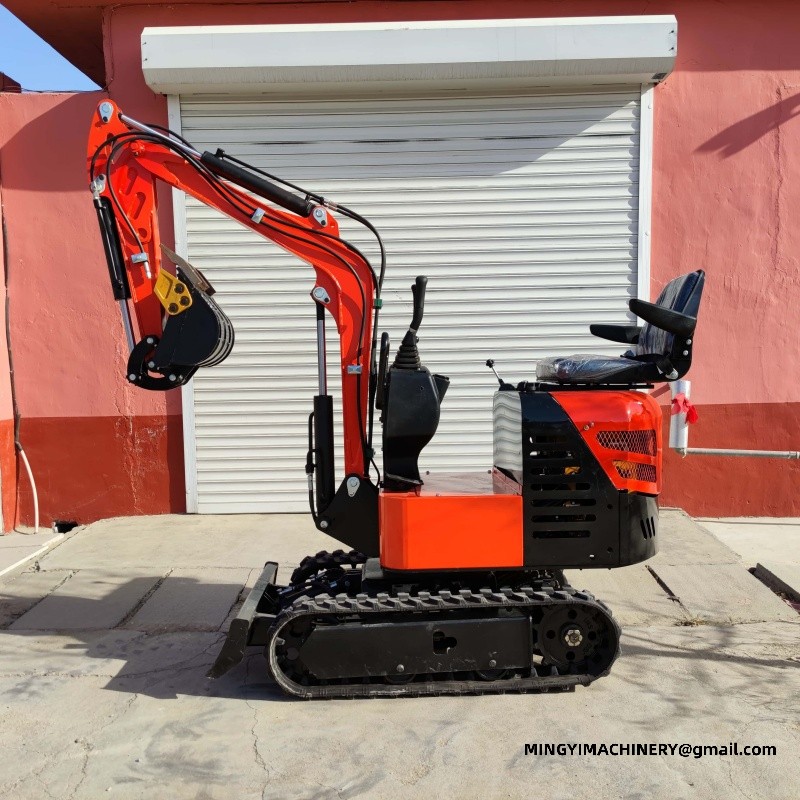
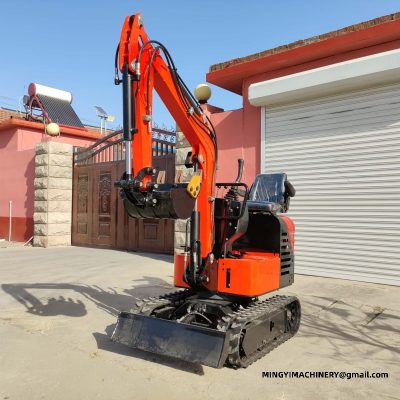
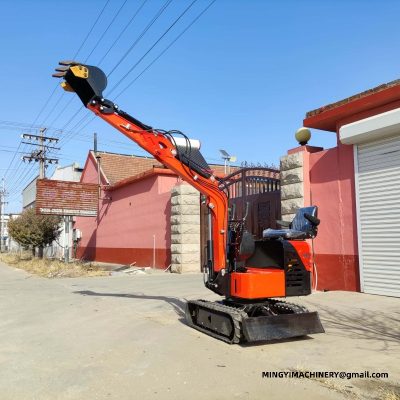
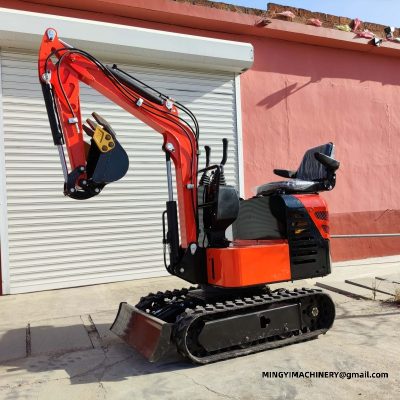
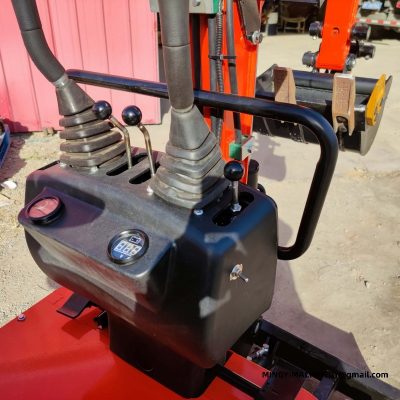
Landscaping moves material in small quantities and to a fine tolerance. Levels are set for drainage and appearance at the same time, so a machine that digs quickly but leaves a rough surface simply shifts the work to a rake and a shovel.
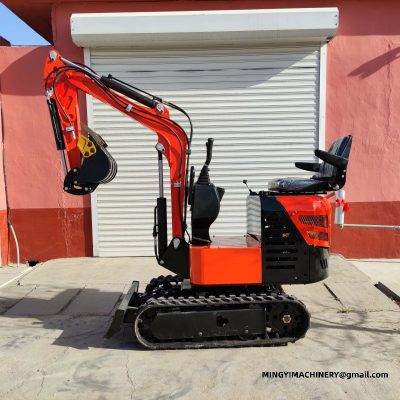
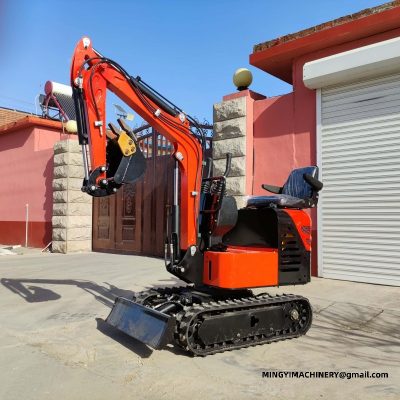
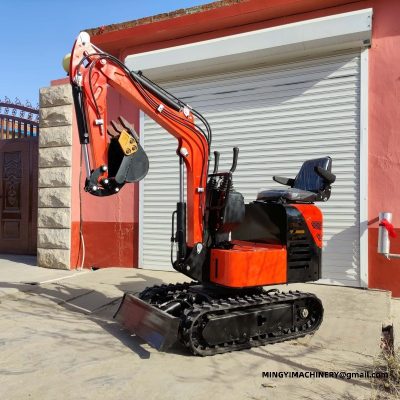
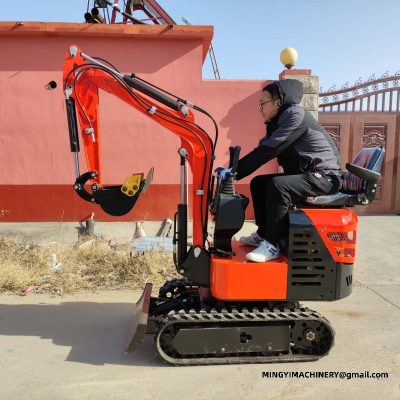
MINGYI builds compact crawler excavators in the 0.8 to 6 tonnes class for landscape work, produced to order. The track type and the attachment package matter as much as the machine size here, and both are fixed at the ordering stage.
Shaping ground for gardens, terraces and lawns
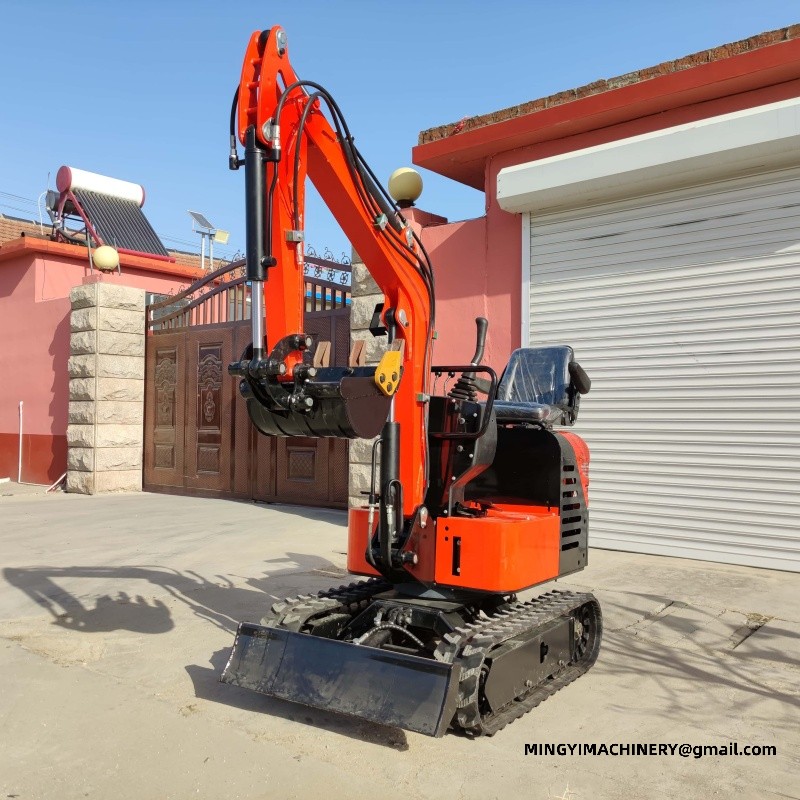
The first task is usually to cut or build a level platform, working to pegged spot heights rather than to eye. A tilting bucket allows the operator to grade as the machine moves, which reduces the number of passes across finished ground.
Where the scheme includes new drainage or irrigation, narrow trenches are cut at the same time. A quick coupler lets the digging bucket be swapped for a narrow one without leaving the seat, keeping the whole operation on one machine.
Protecting finished surfaces while working
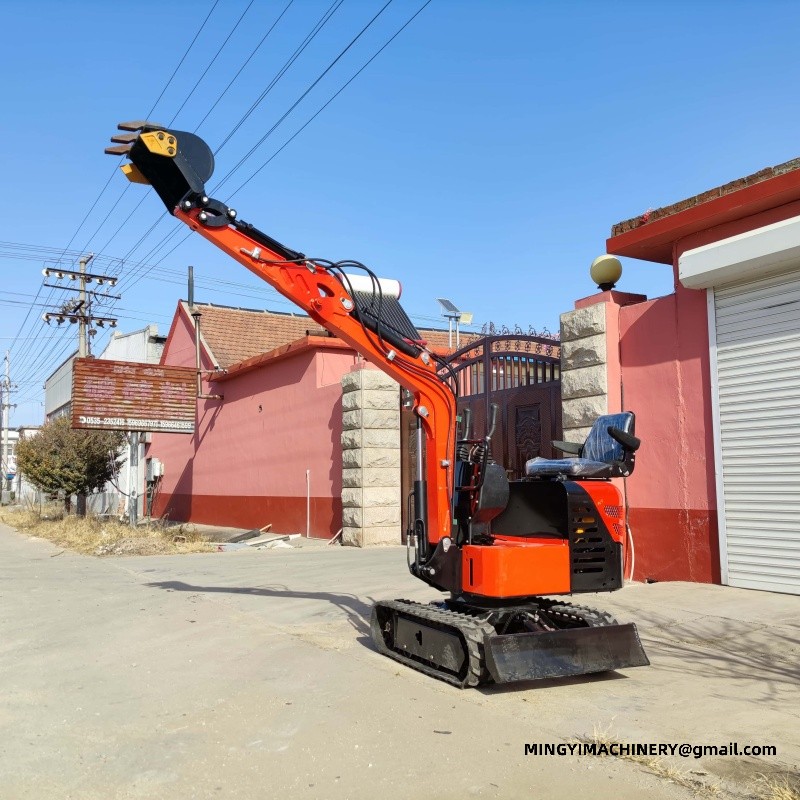
Much of the work happens after paving, turf or planting is already in place, and the machine has to cross it without leaving a mark. Rubber tracks distribute load over a wider area and are the usual choice for this stage of a scheme.
A grass rake or rotary tiller fitted to the same carrier prepares beds and lawn areas without bringing in extra plant. Each attachment is recorded against the machine so the correct mounting and hydraulic connections are supplied with it.
Good landscape work is measured by what is not disturbed. A compact excavator with rubber tracks and a small attachment set does the earthmoving and the fine shaping in one visit, leaving the finished parts of the scheme untouched.
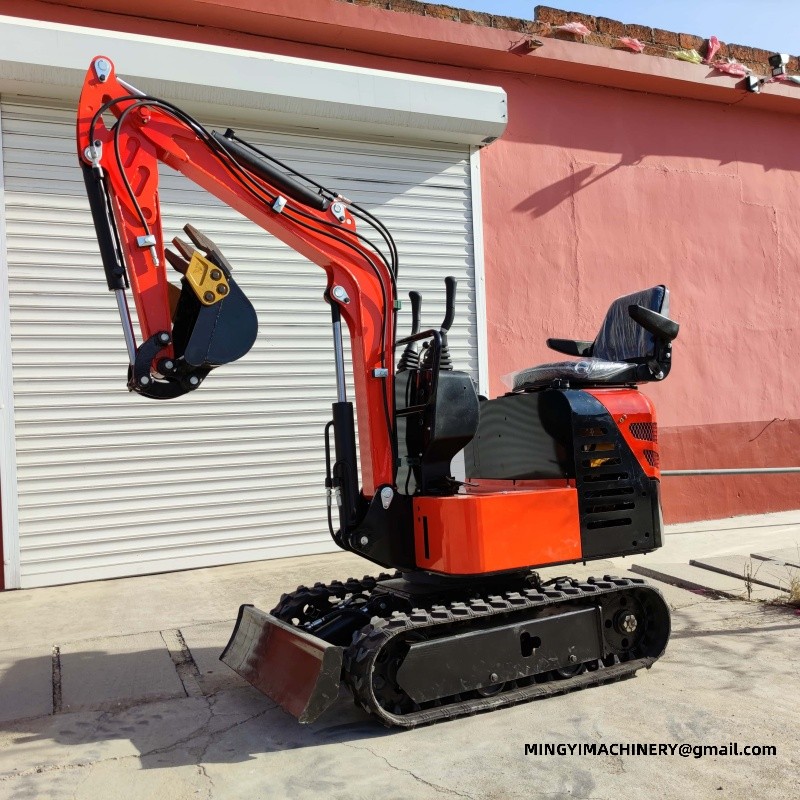
Attachments that turn mini excavator for landscaping projects into several machines Attachment lists are best written before delivery. Specifying the excavator with the tools the job list needs avoids the work and delay of adding hydraulics later, and a quick coupler makes the swap a few minutes instead of a workshop job. Most of the daily variety on this class of machine comes from the attachment rack rather than from the machine itself. Bucket, breaker, auger, ripper, rake and grab cover the large majority of the work a contractor will see. Hydraulic circuits on a mini excavator for landscaping projects Flow and pressure are matched to the tool, not to the machine size. Asking for the attachment list first means the unit in daily use leaves the factory with circuits that suit the heaviest tool the buyer intends to run. Hydraulic specification is easier to settle at build time than to correct later. A machine of this size delivered without auxiliary lines can still dig, but every additional tool becomes a retrofit project. Interior and light demolition with mini excavator for landscaping projects Interior demolition is an access and a weight question. The equipment on site that fits through a doorway and works on a suspended floor does jobs that would otherwise be done by hand or by a larger machine that cannot enter. Dust, debris clearance and floor loading all argue for a compact machine indoors. The machine itself spreads its weight over a wider track footprint than a wheeled machine of similar capacity. Working near live services with mini excavator for landscaping projects Digging near water, gas and cable is a precision job. The model in question is used here because the operator can work in short controlled cuts and because the machine can be positioned without driving over the run being exposed. The risk on utility work is not machine power but machine placement. The machine in that duty that fits the working width leaves the surrounding ground undisturbed, which keeps the trench stable and the reinstatement small. Orchard, vineyard and farm use of mini excavator for landscaping projects Ditching, fertilising and drainage on farmland suit the unit on the job because the work is spread over a large area in short bursts. The machine travels behind a pickup and works where it stops. Farms also use a machine built for the work for general maintenance - clearing a watercourse, repairing a track, loading a spreader. One carrier with a few attachments covers most of the jobs that would otherwise wait for a contractor. Municipal and public works with mini excavator for landscaping projects Municipal crews work on streets, footpaths and parks where the public is present. The equipment in service is specified because it occupies little space, works inside a small exclusion zone and can be moved on a standard trailer. Drainage repair, tree planting, footway reconstruction and cemetery work are all within the range of the excavator. The jobs are small individually and continuous across the year. Working this class of machine in confined spaces Confined sites are decided by dimensions. Overall width, tail swing and the space needed to work the arm are what let the unit in daily use operate inside a building, between walls or in a courtyard. Ventilation is the other indoor constraint. Running a machine of this size inside a closed structure needs air movement, and that is a planning item rather than something to discover after the first hour. Canopy or enclosed cab on the equipment on site The cab decision follows the climate and the hours. Operators working a full shift in the machine itself benefit from a sealed cab with wipers and heating; operators stepping on and off every few minutes usually prefer the canopy for the visibility and the quick exit. Enclosure also changes noise and dust exposure. A sealed cab on the model in question keeps dust out on dry sites and lets the machine work through weather that would otherwise stop a canopy machine for the day. Daily checks and maintenance on the machine in that duty Daily maintenance on the unit on the job is a short list: engine oil level, coolant, track tension, hydraulic oil level and a look at the hoses. Ten minutes at the start of the shift prevents most of the failures that stop a machine. Track tension is the item most often neglected. A machine built for the work run with slack tracks wears the undercarriage and can throw a track on a turn; run too tight, the same components wear from the other direction. Trenching work with the equipment in service Trench quality depends on the bucket width and the operator, not on machine size. The excavator with a narrow bucket and a swing boom cuts a clean run along a boundary without disturbing the ground either side of it. Depth control matters more on service work than speed. This class of machine working beside live services is chosen because it can be placed precisely and stopped instantly, which is what the job actually requires. Operator technique for the unit in daily use Output on a compact machine comes from placement rather than power. An experienced operator keeps a machine of this size working inside the swing arc, positions once and digs a full run instead of repositioning for every bucket. The second habit is tool discipline. Running the equipment on site with the right bucket width for the trench means less spoil, less reinstatement and a cleaner job than a wide bucket and a lot of trimming. Parts, service and support for the machine itself Support after delivery is a parts question. Wearing items for the model in question - filters, belts, track components, bucket teeth and pins - are the items a buyer should plan to hold before the first service interval. Engine parts availability usually drives the engine choice. The machine in that duty built with an engine the local network already carries is serviced from stock rather than from an international order. Specification data for the unit on the job Buyers comparing a machine built for the work usually start from four numbers - weight, digging depth, reach and transport width - because those are the ones that decide whether the machine can be delivered and whether it can do the job once it is there. These are the reference figures for the equipment in service. MINGYI confirms the final build sheet, including engine and attachment choices, against the destination and the job list before production. Rental fleets buy for utilisation, not for a single job. The excavator with a quick coupler and a common attachment standard is hired more often because it suits more of the calls that come in. The specification that rents best is usually the simplest one to explain at the counter. This class of machine with rubber tracks, a canopy and a coupler covers the majority of weekend and short-term hires.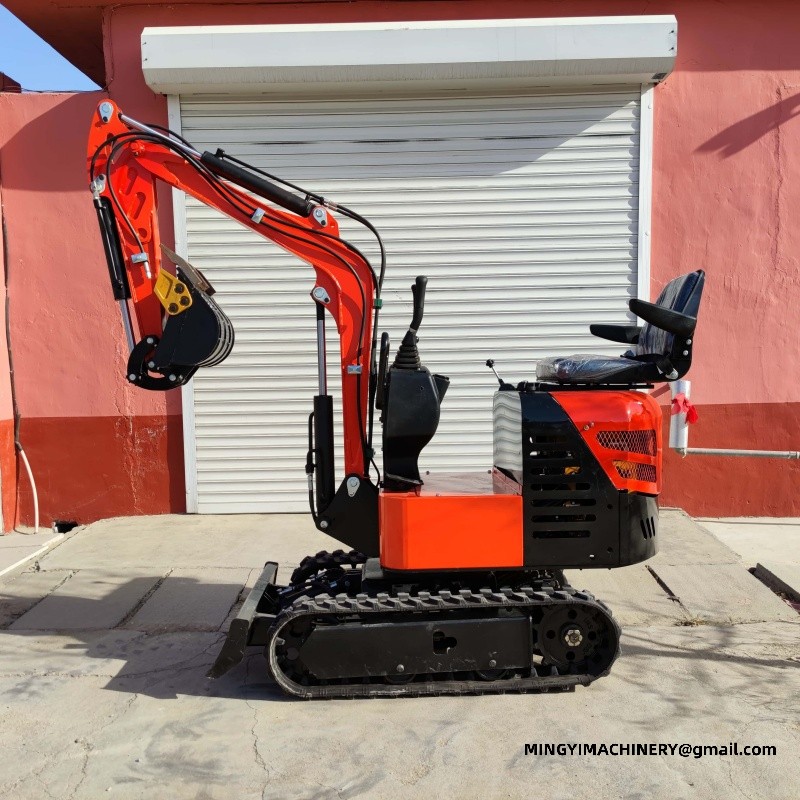
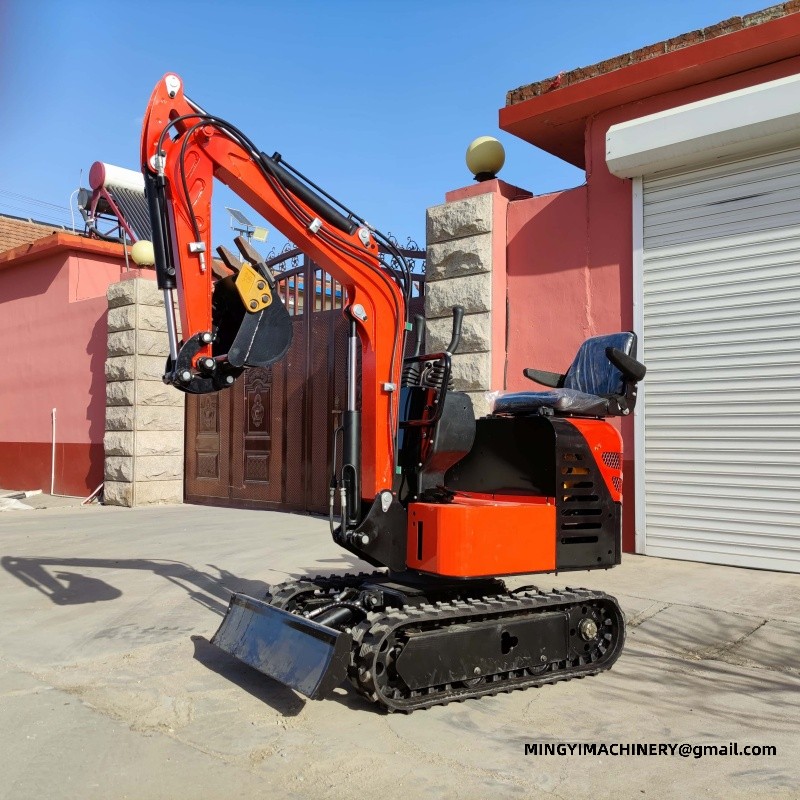
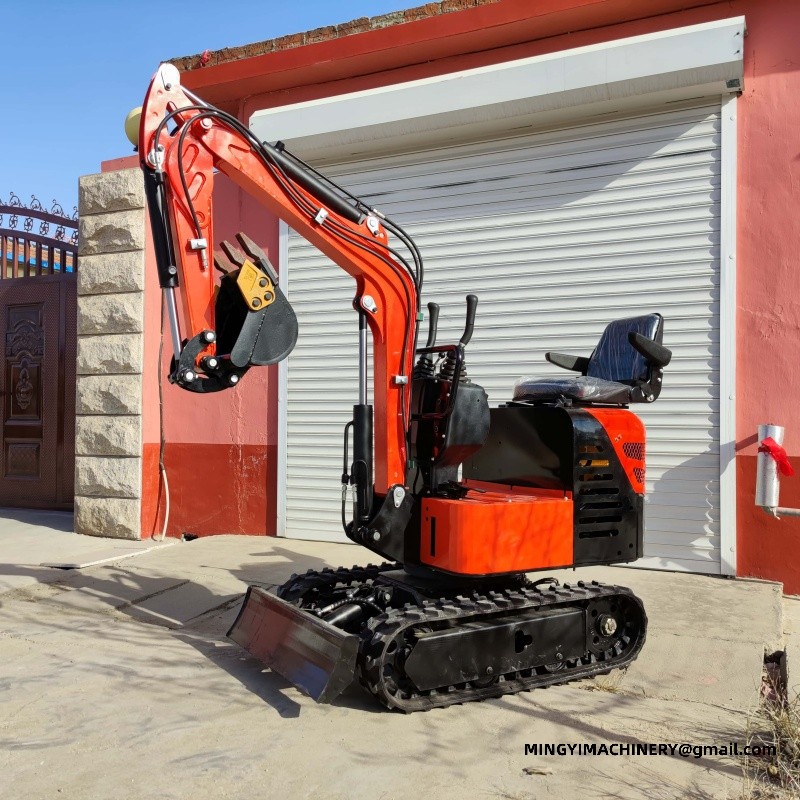
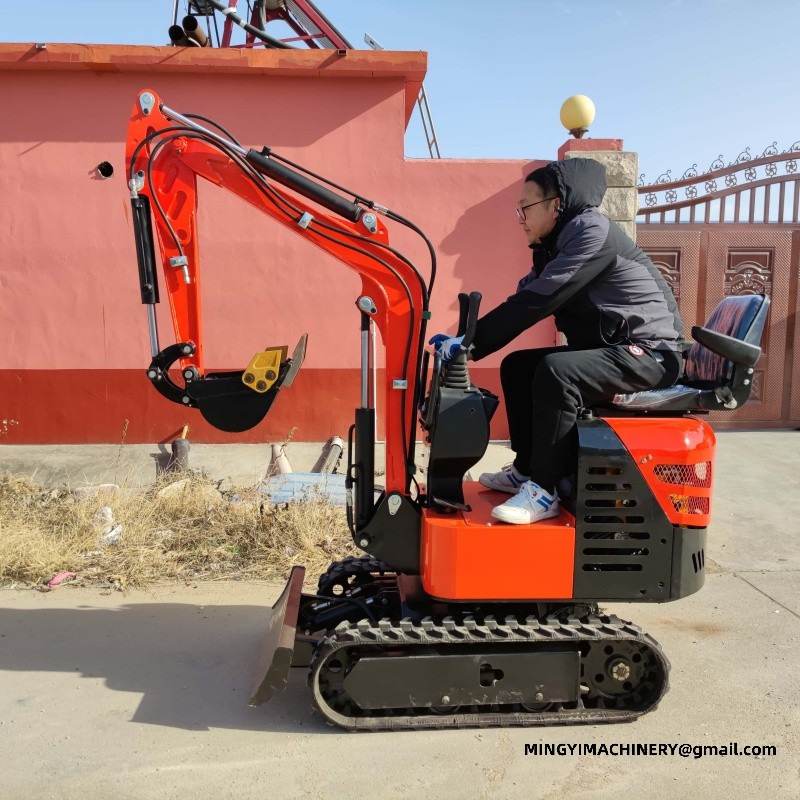
Reference specification — mini excavator range 12W 15W 15L 25L Operating weight 1200 kg (2645.55 lb) 1400 kg (3086.47 lb) 1400 kg (3086.47 lb) 2200 kg (4850.17 lb) Transport size (L×W×H) 2200 × 930 × 2250 mm 2200 × 930 × 2250 mm 2200 × 930 × 2250 mm 3000 × 1300 × 2700 mm Max digging depth 1630 mm (64.17 in) 1630 mm (64.17 in) 1700 mm (66.93 in) 2300 mm (90.55 in) Max digging height 2750 mm (108.27 in) 2750 mm (108.27 in) 2750 mm (108.27 in) 3100 mm (122.05 in) Max dumping height 1960 mm (77.17 in) 1960 mm (77.17 in) 1960 mm (77.17 in) 2050 mm (80.71 in) Max digging radius 2900 mm (114.17 in) 2900 mm (114.17 in) 2900 mm (114.17 in) 3900 mm (153.54 in) Max digging distance 2100 mm (82.68 in) 2100 mm (82.68 in) 2300 mm (90.55 in) 3100 mm (125.05 in) Minimum turning radius 1300 mm (51.18 in) 1300 mm (51.18 in) 1450 mm (57.09 in) 1800 mm (70.87 in) Travel speed 3 km/h (1.86 mph) 3 km/h (1.86 mph) 3 km/h (1.86 mph) 7 km/h (4.35 mph) Gradeability 30° 30° 30° 30° Fuel consumption 1-1.3 L/h (0.264—0.343 gal) 1-1.3 L/h (0.264—0.343 gal) 1-1.3 L/h (0.264—0.343 gal) 2-3 L/h (0.528—0.793 gal) Fuel tank capacity 10 L (2.64 gal) 10 L (2.64 gal) 10 L (2.64 gal) 16 L (4.23 gal) Hydraulic oil tank 16 L (4.23 gal) 16 L (4.23 gal) 16 L (4.23 gal) 18 L (4.76 gal) Dozer blade lift height 180 mm (7.09 in) 180 mm (7.09 in) 180 mm (7.09 in) 230 mm (9.06 in) Dozer blade drop depth 210 mm (8.27 in) 210 mm (8.27 in) 210 mm (8.27 in) 280 mm (11.02 in)
Q. What are the unit in daily use?
A. Landscaping is finishing work: prepare beds, level ground, move trees - then leave a surface the client is happy to look at. Plan the dig so the machine treads where the hard surface will be, and lay boards where the ground is soft. MINGYI builds the 08, 12 and 18 models covering the 0.8 to 6 tonne class, and a machine of this size is where that range meets landscaping projects.
Q. How do you avoid damaging finished ground?
A. Rubber tracks, boards or mats under the machine, and a dig plan that treads where the hard surface will be. A fine-control valve grades to the line on the first pass, which is where the care shows.
Q. What about colours and branding?
A. OEM colours and decals are part of the build: private-label machines carry the buyer brand on the standard MINGYI platform, and the landscaping projects order confirms colours, marks and documents before production starts.
Hot, humid and dusty conditions around the equipment on site
Heat and dust shorten service intervals rather than machine life. In these conditions the filters on the machine itself need attention more often, and the cooling surfaces need to be kept clear to hold the working temperature.
Pre-delivery inspection before the model in question leaves the shop
Inspection is a list, not a glance. Before the machine in that duty is released the fluid levels, belt tension, electrical connections and safety decals are each ticked off, and anything that fails stays in the shop rather than travelling with the machine.
E-mail : sales@mingycn.com
LINE ( ID ): mingyicn
Related pages
mini excavator for foundation work · mini excavator for trench digging · China Wheel Loader Factory: How Each Model Is Built and Checked · Mini Excavators









