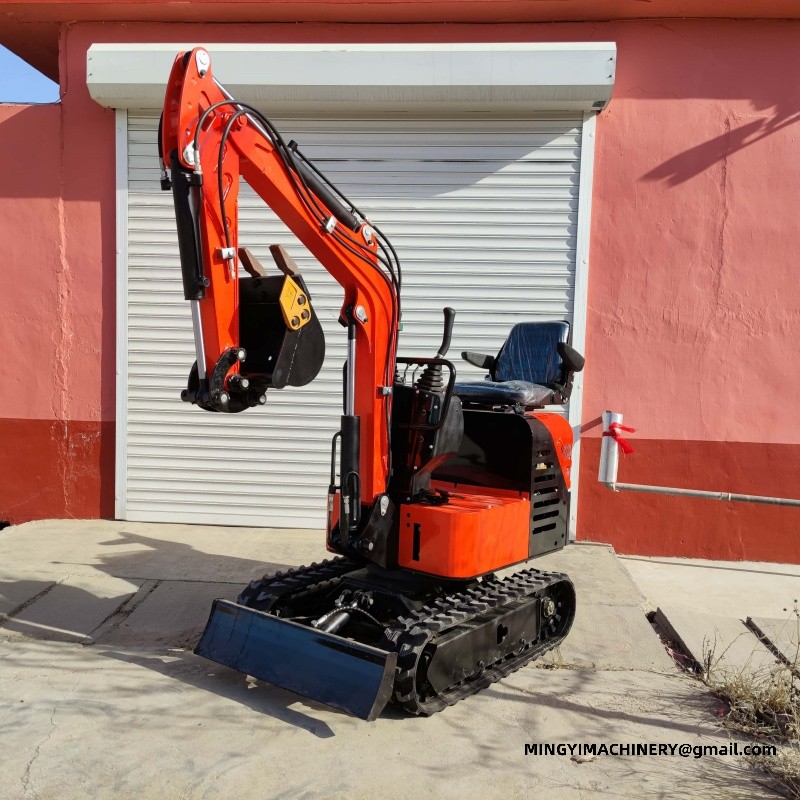
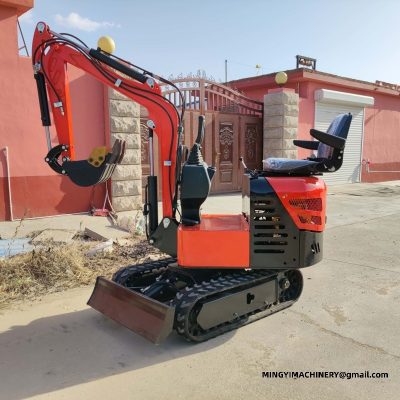
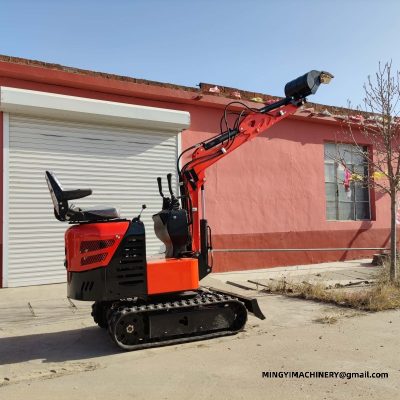
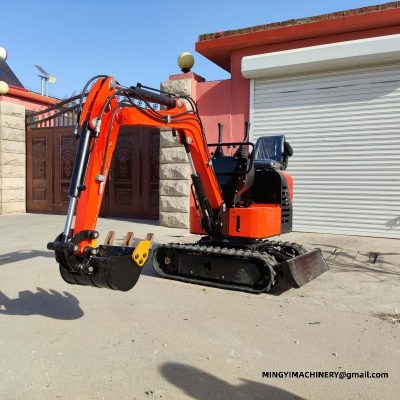
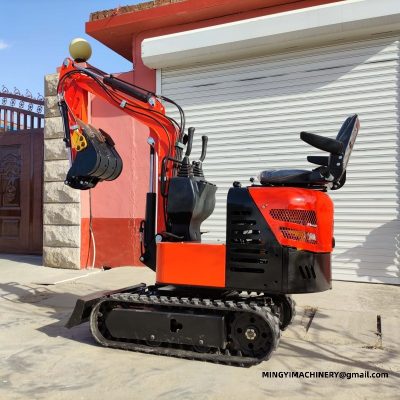
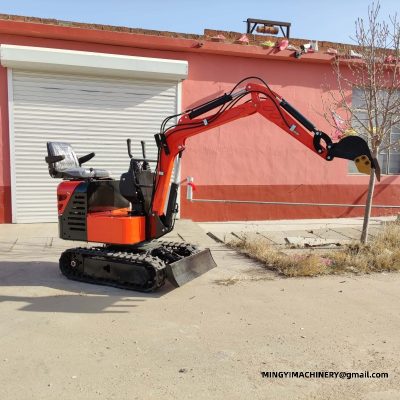
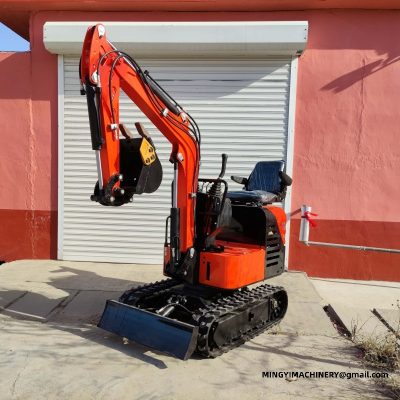
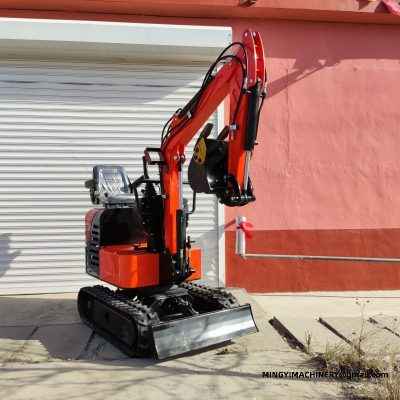
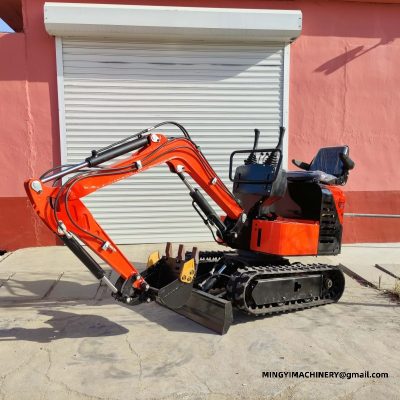
Foundation work covers the whole sequence from the first cut to the finished backfill, and a compact machine can stay on that sequence instead of being swapped between a digger and a loader. MINGYI builds these units to order, so boom form and attachment set follow the foundation type.
This class is a common choice for residential and light commercial foundations, where the excavation is shallow but the access is limited. A retractable undercarriage and a short tail swing let the machine work inside a footprint a wheeled unit could not enter.
Digging to the foundation setting-out
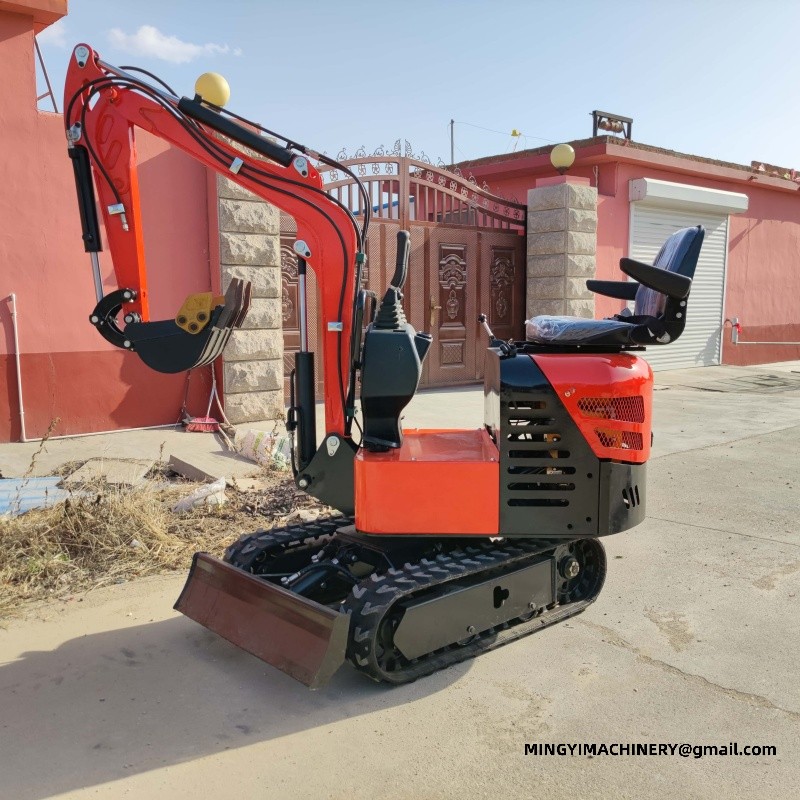
On foundation work the bucket follows pegs and string lines, so the machine has to be stable enough for the operator to cut close to the line without chattering. A well matched dipper keeps the cutting edge under control through the last pass.
Deepening for a service duct or a lift pit means the same machine has to work below the general formation level. An extended boom lets that be done without bringing in a larger unit later.
Foundation attachments and the backfill that follows
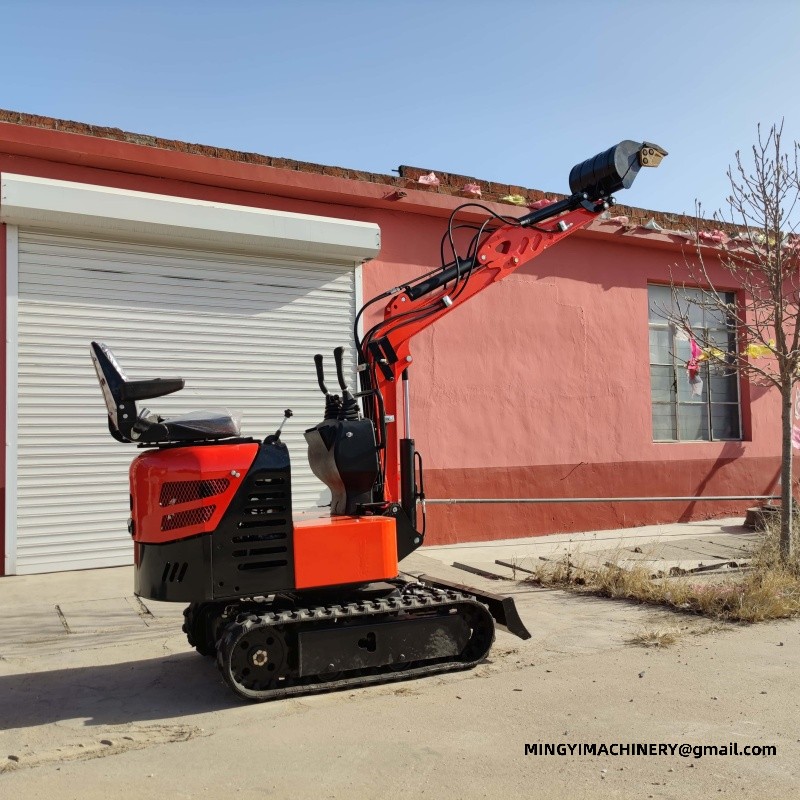
Most foundation packages leave with a digging bucket, a wider clean-up bucket and a coupler. A hydraulic breaker is added where rock or old concrete has to come out first, and a skeleton bucket separates stone from fines.
Backfill is where a compact machine earns its place, since the unit that cut the trench can place spoil in layers and run a compaction wheel over each. That keeps the foundation sequence with one crew.
Choosing a machine for foundation work means matching reach, tail swing and attachment range to the drawings. A compact crawler excavator specified against the foundation type and the site access will hold the line and finish the backfill on the same unit.
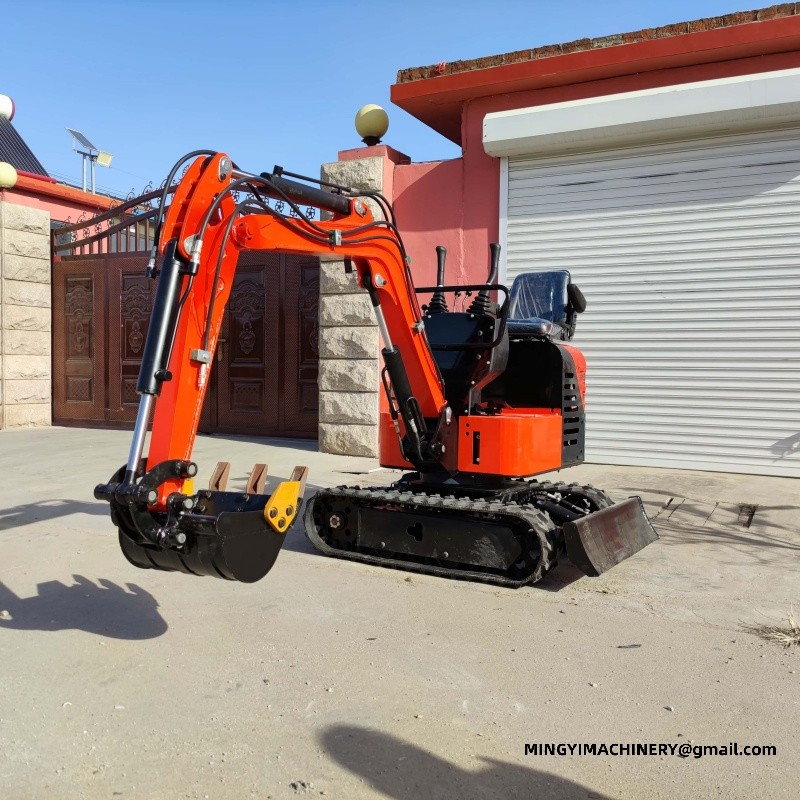
Hiring versus owning a mini excavator for foundation work The choice follows the hours. Work that fills a few weeks a year is usually better hired, while the excavator that would be on site most weeks starts to justify ownership once the transport and booking time is counted. Availability is part of the decision. Owning this class of machine means it is there on the day the ground is ready; hiring means competing for the same machine at the same time as everyone else in the season. Lifting and material handling with a mini excavator for foundation work Lifting with a machine built to dig needs a plan. The load, the radius and the ground under the machine of this size all matter, and the safe figure is the one on the chart rather than the one that looks possible. Ground condition under the machine is part of every lift. Soft or uneven support is the common factor in handling incidents, and checking it takes less time than recovering the unit in daily use that has settled. What owners should plan for beyond the mini excavator for foundation work Purchase decision is the visible part of the effort. Fuel, filters, tracks or tyres, the operator and the transport between sites are the items that decide what the equipment on site actually demands over a few seasons, and they are worth listing before the order. Downtime is the hidden line item. The machine itself waiting on a part earns nothing while it stands, so parts availability and service access belong in the plan as much as fuel does. Road and paving work for mini excavator for foundation work Patching and reinstatement favour a machine that can work in a lane closure. The model in question occupies less road than a full-size excavator, which reduces the traffic management needed and the length of the closure. Breaking out a failed slab and backfilling the same hole in one visit is normal work for the machine in that duty. The breaker and the bucket come off the same coupler, so the road is reopened the same day. Running mini excavator for foundation work in a rental fleet The specification that rents best is usually the simplest one to explain at the counter. The unit on the job with rubber tracks, a canopy and a coupler covers the majority of weekend and short-term hires. Fleet buyers also weigh transport. A machine built for the work that a customer can tow on a normal licence and a standard trailer is a hire that does not need a delivery truck, which changes how often it goes out. Working a mini excavator for foundation work through the seasons Weather decides which days are productive. Rain turns some ground unusable and cold changes how the equipment in service starts and warms up, so planning the wet months around maintenance is more useful than planning around output. Seasonal planning smooths the workload. Machines that are busy for a few months and idle for the rest benefit from a service slot in the quiet period, and the excavator prepared in the off-season starts the busy months reliably. Noise, dust and working near occupied buildings Enclosure and machine condition both reduce noise. This class of machine with intact panels, sound mounts and a maintained exhaust is measurably quieter than the same machine with loose guards, and the difference matters on restricted sites. Dust control is often part of the same conversation. Water, timing and work sequence reduce what leaves the site, and agreeing them in advance keeps the unit in daily use working rather than stopped after a complaint. Orchard, vineyard and farm use of a machine of this size Orchard and vineyard work is carried out between rows. The equipment on site with a narrow chassis and a swing boom works down the row without damaging the trees, which is the reason a full-size machine is not used at all. Ditching, fertilising and drainage on farmland suit the machine itself because the work is spread over a large area in short bursts. The machine travels behind a pickup and works where it stops. Parts, service and support for the model in question Engine parts availability usually drives the engine choice. The machine in that duty built with an engine the local network already carries is serviced from stock rather than from an international order. Remote support is handled by video. The unit on the job fault can often be diagnosed on a walk-around call with the panel open, which is faster than waiting for a visit and avoids shipping a part that is not needed. OEM and fleet customisation of a machine built for the work Distributors and rental fleets usually need the machine to look like theirs. Paint, decals, seat colour and attachment branding can be specified on the equipment in service at build time rather than applied after import. Customisation also covers the specification sheet. A fleet buyer may want every the excavator delivered with the same coupler, the same engine and the same tool kit so training and parts stock stay simple. Trailering and moving this class of machine Transport weight and width decide whether a machine needs a specialist haulier. The unit in daily use sized to travel on a standard plant trailer behind a suitable vehicle moves with the crew rather than on a scheduled low loader. Loading practice matters as much as the numbers. A machine of this size is driven up ramps under its own power with the boom lowered and the tracks aligned, and secured at the points the manufacturer specifies. Specification data for the equipment on site Where the machine itself is being specified for a job list, the table below gives the factory figures that matter most: what the machine weighs, how deep and how far it works, and what it measures on a trailer. These are the reference figures for the model in question. MINGYI confirms the final build sheet, including engine and attachment choices, against the destination and the job list before production. Auxiliary hydraulic lines are what let a machine drive a tool rather than only a bucket. The machine in that duty specified with the right circuits and flow runs a breaker or an auger without an add-on power pack bolted to the frame. Flow and pressure are matched to the tool, not to the machine size. Asking for the attachment list first means the unit on the job leaves the factory with circuits that suit the heaviest tool the buyer intends to run.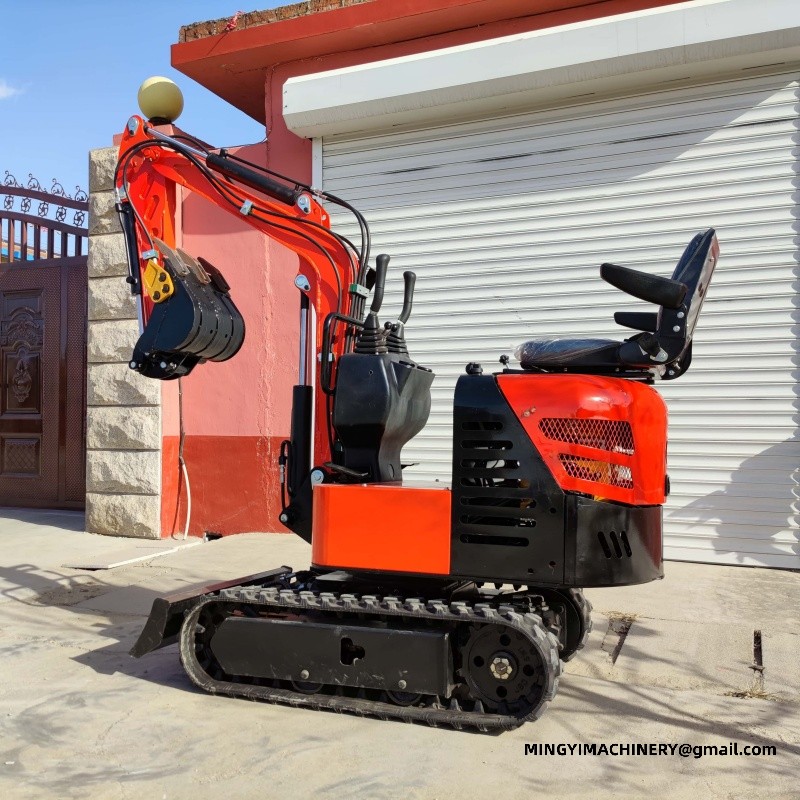
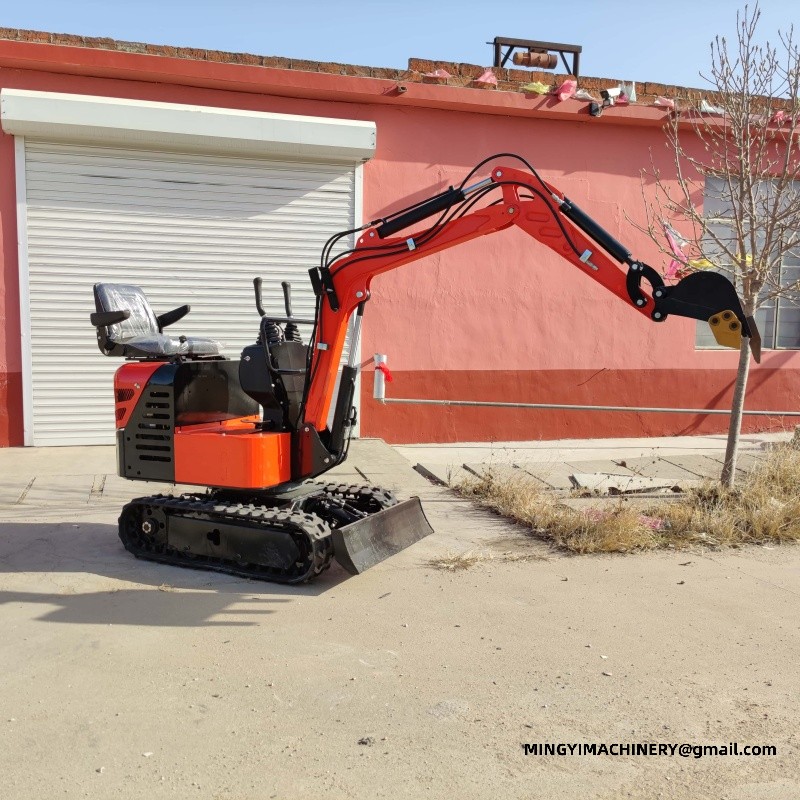
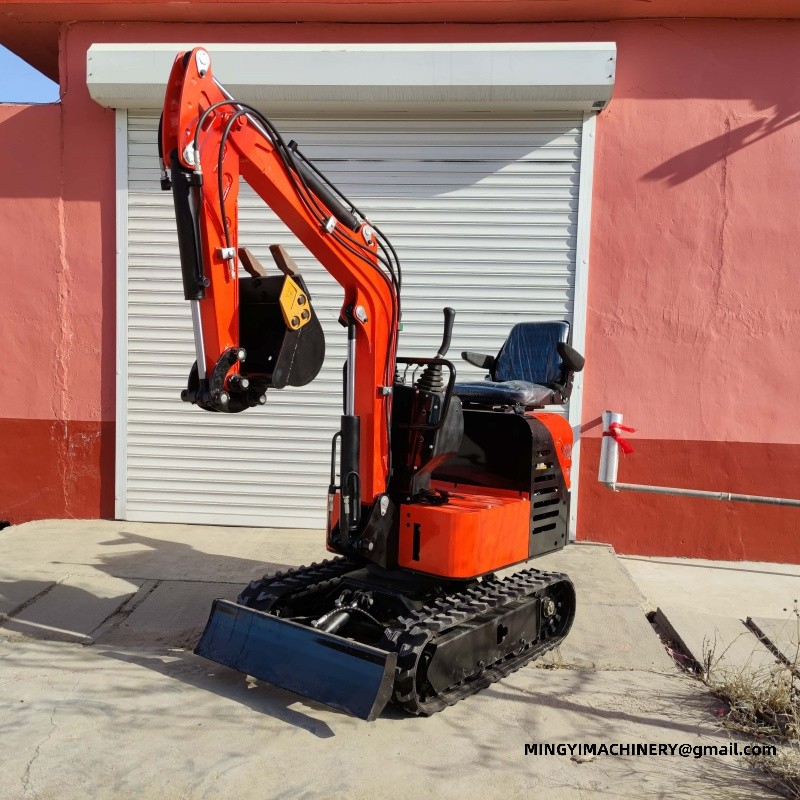
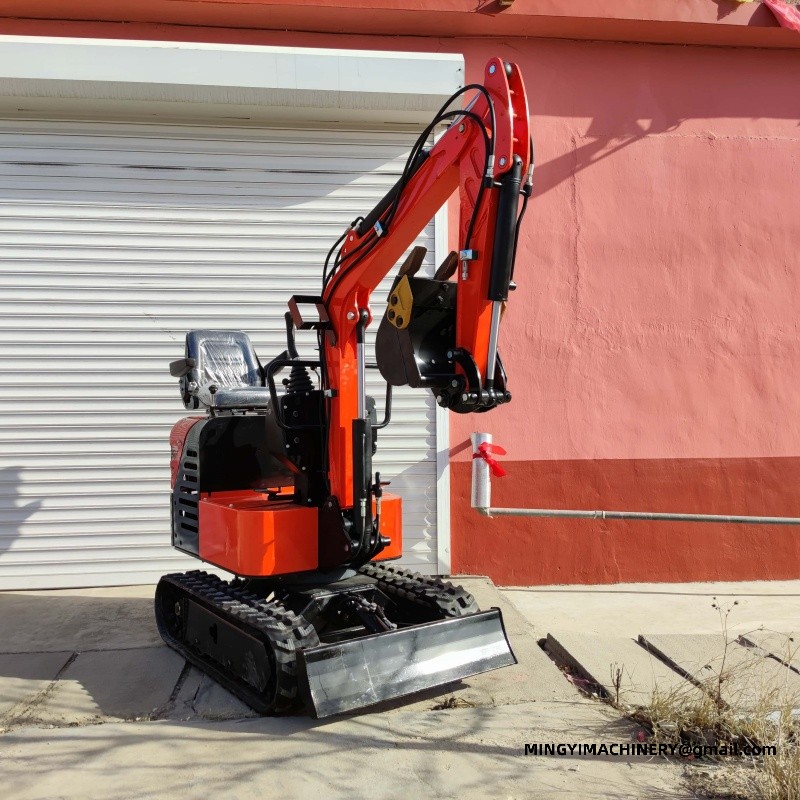
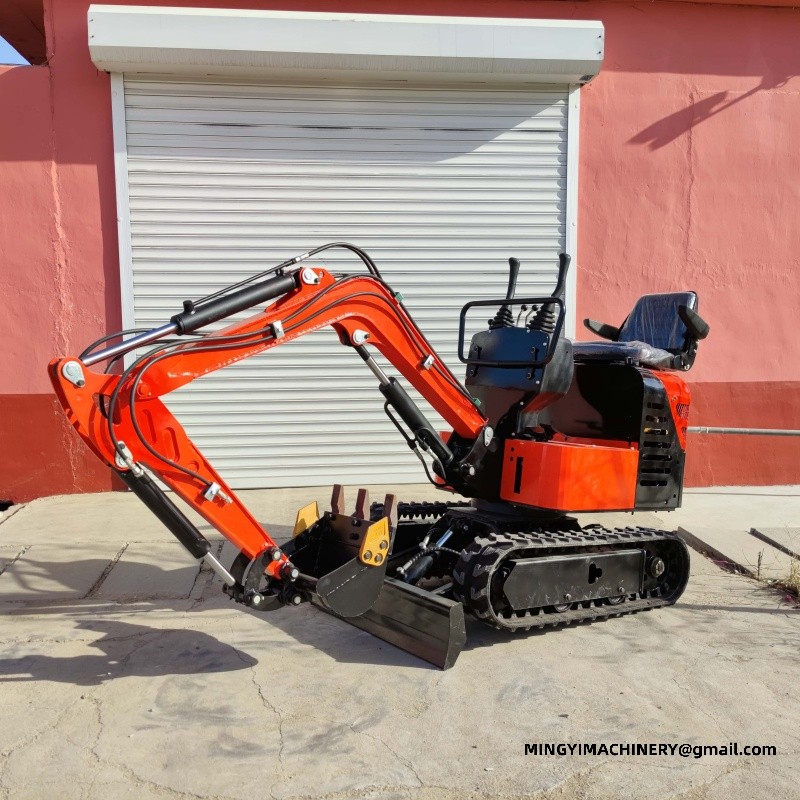
Reference specification — mini excavator range 30-1W 30-2W 09L 15L Operating weight 2900 kg (6393.41 lb) 2700 kg (5952.48 lb) 1100 kg (2425.08 lb) 1400 kg (3086.47 lb) Transport size (L×W×H) 3000 × 1250 × 2780 mm 3000 × 1100 × 2700 mm 2300 × 720 × 1870 mm 2200 × 930 × 2250 mm Max digging depth 2200 mm (86.61 in) 2200 mm (86.61 in) 1400 mm (55.12 in) 1700 mm (66.93 in) Max digging height 3400 mm (133.86 in) 3000 mm (118.11 in) 2800 mm (110.24 in) 2750 mm (108.27 in) Max dumping height 2400 mm (94.49 in) 2000 mm (78.74 in) 1880 mm (74.02 in) 1960 mm (77.17 in) Max digging radius 4000 mm (157.48 in) 3800 mm (149.61 in) 2490 mm (98.03 in) 2900 mm (114.17 in) Max digging distance 2800 mm (110.24 in) 3050 mm (120.08 in) 2000 mm (78.74 in) 2300 mm (90.55 in) Minimum turning radius 2000 mm (78.74 in) 1750 mm (68.9 in) 1400 mm (55.12 in) 1450 mm (57.09 in) Travel speed 5 km/h (3.11 mph) 7 km/h (4.35 mph) 3 km/h (1.86 mph) 3 km/h (1.86 mph) Gradeability 30° 30° 30° 30° Fuel consumption 2-3 L/h (0.528—0.793 gal) 2-3 L/h (0.528—0.793 gal) 1-1.3 L/h (0.264—0.343 gal) 1-1.3 L/h (0.264—0.343 gal) Fuel tank capacity 16 L (4.23 gal) 16 L (4.23 gal) 8 L (2.11 gal) 10 L (2.64 gal) Hydraulic oil tank 20 L (5.28 gal) 20 L (5.28 gal) 16 L (4.23 gal) 16 L (4.23 gal) Dozer blade lift height 420 mm (16.54 in) 230 mm (9.06 in) 180 mm (7.09 in) 180 mm (7.09 in) Dozer blade drop depth 210 mm (8.27 in) 280 mm (11.02 in) 210 mm (8.27 in) 210 mm (8.27 in)
Q. What is a machine built for the work?
A. Civil small-works crews need one compact machine that digs, lifts and places across a full shift of varied tasks, often next to live traffic. The quick coupler and a planned trailer keep the crew self-sufficient, with no traffic management beyond cones. The equipment in service is one of the pages buyers land on when comparing machines for foundation work, and the factory treats it as a specification conversation rather than a catalogue line.
Q. What matters most on roadside work?
A. Stability at the trench edge and a boom that reaches the line while the carrier stays off the carriageway. Reinstatement quality - the part the public judges - comes from the grading and compaction tools running on the same carrier.
Q. What support follows the sale?
A. Spare-part kits, wear items and service documentation ship with the programme, and the parts team works from the serial plate to match components exactly. Warranty and support terms for the foundation work order are confirmed in writing before the machine leaves.
Commissioning the excavator on site
The machine should be introduced to the site as well as the operator. Walking the route this class of machine will take, noting the soft spots and the turns, prevents the kind of first-day incident that has nothing to do with the machine.
Moving the unit in daily use between sites
A machine that works on one site still has to reach the next. The overall dimensions and the operating weight of a machine of this size decide what trailer or truck is needed, and that decision belongs before the job is booked.
Handover and getting familiar with the equipment on site
Familiarisation is not the same as reading the manual. Sitting on the machine itself, working through the controls at low speed and learning where the machine balances takes an hour, and that hour is what keeps the first week uneventful.
E-mail : sales@mingycn.com
LINE ( ID ): mingyicn
Related pages
mini excavator for trench digging · mini excavator for backyard · Wheel Loader Supplier: Model Coverage and Container Planning · Mini Excavators









