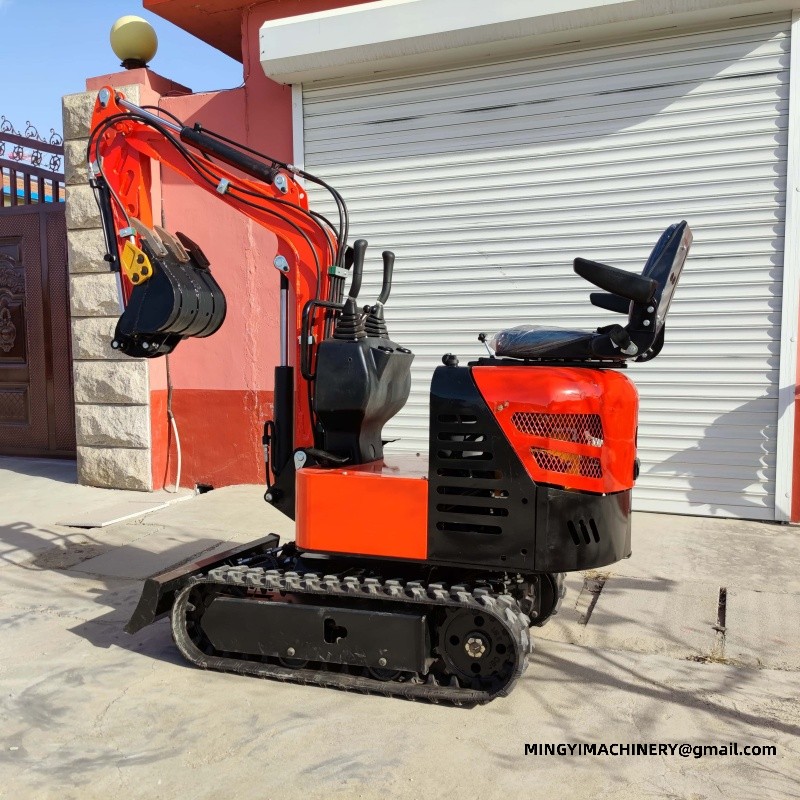
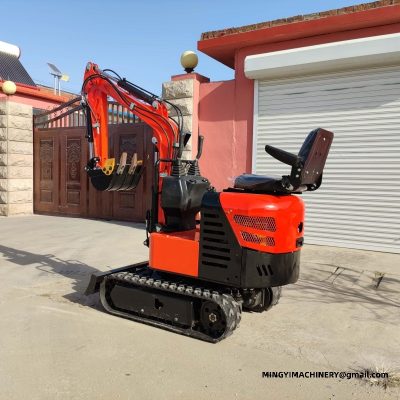
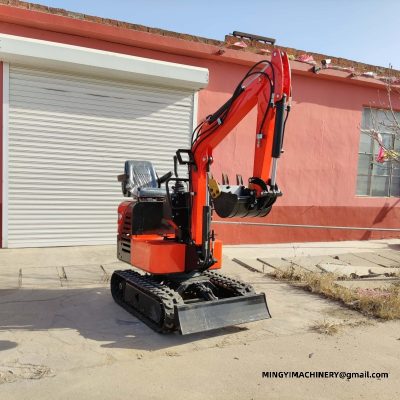
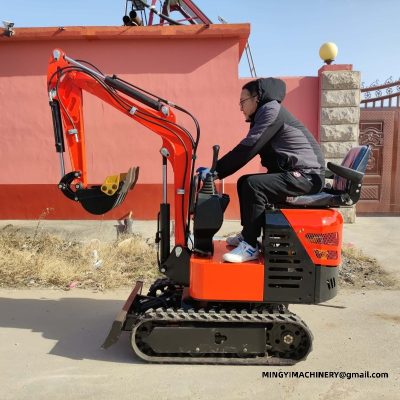
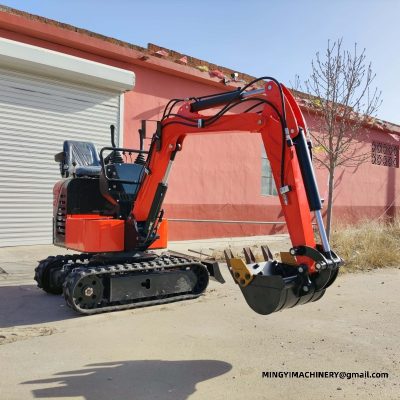
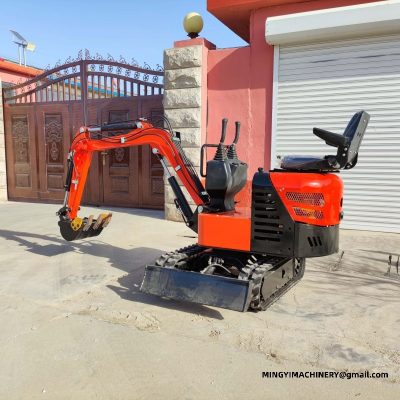
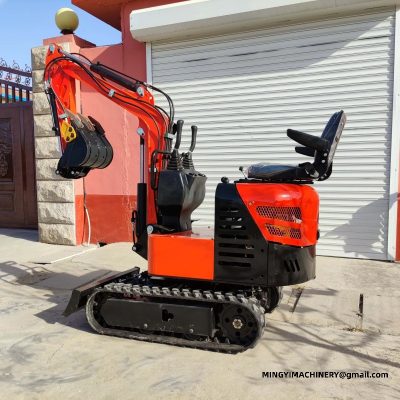
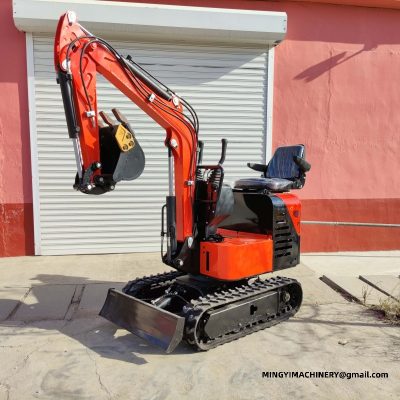
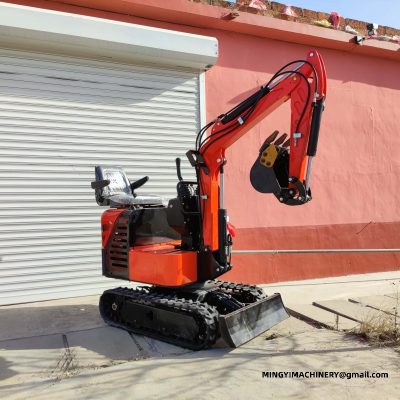
On a compact excavator, the hydraulics are the machine. How the main pump meters flow, how quickly the valve block responds and how the auxiliary circuit is set up decide whether the unit digs smoothly all day and whether the attachments bolted to it perform.
MINGYI builds mini excavators around a hydraulic system specified for the work in hand, with digging, swinging and attachment circuits matched to the machine's class. The configuration is agreed at the ordering stage and recorded.
Hydraulic capability that shows up on site
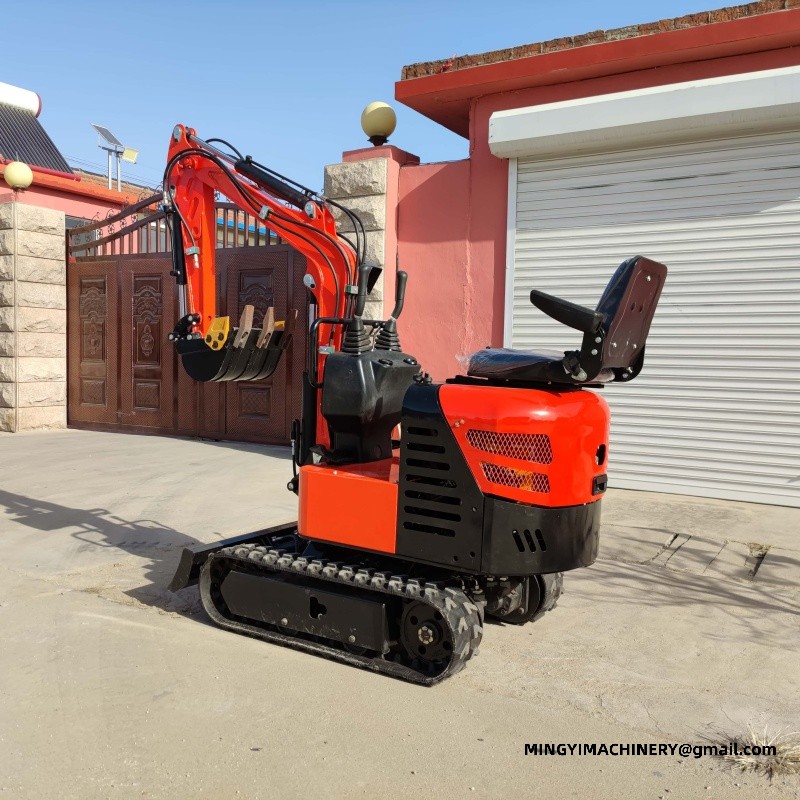
Good hydraulics show in the working day rather than the brochure: bucket and arm movements that start and stop without jerking, swing that combines with arm travel instead of waiting for it, and a control feel fine enough to trim a trench grade in one pass.
The same system carries the attachments. Auxiliary flow runs a breaker hammer, auger, mower or tiller, and machines specified for heavy attachment use get their circuits arranged at build rather than adapted afterwards.
Matching the hydraulic system to the work
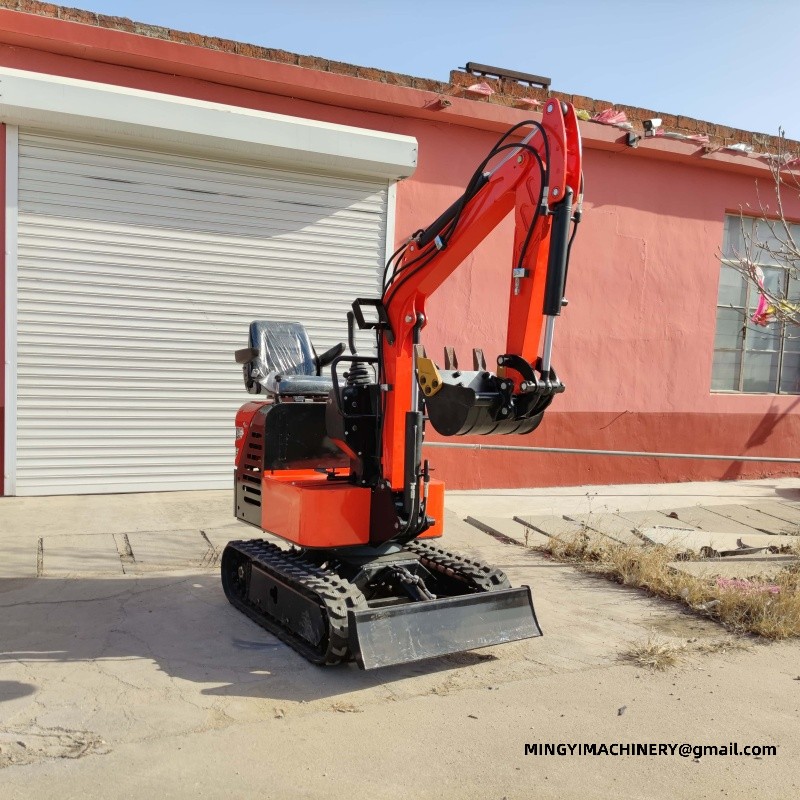
The order should state which attachments the machine will run and for how much of its time, since this sets the auxiliary circuit specification. Buyers running breakers or tillers for long stretches need a circuit arranged for continuous work.
Coupler choice belongs in the same conversation: a hydraulic quick coupler makes multi attachment days practical, while a mechanical coupler keeps the specification simpler. Whichever is chosen, it is fixed at the ordering stage.
Hydraulic performance is what separates a working machine from a disappointing one. MINGYI specifies the system to the duties you describe, so the unit arrives set up for the digging and attachments it will spend its life on.
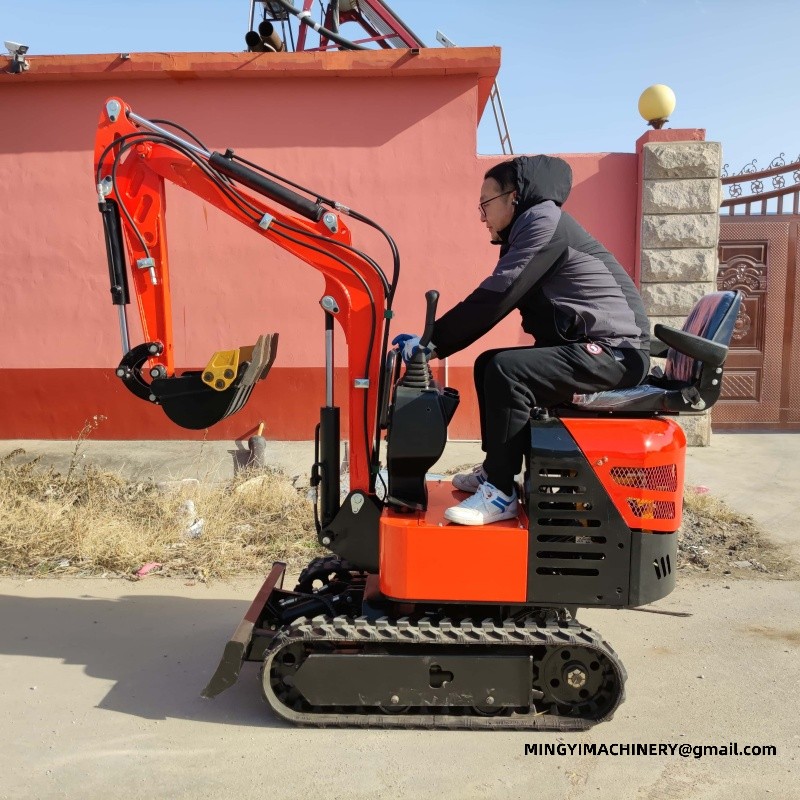
Getting high efficiency hydraulic mini excavator through a narrow gap Access decides the machine before output does. With the excavator the limiting dimension is usually the widest point on the way in, so measuring the gate, the corridor and the turning space first saves a wasted delivery and a second visit. Contractors who buy this class of machine normally have one job in mind that nothing else reaches. The purchase order follows the access measurement, not the other way round, and the build sheet is then settled around it. Interior and light demolition with high efficiency hydraulic mini excavator Interior demolition is an access and a weight question. The unit in daily use that fits through a doorway and works on a suspended floor does jobs that would otherwise be done by hand or by a larger machine that cannot enter. Dust, debris clearance and floor loading all argue for a compact machine indoors. A machine of this size spreads its weight over a wider track footprint than a wheeled machine of similar capacity. Quick coupler practice on high efficiency hydraulic mini excavator A quick coupler is the single option that changes how a machine is used day to day. Fitted to the equipment on site, it turns an attachment change from a two-person workshop job into a task the operator does alone in minutes. For a fleet that shares attachments between machines, a common coupler standard matters more than the coupler brand. The machine itself that picks up the same tools as the larger machines keeps the rack usable across the yard. Trailering and moving high efficiency hydraulic mini excavator Transport weight and width decide whether a machine needs a specialist haulier. The model in question sized to travel on a standard plant trailer behind a suitable vehicle moves with the crew rather than on a scheduled low loader. Loading practice matters as much as the numbers. The machine in that duty is driven up ramps under its own power with the boom lowered and the tracks aligned, and secured at the points the manufacturer specifies. Working near live services with high efficiency hydraulic mini excavator The risk on utility work is not machine power but machine placement. The unit on the job that fits the working width leaves the surrounding ground undisturbed, which keeps the trench stable and the reinstatement small. Utility crews specify a machine built for the work with a narrow bucket and good visibility for exactly this reason: the machine has to stop at the service, not at the edge of the operator's view. Specifying high efficiency hydraulic mini excavator against a job list The practical way to specify is to write the job list first: the narrowest access, the deepest trench, the heaviest tool and the surfaces the machine must cross. The equipment in service is then matched to those four numbers. Buyers who skip this step either over-buy or under-buy. The excavator specified only from machine size tends to arrive without the coupler, the circuits or the track type the work actually needs. Hiring versus owning this class of machine The choice follows the hours. Work that fills a few weeks a year is usually better hired, while the unit in daily use that would be on site most weeks starts to justify ownership once the transport and booking time is counted. Availability is part of the decision. Owning a machine of this size means it is there on the day the ground is ready; hiring means competing for the same machine at the same time as everyone else in the season. Trenching work with the equipment on site Service trenches are the most common reason the machine itself is hired. Water, sewage, cable and gas runs are narrow, shallow and often close to existing services, which is exactly the work a full-size machine cannot do safely. Trench quality depends on the bucket width and the operator, not on machine size. The model in question with a narrow bucket and a swing boom cuts a clean run along a boundary without disturbing the ground either side of it. Matching the machine in that duty to ground conditions Soft ground is a flotation problem, not a power problem. The unit on the job on wide rubber tracks crosses lawn, sand and cultivated soil that would stop a narrower machine or a wheeled unit of the same capacity. Hard and abrasive ground reverses the specification. On rock, demolition rubble or sharp gravel, steel tracks with rubber blocks on a machine built for the work survive conditions that cut a rubber belt quickly. OEM and fleet customisation of the equipment in service Distributors and rental fleets usually need the machine to look like theirs. Paint, decals, seat colour and attachment branding can be specified on the excavator at build time rather than applied after import. Customisation also covers the specification sheet. A fleet buyer may want every This class of machine delivered with the same coupler, the same engine and the same tool kit so training and parts stock stay simple. Engine options behind the unit in daily use Power unit selection is settled against the service network the buyer already uses. MINGYI offers Kubota D722, Kubota D902, YANMAR, Changchai, Laidong, Runtong, YARMAX, Youpu 2V80 and Youpu 195, so a fleet running one brand of engine can keep the same filters, the same parts supplier and the same mechanic. Two buyers can order the same a machine of this size and receive different engines. The decision is rarely about peak power; it is about which parts counter is closest to the site and which engine the local mechanic already knows. Specification data for the equipment on site Buyers comparing the machine itself usually start from four numbers - weight, digging depth, reach and transport width - because those are the ones that decide whether the machine can be delivered and whether it can do the job once it is there. Figures are factory figures and are confirmed on the build sheet for the model in question. Where a job sits between two models, the larger machine usually takes less time than the smaller one spends on rework. The specification that rents best is usually the simplest one to explain at the counter. The machine in that duty with rubber tracks, a canopy and a coupler covers the majority of weekend and short-term hires. Fleet buyers also weigh transport. The unit on the job that a customer can tow on a normal licence and a standard trailer is a hire that does not need a delivery truck, which changes how often it goes out.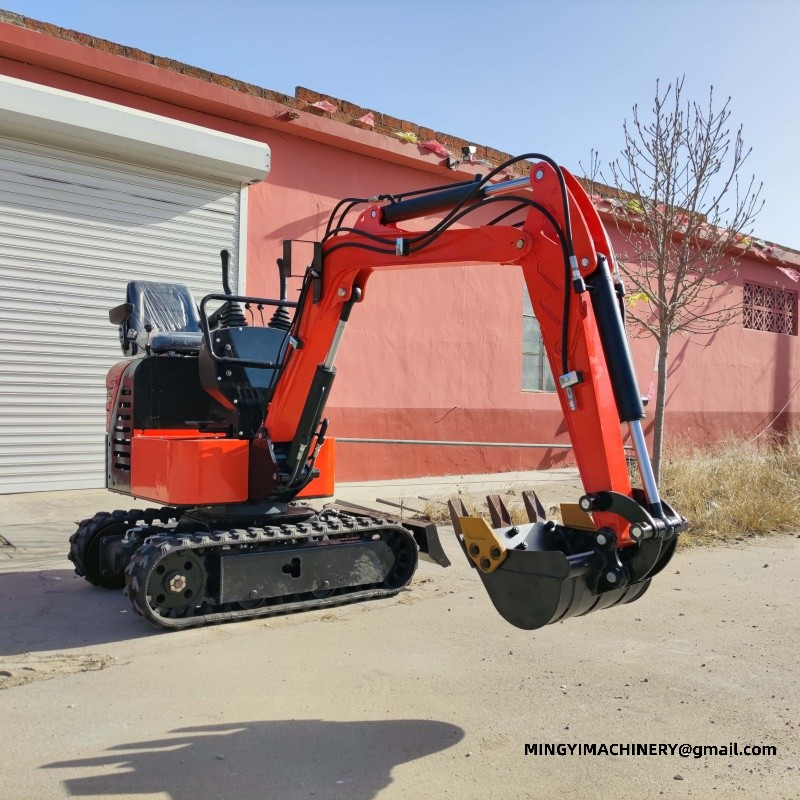
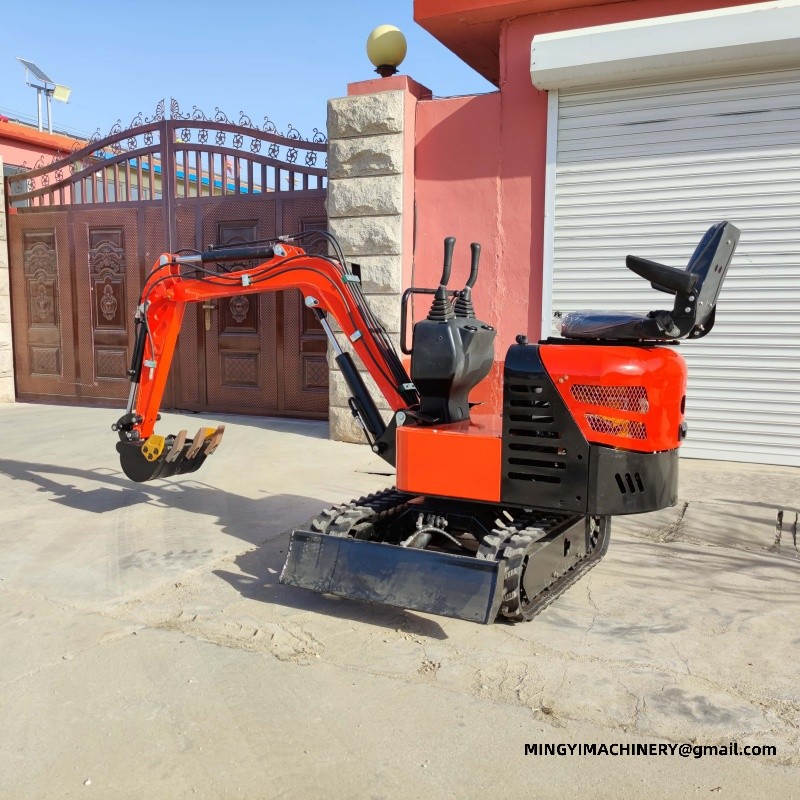
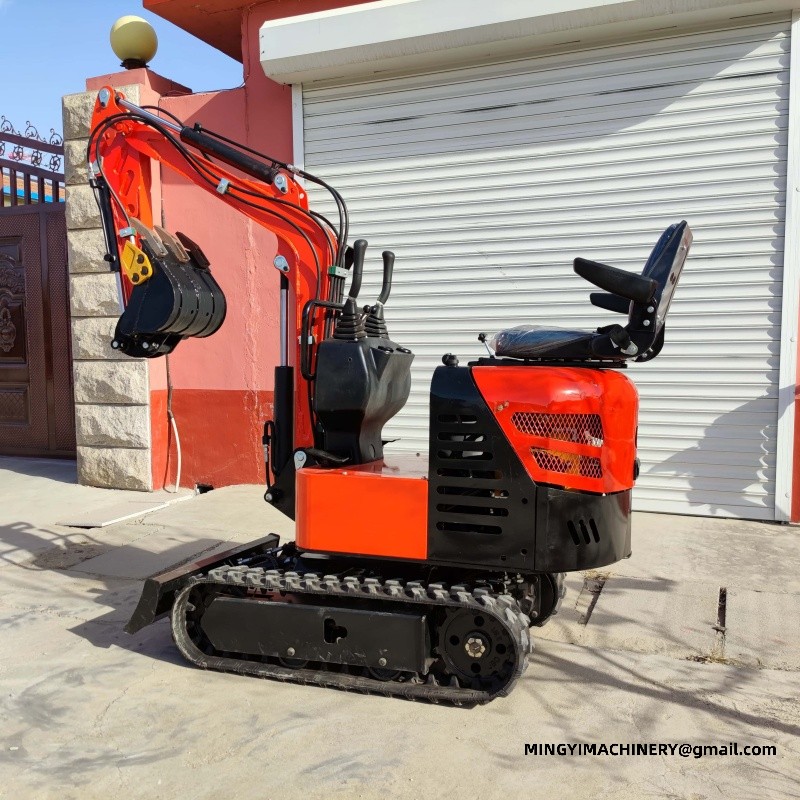
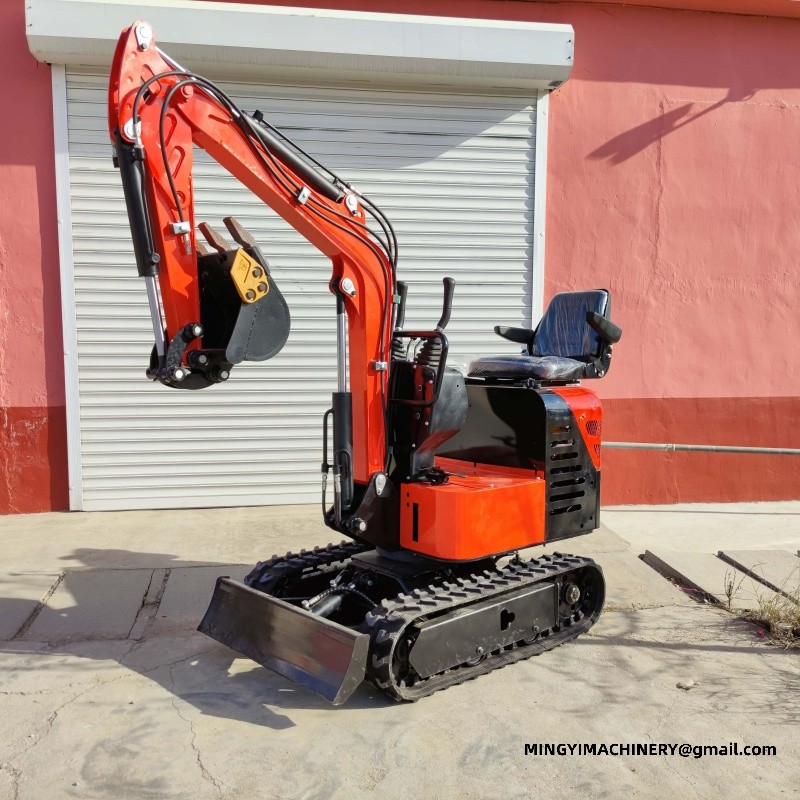
Reference specification — mini excavator range 15W 30-2W 12L 25L Operating weight 1400 kg (3086.47 lb) 2700 kg (5952.48 lb) 1200 kg (2645.55 lb) 2200 kg (4850.17 lb) Transport size (L×W×H) 2200 × 930 × 2250 mm 3000 × 1100 × 2700 mm 2200 × 930 × 2250 mm 3000 × 1300 × 2700 mm Max digging depth 1630 mm (64.17 in) 2200 mm (86.61 in) 1700 mm (66.93 in) 2300 mm (90.55 in) Max digging height 2750 mm (108.27 in) 3000 mm (118.11 in) 2600 mm (102.36 in) 3100 mm (122.05 in) Max dumping height 1960 mm (77.17 in) 2000 mm (78.74 in) 1800 mm (70.87 in) 2050 mm (80.71 in) Max digging radius 2900 mm (114.17 in) 3800 mm (149.61 in) 2900 mm (114.17 in) 3900 mm (153.54 in) Max digging distance 2100 mm (82.68 in) 3050 mm (120.08 in) 2300 mm (90.55 in) 3100 mm (125.05 in) Minimum turning radius 1300 mm (51.18 in) 1750 mm (68.9 in) 1450 mm (57.09 in) 1800 mm (70.87 in) Travel speed 3 km/h (1.86 mph) 7 km/h (4.35 mph) 3 km/h (1.86 mph) 7 km/h (4.35 mph) Gradeability 30° 30° 30° 30° Fuel consumption 1-1.3 L/h (0.264—0.343 gal) 2-3 L/h (0.528—0.793 gal) 1-1.3 L/h (0.264—0.343 gal) 2-3 L/h (0.528—0.793 gal) Fuel tank capacity 10 L (2.64 gal) 16 L (4.23 gal) 10 L (2.64 gal) 16 L (4.23 gal) Hydraulic oil tank 16 L (4.23 gal) 20 L (5.28 gal) 16 L (4.23 gal) 18 L (4.76 gal) Dozer blade lift height 180 mm (7.09 in) 230 mm (9.06 in) 180 mm (7.09 in) 230 mm (9.06 in) Dozer blade drop depth 210 mm (8.27 in) 280 mm (11.02 in) 210 mm (8.27 in) 280 mm (11.02 in)
Q. What is a machine built for the work used for?
A. The hydraulic circuit is the character of a compact excavator: how it responds to the levers, how it shares flow between boom and swing, how it protects the attachment. Electric-drive options suit indoor and emission-sensitive sites where a diesel is the wrong answer. Read the equipment in service together with the engine, track and attachment pages: jobs around high efficiency hydraulic are decided by how those choices line up, not by any single number on the sheet.
Q. What do pilot controls change in practice?
A. Finesse: the operator meters boom and bucket instead of switching them, which shows in trench walls, grading finish and fatigue at the end of the shift.
Q. How do I get a specification?
A. Send the model, the destination and the attachment list by email or LINE - the channels listed just below this section. The reply covers the specification, lead time, packing and freight in one document, with the high efficiency hydraulic build sheet attached.
Keeping a service record for the excavator
Patterns show up in the record before they show up in the machine. Rising oil consumption or a filter that keeps blocking on this class of machine is obvious on paper long before it becomes a failure on site.
Later additions and retrofits on the unit in daily use
An added function should pay for itself quickly. Whether a machine of this size gains a different bucket, a hydraulic service or a protection package, the test is the number of days a year it is actually used.
Planning the season around the equipment on site
The calendar decides more than the specification does. Planning when the machine itself will be working, when it will be serviced and when it can be spared keeps the maintenance out of the weeks that matter.
E-mail : sales@mingycn.com
LINE ( ID ): mingyicn
Working alongside other plant with high efficiency hydraulic mini excavator
Most site incidents between machines are about sequencing rather than about skill, meaning who is in the arc, who is loading whom and who moves next.
Exclusion zones drawn on the ground work better than zones described in a meeting, and they are re-drawn when the job phase changes.
Related pages
mini excavator load sensing hydraulics · hydraulic pilot mini excavator · Front Wheel Loader: Weight Transfer, Boom Length and Axle Choice · Mini Excavators









