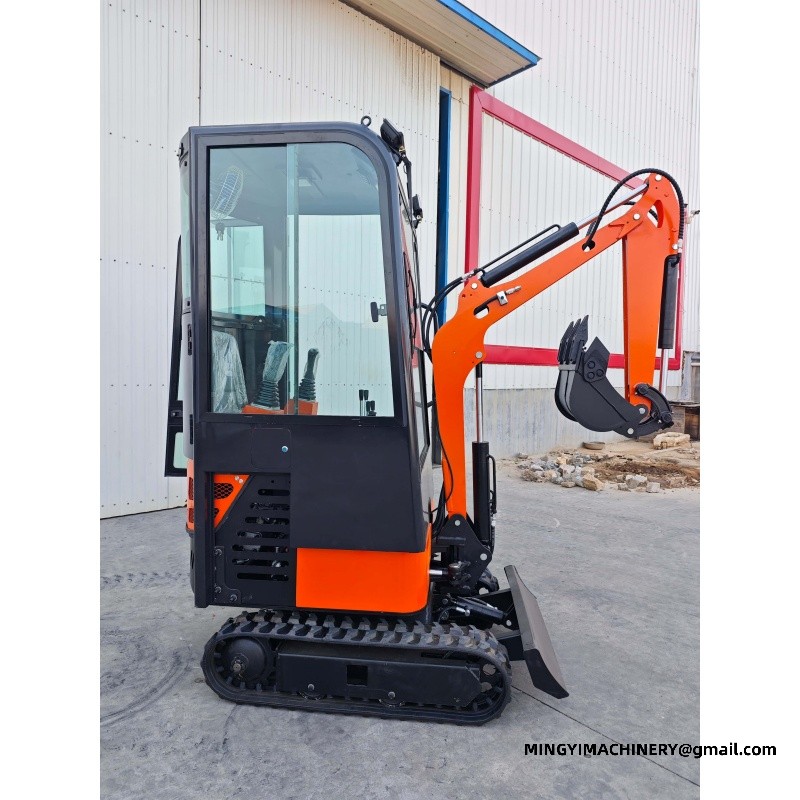
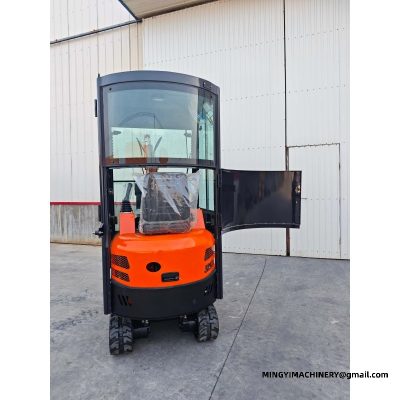
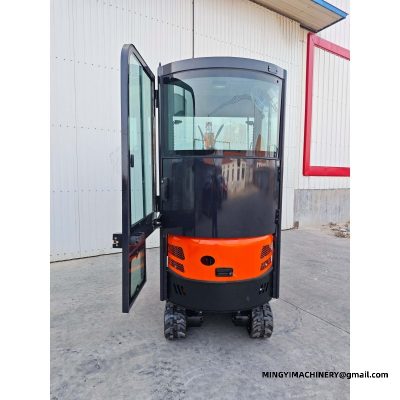
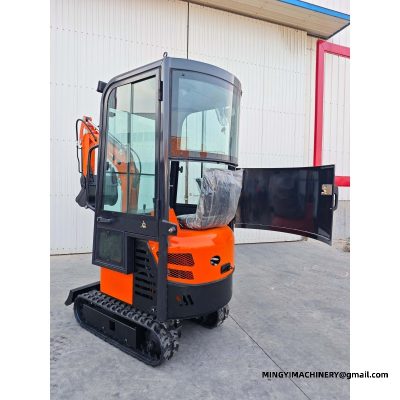
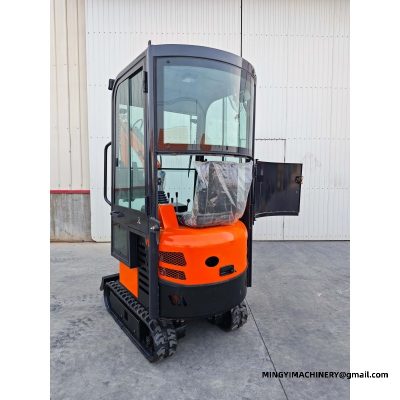
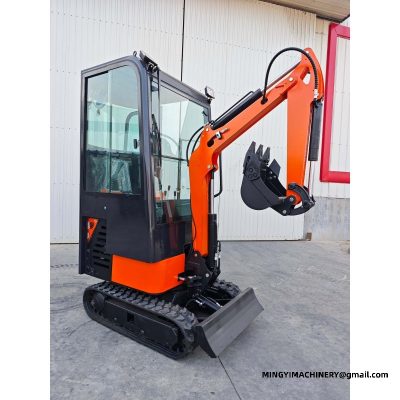
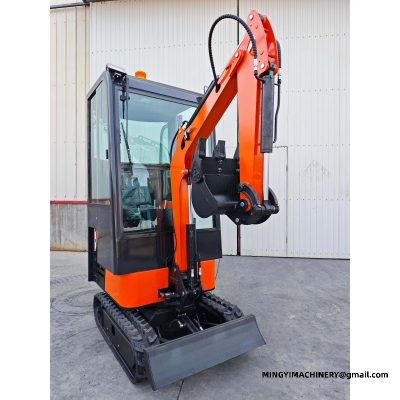
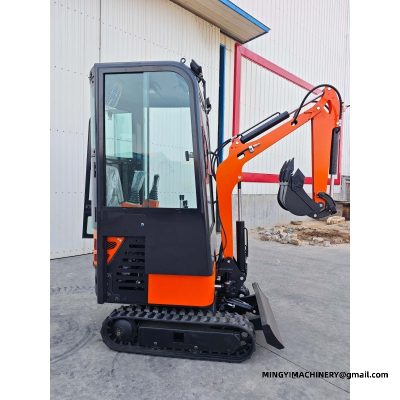
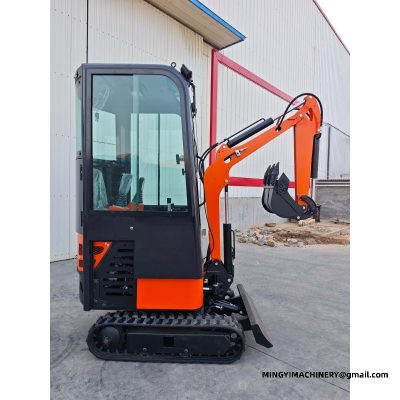
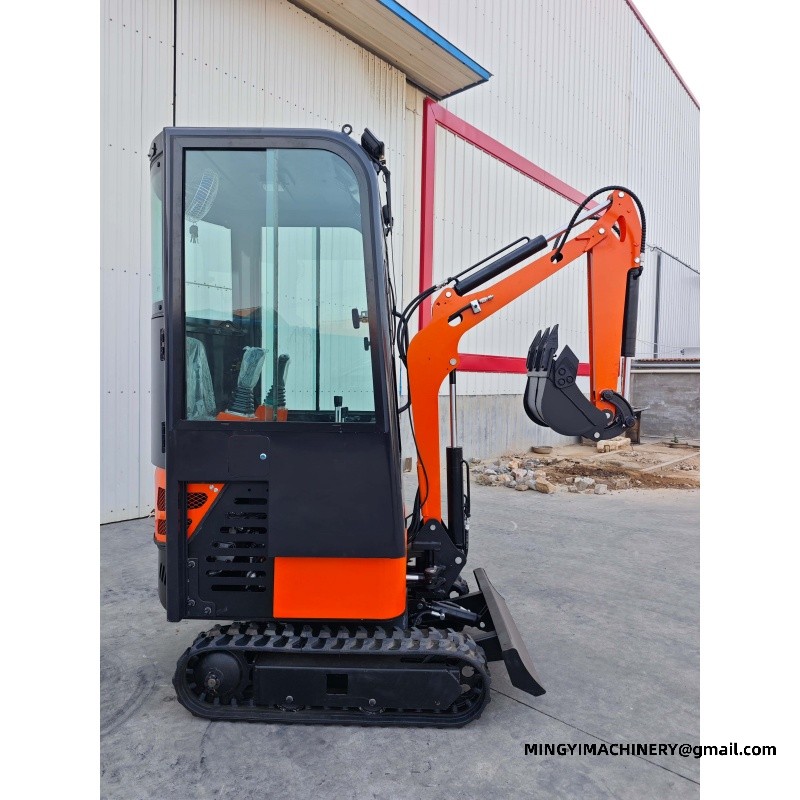
Hydraulic pilot control separates machines that dig from machines that dig precisely. In a pilot-controlled mini excavator the joysticks meter pilot pressure to the main valves, so boom, arm and bucket movements start and finish smoothly instead of snapping. MINGYI builds pilot-controlled machines across its range.
The difference shows in the work: clean trench floors, level grading passes and bucket control fine enough to work around buried services. For buyers whose contracts include finishing and careful digging, pilot control is the configuration to specify.
What pilot control changes in the work
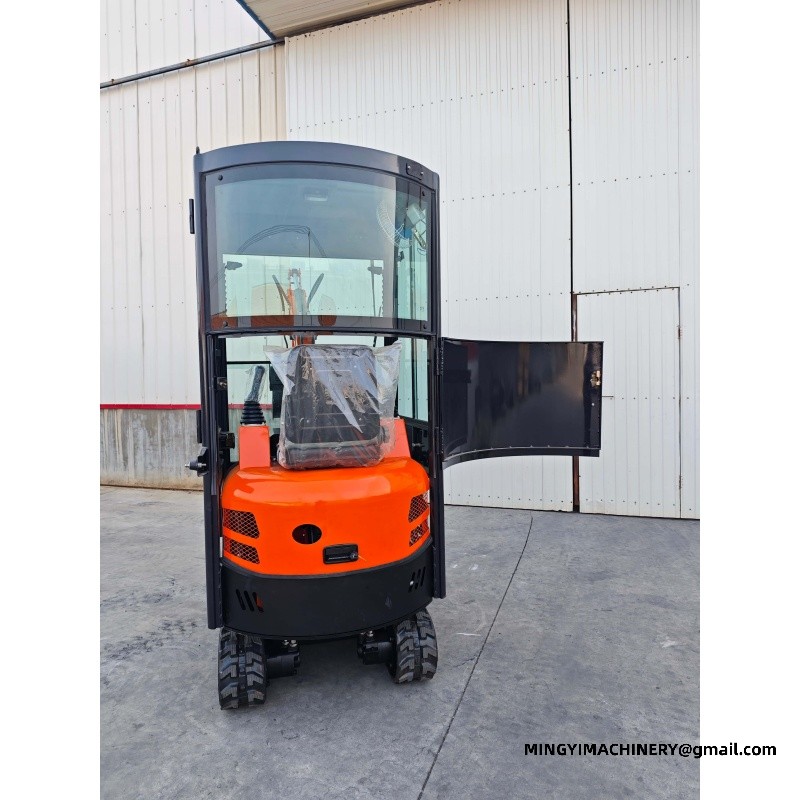
Operator inputs translate into proportional hydraulic response, so a bucket can be feathered into position at the bottom of a trench and a boom lowered without the lurch that mechanical linkage produces. Grading with a tilting bucket becomes one continuous motion.
Prolonged work near pipes, cables and root systems also benefits, since the machine responds in small, controllable increments. Crews on service connections notice the difference within the first week.
Ordering a pilot-controlled machine
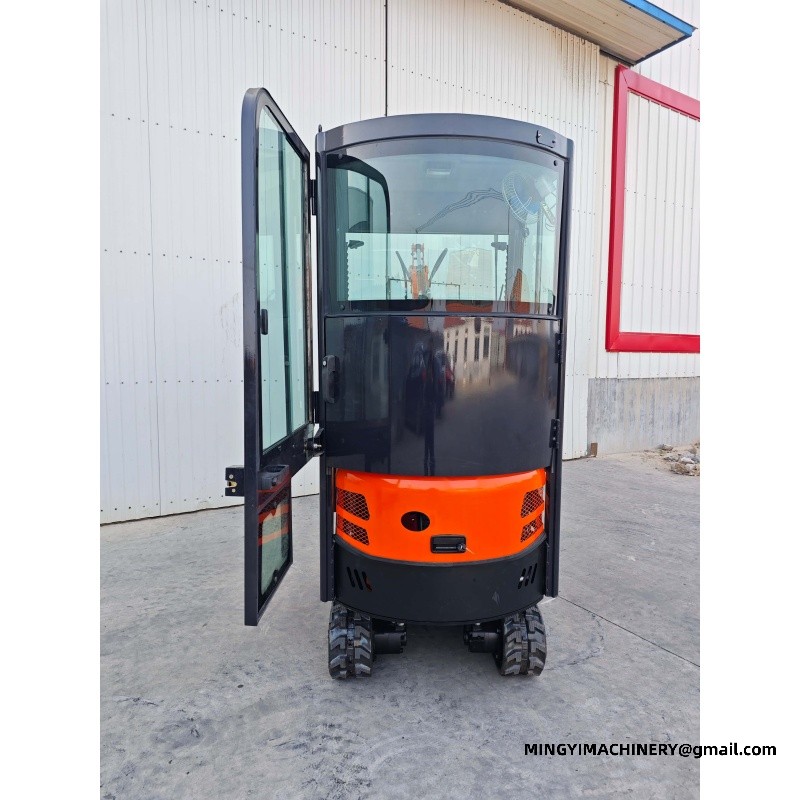
Hydraulic pilot control is specified at the ordering stage along with the engine option, cab format and tracks, and it is recorded on the build sheet. Buyers pairing the machine with continuous-flow attachments such as mowers should state that plan so the auxiliary circuit matches.
Each pilot-controlled excavator ships with spare parts and service information covering the control system as fitted, with the pilot circuit filter forming part of the routine service schedule.
Precision is a hydraulic decision as much as an operator one. Specify pilot control when the order is placed, and the machine arrives able to do the fine work the contract demands.
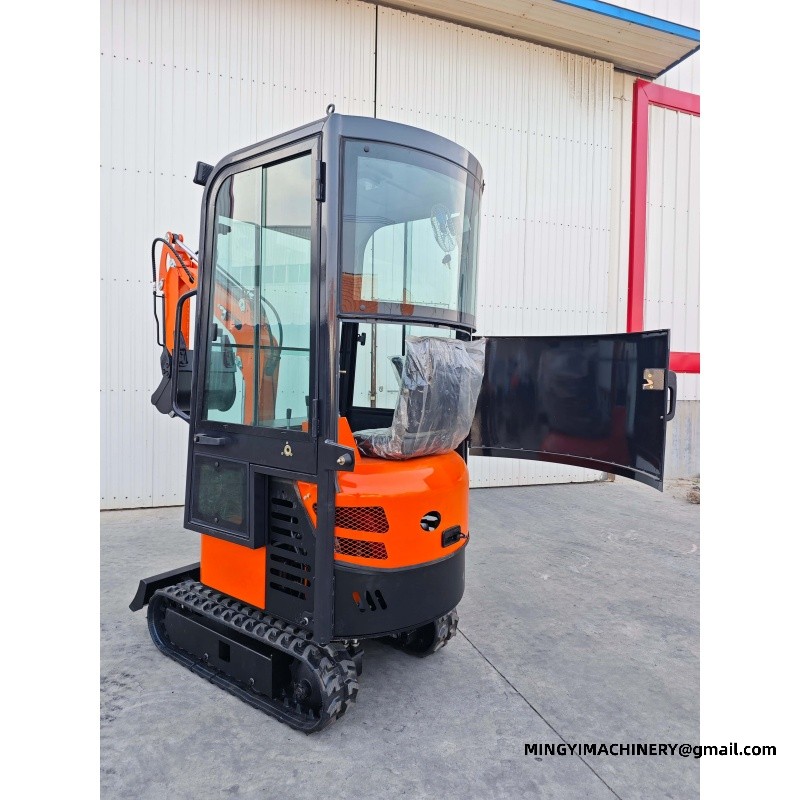
Working on slopes and uneven ground with hydraulic pilot mini excavator Slope work is a stability question before it is a traction question. Knowing the gradient the excavator is rated for, and working across rather than straight up where the ground allows, removes most of the risk. Ground that looks level often is not. This class of machine crossing a filled trench, a soft edge or a hidden void behaves differently from one on undisturbed ground, and those are the places worth walking before driving. Daily checks and maintenance on hydraulic pilot mini excavator Daily maintenance on the unit in daily use is a short list: engine oil level, coolant, track tension, hydraulic oil level and a look at the hoses. Ten minutes at the start of the shift prevents most of the failures that stop a machine. Greasing is the second item. The slew ring, the boom and arm pins and the bucket linkage on a machine of this size take grease daily in dusty work, and the intervals shorten further when the machine is used in water or mud. Landscaping and ground care with hydraulic pilot mini excavator Landscape contractors use the equipment on site for planting holes, pond excavation, grading and retaining work. The machine is light enough to cross finished lawn and narrow enough to work between established trees. Grass cutting heads, rakes and tillers extend the machine itself into ground care. The same carrier that digs a border in spring can cut and clear the same area later in the season. Municipal and public works with hydraulic pilot mini excavator Municipal crews work on streets, footpaths and parks where the public is present. The model in question is specified because it occupies little space, works inside a small exclusion zone and can be moved on a standard trailer. Noise and surface protection matter on public work. The machine in that duty on rubber tracks across paving, with a sealed cab for the operator, suits the conditions better than a larger tracked machine. Running hydraulic pilot mini excavator in a rental fleet Rental fleets buy for utilisation, not for a single job. The unit on the job with a quick coupler and a common attachment standard is hired more often because it suits more of the calls that come in. Fleet buyers also weigh transport. A machine built for the work that a customer can tow on a normal licence and a standard trailer is a hire that does not need a delivery truck, which changes how often it goes out. Orchard, vineyard and farm use of hydraulic pilot mini excavator Orchard and vineyard work is carried out between rows. The equipment in service with a narrow chassis and a swing boom works down the row without damaging the trees, which is the reason a full-size machine is not used at all. Farms also use the excavator for general maintenance - clearing a watercourse, repairing a track, loading a spreader. One carrier with a few attachments covers most of the jobs that would otherwise wait for a contractor. Getting this class of machine through a narrow gap The first question on most job lists is whether the machine can reach the work at all. The unit in daily use is chosen against the narrowest point on the route - a garden gate, a doorway, a gap between two walls - because a machine that arrives and then cannot pass loses a day, not an hour. Contractors who buy a machine of this size normally have one job in mind that nothing else reaches. The purchase order follows the access measurement, not the other way round, and the build sheet is then settled around it. Working the equipment on site through the seasons Seasonal planning smooths the workload. Machines that are busy for a few months and idle for the rest benefit from a service slot in the quiet period, and the machine itself prepared in the off-season starts the busy months reliably. Heat and dust are as limiting as rain. Air intake condition and cooling cleanliness decide how the model in question behaves in a dry season, and both are checked in a minute rather than repaired later. Engine options behind the machine in that duty Power unit selection is settled against the service network the buyer already uses. MINGYI offers Kubota D722, Kubota D902, YANMAR, Changchai, Laidong, Runtong, YARMAX, Youpu 2V80 and Youpu 195, so a fleet running one brand of engine can keep the same filters, the same parts supplier and the same mechanic. Engine choice is also an emissions and documentation question for some markets. Listing the available units with the unit on the job enquiry lets the factory confirm what can be supplied and documented for the destination country. Track choice for a machine built for the work Rubber tracks suit paved and landscaped ground because they spread the machine weight and leave the surface intact. Steel tracks with rubber blocks are specified where the ground is rougher or the working day is longer, and the choice can be made per machine rather than accepted as a factory default. Undercarriage selection is a ground question, not a preference question. The equipment in service running on finished paving needs rubber; the same machine on demolition rubble or rock wears rubber quickly, so steel with rubber blocks becomes the better answer over a full season. Trenching work with the excavator Service trenches are the most common reason this class of machine is hired. Water, sewage, cable and gas runs are narrow, shallow and often close to existing services, which is exactly the work a full-size machine cannot do safely. Depth control matters more on service work than speed. The unit in daily use working beside live services is chosen because it can be placed precisely and stopped instantly, which is what the job actually requires. Lifting and material handling with a machine of this size Stability changes with reach. A load the equipment on site handles close in becomes a different proposition at full extension, so the working radius belongs in the plan before the lift rather than during it. Ground condition under the machine is part of every lift. Soft or uneven support is the common factor in handling incidents, and checking it takes less time than recovering the machine itself that has settled. Specification data for the model in question The figures below are the factory figures for the models most often matched to the machine in that duty. They are the numbers to check against the site: the depth the work needs, the reach from one position, and the width of the narrowest point on the route in. Figures are factory figures and are confirmed on the build sheet for the unit on the job. Where a job sits between two models, the larger machine usually takes less time than the smaller one spends on rework. The useful comparison is demand per working hour, not demand per machine. A machine built for the work that works more hours a year spreads its standing takes over more output, which is why utilisation usually matters more than the invoice figure. Downtime is the hidden line item. The equipment in service waiting on a part earns nothing while it stands, so parts availability and service access belong in the plan as much as fuel does.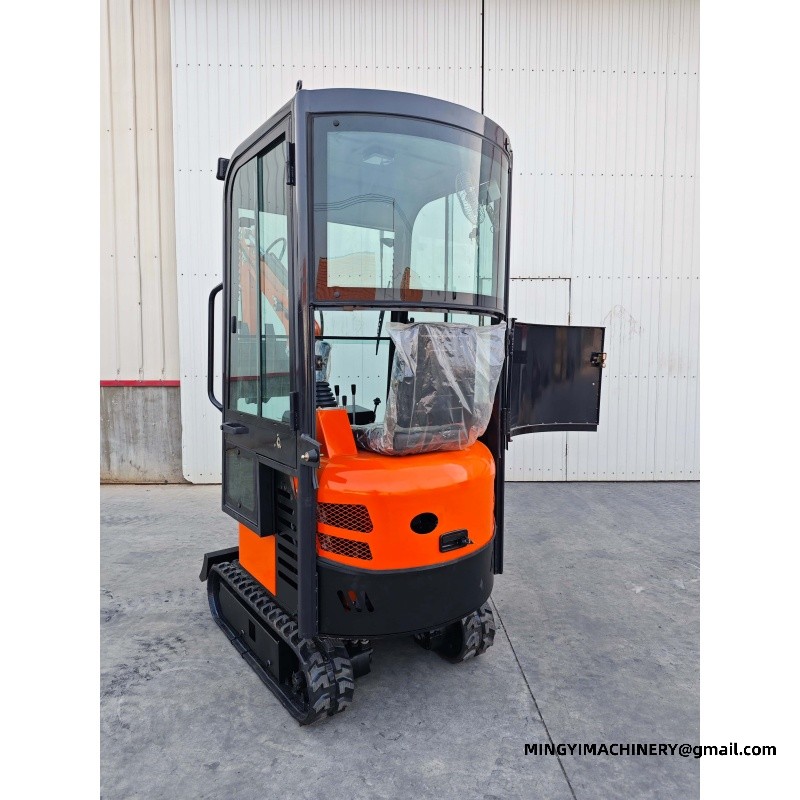
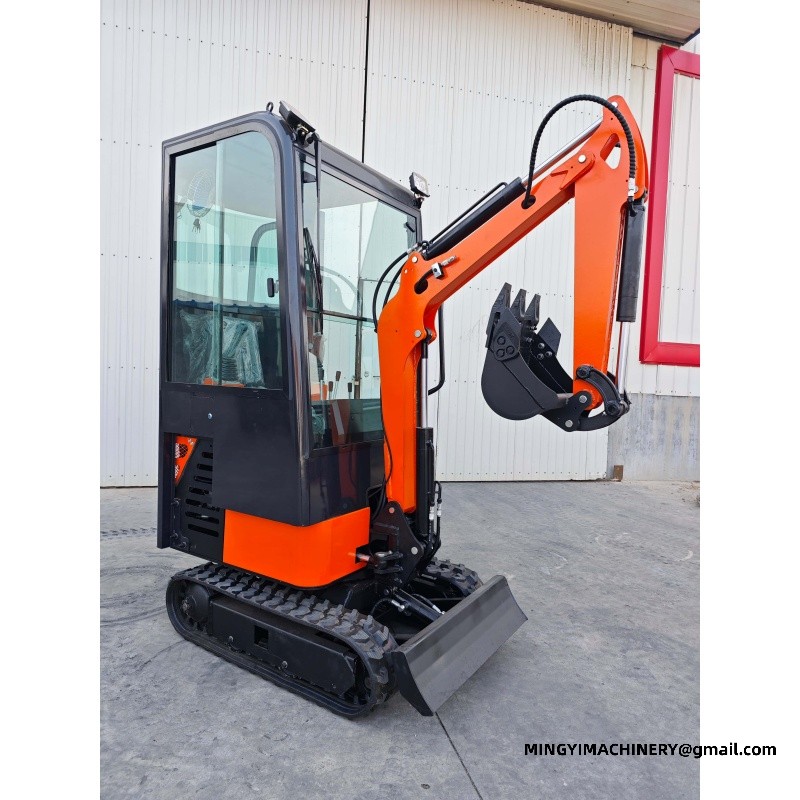
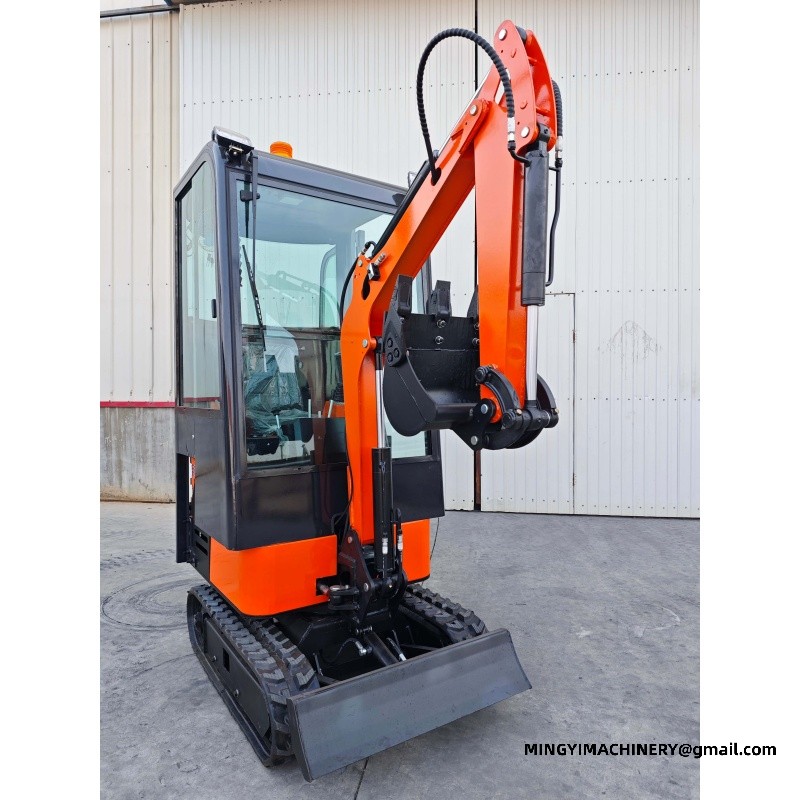
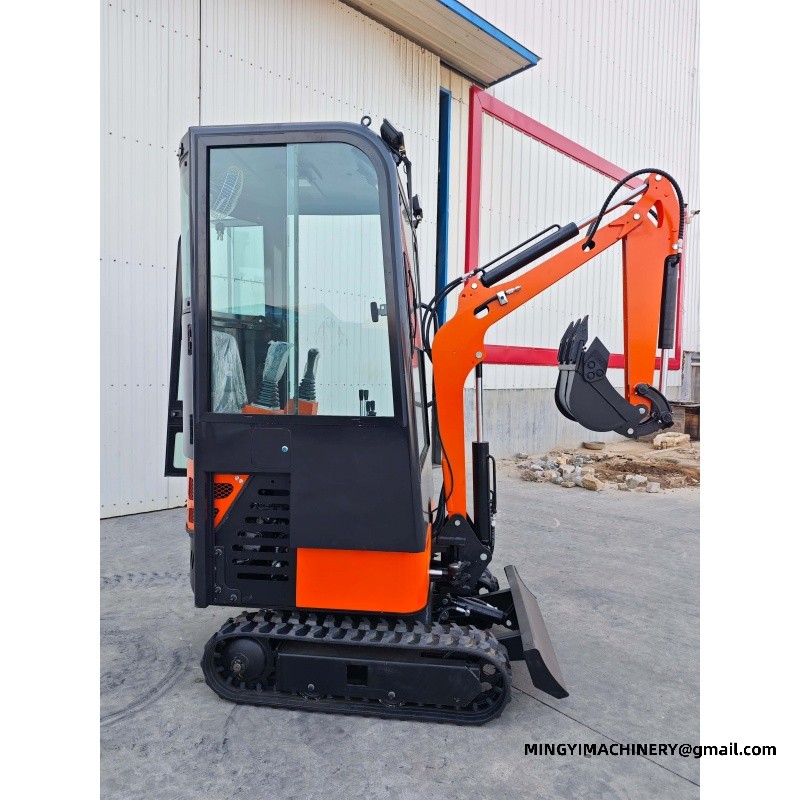
Reference specification — mini excavator range 15W 15L 20-2L 30-2L Operating weight 1400 kg (3086.47 lb) 1400 kg (3086.47 lb) 1900 kg (4188.78 lb) 2400 kg (5291 lb) Transport size (L×W×H) 2200 × 930 × 2250 mm 2200 × 930 × 2250 mm 2600 × 1300 × 2344 mm 2800 × 1500 × 2500 mm Max digging depth 1630 mm (64.17 in) 1700 mm (66.93 in) 2100 mm (82.68 in) 2200 mm (86.61 in) Max digging height 2750 mm (108.27 in) 2750 mm (108.27 in) 2880 mm (113.39 in) 2900 mm (114.17 in) Max dumping height 1960 mm (77.17 in) 1960 mm (77.17 in) 2100 mm (82.68 in) 2100 mm (82.68 in) Max digging radius 2900 mm (114.17 in) 2900 mm (114.17 in) 3215 mm (126.57 in) 3330 mm (131.1 in) Max digging distance 2100 mm (82.68 in) 2300 mm (90.55 in) 2460 mm (96.85 in) 2700 mm (106.3 in) Minimum turning radius 1300 mm (51.18 in) 1450 mm (57.09 in) 1587 mm (62.48 in) 1555 mm (61.22 in) Travel speed 3 km/h (1.86 mph) 3 km/h (1.86 mph) 5 km/h (3.11 mph) 7 km/h (4.35 mph) Gradeability 30° 30° 30° 30° Fuel consumption 1-1.3 L/h (0.264—0.343 gal) 1-1.3 L/h (0.264—0.343 gal) 2-3 L/h (0.528—0.793 gal) 2-3 L/h (0.528—0.793 gal) Fuel tank capacity 10 L (2.64 gal) 10 L (2.64 gal) 16 L (4.23 gal) 16 L (4.23 gal) Hydraulic oil tank 16 L (4.23 gal) 16 L (4.23 gal) 18 L (4.76 gal) 18 L (4.76 gal) Dozer blade lift height 180 mm (7.09 in) 180 mm (7.09 in) 180 mm (7.09 in) 230 mm (9.06 in) Dozer blade drop depth 210 mm (8.27 in) 210 mm (8.27 in) 210 mm (8.27 in) 280 mm (11.02 in)
Q. What is the excavator?
A. Pilot controls, load sensing and high-flow circuits decide whether a small machine digs like a big one - smooth, precise and quick on the return pass. Load sensing keeps the flow where the work is; pilot levers give the finesse that trench walls and grading finish demand. MINGYI builds the 08, 12 and 18 models covering the 0.8 to 6 tonne class, and this class of machine is where that range meets hydraulic pilot.
Q. What do pilot controls change in practice?
A. Finesse: the operator meters boom and bucket instead of switching them, which shows in trench walls, grading finish and fatigue at the end of the shift.
Q. How do I get a specification?
A. Send the model, the destination and the attachment list by email or LINE - the channels listed just below this section. The reply covers the specification, lead time, packing and freight in one document, with the hydraulic pilot build sheet attached.
Hot, humid and dusty conditions around the unit in daily use
Humidity attacks the parts that are not used. Storage in a damp climate means a machine of this size needs the exposed metal protected and the machine run regularly, because standing still does more damage than working.
Packing, loading and shipment of the equipment on site
Container loading is a planning exercise. The overall dimensions and the operating weight of the machine itself decide whether it ships whole, partly disassembled or with the attachment removed, and that decision is made before the booking.
E-mail : sales@mingycn.com
LINE ( ID ): mingyicn
Related pages
mini excavator with yanmar engine · low emission mini excavator · Wheel Loader for Mining: Cooling, Tyres and Abrasive Ground · Mini Excavators









