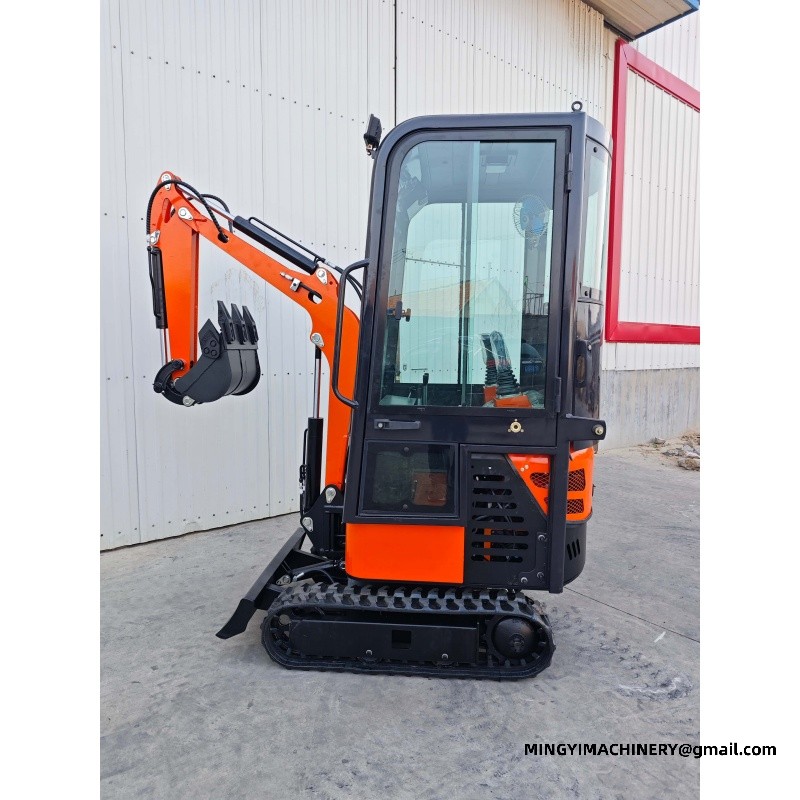
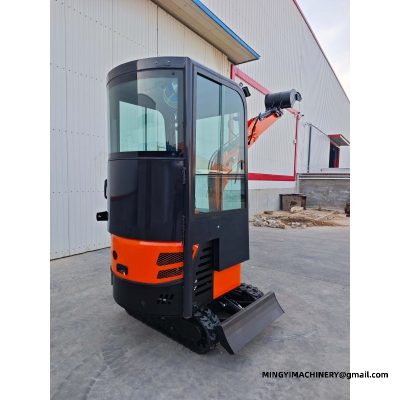
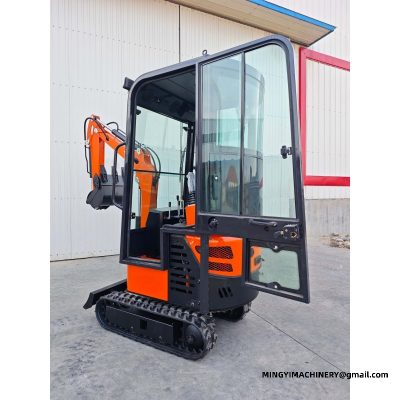
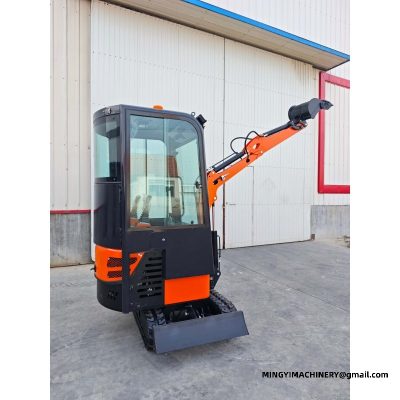
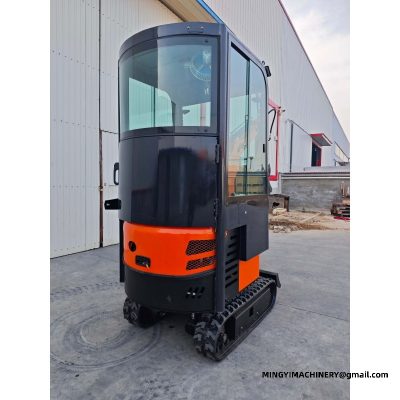
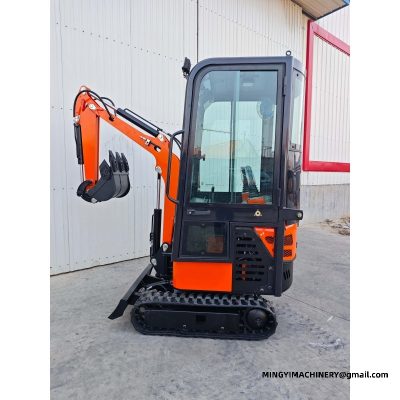
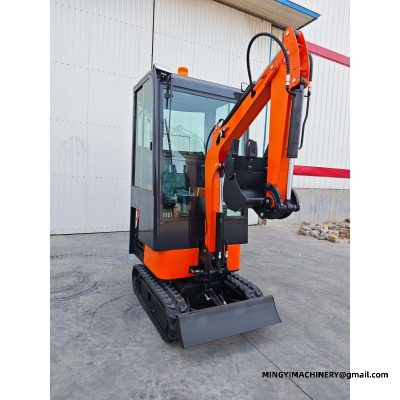
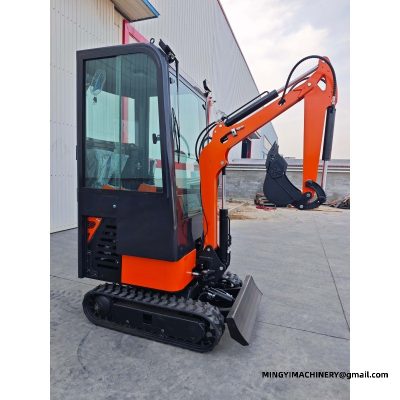
Where a mini excavator will be registered and worked shapes the engine it should carry. MINGYI builds emission-configured mini excavators to order, with the engine option and its emission arrangement agreed against the destination market before production begins.
Buyers supplying markets with engine emission requirements do not compromise on the rest of the machine: track type, cab format, boom geometry and attachment hydraulics follow the same ordering process. The emission configuration is one line on that sheet, settled first.
Selecting machines for regulated markets
The conversation starts with the destination: what the market expects of non-road engines, and which options from the available range, including Kubota and YANMAR units, suit those expectations. The sales engineer fixes the engine and its configuration at the ordering stage.
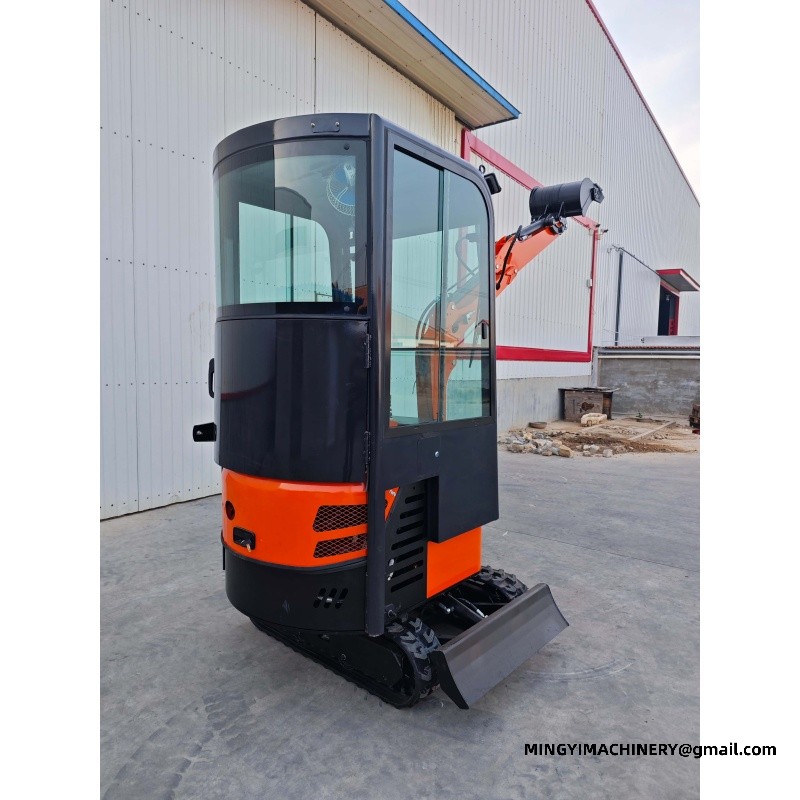
Indoor and urban work also drives the choice, since exhaust levels at the point of work matter in demolition inside occupied buildings and in city-centre trenching. Buyers should describe these sites when ordering.
Keeping the specification honest at ordering
No emission configuration should be left to assumption: the requirement is written into the order, the build follows it, and the finished machine is checked against the sheet before shipping. Buyers receive the machine as specified, with spare parts and service information for the fitted engine.
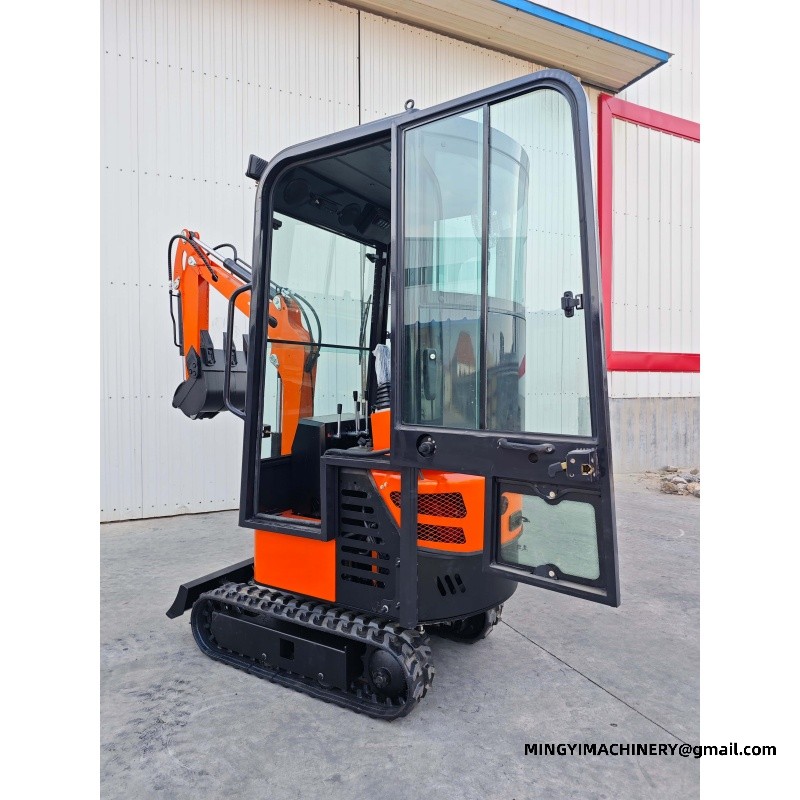
Fleet buyers placing repeat orders reference the same specification so every additional unit matches the first. This keeps one parts list and one service routine across the fleet, whatever the delivery dates.
Emission requirements are a market fact, and the answer is an engine configuration agreed before the build starts. State the destination, and the specification follows.
Getting emission-compliant mini excavator through a narrow gap The first question on most job lists is whether the machine can reach the work at all. The excavator is chosen against the narrowest point on the route - a garden gate, a doorway, a gap between two walls - because a machine that arrives and then cannot pass loses a day, not an hour. Access decides the machine before output does. With this class of machine the limiting dimension is usually the widest point on the way in, so measuring the gate, the corridor and the turning space first saves a wasted delivery and a second visit. Matching emission-compliant mini excavator to ground conditions Soft ground is a flotation problem, not a power problem. The unit in daily use on wide rubber tracks crosses lawn, sand and cultivated soil that would stop a narrower machine or a wheeled unit of the same capacity. Mixed sites are common and argue for a compromise specification. Most buyers choose rubber for a machine of this size and accept the wear, unless the majority of the work is on material that will damage it. OEM and fleet customisation of emission-compliant mini excavator Distributors and rental fleets usually need the machine to look like theirs. Paint, decals, seat colour and attachment branding can be specified on the equipment on site at build time rather than applied after import. Customisation also covers the specification sheet. A fleet buyer may want every machine itself delivered with the same coupler, the same engine and the same tool kit so training and parts stock stay simple. Operator technique for emission-compliant mini excavator Output on a compact machine comes from placement rather than power. An experienced operator keeps the model in question working inside the swing arc, positions once and digs a full run instead of repositioning for every bucket. The second habit is tool discipline. Running the machine in that duty with the right bucket width for the trench means less spoil, less reinstatement and a cleaner job than a wide bucket and a lot of trimming. Interior and light demolition with emission-compliant mini excavator Interior demolition is an access and a weight question. The unit on the job that fits through a doorway and works on a suspended floor does jobs that would otherwise be done by hand or by a larger machine that cannot enter. Breaking out a floor slab, a wall footing or a concrete step is routine work for a machine built for the work with a breaker. The machine is small enough to work inside and heavy enough to run the tool at a practical rate. Acceptance checks when a emission-compliant mini excavator arrives Delivery day is the best time to find a problem. Checking the specification against the order, the fluid levels, the fasteners and any transport damage while the excavator is still on the trailer is faster than claiming later. Documentation should arrive with the machine. Parts list, service schedule and any certificates for the equipment in service are what the workshop needs later, and they are much easier to obtain at delivery than in month six. Running this class of machine in a rental fleet The specification that rents best is usually the simplest one to explain at the counter. The unit in daily use with rubber tracks, a canopy and a coupler covers the majority of weekend and short-term hires. Fleet buyers also weigh transport. A machine of this size that a customer can tow on a normal licence and a standard trailer is a hire that does not need a delivery truck, which changes how often it goes out. Hiring versus owning the equipment on site Availability is part of the decision. Owning the machine itself means it is there on the day the ground is ready; hiring means competing for the same machine at the same time as everyone else in the season. Ownership brings obligations that hiring does not. Storage, servicing, insurance and an operator are the items to set against the hire rate before deciding which way the model in question should be supplied. Specifying the machine in that duty against a job list Buyers who skip this step either over-buy or under-buy. The unit on the job specified only from machine size tends to arrive without the coupler, the circuits or the track type the work actually needs. Useful information to send with an enquiry includes working width, required digging depth, ground conditions and the attachment set. Those four items let the factory specify a machine built for the work that fits rather than a generic build. Track choice for the equipment in service Undercarriage selection is a ground question, not a preference question. The excavator running on finished paving needs rubber; the same machine on demolition rubble or rock wears rubber quickly, so steel with rubber blocks becomes the better answer over a full season. Track type changes what the machine can cross and what it leaves behind. Buyers specify rubber for lawns, driveways and municipal work, and steel with rubber blocks for sites where sharp material would cut a rubber belt in a week. What owners should plan for beyond the class of machine Purchase decision is the visible part of the effort. Fuel, filters, tracks or tyres, the operator and the transport between sites are the items that decide what the unit in daily use actually demands over a few seasons, and they are worth listing before the order. The useful comparison is demand per working hour, not demand per machine. A machine of this size that works more hours a year spreads its standing takes over more output, which is why utilisation usually matters more than the invoice figure. Municipal and public works with the equipment on site Municipal crews work on streets, footpaths and parks where the public is present. The machine itself is specified because it occupies little space, works inside a small exclusion zone and can be moved on a standard trailer. Drainage repair, tree planting, footway reconstruction and cemetery work are all within the range of the model in question. The jobs are small individually and continuous across the year. Specification data for the machine in that duty The figures below are the factory figures for the models most often matched to the unit on the job. They are the numbers to check against the site: the depth the work needs, the reach from one position, and the width of the narrowest point on the route in. Figures are factory figures and are confirmed on the build sheet for a machine built for the work. Where a job sits between two models, the larger machine usually takes less time than the smaller one spends on rework. Support after delivery is a parts question. Wearing items for the equipment in service - filters, belts, track components, bucket teeth and pins - are the items a buyer should plan to hold before the first service interval. Remote support is handled by video. The excavator fault can often be diagnosed on a walk-around call with the panel open, which is faster than waiting for a visit and avoids shipping a part that is not needed.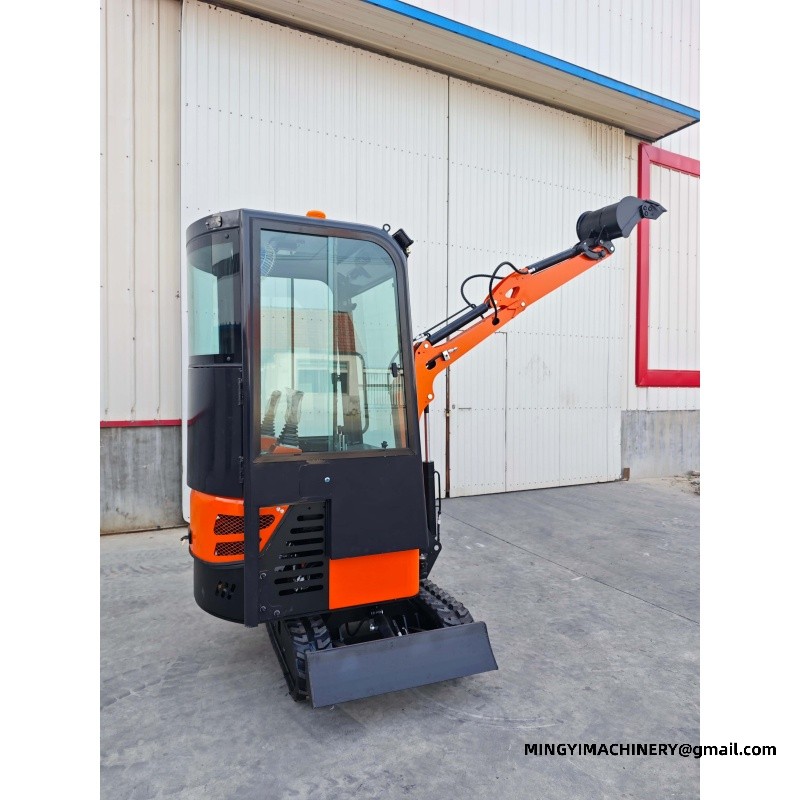
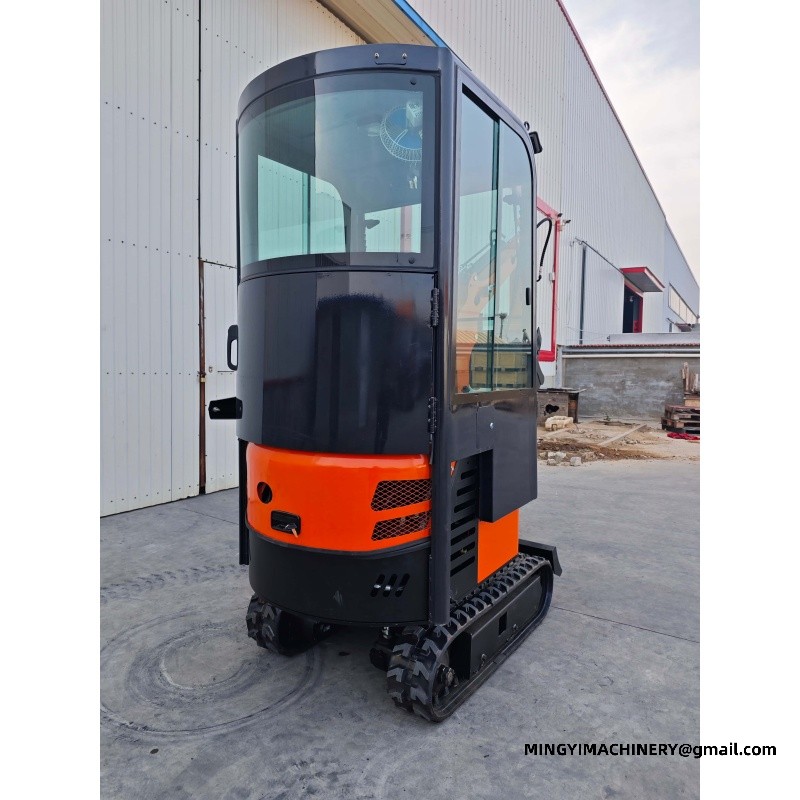
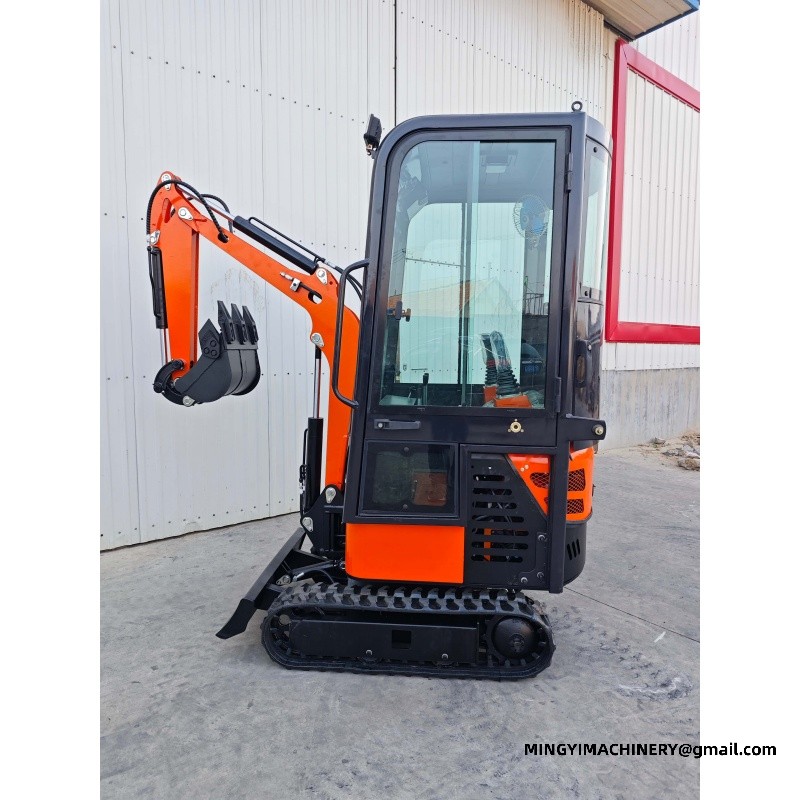
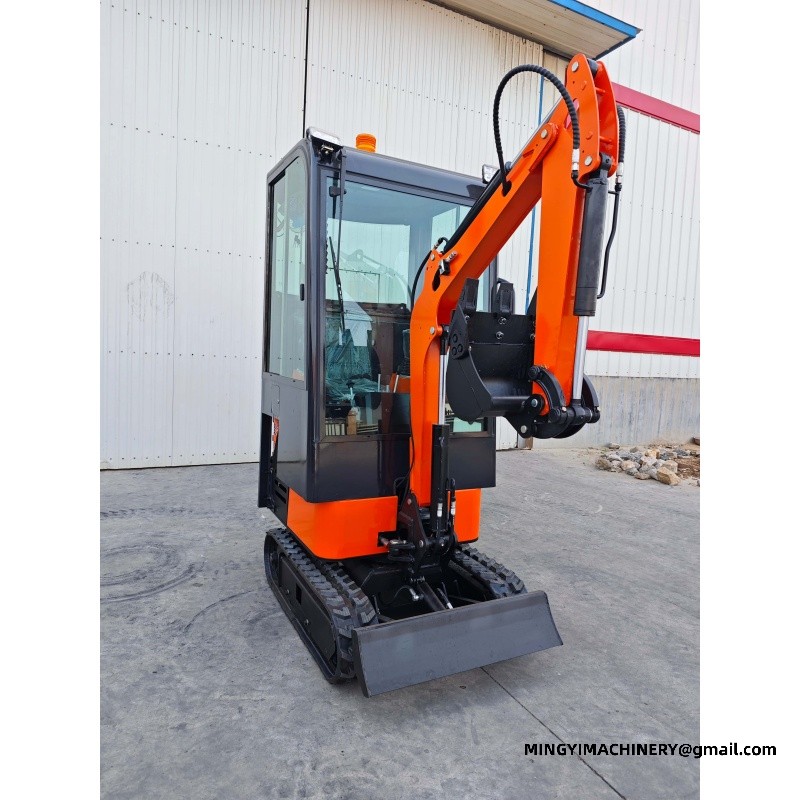
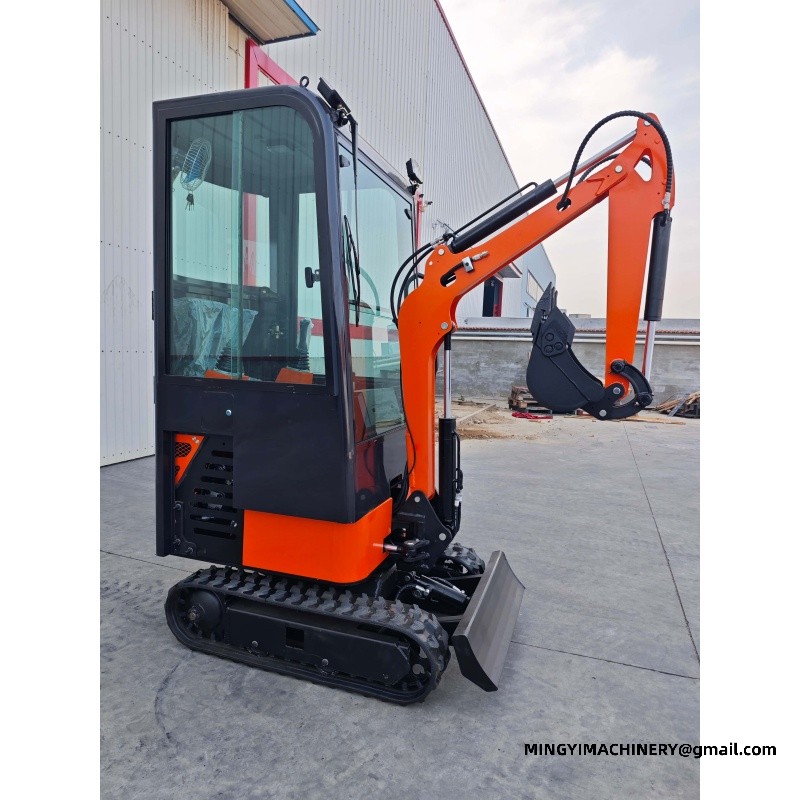
Reference specification — mini excavator range 20-1W 09L 12L 25L Operating weight 1800 kg (3968.32 lb) 1100 kg (2425.08 lb) 1200 kg (2645.55 lb) 2200 kg (4850.17 lb) Transport size (L×W×H) 2550 × 1100 × 2200 mm 2300 × 720 × 1870 mm 2200 × 930 × 2250 mm 3000 × 1300 × 2700 mm Max digging depth 1800 mm (70.87 in) 1400 mm (55.12 in) 1700 mm (66.93 in) 2300 mm (90.55 in) Max digging height 2820 mm (111.02 in) 2800 mm (110.24 in) 2600 mm (102.36 in) 3100 mm (122.05 in) Max dumping height 2050 mm (80.71 in) 1880 mm (74.02 in) 1800 mm (70.87 in) 2050 mm (80.71 in) Max digging radius 3050 mm (120.08 in) 2490 mm (98.03 in) 2900 mm (114.17 in) 3900 mm (153.54 in) Max digging distance 2300 mm (90.55 in) 2000 mm (78.74 in) 2300 mm (90.55 in) 3100 mm (125.05 in) Minimum turning radius 1450 mm (57.09 in) 1400 mm (55.12 in) 1450 mm (57.09 in) 1800 mm (70.87 in) Travel speed 5 km/h (3.11 mph) 3 km/h (1.86 mph) 3 km/h (1.86 mph) 7 km/h (4.35 mph) Gradeability 30° 30° 30° 30° Fuel consumption 2-3 L/h (0.528—0.793 gal) 1-1.3 L/h (0.264—0.343 gal) 1-1.3 L/h (0.264—0.343 gal) 2-3 L/h (0.528—0.793 gal) Fuel tank capacity 16 L (4.23 gal) 8 L (2.11 gal) 10 L (2.64 gal) 16 L (4.23 gal) Hydraulic oil tank 18 L (4.76 gal) 16 L (4.23 gal) 16 L (4.23 gal) 18 L (4.76 gal) Dozer blade lift height 180 mm (7.09 in) 180 mm (7.09 in) 180 mm (7.09 in) 230 mm (9.06 in) Dozer blade drop depth 210 mm (8.27 in) 210 mm (8.27 in) 210 mm (8.27 in) 280 mm (11.02 in)
Q. Who chooses this class of machine?
A. The engine decides how a compact digger behaves all day: the power curve, the service intervals and the way it holds revs when the hydraulics load up. Engine pages exist because buyers compare them first: the rest of the specification follows the engine decision. The unit in daily use is one of the pages buyers land on when comparing machines for emission-compliant, and the factory treats it as a specification conversation rather than a catalogue line.
Q. Can the engine be replaced later?
A. Yes, and the replacement-engine pages cover the practical side: mounts, hydraulics and cooling have to line up with the new unit. Send the model and the running hours by email or LINE and the factory confirms which engines drop into which machines without cutting the frame.
Q. Can I see the machine before it ships?
A. Inspection is arranged at the factory, in person or by a scheduled video walk-around - the same session covers paint, decals and attachment fitment for the emission-compliant specification, so the machine inspected is the machine that ships.
Pre-delivery inspection before a machine of this size leaves the shop
The last hour before packing is the best time to find a fault. Running the equipment on site through its full working cycle, checking for leaks under load and confirming that the controls match the specification avoids a conversation across time zones later.
A second operator for the machine itself
A machine that only one person can use is a single point of failure. Training a second operator on the model in question takes a day and removes the dependency that otherwise governs holidays, illness and busy weeks.
Planning the season around the machine in that duty
Workload is rarely even across the year, and the machine should be specified for the busy weeks. The unit on the job sized only for the average month will be the limiting factor exactly when the work is worth the most.
E-mail : sales@mingycn.com
LINE ( ID ): mingyicn
Related pages
diesel powered mini excavator · retractable undercarriage mini excavator · Wheel Loader for Material Handling: Pallet, Bagged and Bulk Load Duty · Mini Excavators









