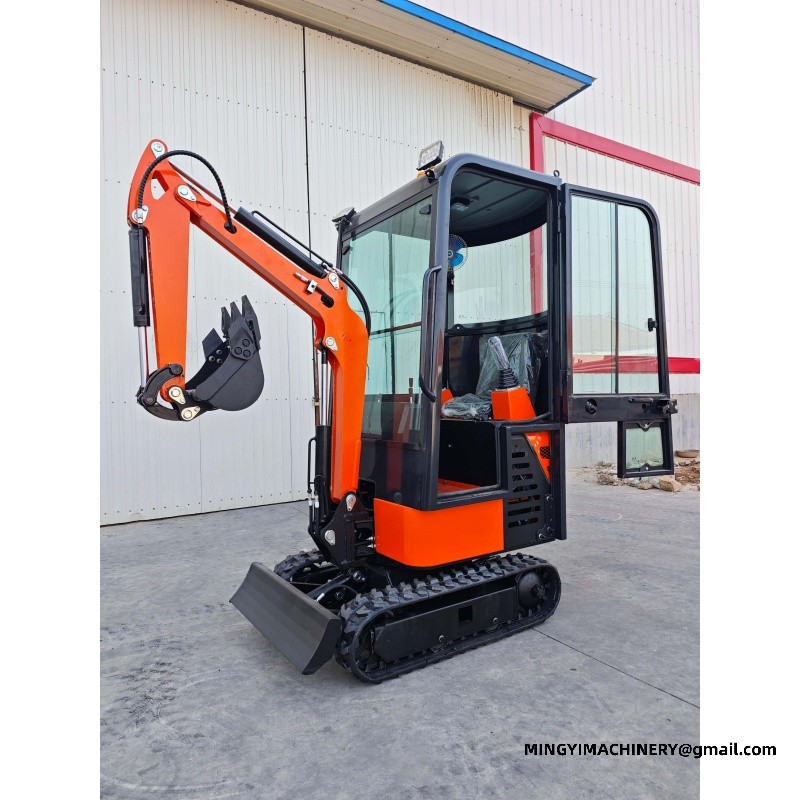
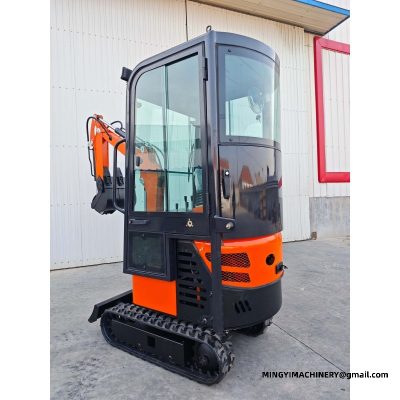
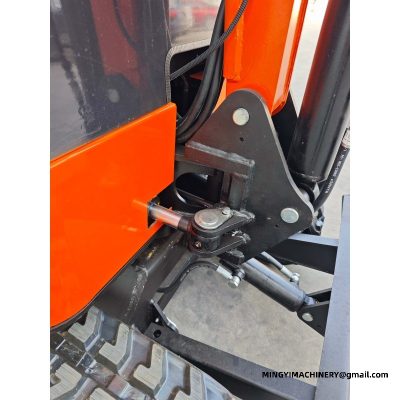
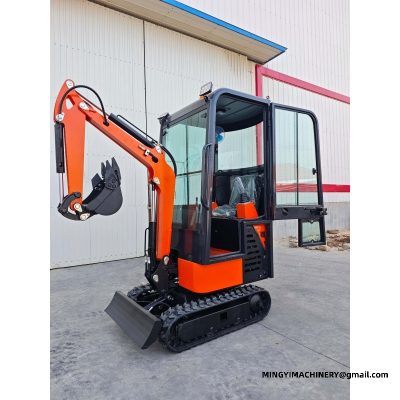
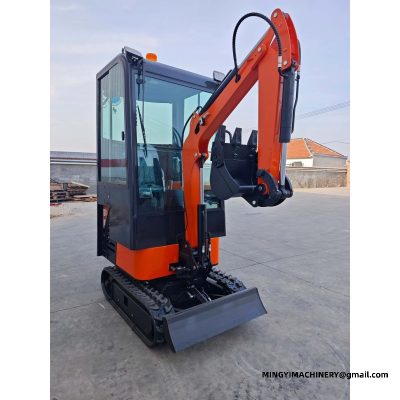
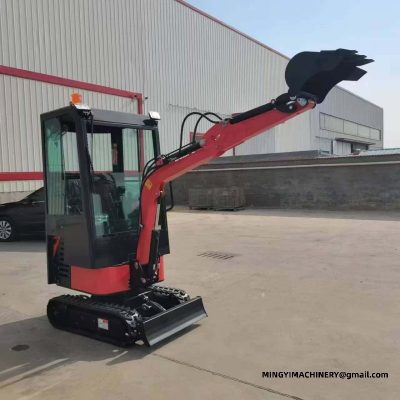
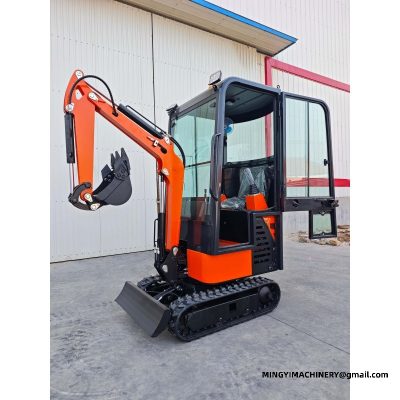
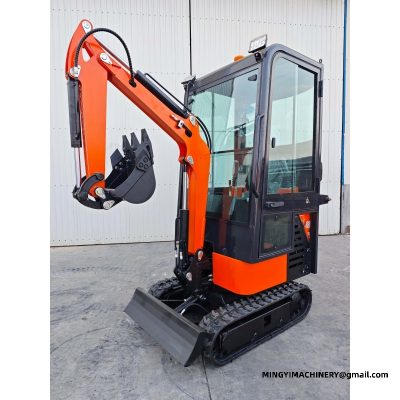
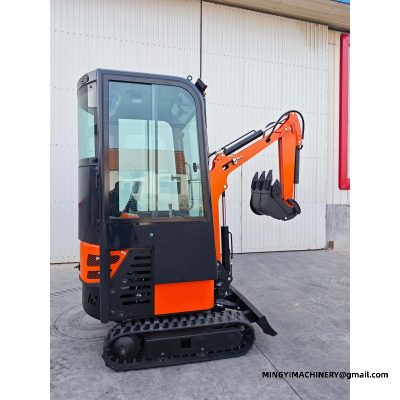
Diesel remains the practical choice for machines working a full shift away from mains power, because refuelling is quick and the engine is understood by mechanics in most markets.
MINGYI compact excavators are offered with a range of diesel engines, and the engine is fixed at the ordering stage along with the rest of the specification.
Diesel engines offered across the compact range
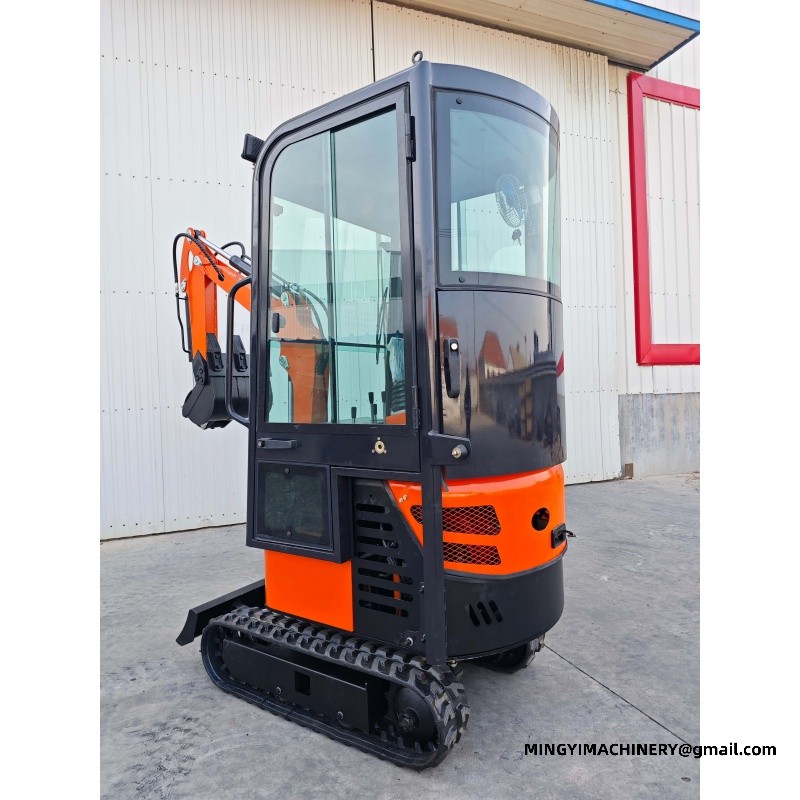
Kubota D722 and Kubota D902 are the lighter options and suit machines working in confined areas, while YANMAR engines are chosen where a buyer wants a familiar name in the local workshop.
Changchai, Laidong and Runtong are the alternatives for markets where parts and service for those engines are already established. YARMAX, Youpu 2V80 and Youpu 195 complete the list.
Practical points for diesel machines on site
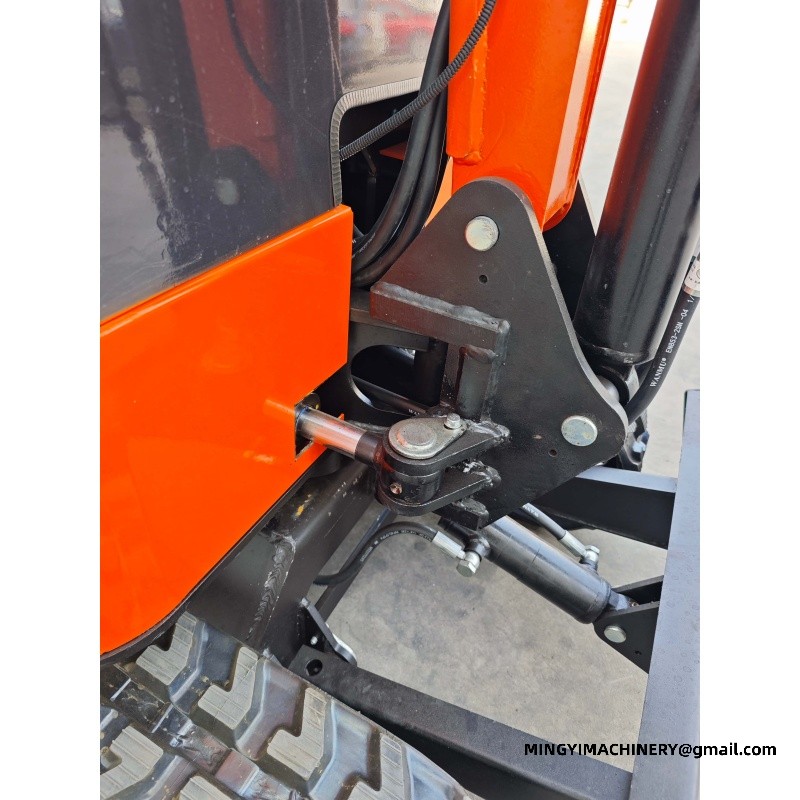
A diesel carrier can be refuelled on site from a can, which matters where the machine is parked well away from a fuel point. Servicing is straightforward and the consumables are widely available.
Because the units are built to order, the buyer states the engine, the track type and the cab form together, and the machine is assembled to that specification.
Recording the engine choice against the machine at the ordering stage keeps spare parts and service information consistent with the unit that was delivered.
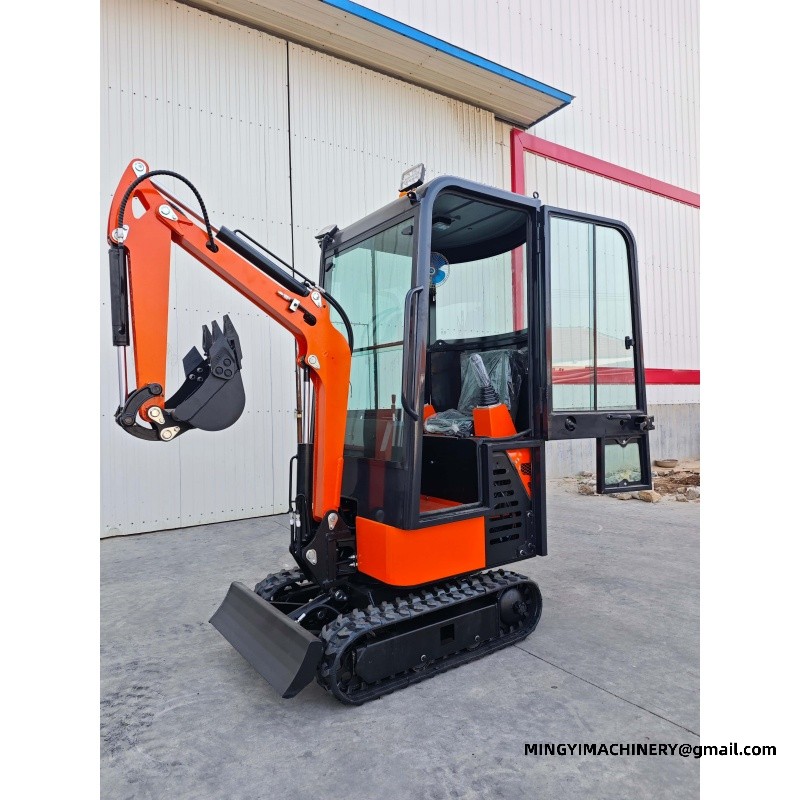
Specifying diesel powered mini excavator against a job list The practical way to specify is to write the job list first: the narrowest access, the deepest trench, the heaviest tool and the surfaces the machine must cross. The excavator is then matched to those four numbers. Buyers who skip this step either over-buy or under-buy. This class of machine specified only from machine size tends to arrive without the coupler, the circuits or the track type the work actually needs. Municipal and public works with diesel powered mini excavator Municipal crews work on streets, footpaths and parks where the public is present. The unit in daily use is specified because it occupies little space, works inside a small exclusion zone and can be moved on a standard trailer. Noise and surface protection matter on public work. A machine of this size on rubber tracks across paving, with a sealed cab for the operator, suits the conditions better than a larger tracked machine. Trenching work with diesel powered mini excavator Service trenches are the most common reason the equipment on site is hired. Water, sewage, cable and gas runs are narrow, shallow and often close to existing services, which is exactly the work a full-size machine cannot do safely. Trench quality depends on the bucket width and the operator, not on machine size. The machine itself with a narrow bucket and a swing boom cuts a clean run along a boundary without disturbing the ground either side of it. Trailering and moving diesel powered mini excavator Loading practice matters as much as the numbers. The model in question is driven up ramps under its own power with the boom lowered and the tracks aligned, and secured at the points the manufacturer specifies. Detachable components reduce transport length. The machine in that duty built with a removable arm section or a folding step fits a shorter trailer and may avoid an oversize movement permit. Lifting and material handling with a diesel powered mini excavator Stability changes with reach. A load the unit on the job handles close in becomes a different proposition at full extension, so the working radius belongs in the plan before the lift rather than during it. Ground condition under the machine is part of every lift. Soft or uneven support is the common factor in handling incidents, and checking it takes less time than recovering a machine built for the work that has settled. Canopy or enclosed cab on a diesel powered mini excavator A canopy keeps the machine light and the operator aware of the surroundings, which suits short jobs in warm weather. A fully enclosed cab is specified where rain, dust or cold are part of the working year, and it can be added to the equipment in service as a retrofit rather than only at build time. The cab decision follows the climate and the hours. Operators working a full shift in the excavator benefit from a sealed cab with wipers and heating; operators stepping on and off every few minutes usually prefer the canopy for the visibility and the quick exit. Working this class of machine in confined spaces Confined sites are decided by dimensions. Overall width, tail swing and the space needed to work the arm are what let the unit in daily use operate inside a building, between walls or in a courtyard. Clearance above matters as much as around. Door heights, pipework and overhead services set the limit for a machine of this size indoors, and measuring them first avoids a machine that arrives and cannot be used. Boom configuration for the equipment on site A swing boom lets the machine dig parallel to its tracks without repositioning, which is what makes trenching beside a wall or a fence practical. On the machine itself this is often the option that decides whether a job is possible at all. Detachable boom sections are used where transport length matters. The model in question that has to travel on a standard trailer can be built so the arm comes off for the road and goes back on at the site. Export packing and shipping of the machine in that duty Machines leave the factory prepared for container or flat rack shipment. The unit on the job is normally shipped with the attachment set and the spare parts list agreed in advance so the container is planned once. Buyers who import regularly plan the spare parts with the machine. A machine built for the work ordered with a wearing-parts kit arrives ready to work rather than ready to wait for the first service interval. Daily checks and maintenance on the equipment in service Track tension is the item most often neglected. The excavator run with slack tracks wears the undercarriage and can throw a track on a turn; run too tight, the same components wear from the other direction. Greasing is the second item. The slew ring, the boom and arm pins and the bucket linkage on this class of machine take grease daily in dusty work, and the intervals shorten further when the machine is used in water or mud. Engine options behind the unit in daily use Two buyers can order the same the equipment on site and receive different engines. The decision is rarely about peak power; it is about which parts counter is closest to the site and which engine the local mechanic already knows. Engine choice is also an emissions and documentation question for some markets. Listing the available units with a machine of this size enquiry lets the factory confirm what can be supplied and documented for the destination country. Attachments that turn the machine itself into several machines The base machine is a carrier; the tool on the end of the arm decides the task. The model in question fitted with a toothed bucket digs, and the same machine with a breaker, an auger or a grab does work that would otherwise need a second unit on site. Most of the daily variety on the machine in that duty comes from the attachment rack rather than from the machine itself. Bucket, breaker, auger, ripper, rake and grab cover the large majority of the work a contractor will see. Specification data for the unit on the job Buyers comparing a machine built for the work usually start from four numbers - weight, digging depth, reach and transport width - because those are the ones that decide whether the machine can be delivered and whether it can do the job once it is there. Every value shown is as built for the equipment in service; options such as cab, side swing or a telescopic undercarriage change the transport dimensions and are confirmed at order stage. Slope work is a stability question before it is a traction question. Knowing the gradient the excavator is rated for, and working across rather than straight up where the ground allows, removes most of the risk. Planning the direction of travel helps. Working so that the this class of machine is stable under load and not required to turn on a slope is a decision made before the job starts, not a correction made during it.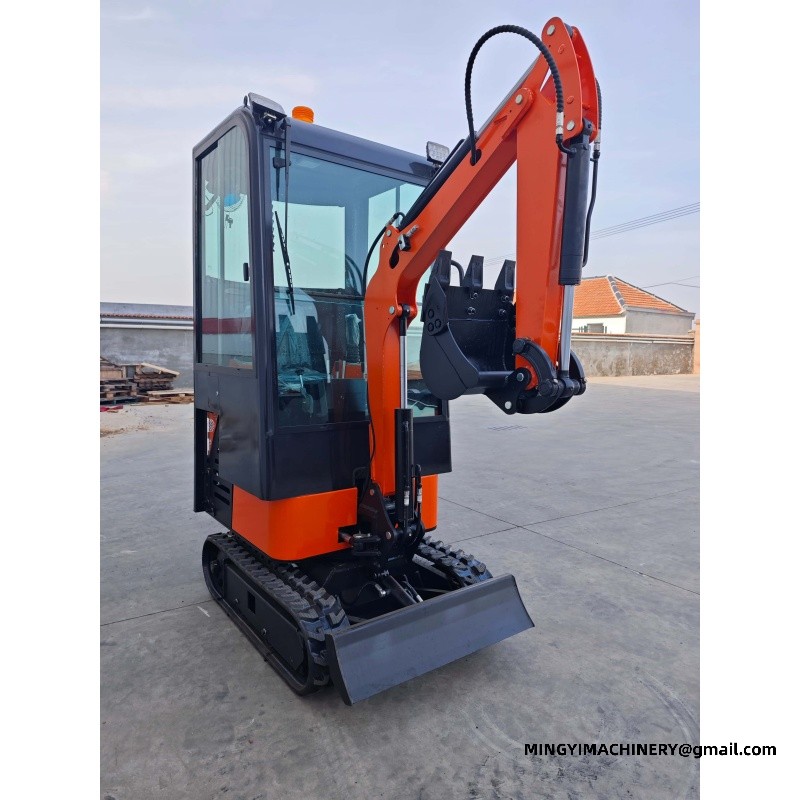
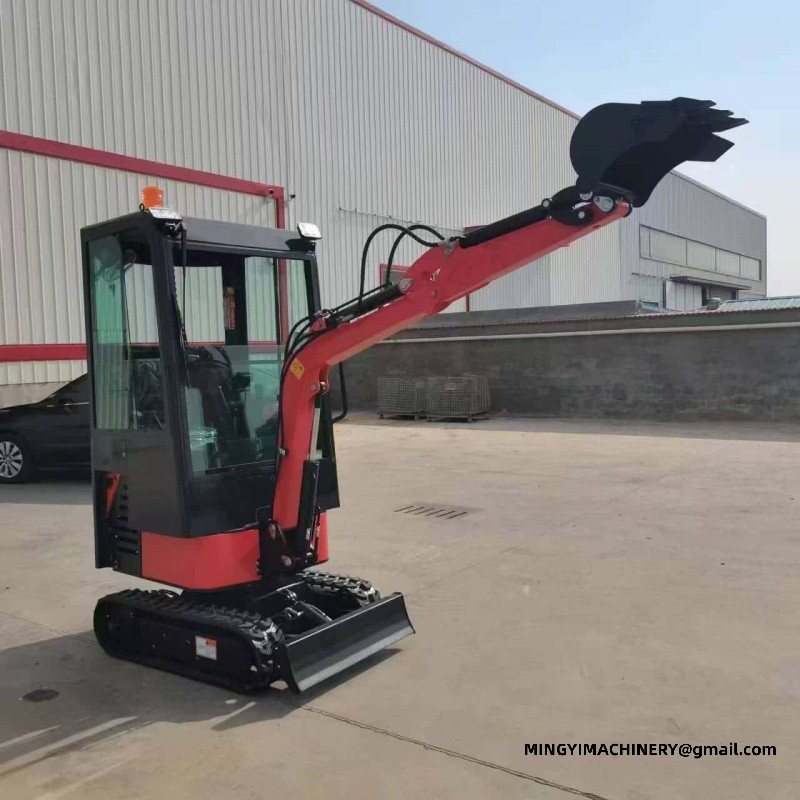
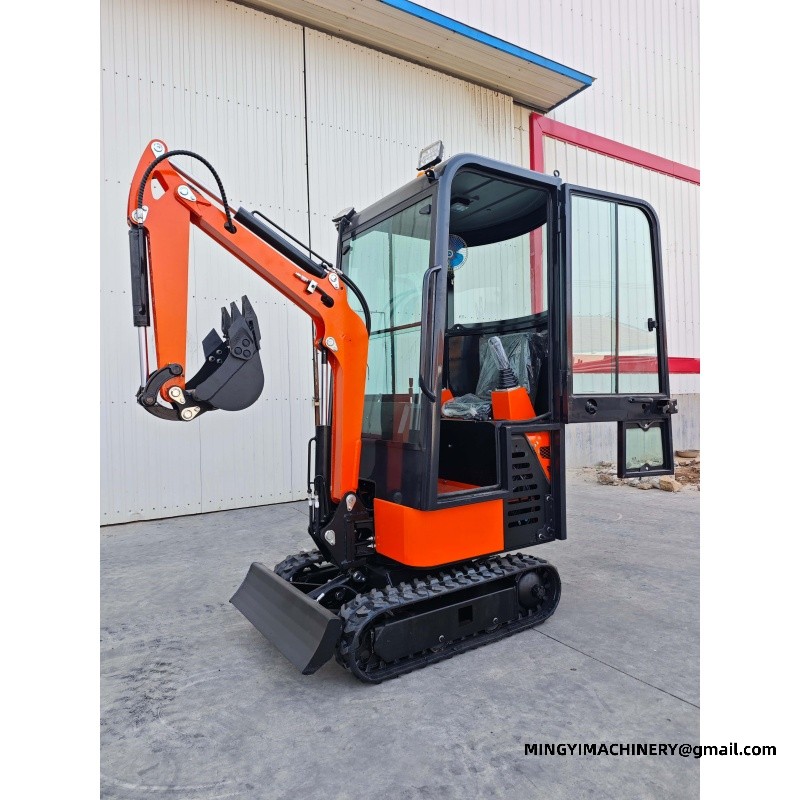
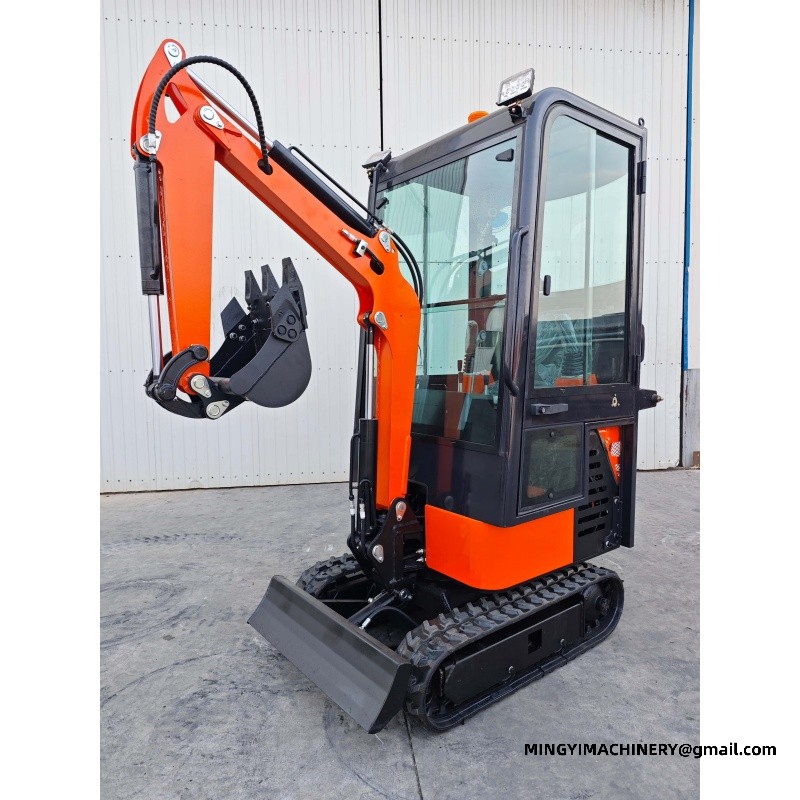
Reference specification — mini excavator range 20-3W 12L 15L 20-2L Operating weight 1900 kg (4188.78 lb) 1200 kg (2645.55 lb) 1400 kg (3086.47 lb) 1900 kg (4188.78 lb) Transport size (L×W×H) 2550 × 1100 × 2200 mm 2200 × 930 × 2250 mm 2200 × 930 × 2250 mm 2600 × 1300 × 2344 mm Max digging depth 1800 mm (70.87 in) 1700 mm (66.93 in) 1700 mm (66.93 in) 2100 mm (82.68 in) Max digging height 2820 mm (111.02 in) 2600 mm (102.36 in) 2750 mm (108.27 in) 2880 mm (113.39 in) Max dumping height 2050 mm (80.71 in) 1800 mm (70.87 in) 1960 mm (77.17 in) 2100 mm (82.68 in) Max digging radius 3050 mm (120.08 in) 2900 mm (114.17 in) 2900 mm (114.17 in) 3215 mm (126.57 in) Max digging distance 2300 mm (90.55 in) 2300 mm (90.55 in) 2300 mm (90.55 in) 2460 mm (96.85 in) Minimum turning radius 1450 mm (57.09 in) 1450 mm (57.09 in) 1450 mm (57.09 in) 1587 mm (62.48 in) Travel speed 5 km/h (3.11 mph) 3 km/h (1.86 mph) 3 km/h (1.86 mph) 5 km/h (3.11 mph) Gradeability 30° 30° 30° 30° Fuel consumption 2-3 L/h (0.528—0.793 gal) 1-1.3 L/h (0.264—0.343 gal) 1-1.3 L/h (0.264—0.343 gal) 2-3 L/h (0.528—0.793 gal) Fuel tank capacity 16 L (4.23 gal) 10 L (2.64 gal) 10 L (2.64 gal) 16 L (4.23 gal) Hydraulic oil tank 18 L (4.76 gal) 16 L (4.23 gal) 16 L (4.23 gal) 18 L (4.76 gal) Dozer blade lift height 180 mm (7.09 in) 180 mm (7.09 in) 180 mm (7.09 in) 180 mm (7.09 in) Dozer blade drop depth 210 mm (8.27 in) 210 mm (8.27 in) 210 mm (8.27 in) 210 mm (8.27 in)
Q. What is the unit in daily use used for?
A. On a compact excavator the engine shapes more than output - it sets the noise, the fuel burn and how easily a local workshop can keep the machine running. MINGYI assembles several engine options across the 08, 12 and 18 models so the machine can be matched to local fuel, parts supply and emission rules. A machine of this size is one of the pages buyers land on when comparing machines for diesel powered, and the factory treats it as a specification conversation rather than a catalogue line.
Q. How do I choose between the engine options?
A. Start from parts and service, not from the brochure. An engine your local market can filter, bleed and rebuild beats a paper advantage, and emission rules at the work site settle the rest. MINGYI matches the engine to the model and the market it will work in.
Q. How do I get a specification?
A. Send the model, the destination and the attachment list by email or LINE - the channels listed just below this section. The reply covers the specification, lead time, packing and freight in one document, with the diesel powered build sheet attached.
Packing, loading and shipment of the equipment on site
Export packing is part of the machine, not an afterthought. The machine itself is blocked and braced inside the container so that it arrives in the same condition it left, and the load plan is decided by the dimensions rather than by what fits loosely.
A second operator for the model in question
Shared machines need shared habits. Two operators on the machine in that duty should do the same daily checks in the same order, because the check that one person skips is the check that eventually matters.
Commissioning the unit on the job on site
Transport shakes things loose. A short check of a machine built for the work after the crate is opened, covering the same points the pre-delivery inspection covered, is the most useful insurance available on delivery day.
E-mail : sales@mingycn.com
LINE ( ID ): mingyicn
Related pages
retractable undercarriage mini excavator · offset boom digger for kerbs and walls · Wheel Loader for Aggregate Yard: Stockpiles and Haul Cycles · Mini Excavators









