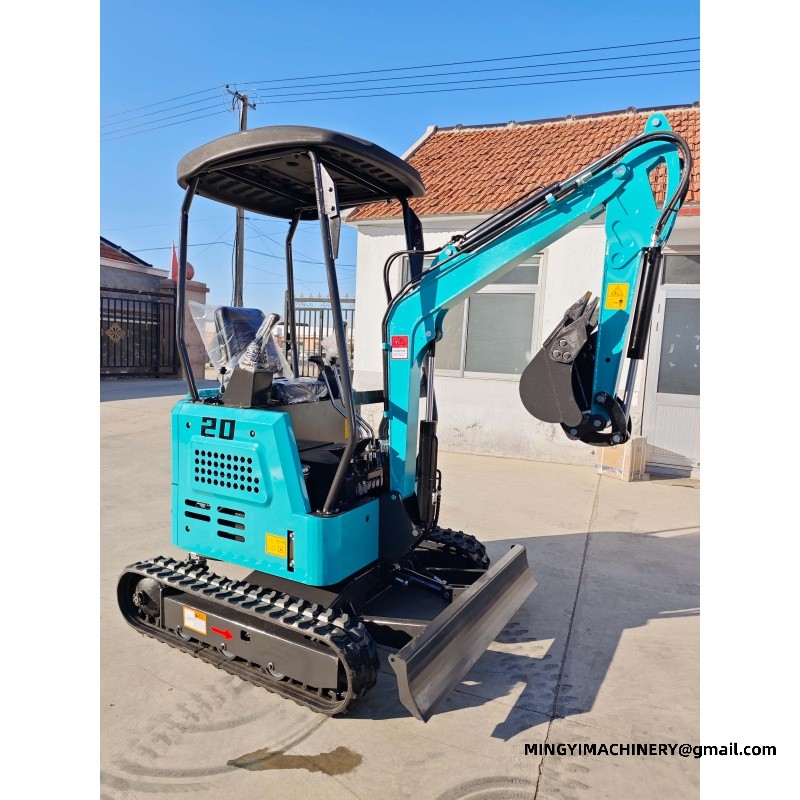
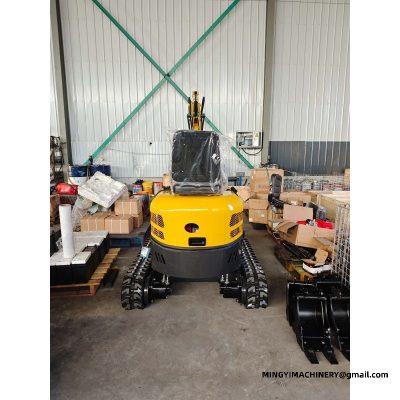
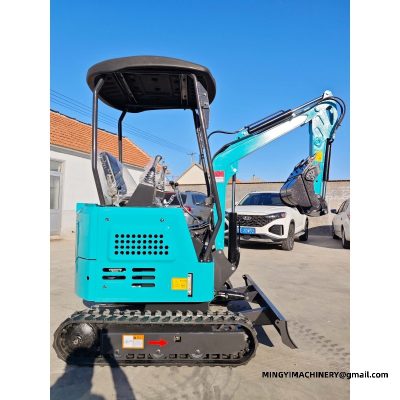
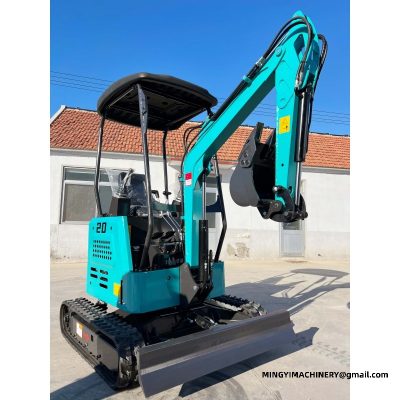
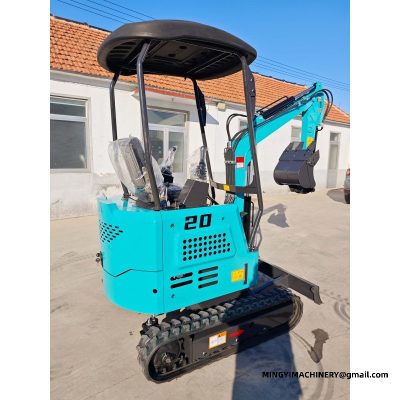
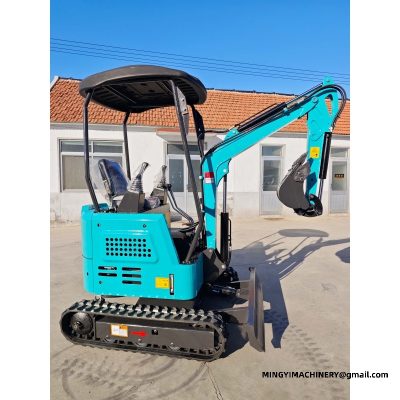
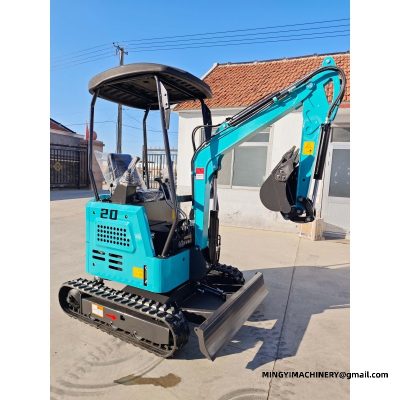
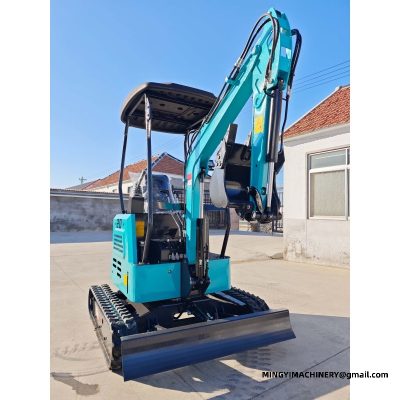
In a lane between two walls, the tail of a conventional excavator is the part that hits first. MINGYI zero tail swing mini excavators keep the upper structure within the track footprint while slewing, so the machine turns fully in the space it already occupies.
That geometry is why these units serve indoor demolition, cellar work, trenching against foundations and any site bounded by masonry or fencing. The operator concentrates on the digging line instead of the counterweight.
Working flush against walls and openings
Because nothing overhangs the tracks during the swing, the machine can dig parallel to a foundation and load a barrow positioned behind it in the same confined strip. Basement underpinning and cellar floor removal run on this clearance.
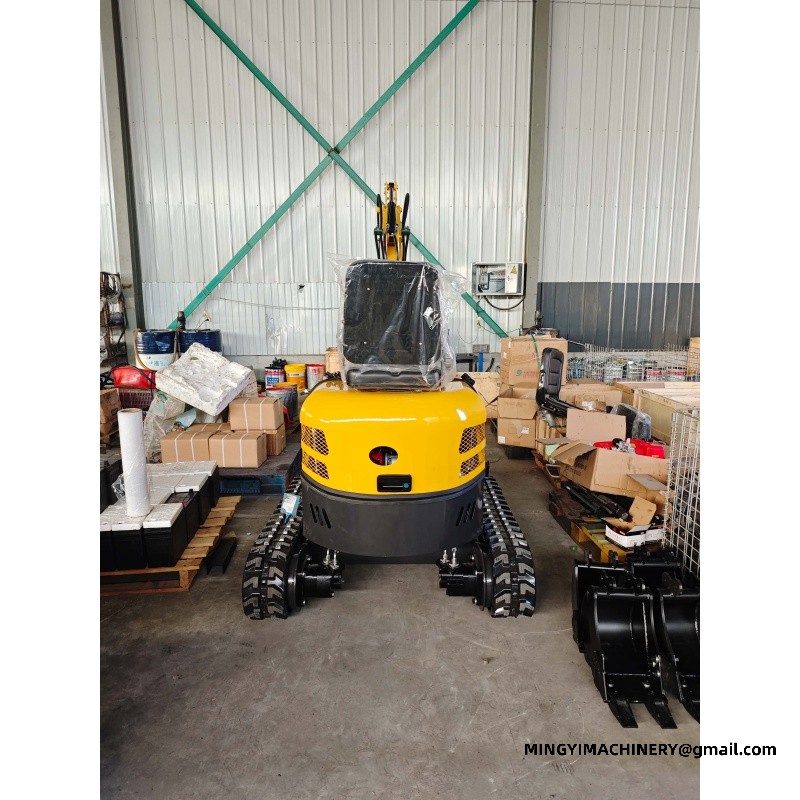
In occupied buildings, the zero tail body passes through gateways and internal openings that would stop a conventional unit, and the swing radius never clips door frames during the work cycle. This is also why they suit courtyard and terrace housing jobs.
Ordering a zero tail unit from MINGYI
The zero tail configuration is combined at the ordering stage with track type, canopy or cab and the tool package, and the whole build is recorded against the machine. Indoor demolition crews typically add a breaker hammer and a narrow bucket to the same order.
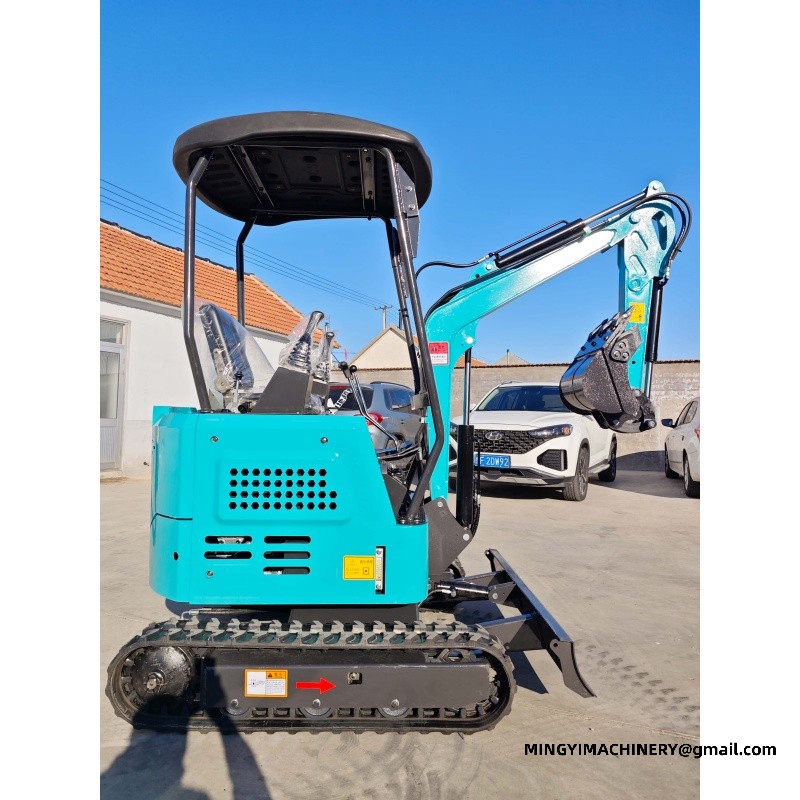
Rubber tracks are the common choice where floors and paved surfaces have to be protected, while steel tracks with rubber blocks serve tougher ground. Buyers should describe the tightest opening the machine must pass through.
A zero tail swing excavator is the right machine wherever the working space is defined by what is already built around it. MINGYI can check the site clearances with the buyer and fix the configuration before the build starts.
Parts, service and support for zero tail swing digger for narrow lanes Engine parts availability usually drives the engine choice. The excavator built with an engine the local network already carries is serviced from stock rather than from an international order. Remote support is handled by video. This class of machine fault can often be diagnosed on a walk-around call with the panel open, which is faster than waiting for a visit and avoids shipping a part that is not needed. Working on slopes and uneven ground with zero tail swing digger for narrow lanes Ground that looks level often is not. The unit in daily use crossing a filled trench, a soft edge or a hidden void behaves differently from one on undisturbed ground, and those are the places worth walking before driving. Planning the direction of travel helps. Working so that the A machine of this size is stable under load and not required to turn on a slope is a decision made before the job starts, not a correction made during it. Engine options behind zero tail swing digger for narrow lanes Power unit selection is settled against the service network the buyer already uses. MINGYI offers Kubota D722, Kubota D902, YANMAR, Changchai, Laidong, Runtong, YARMAX, Youpu 2V80 and Youpu 195, so a fleet running one brand of engine can keep the same filters, the same parts supplier and the same mechanic. Two buyers can order the same the equipment on site and receive different engines. The decision is rarely about peak power; it is about which parts counter is closest to the site and which engine the local mechanic already knows. OEM and fleet customisation of zero tail swing digger for narrow lanes Customisation also covers the specification sheet. A fleet buyer may want every model in question delivered with the same coupler, the same engine and the same tool kit so training and parts stock stay simple. Documentation can be prepared to suit the importer. Manuals, parts books and decal sets for the machine itself can be supplied with the buyer's own branding where the order size justifies it. Canopy or enclosed cab on a zero tail swing digger for narrow lanes The cab decision follows the climate and the hours. Operators working a full shift in the machine in that duty benefit from a sealed cab with wipers and heating; operators stepping on and off every few minutes usually prefer the canopy for the visibility and the quick exit. Enclosure also changes noise and dust exposure. A sealed cab on the unit on the job keeps dust out on dry sites and lets the machine work through weather that would otherwise stop a canopy machine for the day. Boom configuration for zero tail swing digger for narrow lanes A swing boom lets the machine dig parallel to its tracks without repositioning, which is what makes trenching beside a wall or a fence practical. On a machine built for the work this is often the option that decides whether a job is possible at all. Extended and offset boom configurations change reach and working range. The equipment in service with a longer arm reaches further but lifts less at full extension, so the specification is set against the deepest and furthest point on the job list. Working near live services with the excavator Digging near water, gas and cable is a precision job. This class of machine is used here because the operator can work in short controlled cuts and because the machine can be positioned without driving over the run being exposed. The risk on utility work is not machine power but machine placement. The unit in daily use that fits the working width leaves the surrounding ground undisturbed, which keeps the trench stable and the reinstatement small. Trenching work with a machine of this size Trench quality depends on the bucket width and the operator, not on machine size. The equipment on site with a narrow bucket and a swing boom cuts a clean run along a boundary without disturbing the ground either side of it. Depth control matters more on service work than speed. The machine itself working beside live services is chosen because it can be placed precisely and stopped instantly, which is what the job actually requires. Municipal and public works with the model in question Municipal crews work on streets, footpaths and parks where the public is present. The machine in that duty is specified because it occupies little space, works inside a small exclusion zone and can be moved on a standard trailer. Drainage repair, tree planting, footway reconstruction and cemetery work are all within the range of the unit on the job. The jobs are small individually and continuous across the year. Interior and light demolition with a machine built for the work Interior demolition is an access and a weight question. The equipment in service that fits through a doorway and works on a suspended floor does jobs that would otherwise be done by hand or by a larger machine that cannot enter. Dust, debris clearance and floor loading all argue for a compact machine indoors. The excavator spreads its weight over a wider track footprint than a wheeled machine of similar capacity. Hiring versus owning this class of machine The choice follows the hours. Work that fills a few weeks a year is usually better hired, while the unit in daily use that would be on site most weeks starts to justify ownership once the transport and booking time is counted. Availability is part of the decision. Owning a machine of this size means it is there on the day the ground is ready; hiring means competing for the same machine at the same time as everyone else in the season. Specification data for the equipment on site The figures below are the factory figures for the models most often matched to the machine itself. They are the numbers to check against the site: the depth the work needs, the reach from one position, and the width of the narrowest point on the route in. These are the reference figures for the model in question. MINGYI confirms the final build sheet, including engine and attachment choices, against the destination and the job list before production. The specification that rents best is usually the simplest one to explain at the counter. The machine in that duty with rubber tracks, a canopy and a coupler covers the majority of weekend and short-term hires. Fleet buyers also weigh transport. The unit on the job that a customer can tow on a normal licence and a standard trailer is a hire that does not need a delivery truck, which changes how often it goes out.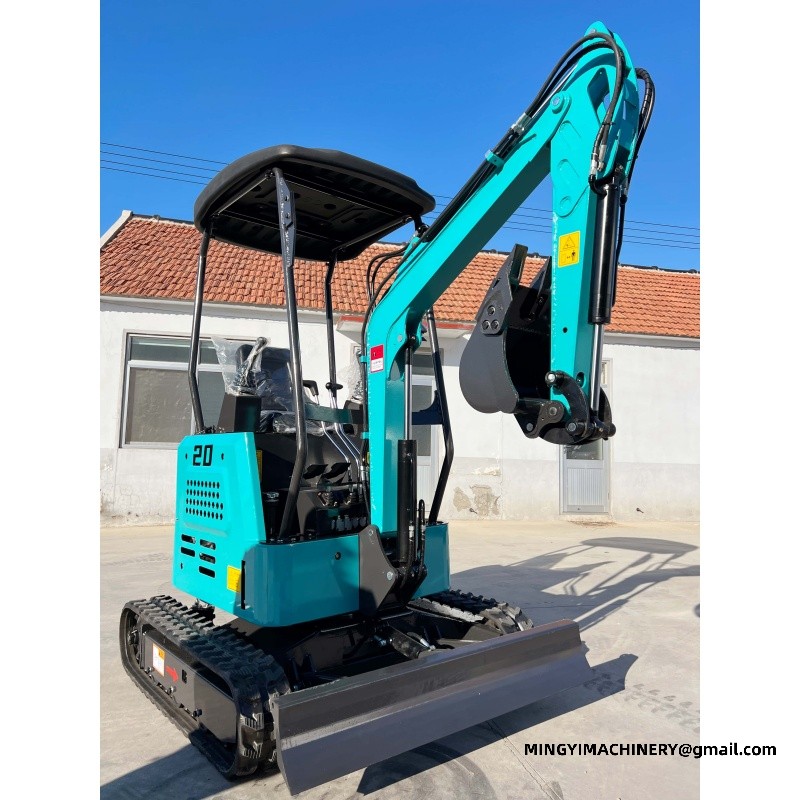
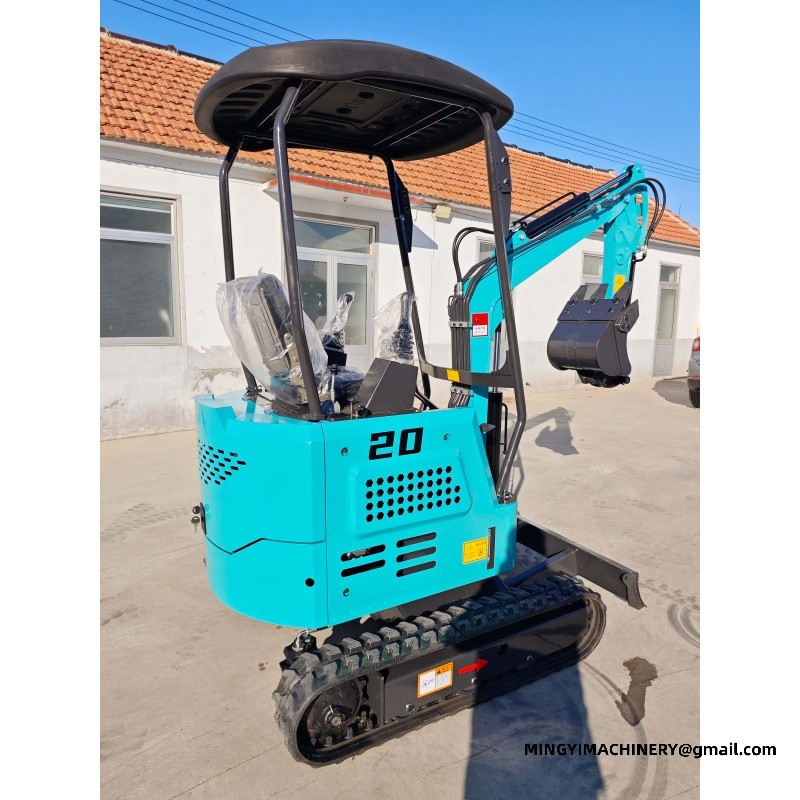
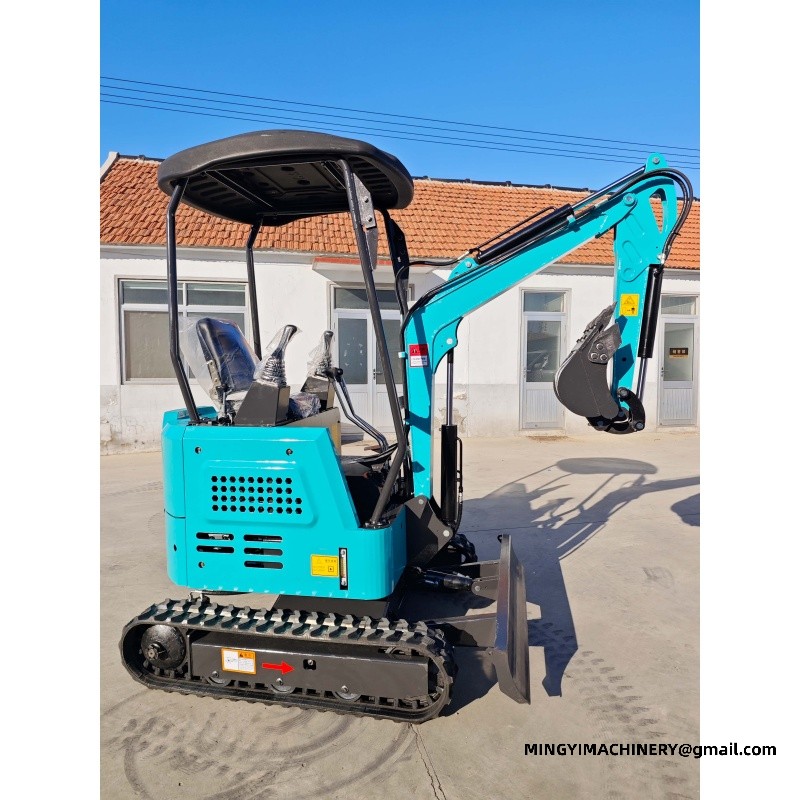
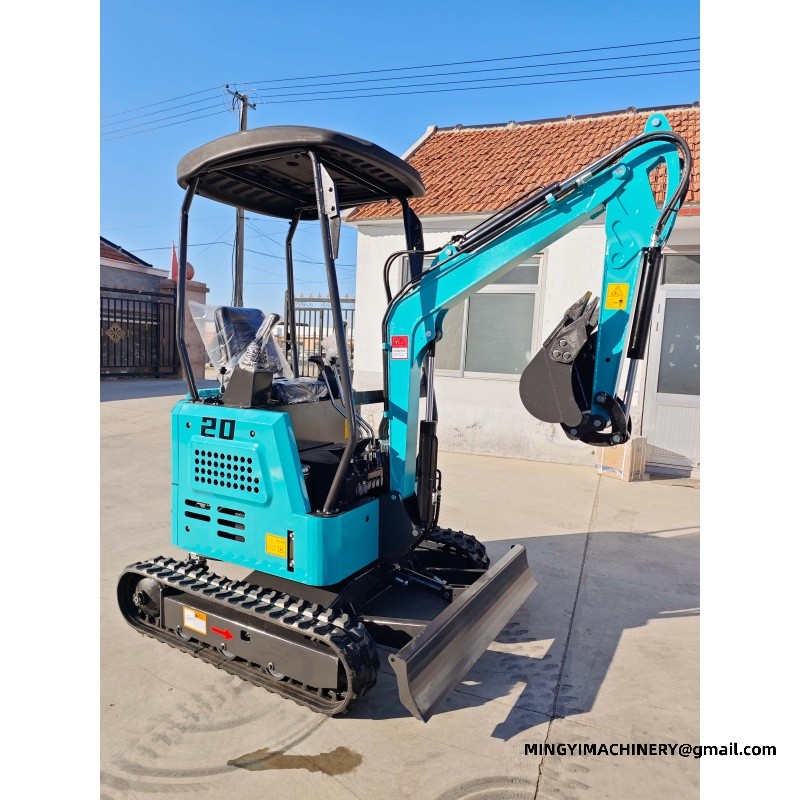
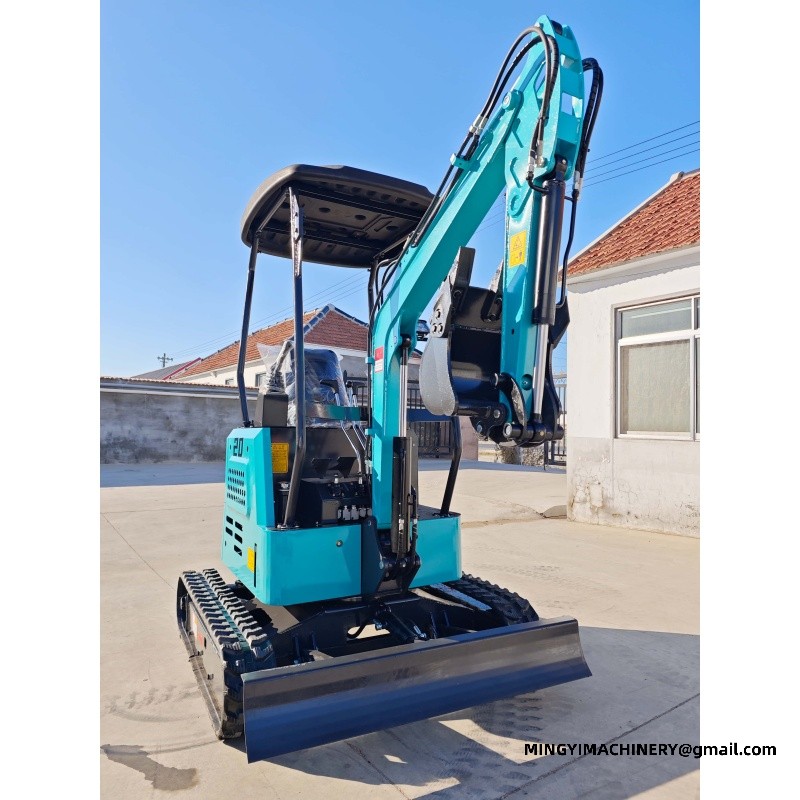
Reference specification — mini excavator range 15W 30-1W 15L 30-2L Operating weight 1400 kg (3086.47 lb) 2900 kg (6393.41 lb) 1400 kg (3086.47 lb) 2400 kg (5291 lb) Transport size (L×W×H) 2200 × 930 × 2250 mm 3000 × 1250 × 2780 mm 2200 × 930 × 2250 mm 2800 × 1500 × 2500 mm Max digging depth 1630 mm (64.17 in) 2200 mm (86.61 in) 1700 mm (66.93 in) 2200 mm (86.61 in) Max digging height 2750 mm (108.27 in) 3400 mm (133.86 in) 2750 mm (108.27 in) 2900 mm (114.17 in) Max dumping height 1960 mm (77.17 in) 2400 mm (94.49 in) 1960 mm (77.17 in) 2100 mm (82.68 in) Max digging radius 2900 mm (114.17 in) 4000 mm (157.48 in) 2900 mm (114.17 in) 3330 mm (131.1 in) Max digging distance 2100 mm (82.68 in) 2800 mm (110.24 in) 2300 mm (90.55 in) 2700 mm (106.3 in) Minimum turning radius 1300 mm (51.18 in) 2000 mm (78.74 in) 1450 mm (57.09 in) 1555 mm (61.22 in) Travel speed 3 km/h (1.86 mph) 5 km/h (3.11 mph) 3 km/h (1.86 mph) 7 km/h (4.35 mph) Gradeability 30° 30° 30° 30° Fuel consumption 1-1.3 L/h (0.264—0.343 gal) 2-3 L/h (0.528—0.793 gal) 1-1.3 L/h (0.264—0.343 gal) 2-3 L/h (0.528—0.793 gal) Fuel tank capacity 10 L (2.64 gal) 16 L (4.23 gal) 10 L (2.64 gal) 16 L (4.23 gal) Hydraulic oil tank 16 L (4.23 gal) 20 L (5.28 gal) 16 L (4.23 gal) 18 L (4.76 gal) Dozer blade lift height 180 mm (7.09 in) 420 mm (16.54 in) 180 mm (7.09 in) 230 mm (9.06 in) Dozer blade drop depth 210 mm (8.27 in) 210 mm (8.27 in) 210 mm (8.27 in) 280 mm (11.02 in)
Q. Who uses the machine built for the work?
A. The whole point of the smallest classes is presence - a digging machine that reaches work nothing bigger can enter. Retractable frames narrow for the passage then widen for stability, so nothing is given up once the machine is through. The equipment in service is one of the pages buyers land on when comparing machines for narrow lanes, and the factory treats it as a specification conversation rather than a catalogue line.
Q. What can such a small digger actually do?
A. More than its size suggests: inside a basement or behind a boundary it digs footings, breaks floors and grades the sub-base at rates hand digging cannot touch. The limit is reach and lift, not willingness.
Q. What support follows the sale?
A. Spare-part kits, wear items and service documentation ship with the programme, and the parts team works from the serial plate to match components exactly. Warranty and support terms for the narrow lanes order are confirmed in writing before the machine leaves.
Storage and long idle periods for the excavator
A stored machine should be brought back carefully. Before this class of machine returns to work the fluids, the brakes and the controls are checked, because months of standing change more than a weekend does.
Wear items and spares worth holding for the unit in daily use
The parts that stop a machine are rarely the parts that are hardest to find. Filters, belts, seals and the ground engaging tools on a machine of this size are easy to hold and slow to replace, which is why they belong on the shelf rather than on an order.
E-mail : sales@mingycn.com
LINE ( ID ): mingyicn
Heat and hydraulic temperature in zero tail swing digger for narrow lanes
Cooling cores blocked with dust or seed husks are the common cause in summer, and cleaning them from the inside out works better than washing the face of the radiator.
Continuous high-flow work in high ambient temperature is where a duty cycle helps, because a short pause every hour cools the system more than a long stop at midday.
Related pages
offset boom digger for wall work · excavator attachments for landscaping · Loader Machine for Construction: Specifying for Site Cycles · Mini Excavators









