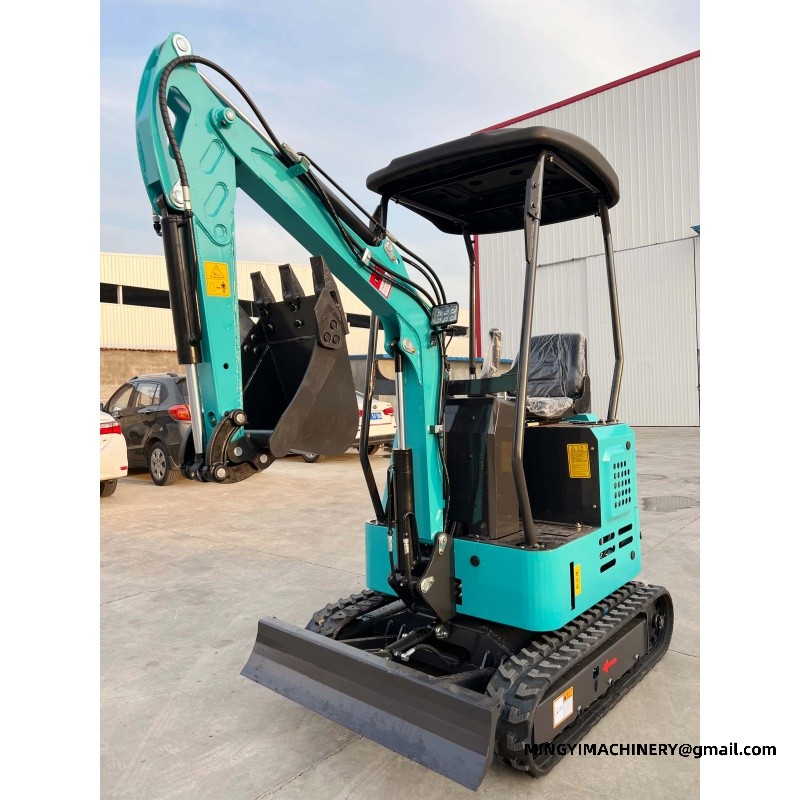
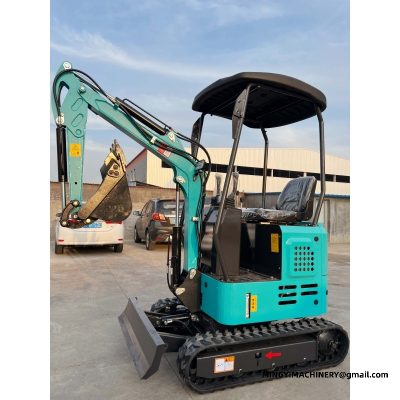
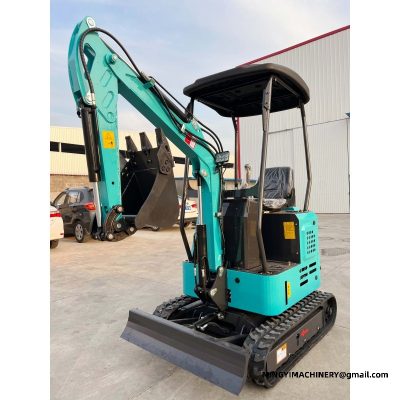
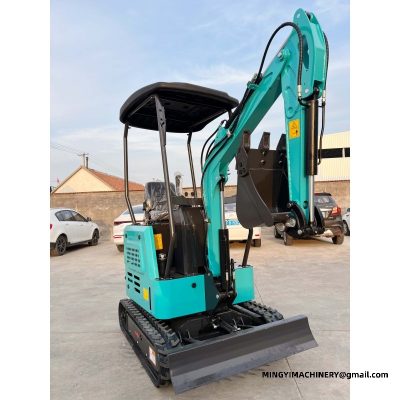
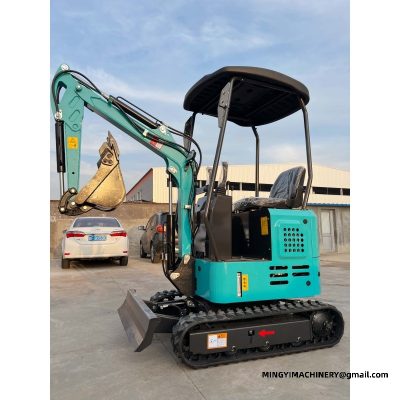
The first obstacle on many domestic and commercial jobs is the entrance. A digger that will not pass the gate, the doorway or the garden path never gets to the work, whatever its specification on paper.
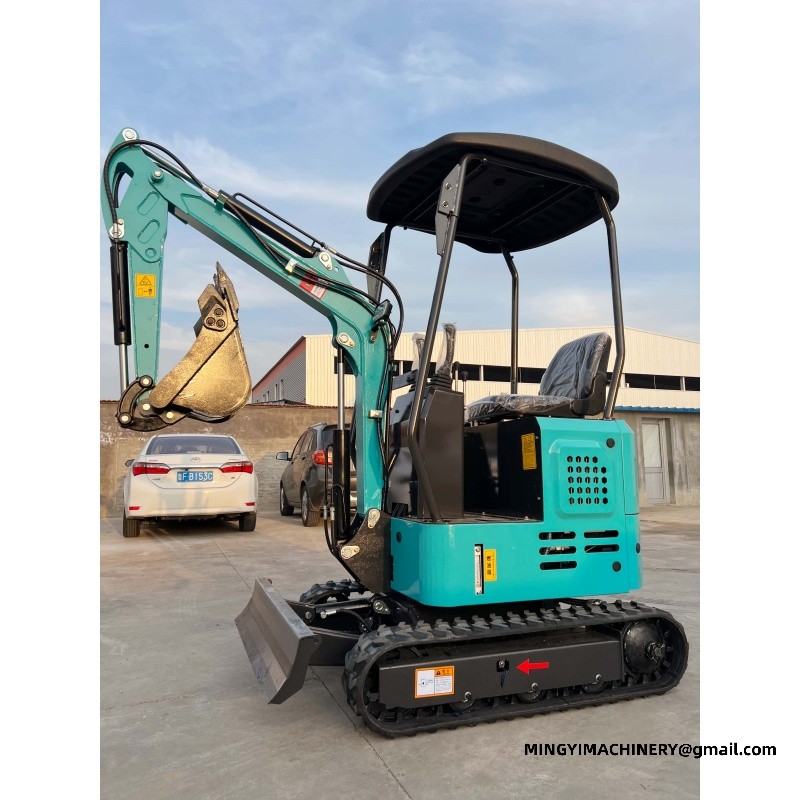
MINGYI builds compact crawler excavators that can be set up for restricted access, including retractable undercarriages and short tail arrangements. The machine is assembled to order so the access route can be matched before the build begins.
Passing narrow gates and doorways
Access is measured in the smallest dimension along the route, not the working area itself. A machine narrow enough for the gate may still be too tall for an archway or too wide across the tracks once it is loaded with a wider attachment.
A retractable undercarriage solves part of the problem by narrowing the tracks for the entry. Once inside, the undercarriage is widened again so the machine is stable enough to dig.
Planning an access route before the machine arrives
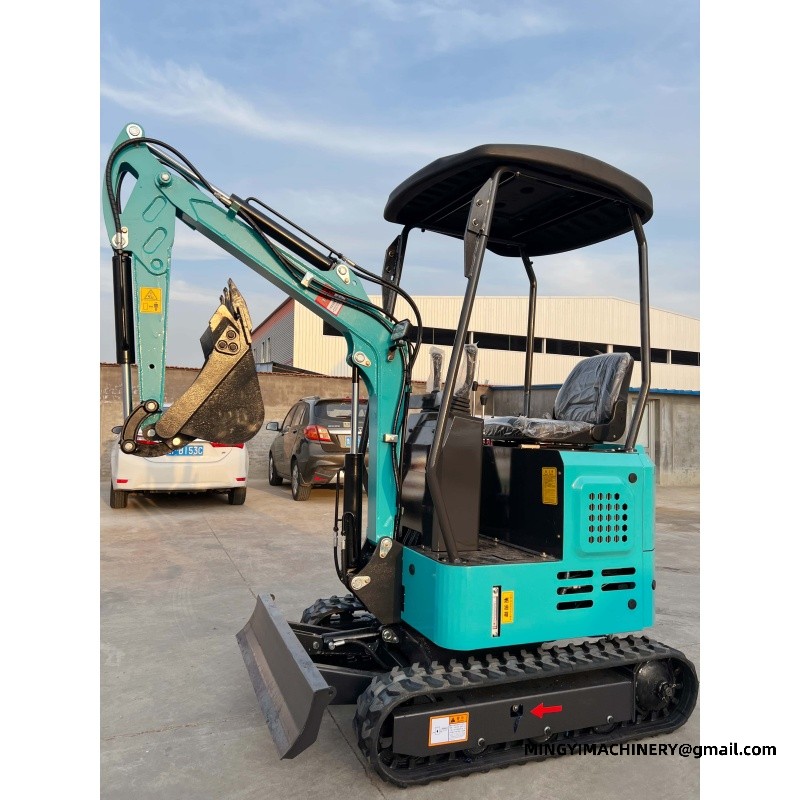
The route should be checked on site while the order is still open. Gate widths, door openings, kerbs and any step at the threshold all decide whether the intended class will reach the work at all.
If the route is tight, the boom arrangement and the cab form become access decisions as much as working ones. A canopy machine is lower than a cab version, and an offset boom lets the machine dig beside a wall on a narrow site.
For restricted access work the route is part of the specification. Measuring the tightest point before ordering turns a difficult delivery into a routine one and avoids moving fences that need never have been touched.
Boom configuration for mini excavator for narrow gate access A swing boom lets the machine dig parallel to its tracks without repositioning, which is what makes trenching beside a wall or a fence practical. On the excavator this is often the option that decides whether a job is possible at all. Extended and offset boom configurations change reach and working range. This class of machine with a longer arm reaches further but lifts less at full extension, so the specification is set against the deepest and furthest point on the job list. Trailering and moving mini excavator for narrow gate access Transport weight and width decide whether a machine needs a specialist haulier. The unit in daily use sized to travel on a standard plant trailer behind a suitable vehicle moves with the crew rather than on a scheduled low loader. Detachable components reduce transport length. A machine of this size built with a removable arm section or a folding step fits a shorter trailer and may avoid an oversize movement permit. Trenching work with mini excavator for narrow gate access Service trenches are the most common reason the equipment on site is hired. Water, sewage, cable and gas runs are narrow, shallow and often close to existing services, which is exactly the work a full-size machine cannot do safely. Depth control matters more on service work than speed. The machine itself working beside live services is chosen because it can be placed precisely and stopped instantly, which is what the job actually requires. Engine options behind mini excavator for narrow gate access Power unit selection is settled against the service network the buyer already uses. MINGYI offers Kubota D722, Kubota D902, YANMAR, Changchai, Laidong, Runtong, YARMAX, Youpu 2V80 and Youpu 195, so a fleet running one brand of engine can keep the same filters, the same parts supplier and the same mechanic. Engine choice is also an emissions and documentation question for some markets. Listing the available units with the model in question enquiry lets the factory confirm what can be supplied and documented for the destination country. Road and paving work for mini excavator for narrow gate access Patching and reinstatement favour a machine that can work in a lane closure. The machine in that duty occupies less road than a full-size excavator, which reduces the traffic management needed and the length of the closure. Breaking out a failed slab and backfilling the same hole in one visit is normal work for the unit on the job. The breaker and the bucket come off the same coupler, so the road is reopened the same day. Daily checks and maintenance on mini excavator for narrow gate access Daily maintenance on a machine built for the work is a short list: engine oil level, coolant, track tension, hydraulic oil level and a look at the hoses. Ten minutes at the start of the shift prevents most of the failures that stop a machine. Greasing is the second item. The slew ring, the boom and arm pins and the bucket linkage on the equipment in service take grease daily in dusty work, and the intervals shorten further when the machine is used in water or mud. Municipal and public works with the excavator Drainage repair, tree planting, footway reconstruction and cemetery work are all within the range of this class of machine. The jobs are small individually and continuous across the year. Noise and surface protection matter on public work. The unit in daily use on rubber tracks across paving, with a sealed cab for the operator, suits the conditions better than a larger tracked machine. Hiring versus owning a machine of this size The choice follows the hours. Work that fills a few weeks a year is usually better hired, while the equipment on site that would be on site most weeks starts to justify ownership once the transport and booking time is counted. Availability is part of the decision. Owning the machine itself means it is there on the day the ground is ready; hiring means competing for the same machine at the same time as everyone else in the season. OEM and fleet customisation of the model in question Customisation also covers the specification sheet. A fleet buyer may want every unit on the job delivered with the same coupler, the same engine and the same tool kit so training and parts stock stay simple. Documentation can be prepared to suit the importer. Manuals, parts books and decal sets for the machine in that duty can be supplied with the buyer's own branding where the order size justifies it. Working near live services with a machine built for the work Digging near water, gas and cable is a precision job. The equipment in service is used here because the operator can work in short controlled cuts and because the machine can be positioned without driving over the run being exposed. Utility crews specify the excavator with a narrow bucket and good visibility for exactly this reason: the machine has to stop at the service, not at the edge of the operator's view. Interior and light demolition with this class of machine Breaking out a floor slab, a wall footing or a concrete step is routine work for the unit in daily use with a breaker. The machine is small enough to work inside and heavy enough to run the tool at a practical rate. Dust, debris clearance and floor loading all argue for a compact machine indoors. A machine of this size spreads its weight over a wider track footprint than a wheeled machine of similar capacity. Working on slopes and uneven ground with the equipment on site Ground that looks level often is not. The machine itself crossing a filled trench, a soft edge or a hidden void behaves differently from one on undisturbed ground, and those are the places worth walking before driving. Planning the direction of travel helps. Working so that the model in question is stable under load and not required to turn on a slope is a decision made before the job starts, not a correction made during it. Specification data for the machine in that duty The figures below are the factory figures for the models most often matched to the unit on the job. They are the numbers to check against the site: the depth the work needs, the reach from one position, and the width of the narrowest point on the route in. These are the reference figures for a machine built for the work. MINGYI confirms the final build sheet, including engine and attachment choices, against the destination and the job list before production. Couplers are specified early because they affect the arm and the hydraulic kit. Adding one to the equipment in service after delivery means new pins, new hoses and a fitment session; adding it at build time is a line on the sheet. For a fleet that shares attachments between machines, a common coupler standard matters more than the coupler brand. The excavator that picks up the same tools as the larger machines keeps the rack usable across the yard.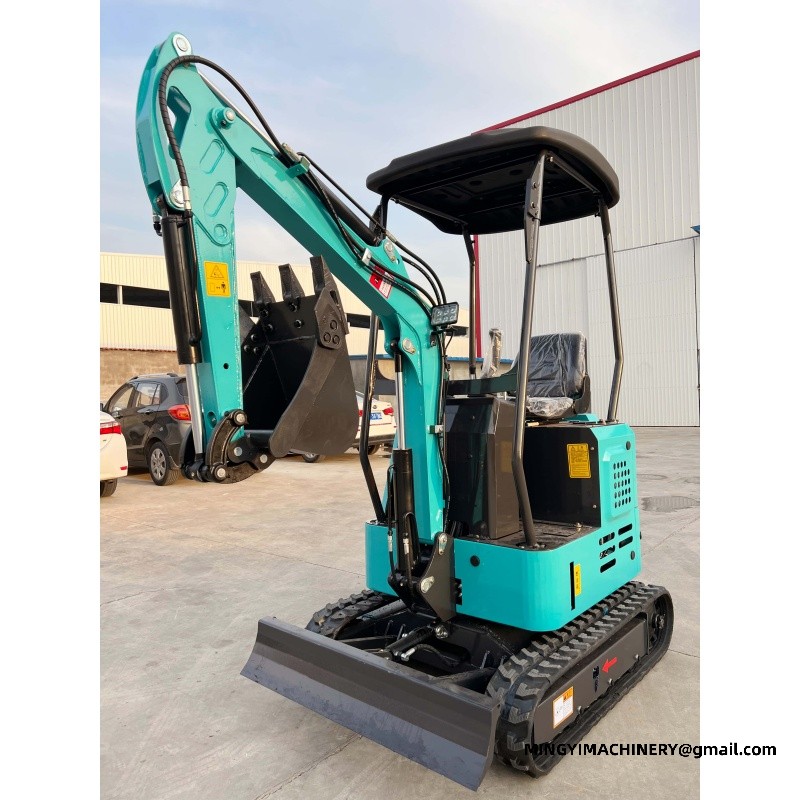
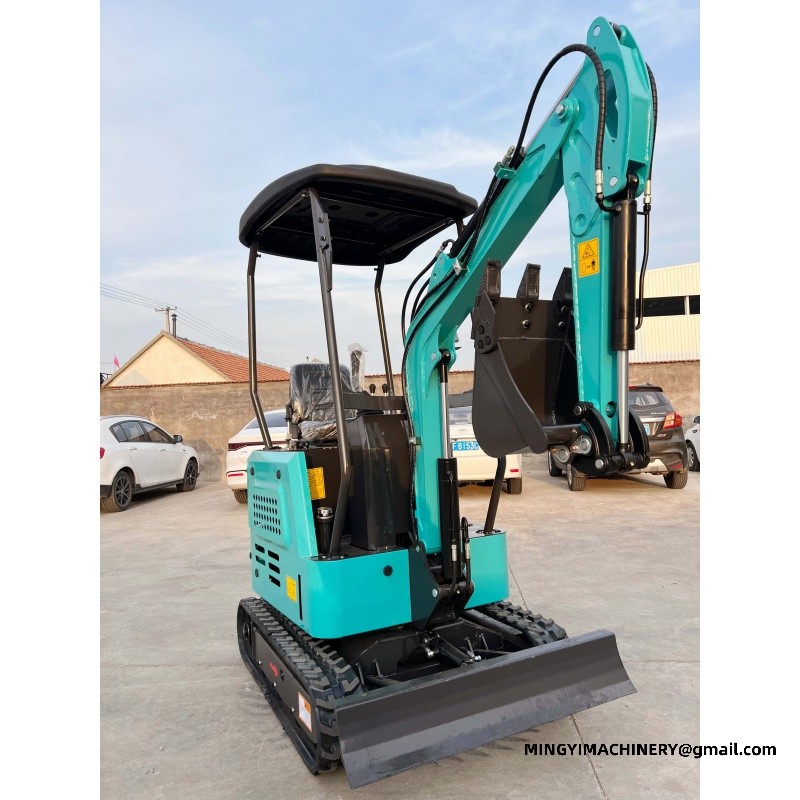
Reference specification — mini excavator range 20-1W 20-1WL 30-2W 30-2L Operating weight 1800 kg (3968.32 lb) 1900 kg (4188.78 lb) 2700 kg (5952.48 lb) 2400 kg (5291 lb) Transport size (L×W×H) 2550 × 1100 × 2200 mm 2550 × 1100 × 2200 mm 3000 × 1100 × 2700 mm 2800 × 1500 × 2500 mm Max digging depth 1800 mm (70.87 in) 1800 mm (70.87 in) 2200 mm (86.61 in) 2200 mm (86.61 in) Max digging height 2820 mm (111.02 in) 2820 mm (111.02 in) 3000 mm (118.11 in) 2900 mm (114.17 in) Max dumping height 2050 mm (80.71 in) 2050 mm (80.71 in) 2000 mm (78.74 in) 2100 mm (82.68 in) Max digging radius 3050 mm (120.08 in) 3050 mm (120.08 in) 3800 mm (149.61 in) 3330 mm (131.1 in) Max digging distance 2300 mm (90.55 in) 2300 mm (90.55 in) 3050 mm (120.08 in) 2700 mm (106.3 in) Minimum turning radius 1450 mm (57.09 in) 1450 mm (57.09 in) 1750 mm (68.9 in) 1555 mm (61.22 in) Travel speed 5 km/h (3.11 mph) 5 km/h (3.11 mph) 7 km/h (4.35 mph) 7 km/h (4.35 mph) Gradeability 30° 30° 30° 30° Fuel consumption 2-3 L/h (0.528—0.793 gal) 2-3 L/h (0.528—0.793 gal) 2-3 L/h (0.528—0.793 gal) 2-3 L/h (0.528—0.793 gal) Fuel tank capacity 16 L (4.23 gal) 16 L (4.23 gal) 16 L (4.23 gal) 16 L (4.23 gal) Hydraulic oil tank 18 L (4.76 gal) 18 L (4.76 gal) 20 L (5.28 gal) 18 L (4.76 gal) Dozer blade lift height 180 mm (7.09 in) 180 mm (7.09 in) 230 mm (9.06 in) 230 mm (9.06 in) Dozer blade drop depth 210 mm (8.27 in) 210 mm (8.27 in) 280 mm (11.02 in) 280 mm (11.02 in)
Q. What is this class of machine?
A. The whole point of the smallest classes is presence - a digging machine that reaches work nothing bigger can enter. Retractable frames narrow for the passage then widen for stability, so nothing is given up once the machine is through. The unit in daily use is one of the pages buyers land on when comparing machines for narrow gate access, and the factory treats it as a specification conversation rather than a catalogue line.
Q. Is a micro machine still worth buying?
A. If the work is behind a single gate or down a stairwell, yes - it is the only machine that reaches the job at all. Pair it with the attachment set and it specifications like a bigger machine on small sites.
Q. Which models does MINGYI build?
A. The 08, 12 and 18 models cover the 0.8 to 6 tonne class with engine, track, cab and attachment options across the range - dealer programmes can mix models in one shipment, and each narrow gate access machine is confirmed on its own build sheet.
Planning the season around a machine of this size
Seasonal work rewards a machine that can change duty. Through the year the equipment on site may move from one task to another, and the attachment list should be chosen for the whole year rather than for the first job.
Hot, humid and dusty conditions around the machine itself
Humidity attacks the parts that are not used. Storage in a damp climate means the model in question needs the exposed metal protected and the machine run regularly, because standing still does more damage than working.
E-mail : sales@mingycn.com
LINE ( ID ): mingyicn
Related pages
mini excavator for backyard pools · mini excavator for pipeline trenches · Small Wheel Loader: Light Builds for Farms and Nurseries · Mini Excavators









