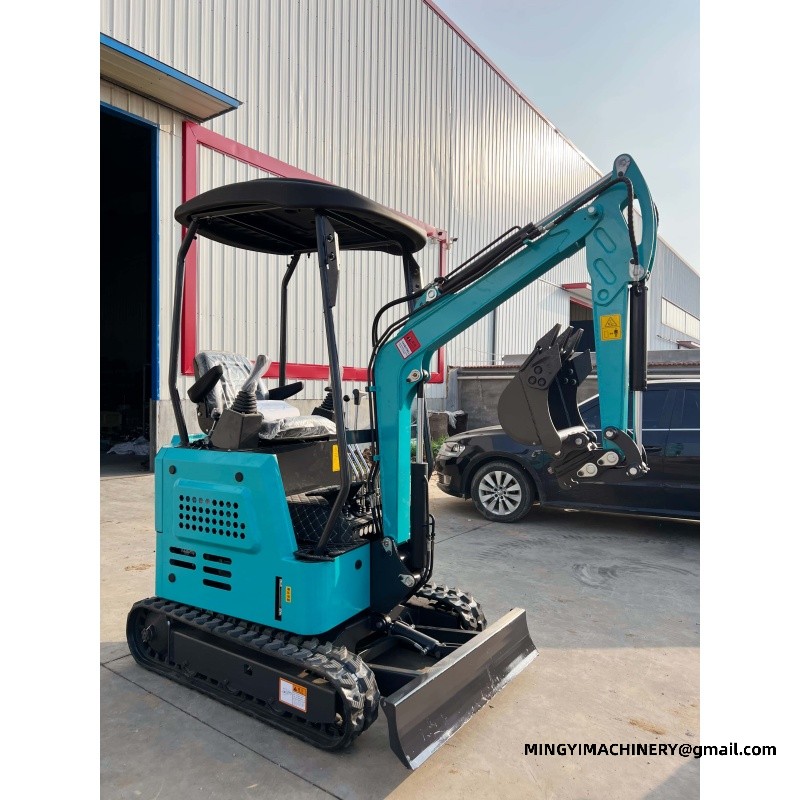
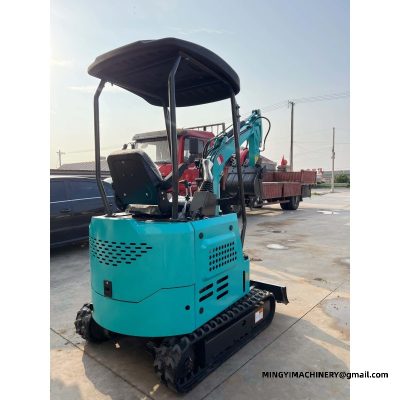
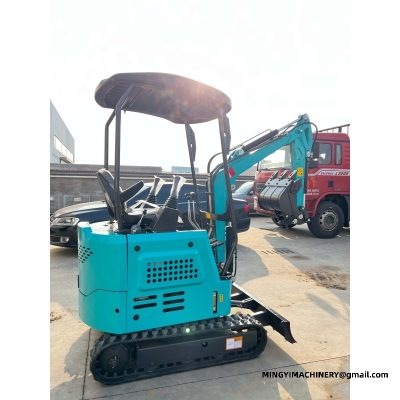
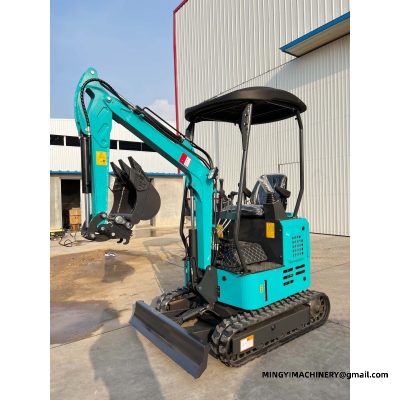
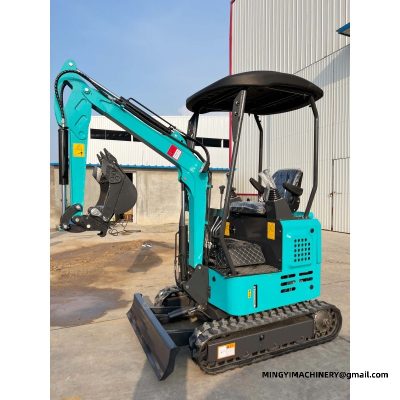
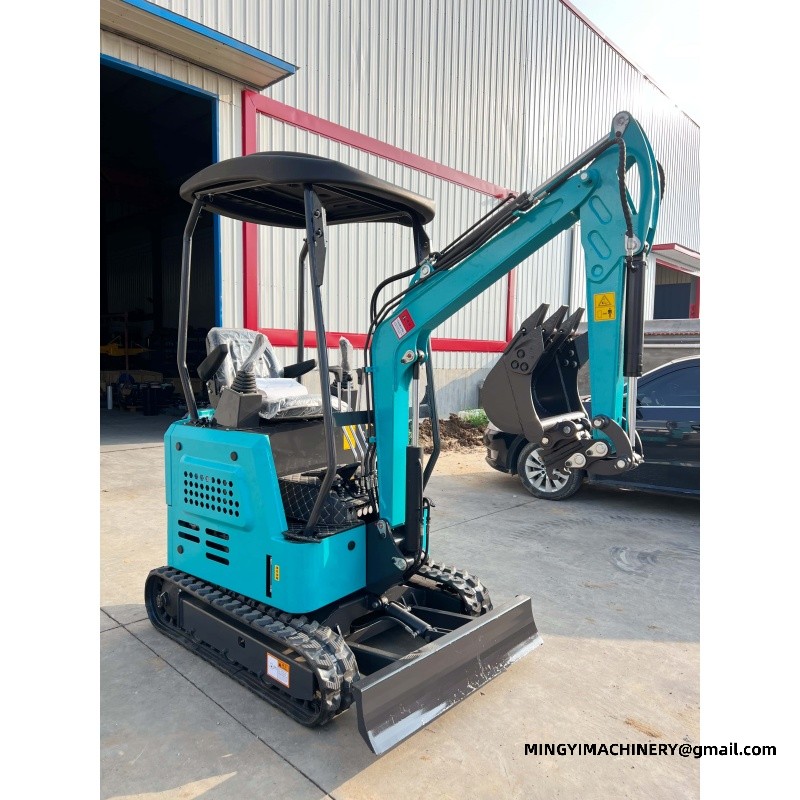
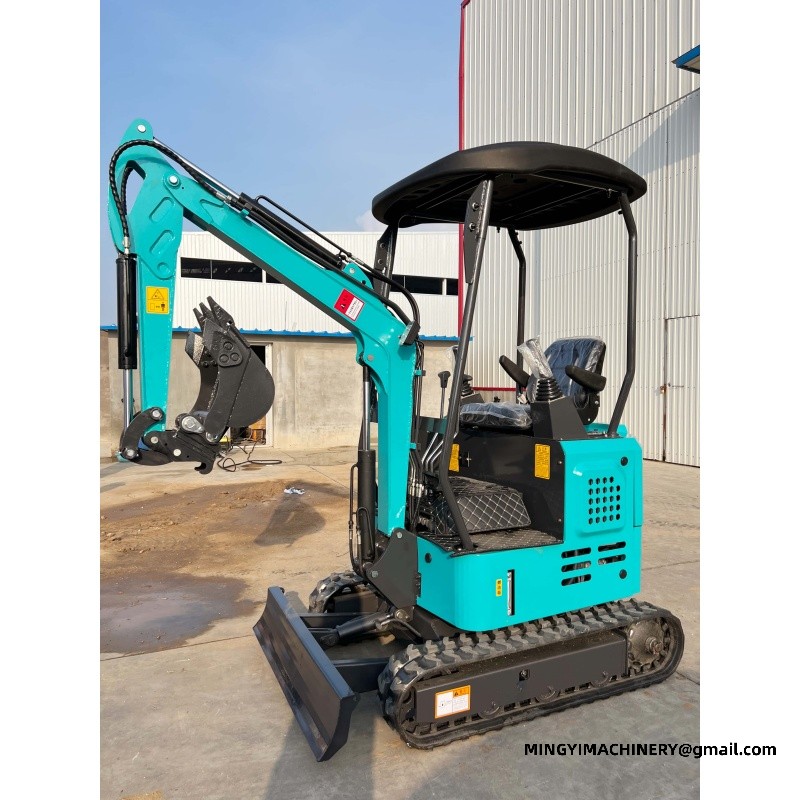
Interior demolition puts different limits on a machine. The work happens inside buildings with doorways to pass, floors that were never designed for plant, and neighbours on the other side of the wall who hear every blow. A MINGYI mini excavator for indoor demolition is specified with those limits in mind.
The smallest classes in the 0.8 to 6 tonnes range, such as the 08 series, are narrow enough to pass through standard openings once the undercarriage is retracted, and light enough that suspended floors can be assessed case by case. The machine is ordered for this environment, not adapted to it after arrival.
Interior strip out work
The work includes removing screed and floor slabs, taking out non structural partitions, breaking old stair bases, and clearing the slab openings left when interior features are removed. The breaker hammer handles the bonded material, and the bucket loads the debris straight into skips staged at the doorway.
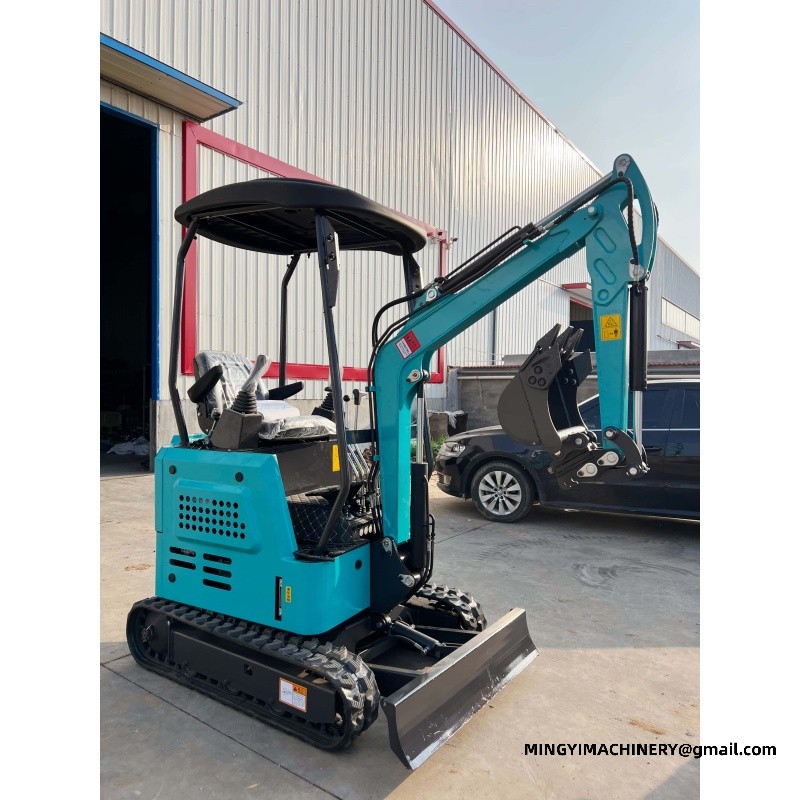
A shell bucket is useful where fine material has to be lifted without spillage, and a compact swing boom lets the machine work along a wall while its tracks stay clear of the spoil pile. Sorting steel from rubble with a thumb bucket keeps the skip loads clean.
Machine configuration for inside work
Width and tail swing decide whether the machine fits the job, so the retractable undercarriage and short tail swing options are confirmed at the ordering stage along with the door widths on your typical sites. Electric start and careful throttle control matter when work runs for long days in one room.
Exhaust and noise are the other constraints. Buyers should state the ventilation available on site, and where an enclosed cab is preferred for dust protection, this can be included in the build. Track pads and hose guards round out the indoor specification.
Send the narrowest access point and the floor type on your typical interior jobs, and the machine will be checked against them before assembly. Each unit leaves with the parts and service information needed for maintenance between strip out contracts.
Engine options behind indoor demolition mini excavator Power unit selection is settled against the service network the buyer already uses. MINGYI offers Kubota D722, Kubota D902, YANMAR, Changchai, Laidong, Runtong, YARMAX, Youpu 2V80 and Youpu 195, so a fleet running one brand of engine can keep the same filters, the same parts supplier and the same mechanic. Engine choice is also an emissions and documentation question for some markets. Listing the available units with the excavator enquiry lets the factory confirm what can be supplied and documented for the destination country. Orchard, vineyard and farm use of indoor demolition mini excavator Orchard and vineyard work is carried out between rows. This class of machine with a narrow chassis and a swing boom works down the row without damaging the trees, which is the reason a full-size machine is not used at all. Farms also use the unit in daily use for general maintenance - clearing a watercourse, repairing a track, loading a spreader. One carrier with a few attachments covers most of the jobs that would otherwise wait for a contractor. Acceptance checks when a indoor demolition mini excavator arrives A function check before the machine goes to work is worth the hour. Running through the controls, the travel and the attachment circuit on a machine of this size confirms it is set up as specified and ready for the site. Documentation should arrive with the machine. Parts list, service schedule and any certificates for the equipment on site are what the workshop needs later, and they are much easier to obtain at delivery than in month six. Road and paving work for indoor demolition mini excavator Road repair generates short, interrupted jobs - a patch, a drainage connection, a kerb line. The machine itself is economical here because it travels on a small trailer and starts working minutes after arriving. Patching and reinstatement favour a machine that can work in a lane closure. The model in question occupies less road than a full-size excavator, which reduces the traffic management needed and the length of the closure. Hydraulic circuits on a indoor demolition mini excavator Auxiliary hydraulic lines are what let a machine drive a tool rather than only a bucket. The machine in that duty specified with the right circuits and flow runs a breaker or an auger without an add-on power pack bolted to the frame. Hydraulic specification is easier to settle at build time than to correct later. The unit on the job delivered without auxiliary lines can still dig, but every additional tool becomes a retrofit project. Working near live services with indoor demolition mini excavator Digging near water, gas and cable is a precision job. A machine built for the work is used here because the operator can work in short controlled cuts and because the machine can be positioned without driving over the run being exposed. Utility crews specify the equipment in service with a narrow bucket and good visibility for exactly this reason: the machine has to stop at the service, not at the edge of the operator's view. Track choice for the excavator Rubber tracks suit paved and landscaped ground because they spread the machine weight and leave the surface intact. Steel tracks with rubber blocks are specified where the ground is rougher or the working day is longer, and the choice can be made per machine rather than accepted as a factory default. Undercarriage selection is a ground question, not a preference question. This class of machine running on finished paving needs rubber; the same machine on demolition rubble or rock wears rubber quickly, so steel with rubber blocks becomes the better answer over a full season. Landscaping and ground care with the unit in daily use Landscape contractors use a machine of this size for planting holes, pond excavation, grading and retaining work. The machine is light enough to cross finished lawn and narrow enough to work between established trees. Grass cutting heads, rakes and tillers extend the equipment on site into ground care. The same carrier that digs a border in spring can cut and clear the same area later in the season. Working the machine itself through the seasons Seasonal planning smooths the workload. Machines that are busy for a few months and idle for the rest benefit from a service slot in the quiet period, and the model in question prepared in the off-season starts the busy months reliably. Heat and dust are as limiting as rain. Air intake condition and cooling cleanliness decide how the machine in that duty behaves in a dry season, and both are checked in a minute rather than repaired later. Noise, dust and working near occupied buildings Work near housing or occupied premises brings constraints that open sites do not. Start times, exhaust condition and how often the unit on the job needs to reverse are the practical limits that neighbours notice. Dust control is often part of the same conversation. Water, timing and work sequence reduce what leaves the site, and agreeing them in advance keeps a machine built for the work working rather than stopped after a complaint. Canopy or enclosed cab on the equipment in service A canopy keeps the machine light and the operator aware of the surroundings, which suits short jobs in warm weather. A fully enclosed cab is specified where rain, dust or cold are part of the working year, and it can be added to the excavator as a retrofit rather than only at build time. Enclosure also changes noise and dust exposure. A sealed cab on this class of machine keeps dust out on dry sites and lets the machine work through weather that would otherwise stop a canopy machine for the day. Specification data for the unit in daily use The figures below are the factory figures for the models most often matched to a machine of this size. They are the numbers to check against the site: the depth the work needs, the reach from one position, and the width of the narrowest point on the route in. Figures are factory figures and are confirmed on the build sheet for the equipment on site. Where a job sits between two models, the larger machine usually takes less time than the smaller one spends on rework. The first question on most job lists is whether the machine can reach the work at all. The machine itself is chosen against the narrowest point on the route - a garden gate, a doorway, a gap between two walls - because a machine that arrives and then cannot pass loses a day, not an hour. Contractors who buy the model in question normally have one job in mind that nothing else reaches. The purchase order follows the access measurement, not the other way round, and the build sheet is then settled around it.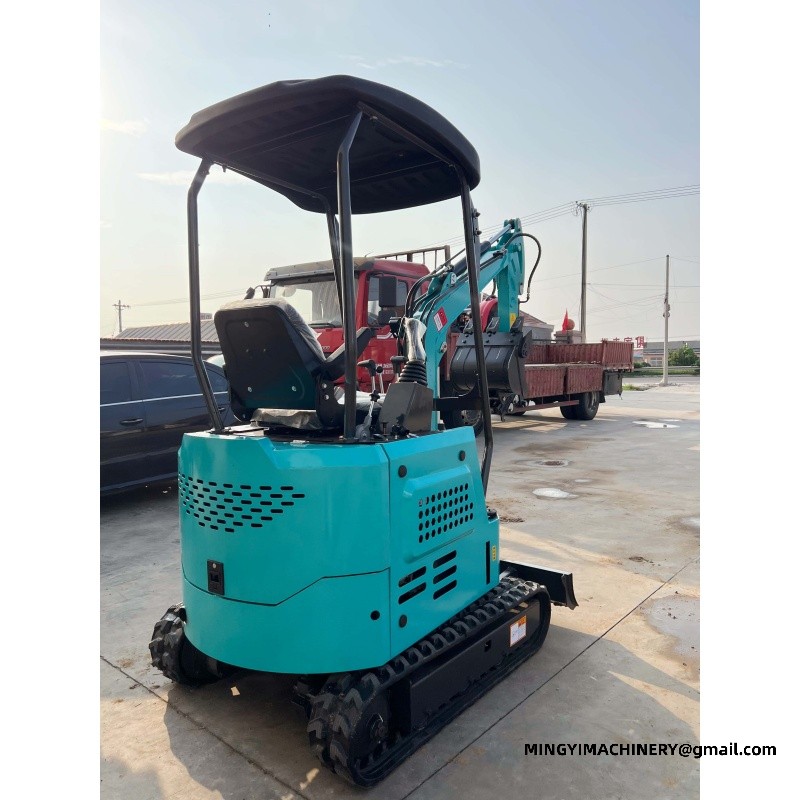
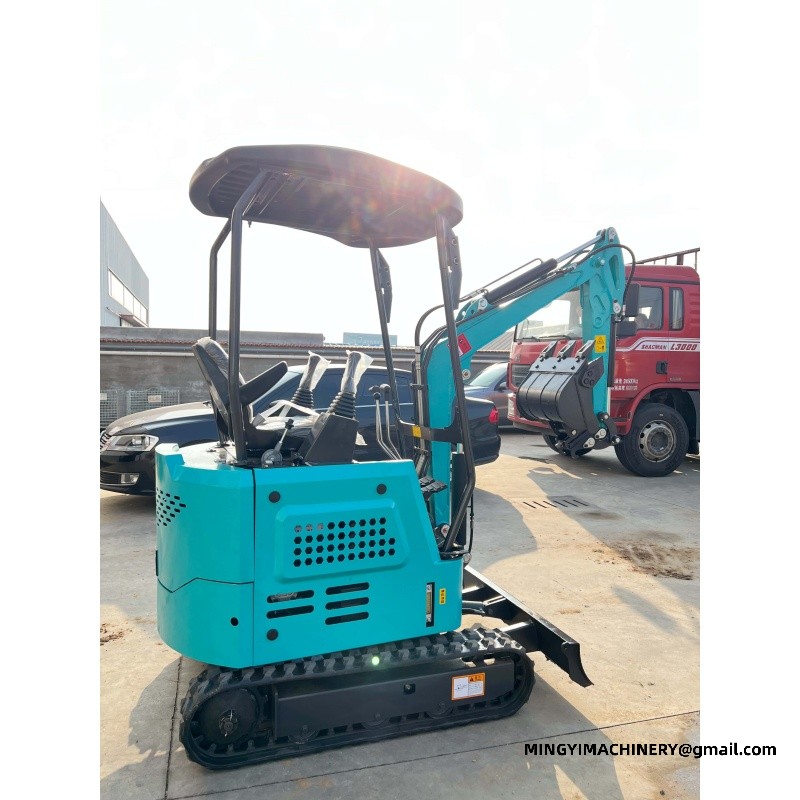
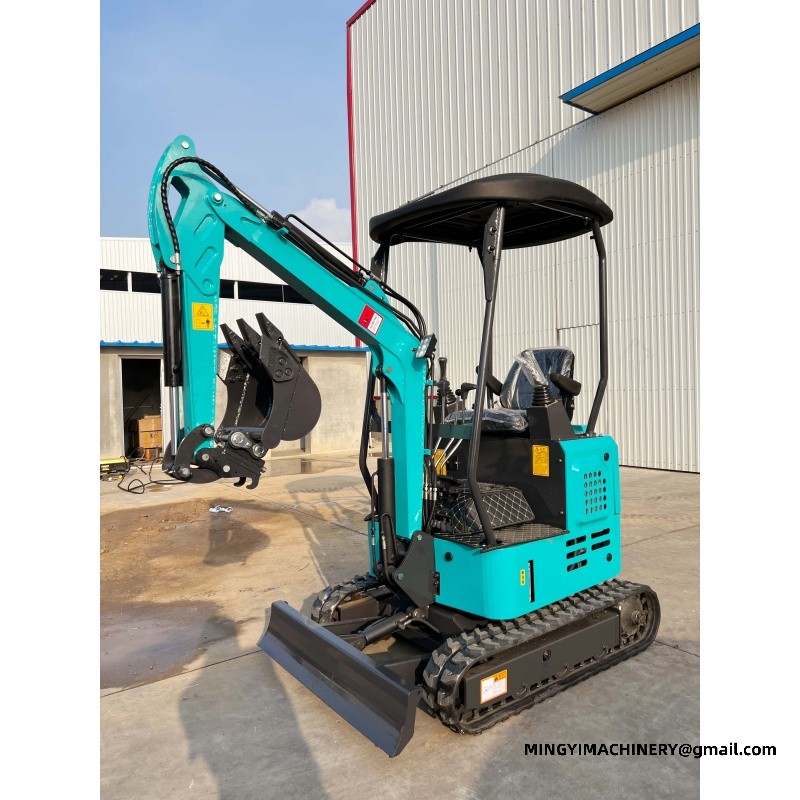
Reference specification — mini excavator range 20-1WL 30-2W 09L 12L Operating weight 1900 kg (4188.78 lb) 2700 kg (5952.48 lb) 1100 kg (2425.08 lb) 1200 kg (2645.55 lb) Transport size (L×W×H) 2550 × 1100 × 2200 mm 3000 × 1100 × 2700 mm 2300 × 720 × 1870 mm 2200 × 930 × 2250 mm Max digging depth 1800 mm (70.87 in) 2200 mm (86.61 in) 1400 mm (55.12 in) 1700 mm (66.93 in) Max digging height 2820 mm (111.02 in) 3000 mm (118.11 in) 2800 mm (110.24 in) 2600 mm (102.36 in) Max dumping height 2050 mm (80.71 in) 2000 mm (78.74 in) 1880 mm (74.02 in) 1800 mm (70.87 in) Max digging radius 3050 mm (120.08 in) 3800 mm (149.61 in) 2490 mm (98.03 in) 2900 mm (114.17 in) Max digging distance 2300 mm (90.55 in) 3050 mm (120.08 in) 2000 mm (78.74 in) 2300 mm (90.55 in) Minimum turning radius 1450 mm (57.09 in) 1750 mm (68.9 in) 1400 mm (55.12 in) 1450 mm (57.09 in) Travel speed 5 km/h (3.11 mph) 7 km/h (4.35 mph) 3 km/h (1.86 mph) 3 km/h (1.86 mph) Gradeability 30° 30° 30° 30° Fuel consumption 2-3 L/h (0.528—0.793 gal) 2-3 L/h (0.528—0.793 gal) 1-1.3 L/h (0.264—0.343 gal) 1-1.3 L/h (0.264—0.343 gal) Fuel tank capacity 16 L (4.23 gal) 16 L (4.23 gal) 8 L (2.11 gal) 10 L (2.64 gal) Hydraulic oil tank 18 L (4.76 gal) 20 L (5.28 gal) 16 L (4.23 gal) 16 L (4.23 gal) Dozer blade lift height 180 mm (7.09 in) 230 mm (9.06 in) 180 mm (7.09 in) 180 mm (7.09 in) Dozer blade drop depth 210 mm (8.27 in) 280 mm (11.02 in) 210 mm (8.27 in) 210 mm (8.27 in)
Q. What is the machine in that duty used for?
A. In strip-out and demolition the compact digger does the work that used to need crews with hand tools, at a rate hand work cannot touch. Steel tracks earn their place once the floor is rubble, and dust discipline protects the crew and the structure that stays. The unit on the job is one of the pages buyers land on when comparing machines for indoor demolition, and the factory treats it as a specification conversation rather than a catalogue line.
Q. What attachment set matters for demolition?
A. A breaker for the concrete, a thumb or grapple for sorting, a bucket for clean-up - and steel tracks once the floor is rubble. The coupler turns the machine from breaker carrier to loader between passes.
Q. What about colours and branding?
A. OEM colours and decals are part of the build: private-label machines carry the buyer brand on the standard MINGYI platform, and the indoor demolition order confirms colours, marks and documents before production starts.
Wear items and spares worth holding for a machine built for the work
Holding spares is about downtime rather than the shelf itself. The question for the equipment in service is not how large the part is but how long the machine sits while it is found, and a small shelf answers that better than a fast courier.
Keeping a service record for the excavator
The record should follow the machine, not the owner. When this class of machine changes hands the service history travels with it, and a complete folder is often the difference between a quick sale and a long one.
E-mail : sales@mingycn.com
LINE ( ID ): mingyicn
Related pages
mini excavator diesel engine options · mini excavator engine emission compliance · Compact Wheel Loader: Clearance, Footprint and Low Profile · Mini Excavators









