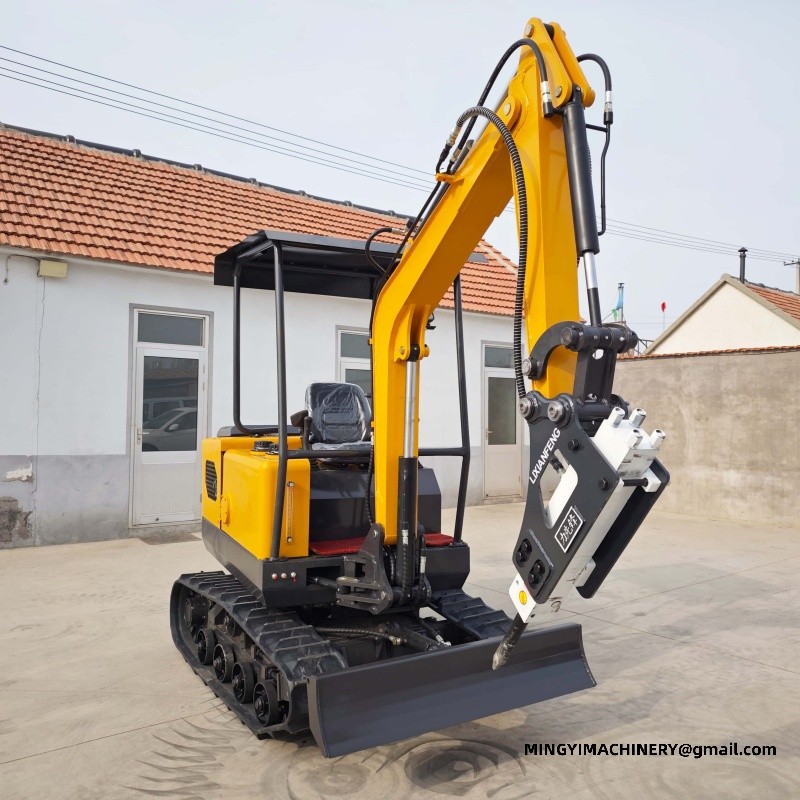
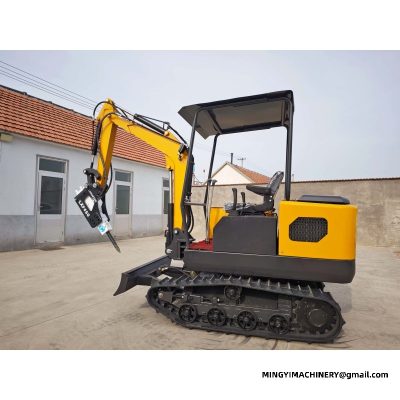
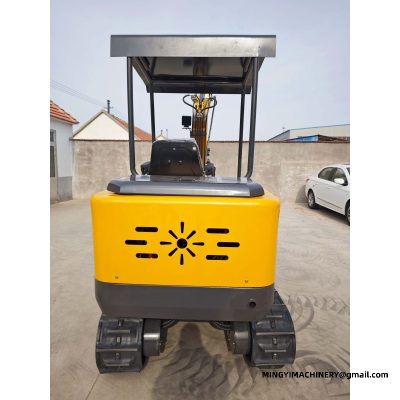
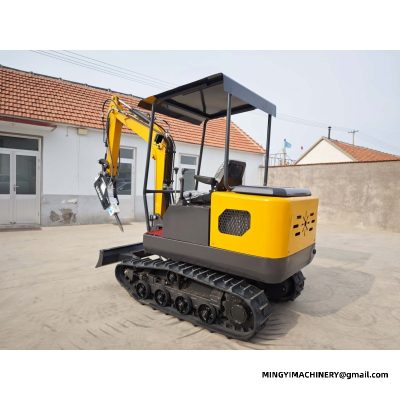
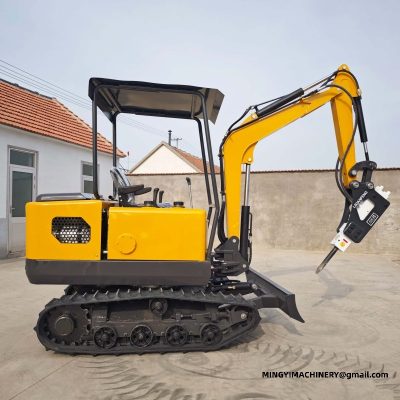
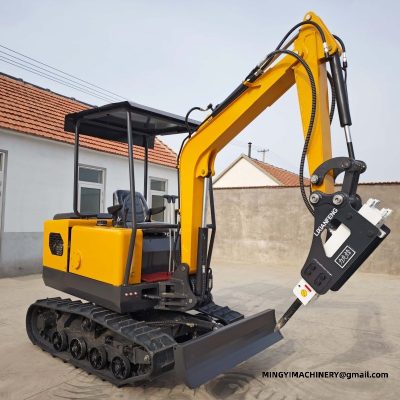
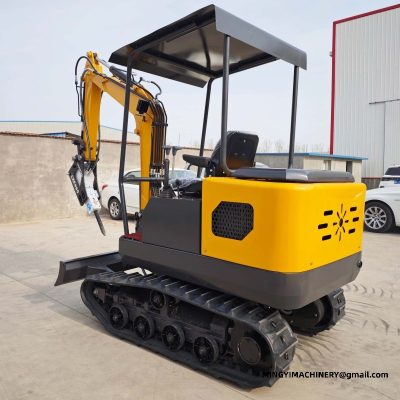
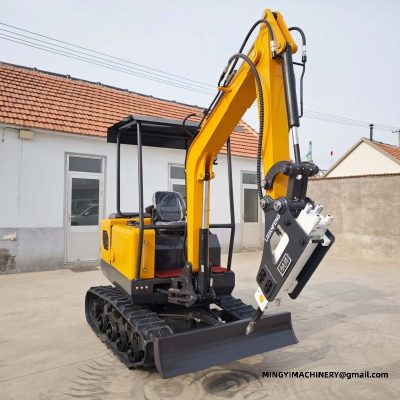
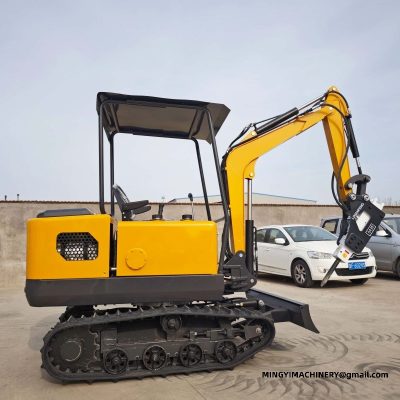
A hydraulic earth auger is driven from the machine's own circuit, which is why the choice of drive unit matters more than the appearance of the flight.
Matching the auger to the carrier and to the ground keeps the cycle quick and prevents the stalling that turns a simple post hole into a long stop.
Matching the auger drive to the carrier hydraulic circuit
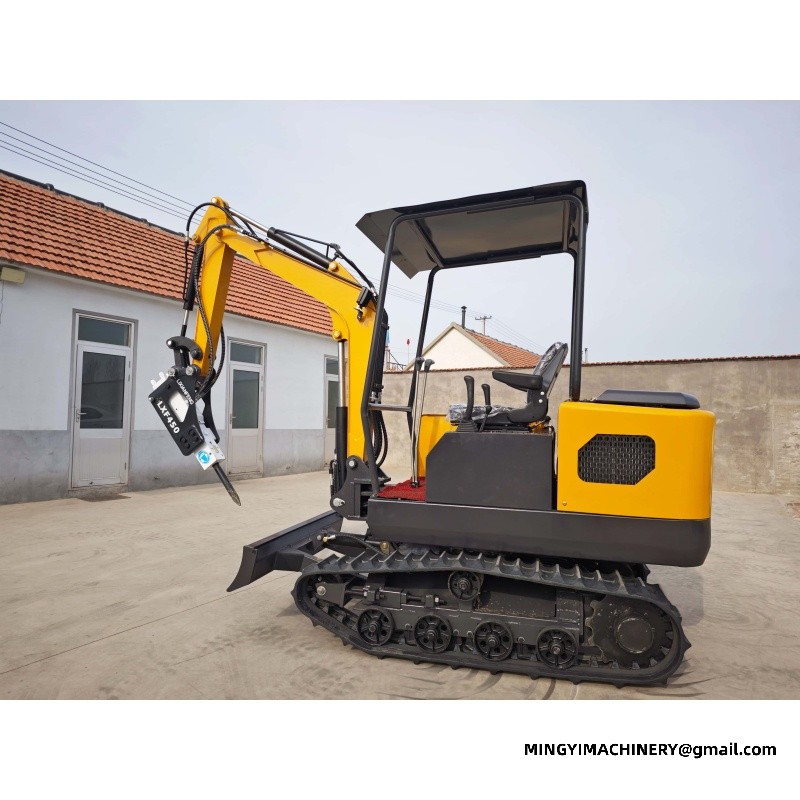
The drive head is selected so the flow available at the auxiliary line suits the torque the flight demands. Too much speed in heavy clay stalls the head; too little speed in sand leaves the hole rough.
A hydraulic quick coupler lets the operator park the auger and pick up the digging bucket without leaving the seat, which keeps a mixed site moving through the day.
Auger work in clay, gravel and mixed fill
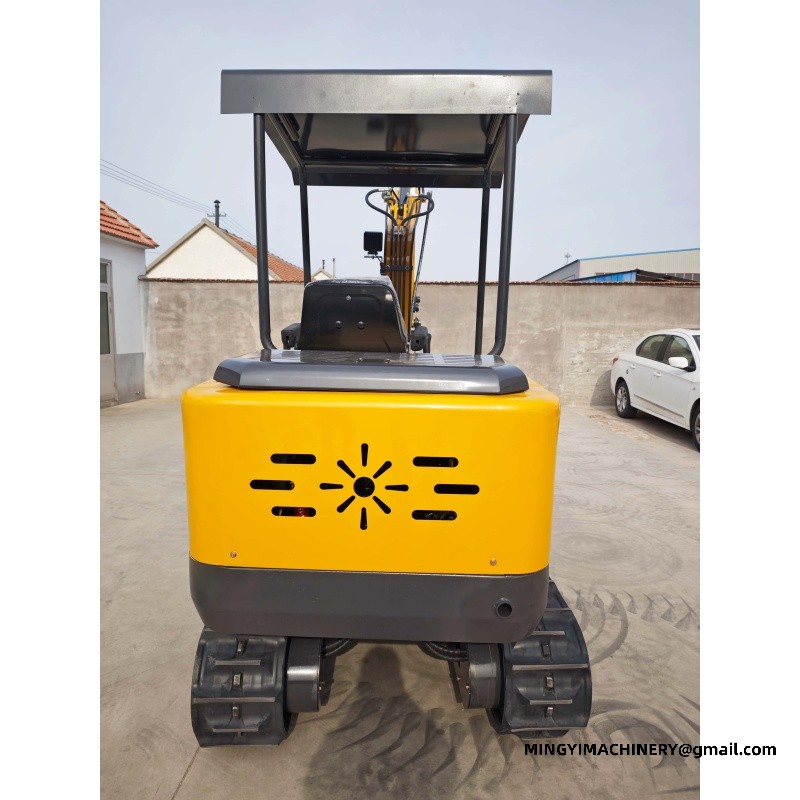
Clay needs the head to bite and clear steadily, so the operator feeds the boom slowly and lifts the flight often to release the spoil. Gravel and fill behave differently and clear with fewer lifts.
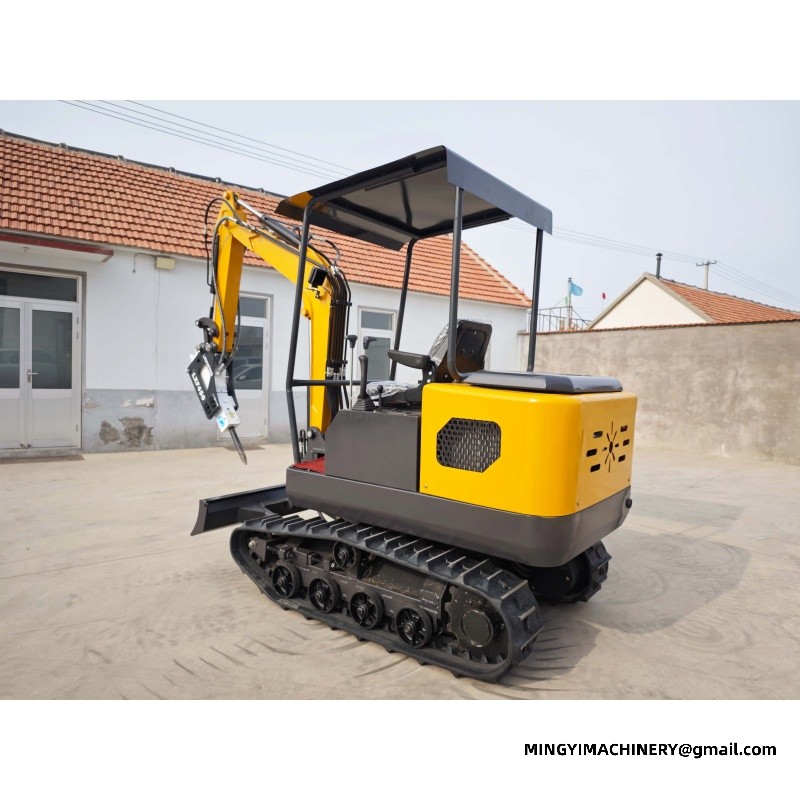
On sites where the auger is used between paving or turf, rubber tracks protect the surface, while steel tracks with rubber blocks are chosen when the machine has to cross soft or uneven ground between holes.
Since the auger is supplied with the machine, the drive size, the flight diameter and the track option are confirmed against the intended ground before the build starts.
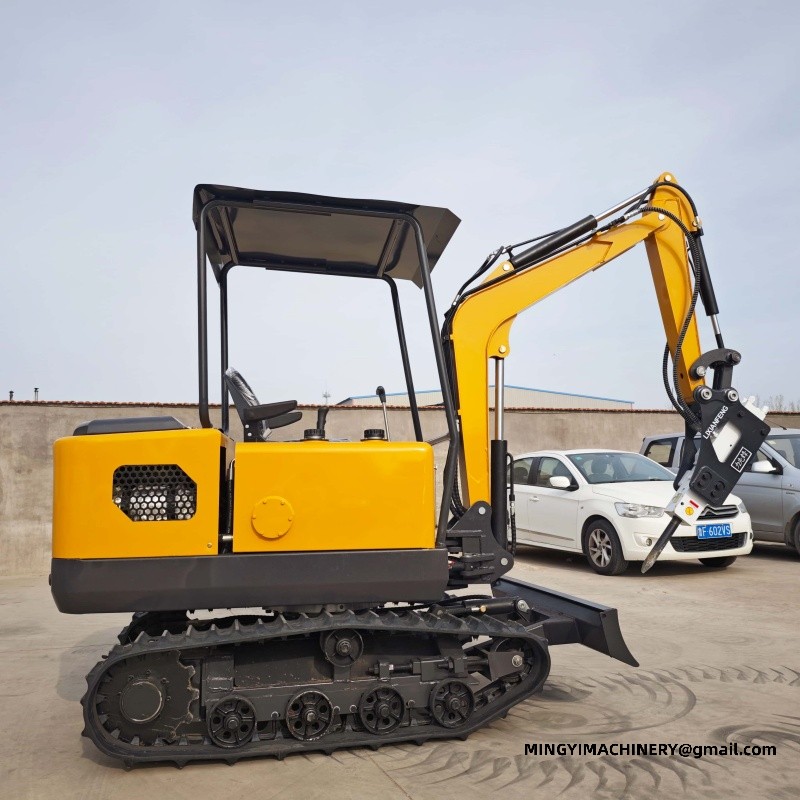
Hydraulic circuits on a mini excavator with hydraulic auger Auxiliary hydraulic lines are what let a machine drive a tool rather than only a bucket. The excavator specified with the right circuits and flow runs a breaker or an auger without an add-on power pack bolted to the frame. Flow and pressure are matched to the tool, not to the machine size. Asking for the attachment list first means this class of machine leaves the factory with circuits that suit the heaviest tool the buyer intends to run. Specifying mini excavator with hydraulic auger against a job list The practical way to specify is to write the job list first: the narrowest access, the deepest trench, the heaviest tool and the surfaces the machine must cross. The unit in daily use is then matched to those four numbers. Buyers who skip this step either over-buy or under-buy. A machine of this size specified only from machine size tends to arrive without the coupler, the circuits or the track type the work actually needs. Export packing and shipping of mini excavator with hydraulic auger Export documentation, decals and paint are settled before packing. Asking for them with the machine itself order avoids a second handling session and keeps the machine on the booked vessel. Buyers who import regularly plan the spare parts with the machine. The equipment on site ordered with a wearing-parts kit arrives ready to work rather than ready to wait for the first service interval. Hiring versus owning a mini excavator with hydraulic auger The choice follows the hours. Work that fills a few weeks a year is usually better hired, while the model in question that would be on site most weeks starts to justify ownership once the transport and booking time is counted. Ownership brings obligations that hiring does not. Storage, servicing, insurance and an operator are the items to set against the hire rate before deciding which way the machine in that duty should be supplied. Daily checks and maintenance on mini excavator with hydraulic auger Daily maintenance on the unit on the job is a short list: engine oil level, coolant, track tension, hydraulic oil level and a look at the hoses. Ten minutes at the start of the shift prevents most of the failures that stop a machine. Greasing is the second item. The slew ring, the boom and arm pins and the bucket linkage on a machine built for the work take grease daily in dusty work, and the intervals shorten further when the machine is used in water or mud. Parts, service and support for mini excavator with hydraulic auger Support after delivery is a parts question. Wearing items for the equipment in service - filters, belts, track components, bucket teeth and pins - are the items a buyer should plan to hold before the first service interval. Remote support is handled by video. The excavator fault can often be diagnosed on a walk-around call with the panel open, which is faster than waiting for a visit and avoids shipping a part that is not needed. Trailering and moving this class of machine Transport weight and width decide whether a machine needs a specialist haulier. The unit in daily use sized to travel on a standard plant trailer behind a suitable vehicle moves with the crew rather than on a scheduled low loader. Detachable components reduce transport length. A machine of this size built with a removable arm section or a folding step fits a shorter trailer and may avoid an oversize movement permit. Operator technique for the equipment on site The second habit is tool discipline. Running the machine itself with the right bucket width for the trench means less spoil, less reinstatement and a cleaner job than a wide bucket and a lot of trimming. Stability is the third. The model in question working across the tracks rather than over the corners keeps the machine steady and the undercarriage loaded evenly, which shows up as track life at the end of the season. OEM and fleet customisation of the machine in that duty Distributors and rental fleets usually need the machine to look like theirs. Paint, decals, seat colour and attachment branding can be specified on the unit on the job at build time rather than applied after import. Documentation can be prepared to suit the importer. Manuals, parts books and decal sets for a machine built for the work can be supplied with the buyer's own branding where the order size justifies it. Attachments that turn the equipment in service into several machines The base machine is a carrier; the tool on the end of the arm decides the task. The excavator fitted with a toothed bucket digs, and the same machine with a breaker, an auger or a grab does work that would otherwise need a second unit on site. Attachment lists are best written before delivery. Specifying this class of machine with the tools the job list needs avoids the work and delay of adding hydraulics later, and a quick coupler makes the swap a few minutes instead of a workshop job. Trenching work with the unit in daily use Service trenches are the most common reason a machine of this size is hired. Water, sewage, cable and gas runs are narrow, shallow and often close to existing services, which is exactly the work a full-size machine cannot do safely. Trench quality depends on the bucket width and the operator, not on machine size. The equipment on site with a narrow bucket and a swing boom cuts a clean run along a boundary without disturbing the ground either side of it. Working near live services with the machine itself Digging near water, gas and cable is a precision job. The model in question is used here because the operator can work in short controlled cuts and because the machine can be positioned without driving over the run being exposed. Utility crews specify the machine in that duty with a narrow bucket and good visibility for exactly this reason: the machine has to stop at the service, not at the edge of the operator's view. Specification data for the unit on the job Buyers comparing a machine built for the work usually start from four numbers - weight, digging depth, reach and transport width - because those are the ones that decide whether the machine can be delivered and whether it can do the job once it is there. Every value shown is as built for the equipment in service; options such as cab, side swing or a telescopic undercarriage change the transport dimensions and are confirmed at order stage. Delivery day is the best time to find a problem. Checking the specification against the order, the fluid levels, the fasteners and any transport damage while the class of machine is still on the trailer is faster than claiming later. Documentation should arrive with the machine. Parts list, service schedule and any certificates for the excavator are what the workshop needs later, and they are much easier to obtain at delivery than in month six.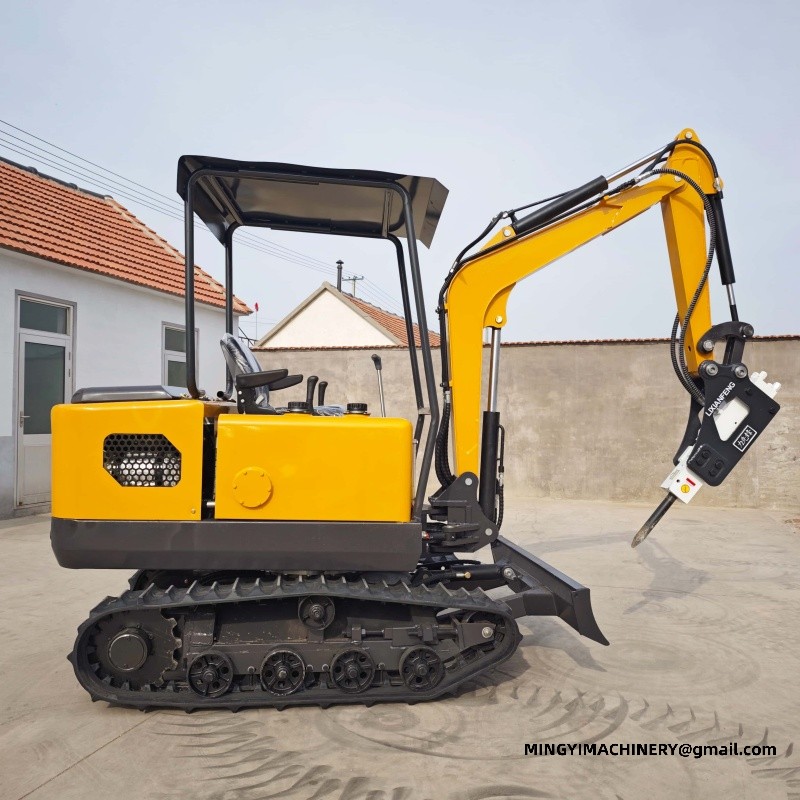
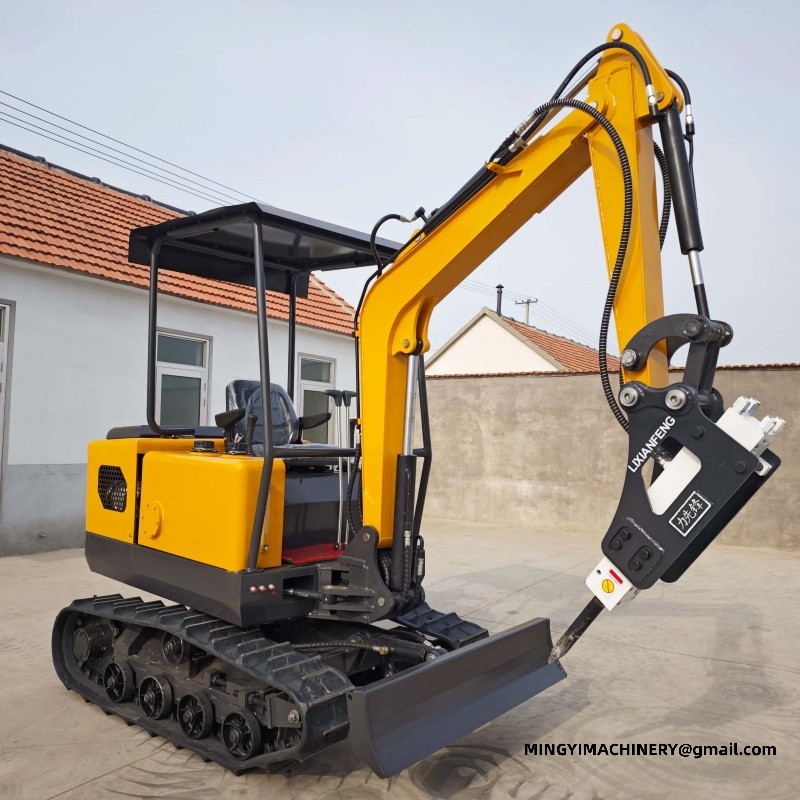
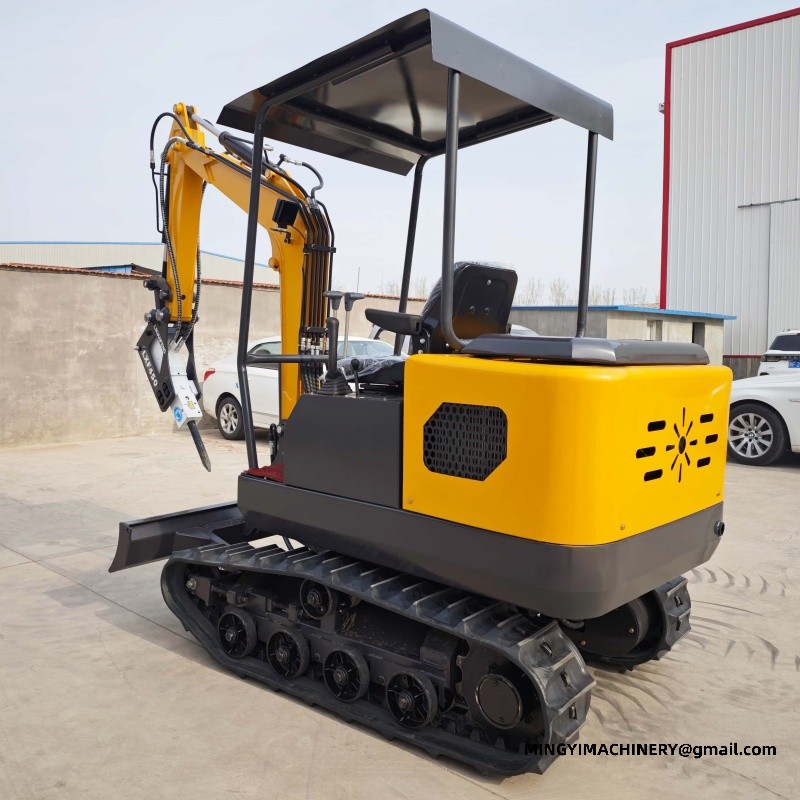
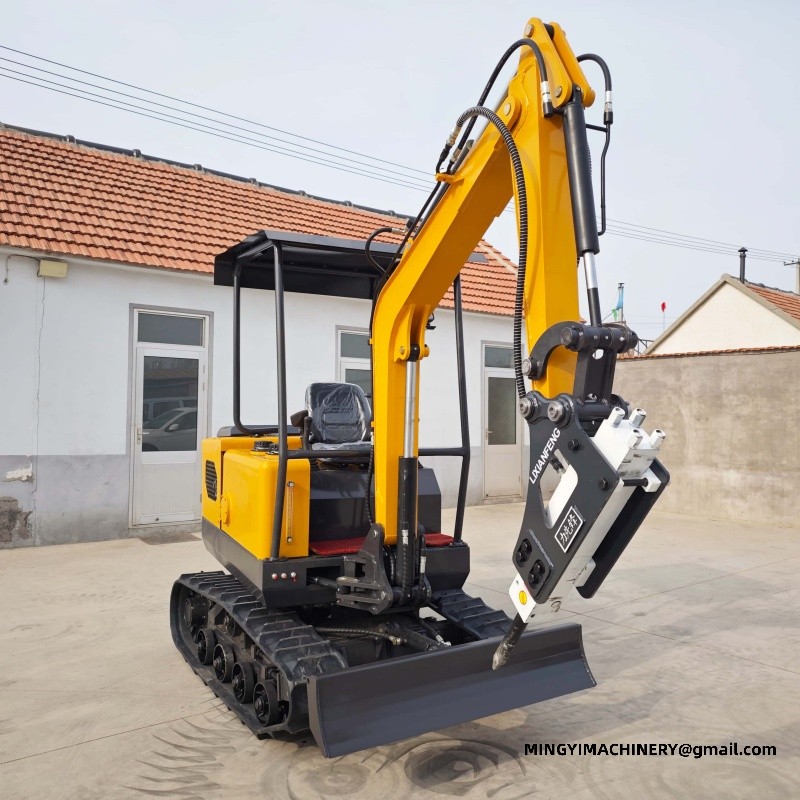
Reference specification — mini excavator range 15W 12L 15L 30-2L Operating weight 1400 kg (3086.47 lb) 1200 kg (2645.55 lb) 1400 kg (3086.47 lb) 2400 kg (5291 lb) Transport size (L×W×H) 2200 × 930 × 2250 mm 2200 × 930 × 2250 mm 2200 × 930 × 2250 mm 2800 × 1500 × 2500 mm Max digging depth 1630 mm (64.17 in) 1700 mm (66.93 in) 1700 mm (66.93 in) 2200 mm (86.61 in) Max digging height 2750 mm (108.27 in) 2600 mm (102.36 in) 2750 mm (108.27 in) 2900 mm (114.17 in) Max dumping height 1960 mm (77.17 in) 1800 mm (70.87 in) 1960 mm (77.17 in) 2100 mm (82.68 in) Max digging radius 2900 mm (114.17 in) 2900 mm (114.17 in) 2900 mm (114.17 in) 3330 mm (131.1 in) Max digging distance 2100 mm (82.68 in) 2300 mm (90.55 in) 2300 mm (90.55 in) 2700 mm (106.3 in) Minimum turning radius 1300 mm (51.18 in) 1450 mm (57.09 in) 1450 mm (57.09 in) 1555 mm (61.22 in) Travel speed 3 km/h (1.86 mph) 3 km/h (1.86 mph) 3 km/h (1.86 mph) 7 km/h (4.35 mph) Gradeability 30° 30° 30° 30° Fuel consumption 1-1.3 L/h (0.264—0.343 gal) 1-1.3 L/h (0.264—0.343 gal) 1-1.3 L/h (0.264—0.343 gal) 2-3 L/h (0.528—0.793 gal) Fuel tank capacity 10 L (2.64 gal) 10 L (2.64 gal) 10 L (2.64 gal) 16 L (4.23 gal) Hydraulic oil tank 16 L (4.23 gal) 16 L (4.23 gal) 16 L (4.23 gal) 18 L (4.76 gal) Dozer blade lift height 180 mm (7.09 in) 180 mm (7.09 in) 180 mm (7.09 in) 230 mm (9.06 in) Dozer blade drop depth 210 mm (8.27 in) 210 mm (8.27 in) 210 mm (8.27 in) 280 mm (11.02 in)
Q. What is the unit in daily use used for?
A. Attachments turn one carrier into several machines: dig on Monday, grade, lift, mow or drill on Tuesday without the machine leaving site. A digger that only digs competes with shovels; a digger with the right working set competes for whole jobs. MINGYI builds the 08, 12 and 18 models covering the 0.8 to 6 tonne class, and a machine of this size is where that range meets hydraulic auger.
Q. How is the attachment fitted and swapped?
A. Through the quick coupler on the dipper: seat the tool, lock it, plug the hydraulics where the design needs them. Mechanical attachments need no lines at all, so a bucket-to-rake change is a minute job at the trench edge.
Q. Can I see the machine before it ships?
A. Inspection is arranged at the factory, in person or by a scheduled video walk-around - the same session covers paint, decals and attachment fitment for the hydraulic auger specification, so the machine inspected is the machine that ships.
Later additions and retrofits on the equipment on site
Retrofitting is limited by the base machine. Before anything is added to the machine itself the hydraulic flow, the mounting interface and the stability allowance have to be checked, because those limits are what decide what is sensible.
Pre-delivery inspection before the model in question leaves the shop
Inspection is a list, not a glance. Before the machine in that duty is released the fluid levels, belt tension, electrical connections and safety decals are each ticked off, and anything that fails stays in the shop rather than travelling with the machine.
E-mail : sales@mingycn.com
LINE ( ID ): mingyicn
Night work and lighting on mini excavator with hydraulic auger
Reflective markings on the machine help everyone else on site, and they are simple to add and easy to replace.
A lighting check belongs at the start of every night shift, together with a look at the warning beacon and the brake lights.
Related pages
mini excavator and breaker package · mini excavator with grading bucket · Wheel Loader for Agriculture: Silage, Grain and Yard Work · Mini Excavators









