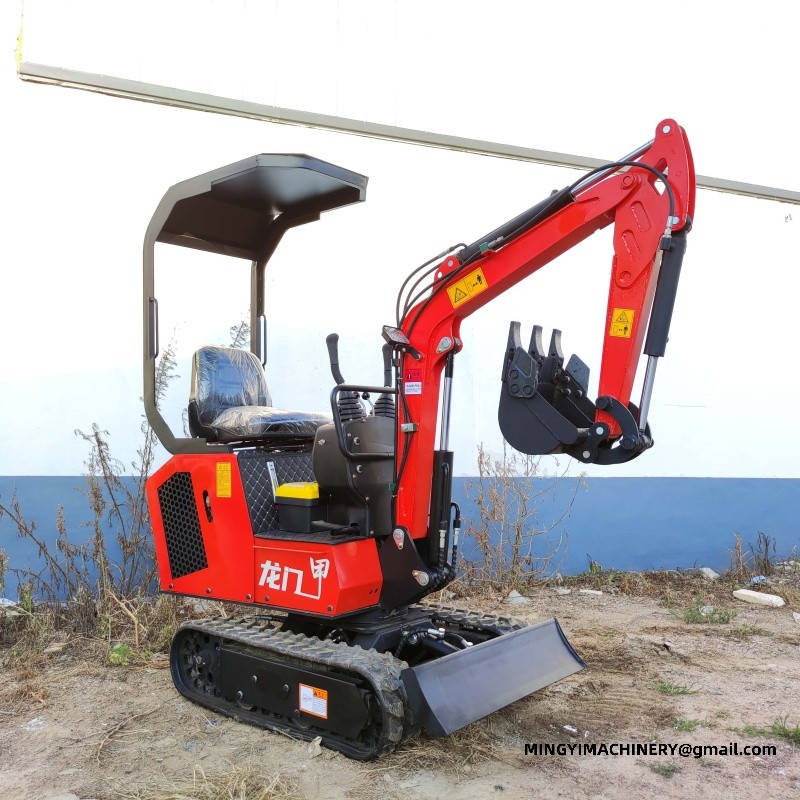
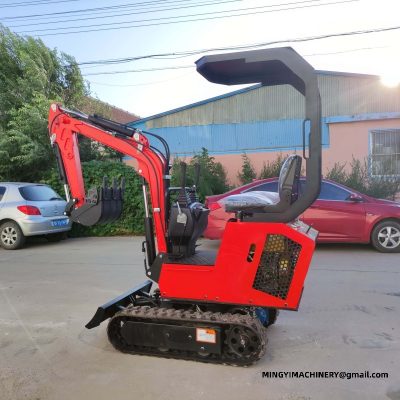
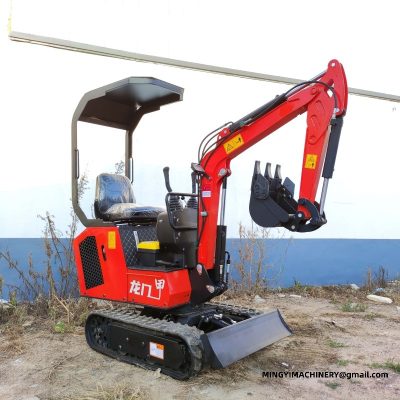
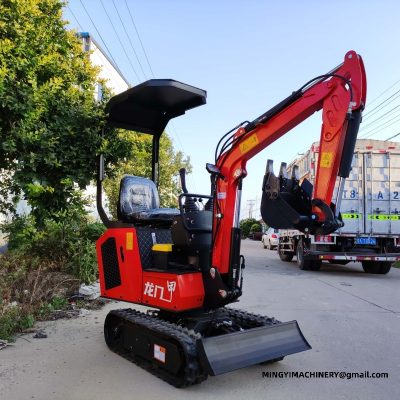
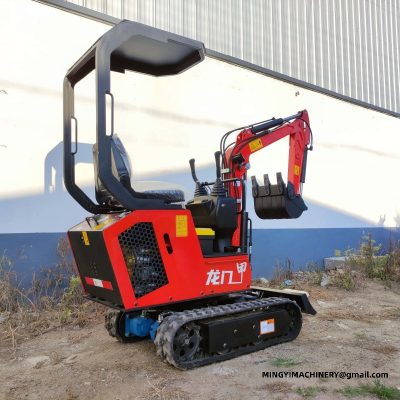
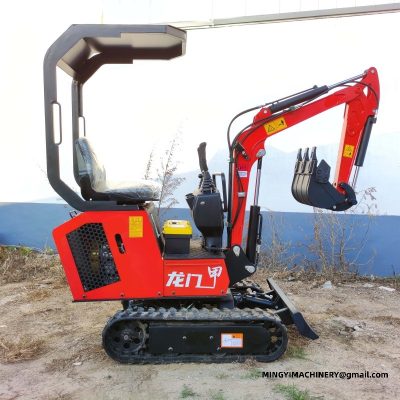
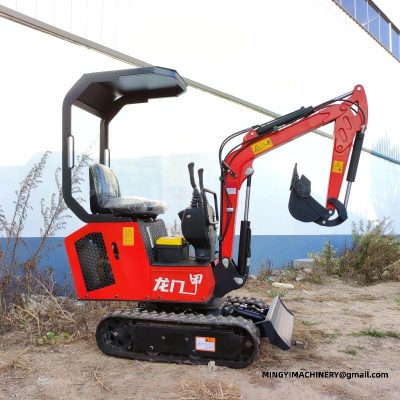
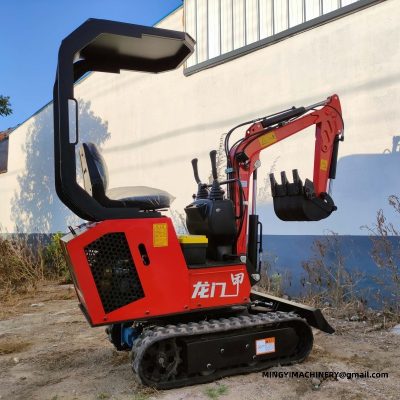
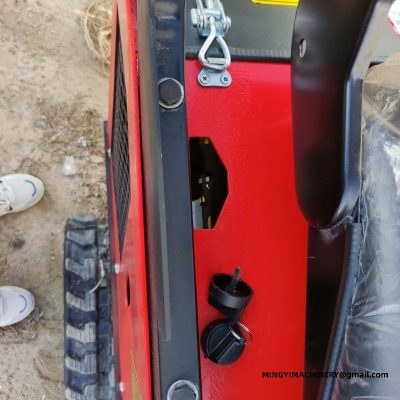
Mini excavators for sale from MINGYI cover the classes from 0.8 to 6 tonnes, built to order for export buyers and configured around the work each machine is bought for. The model line includes the 08, 12 and 18 series, alongside attachment and track options for the destination.
Because every unit is built to order, a purchase starts with a working brief rather than a stock number: the access limits of the typical site, the ground conditions, the attachments that must run, and the market the machine will work in.
Machines available to order
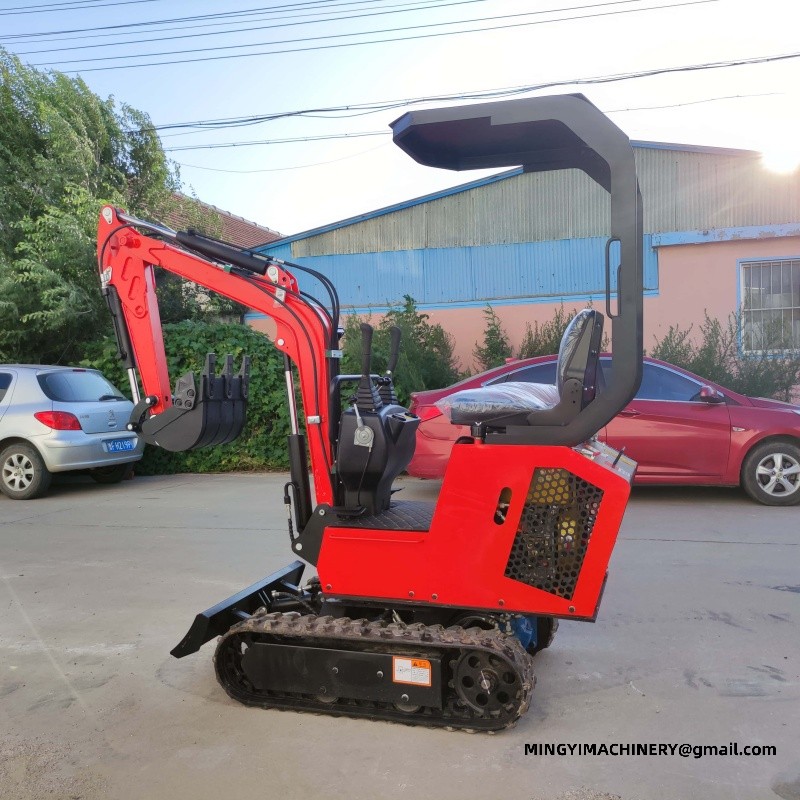
The range spans small units for indoor and garden work through classes sized for construction trenching and loading. Buyers specify canopy or enclosed cab, rubber or steel tracks with rubber blocks, and engines including Kubota D722, Kubota D902, YANMAR, Changchai, Laidong and YARMAX units.
Attachments ordered with the carrier include digging and grading buckets, tilting bucket, breaker hammer, auger, thumb and quick coupler, mowers and tillers. Circuits are specified so every attachment on the list runs from delivery.
How a purchase proceeds
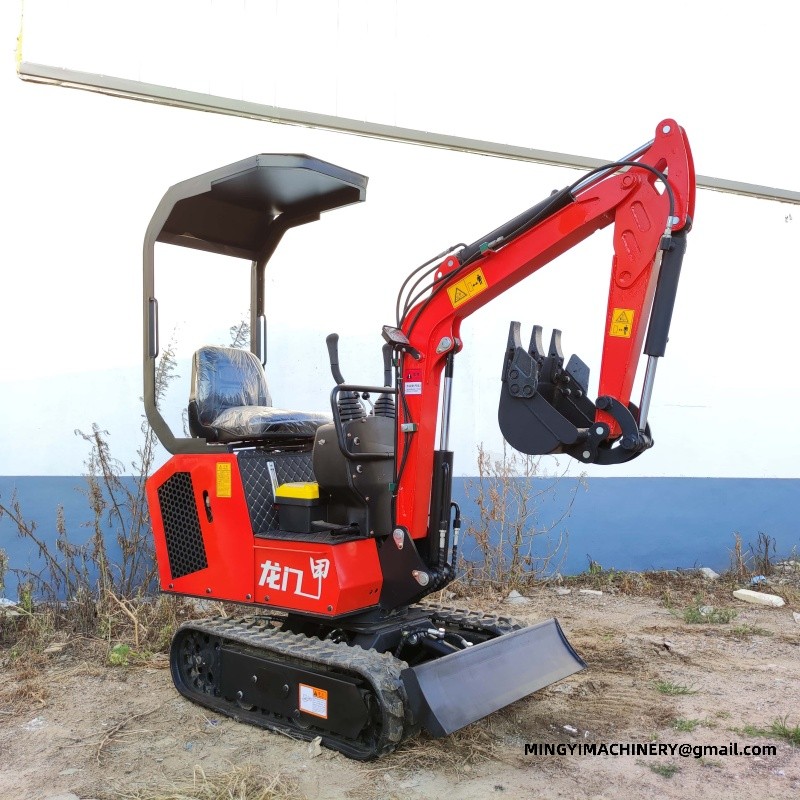
The order is placed against a specification agreed with the buyer and recorded against the machine before build. Spares and service information are supplied with the unit, and packing and shipping arranged for the destination port.
Before requesting a specification, it is worth gathering the details that shape the specification: narrowest access on your sites, ground conditions, attachment list and expected duty. That brief turns the enquiry into a configuration rather than a specification for an unknown machine.
A mini excavator for sale from MINGYI is a machine specified for its buyer. Set out the work, the sites and the attachments, and the unit that ships is matched to the jobs it was bought for.
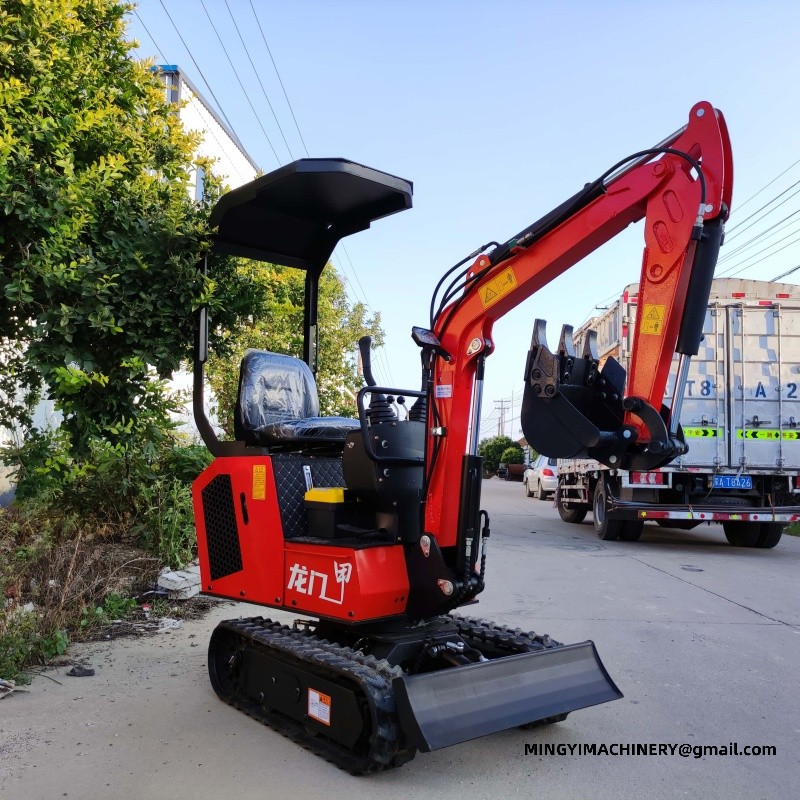
Daily checks and maintenance on mini excavator built to order Daily maintenance on the excavator is a short list: engine oil level, coolant, track tension, hydraulic oil level and a look at the hoses. Ten minutes at the start of the shift prevents most of the failures that stop a machine. Track tension is the item most often neglected. This class of machine run with slack tracks wears the undercarriage and can throw a track on a turn; run too tight, the same components wear from the other direction. Trenching work with mini excavator built to order Trench quality depends on the bucket width and the operator, not on machine size. The unit in daily use with a narrow bucket and a swing boom cuts a clean run along a boundary without disturbing the ground either side of it. Depth control matters more on service work than speed. A machine of this size working beside live services is chosen because it can be placed precisely and stopped instantly, which is what the job actually requires. Getting mini excavator built to order through a narrow gap Access decides the machine before output does. With the equipment on site the limiting dimension is usually the widest point on the way in, so measuring the gate, the corridor and the turning space first saves a wasted delivery and a second visit. Contractors who buy the machine itself normally have one job in mind that nothing else reaches. The purchase order follows the access measurement, not the other way round, and the build sheet is then settled around it. Track choice for mini excavator built to order Rubber tracks suit paved and landscaped ground because they spread the machine weight and leave the surface intact. Steel tracks with rubber blocks are specified where the ground is rougher or the working day is longer, and the choice can be made per machine rather than accepted as a factory default. Track type changes what the machine can cross and what it leaves behind. Buyers specify rubber for lawns, driveways and municipal work, and steel with rubber blocks for sites where sharp material would cut a rubber belt in a week. Hiring versus owning a mini excavator built to order The choice follows the hours. Work that fills a few weeks a year is usually better hired, while the model in question that would be on site most weeks starts to justify ownership once the transport and booking time is counted. Availability is part of the decision. Owning the machine in that duty means it is there on the day the ground is ready; hiring means competing for the same machine at the same time as everyone else in the season. Municipal and public works with mini excavator built to order Municipal crews work on streets, footpaths and parks where the public is present. The unit on the job is specified because it occupies little space, works inside a small exclusion zone and can be moved on a standard trailer. Drainage repair, tree planting, footway reconstruction and cemetery work are all within the range of a machine built for the work. The jobs are small individually and continuous across the year. Hydraulic circuits on the equipment in service Flow and pressure are matched to the tool, not to the machine size. Asking for the attachment list first means the excavator leaves the factory with circuits that suit the heaviest tool the buyer intends to run. Hydraulic specification is easier to settle at build time than to correct later. This class of machine delivered without auxiliary lines can still dig, but every additional tool becomes a retrofit project. Working the unit in daily use in confined spaces Clearance above matters as much as around. Door heights, pipework and overhead services set the limit for a machine of this size indoors, and measuring them first avoids a machine that arrives and cannot be used. Ventilation is the other indoor constraint. Running the equipment on site inside a closed structure needs air movement, and that is a planning item rather than something to discover after the first hour. Noise, dust and working near occupied buildings Enclosure and machine condition both reduce noise. The machine itself with intact panels, sound mounts and a maintained exhaust is measurably quieter than the same machine with loose guards, and the difference matters on restricted sites. Dust control is often part of the same conversation. Water, timing and work sequence reduce what leaves the site, and agreeing them in advance keeps the model in question working rather than stopped after a complaint. Road and paving work for the machine in that duty Patching and reinstatement favour a machine that can work in a lane closure. The unit on the job occupies less road than a full-size excavator, which reduces the traffic management needed and the length of the closure. Breaking out a failed slab and backfilling the same hole in one visit is normal work for a machine built for the work. The breaker and the bucket come off the same coupler, so the road is reopened the same day. Engine options behind the equipment in service Power unit selection is settled against the service network the buyer already uses. MINGYI offers Kubota D722, Kubota D902, YANMAR, Changchai, Laidong, Runtong, YARMAX, Youpu 2V80 and Youpu 195, so a fleet running one brand of engine can keep the same filters, the same parts supplier and the same mechanic. Two buyers can order the same the excavator and receive different engines. The decision is rarely about peak power; it is about which parts counter is closest to the site and which engine the local mechanic already knows. Specification data for this class of machine The figures below are the factory figures for the models most often matched to the unit in daily use. They are the numbers to check against the site: the depth the work needs, the reach from one position, and the width of the narrowest point on the route in. Figures are factory figures and are confirmed on the build sheet for a machine of this size. Where a job sits between two models, the larger machine usually takes less time than the smaller one spends on rework. Attachment lists are best written before delivery. Specifying the equipment on site with the tools the job list needs avoids the work and delay of adding hydraulics later, and a quick coupler makes the swap a few minutes instead of a workshop job. Most of the daily variety on the machine itself comes from the attachment rack rather than from the machine itself. Bucket, breaker, auger, ripper, rake and grab cover the large majority of the work a contractor will see.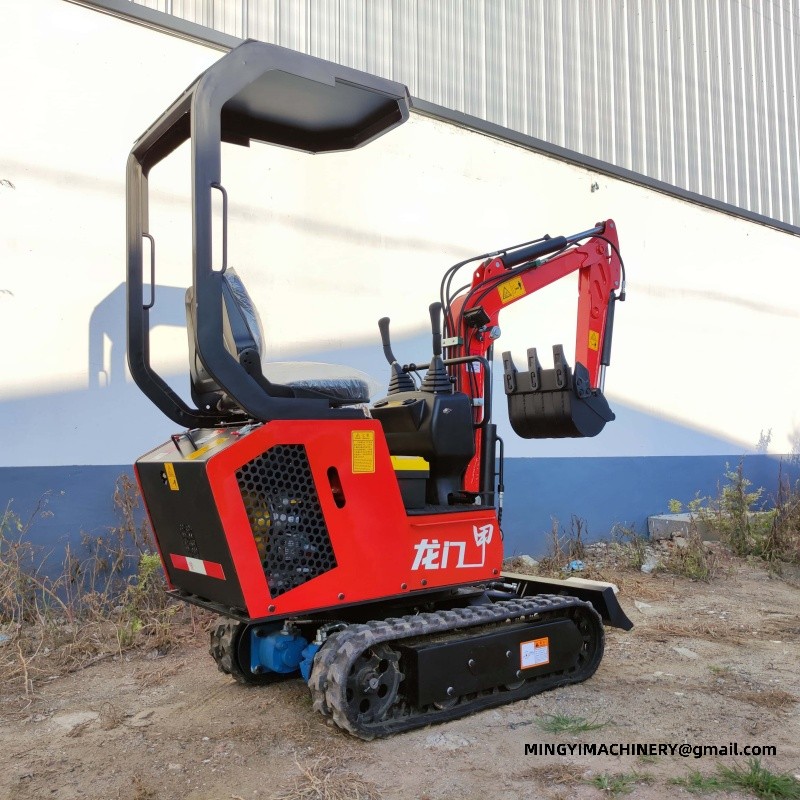
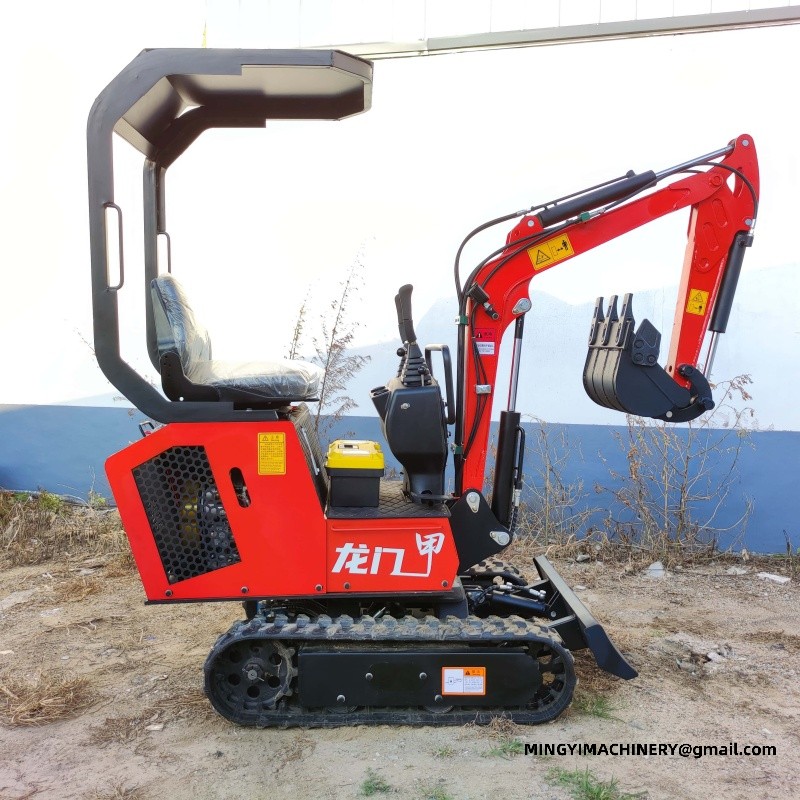
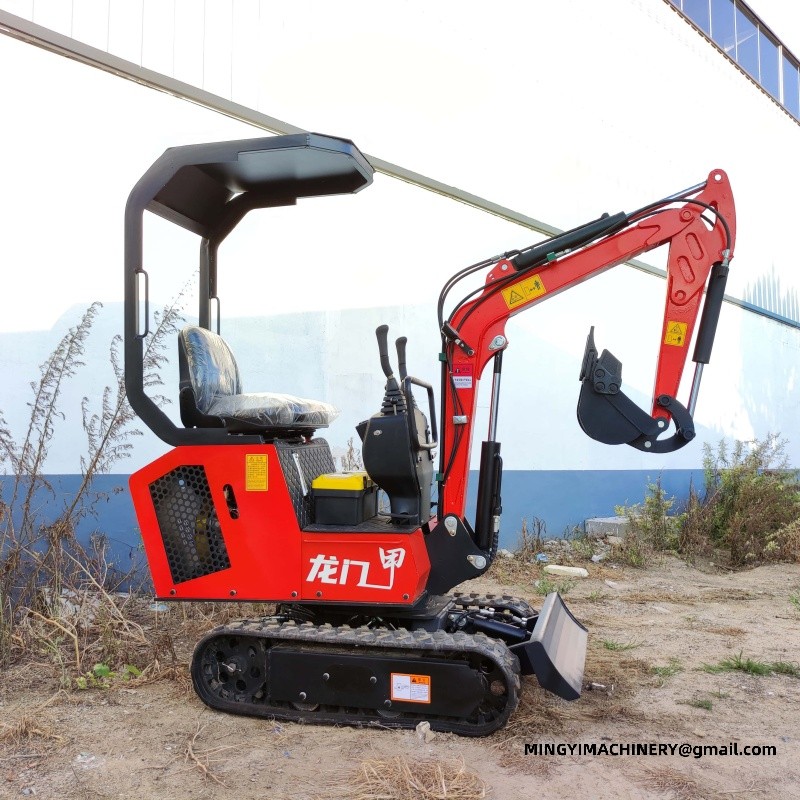
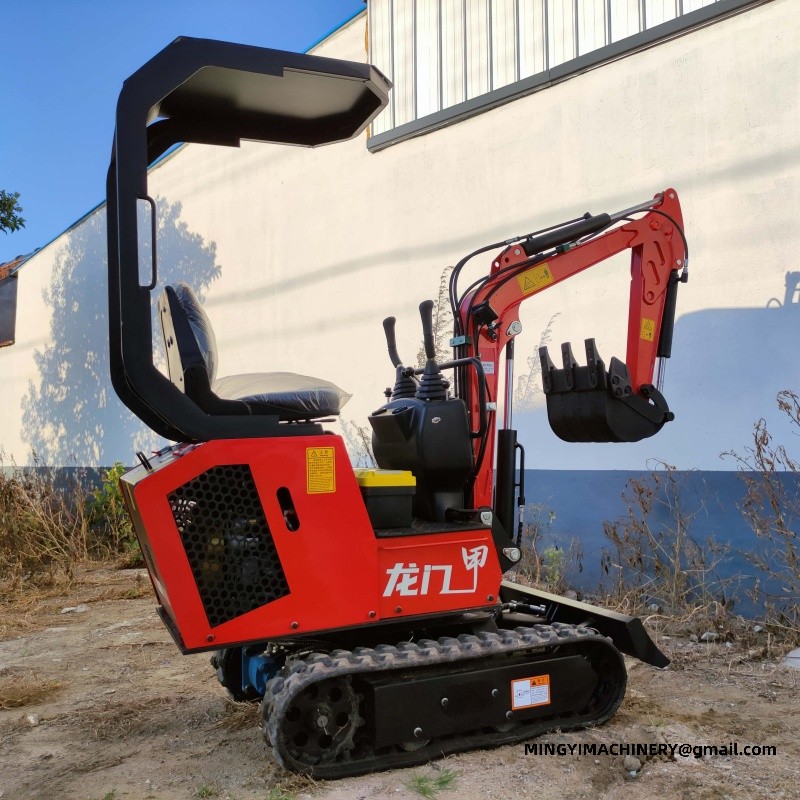
Reference specification — mini excavator range 12W 13W 12L 15L Operating weight 1200 kg (2645.55 lb) 1300 kg (2866.01 lb) 1200 kg (2645.55 lb) 1400 kg (3086.47 lb) Transport size (L×W×H) 2200 × 930 × 2250 mm 2200 × 930 × 2250 mm 2200 × 930 × 2250 mm 2200 × 930 × 2250 mm Max digging depth 1630 mm (64.17 in) 1630 mm (64.17 in) 1700 mm (66.93 in) 1700 mm (66.93 in) Max digging height 2750 mm (108.27 in) 2750 mm (108.27 in) 2600 mm (102.36 in) 2750 mm (108.27 in) Max dumping height 1960 mm (77.17 in) 1960 mm (77.17 in) 1800 mm (70.87 in) 1960 mm (77.17 in) Max digging radius 2900 mm (114.17 in) 2900 mm (114.17 in) 2900 mm (114.17 in) 2900 mm (114.17 in) Max digging distance 2100 mm (82.68 in) 2100 mm (82.68 in) 2300 mm (90.55 in) 2300 mm (90.55 in) Minimum turning radius 1300 mm (51.18 in) 1300 mm (51.18 in) 1450 mm (57.09 in) 1450 mm (57.09 in) Travel speed 3 km/h (1.86 mph) 3 km/h (1.86 mph) 3 km/h (1.86 mph) 3 km/h (1.86 mph) Gradeability 30° 30° 30° 30° Fuel consumption 1-1.3 L/h (0.264—0.343 gal) 1-1.3 L/h (0.264—0.343 gal) 1-1.3 L/h (0.264—0.343 gal) 1-1.3 L/h (0.264—0.343 gal) Fuel tank capacity 10 L (2.64 gal) 10 L (2.64 gal) 10 L (2.64 gal) 10 L (2.64 gal) Hydraulic oil tank 16 L (4.23 gal) 16 L (4.23 gal) 16 L (4.23 gal) 16 L (4.23 gal) Dozer blade lift height 180 mm (7.09 in) 180 mm (7.09 in) 180 mm (7.09 in) 180 mm (7.09 in) Dozer blade drop depth 210 mm (8.27 in) 210 mm (8.27 in) 210 mm (8.27 in) 210 mm (8.27 in)
Q. What is the model in question?
A. Export supply is a programme, not a transaction: build specification, packing, documents and parts support have to line up before the machine sails. OEM and ODM build options cover colour, decals, engine choice, cab layout and attachment packages, confirmed on the build sheet before production. The machine in that duty is one of the pages buyers land on when comparing machines for built to order, and the factory treats it as a specification conversation rather than a catalogue line.
Q. How do I start an order?
A. Send the models, quantities and destination by email or LINE. The factory replies with lead time, packing and freight terms in one specification, and documentation and inspection are arranged at the same time so the shipment and the paperwork travel together.
Q. How do I get a specification?
A. Send the model, the destination and the attachment list by email or LINE - the channels listed just below this section. The reply covers the specification, lead time, packing and freight in one document, with the built to order build sheet attached.
Reading the early symptoms on the unit on the job
The symptom is usually not at the fault. A hydraulic function that has become sluggish on a machine built for the work may point to a filter, a relief setting or a pump, and starting with the simple checks avoids the wrong guess.
Hot, humid and dusty conditions around the equipment in service
Heat and dust shorten service intervals rather than machine life. In these conditions the filters on the excavator need attention more often, and the cooling surfaces need to be kept clear to hold the working temperature.
E-mail : sales@mingycn.com
LINE ( ID ): mingyicn
Heat and hydraulic temperature in mini excavator built to order
Oil that runs hotter than the design range loses its film strength, and the first symptom is usually slower, softer movement rather than a leak.
Continuous high-flow work in high ambient temperature is where a duty cycle helps, because a short pause every hour cools the system more than a long stop at midday.
Related pages
sourcing a mini excavator from china · mini excavator export supply · China Wheel Loader Factory: Builds, QC and Export Loading · Mini Excavators









