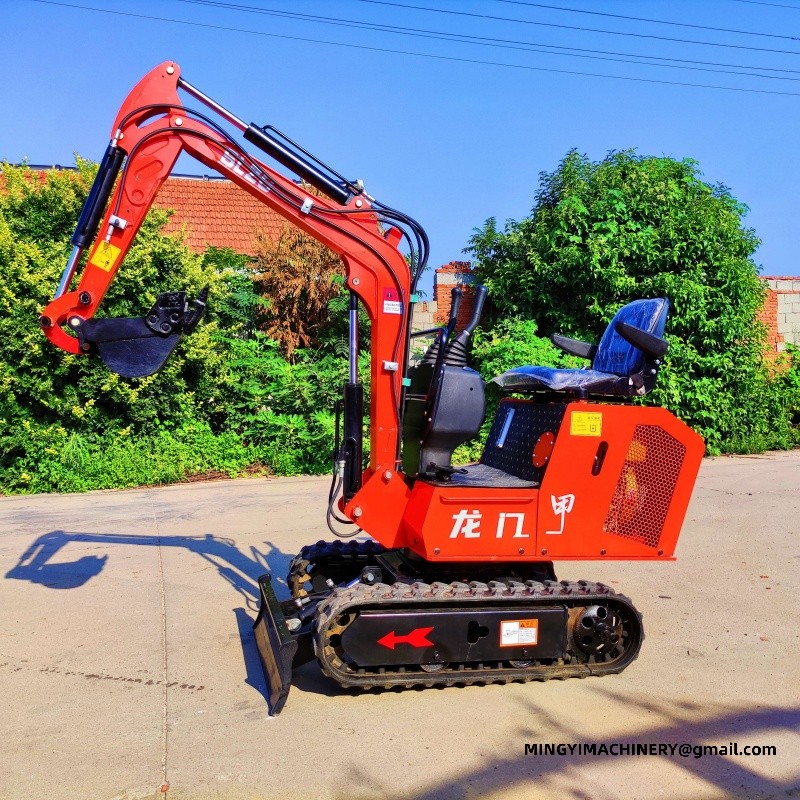
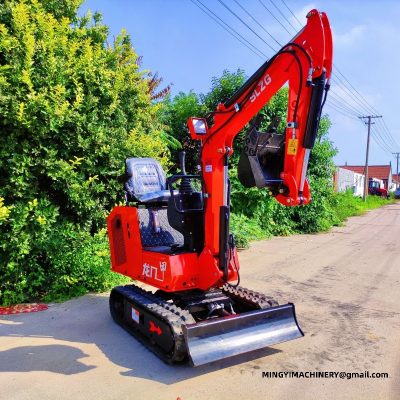
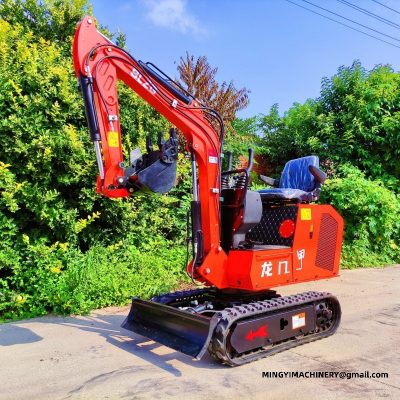
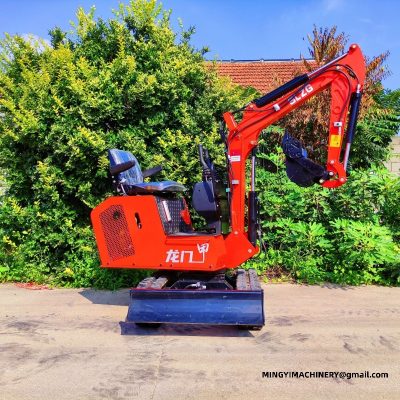
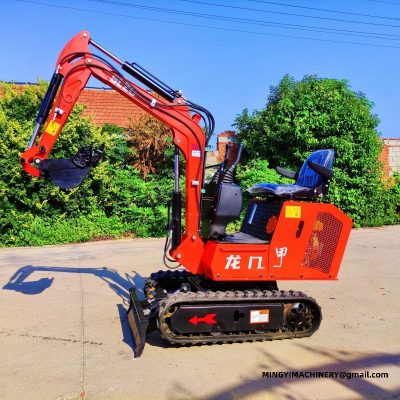
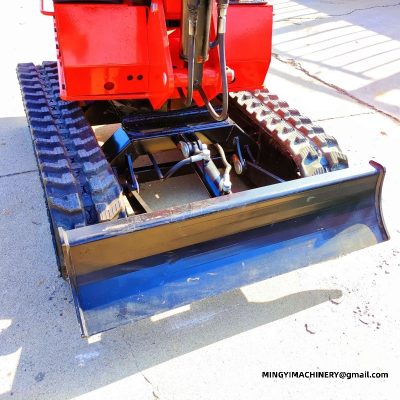
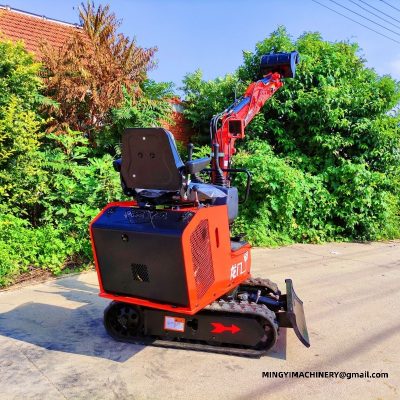
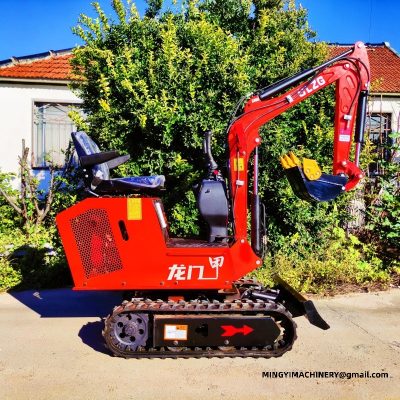
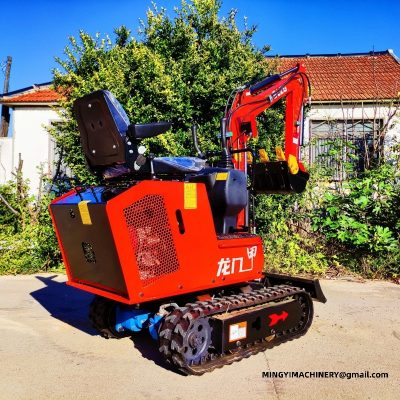
A crawler undercarriage is what gives a small excavator its grip and its stability. On soft, sloping or rough ground it keeps the machine working where a wheeled unit would struggle.
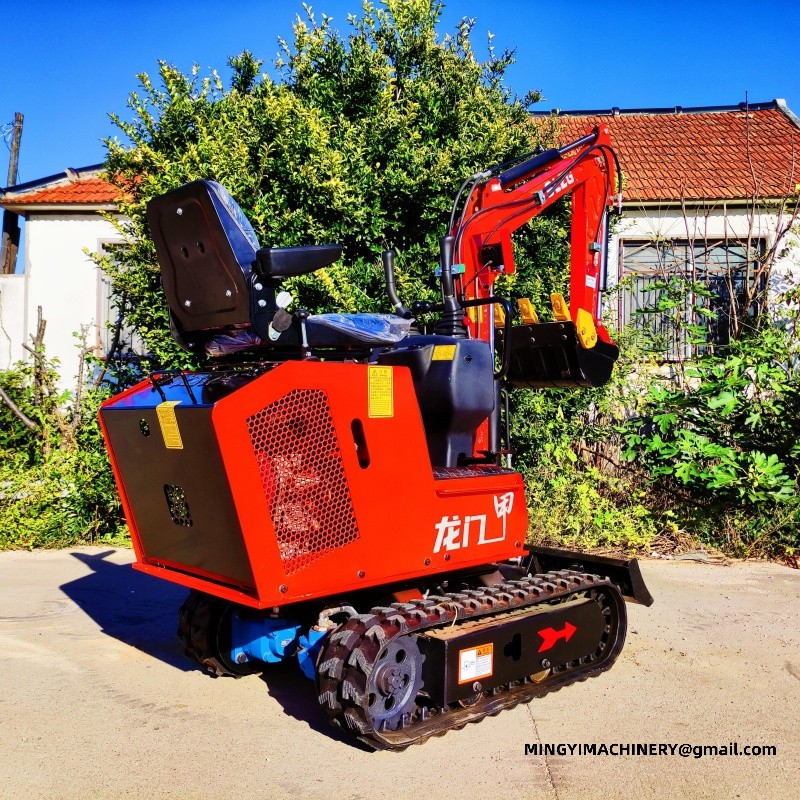
The MINGYI compact range is built on that platform, with the track type and the boom arrangement chosen to suit the market and the ground.
The crawler platform in landscaping and construction
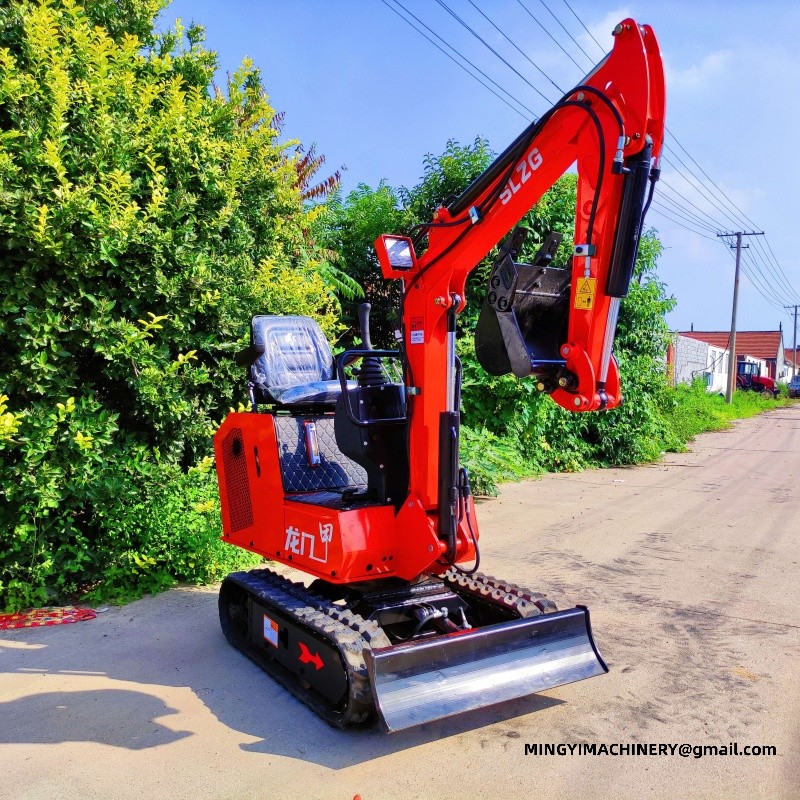
Crawler machines spread their weight over a long footprint, which lets them work on lawns, verges and freshly graded ground without sinking as deeply as a wheeled machine.
A compact crawler can also climb a low bank or follow a slope along a ditch line, which is the reason it is preferred for drainage, terracing and roadside work.
Track options and machine forms on the crawler range
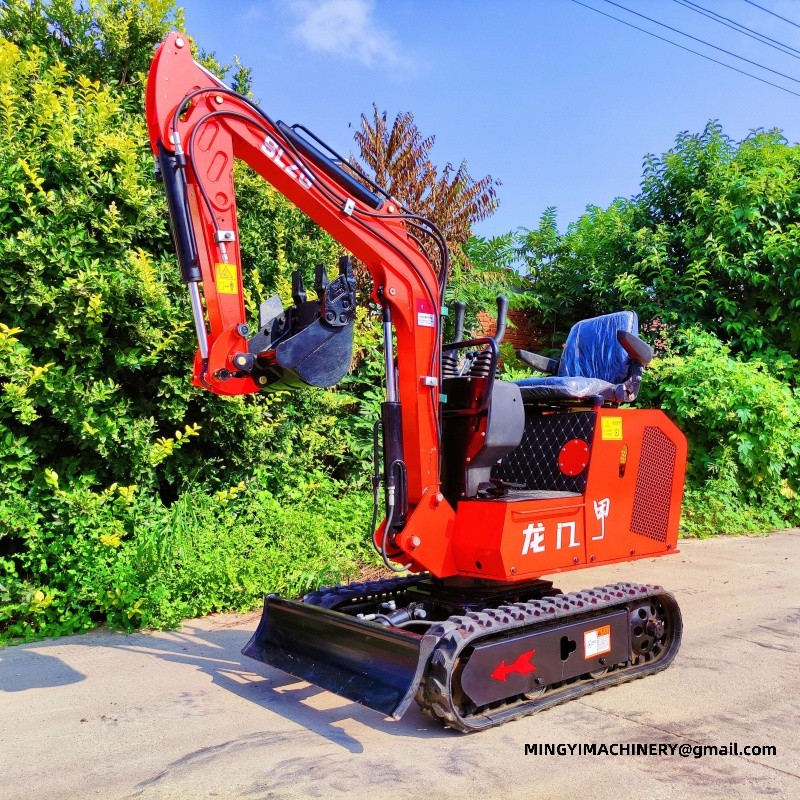
Rubber tracks and steel tracks with rubber blocks are both offered, and the choice is settled with the order. The same platform is available as a canopy or an enclosed cab.
Boom options include a swing or offset type and an extended dipper, so the machine can be configured for trenching, bank work or general excavation.
The undercarriage, engine, cab form and attachment coupler are fixed together at the ordering stage, and the finished unit is supplied with spare parts and service information.
Working near live services with mini crawler excavator for soft ground The risk on utility work is not machine power but machine placement. The excavator that fits the working width leaves the surrounding ground undisturbed, which keeps the trench stable and the reinstatement small. Utility crews specify this class of machine with a narrow bucket and good visibility for exactly this reason: the machine has to stop at the service, not at the edge of the operator's view. Canopy or enclosed cab on a mini crawler excavator for soft ground The cab decision follows the climate and the hours. Operators working a full shift in the unit in daily use benefit from a sealed cab with wipers and heating; operators stepping on and off every few minutes usually prefer the canopy for the visibility and the quick exit. Enclosure also changes noise and dust exposure. A sealed cab on a machine of this size keeps dust out on dry sites and lets the machine work through weather that would otherwise stop a canopy machine for the day. Export packing and shipping of mini crawler excavator for soft ground Machines leave the factory prepared for container or flat rack shipment. The equipment on site is normally shipped with the attachment set and the spare parts list agreed in advance so the container is planned once. Export documentation, decals and paint are settled before packing. Asking for them with the machine itself order avoids a second handling session and keeps the machine on the booked vessel. Matching mini crawler excavator for soft ground to ground conditions Soft ground is a flotation problem, not a power problem. The model in question on wide rubber tracks crosses lawn, sand and cultivated soil that would stop a narrower machine or a wheeled unit of the same capacity. Hard and abrasive ground reverses the specification. On rock, demolition rubble or sharp gravel, steel tracks with rubber blocks on the machine in that duty survive conditions that cut a rubber belt quickly. OEM and fleet customisation of mini crawler excavator for soft ground Distributors and rental fleets usually need the machine to look like theirs. Paint, decals, seat colour and attachment branding can be specified on the unit on the job at build time rather than applied after import. Customisation also covers the specification sheet. A fleet buyer may want every machine built for the work delivered with the same coupler, the same engine and the same tool kit so training and parts stock stay simple. Working a mini crawler excavator for soft ground through the seasons Weather decides which days are productive. Rain turns some ground unusable and cold changes how the equipment in service starts and warms up, so planning the wet months around maintenance is more useful than planning around output. Seasonal planning smooths the workload. Machines that are busy for a few months and idle for the rest benefit from a service slot in the quiet period, and the excavator prepared in the off-season starts the busy months reliably. Engine options behind this class of machine Power unit selection is settled against the service network the buyer already uses. MINGYI offers Kubota D722, Kubota D902, YANMAR, Changchai, Laidong, Runtong, YARMAX, Youpu 2V80 and Youpu 195, so a fleet running one brand of engine can keep the same filters, the same parts supplier and the same mechanic. Two buyers can order the same the unit in daily use and receive different engines. The decision is rarely about peak power; it is about which parts counter is closest to the site and which engine the local mechanic already knows. Lifting and material handling with a machine of this size Stability changes with reach. A load the equipment on site handles close in becomes a different proposition at full extension, so the working radius belongs in the plan before the lift rather than during it. Ground condition under the machine is part of every lift. Soft or uneven support is the common factor in handling incidents, and checking it takes less time than recovering the machine itself that has settled. Working on slopes and uneven ground with the model in question Slope work is a stability question before it is a traction question. Knowing the gradient the machine in that duty is rated for, and working across rather than straight up where the ground allows, removes most of the risk. Planning the direction of travel helps. Working so that the unit on the job is stable under load and not required to turn on a slope is a decision made before the job starts, not a correction made during it. Boom configuration for a machine built for the work A swing boom lets the machine dig parallel to its tracks without repositioning, which is what makes trenching beside a wall or a fence practical. On the equipment in service this is often the option that decides whether a job is possible at all. Detachable boom sections are used where transport length matters. The excavator that has to travel on a standard trailer can be built so the arm comes off for the road and goes back on at the site. What owners should plan for beyond the class of machine Purchase decision is the visible part of the effort. Fuel, filters, tracks or tyres, the operator and the transport between sites are the items that decide what the unit in daily use actually demands over a few seasons, and they are worth listing before the order. The useful comparison is demand per working hour, not demand per machine. A machine of this size that works more hours a year spreads its standing takes over more output, which is why utilisation usually matters more than the invoice figure. Hydraulic circuits on the equipment on site Flow and pressure are matched to the tool, not to the machine size. Asking for the attachment list first means the machine itself leaves the factory with circuits that suit the heaviest tool the buyer intends to run. Hydraulic specification is easier to settle at build time than to correct later. The model in question delivered without auxiliary lines can still dig, but every additional tool becomes a retrofit project. Specification data for the machine in that duty Where the unit on the job is being specified for a job list, the table below gives the factory figures that matter most: what the machine weighs, how deep and how far it works, and what it measures on a trailer. These are the reference figures for a machine built for the work. MINGYI confirms the final build sheet, including engine and attachment choices, against the destination and the job list before production. The choice follows the hours. Work that fills a few weeks a year is usually better hired, while the equipment in service that would be on site most weeks starts to justify ownership once the transport and booking time is counted. Availability is part of the decision. Owning the excavator means it is there on the day the ground is ready; hiring means competing for the same machine at the same time as everyone else in the season.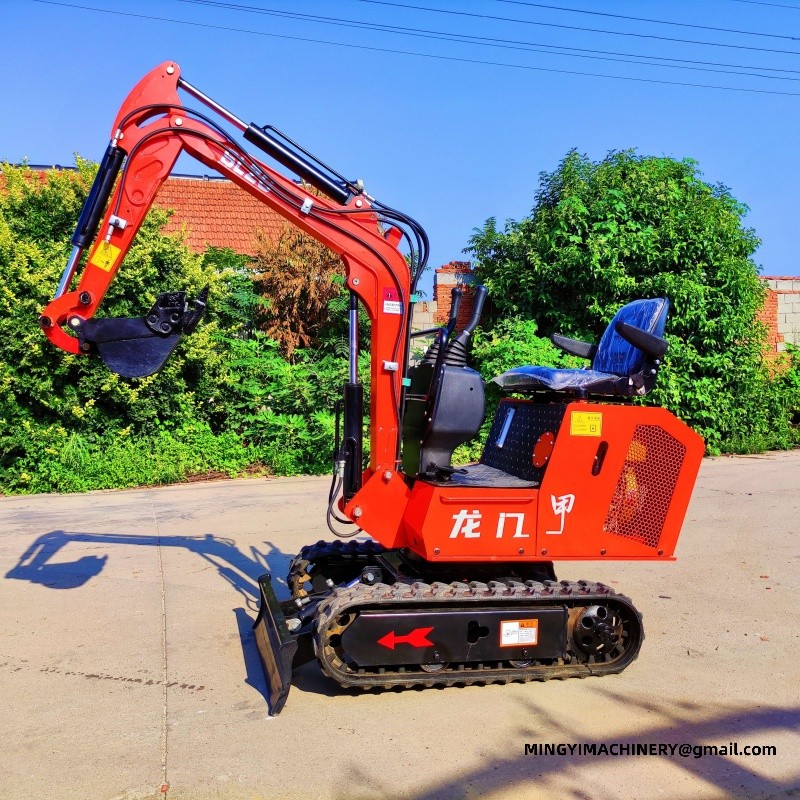
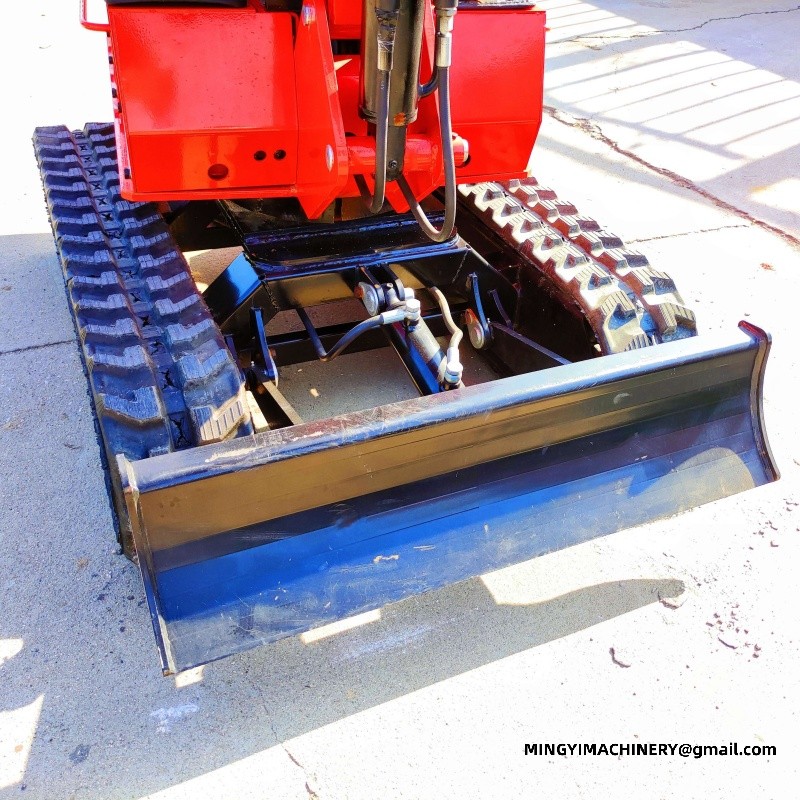
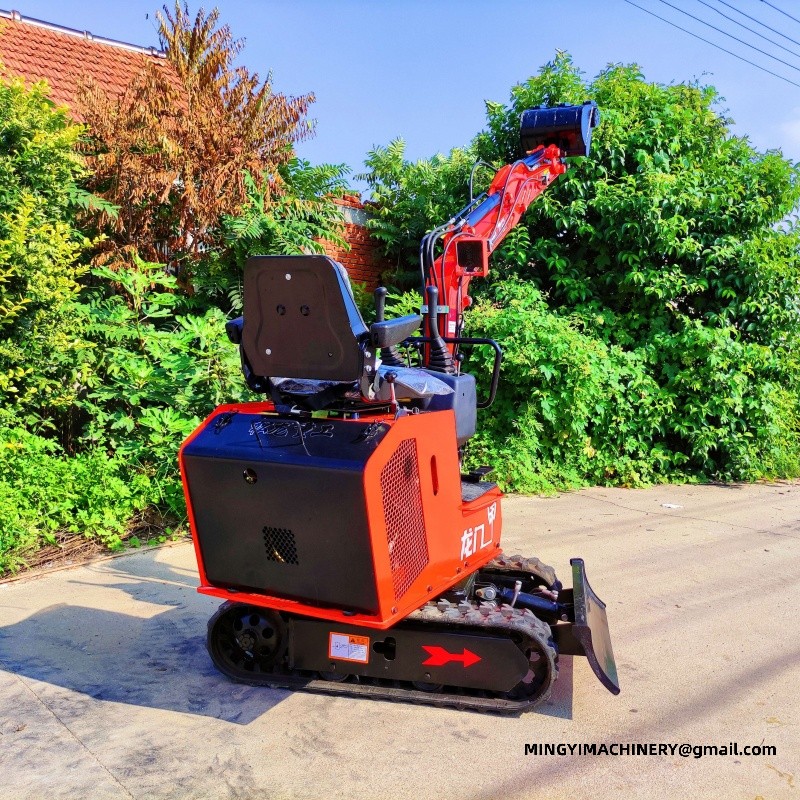
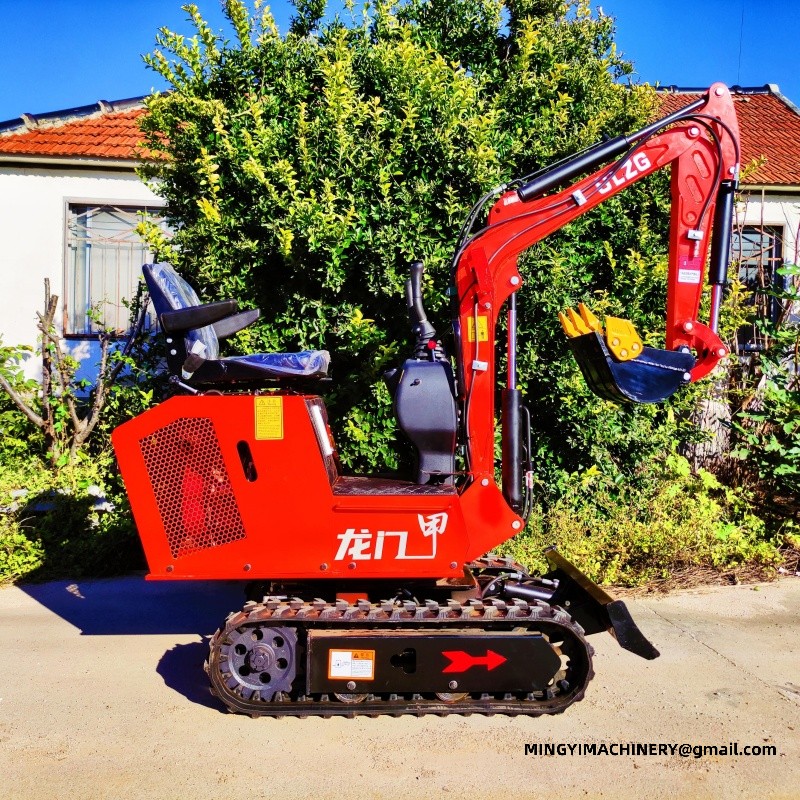
Reference specification — mini excavator range 09W 20-1W 30-2W 20-2L Operating weight 1100 kg (2425.08 lb) 1800 kg (3968.32 lb) 2700 kg (5952.48 lb) 1900 kg (4188.78 lb) Transport size (L×W×H) 1800 × 750 × 1970 mm 2550 × 1100 × 2200 mm 3000 × 1100 × 2700 mm 2600 × 1300 × 2344 mm Max digging depth 1250 mm (49.21 in) 1800 mm (70.87 in) 2200 mm (86.61 in) 2100 mm (82.68 in) Max digging height 2800 mm (110.24 in) 2820 mm (111.02 in) 3000 mm (118.11 in) 2880 mm (113.39 in) Max dumping height 1700 mm (66.93 in) 2050 mm (80.71 in) 2000 mm (78.74 in) 2100 mm (82.68 in) Max digging radius 2570 mm (101.18 in) 3050 mm (120.08 in) 3800 mm (149.61 in) 3215 mm (126.57 in) Max digging distance 1869 mm (73.58 in) 2300 mm (90.55 in) 3050 mm (120.08 in) 2460 mm (96.85 in) Minimum turning radius 1000 mm (39.37 in) 1450 mm (57.09 in) 1750 mm (68.9 in) 1587 mm (62.48 in) Travel speed 3 km/h (1.86 mph) 5 km/h (3.11 mph) 7 km/h (4.35 mph) 5 km/h (3.11 mph) Gradeability 30° 30° 30° 30° Fuel consumption 1-1.3 L/h (0.264—0.343 gal) 2-3 L/h (0.528—0.793 gal) 2-3 L/h (0.528—0.793 gal) 2-3 L/h (0.528—0.793 gal) Fuel tank capacity 8 L (2.11 gal) 16 L (4.23 gal) 16 L (4.23 gal) 16 L (4.23 gal) Hydraulic oil tank 16 L (4.23 gal) 18 L (4.76 gal) 20 L (5.28 gal) 18 L (4.76 gal) Dozer blade lift height 180 mm (7.09 in) 180 mm (7.09 in) 230 mm (9.06 in) 180 mm (7.09 in) Dozer blade drop depth 210 mm (8.27 in) 210 mm (8.27 in) 280 mm (11.02 in) 210 mm (8.27 in)
Q. What is this class of machine?
A. On difficult ground the undercarriage does the earning - spreading the load, holding the slope and keeping the slew steady while the bucket digs. The rule on difficult ground is simple: the ground decides the track, not the other way round. MINGYI builds the 08, 12 and 18 models covering the 0.8 to 6 tonne class, and the unit in daily use is where that range meets soft ground.
Q. Is mud a machine problem or a setup problem?
A. Setup: matched tracks, slow slew and a dig plan that keeps the carrier on the firmest ground available. Set up right, wetland and mud digging is steady production rather than recovery work.
Q. Can I see the machine before it ships?
A. Inspection is arranged at the factory, in person or by a scheduled video walk-around - the same session covers paint, decals and attachment fitment for the soft ground specification, so the machine inspected is the machine that ships.
Keeping a service record for a machine of this size
A written record is worth more than a good memory. Dates, hours and the parts fitted on the equipment on site turn a guess about the next service into a fact, and they are the first thing a buyer asks to see.
Pre-delivery inspection before the machine itself leaves the shop
What the customer sees on arrival is decided before departure. The walk-around given to the model in question covers the same points the operator will check on day one, so there are no surprises when the crate is opened at the destination.
E-mail : sales@mingycn.com
LINE ( ID ): mingyicn
Heat and hydraulic temperature in mini crawler excavator for soft ground
Cooling cores blocked with dust or seed husks are the common cause in summer, and cleaning them from the inside out works better than washing the face of the radiator.
Hoses age faster next to hot manifolds, so routing and clearance are checked at the same time as the oil level.
Related pages
small digger range · mini excavator for basement work · Wheel Loader Factory China: 21 Builds, Three Frame Tiers · Mini Excavators









