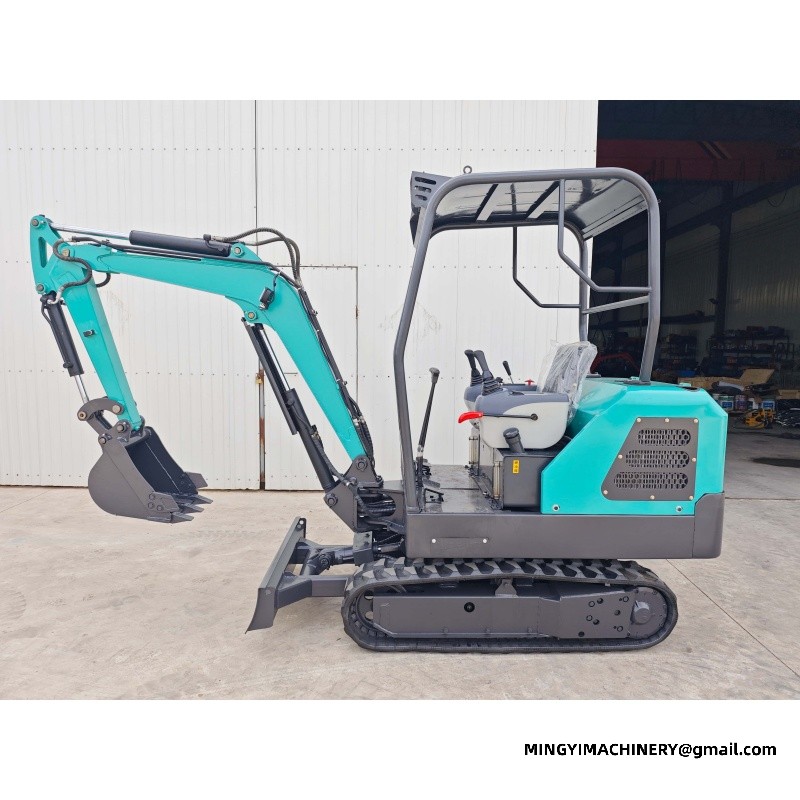
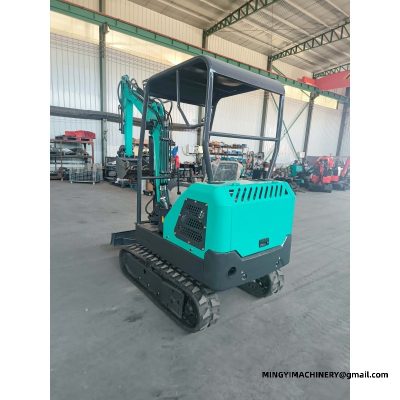
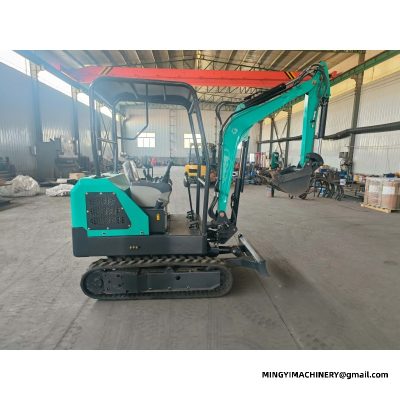
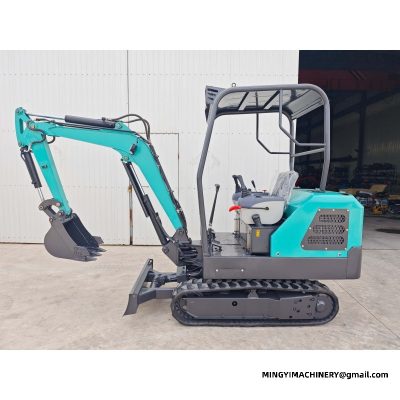
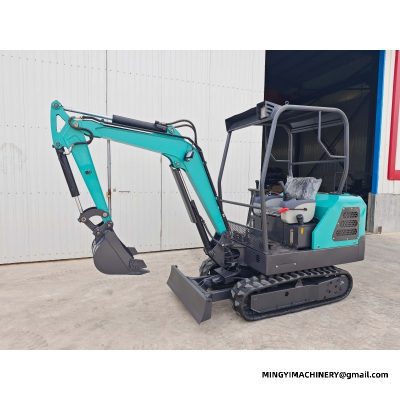
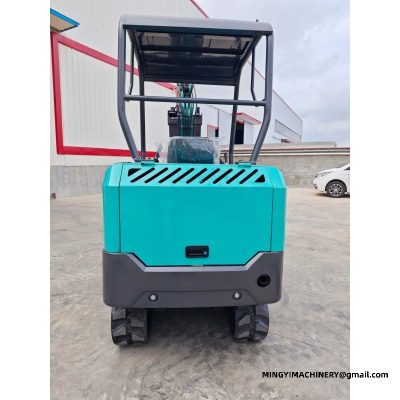
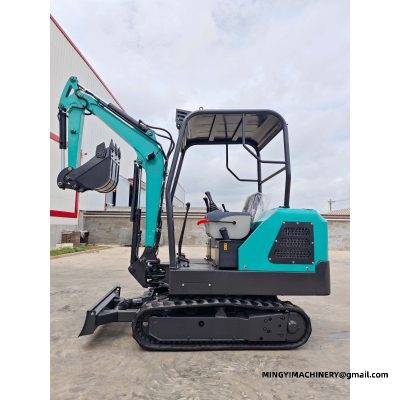
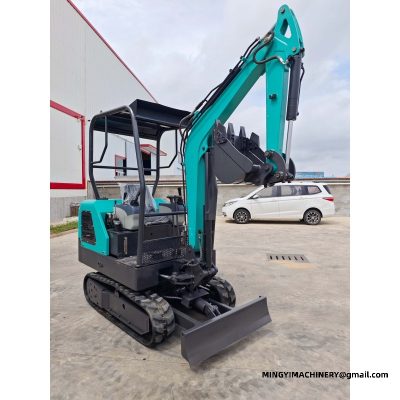
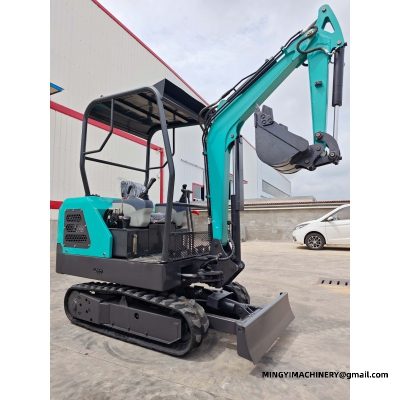
Work on buried services puts a premium on access and accuracy rather than volume. A compact crawler excavator can be positioned over a valve, a joint or a metre box and open the ground around it without disturbing the surrounding surface.
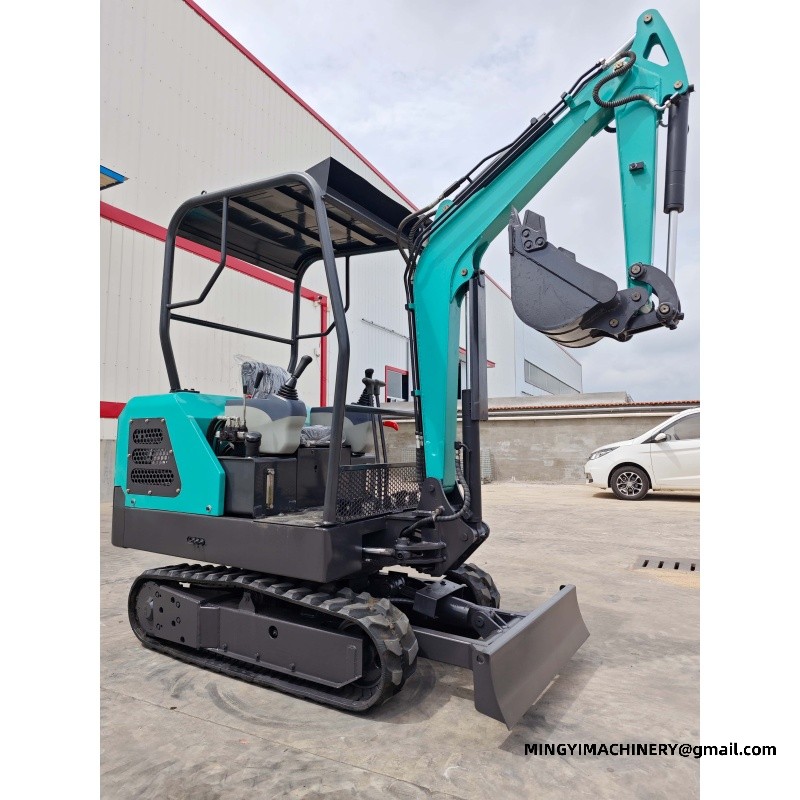
MINGYI builds this class to order, so the undercarriage and attachment set follow the utility work the buyer expects. A narrow bucket, a coupler and dependable reach are what most service crews ask for first.
Excavating around live services
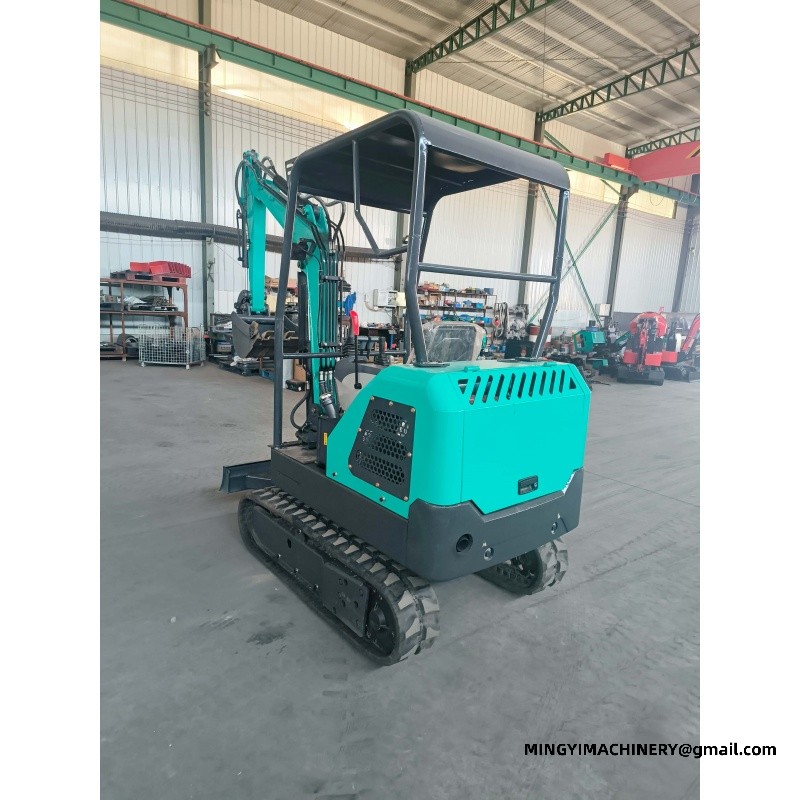
The caution here differs from ordinary trenching, because a machine cutting near a live main has to stop short and finish by hand. A smaller bucket and a steady hydraulic response let the operator take the last pass slowly and leave the service exposed rather than struck.
A tilting bucket allows the floor around a fitting to be trimmed flat, so a chamber or a surround can be set level. Where roots or old reinstatement get in the way, a ripper on the same coupler opens the material before the bucket removes it.
Attachments that suit service and utility work
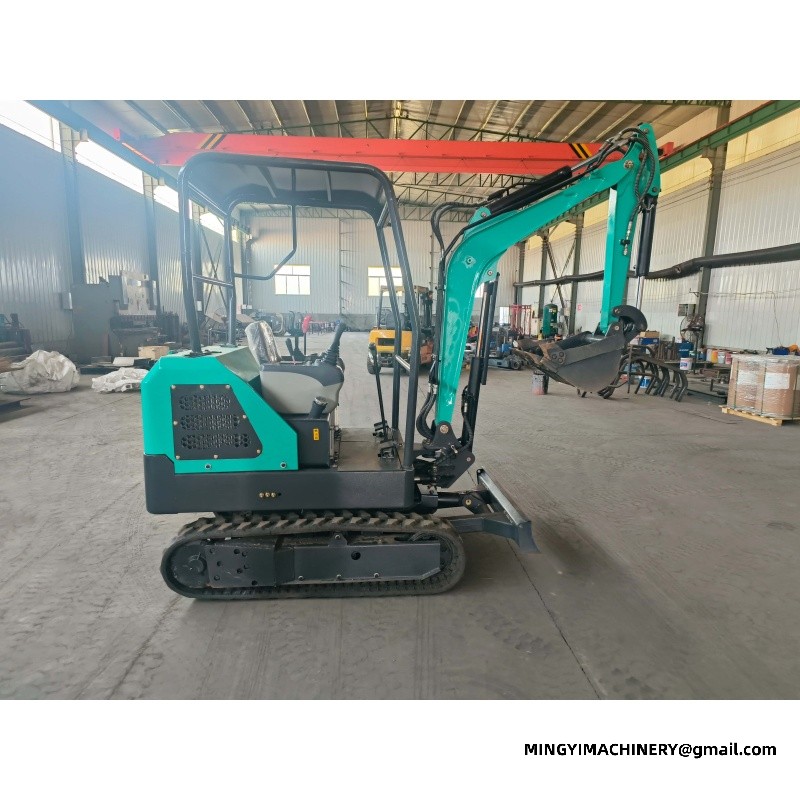
A quick coupler is close to essential on this kind of work, because the machine changes between bucket, breaker and auger within a single shift. Mechanical and hydraulic versions are both available, and the hydraulic type lets the change be made from the seat.
A breaker hammer opens hard surfacing over a repair, and an auger drills the post and marker positions that often follow a service installation. A shell bucket handles loose gravel without lifting the fines along with it.
Utility work is judged on how carefully the machine exposes what is buried rather than how fast it moves spoil. A two tonne crawler excavator specified with a coupler, a narrow bucket and a breaker covers repair and reinstatement in one visit.
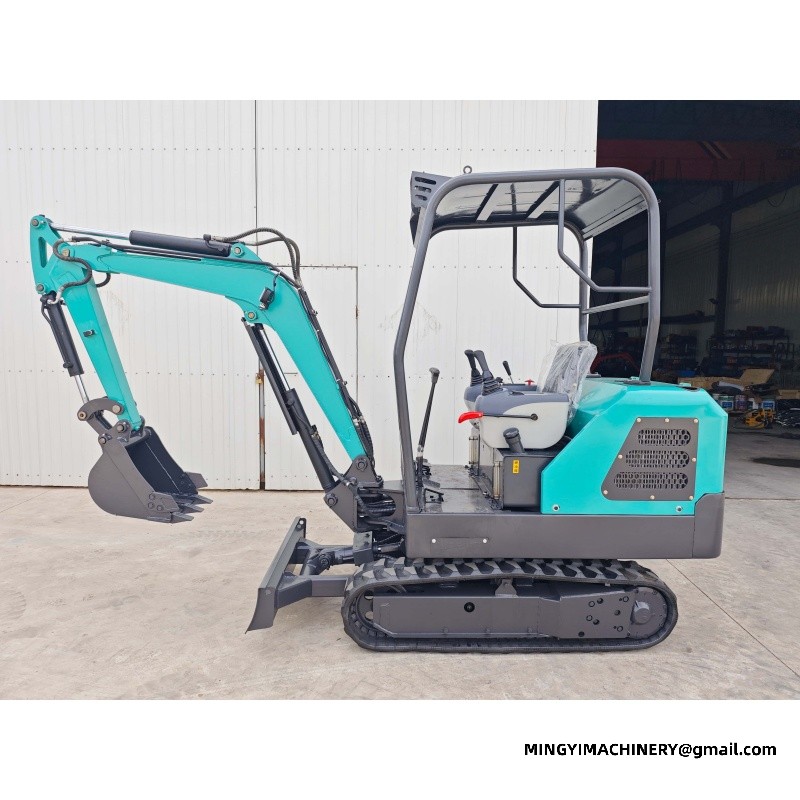
Operator technique for two tonne mini excavator for utilities The second habit is tool discipline. Running the excavator with the right bucket width for the trench means less spoil, less reinstatement and a cleaner job than a wide bucket and a lot of trimming. Stability is the third. This class of machine working across the tracks rather than over the corners keeps the machine steady and the undercarriage loaded evenly, which shows up as track life at the end of the season. Running two tonne mini excavator for utilities in a rental fleet Rental fleets buy for utilisation, not for a single job. The unit in daily use with a quick coupler and a common attachment standard is hired more often because it suits more of the calls that come in. The specification that rents best is usually the simplest one to explain at the counter. A machine of this size with rubber tracks, a canopy and a coupler covers the majority of weekend and short-term hires. Engine options behind two tonne mini excavator for utilities Power unit selection is settled against the service network the buyer already uses. MINGYI offers Kubota D722, Kubota D902, YANMAR, Changchai, Laidong, Runtong, YARMAX, Youpu 2V80 and Youpu 195, so a fleet running one brand of engine can keep the same filters, the same parts supplier and the same mechanic. Engine choice is also an emissions and documentation question for some markets. Listing the available units with the equipment on site enquiry lets the factory confirm what can be supplied and documented for the destination country. Acceptance checks when a two tonne mini excavator for utilities arrives A function check before the machine goes to work is worth the hour. Running through the controls, the travel and the attachment circuit on the machine itself confirms it is set up as specified and ready for the site. Documentation should arrive with the machine. Parts list, service schedule and any certificates for the model in question are what the workshop needs later, and they are much easier to obtain at delivery than in month six. Lifting and material handling with a two tonne mini excavator for utilities Lifting with a machine built to dig needs a plan. The load, the radius and the ground under the unit on the job all matter, and the safe figure is the one on the chart rather than the one that looks possible. Stability changes with reach. A load the machine in that duty handles close in becomes a different proposition at full extension, so the working radius belongs in the plan before the lift rather than during it. Boom configuration for two tonne mini excavator for utilities Extended and offset boom configurations change reach and working range. A machine built for the work with a longer arm reaches further but lifts less at full extension, so the specification is set against the deepest and furthest point on the job list. Detachable boom sections are used where transport length matters. The equipment in service that has to travel on a standard trailer can be built so the arm comes off for the road and goes back on at the site. Interior and light demolition with the excavator Breaking out a floor slab, a wall footing or a concrete step is routine work for this class of machine with a breaker. The machine is small enough to work inside and heavy enough to run the tool at a practical rate. Dust, debris clearance and floor loading all argue for a compact machine indoors. The unit in daily use spreads its weight over a wider track footprint than a wheeled machine of similar capacity. Daily checks and maintenance on a machine of this size Daily maintenance on the equipment on site is a short list: engine oil level, coolant, track tension, hydraulic oil level and a look at the hoses. Ten minutes at the start of the shift prevents most of the failures that stop a machine. Greasing is the second item. The slew ring, the boom and arm pins and the bucket linkage on the machine itself take grease daily in dusty work, and the intervals shorten further when the machine is used in water or mud. Hydraulic circuits on the model in question Auxiliary hydraulic lines are what let a machine drive a tool rather than only a bucket. The machine in that duty specified with the right circuits and flow runs a breaker or an auger without an add-on power pack bolted to the frame. Hydraulic specification is easier to settle at build time than to correct later. The unit on the job delivered without auxiliary lines can still dig, but every additional tool becomes a retrofit project. Trenching work with a machine built for the work Service trenches are the most common reason the equipment in service is hired. Water, sewage, cable and gas runs are narrow, shallow and often close to existing services, which is exactly the work a full-size machine cannot do safely. Depth control matters more on service work than speed. The excavator working beside live services is chosen because it can be placed precisely and stopped instantly, which is what the job actually requires. Trailering and moving this class of machine Transport weight and width decide whether a machine needs a specialist haulier. The unit in daily use sized to travel on a standard plant trailer behind a suitable vehicle moves with the crew rather than on a scheduled low loader. Detachable components reduce transport length. A machine of this size built with a removable arm section or a folding step fits a shorter trailer and may avoid an oversize movement permit. Specification data for the equipment on site Where the machine itself is being specified for a job list, the table below gives the factory figures that matter most: what the machine weighs, how deep and how far it works, and what it measures on a trailer. Figures are factory figures and are confirmed on the build sheet for the model in question. Where a job sits between two models, the larger machine usually takes less time than the smaller one spends on rework. Confined sites are decided by dimensions. Overall width, tail swing and the space needed to work the arm are what let the machine in that duty operate inside a building, between walls or in a courtyard. Ventilation is the other indoor constraint. Running the unit on the job inside a closed structure needs air movement, and that is a planning item rather than something to discover after the first hour.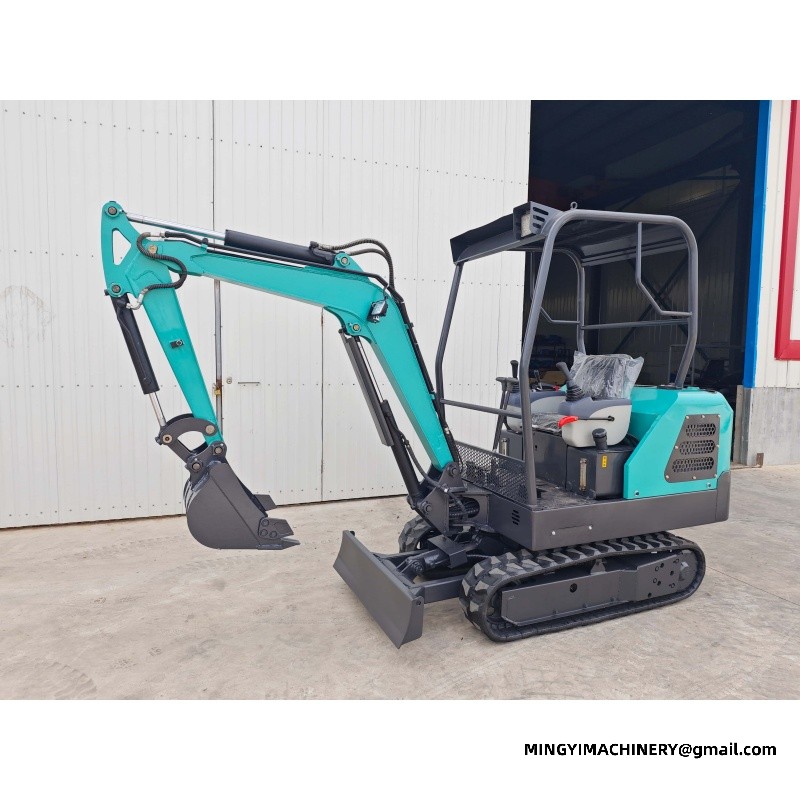
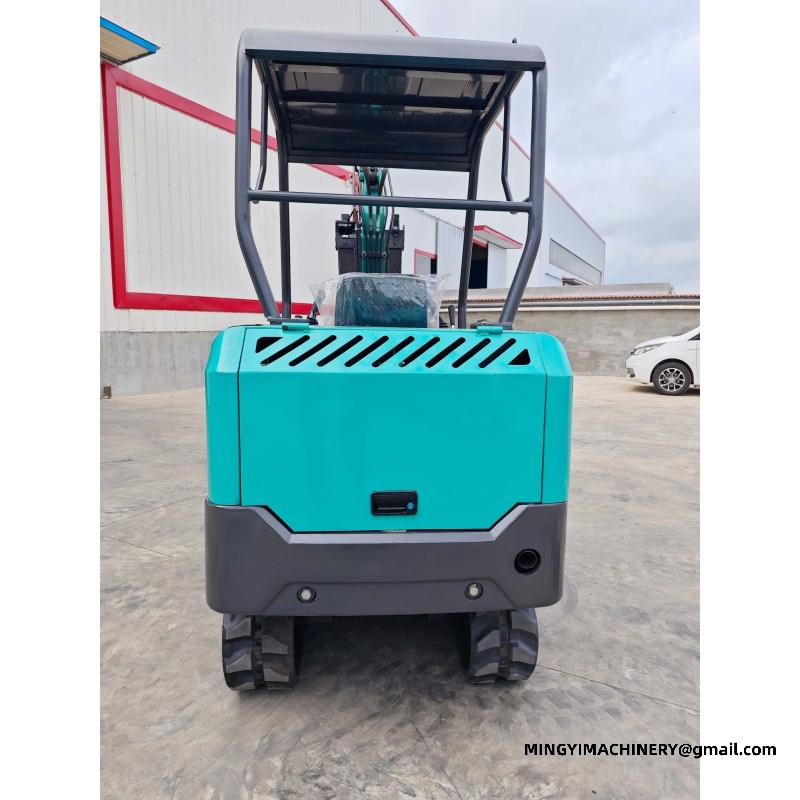
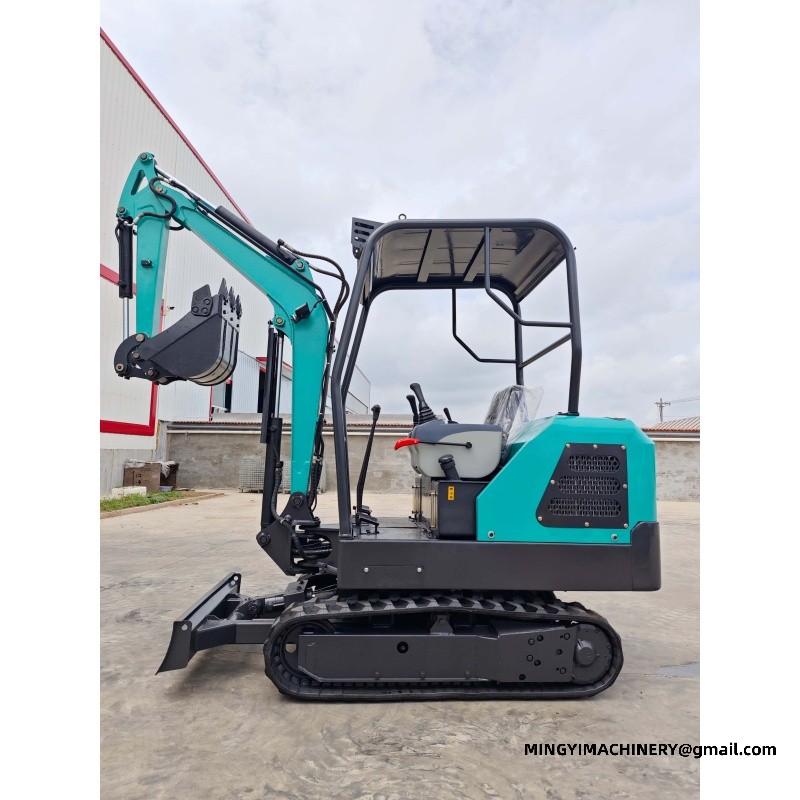
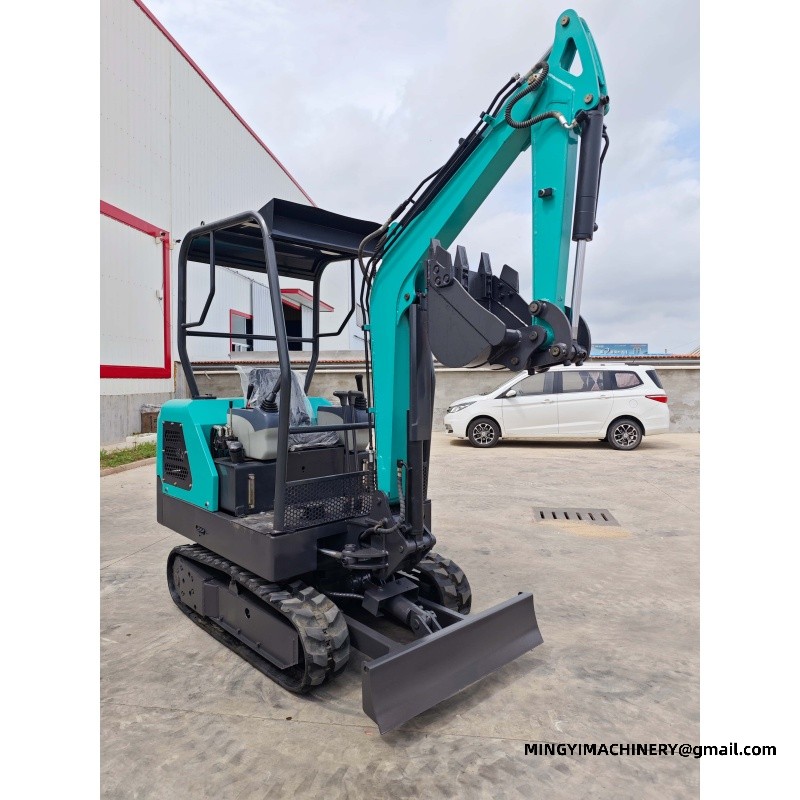
Reference specification — mini excavator range 09W 12L 15L 20-2L Operating weight 1100 kg (2425.08 lb) 1200 kg (2645.55 lb) 1400 kg (3086.47 lb) 1900 kg (4188.78 lb) Transport size (L×W×H) 1800 × 750 × 1970 mm 2200 × 930 × 2250 mm 2200 × 930 × 2250 mm 2600 × 1300 × 2344 mm Max digging depth 1250 mm (49.21 in) 1700 mm (66.93 in) 1700 mm (66.93 in) 2100 mm (82.68 in) Max digging height 2800 mm (110.24 in) 2600 mm (102.36 in) 2750 mm (108.27 in) 2880 mm (113.39 in) Max dumping height 1700 mm (66.93 in) 1800 mm (70.87 in) 1960 mm (77.17 in) 2100 mm (82.68 in) Max digging radius 2570 mm (101.18 in) 2900 mm (114.17 in) 2900 mm (114.17 in) 3215 mm (126.57 in) Max digging distance 1869 mm (73.58 in) 2300 mm (90.55 in) 2300 mm (90.55 in) 2460 mm (96.85 in) Minimum turning radius 1000 mm (39.37 in) 1450 mm (57.09 in) 1450 mm (57.09 in) 1587 mm (62.48 in) Travel speed 3 km/h (1.86 mph) 3 km/h (1.86 mph) 3 km/h (1.86 mph) 5 km/h (3.11 mph) Gradeability 30° 30° 30° 30° Fuel consumption 1-1.3 L/h (0.264—0.343 gal) 1-1.3 L/h (0.264—0.343 gal) 1-1.3 L/h (0.264—0.343 gal) 2-3 L/h (0.528—0.793 gal) Fuel tank capacity 8 L (2.11 gal) 10 L (2.64 gal) 10 L (2.64 gal) 16 L (4.23 gal) Hydraulic oil tank 16 L (4.23 gal) 16 L (4.23 gal) 16 L (4.23 gal) 18 L (4.76 gal) Dozer blade lift height 180 mm (7.09 in) 180 mm (7.09 in) 180 mm (7.09 in) 180 mm (7.09 in) Dozer blade drop depth 210 mm (8.27 in) 210 mm (8.27 in) 210 mm (8.27 in) 210 mm (8.27 in)
Q. What are the machine built for the work?
A. A trench is judged by what happens after the dig: a straight line, a stable wall and a backfill that settles without sinking - all set by bucket width and machine control. A bucket too wide pulls more spoil than the job needs and leaves a messy backfill; a bucket matched to the service keeps the cut clean. Read the equipment in service together with the engine, track and attachment pages: jobs around utilities are decided by how those choices line up, not by any single number on the sheet.
Q. How do I keep a trench straight and at depth?
A. Mark the line, set the bucket to the trench width and let the machine hold the cut - working back along the trench keeps spoil clear and the sightline open. A swing boom helps along walls and fences where the carrier cannot align.
Q. How do I get a specification?
A. Send the model, the destination and the attachment list by email or LINE - the channels listed just below this section. The reply covers the specification, lead time, packing and freight in one document, with the utilities build sheet attached.
Handover and getting familiar with the excavator
Familiarisation is not the same as reading the manual. Sitting on this class of machine, working through the controls at low speed and learning where the machine balances takes an hour, and that hour is what keeps the first week uneventful.
Later additions and retrofits on the unit in daily use
Retrofitting is limited by the base machine. Before anything is added to a machine of this size the hydraulic flow, the mounting interface and the stability allowance have to be checked, because those limits are what decide what is sensible.
E-mail : sales@mingycn.com
LINE ( ID ): mingyicn
Planning utilisation for two tonne mini excavator for utilities
A machine booked for a job it is too large for wastes capacity, while one that is too small loses the day to rework.
Hours per month tell more than hours in total, and they show whether a second machine or a second operator is the real constraint.
Related pages
1 to 3.5 tonne mini digger for site work · three tonne mini crawler excavator · Wheel Loader for Aggregate Yard: Dust, Fines and Heavy Builds · Mini Excavators









