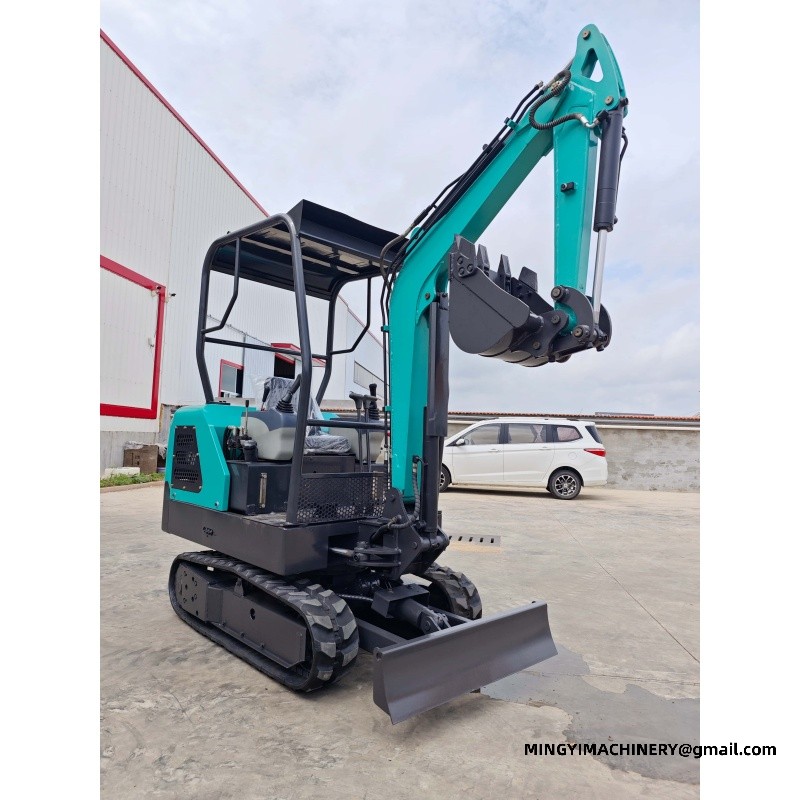
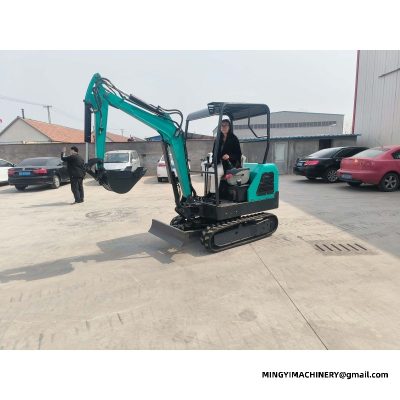
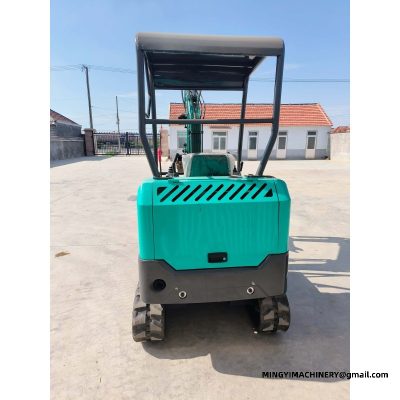
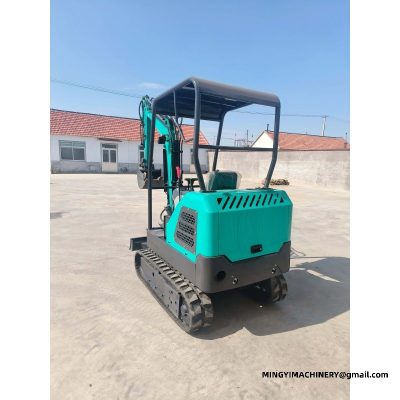
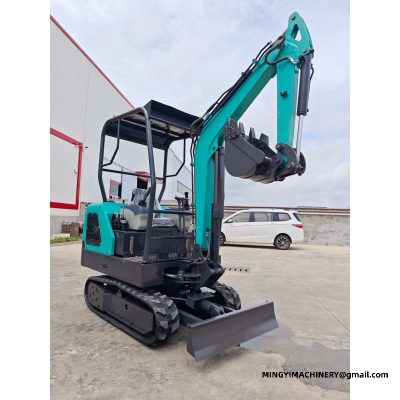
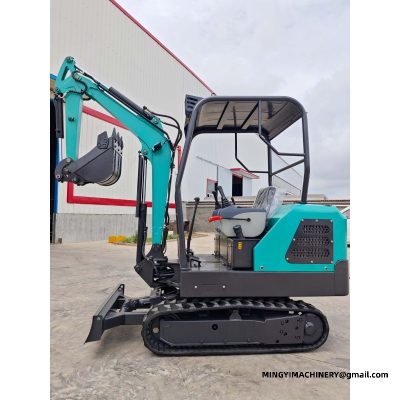
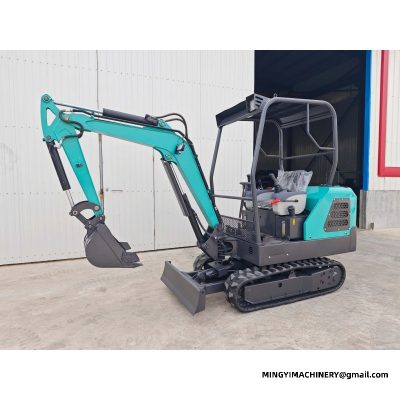
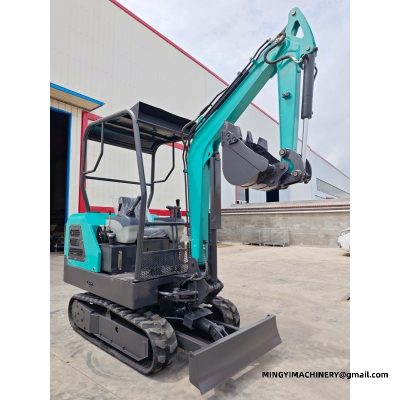
General site work makes heavy demands on a digger in an unglamorous way. One week it is footing trenches, the next it is trenching for a water line, then it is loading muck away and levelling a pad. This page is for buyers who want one MINGYI digger in the 1 to 3.5 tonnes class to cover that rotating list.
Because the work changes constantly, the specification is less about one attachment and more about the balance of digging force, stability and mobility. The notes below set out how that balance is struck in practice.
A week of typical site tasks
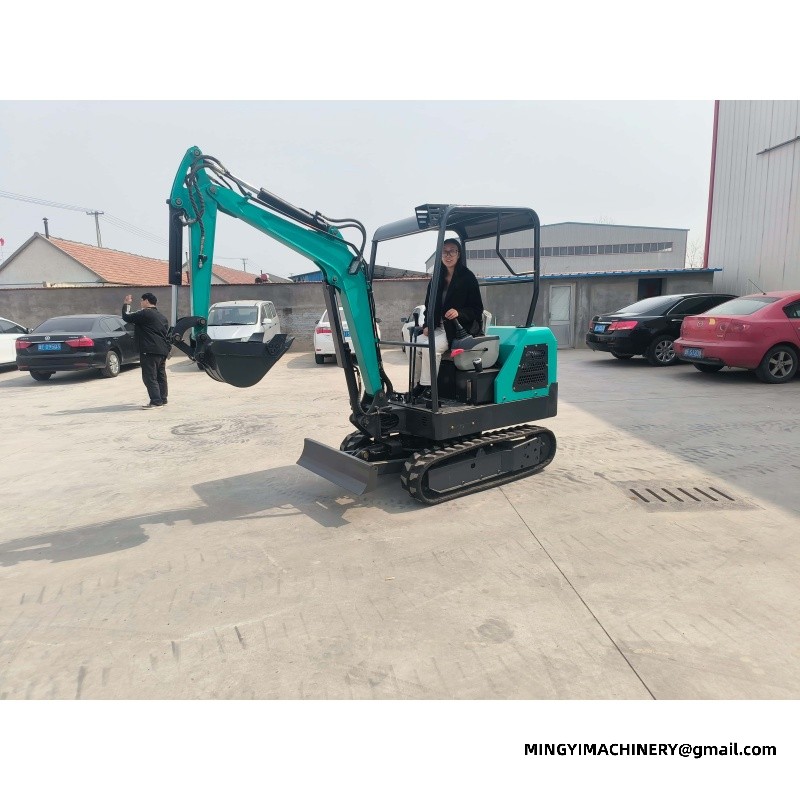
On a housing plot the digger cuts the strip footings, digs the service trenches, breaks out any unexpected rock or old concrete with a hammer, and trims the sub base with a grading bucket. On farm calls it clears ditches and digs gate post holes with an auger.
Where the plot is tight, the swing boom lets the digger trench alongside the foundation line without repositioning onto the heap every few minutes. A retractable undercarriage option helps when access between boundary walls is marginal.
Balancing the specification
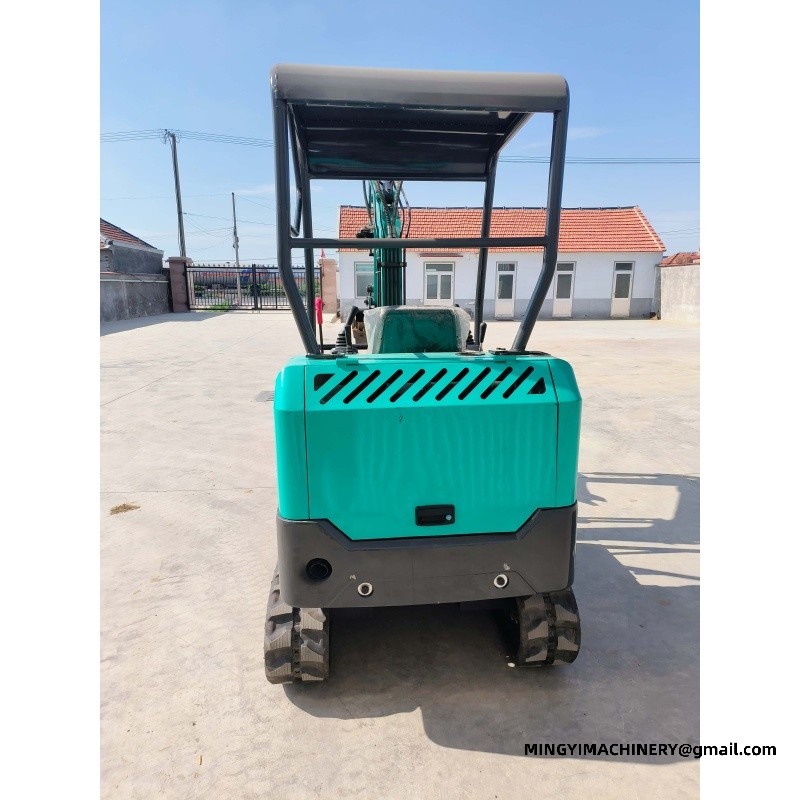
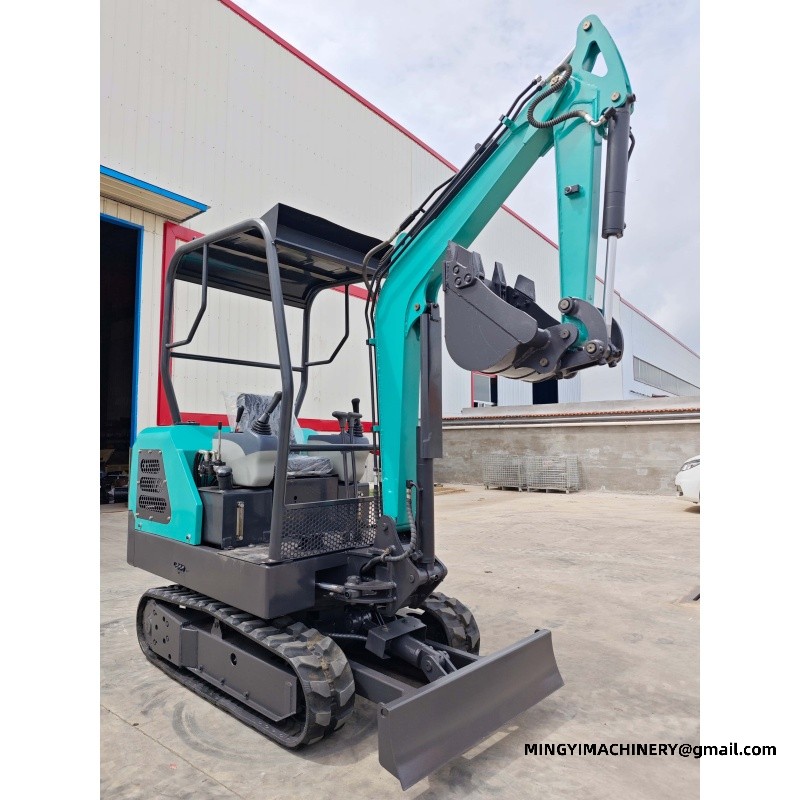
For mixed site work most buyers choose rubber tracks for their behaviour on finished drives and paved crossings, moving to steel tracks with rubber blocks only when soft ground dominates the calendar. Canopy or enclosed cab follows the climate the crews work in.
The engine installation is matched to the duty at the ordering stage, with Kubota and YANMAR options in the stronger machines and Changchai or Laidong units where the work is lighter. Confirm the bucket widths for your footing and trench sizes at the same time.
Give MINGYI the split of your work, trenching against loading against breaking, and the specification will be drawn around it. Each machine ships with the service information and spare parts needed to keep a site digger running through the season.
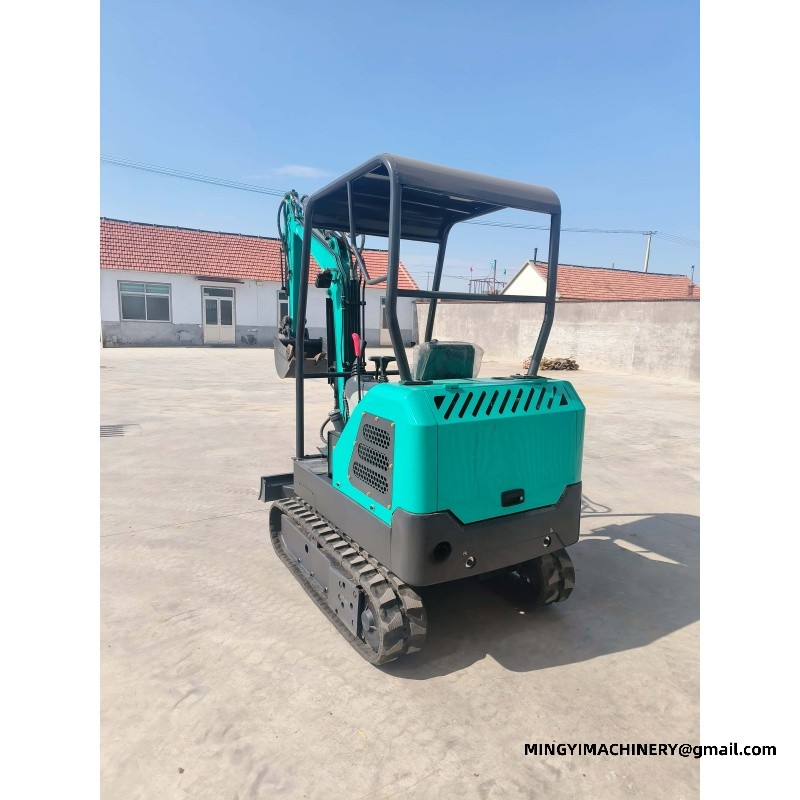
Track choice for 1 to 3.5 tonne mini digger for site work Rubber tracks suit paved and landscaped ground because they spread the machine weight and leave the surface intact. Steel tracks with rubber blocks are specified where the ground is rougher or the working day is longer, and the choice can be made per machine rather than accepted as a factory default. Undercarriage selection is a ground question, not a preference question. The excavator running on finished paving needs rubber; the same machine on demolition rubble or rock wears rubber quickly, so steel with rubber blocks becomes the better answer over a full season. Orchard, vineyard and farm use of 1 to 3.5 tonne mini digger for site work Ditching, fertilising and drainage on farmland suit this class of machine because the work is spread over a large area in short bursts. The machine travels behind a pickup and works where it stops. Farms also use the unit in daily use for general maintenance - clearing a watercourse, repairing a track, loading a spreader. One carrier with a few attachments covers most of the jobs that would otherwise wait for a contractor. OEM and fleet customisation of 1 to 3.5 tonne mini digger for site work Distributors and rental fleets usually need the machine to look like theirs. Paint, decals, seat colour and attachment branding can be specified on a machine of this size at build time rather than applied after import. Documentation can be prepared to suit the importer. Manuals, parts books and decal sets for the equipment on site can be supplied with the buyer's own branding where the order size justifies it. Quick coupler practice on 1 to 3.5 tonne mini digger for site work Couplers are specified early because they affect the arm and the hydraulic kit. Adding one to the machine itself after delivery means new pins, new hoses and a fitment session; adding it at build time is a line on the sheet. For a fleet that shares attachments between machines, a common coupler standard matters more than the coupler brand. The model in question that picks up the same tools as the larger machines keeps the rack usable across the yard. Working a 1 to 3.5 tonne mini digger for site work in confined spaces Clearance above matters as much as around. Door heights, pipework and overhead services set the limit for the machine in that duty indoors, and measuring them first avoids a machine that arrives and cannot be used. Ventilation is the other indoor constraint. Running the unit on the job inside a closed structure needs air movement, and that is a planning item rather than something to discover after the first hour. Attachments that turn 1 to 3.5 tonne mini digger for site work into several machines Attachment lists are best written before delivery. Specifying a machine built for the work with the tools the job list needs avoids the work and delay of adding hydraulics later, and a quick coupler makes the swap a few minutes instead of a workshop job. Most of the daily variety on the equipment in service comes from the attachment rack rather than from the machine itself. Bucket, breaker, auger, ripper, rake and grab cover the large majority of the work a contractor will see. Working on slopes and uneven ground with the excavator Slope work is a stability question before it is a traction question. Knowing the gradient this class of machine is rated for, and working across rather than straight up where the ground allows, removes most of the risk. Ground that looks level often is not. The unit in daily use crossing a filled trench, a soft edge or a hidden void behaves differently from one on undisturbed ground, and those are the places worth walking before driving. Working near live services with a machine of this size Digging near water, gas and cable is a precision job. The equipment on site is used here because the operator can work in short controlled cuts and because the machine can be positioned without driving over the run being exposed. The risk on utility work is not machine power but machine placement. The machine itself that fits the working width leaves the surrounding ground undisturbed, which keeps the trench stable and the reinstatement small. Export packing and shipping of the model in question Machines leave the factory prepared for container or flat rack shipment. The machine in that duty is normally shipped with the attachment set and the spare parts list agreed in advance so the container is planned once. Export documentation, decals and paint are settled before packing. Asking for them with the unit on the job order avoids a second handling session and keeps the machine on the booked vessel. Specification data for a machine built for the work The figures below are the factory figures for the models most often matched to the equipment in service. They are the numbers to check against the site: the depth the work needs, the reach from one position, and the width of the narrowest point on the route in. Figures are factory figures and are confirmed on the build sheet for the excavator. Where a job sits between two models, the larger machine usually takes less time than the smaller one spends on rework. Power unit selection is settled against the service network the buyer already uses. MINGYI offers Kubota D722, Kubota D902, YANMAR, Changchai, Laidong, Runtong, YARMAX, Youpu 2V80 and Youpu 195, so a fleet running one brand of engine can keep the same filters, the same parts supplier and the same mechanic. Two buyers can order the same this class of machine and receive different engines. The decision is rarely about peak power; it is about which parts counter is closest to the site and which engine the local mechanic already knows.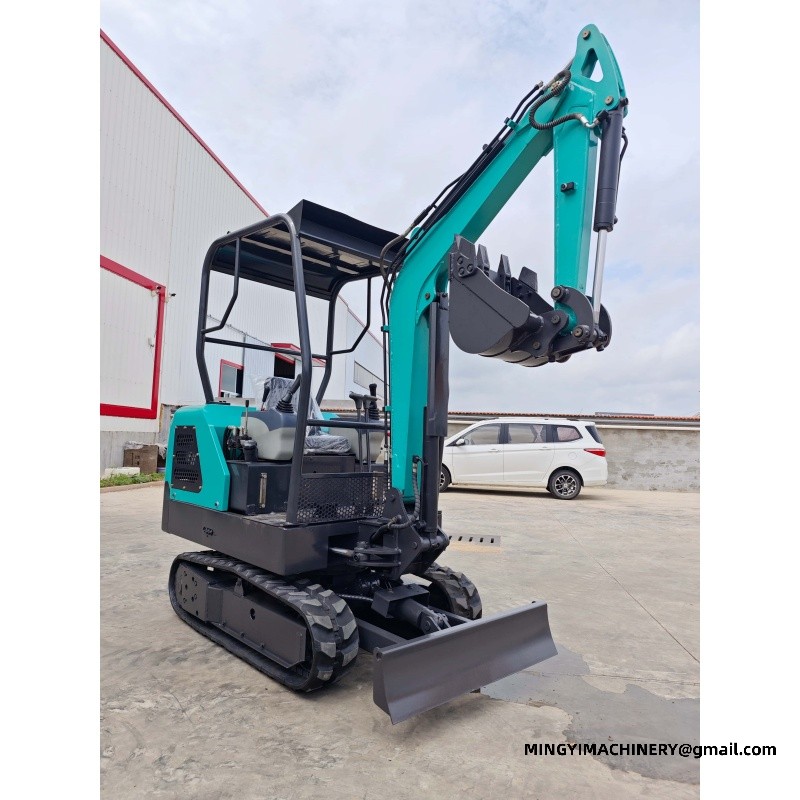
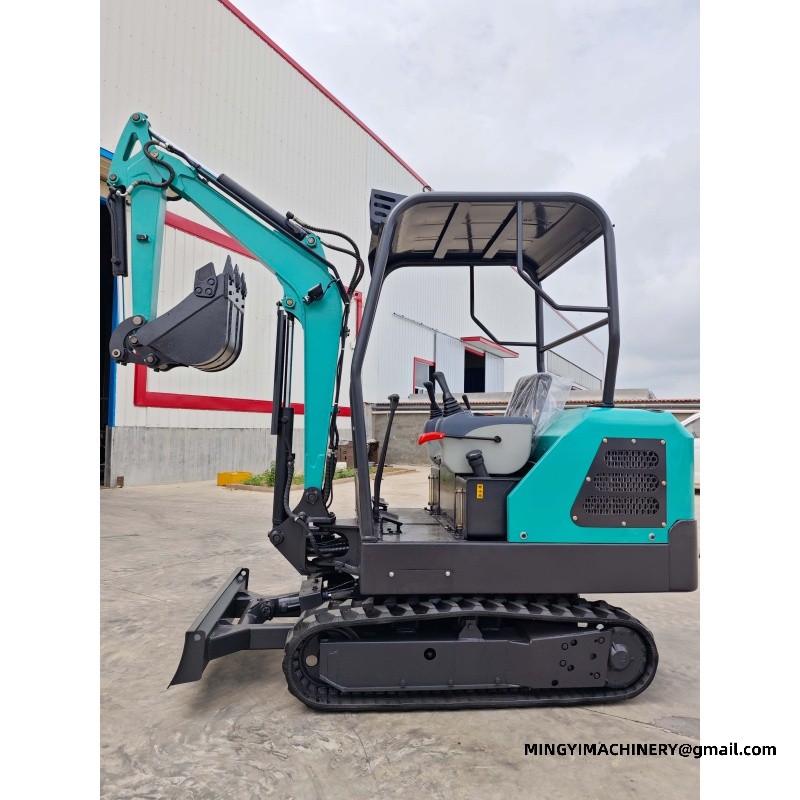
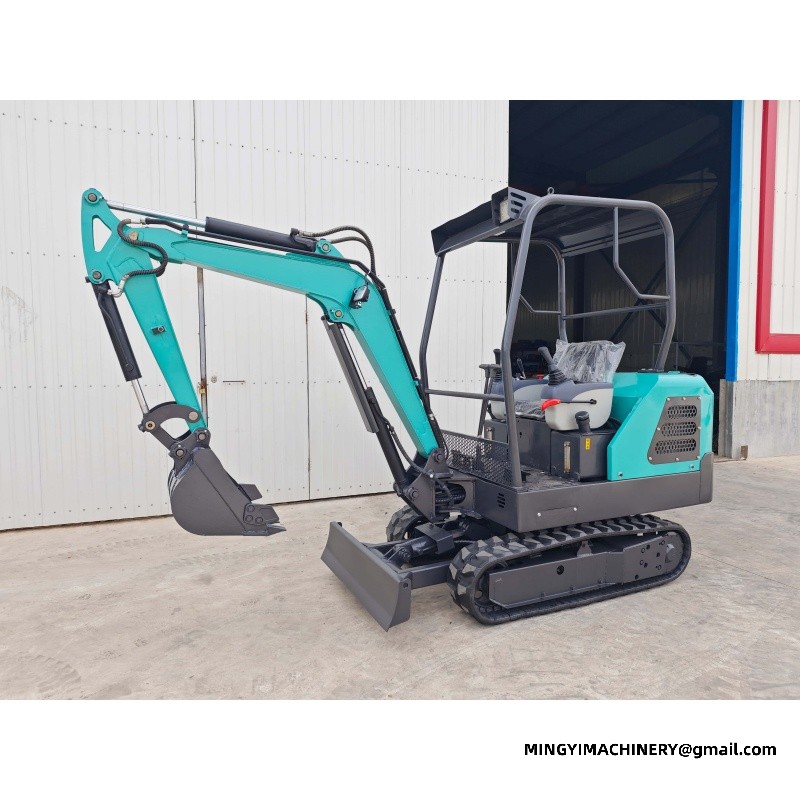
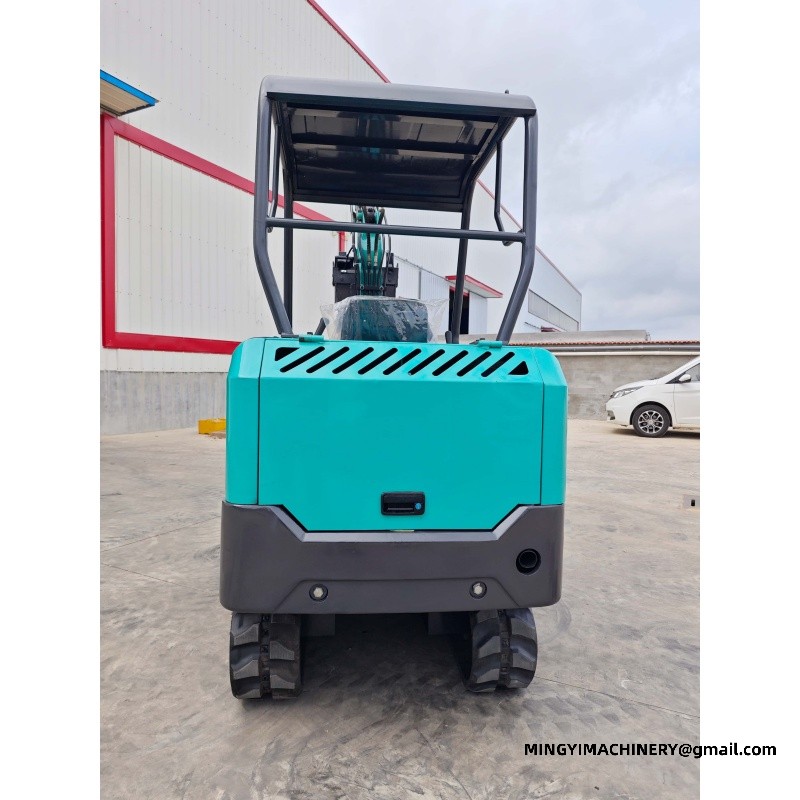
Reference specification — mini excavator range 20-1W 20-1WL 20-3W 30-1W Operating weight 1800 kg (3968.32 lb) 1900 kg (4188.78 lb) 1900 kg (4188.78 lb) 2900 kg (6393.41 lb) Transport size (L×W×H) 2550 × 1100 × 2200 mm 2550 × 1100 × 2200 mm 2550 × 1100 × 2200 mm 3000 × 1250 × 2780 mm Max digging depth 1800 mm (70.87 in) 1800 mm (70.87 in) 1800 mm (70.87 in) 2200 mm (86.61 in) Max digging height 2820 mm (111.02 in) 2820 mm (111.02 in) 2820 mm (111.02 in) 3400 mm (133.86 in) Max dumping height 2050 mm (80.71 in) 2050 mm (80.71 in) 2050 mm (80.71 in) 2400 mm (94.49 in) Max digging radius 3050 mm (120.08 in) 3050 mm (120.08 in) 3050 mm (120.08 in) 4000 mm (157.48 in) Max digging distance 2300 mm (90.55 in) 2300 mm (90.55 in) 2300 mm (90.55 in) 2800 mm (110.24 in) Minimum turning radius 1450 mm (57.09 in) 1450 mm (57.09 in) 1450 mm (57.09 in) 2000 mm (78.74 in) Travel speed 5 km/h (3.11 mph) 5 km/h (3.11 mph) 5 km/h (3.11 mph) 5 km/h (3.11 mph) Gradeability 30° 30° 30° 30° Fuel consumption 2-3 L/h (0.528—0.793 gal) 2-3 L/h (0.528—0.793 gal) 2-3 L/h (0.528—0.793 gal) 2-3 L/h (0.528—0.793 gal) Fuel tank capacity 16 L (4.23 gal) 16 L (4.23 gal) 16 L (4.23 gal) 16 L (4.23 gal) Hydraulic oil tank 18 L (4.76 gal) 18 L (4.76 gal) 18 L (4.76 gal) 20 L (5.28 gal) Dozer blade lift height 180 mm (7.09 in) 180 mm (7.09 in) 180 mm (7.09 in) 420 mm (16.54 in) Dozer blade drop depth 210 mm (8.27 in) 210 mm (8.27 in) 210 mm (8.27 in) 210 mm (8.27 in)
Q. Who chooses the unit in daily use?
A. The class sets the trade: access on one side, reach and lift on the other, and every compact buyer picks their point on that line. A machine that passes the narrowest gap on the job list and still swings the bucket the trench needs is the right size - nothing more complicated than that. A machine of this size is one of the pages buyers land on when comparing machines for site work, and the factory treats it as a specification conversation rather than a catalogue line.
Q. What changes between the size classes?
A. Reach, lift and stability grow with the class; doorways and trailer weight limits close. The smallest classes trade reach for access, the largest trade access for full-size work rates, and tracks, cabs and attachments stay common across the range.
Q. Does MINGYI supply attachments with the machine?
A. Yes - buckets, breakers, augers, rakes and the rest of the working set ship with the carrier, matched to the hydraulic flow and the coupler. For site work the package is confirmed on the build sheet, so machine and tools arrive together and start work together.
A second operator for the equipment on site
A machine that only one person can use is a single point of failure. Training a second operator on the machine itself takes a day and removes the dependency that otherwise governs holidays, illness and busy weeks.
Later additions and retrofits on the model in question
An added function should pay for itself quickly. Whether the machine in that duty gains a different bucket, a hydraulic service or a protection package, the test is the number of days a year it is actually used.
E-mail : sales@mingycn.com
LINE ( ID ): mingyicn
Visibility and blind spots around 1 to 3.5 tonne mini digger for site work
A machine working in a yard with people on foot needs a rule about who moves first, agreed before the shift rather than during it.
Dust, low sun and rain all shorten sight lines, and the sensible response is to slow the cycle rather than to work on memory.
The seat position, the mirror setting and the camera angle are worth recording once the operator is settled, so a change of driver does not undo them.
Emission and regional requirements for 1 to 3.5 tonne mini digger for site work
Emission rules are set by the market the machine is delivered into, and they are confirmed before the build rather than after it.
Fuel quality varies by region, and poor fuel shortens service intervals and affects after-treatment where it is fitted.
Where a machine moves between regions during its life, the original certificate is worth keeping with the manual.
Related pages
three tonne mini crawler excavator · 3.5 tonne mini excavator · OEM Wheel Loader Manufacturer: Build Records and Model Mixes · Mini Excavators









