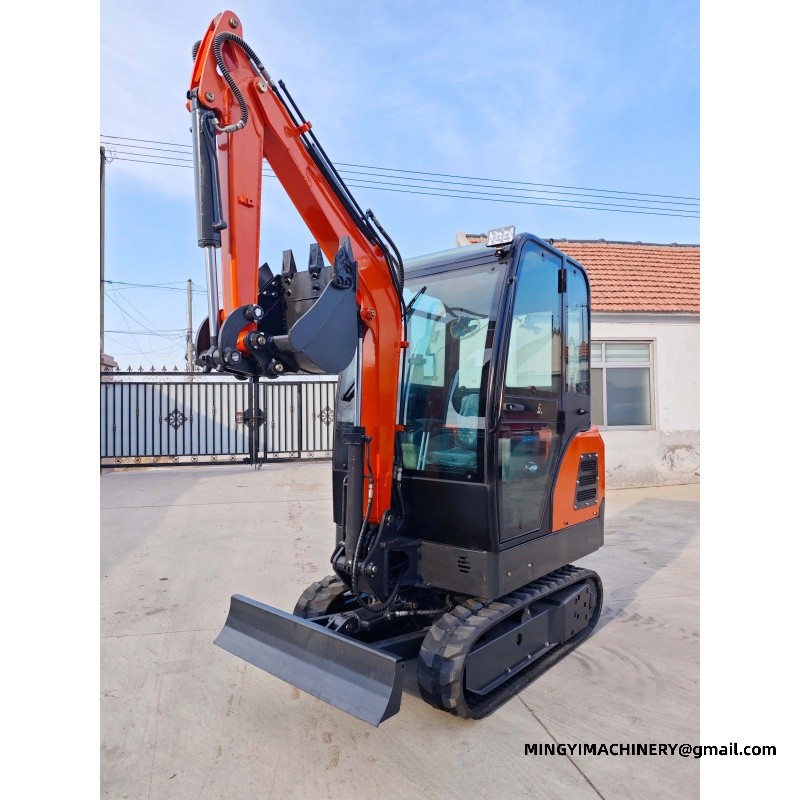
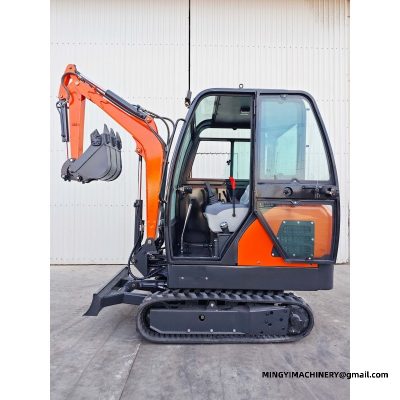
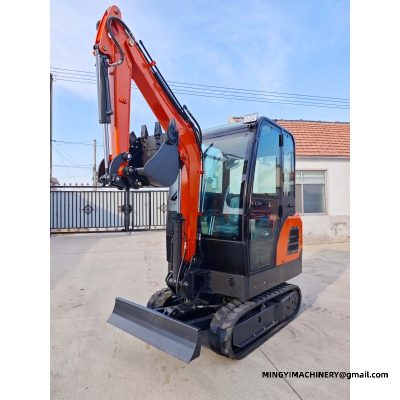
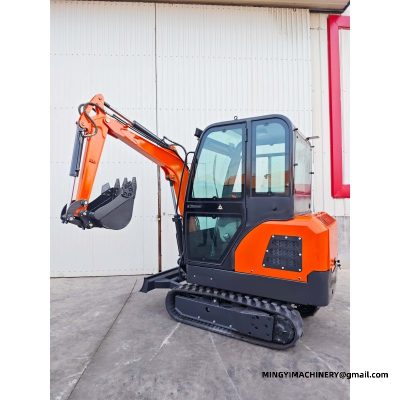
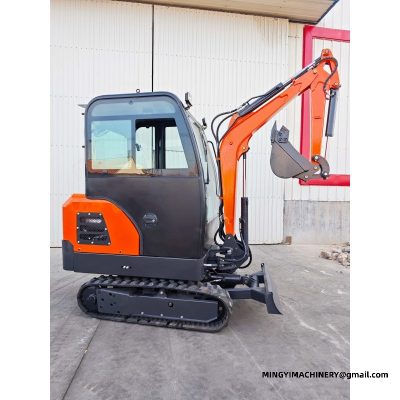
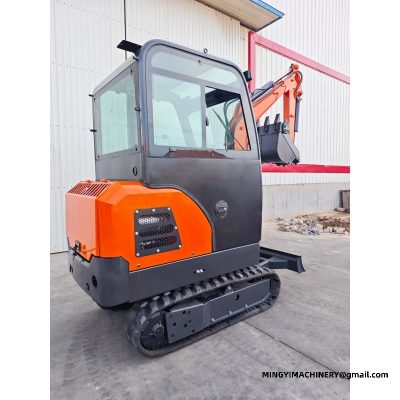
Grounds teams keep verges, parkland and amenity grass in order across a spread of locations rather than a single site. Drainage grips, edging and small planting jobs all fall to the same crew, and a compact carrier has to follow them.
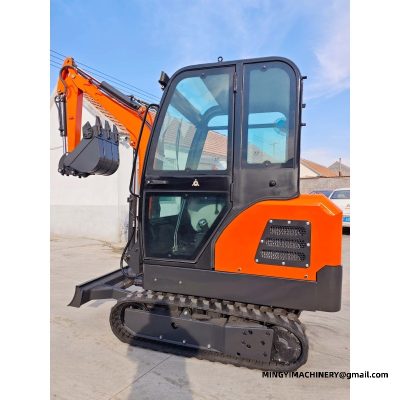
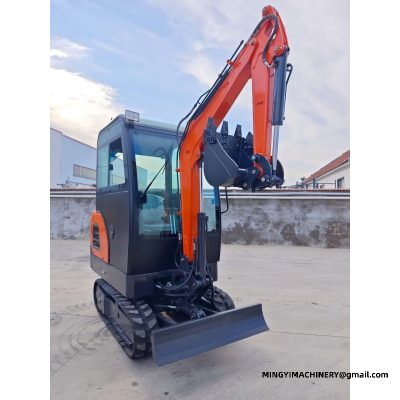
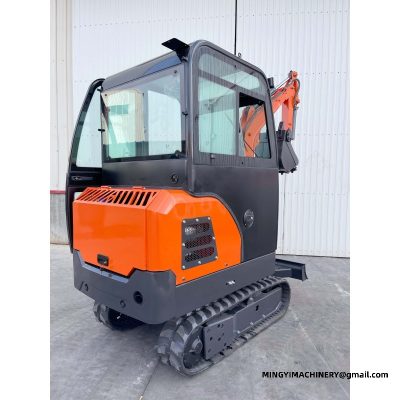
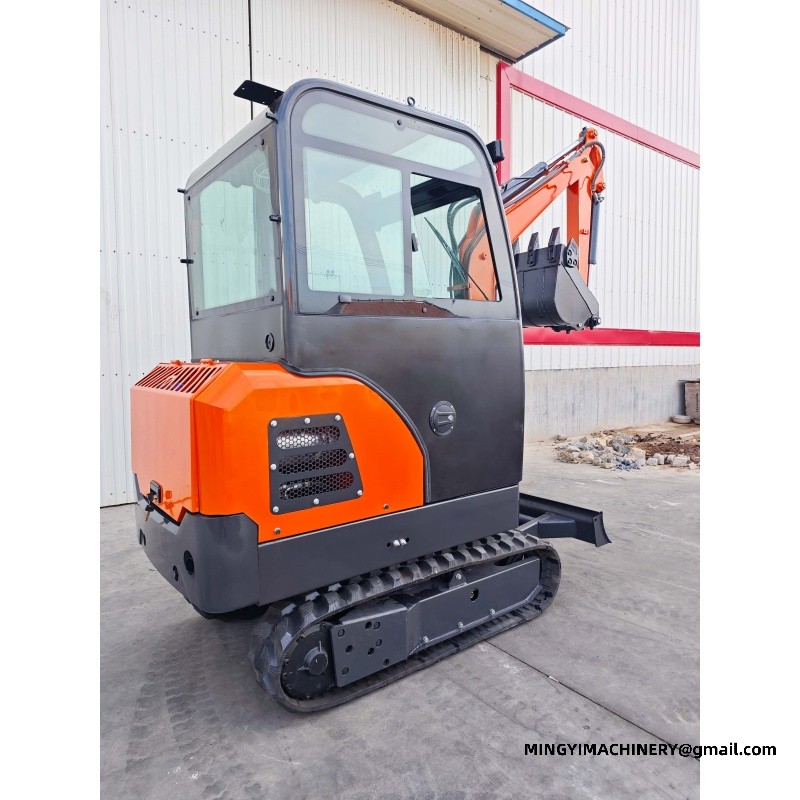
MINGYI supplies compact crawler excavators to grounds contractors. Built to order, the machine can be set with the track type and the tools that suit grass, footpaths and the occasional silted ditch.
Grounds maintenance tasks that call for a compact machine
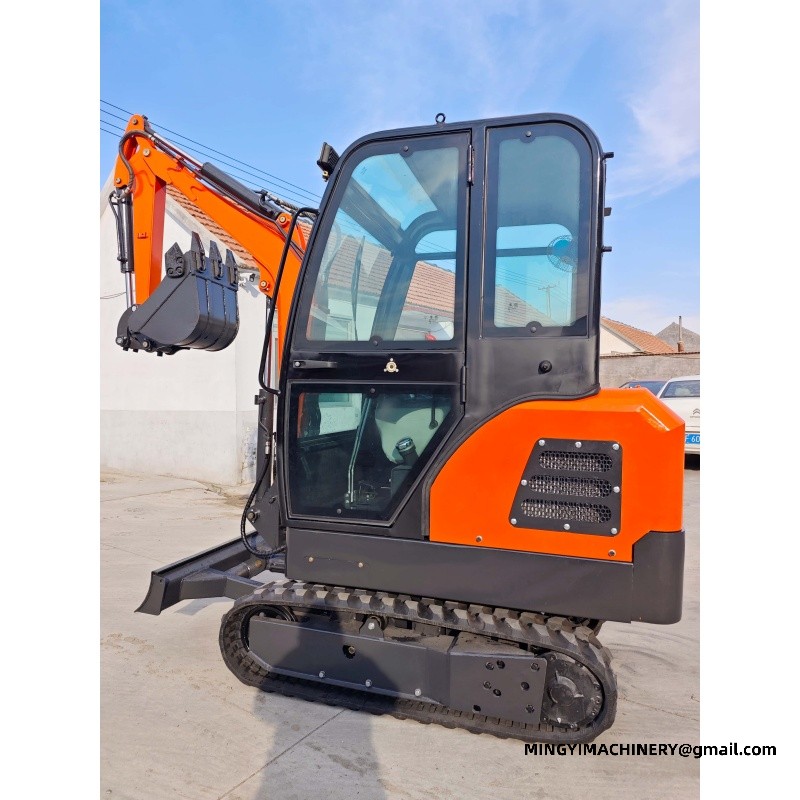
Opening a drainage grip or a blocked ditch is a recurring job on amenity land, and a narrow bucket clears the run without disturbing the surrounding turf. The same machine then trims an edge or lifts a root ball for replanting.
Because the work is spread across a park or a roadside, the carrier has to move between areas without a second vehicle. A compact machine on a small trailer keeps a crew working through the day.
Track and attachment choices for amenity ground
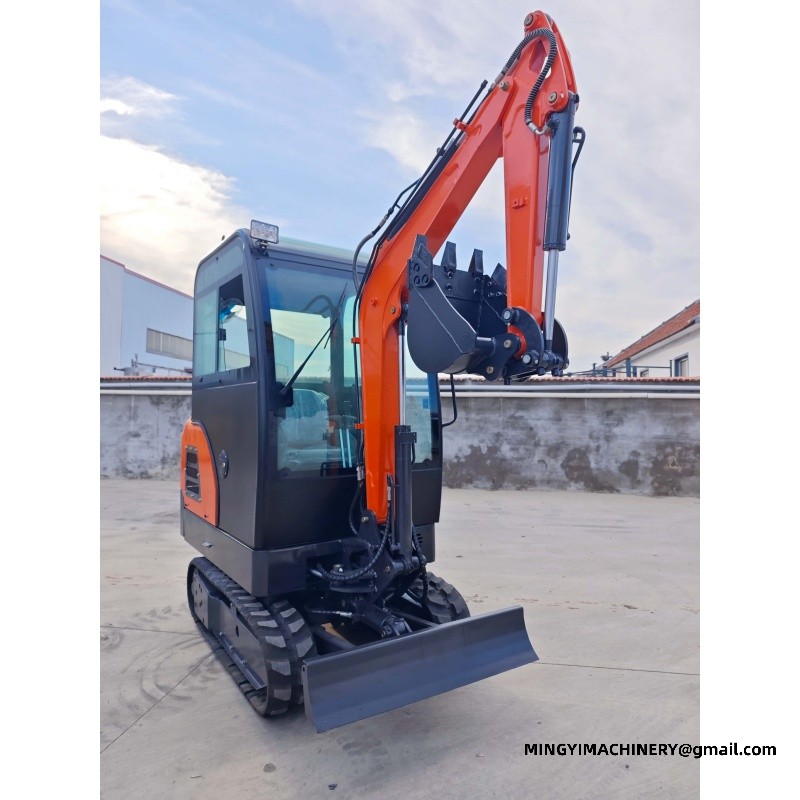
Rubber tracks are the usual pick where the machine crosses lawns and footpaths, since they leave the surface intact and can be run in wet weather without cutting ruts. Firmer verges may suit steel tracks with rubber blocks.
A grass rake or a grabber handles cut growth and fallen limbs, while a bucket covers the ditching. Matching those tools to the carrier through a quick coupler keeps a crew from hauling several machines around.
For grounds work, confirm the track type, the tool list and the machine class when ordering. Settling those points early is what keeps a single carrier useful across parks, verges and roadside ditches.
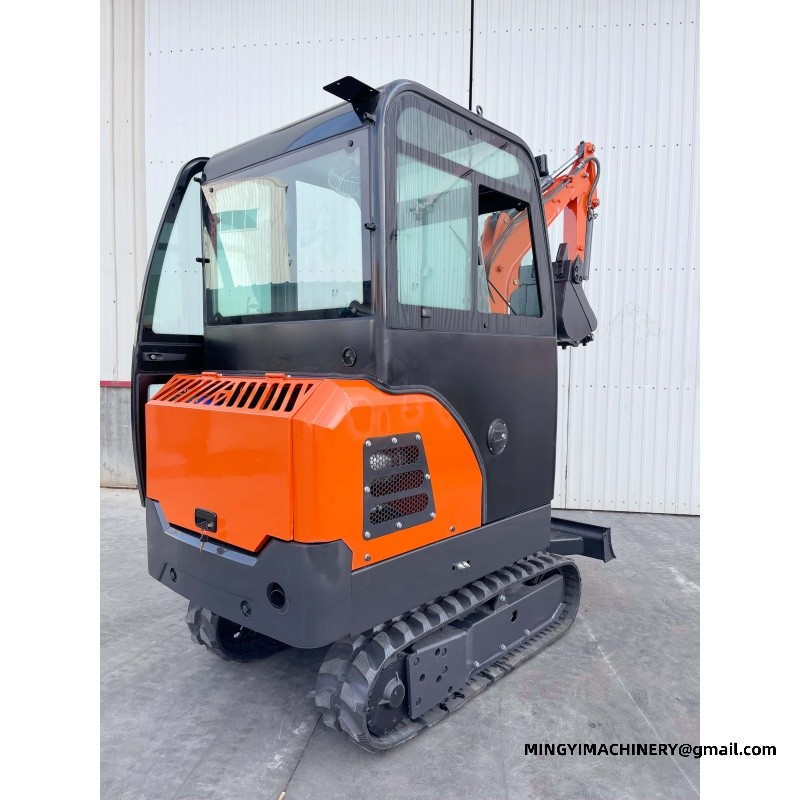
Interior and light demolition with mini excavator for grounds maintenance Interior demolition is an access and a weight question. The excavator that fits through a doorway and works on a suspended floor does jobs that would otherwise be done by hand or by a larger machine that cannot enter. Dust, debris clearance and floor loading all argue for a compact machine indoors. This class of machine spreads its weight over a wider track footprint than a wheeled machine of similar capacity. Trailering and moving mini excavator for grounds maintenance Transport weight and width decide whether a machine needs a specialist haulier. The unit in daily use sized to travel on a standard plant trailer behind a suitable vehicle moves with the crew rather than on a scheduled low loader. Loading practice matters as much as the numbers. A machine of this size is driven up ramps under its own power with the boom lowered and the tracks aligned, and secured at the points the manufacturer specifies. Municipal and public works with mini excavator for grounds maintenance Municipal crews work on streets, footpaths and parks where the public is present. The equipment on site is specified because it occupies little space, works inside a small exclusion zone and can be moved on a standard trailer. Drainage repair, tree planting, footway reconstruction and cemetery work are all within the range of the machine itself. The jobs are small individually and continuous across the year. Engine options behind mini excavator for grounds maintenance Two buyers can order the same the machine in that duty and receive different engines. The decision is rarely about peak power; it is about which parts counter is closest to the site and which engine the local mechanic already knows. Engine choice is also an emissions and documentation question for some markets. Listing the available units with the model in question enquiry lets the factory confirm what can be supplied and documented for the destination country. Working on slopes and uneven ground with mini excavator for grounds maintenance Ground that looks level often is not. The unit on the job crossing a filled trench, a soft edge or a hidden void behaves differently from one on undisturbed ground, and those are the places worth walking before driving. Planning the direction of travel helps. Working so that the A machine built for the work is stable under load and not required to turn on a slope is a decision made before the job starts, not a correction made during it. Boom configuration for mini excavator for grounds maintenance A swing boom lets the machine dig parallel to its tracks without repositioning, which is what makes trenching beside a wall or a fence practical. On the equipment in service this is often the option that decides whether a job is possible at all. Detachable boom sections are used where transport length matters. The excavator that has to travel on a standard trailer can be built so the arm comes off for the road and goes back on at the site. Track choice for this class of machine Undercarriage selection is a ground question, not a preference question. The unit in daily use running on finished paving needs rubber; the same machine on demolition rubble or rock wears rubber quickly, so steel with rubber blocks becomes the better answer over a full season. Track type changes what the machine can cross and what it leaves behind. Buyers specify rubber for lawns, driveways and municipal work, and steel with rubber blocks for sites where sharp material would cut a rubber belt in a week. Trenching work with a machine of this size Trench quality depends on the bucket width and the operator, not on machine size. The equipment on site with a narrow bucket and a swing boom cuts a clean run along a boundary without disturbing the ground either side of it. Depth control matters more on service work than speed. The machine itself working beside live services is chosen because it can be placed precisely and stopped instantly, which is what the job actually requires. Attachments that turn the model in question into several machines Attachment lists are best written before delivery. Specifying the machine in that duty with the tools the job list needs avoids the work and delay of adding hydraulics later, and a quick coupler makes the swap a few minutes instead of a workshop job. Most of the daily variety on the unit on the job comes from the attachment rack rather than from the machine itself. Bucket, breaker, auger, ripper, rake and grab cover the large majority of the work a contractor will see. Working a machine built for the work through the seasons Weather decides which days are productive. Rain turns some ground unusable and cold changes how the equipment in service starts and warms up, so planning the wet months around maintenance is more useful than planning around output. Seasonal planning smooths the workload. Machines that are busy for a few months and idle for the rest benefit from a service slot in the quiet period, and the excavator prepared in the off-season starts the busy months reliably. What owners should plan for beyond the class of machine Purchase decision is the visible part of the effort. Fuel, filters, tracks or tyres, the operator and the transport between sites are the items that decide what the unit in daily use actually demands over a few seasons, and they are worth listing before the order. Downtime is the hidden line item. A machine of this size waiting on a part earns nothing while it stands, so parts availability and service access belong in the plan as much as fuel does. Specification data for the equipment on site Where the machine itself is being specified for a job list, the table below gives the factory figures that matter most: what the machine weighs, how deep and how far it works, and what it measures on a trailer. These are the reference figures for the model in question. MINGYI confirms the final build sheet, including engine and attachment choices, against the destination and the job list before production. Track tension is the item most often neglected. The machine in that duty run with slack tracks wears the undercarriage and can throw a track on a turn; run too tight, the same components wear from the other direction. Greasing is the second item. The slew ring, the boom and arm pins and the bucket linkage on the unit on the job take grease daily in dusty work, and the intervals shorten further when the machine is used in water or mud.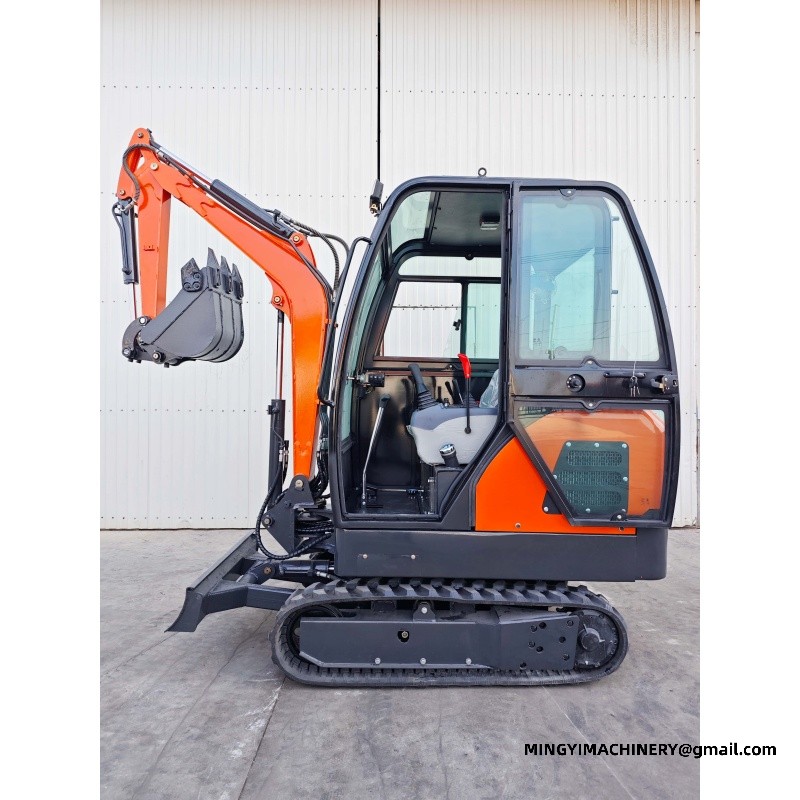
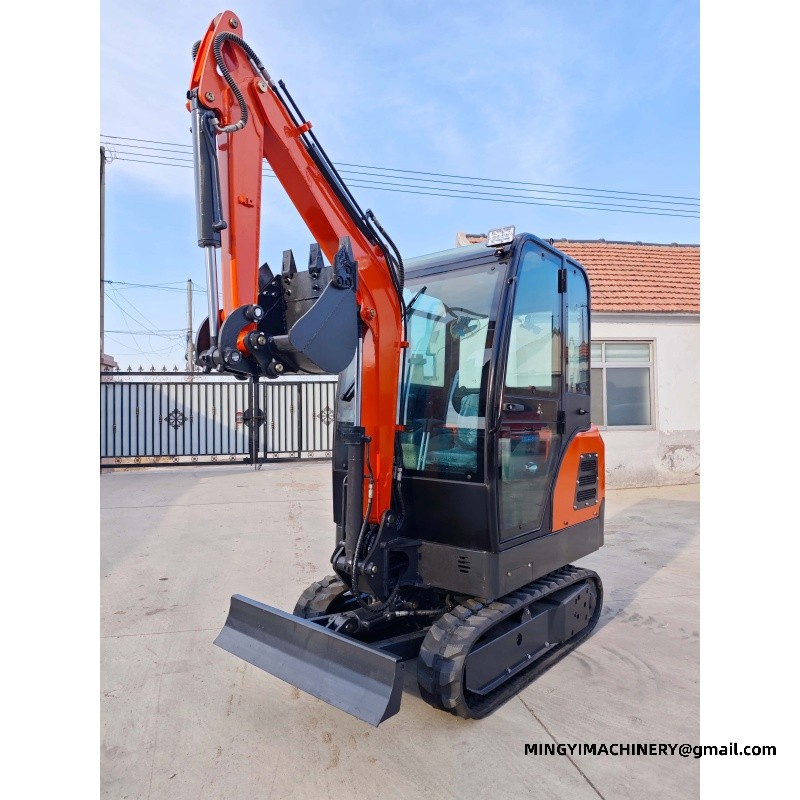
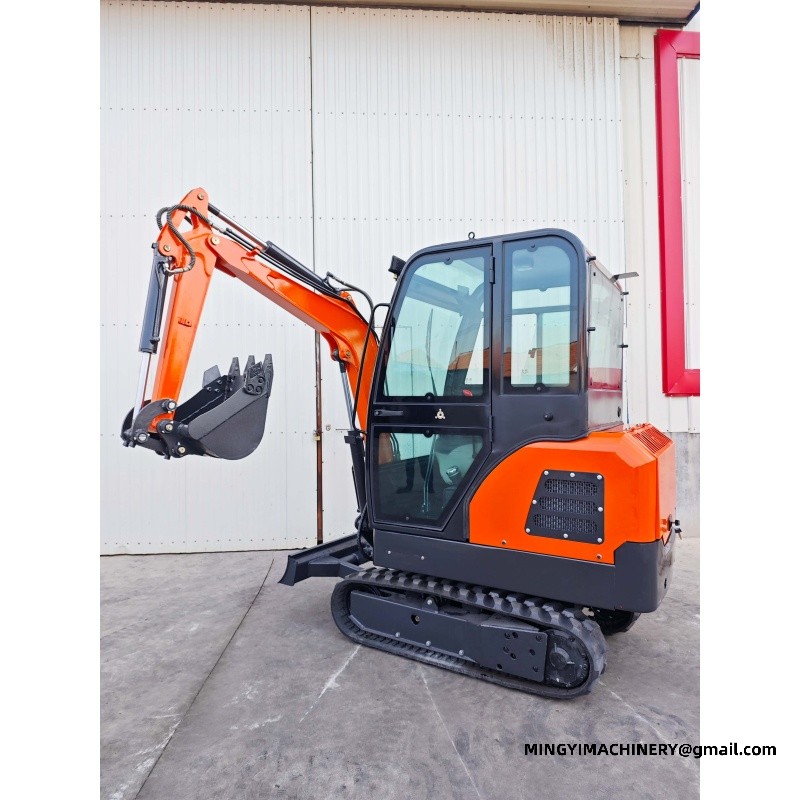
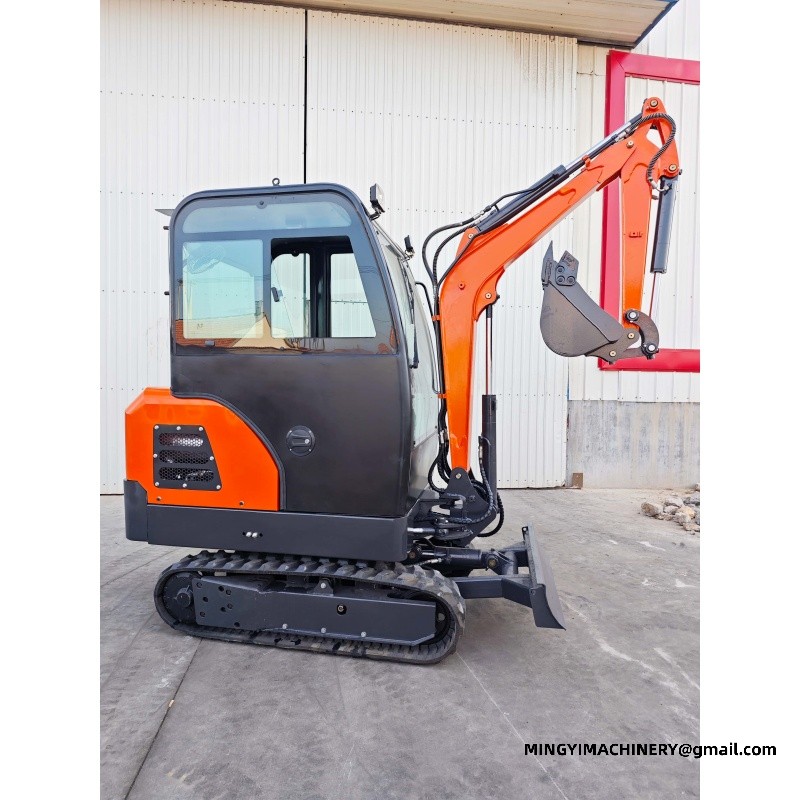
Reference specification — mini excavator range 09W 12W 20-3W 25L Operating weight 1100 kg (2425.08 lb) 1200 kg (2645.55 lb) 1900 kg (4188.78 lb) 2200 kg (4850.17 lb) Transport size (L×W×H) 1800 × 750 × 1970 mm 2200 × 930 × 2250 mm 2550 × 1100 × 2200 mm 3000 × 1300 × 2700 mm Max digging depth 1250 mm (49.21 in) 1630 mm (64.17 in) 1800 mm (70.87 in) 2300 mm (90.55 in) Max digging height 2800 mm (110.24 in) 2750 mm (108.27 in) 2820 mm (111.02 in) 3100 mm (122.05 in) Max dumping height 1700 mm (66.93 in) 1960 mm (77.17 in) 2050 mm (80.71 in) 2050 mm (80.71 in) Max digging radius 2570 mm (101.18 in) 2900 mm (114.17 in) 3050 mm (120.08 in) 3900 mm (153.54 in) Max digging distance 1869 mm (73.58 in) 2100 mm (82.68 in) 2300 mm (90.55 in) 3100 mm (125.05 in) Minimum turning radius 1000 mm (39.37 in) 1300 mm (51.18 in) 1450 mm (57.09 in) 1800 mm (70.87 in) Travel speed 3 km/h (1.86 mph) 3 km/h (1.86 mph) 5 km/h (3.11 mph) 7 km/h (4.35 mph) Gradeability 30° 30° 30° 30° Fuel consumption 1-1.3 L/h (0.264—0.343 gal) 1-1.3 L/h (0.264—0.343 gal) 2-3 L/h (0.528—0.793 gal) 2-3 L/h (0.528—0.793 gal) Fuel tank capacity 8 L (2.11 gal) 10 L (2.64 gal) 16 L (4.23 gal) 16 L (4.23 gal) Hydraulic oil tank 16 L (4.23 gal) 16 L (4.23 gal) 18 L (4.76 gal) 18 L (4.76 gal) Dozer blade lift height 180 mm (7.09 in) 180 mm (7.09 in) 180 mm (7.09 in) 230 mm (9.06 in) Dozer blade drop depth 210 mm (8.27 in) 210 mm (8.27 in) 210 mm (8.27 in) 280 mm (11.02 in)
Q. Who chooses a machine built for the work?
A. The landscape digger balances output with care: track choice, bucket control and a light footprint matter as much as digging speed. With a thumb or a tree-moving grab the digger opens the root ball, lifts and sets the plant in one motion - the work of a crew. For grounds maintenance applications the practical route is to send the job list to the factory and let the build sheet answer it - which is exactly what this page invites.
Q. What does a landscape crew actually dig in a week?
A. Bed preparation, path base, drainage, planting holes and the odd tree - varied, light, and judged by the finish. That mix is exactly what the compact class is built around.
Q. What about colours and branding?
A. OEM colours and decals are part of the build: private-label machines carry the buyer brand on the standard MINGYI platform, and the grounds maintenance order confirms colours, marks and documents before production starts.
Hot, humid and dusty conditions around the equipment in service
Tropical operation is a specification question as much as a maintenance one. The cooling capacity, the sealing and the corrosion protection fitted to the excavator are what make the difference once the ambient temperature rises.
Packing, loading and shipment of this class of machine
The paperwork matters as much as the packing. Serial numbers, dimensions and weights recorded for the unit in daily use at loading are the same figures the destination needs, and a mismatch here loses more days than the voyage itself.
Planning the season around a machine of this size
Workload is rarely even across the year, and the machine should be specified for the busy weeks. The equipment on site sized only for the average month will be the limiting factor exactly when the work is worth the most.
E-mail : sales@mingycn.com
LINE ( ID ): mingyicn
Wear limits and replacement points on mini excavator for grounds maintenance
Track sag, tyre tread, cutting edges and bucket teeth all have stated limits, and the figures in the manual are the ones to work from.
Keeping a record of hours at each change makes the next machine easier to plan for, and it helps whoever buys the machine later.
Related pages
rubber tracked mini excavator · rubber track mini digger for hire fleets · Compact Wheel Loader: Choosing Between the Two Entry Builds · Mini Excavators









