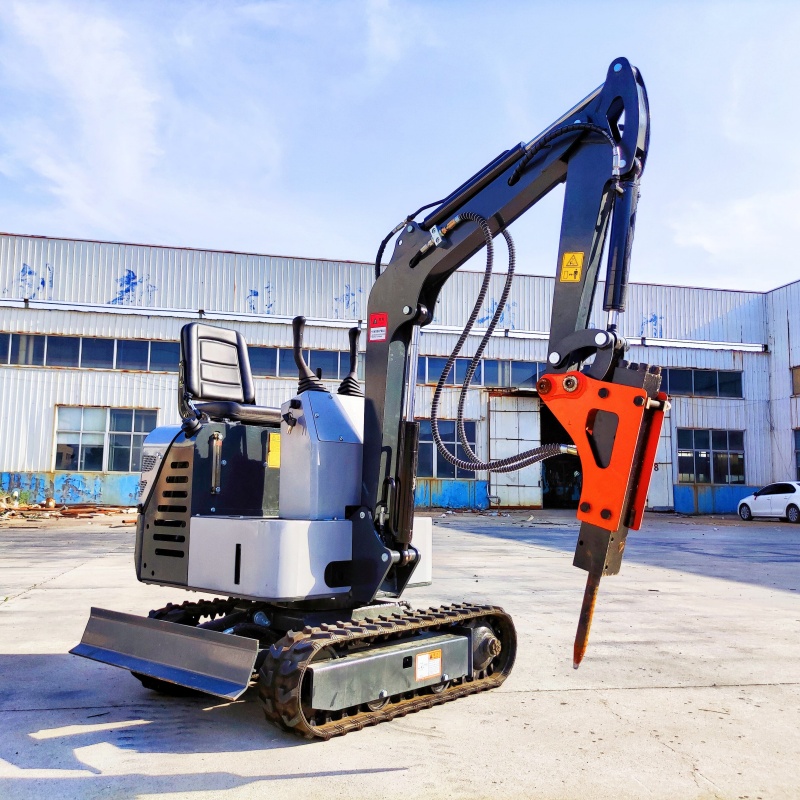
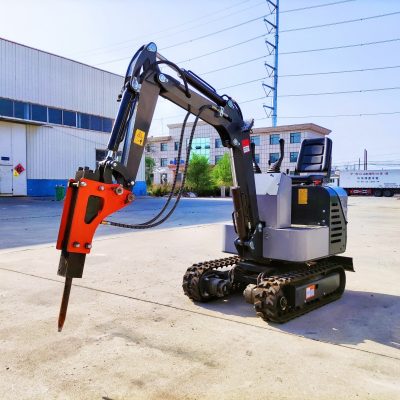
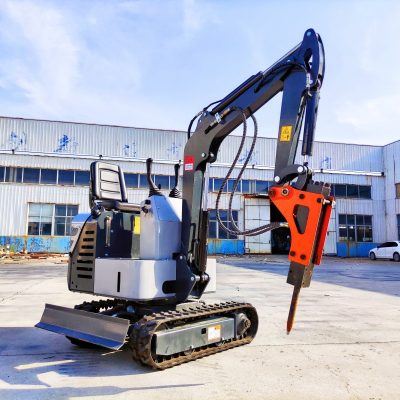
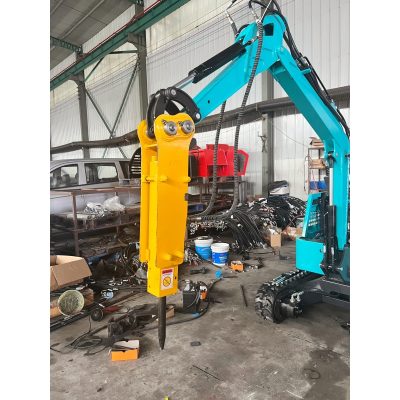
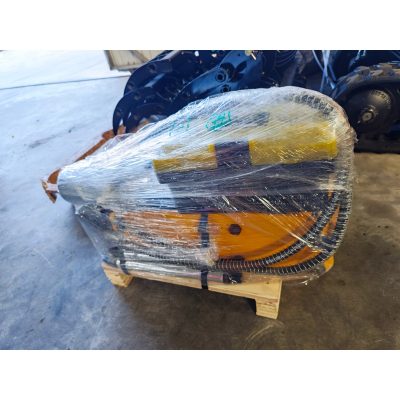
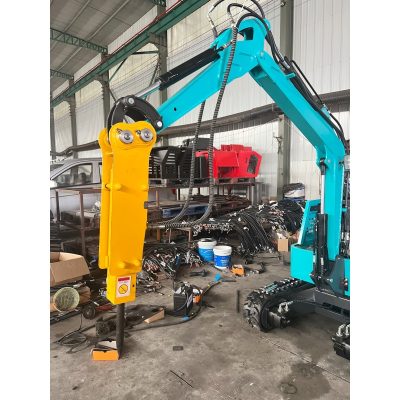
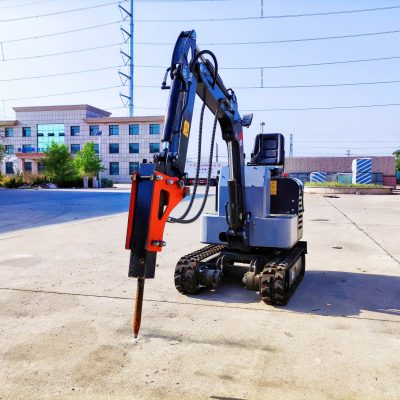
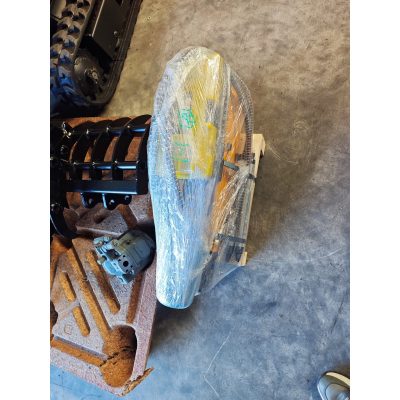
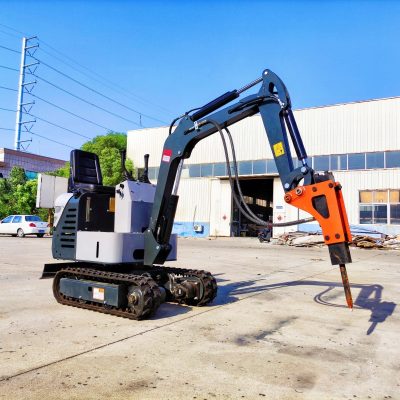
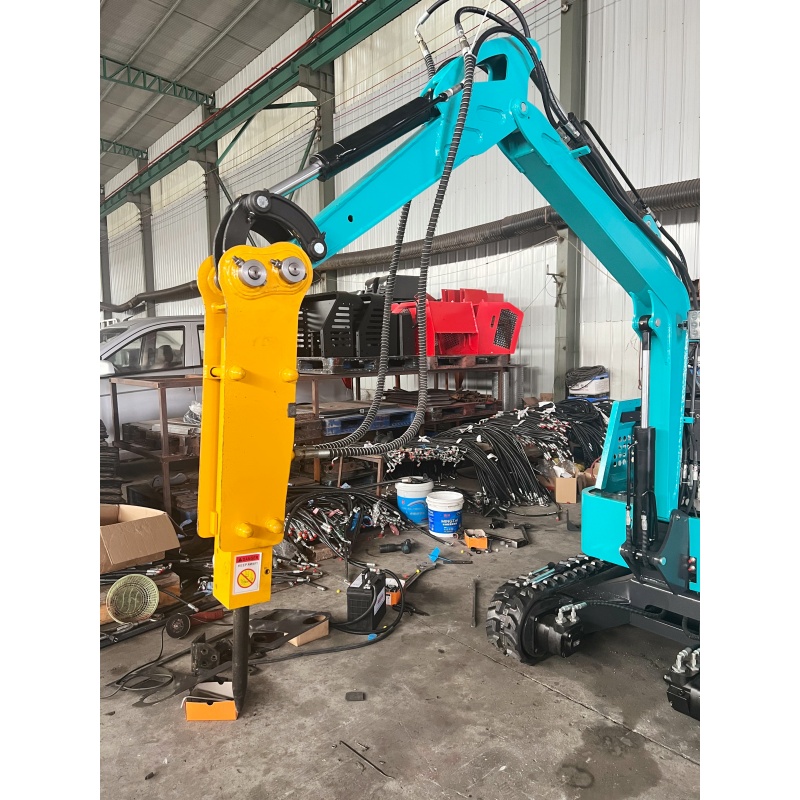
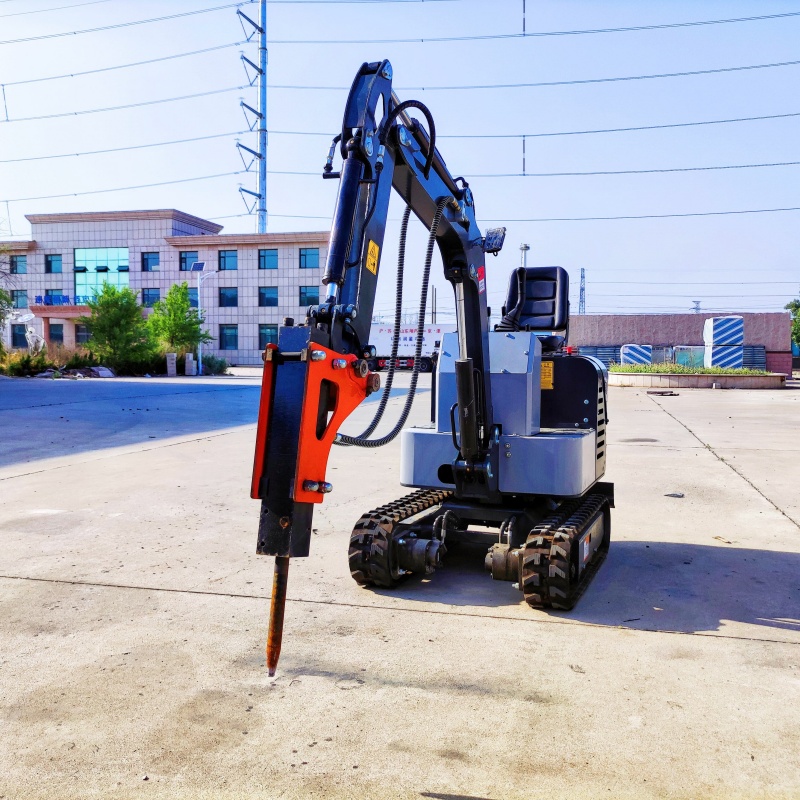
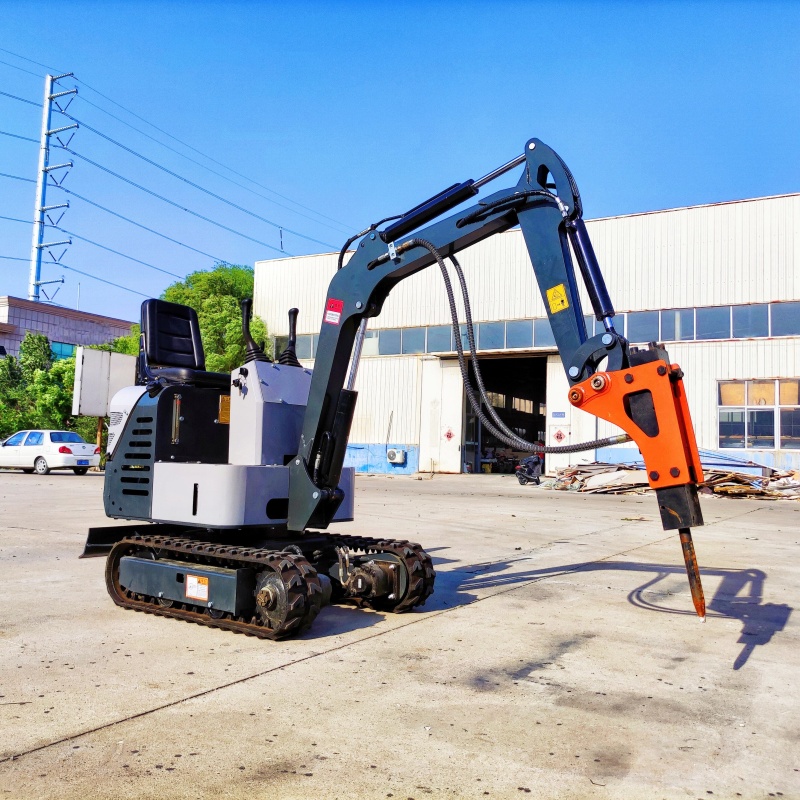
Crusher hammers are fitted where concrete and rock have to be reduced rather than simply broken away. The attachment turns a crawler excavator into a pulverising tool, which suits demolition and site reduction work.
MINGYI supplies crusher hammers for its crawler excavators, matched to the machine class and the hydraulic circuit at ordering. The carrier is specified with the breaker feed the attachment needs.
What a crusher hammer does on a demolition site
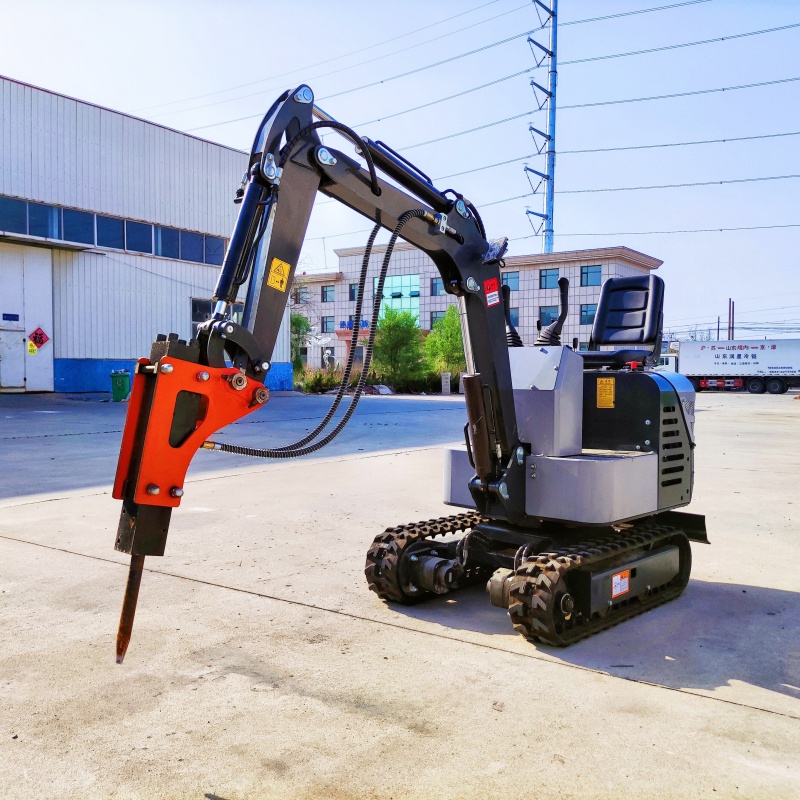
A crusher hammer works material down between jaws, so concrete can be reduced to a size that is easier to handle and transport. That is useful on demolition jobs where the debris has to be moved a long distance.
Used with a standard bucket on the same coupler, the crusher hammer lets one machine pull a structure down and then process the material, which reduces the number of plant items on a tight site.
Matching a crusher hammer to a crawler carrier
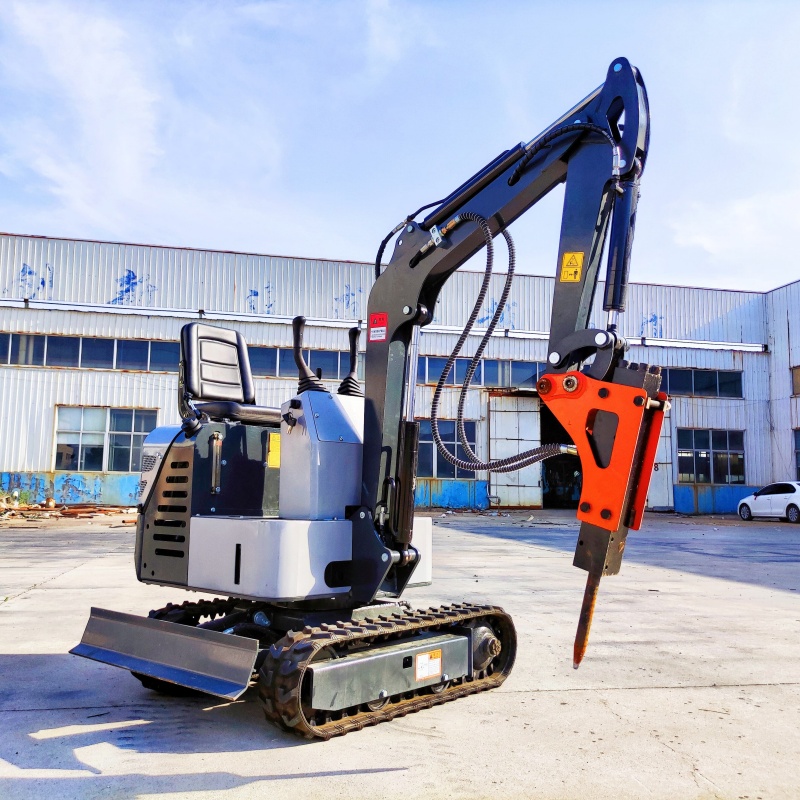
The attachment has to sit within the lift and hydraulic capability of the machine, so the hammer is chosen against the carrier rather than by size alone. The class is fixed at the ordering stage.
Where the crusher works alongside a breaker hammer, both are fed from the same auxiliary circuit through a quick coupler. That keeps the two attachments available without a separate machine.
Machine class, coupler and hydraulic supply are the points to fix before a crusher hammer order. Settling them together is what keeps the attachment within the working limits of the carrier it is fitted to.
Working on slopes and uneven ground with crusher hammer for crawler excavators Ground that looks level often is not. The excavator crossing a filled trench, a soft edge or a hidden void behaves differently from one on undisturbed ground, and those are the places worth walking before driving. Planning the direction of travel helps. Working so that the this class of machine is stable under load and not required to turn on a slope is a decision made before the job starts, not a correction made during it. Specifying crusher hammer for crawler excavators against a job list Buyers who skip this step either over-buy or under-buy. The unit in daily use specified only from machine size tends to arrive without the coupler, the circuits or the track type the work actually needs. Useful information to send with an enquiry includes working width, required digging depth, ground conditions and the attachment set. Those four items let the factory specify a machine of this size that fits rather than a generic build. Municipal and public works with crusher hammer for crawler excavators Municipal crews work on streets, footpaths and parks where the public is present. The equipment on site is specified because it occupies little space, works inside a small exclusion zone and can be moved on a standard trailer. Drainage repair, tree planting, footway reconstruction and cemetery work are all within the range of the machine itself. The jobs are small individually and continuous across the year. Landscaping and ground care with crusher hammer for crawler excavators Landscape contractors use the model in question for planting holes, pond excavation, grading and retaining work. The machine is light enough to cross finished lawn and narrow enough to work between established trees. On soft landscape work the surface is the constraint. The machine in that duty on rubber tracks crosses turf without stripping it, which is why the same jobs are not given to a wheeled machine. Quick coupler practice on crusher hammer for crawler excavators Couplers are specified early because they affect the arm and the hydraulic kit. Adding one to the unit on the job after delivery means new pins, new hoses and a fitment session; adding it at build time is a line on the sheet. For a fleet that shares attachments between machines, a common coupler standard matters more than the coupler brand. A machine built for the work that picks up the same tools as the larger machines keeps the rack usable across the yard. Working a crusher hammer for crawler excavators in confined spaces Clearance above matters as much as around. Door heights, pipework and overhead services set the limit for the equipment in service indoors, and measuring them first avoids a machine that arrives and cannot be used. Ventilation is the other indoor constraint. Running the excavator inside a closed structure needs air movement, and that is a planning item rather than something to discover after the first hour. Orchard, vineyard and farm use of this class of machine Ditching, fertilising and drainage on farmland suit the unit in daily use because the work is spread over a large area in short bursts. The machine travels behind a pickup and works where it stops. Farms also use a machine of this size for general maintenance - clearing a watercourse, repairing a track, loading a spreader. One carrier with a few attachments covers most of the jobs that would otherwise wait for a contractor. Noise, dust and working near occupied buildings Enclosure and machine condition both reduce noise. The equipment on site with intact panels, sound mounts and a maintained exhaust is measurably quieter than the same machine with loose guards, and the difference matters on restricted sites. Dust control is often part of the same conversation. Water, timing and work sequence reduce what leaves the site, and agreeing them in advance keeps the machine itself working rather than stopped after a complaint. Road and paving work for the model in question Patching and reinstatement favour a machine that can work in a lane closure. The machine in that duty occupies less road than a full-size excavator, which reduces the traffic management needed and the length of the closure. Breaking out a failed slab and backfilling the same hole in one visit is normal work for the unit on the job. The breaker and the bucket come off the same coupler, so the road is reopened the same day. Running a machine built for the work in a rental fleet The specification that rents best is usually the simplest one to explain at the counter. The equipment in service with rubber tracks, a canopy and a coupler covers the majority of weekend and short-term hires. Fleet buyers also weigh transport. The excavator that a customer can tow on a normal licence and a standard trailer is a hire that does not need a delivery truck, which changes how often it goes out. Attachments that turn this class of machine into several machines Attachment lists are best written before delivery. Specifying the unit in daily use with the tools the job list needs avoids the work and delay of adding hydraulics later, and a quick coupler makes the swap a few minutes instead of a workshop job. Most of the daily variety on a machine of this size comes from the attachment rack rather than from the machine itself. Bucket, breaker, auger, ripper, rake and grab cover the large majority of the work a contractor will see. Daily checks and maintenance on the equipment on site Daily maintenance on the machine itself is a short list: engine oil level, coolant, track tension, hydraulic oil level and a look at the hoses. Ten minutes at the start of the shift prevents most of the failures that stop a machine. Greasing is the second item. The slew ring, the boom and arm pins and the bucket linkage on the model in question take grease daily in dusty work, and the intervals shorten further when the machine is used in water or mud. Engine options behind the machine in that duty Engine choice is also an emissions and documentation question for some markets. Listing the available units with the unit on the job enquiry lets the factory confirm what can be supplied and documented for the destination country. Specification data for a machine built for the work The figures below are the factory figures for the models most often matched to the equipment in service. They are the numbers to check against the site: the depth the work needs, the reach from one position, and the width of the narrowest point on the route in. These are the reference figures for the excavator. MINGYI confirms the final build sheet, including engine and attachment choices, against the destination and the job list before production. Power unit selection is settled against the service network the buyer already uses. MINGYI offers Kubota D722, Kubota D902, YANMAR, Changchai, Laidong, Runtong, YARMAX, Youpu 2V80 and Youpu 195, so a fleet running one brand of engine can keep the same filters, the same parts supplier and the same mechanic. Two buyers can order the same this class of machine and receive different engines. The decision is rarely about peak power; it is about which parts counter is closest to the site and which engine the local mechanic already knows.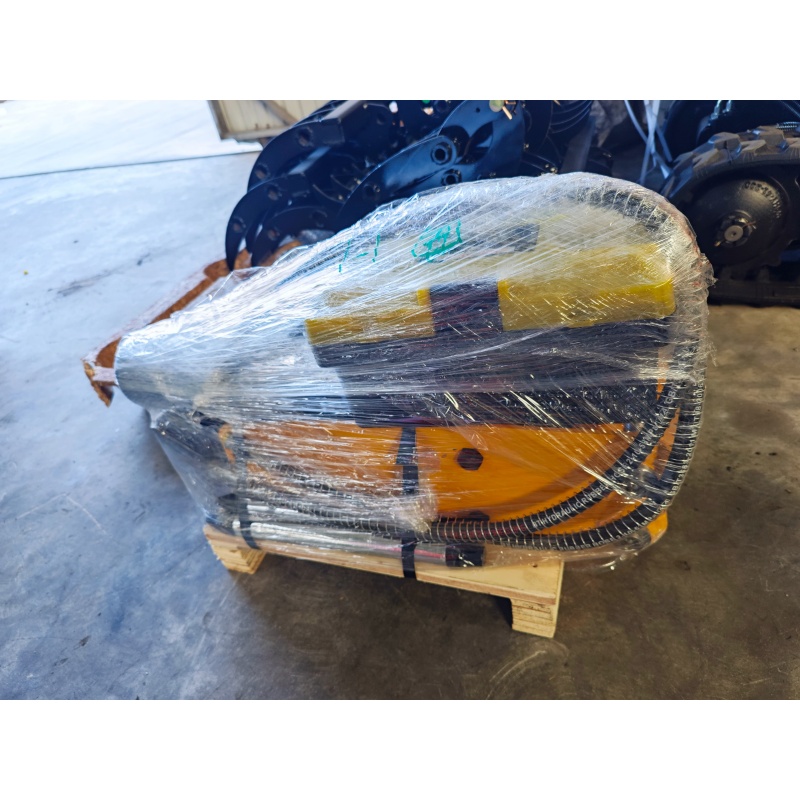
Reference specification — mini excavator range 09W 20-1W 20-3W 09L Operating weight 1100 kg (2425.08 lb) 1800 kg (3968.32 lb) 1900 kg (4188.78 lb) 1100 kg (2425.08 lb) Transport size (L×W×H) 1800 × 750 × 1970 mm 2550 × 1100 × 2200 mm 2550 × 1100 × 2200 mm 2300 × 720 × 1870 mm Max digging depth 1250 mm (49.21 in) 1800 mm (70.87 in) 1800 mm (70.87 in) 1400 mm (55.12 in) Max digging height 2800 mm (110.24 in) 2820 mm (111.02 in) 2820 mm (111.02 in) 2800 mm (110.24 in) Max dumping height 1700 mm (66.93 in) 2050 mm (80.71 in) 2050 mm (80.71 in) 1880 mm (74.02 in) Max digging radius 2570 mm (101.18 in) 3050 mm (120.08 in) 3050 mm (120.08 in) 2490 mm (98.03 in) Max digging distance 1869 mm (73.58 in) 2300 mm (90.55 in) 2300 mm (90.55 in) 2000 mm (78.74 in) Minimum turning radius 1000 mm (39.37 in) 1450 mm (57.09 in) 1450 mm (57.09 in) 1400 mm (55.12 in) Travel speed 3 km/h (1.86 mph) 5 km/h (3.11 mph) 5 km/h (3.11 mph) 3 km/h (1.86 mph) Gradeability 30° 30° 30° 30° Fuel consumption 1-1.3 L/h (0.264—0.343 gal) 2-3 L/h (0.528—0.793 gal) 2-3 L/h (0.528—0.793 gal) 1-1.3 L/h (0.264—0.343 gal) Fuel tank capacity 8 L (2.11 gal) 16 L (4.23 gal) 16 L (4.23 gal) 8 L (2.11 gal) Hydraulic oil tank 16 L (4.23 gal) 18 L (4.76 gal) 18 L (4.76 gal) 16 L (4.23 gal) Dozer blade lift height 180 mm (7.09 in) 180 mm (7.09 in) 180 mm (7.09 in) 180 mm (7.09 in) Dozer blade drop depth 210 mm (8.27 in) 210 mm (8.27 in) 210 mm (8.27 in) 210 mm (8.27 in)
Q. Who uses the unit in daily use?
A. The attachment story on a compact digger is about earning across trades: one carrier, one trailer, and a quick coupler that swaps tools in about a minute. Every attachment on this page runs on the same carrier the machine ships with, matched to its hydraulic flow and coupler. Read a machine of this size together with the engine, track and attachment pages: jobs around crawler excavators are decided by how those choices line up, not by any single number on the sheet.
Q. What does the attachment add to daily work?
A. Reach into jobs the bucket alone cannot specification: grading with a tilting bucket, clearing with a rake, drilling with an auger, lifting with a thumb. One carrier, several trades - the machine stays on site earning instead of waiting for a specialist.
Q. How do I get a specification?
A. Send the model, the destination and the attachment list by email or LINE - the channels listed just below this section. The reply covers the specification, lead time, packing and freight in one document, with the crawler excavators build sheet attached.
Cold weather and winter care for the equipment on site
A cold start is easier when the machine is prepared the night before. The routine that keeps the machine itself working through winter is mostly a matter of fuel, battery and patience in the first ten minutes of the day.
Later additions and retrofits on the model in question
Most additions are easier to plan than to add. Hydraulic services, mounting brackets and electrical capacity on the machine in that duty are build items, and deciding them at the specification stage is far easier than doing it later.
E-mail : sales@mingycn.com
LINE ( ID ): mingyicn
Related pages
crusher hammer for compact excavators · front fork attachment for mini excavators · Wheel Loader Manufacturer: Five Figures to Ask For · Mini Excavators









