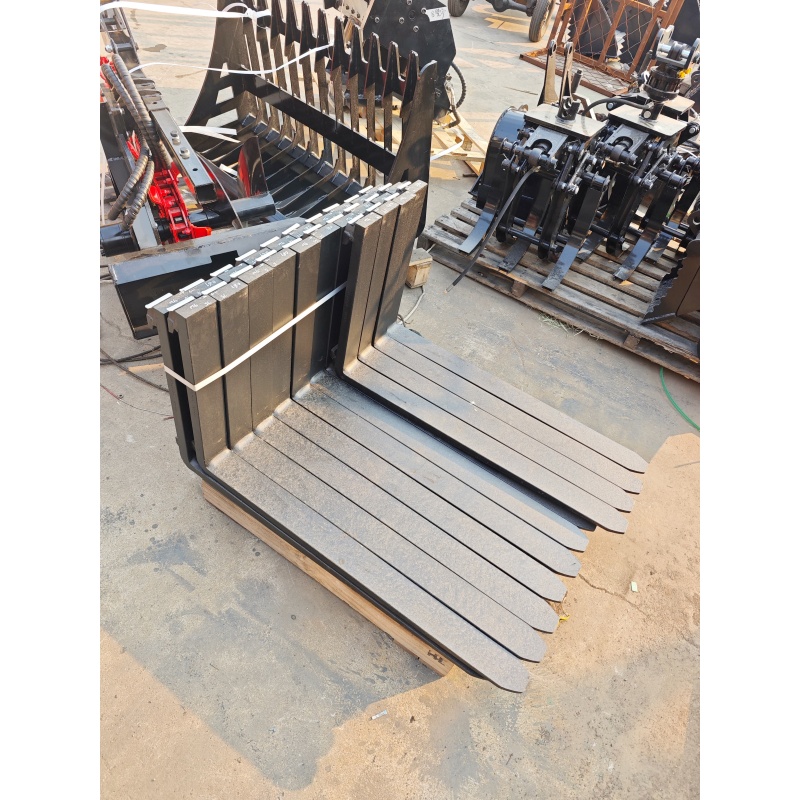
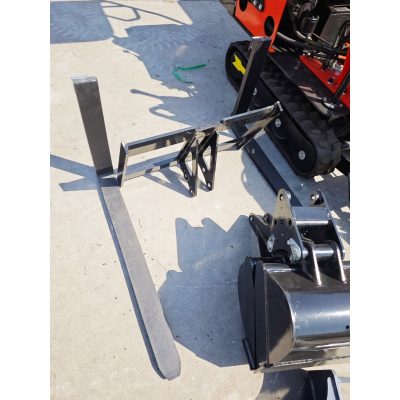
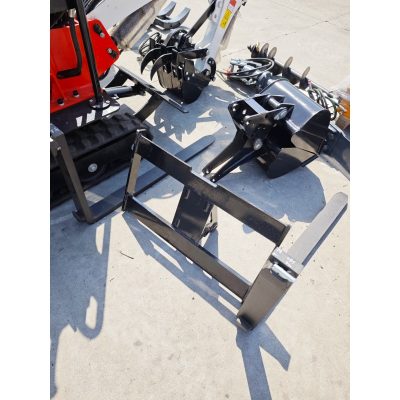
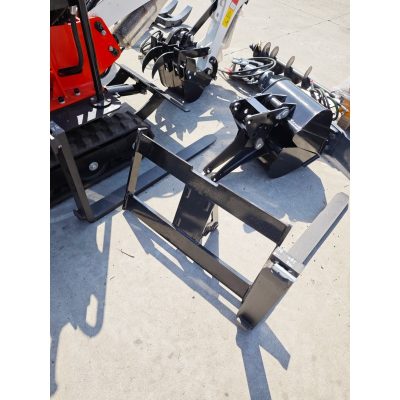
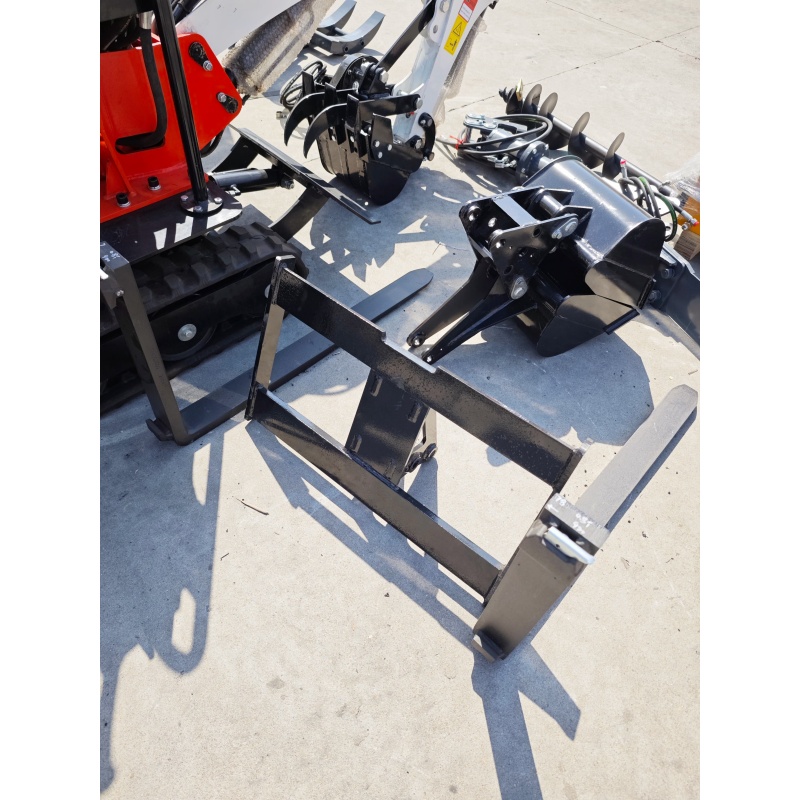
A front fork turns a compact excavator into a machine that can lift and place pallets, bags, pipes and timber. On sites where a telehandler is not available, the fork lets the same machine that dug the trench also move the materials into it.
MINGYI supplies fork attachments matched to its compact excavators and couplers. The fork is ordered with the machine, so the mounting, tine spacing and any guarding are settled before delivery.
Lifting with a front fork on a compact excavator
The fork mounts on the quick coupler in place of the bucket and is used for stacking, loading and placing materials. Because the excavator can reach over obstacles, the fork is useful where goods have to be set down beyond a wall or trench.
Capacity falls as the load moves away from the machine, so heavy items should be carried close in. Operators should follow the machine's rated capacity for the fork rather than judging by the size of the load alone.
Fork mounting and load practice on site
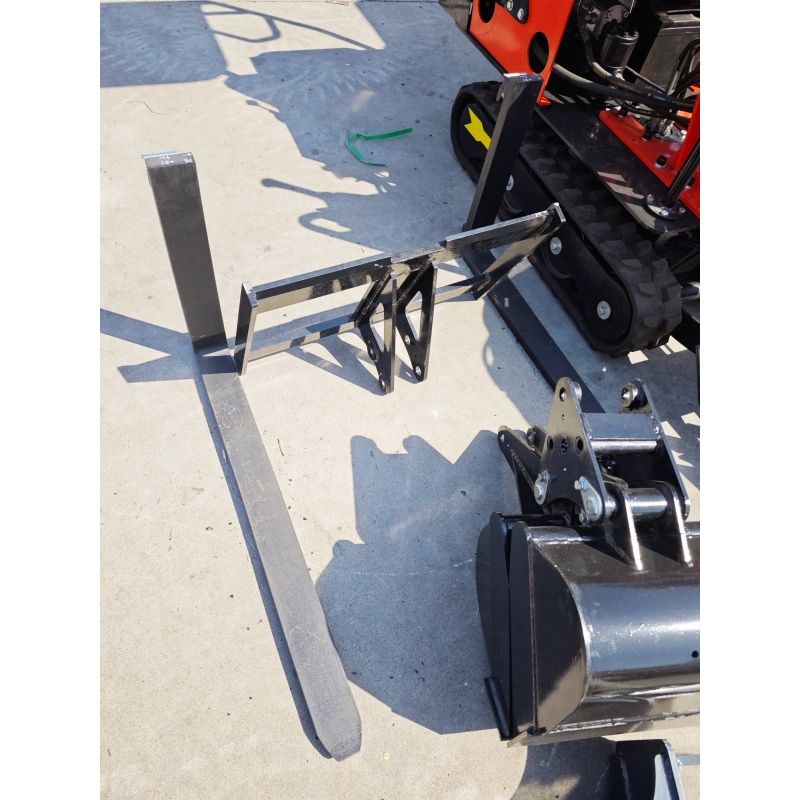
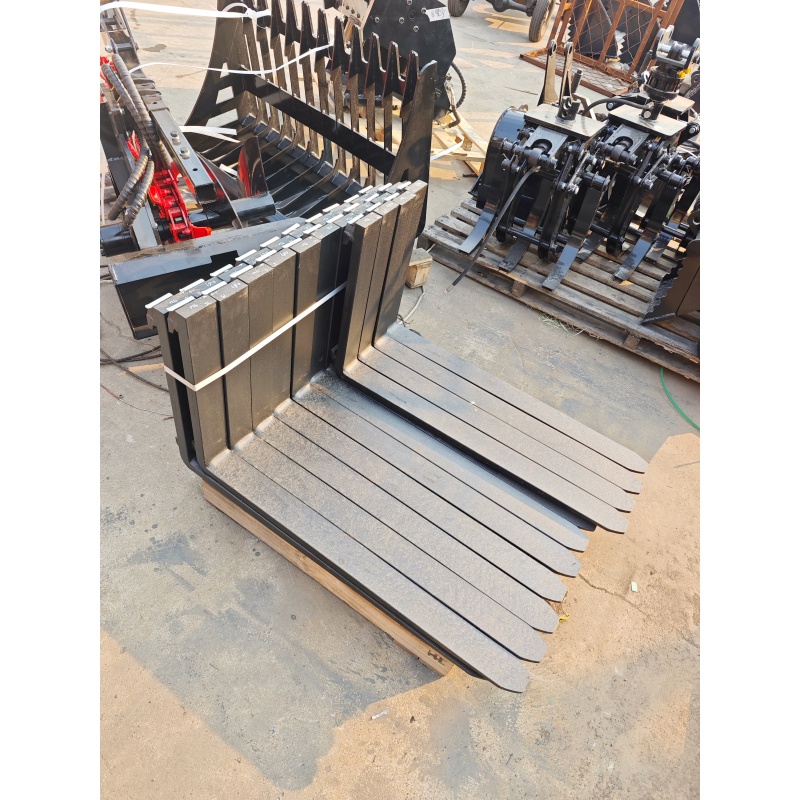
Tine spacing is set to suit the loads being handled, from pallets to pipe bundles. Buyers who expect to carry both should confirm the spacing and the tine length at ordering.
Safe practice keeps the load low while travelling, avoids swinging it over people, and uses a spotter where the operator's view is blocked. A fork suited to the coupler makes these habits easier to keep.
A front fork widens what a compact excavator can do without adding another machine. MINGYI supplies fork attachments built to order with the coupler already matched.
Matching front fork attachment for mini excavators to ground conditions Soft ground is a flotation problem, not a power problem. The excavator on wide rubber tracks crosses lawn, sand and cultivated soil that would stop a narrower machine or a wheeled unit of the same capacity. Mixed sites are common and argue for a compromise specification. Most buyers choose rubber for this class of machine and accept the wear, unless the majority of the work is on material that will damage it. Working on slopes and uneven ground with front fork attachment for mini excavators Slope work is a stability question before it is a traction question. Knowing the gradient the unit in daily use is rated for, and working across rather than straight up where the ground allows, removes most of the risk. Planning the direction of travel helps. Working so that the a machine of this size is stable under load and not required to turn on a slope is a decision made before the job starts, not a correction made during it. Acceptance checks when a front fork attachment for mini excavators arrives Delivery day is the best time to find a problem. Checking the specification against the order, the fluid levels, the fasteners and any transport damage while the machine itself is still on the trailer is faster than claiming later. Documentation should arrive with the machine. Parts list, service schedule and any certificates for the equipment on site are what the workshop needs later, and they are much easier to obtain at delivery than in month six. Boom configuration for front fork attachment for mini excavators A swing boom lets the machine dig parallel to its tracks without repositioning, which is what makes trenching beside a wall or a fence practical. On the model in question this is often the option that decides whether a job is possible at all. Detachable boom sections are used where transport length matters. The machine in that duty that has to travel on a standard trailer can be built so the arm comes off for the road and goes back on at the site. Attachments that turn front fork attachment for mini excavators into several machines The base machine is a carrier; the tool on the end of the arm decides the task. The unit on the job fitted with a toothed bucket digs, and the same machine with a breaker, an auger or a grab does work that would otherwise need a second unit on site. Most of the daily variety on a machine built for the work comes from the attachment rack rather than from the machine itself. Bucket, breaker, auger, ripper, rake and grab cover the large majority of the work a contractor will see. Daily checks and maintenance on front fork attachment for mini excavators Track tension is the item most often neglected. The equipment in service run with slack tracks wears the undercarriage and can throw a track on a turn; run too tight, the same components wear from the other direction. Greasing is the second item. The slew ring, the boom and arm pins and the bucket linkage on the excavator take grease daily in dusty work, and the intervals shorten further when the machine is used in water or mud. Trenching work with this class of machine Service trenches are the most common reason the unit in daily use is hired. Water, sewage, cable and gas runs are narrow, shallow and often close to existing services, which is exactly the work a full-size machine cannot do safely. Trench quality depends on the bucket width and the operator, not on machine size. A machine of this size with a narrow bucket and a swing boom cuts a clean run along a boundary without disturbing the ground either side of it. Engine options behind the equipment on site Two buyers can order the same the model in question and receive different engines. The decision is rarely about peak power; it is about which parts counter is closest to the site and which engine the local mechanic already knows. Engine choice is also an emissions and documentation question for some markets. Listing the available units with the machine itself enquiry lets the factory confirm what can be supplied and documented for the destination country. Operator technique for the machine in that duty Output on a compact machine comes from placement rather than power. An experienced operator keeps the unit on the job working inside the swing arc, positions once and digs a full run instead of repositioning for every bucket. Stability is the third. A machine built for the work working across the tracks rather than over the corners keeps the machine steady and the undercarriage loaded evenly, which shows up as track life at the end of the season. Municipal and public works with the equipment in service Municipal crews work on streets, footpaths and parks where the public is present. The excavator is specified because it occupies little space, works inside a small exclusion zone and can be moved on a standard trailer. Noise and surface protection matter on public work. This class of machine on rubber tracks across paving, with a sealed cab for the operator, suits the conditions better than a larger tracked machine. Working the unit in daily use through the seasons Weather decides which days are productive. Rain turns some ground unusable and cold changes how a machine of this size starts and warms up, so planning the wet months around maintenance is more useful than planning around output. Heat and dust are as limiting as rain. Air intake condition and cooling cleanliness decide how the equipment on site behaves in a dry season, and both are checked in a minute rather than repaired later. Canopy or enclosed cab on the machine itself Enclosure also changes noise and dust exposure. A sealed cab on the model in question keeps dust out on dry sites and lets the machine work through weather that would otherwise stop a canopy machine for the day. Specification data for the machine in that duty Where the unit on the job is being specified for a job list, the table below gives the factory figures that matter most: what the machine weighs, how deep and how far it works, and what it measures on a trailer. These are the reference figures for a machine built for the work. MINGYI confirms the final build sheet, including engine and attachment choices, against the destination and the job list before production. A canopy keeps the machine light and the operator aware of the surroundings, which suits short jobs in warm weather. A fully enclosed cab is specified where rain, dust or cold are part of the working year, and it can be added to the equipment in service as a retrofit rather than only at build time. The cab decision follows the climate and the hours. Operators working a full shift in the excavator benefit from a sealed cab with wipers and heating; operators stepping on and off every few minutes usually prefer the canopy for the visibility and the quick exit.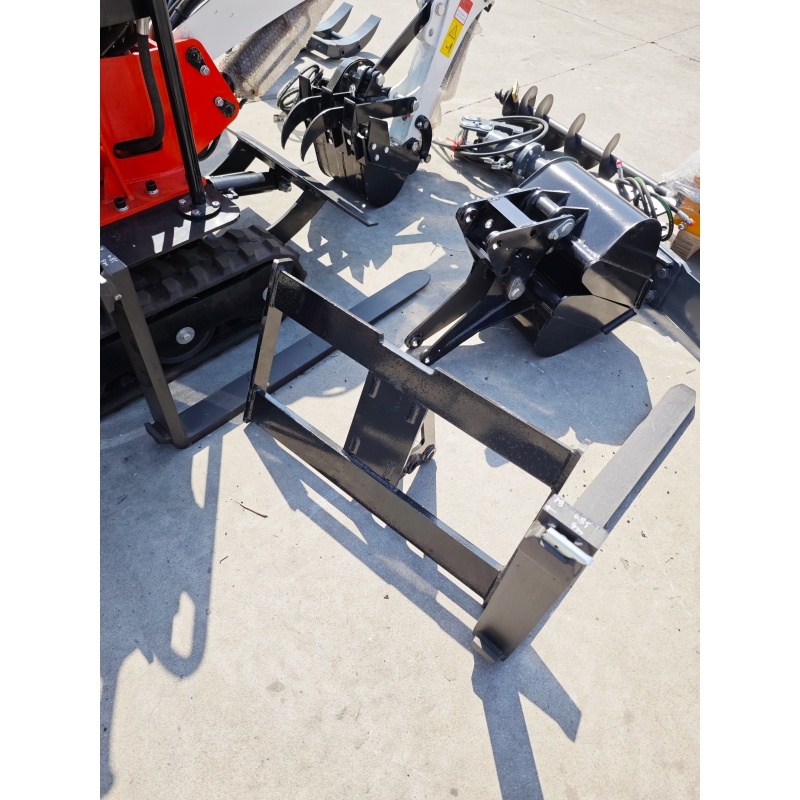
Reference specification — mini excavator range 12W 20-1W 20-3W 30-2L Operating weight 1200 kg (2645.55 lb) 1800 kg (3968.32 lb) 1900 kg (4188.78 lb) 2400 kg (5291 lb) Transport size (L×W×H) 2200 × 930 × 2250 mm 2550 × 1100 × 2200 mm 2550 × 1100 × 2200 mm 2800 × 1500 × 2500 mm Max digging depth 1630 mm (64.17 in) 1800 mm (70.87 in) 1800 mm (70.87 in) 2200 mm (86.61 in) Max digging height 2750 mm (108.27 in) 2820 mm (111.02 in) 2820 mm (111.02 in) 2900 mm (114.17 in) Max dumping height 1960 mm (77.17 in) 2050 mm (80.71 in) 2050 mm (80.71 in) 2100 mm (82.68 in) Max digging radius 2900 mm (114.17 in) 3050 mm (120.08 in) 3050 mm (120.08 in) 3330 mm (131.1 in) Max digging distance 2100 mm (82.68 in) 2300 mm (90.55 in) 2300 mm (90.55 in) 2700 mm (106.3 in) Minimum turning radius 1300 mm (51.18 in) 1450 mm (57.09 in) 1450 mm (57.09 in) 1555 mm (61.22 in) Travel speed 3 km/h (1.86 mph) 5 km/h (3.11 mph) 5 km/h (3.11 mph) 7 km/h (4.35 mph) Gradeability 30° 30° 30° 30° Fuel consumption 1-1.3 L/h (0.264—0.343 gal) 2-3 L/h (0.528—0.793 gal) 2-3 L/h (0.528—0.793 gal) 2-3 L/h (0.528—0.793 gal) Fuel tank capacity 10 L (2.64 gal) 16 L (4.23 gal) 16 L (4.23 gal) 16 L (4.23 gal) Hydraulic oil tank 16 L (4.23 gal) 18 L (4.76 gal) 18 L (4.76 gal) 18 L (4.76 gal) Dozer blade lift height 180 mm (7.09 in) 180 mm (7.09 in) 180 mm (7.09 in) 230 mm (9.06 in) Dozer blade drop depth 210 mm (8.27 in) 210 mm (8.27 in) 210 mm (8.27 in) 280 mm (11.02 in)
Q. Who uses the class of machine?
A. Attachments turn one carrier into several machines: dig on Monday, grade, lift, mow or drill on Tuesday without the machine leaving site. The quick coupler makes the changeover a minute job at the trench edge, and mechanical tools need no hydraulic lines at all. Read the unit in daily use together with the engine, track and attachment pages: jobs around mini excavators are decided by how those choices line up, not by any single number on the sheet.
Q. What does the attachment add to daily work?
A. Reach into jobs the bucket alone cannot specification: grading with a tilting bucket, clearing with a rake, drilling with an auger, lifting with a thumb. One carrier, several trades - the machine stays on site earning instead of waiting for a specialist.
Q. Can I see the machine before it ships?
A. Inspection is arranged at the factory, in person or by a scheduled video walk-around - the same session covers paint, decals and attachment fitment for the mini excavators specification, so the machine inspected is the machine that ships.
Handover and getting familiar with a machine of this size
Familiarisation is not the same as reading the manual. Sitting on the equipment on site, working through the controls at low speed and learning where the machine balances takes an hour, and that hour is what keeps the first week uneventful.
Keeping a service record for the machine itself
The record should follow the machine, not the owner. When the model in question changes hands the service history travels with it, and a complete folder is often the difference between a quick sale and a long one.
E-mail : sales@mingycn.com
LINE ( ID ): mingyicn
Related pages
tilting bucket for slope grading · tilting bucket for mini excavators · China Wheel Loader Factory: How Each Model Is Built and Checked · Mini Excavators









