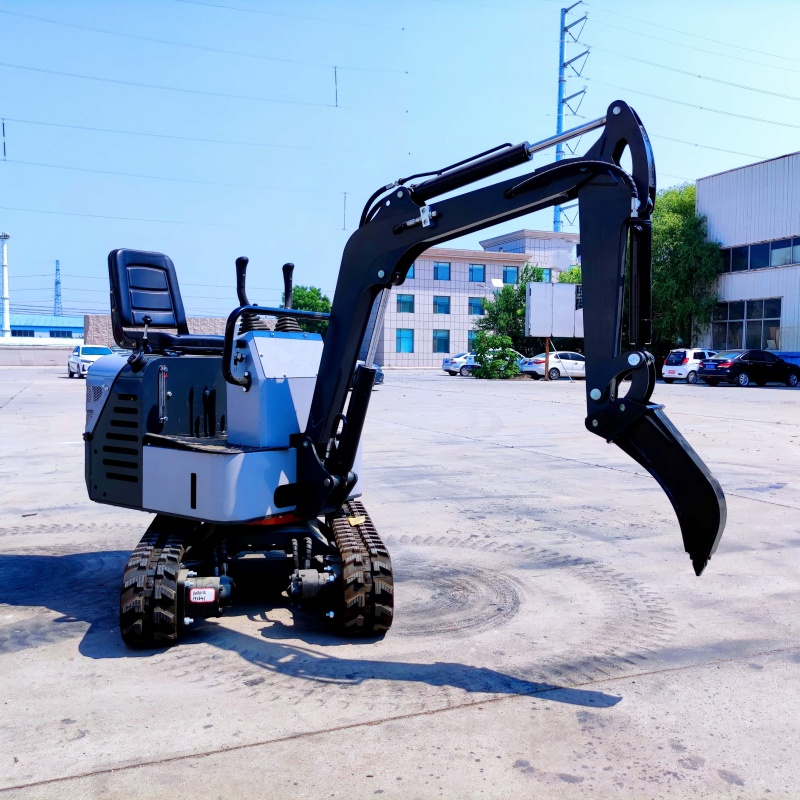
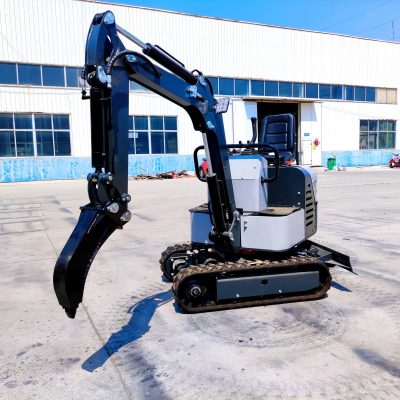
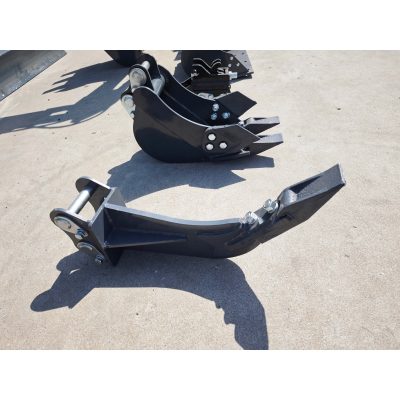
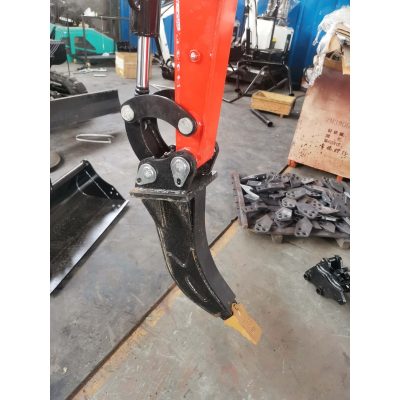
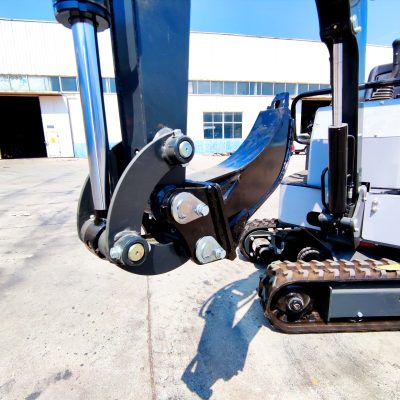
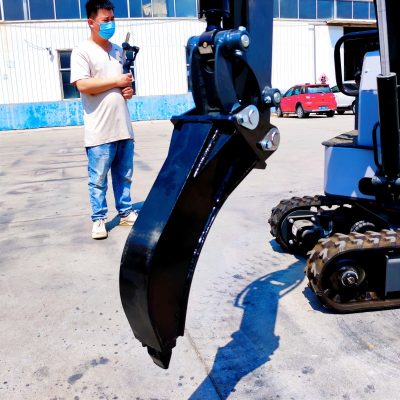
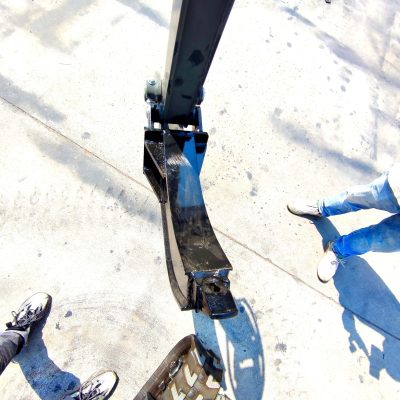
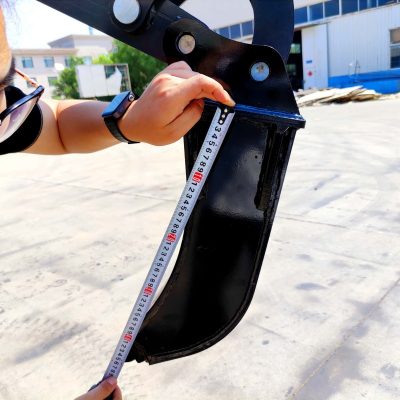
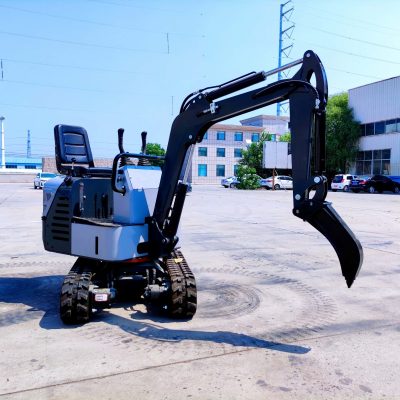
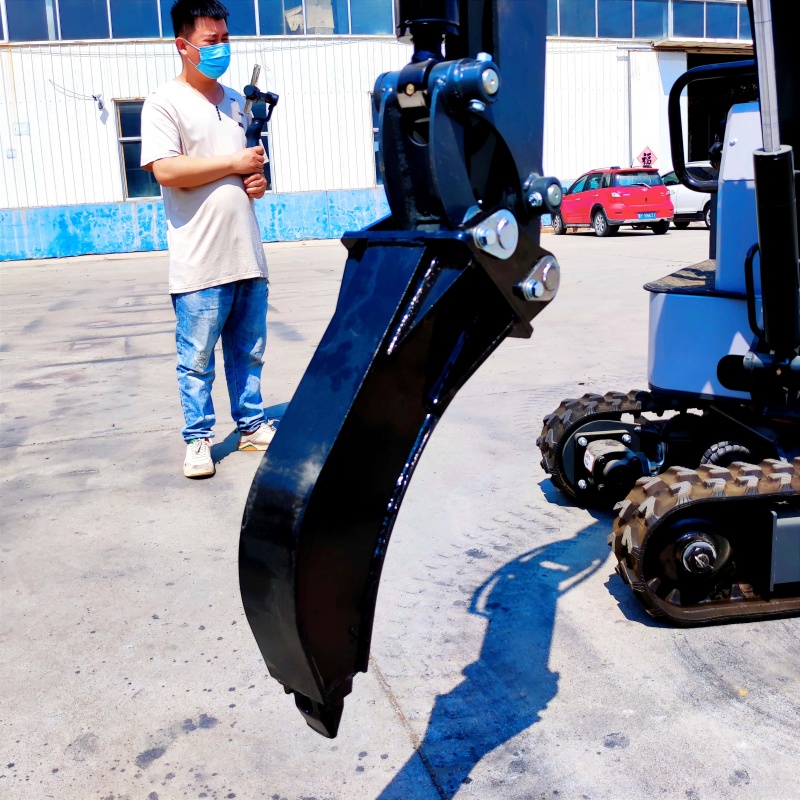
Compacted ground resists a digging bucket because the bucket has to shear the material as well as lift it. A soil loosener works the ground ahead of planting or trenching, breaking the pan so that a bucket can then cut it cleanly.
MINGYI supplies soil loosening attachments for its compact diggers, alongside rotary tillers and root diggers. These are aimed at the same class of site: gardens, orchards, greenhouse beds and smallholdings where the ground has been worked and pressed down over time.
Breaking compacted ground before planting
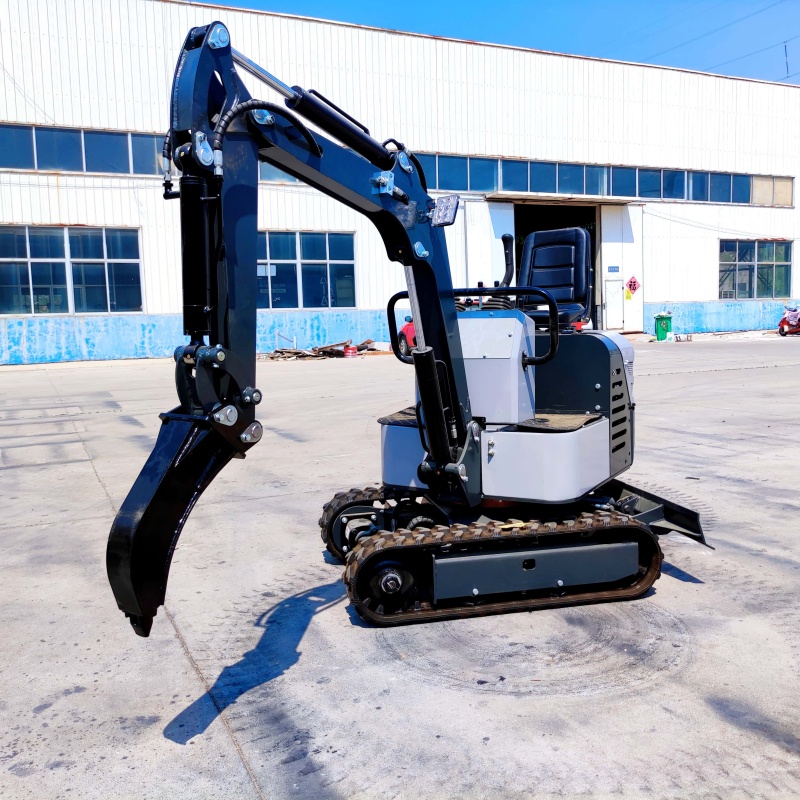
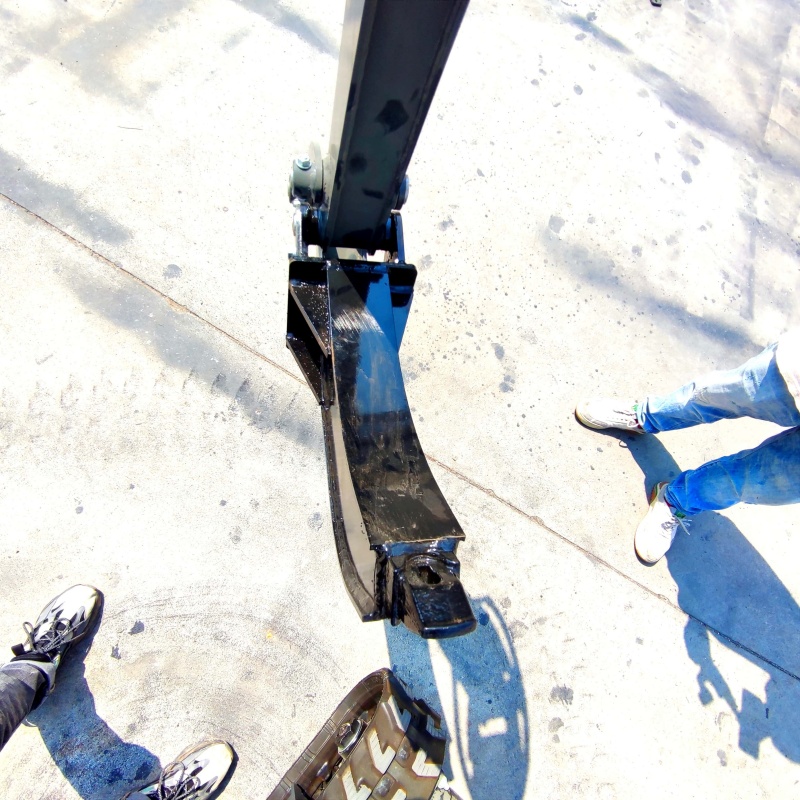
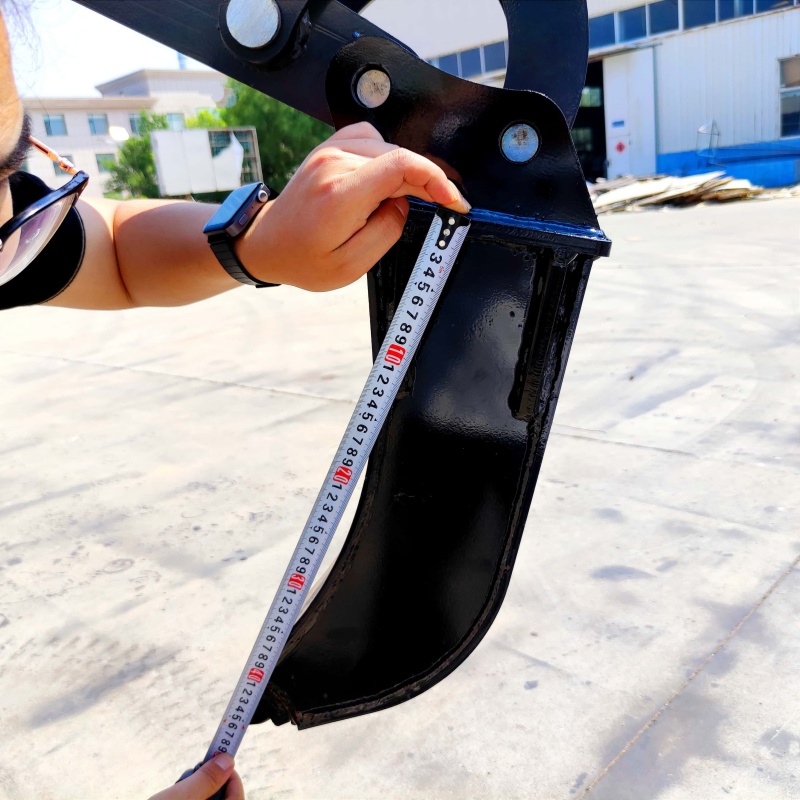
A loosener is used where a bed or border has been walked over and the surface has set hard. The tines are drawn through the soil to lift and fracture it, leaving a tilth that a bucket or a hand rake can then work into a planting layer.
The depth of the pass is set by the operator rather than by the machine, so the loosener can be used lightly between established plants or more deeply on open ground. Working along the row keeps the passes even.
Loosening versus tilling on a compact digger
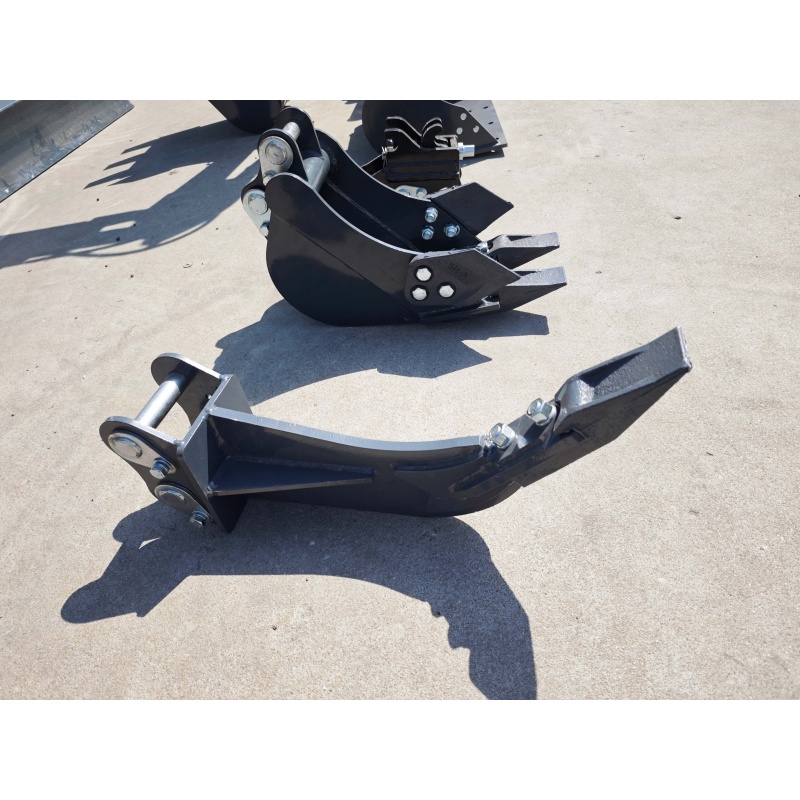
A loosener and a rotary tiller do different jobs and are often bought together. The loosener fractures the ground and leaves its structure; the tiller then breaks the surface into a finer tilth for seed or turf.
Both draw oil from the same machine, and the flow they need is part of the specification. The machine is built to order, so the attachment set is agreed in advance and the brackets are recorded against that carrier.
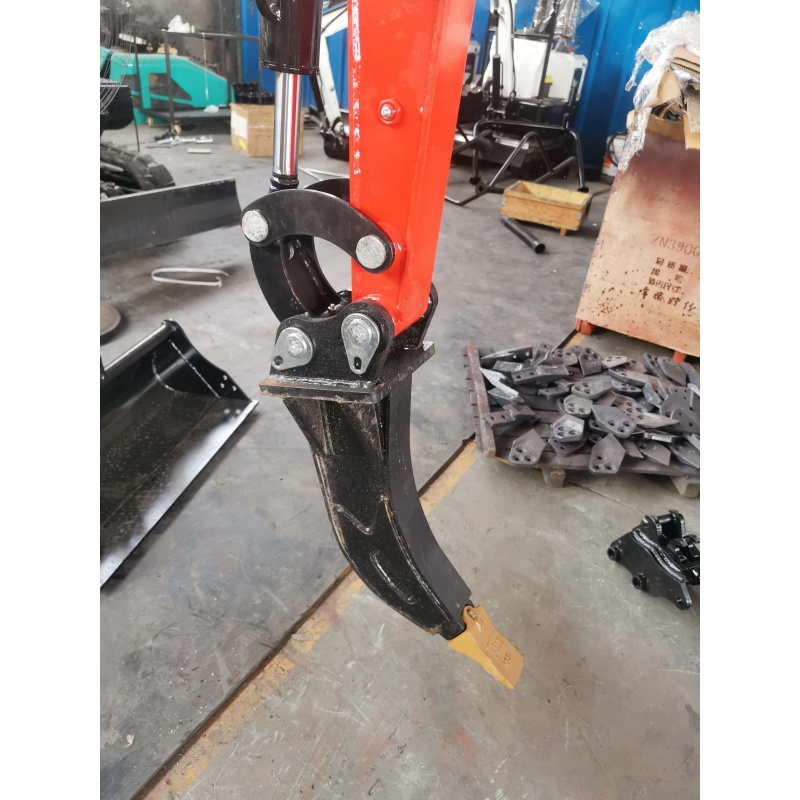
For growers and landscapers the loosener is the first pass, not the last. A compact digger that carries it alongside a bucket and a tiller can prepare ground and plant it in the same working day.
Trenching work with soil loosener for compact diggers Service trenches are the most common reason the excavator is hired. Water, sewage, cable and gas runs are narrow, shallow and often close to existing services, which is exactly the work a full-size machine cannot do safely. Trench quality depends on the bucket width and the operator, not on machine size. This class of machine with a narrow bucket and a swing boom cuts a clean run along a boundary without disturbing the ground either side of it. Working a soil loosener for compact diggers in confined spaces Confined sites are decided by dimensions. Overall width, tail swing and the space needed to work the arm are what let the unit in daily use operate inside a building, between walls or in a courtyard. Clearance above matters as much as around. Door heights, pipework and overhead services set the limit for a machine of this size indoors, and measuring them first avoids a machine that arrives and cannot be used. Acceptance checks when a soil loosener for compact diggers arrives Delivery day is the best time to find a problem. Checking the specification against the order, the fluid levels, the fasteners and any transport damage while the machine itself is still on the trailer is faster than claiming later. Documentation should arrive with the machine. Parts list, service schedule and any certificates for the equipment on site are what the workshop needs later, and they are much easier to obtain at delivery than in month six. Export packing and shipping of soil loosener for compact diggers Machines leave the factory prepared for container or flat rack shipment. The model in question is normally shipped with the attachment set and the spare parts list agreed in advance so the container is planned once. Buyers who import regularly plan the spare parts with the machine. The machine in that duty ordered with a wearing-parts kit arrives ready to work rather than ready to wait for the first service interval. Landscaping and ground care with soil loosener for compact diggers Grass cutting heads, rakes and tillers extend the unit on the job into ground care. The same carrier that digs a border in spring can cut and clear the same area later in the season. On soft landscape work the surface is the constraint. A machine built for the work on rubber tracks crosses turf without stripping it, which is why the same jobs are not given to a wheeled machine. Quick coupler practice on soil loosener for compact diggers A quick coupler is the single option that changes how a machine is used day to day. Fitted to the equipment in service, it turns an attachment change from a two-person workshop job into a task the operator does alone in minutes. For a fleet that shares attachments between machines, a common coupler standard matters more than the coupler brand. The excavator that picks up the same tools as the larger machines keeps the rack usable across the yard. Municipal and public works with this class of machine Municipal crews work on streets, footpaths and parks where the public is present. The unit in daily use is specified because it occupies little space, works inside a small exclusion zone and can be moved on a standard trailer. Noise and surface protection matter on public work. A machine of this size on rubber tracks across paving, with a sealed cab for the operator, suits the conditions better than a larger tracked machine. Parts, service and support for the equipment on site Support after delivery is a parts question. Wearing items for the machine itself - filters, belts, track components, bucket teeth and pins - are the items a buyer should plan to hold before the first service interval. Remote support is handled by video. The model in question fault can often be diagnosed on a walk-around call with the panel open, which is faster than waiting for a visit and avoids shipping a part that is not needed. Operator technique for the machine in that duty Output on a compact machine comes from placement rather than power. An experienced operator keeps the unit on the job working inside the swing arc, positions once and digs a full run instead of repositioning for every bucket. Stability is the third. A machine built for the work working across the tracks rather than over the corners keeps the machine steady and the undercarriage loaded evenly, which shows up as track life at the end of the season. What owners should plan for beyond the equipment in service Purchase decision is the visible part of the effort. Fuel, filters, tracks or tyres, the operator and the transport between sites are the items that decide what the excavator actually demands over a few seasons, and they are worth listing before the order. The useful comparison is demand per working hour, not demand per machine. This class of machine that works more hours a year spreads its standing takes over more output, which is why utilisation usually matters more than the invoice figure. Specifying the unit in daily use against a job list The practical way to specify is to write the job list first: the narrowest access, the deepest trench, the heaviest tool and the surfaces the machine must cross. A machine of this size is then matched to those four numbers. Buyers who skip this step either over-buy or under-buy. The equipment on site specified only from machine size tends to arrive without the coupler, the circuits or the track type the work actually needs. Interior and light demolition with the machine itself Dust, debris clearance and floor loading all argue for a compact machine indoors. The model in question spreads its weight over a wider track footprint than a wheeled machine of similar capacity. Specification data for the machine in that duty Where the unit on the job is being specified for a job list, the table below gives the factory figures that matter most: what the machine weighs, how deep and how far it works, and what it measures on a trailer. Figures are factory figures and are confirmed on the build sheet for a machine built for the work. Where a job sits between two models, the larger machine usually takes less time than the smaller one spends on rework. Interior demolition is an access and a weight question. The equipment in service that fits through a doorway and works on a suspended floor does jobs that would otherwise be done by hand or by a larger machine that cannot enter. Breaking out a floor slab, a wall footing or a concrete step is routine work for the excavator with a breaker. The machine is small enough to work inside and heavy enough to run the tool at a practical rate.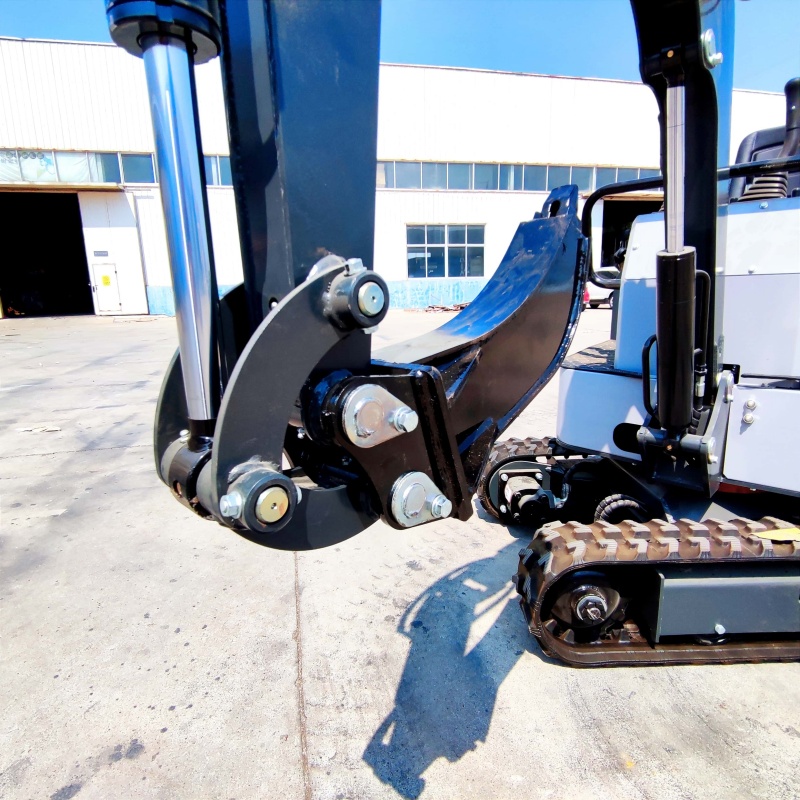
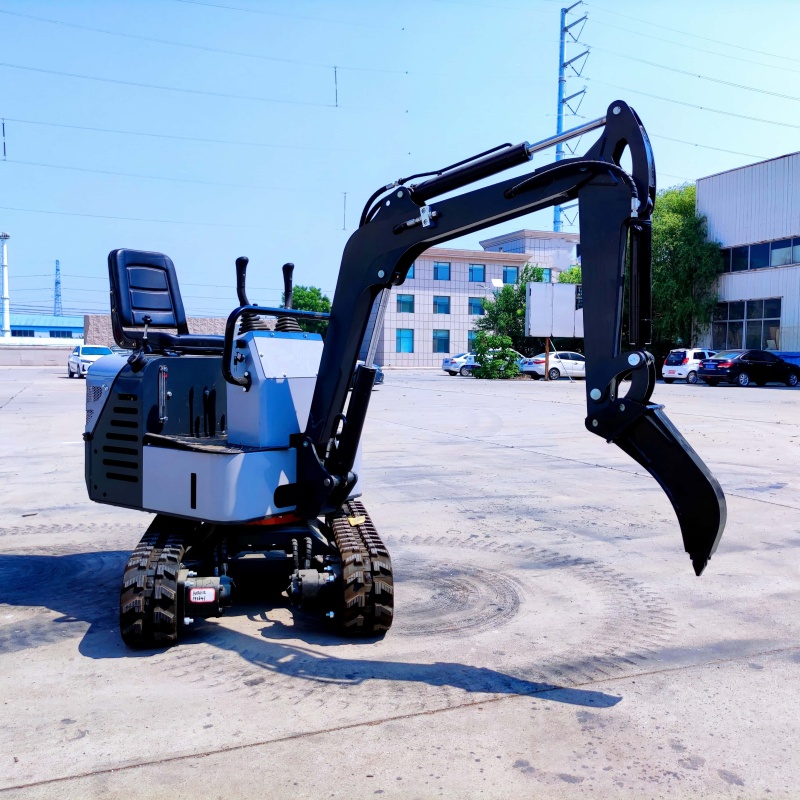
Reference specification — mini excavator range 15W 20-1W 30-1W 30-2L Operating weight 1400 kg (3086.47 lb) 1800 kg (3968.32 lb) 2900 kg (6393.41 lb) 2400 kg (5291 lb) Transport size (L×W×H) 2200 × 930 × 2250 mm 2550 × 1100 × 2200 mm 3000 × 1250 × 2780 mm 2800 × 1500 × 2500 mm Max digging depth 1630 mm (64.17 in) 1800 mm (70.87 in) 2200 mm (86.61 in) 2200 mm (86.61 in) Max digging height 2750 mm (108.27 in) 2820 mm (111.02 in) 3400 mm (133.86 in) 2900 mm (114.17 in) Max dumping height 1960 mm (77.17 in) 2050 mm (80.71 in) 2400 mm (94.49 in) 2100 mm (82.68 in) Max digging radius 2900 mm (114.17 in) 3050 mm (120.08 in) 4000 mm (157.48 in) 3330 mm (131.1 in) Max digging distance 2100 mm (82.68 in) 2300 mm (90.55 in) 2800 mm (110.24 in) 2700 mm (106.3 in) Minimum turning radius 1300 mm (51.18 in) 1450 mm (57.09 in) 2000 mm (78.74 in) 1555 mm (61.22 in) Travel speed 3 km/h (1.86 mph) 5 km/h (3.11 mph) 5 km/h (3.11 mph) 7 km/h (4.35 mph) Gradeability 30° 30° 30° 30° Fuel consumption 1-1.3 L/h (0.264—0.343 gal) 2-3 L/h (0.528—0.793 gal) 2-3 L/h (0.528—0.793 gal) 2-3 L/h (0.528—0.793 gal) Fuel tank capacity 10 L (2.64 gal) 16 L (4.23 gal) 16 L (4.23 gal) 16 L (4.23 gal) Hydraulic oil tank 16 L (4.23 gal) 18 L (4.76 gal) 20 L (5.28 gal) 18 L (4.76 gal) Dozer blade lift height 180 mm (7.09 in) 180 mm (7.09 in) 420 mm (16.54 in) 230 mm (9.06 in) Dozer blade drop depth 210 mm (8.27 in) 210 mm (8.27 in) 210 mm (8.27 in) 280 mm (11.02 in)
Q. What are the class of machine?
A. An attachment widens the range of jobs a single compact excavator can specification and win, which is why the working set matters as much as the base machine. A digger that only digs competes with shovels; a digger with the right working set competes for whole jobs. Read the unit in daily use together with the engine, track and attachment pages: jobs around compact diggers are decided by how those choices line up, not by any single number on the sheet.
Q. How do I know which attachment my machine can run?
A. Compare the carrier hydraulic flow with what the attachment asks for, and the lifting moment with what it weighs at full reach. Lower-flow carriers still run buckets, rakes and mechanical tools; hungry attachments call for the high-flow option, and MINGYI confirms the pairing before the order ships.
Q. Which models does MINGYI build?
A. The 08, 12 and 18 models cover the 0.8 to 6 tonne class with engine, track, cab and attachment options across the range - dealer programmes can mix models in one shipment, and each compact diggers machine is confirmed on its own build sheet.
Handover and getting familiar with a machine of this size
Operators who come from a different machine need a short conversion. The controls on the equipment on site follow the usual pattern, but the response, the sightlines and the stopping distance are learned by doing rather than by reading.
Fuel, oil and fluid quality for the machine itself
Fluid quality is a storage problem before it is a machine problem. Water and sediment in a drum will find the injection system of the model in question eventually, and a settling period is nothing compared with a pump.
E-mail : sales@mingycn.com
LINE ( ID ): mingyicn
Related pages
tree root digger for mini excavator · mini excavator hedge pruner · Front Wheel Loader: Weight Transfer, Boom Length and Axle Choice · Mini Excavators









