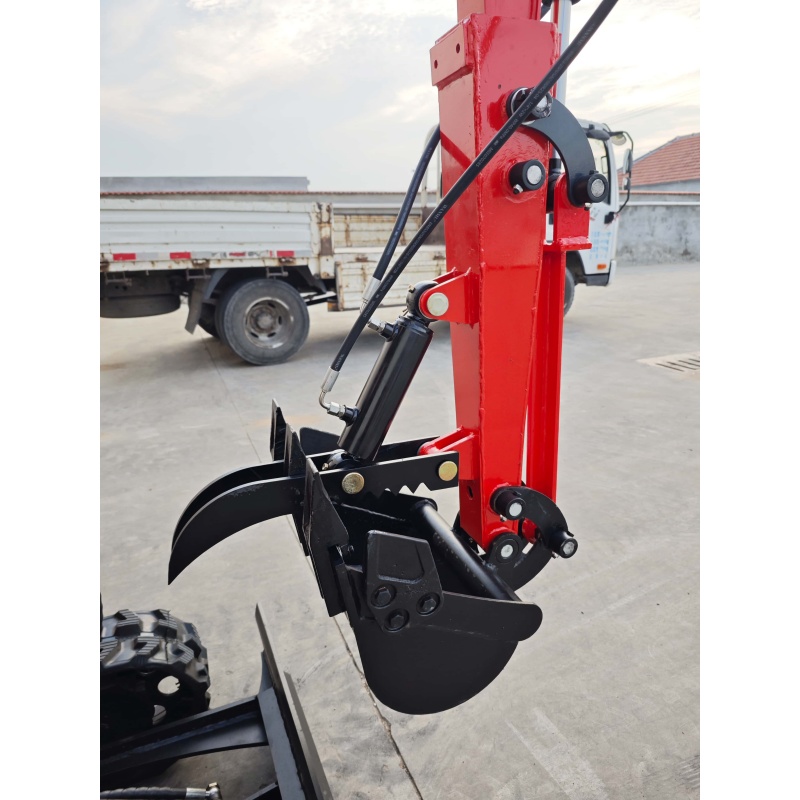
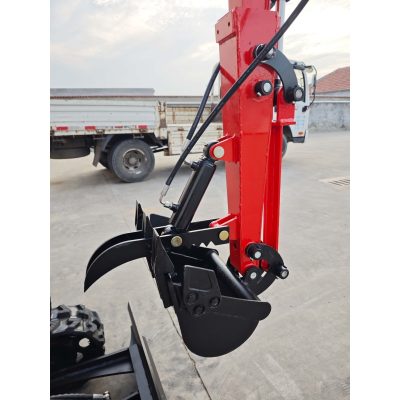
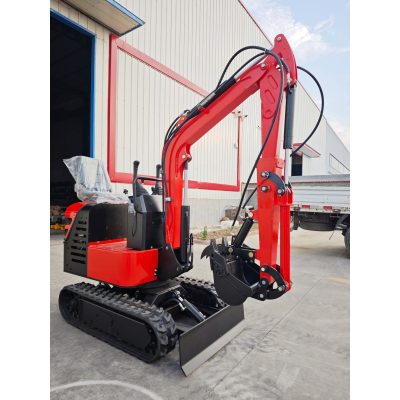
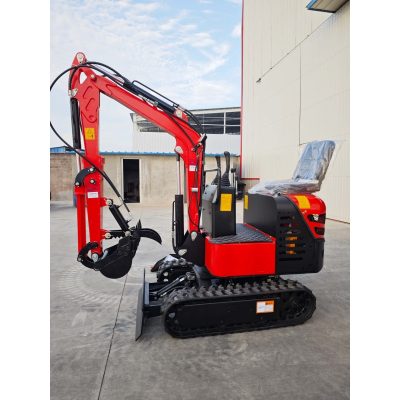
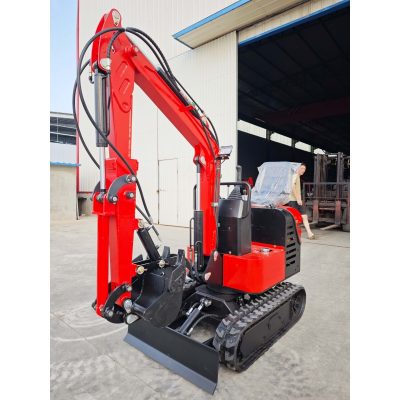
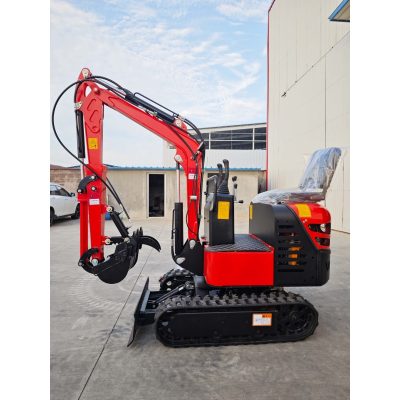
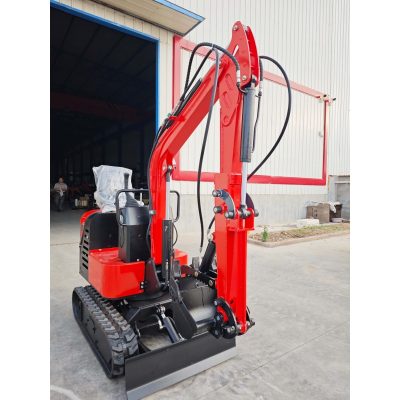
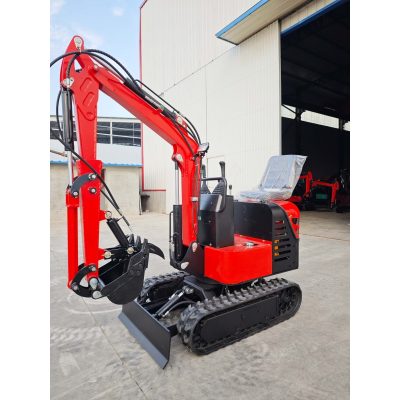
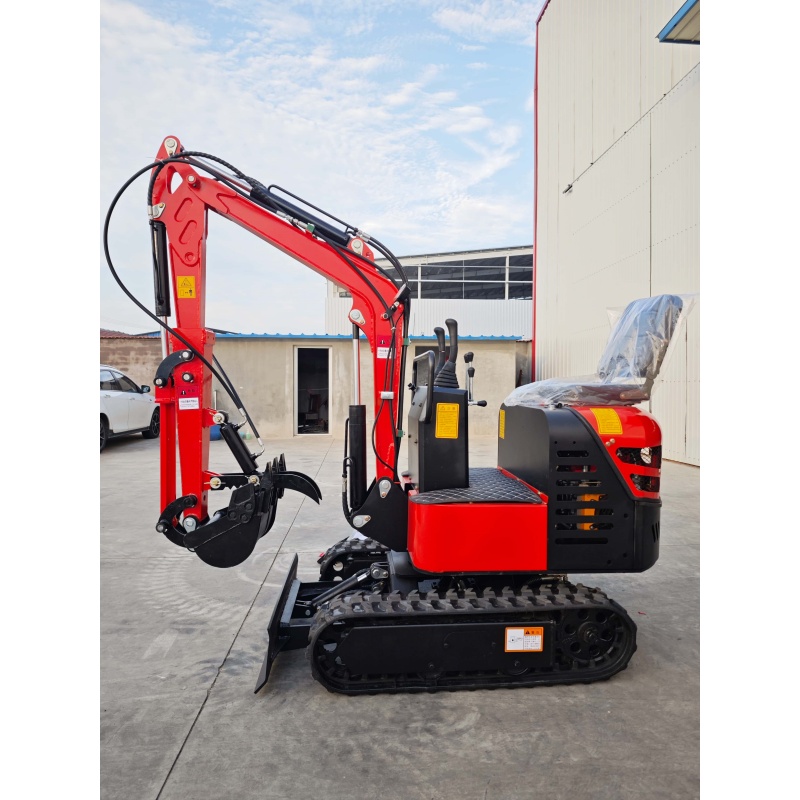
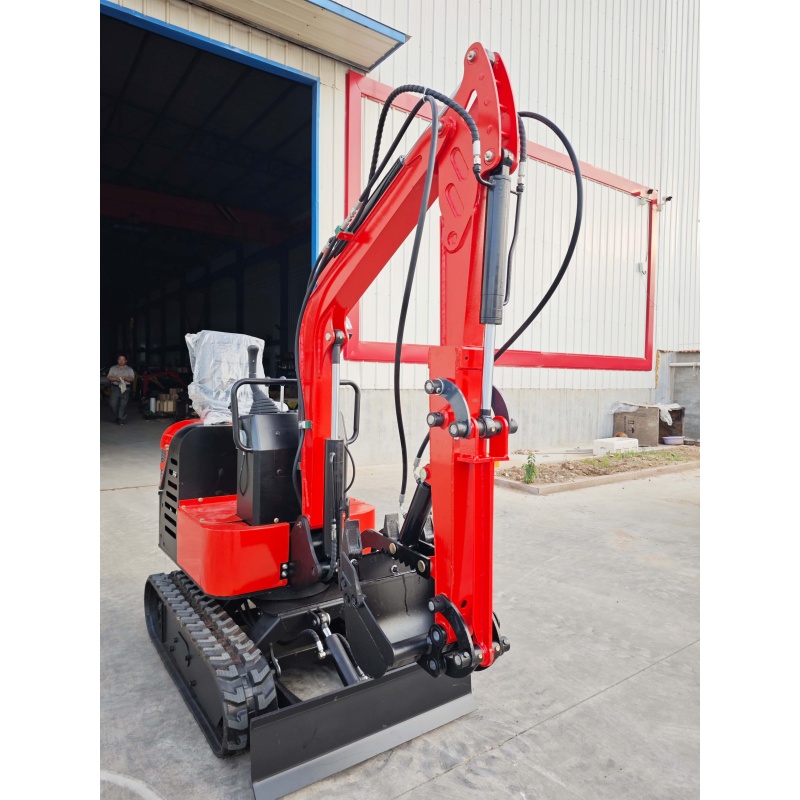
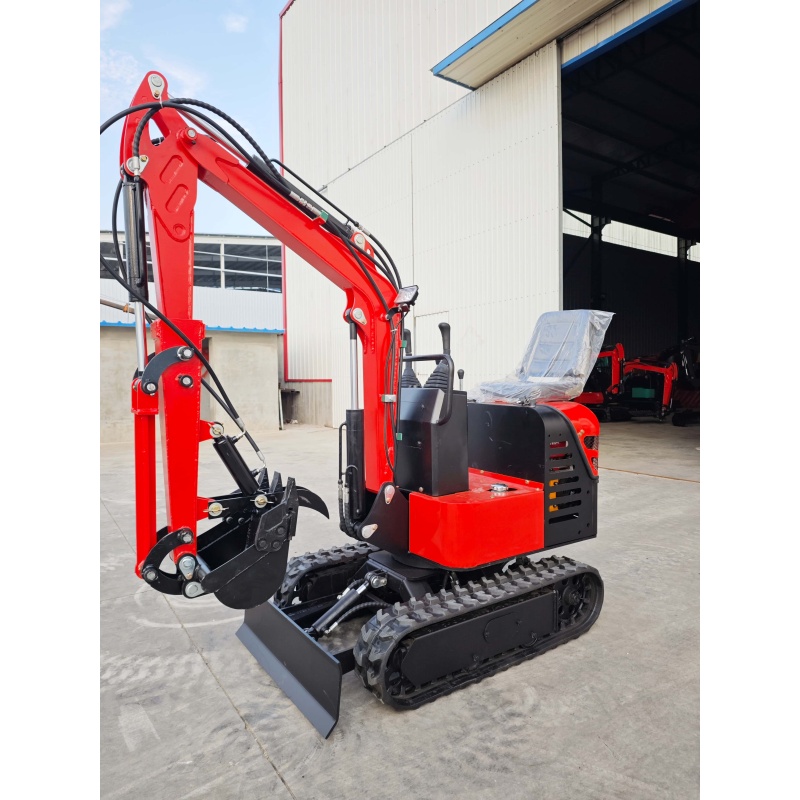
A hydraulic thumb bucket gives a mini excavator a grabbing action at the end of the arm, so the machine can pick up and place irregular objects as well as dig. It is the attachment that turns a digger into a machine that can also handle material.
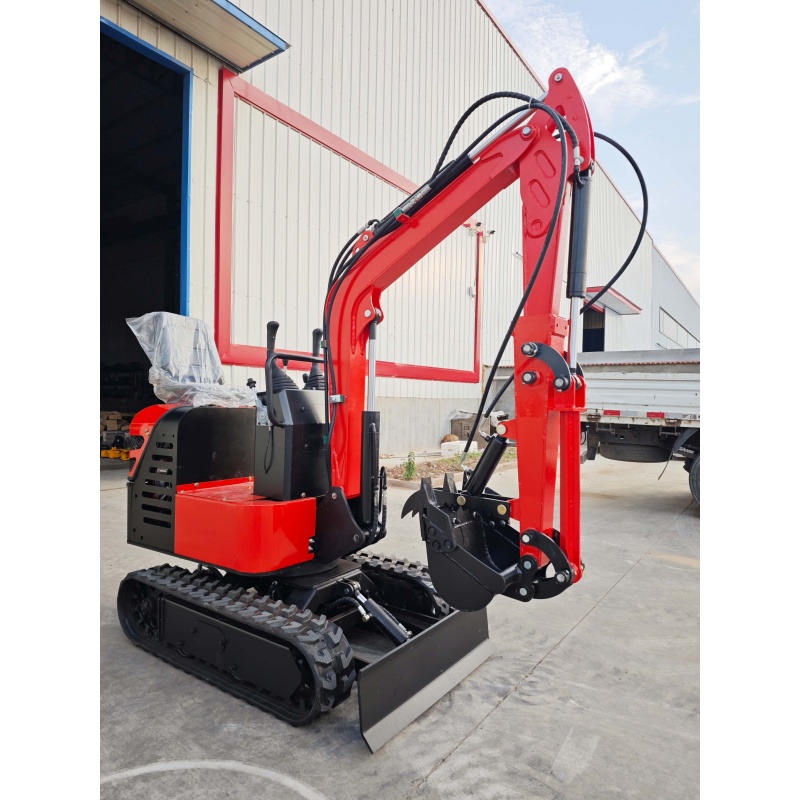
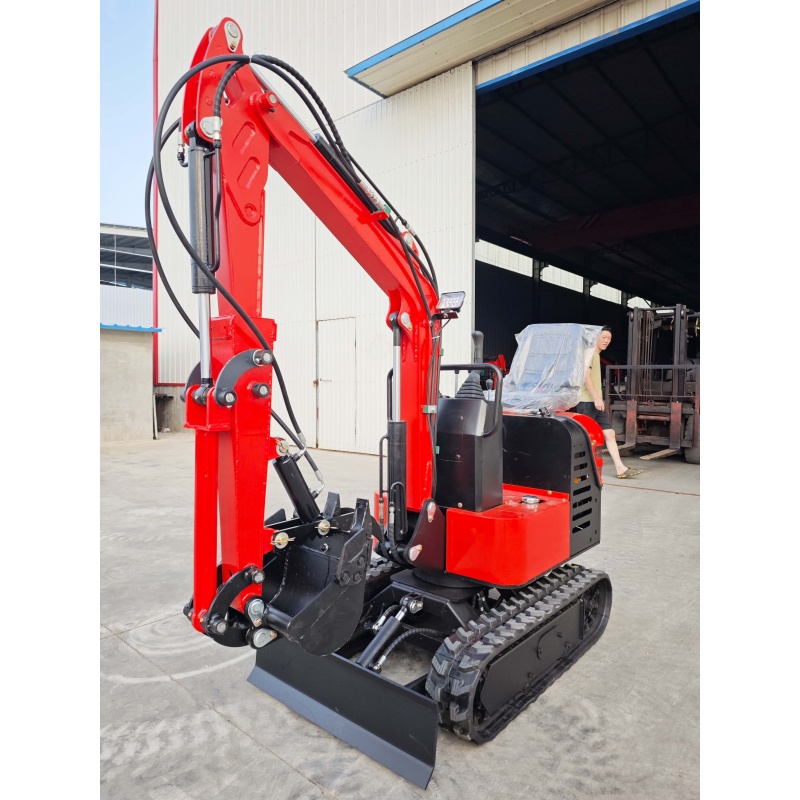
MINGYI supplies hydraulic thumb buckets for its compact crawler excavators, with the hydraulic circuit and the bucket sized to the machine at the ordering stage.
Demolition debris is irregular, and the thumb is what makes it movable.
| Checkpoint | What to settle for this machine |
|---|---|
| Carrier machine | Compact crawler excavators, with the hydraulic circuit and bucket sized to the carrier |
| Work it takes on | Gripping, lifting and placing rocks, timber, branches and demolition debris |
| Ground and material | Demolition and site clearing |
| Mounting and hydraulics | Grabbing action at the end of the arm |
| Confirmed at order stage | Hydraulic circuit and bucket sized to the machine, with any upgrade checked against the base machine |
| Handover and upkeep | Documentation agreed at the order stage |
Handling material with a hydraulic thumb bucket
The thumb works against the bucket to close on an object. Rocks, timber, branches and demolition debris can be gripped, lifted and placed rather than pushed into a heap, which is useful where material has to be sorted.
Because the grip is controlled from the cab, the operator can work steadily on awkward loads. Long items such as poles or logs that would roll out of a plain bucket stay in place between the bucket and the thumb.
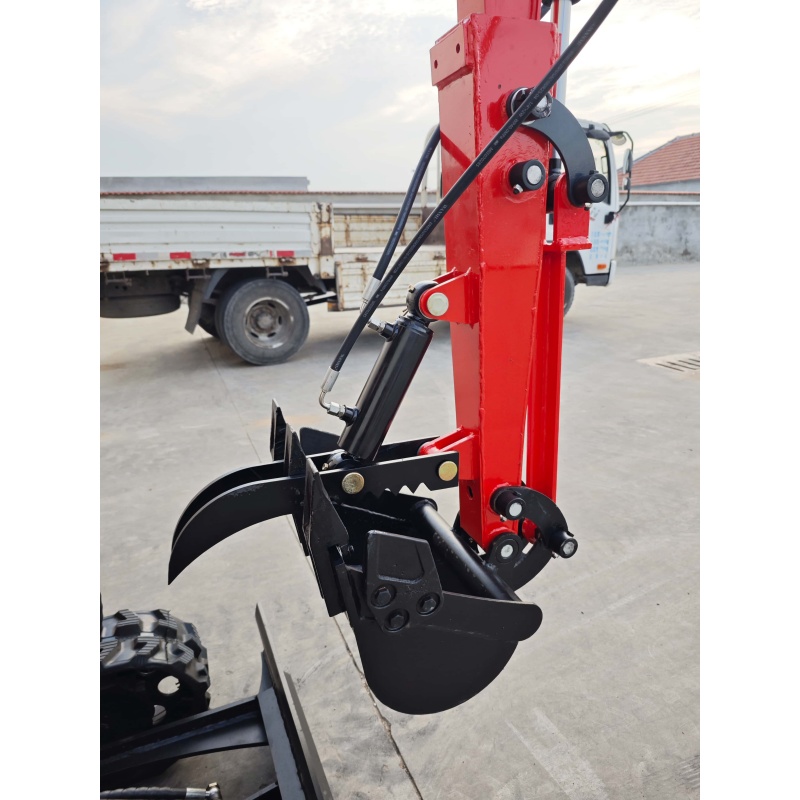
Thumb bucket work on demolition and clearing
On demolition and site clearing, the combination of a bucket and a thumb lets one machine break, pick and load without changing attachment. The operator can separate a metal item from rubble and set it aside while the rest is loaded out.
The hydraulic circuit needed for the thumb is specified with the machine. A buyer who intends to add a thumb later should say so at the ordering stage, so the excavator arrives with the provision already in place.
A hydraulic thumb bucket widens the range of work a mini excavator can accept. Fitted correctly to the machine and its circuit, it lets the operator handle material that a bucket alone would only push around.
Specifying hydraulic thumb bucket for demolition against the job list The specification should be written from the job backwards. Listing the loads, the ground and the hours first, then matching the excavator to that list, avoids buying capacity the work never uses and avoids discovering a shortfall in the first week. Buyers who specify this class of machine on paper before enquiring get specifications that can be compared. Without that list, two suppliers will propose two different machines and the simpler one is usually the smaller one, not the better value. Attachments and working tools for hydraulic thumb bucket for demolition The base machine is only as useful as the tool on the end of it. Matching the attachment to the task - rather than to what arrived with the machine - is what lets one a machine of this size cover several jobs across a week. Most owners find that the second attachment changes how often the machine is used. The unit in daily use that was bought for one task often becomes the general machine on site once a second tool is available. Storage and downtime care for hydraulic thumb bucket for demolition Standing still is hard on machinery. The equipment on site left for weeks benefits from a clean, dry, covered space, a charged battery and a fuel system prepared for the layoff, and all three effort very little. Before-storage preparation prevents most return-to-work faults. Draining or treating fuel, protecting exposed rods and relieving pressure where the maker specifies it are the items worth an hour when the machine itself is parked. Upgrading and reconfiguring hydraulic thumb bucket for demolition Upgrades should be checked against the base machine. Hydraulic capacity, mounting interface and stability all limit what can reasonably be added to the model in question, and confirming those limits avoids an unsatisfactory result. The decision is economic as well as technical. Comparing the work of reconfiguring the machine in that duty against a different machine is a short calculation that usually gives a clear answer. Fitting hydraulic thumb bucket for demolition into the wider site plan Machine productivity depends on what happens around it. Deliveries, other trades and the sequence of work decide how much of the shift the unit on the job spends actually working rather than waiting. Access and storage are worth settling early. Where a machine built for the work will be parked, refuelled and serviced on site affects the working day more than most specification details, and it takes nothing to plan. Customisation and build options for hydraulic thumb bucket for demolition Build options are where a standard machine becomes the right machine. Colour, guarding, lighting, seating and hydraulic provisions can usually be set at build time on the equipment in service, and are far simpler then than as a retrofit. Customisation should still be limited to what the work needs. Each addition to the excavator is another item to maintain, so the useful question is not what can be added but what the job list actually requires. Transporting this class of machine to and between sites Moving the machine is part of owning it. Overall length, width and height decide which trailer or container the unit in daily use fits, and a machine that needs a permit or an abnormal load escort is a machine with a delivery delay built in. Owners who work across several sites should check the transport dimensions before ordering. A machine of this size that fits a standard trailer can be moved by any operator with a suitable vehicle, while an over-width machine narrows that choice and complicates every move. Export packing and shipping of the equipment on site Container loading is a planning exercise. Confirming how the machine itself is packed and how many units fit a container is what turns a per-unit freight estimate into a delivered figure the buyer can actually plan against. Documentation should be agreed at order stage. The commercial invoice, packing list and any certificate required at destination are part of shipping the model in question, and missing papers delay clearance longer than the voyage takes. Wear items and life of the machine in that duty Certain parts are designed to be consumed. Knowing which items on the unit on the job are wearing parts, and roughly how long they last in the duty the machine sees, turns replacement into a plan rather than a breakdown. Replacing wear items early is usually simpler. Worn components on a machine built for the work load the parts they run against, so a worn part left too long often becomes a major repair. Operator technique and familiarisation Machine output varies more between operators than between brands. Smooth, planned movements put less load on the structure and use less fuel, and that difference is visible on the hour meter and in the service bills for the equipment in service. Familiarisation should cover the limits as well as the controls. Knowing where the excavator loses stability, how it behaves at full reach, and what the warning lights mean prevents the incidents that are put down to bad luck. Working hours and duty cycle of this class of machine Seasonal work changes the maintenance calendar. Machines that work hard for two months and stand for ten need preparation before storage and a check before returning to work, and both are simpler than the repairs they prevent. Hour planning helps at resale as well. The unit in daily use with a recorded service history and a sensible hour count is easier to sell than one with the same hours and no records, whatever its condition. Matching a machine of this size to ground conditions Ground decides more of the outcome than power does. Soft, wet or loose surfaces call for a wider footprint and lower ground pressure, while hard standing allows a narrower machine that turns in less space and travels faster between tasks. Traction and flotation are two separate questions. The equipment on site may have the power for a slope and still not have the grip, so the surface, not the engine rating, is usually what limits the working day.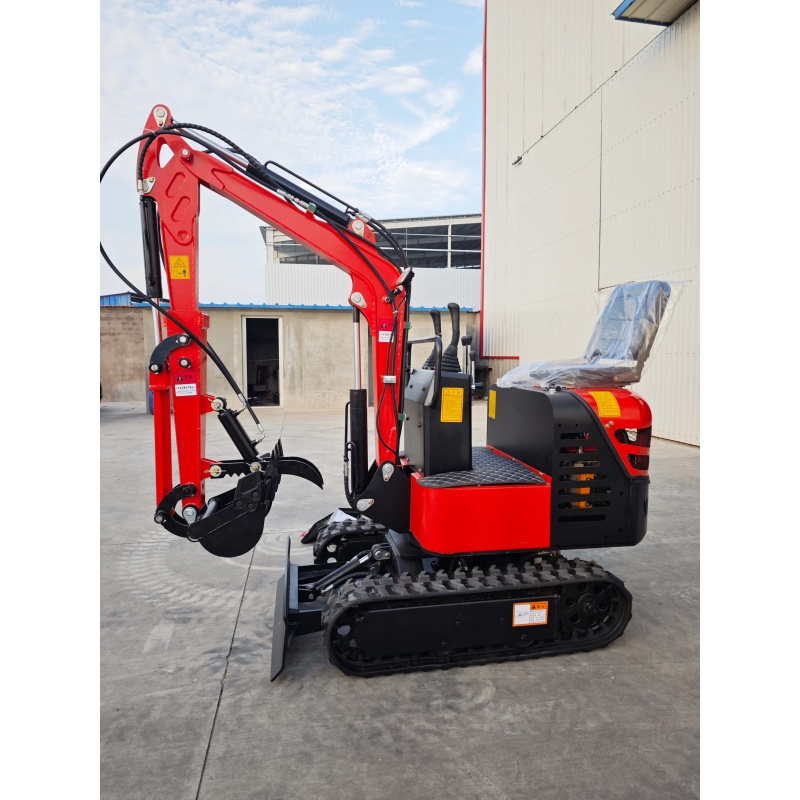
Q. Who chooses the machine itself?
A. An attachment widens the range of jobs a single compact excavator can specification and win, which is why the working set matters as much as the base machine. The quick coupler makes the changeover a minute job at the trench edge, and mechanical tools need no hydraulic lines at all. The model in question is one of the pages buyers land on when comparing machines for demolition, and the factory treats it as a specification conversation rather than a catalogue line.
Q. What does the attachment add to daily work?
A. Reach into jobs the bucket alone cannot specification: grading with a tilting bucket, clearing with a rake, drilling with an auger, lifting with a thumb. One carrier, several trades - the machine stays on site earning instead of waiting for a specialist.
Q. Can I see the machine before it ships?
A. Inspection is arranged at the factory, in person or by a scheduled video walk-around - the same session covers paint, decals and attachment fitment for the demolition specification, so the machine inspected is the machine that ships.
A second operator for the machine in that duty
Training is simpler than repair. An hour spent with a new operator on the unit on the job, covering the limits and the awkward cases, is the least lengthy hour in the whole ownership.
Hot, humid and dusty conditions around a machine built for the work
Tropical operation is a specification question as much as a maintenance one. The cooling capacity, the sealing and the corrosion protection fitted to the equipment in service are what make the difference once the ambient temperature rises.
Pre-delivery inspection before the excavator leaves the shop
The last hour before packing is the best time to find a fault. Running this class of machine through its full working cycle, checking for leaks under load and confirming that the controls match the specification avoids a conversation across time zones later.
Commissioning the unit in daily use on site
The first hour on site should be slow. Before a machine of this size is put to work the fluid levels are rechecked after transport, the fasteners are gone over and the machine is run light so that anything loosened in transit shows up early.
Reading the early symptoms on the equipment on site
Machines rarely fail without warning. A change in sound, a slower function or a new leak on the machine itself is the machine saying something early, and listening then takes a fraction of the time that waiting does.
Wear items and spares worth holding for the model in question
A spares list should follow the duty cycle. The machine in that duty working every day in abrasive dust consumes filters and cutting edges far faster than the same machine used once a week, and the shelf should be stocked for the harder case.
Keeping a service record for the unit on the job
Patterns show up in the record before they show up in the machine. Rising oil consumption or a filter that keeps blocking on a machine built for the work is obvious on paper long before it becomes a failure on site.
Planning the season around the equipment in service
Downtime is simplest when it is planned. Booking the service for the excavator in the quiet part of the season takes nothing from the schedule, while the same work in the busy weeks gives up a day of output every time.
Storage and long idle periods for this class of machine
Rubber, seals and hoses age whether the machine works or not. Keeping the unit in daily use out of direct sun and off damp ground slows that, and running it briefly at intervals keeps everything moving.
E-mail : sales@mingycn.com
LINE ( ID ): mingyicn
Common operator mistakes with hydraulic thumb bucket for demolition
Riding the brake or holding the machine on the converter builds heat that no amount of later care undoes.
Ignoring a small change in sound or feel is the mistake that turns a service item into a repair, and reporting it early is the habit worth building.
Leaving the machine idling for long periods adds hours without adding output, and it is the easiest waste to remove.
Fire prevention and emergency steps for hydraulic thumb bucket for demolition
Most machine fires start with heat, oil and a dry screen of debris, and the first defence is a clean engine bay.
Related pages
thumb bucket and extended boom · mini excavator compaction wheel · OEM Wheel Loader Manufacturer: Build Options and Labelling · Mini Excavators









