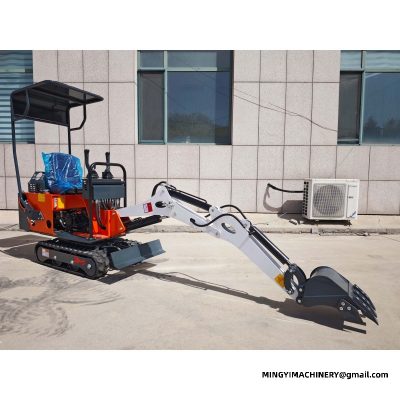
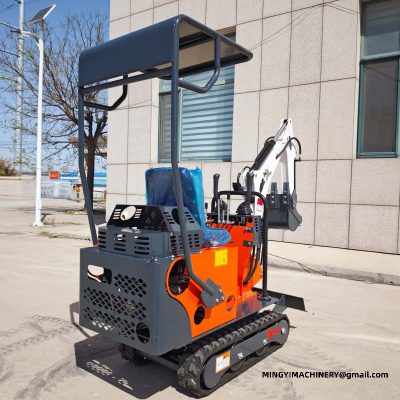
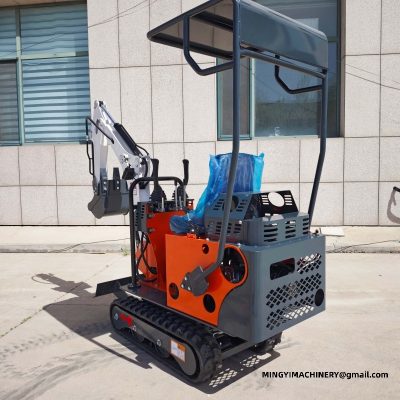
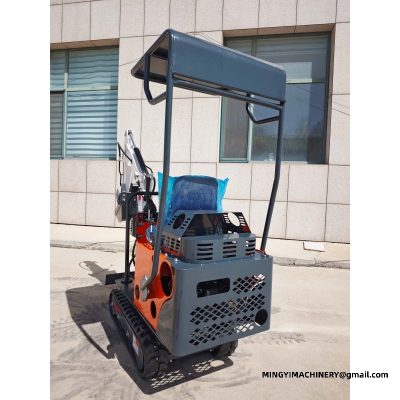
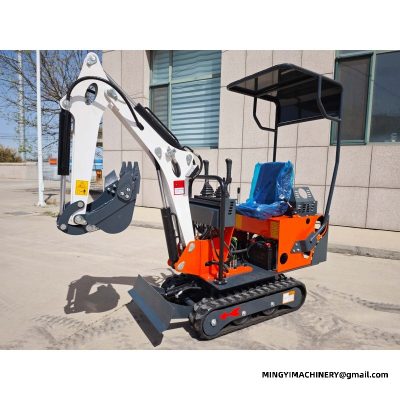
A compact excavator that is waiting for a part is not a small problem — it is a machine earning nothing while it stands idle. That is why parts availability should be settled before the machine is ordered, not discovered when something wears out.
MINGYI supplies spare parts and wear items for the mini excavator range, covering the 08, 12 and 18 model series.
What wears on a compact excavator
Tracks are the largest consumable, and their effort and life depend on the type specified: rubber tracks for surface protection and quiet running, steel tracks with rubber blocks for abrasive ground and longer life. Bucket teeth, cutting edges and pins follow, then hydraulic hoses, filters and fluids.
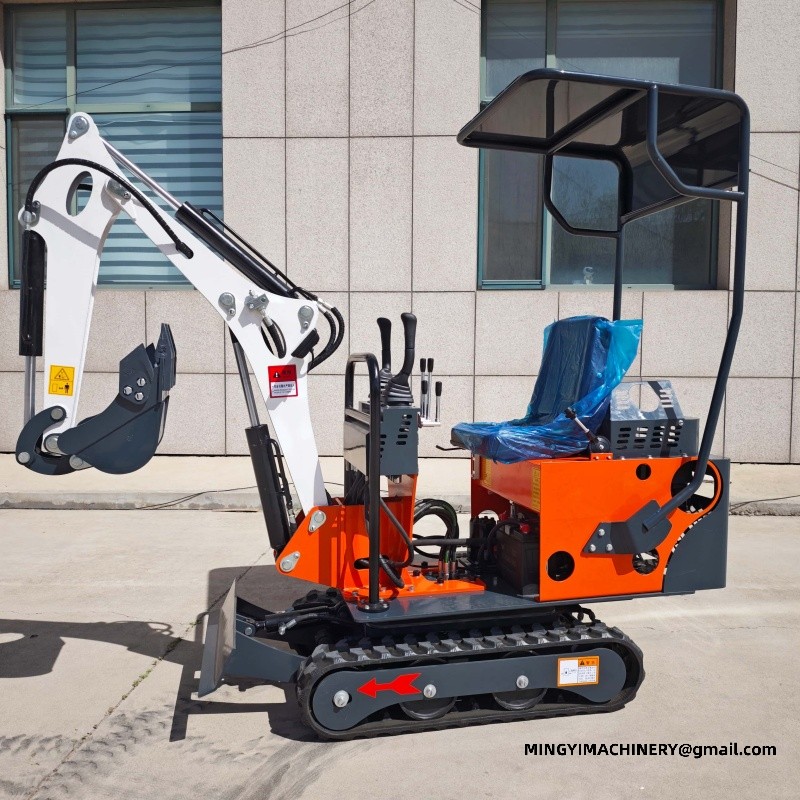
Because these items are consumed steadily through the machine’s life, the practical question for a buyer is whether replacements can be obtained locally and at what effort, rather than whether they are needed at all.
Matching parts to the build specification
Track type, bucket type, quick coupler type and engine family all affect which parts a machine consumes. Recording the build specification at the order is what makes it possible to supply the correct replacement years later, which is one reason we specification against a written specification.
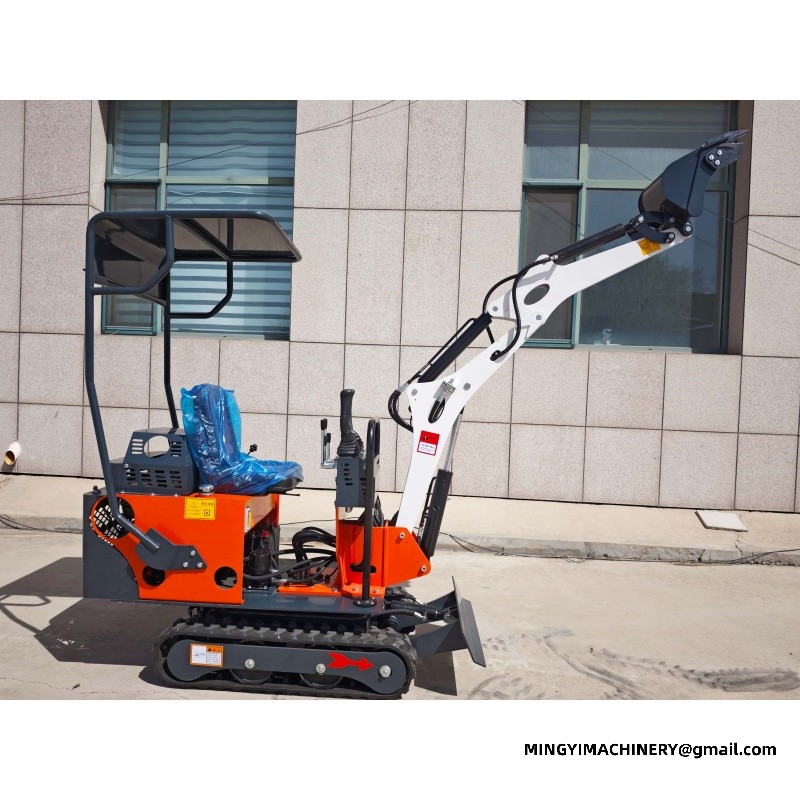
Parts and consumables
• Rubber tracks and steel tracks with rubber blocks
• Bucket teeth, cutting edges, pins and bushes
• Hydraulic hoses, seals and filters
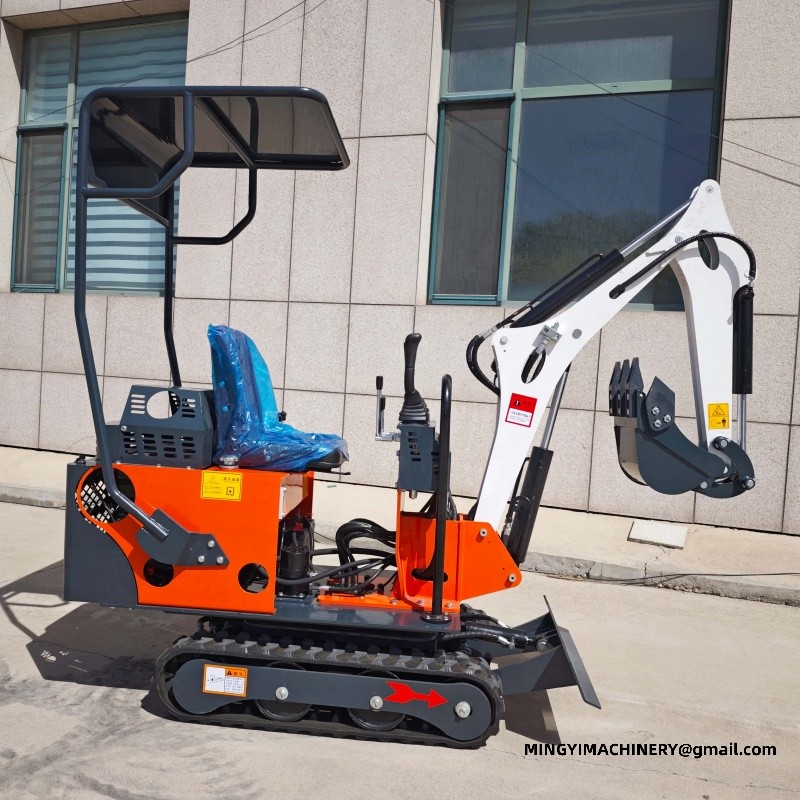
• Engine service parts against the specified engine family
• Quick coupler components and attachment fittings
Tell us the model and the parts you need and we will confirm supply against the machine’s build specification.
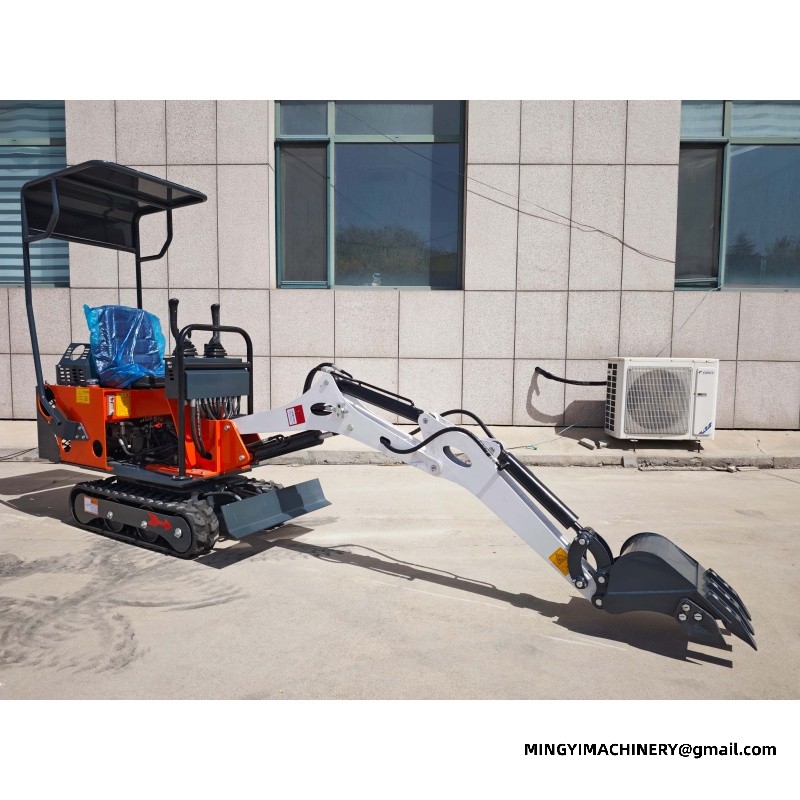
Municipal and public works with mini excavator spare parts Municipal crews work on streets, footpaths and parks where the public is present. This class of machine is specified because it occupies little space, works inside a small exclusion zone and can be moved on a standard trailer. Noise and surface protection matter on public work. The unit in daily use on rubber tracks across paving, with a sealed cab for the operator, suits the conditions better than a larger tracked machine. Boom configuration for mini excavator spare parts A swing boom lets the machine dig parallel to its tracks without repositioning, which is what makes trenching beside a wall or a fence practical. On a machine of this size this is often the option that decides whether a job is possible at all. Detachable boom sections are used where transport length matters. The equipment on site that has to travel on a standard trailer can be built so the arm comes off for the road and goes back on at the site. Working near live services with mini excavator spare parts Digging near water, gas and cable is a precision job. The machine itself is used here because the operator can work in short controlled cuts and because the machine can be positioned without driving over the run being exposed. Utility crews specify the model in question with a narrow bucket and good visibility for exactly this reason: the machine has to stop at the service, not at the edge of the operator's view. Quick coupler practice on mini excavator spare parts A quick coupler is the single option that changes how a machine is used day to day. Fitted to the machine in that duty, it turns an attachment change from a two-person workshop job into a task the operator does alone in minutes. Couplers are specified early because they affect the arm and the hydraulic kit. Adding one to the unit on the job after delivery means new pins, new hoses and a fitment session; adding it at build time is a line on the sheet. Operator technique for mini excavator spare parts The second habit is tool discipline. Running a machine built for the work with the right bucket width for the trench means less spoil, less reinstatement and a cleaner job than a wide bucket and a lot of trimming. Stability is the third. The equipment in service working across the tracks rather than over the corners keeps the machine steady and the undercarriage loaded evenly, which shows up as track life at the end of the season. OEM and fleet customisation of this class of machine Distributors and rental fleets usually need the machine to look like theirs. Paint, decals, seat colour and attachment branding can be specified on the unit in daily use at build time rather than applied after import. Documentation can be prepared to suit the importer. Manuals, parts books and decal sets for a machine of this size can be supplied with the buyer's own branding where the order size justifies it. Interior and light demolition with the equipment on site Breaking out a floor slab, a wall footing or a concrete step is routine work for the machine itself with a breaker. The machine is small enough to work inside and heavy enough to run the tool at a practical rate. Dust, debris clearance and floor loading all argue for a compact machine indoors. The model in question spreads its weight over a wider track footprint than a wheeled machine of similar capacity. Working the machine in that duty in confined spaces Confined sites are decided by dimensions. Overall width, tail swing and the space needed to work the arm are what let the unit on the job operate inside a building, between walls or in a courtyard. Clearance above matters as much as around. Door heights, pipework and overhead services set the limit for a machine built for the work indoors, and measuring them first avoids a machine that arrives and cannot be used. What owners should plan for beyond the equipment in service The useful comparison is demand per working hour, not demand per machine. This class of machine that works more hours a year spreads its standing takes over more output, which is why utilisation usually matters more than the invoice figure. Downtime is the hidden line item. The unit in daily use waiting on a part earns nothing while it stands, so parts availability and service access belong in the plan as much as fuel does. Lifting and material handling with a machine of this size Stability changes with reach. A load the equipment on site handles close in becomes a different proposition at full extension, so the working radius belongs in the plan before the lift rather than during it. Ground condition under the machine is part of every lift. Soft or uneven support is the common factor in handling incidents, and checking it takes less time than recovering the machine itself that has settled. Working the model in question through the seasons Seasonal planning smooths the workload. Machines that are busy for a few months and idle for the rest benefit from a service slot in the quiet period, and the machine in that duty prepared in the off-season starts the busy months reliably. Heat and dust are as limiting as rain. Air intake condition and cooling cleanliness decide how the unit on the job behaves in a dry season, and both are checked in a minute rather than repaired later. Road and paving work for a machine built for the work Road repair generates short, interrupted jobs - a patch, a drainage connection, a kerb line. The equipment in service is economical here because it travels on a small trailer and starts working minutes after arriving. Patching and reinstatement favour a machine that can work in a lane closure. This class of machine occupies less road than a full-size excavator, which reduces the traffic management needed and the length of the closure. Trailering and moving the unit in daily use Transport weight and width decide whether a machine needs a specialist haulier. A machine of this size sized to travel on a standard plant trailer behind a suitable vehicle moves with the crew rather than on a scheduled low loader. Detachable components reduce transport length. The equipment on site built with a removable arm section or a folding step fits a shorter trailer and may avoid an oversize movement permit. Specification data for the machine itself Where the model in question is being specified for a job list, the table below gives the factory figures that matter most: what the machine weighs, how deep and how far it works, and what it measures on a trailer. Every value shown is as built for the machine in that duty; options such as cab, side swing or a telescopic undercarriage change the transport dimensions and are confirmed at order stage. Delivery day is the best time to find a problem. Checking the specification against the order, the fluid levels, the fasteners and any transport damage while the machine built for the work is still on the trailer is faster than claiming later. Documentation should arrive with the machine. Parts list, service schedule and any certificates for the unit on the job are what the workshop needs later, and they are much easier to obtain at delivery than in month six.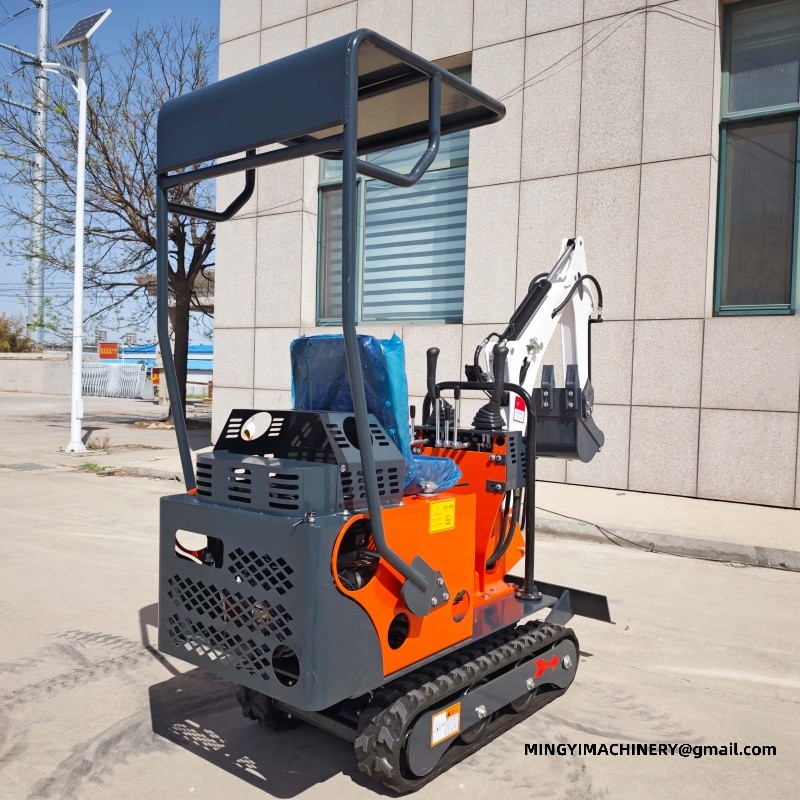
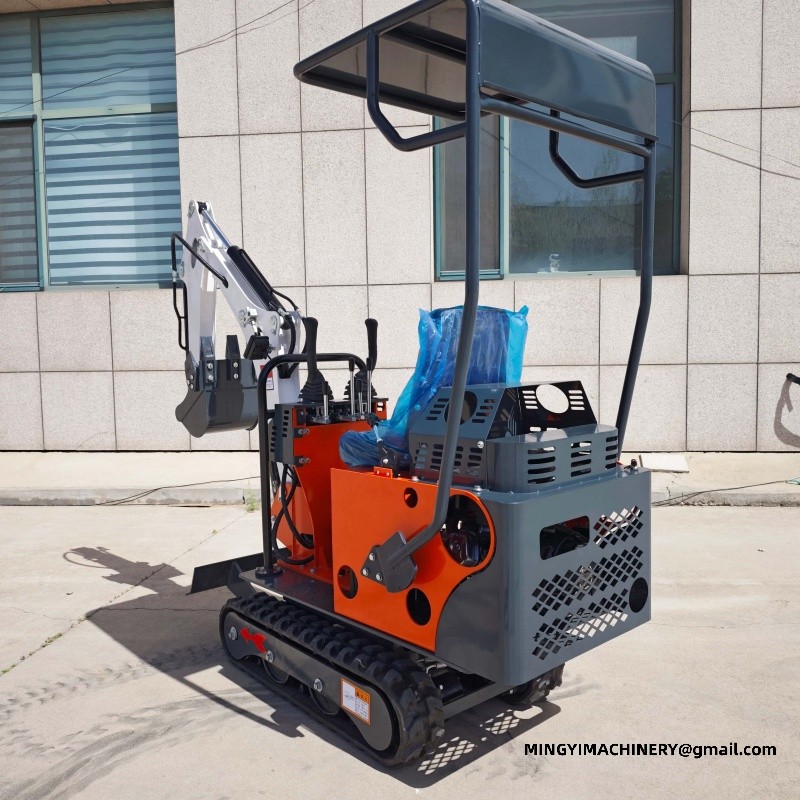
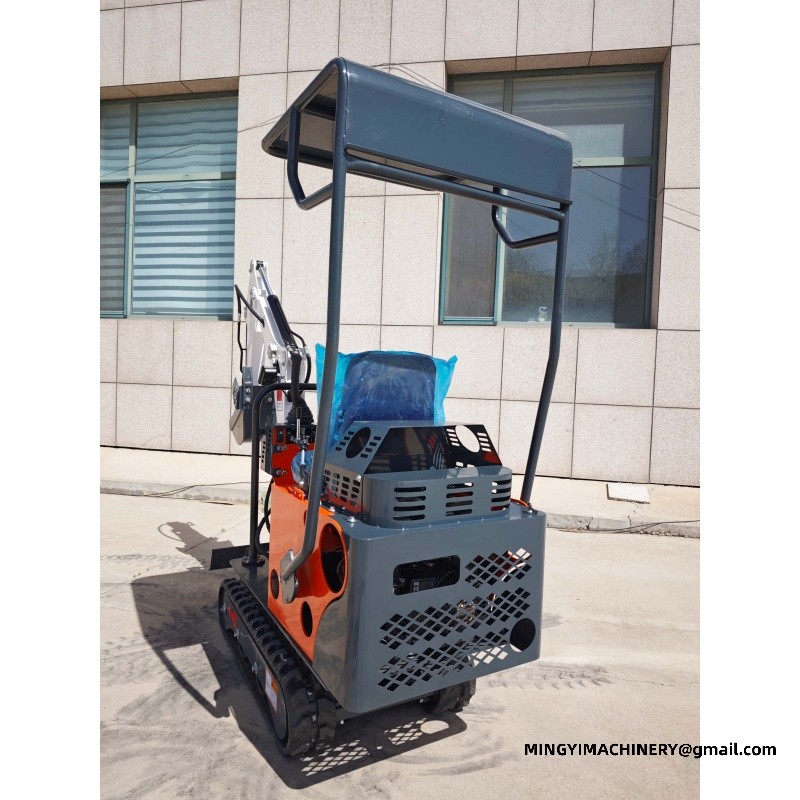
Reference specification — mini excavator range 20-1W 20-1WL 20-3W 30-2W Operating weight 1800 kg (3968.32 lb) 1900 kg (4188.78 lb) 1900 kg (4188.78 lb) 2700 kg (5952.48 lb) Transport size (L×W×H) 2550 × 1100 × 2200 mm 2550 × 1100 × 2200 mm 2550 × 1100 × 2200 mm 3000 × 1100 × 2700 mm Max digging depth 1800 mm (70.87 in) 1800 mm (70.87 in) 1800 mm (70.87 in) 2200 mm (86.61 in) Max digging height 2820 mm (111.02 in) 2820 mm (111.02 in) 2820 mm (111.02 in) 3000 mm (118.11 in) Max dumping height 2050 mm (80.71 in) 2050 mm (80.71 in) 2050 mm (80.71 in) 2000 mm (78.74 in) Max digging radius 3050 mm (120.08 in) 3050 mm (120.08 in) 3050 mm (120.08 in) 3800 mm (149.61 in) Max digging distance 2300 mm (90.55 in) 2300 mm (90.55 in) 2300 mm (90.55 in) 3050 mm (120.08 in) Minimum turning radius 1450 mm (57.09 in) 1450 mm (57.09 in) 1450 mm (57.09 in) 1750 mm (68.9 in) Travel speed 5 km/h (3.11 mph) 5 km/h (3.11 mph) 5 km/h (3.11 mph) 7 km/h (4.35 mph) Gradeability 30° 30° 30° 30° Fuel consumption 2-3 L/h (0.528—0.793 gal) 2-3 L/h (0.528—0.793 gal) 2-3 L/h (0.528—0.793 gal) 2-3 L/h (0.528—0.793 gal) Fuel tank capacity 16 L (4.23 gal) 16 L (4.23 gal) 16 L (4.23 gal) 16 L (4.23 gal) Hydraulic oil tank 18 L (4.76 gal) 18 L (4.76 gal) 18 L (4.76 gal) 20 L (5.28 gal) Dozer blade lift height 180 mm (7.09 in) 180 mm (7.09 in) 180 mm (7.09 in) 230 mm (9.06 in) Dozer blade drop depth 210 mm (8.27 in) 210 mm (8.27 in) 210 mm (8.27 in) 280 mm (11.02 in)
Q. Which spare parts do you supply?
A. Filters, seals, hoses, bucket teeth and wear parts for the 08, 12 and 18 models, supplied with a machine order or separately against a model reference. Because the engine families are common, many consumables can also be sourced locally.
Q. How do I order a spare part?
A. Send the model, the working hours and the part required, with a photograph or the part number where available, to sales@mingycn.com or on LINE at mingyicn. MINGYI will confirm the item and specification it.
Q. Should I keep parts in stock?
A. A first service kit of filters, seals and bucket teeth is worth holding, and hoses too if the machine works far from a supplier. Ordering that kit with the machine means it is on site before the first service is due.
Fuel, oil and fluid quality for the equipment in service
The specification for oil is written for a reason. Using the grade and the change interval set for this class of machine keeps the engine and the hydraulic system inside the range they were designed for.
Pre-delivery inspection before the unit in daily use leaves the shop
What the customer sees on arrival is decided before departure. The walk-around given to a machine of this size covers the same points the operator will check on day one, so there are no surprises when the crate is opened at the destination.
E-mail : sales@mingycn.com
LINE ( ID ): mingyicn
Related pages
mini excavator after sales service · mini excavator maintenance · mini excavator export from china · PRODUCTS









