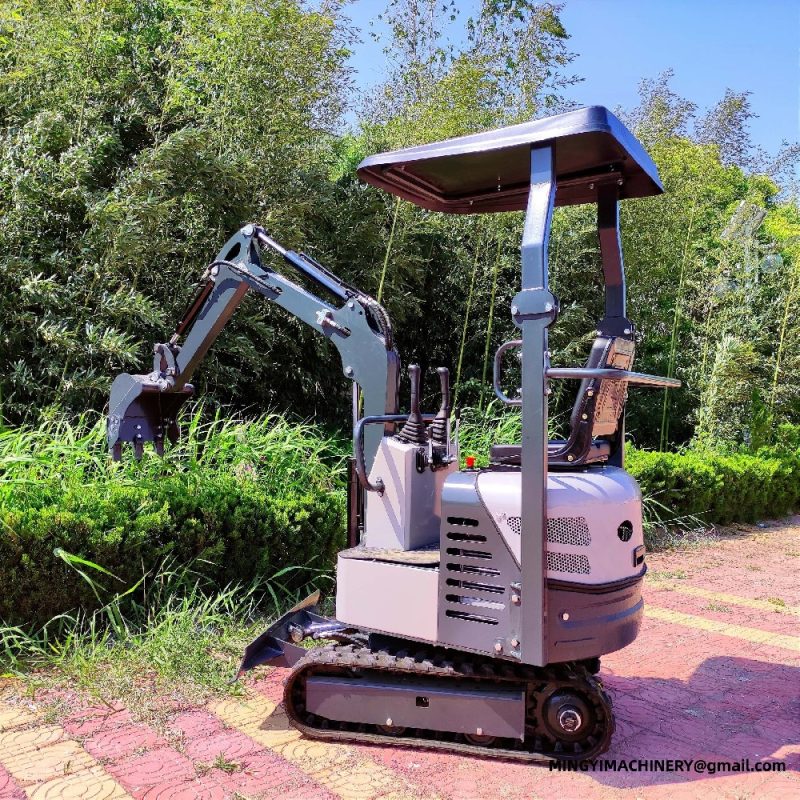
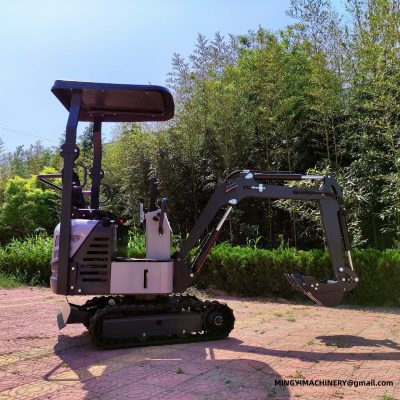
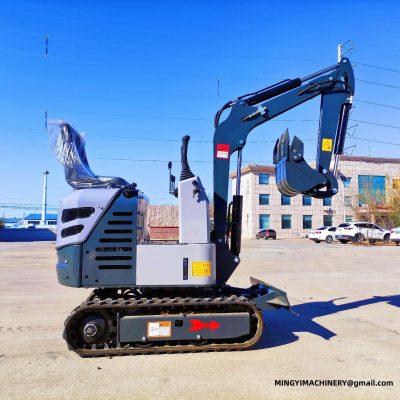
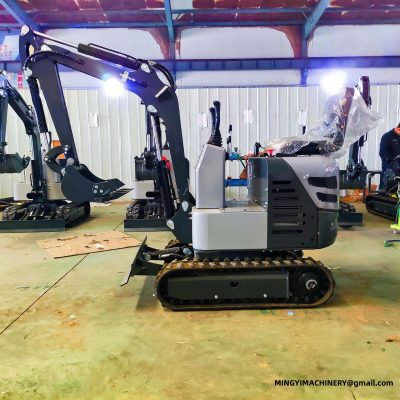
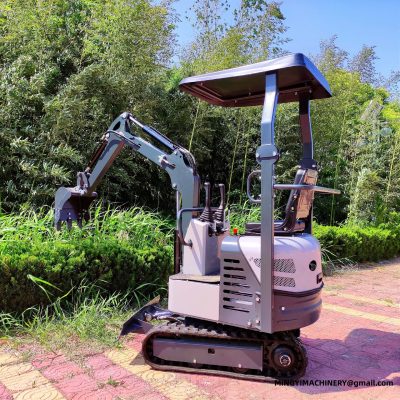
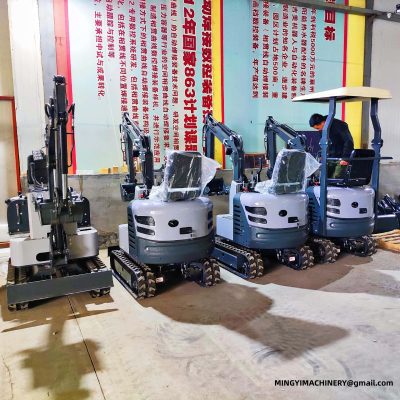
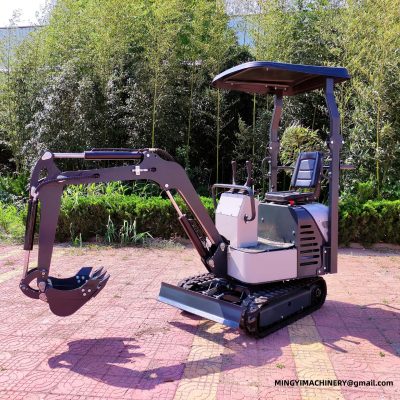
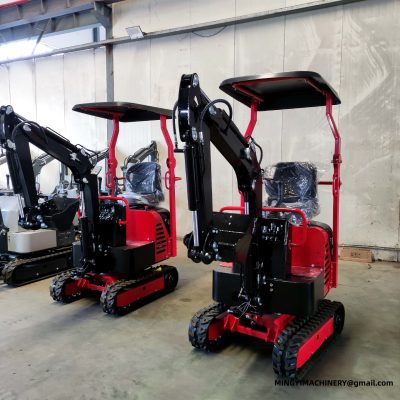
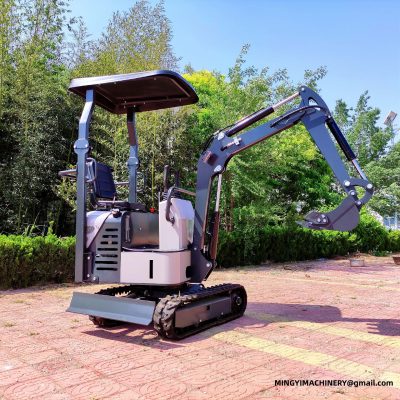
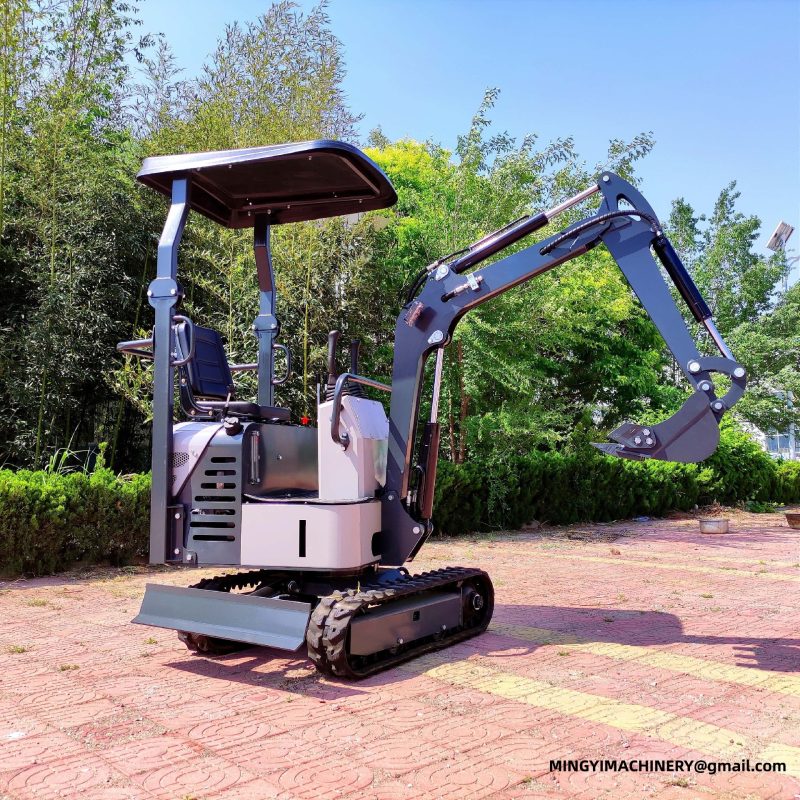
Crawler describes how the machine moves rather than what it does. This class of machine carries its weight on continuous tracks instead of wheels, and that single difference decides where it can work.
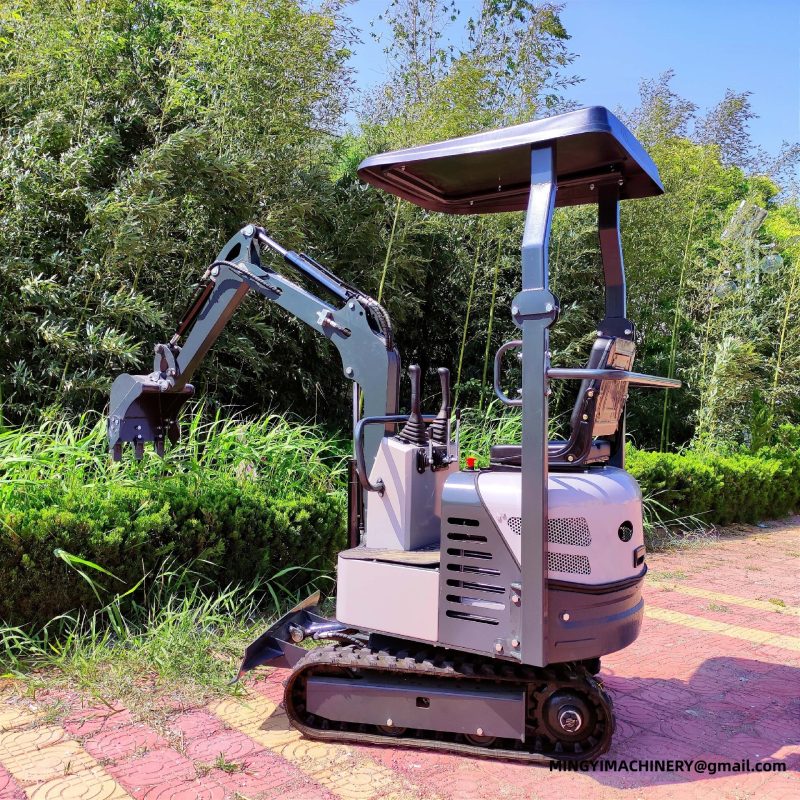
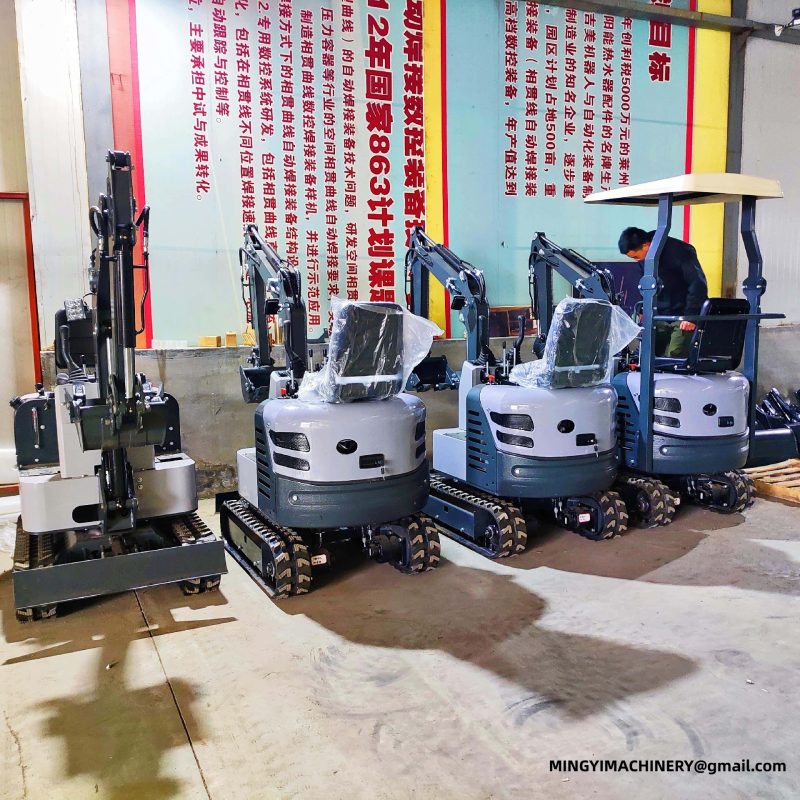
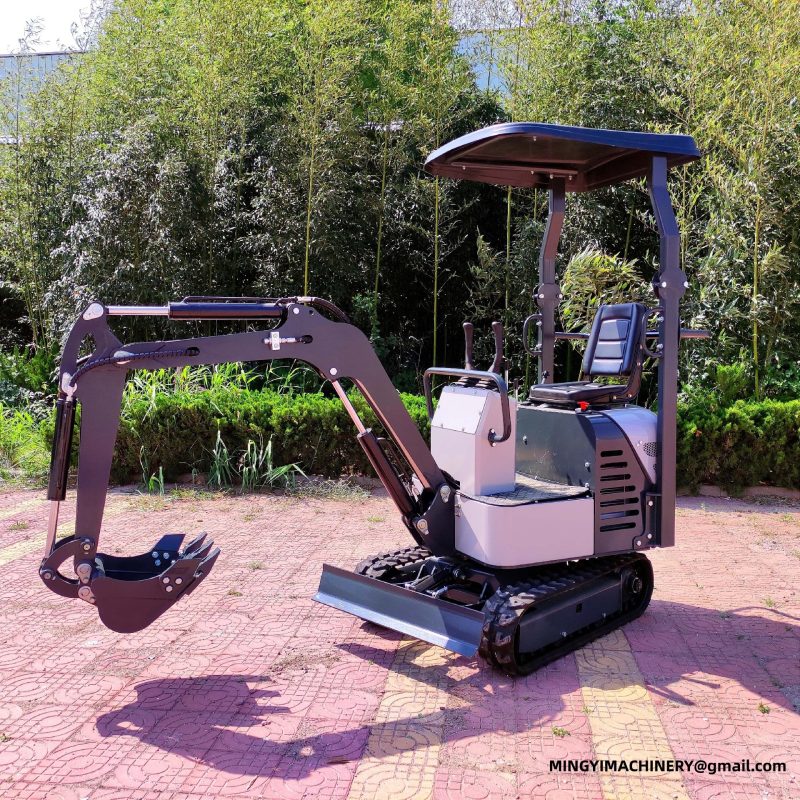
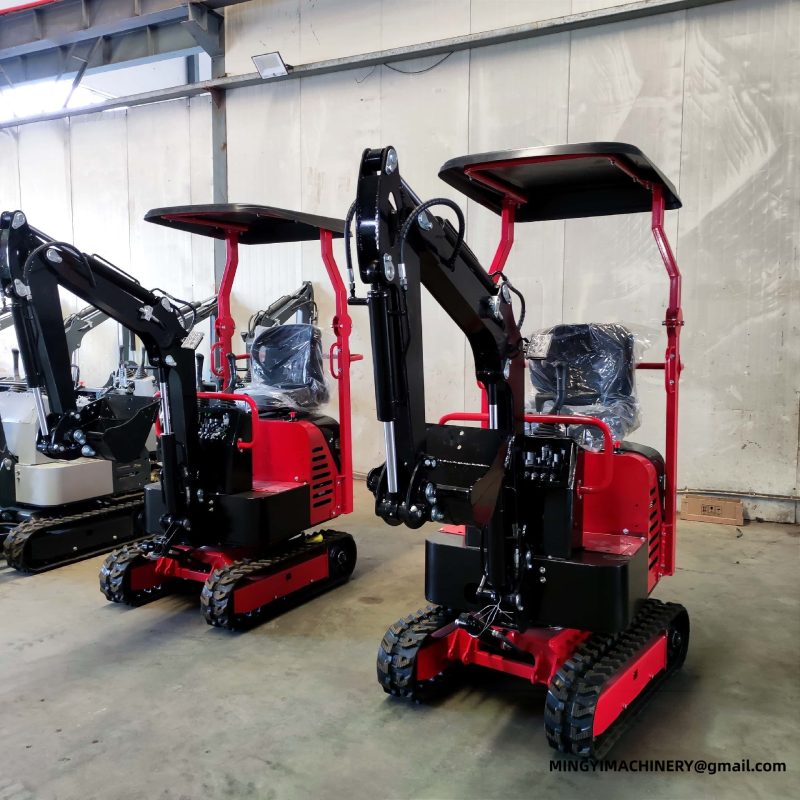
MINGYI builds compact excavators on crawler undercarriages in both rubber and steel track forms, so the machine can be matched to the ground it will travel over.
What the crawler undercarriage gives you
Tracked machines put their weight over a long, wide contact area, so ground pressure is low and stability under digging load is high.
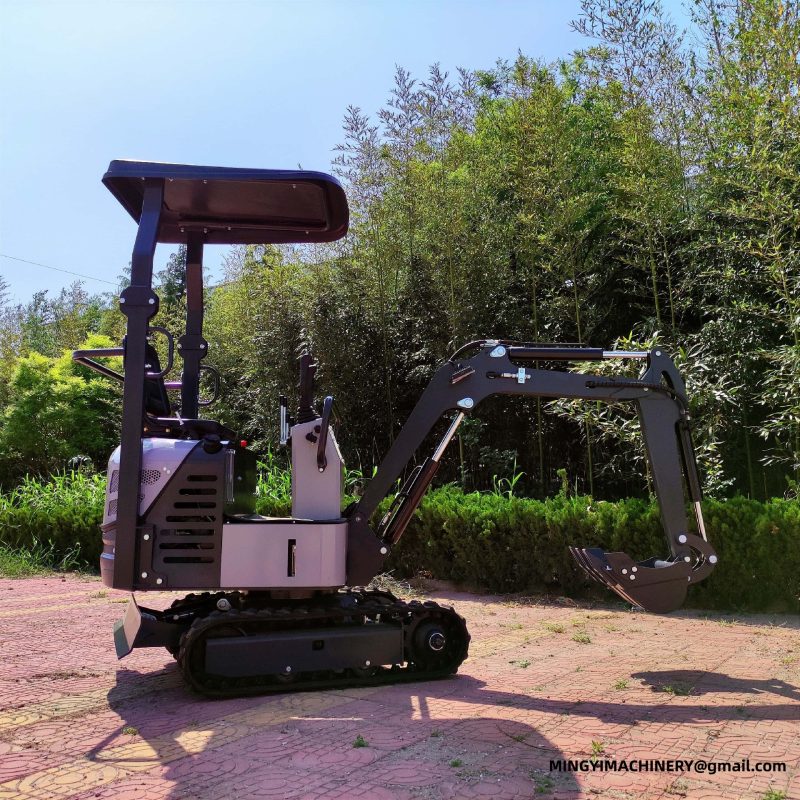
That combination is what allows a crawler excavator to work on soft ground, on slopes and at the edge of an excavation where a wheeled machine would not be safe.
Rubber or steel
Rubber tracks suit machines that cross finished surfaces and work in built-up areas, since they mark far less than steel.
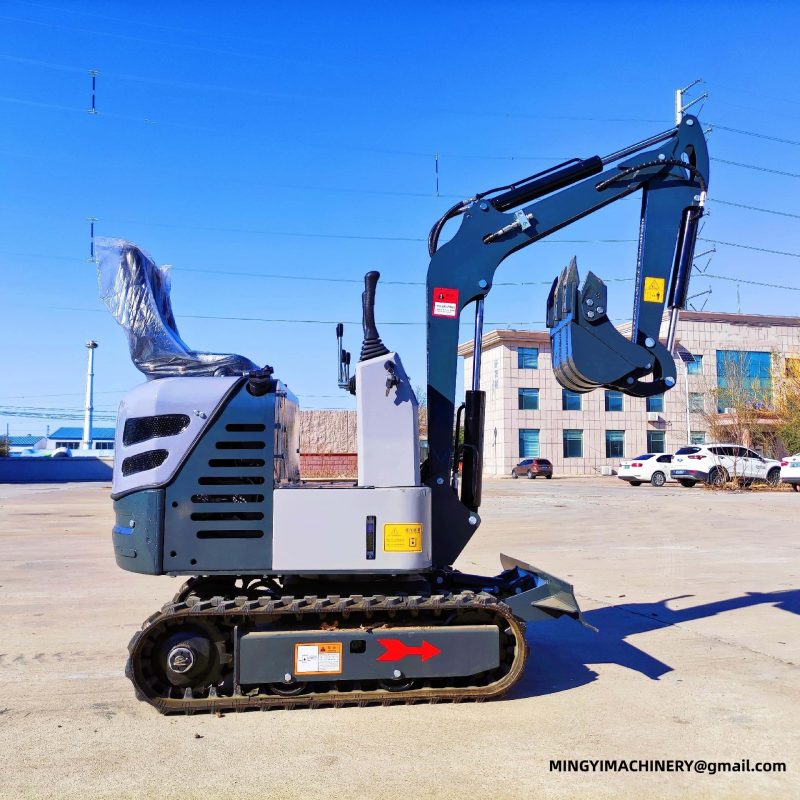
Steel tracks and steel tracks with rubber pads suit rough, abrasive ground and sites where durability matters more than surface protection.
Tell MINGYI the ground and surfaces your machine will work on and we will confirm the crawler specification that fits.
E-mail : Working the unit in daily use through the seasons Seasonal planning smooths the workload. Machines that are busy for a few months and idle for the rest benefit from a service slot in the quiet period, and a machine of this size prepared in the off-season starts the busy months reliably. Heat and dust are as limiting as rain. Air intake condition and cooling cleanliness decide how the equipment on site behaves in a dry season, and both are checked in a minute rather than repaired later. Noise, dust and working near occupied buildings Work near housing or occupied premises brings constraints that open sites do not. Start times, exhaust condition and how often the machine itself needs to reverse are the practical limits that neighbours notice. Dust control is often part of the same conversation. Water, timing and work sequence reduce what leaves the site, and agreeing them in advance keeps the model in question working rather than stopped after a complaint. Interior and light demolition with crawler mini excavator Breaking out a floor slab, a wall footing or a concrete step is routine work for the machine in that duty with a breaker. The machine is small enough to work inside and heavy enough to run the tool at a practical rate. Dust, debris clearance and floor loading all argue for a compact machine indoors. The unit on the job spreads its weight over a wider track footprint than a wheeled machine of similar capacity. Hiring versus owning a crawler mini excavator The choice follows the hours. Work that fills a few weeks a year is usually better hired, while a machine built for the work that would be on site most weeks starts to justify ownership once the transport and booking time is counted. Ownership brings obligations that hiring does not. Storage, servicing, insurance and an operator are the items to set against the hire rate before deciding which way the equipment in service should be supplied. Quick coupler practice on crawler mini excavator A quick coupler is the single option that changes how a machine is used day to day. Fitted to this class of machine, it turns an attachment change from a two-person workshop job into a task the operator does alone in minutes. Couplers are specified early because they affect the arm and the hydraulic kit. Adding one to the unit in daily use after delivery means new pins, new hoses and a fitment session; adding it at build time is a line on the sheet. Operator technique for crawler mini excavator Output on a compact machine comes from placement rather than power. An experienced operator keeps a machine of this size working inside the swing arc, positions once and digs a full run instead of repositioning for every bucket. Stability is the third. The equipment on site working across the tracks rather than over the corners keeps the machine steady and the undercarriage loaded evenly, which shows up as track life at the end of the season. Working near live services with crawler mini excavator Digging near water, gas and cable is a precision job. The machine itself is used here because the operator can work in short controlled cuts and because the machine can be positioned without driving over the run being exposed. Utility crews specify the model in question with a narrow bucket and good visibility for exactly this reason: the machine has to stop at the service, not at the edge of the operator's view. Boom configuration for the machine in that duty A swing boom lets the machine dig parallel to its tracks without repositioning, which is what makes trenching beside a wall or a fence practical. On the unit on the job this is often the option that decides whether a job is possible at all. Detachable boom sections are used where transport length matters. A machine built for the work that has to travel on a standard trailer can be built so the arm comes off for the road and goes back on at the site. Parts, service and support for the equipment in service Support after delivery is a parts question. Wearing items for this class of machine - filters, belts, track components, bucket teeth and pins - are the items a buyer should plan to hold before the first service interval. Remote support is handled by video. The unit in daily use fault can often be diagnosed on a walk-around call with the panel open, which is faster than waiting for a visit and avoids shipping a part that is not needed. Municipal and public works with a machine of this size Drainage repair, tree planting, footway reconstruction and cemetery work are all within the range of the equipment on site. The jobs are small individually and continuous across the year. Noise and surface protection matter on public work. The machine itself on rubber tracks across paving, with a sealed cab for the operator, suits the conditions better than a larger tracked machine. Hydraulic circuits on the model in question Auxiliary hydraulic lines are what let a machine drive a tool rather than only a bucket. The machine in that duty specified with the right circuits and flow runs a breaker or an auger without an add-on power pack bolted to the frame. Hydraulic specification is easier to settle at build time than to correct later. The unit on the job delivered without auxiliary lines can still dig, but every additional tool becomes a retrofit project. What owners should plan for beyond the machine built for the work The useful comparison is demand per working hour, not demand per machine. The equipment in service that works more hours a year spreads its standing takes over more output, which is why utilisation usually matters more than the invoice figure. Downtime is the hidden line item. This class of machine waiting on a part earns nothing while it stands, so parts availability and service access belong in the plan as much as fuel does. Attachments that turn the unit in daily use into several machines The base machine is a carrier; the tool on the end of the arm decides the task. A machine of this size fitted with a toothed bucket digs, and the same machine with a breaker, an auger or a grab does work that would otherwise need a second unit on site. Attachment lists are best written before delivery. Specifying the equipment on site with the tools the job list needs avoids the work and delay of adding hydraulics later, and a quick coupler makes the swap a few minutes instead of a workshop job. Landscaping and ground care with the machine itself Grass cutting heads, rakes and tillers extend the model in question into ground care. The same carrier that digs a border in spring can cut and clear the same area later in the season. On soft landscape work the surface is the constraint. The machine in that duty on rubber tracks crosses turf without stripping it, which is why the same jobs are not given to a wheeled machine. Running the unit on the job in a rental fleet Rental fleets buy for utilisation, not for a single job. A machine built for the work with a quick coupler and a common attachment standard is hired more often because it suits more of the calls that come in. Fleet buyers also weigh transport. The equipment in service that a customer can tow on a normal licence and a standard trailer is a hire that does not need a delivery truck, which changes how often it goes out. Track choice for this class of machine Undercarriage selection is a ground question, not a preference question. The unit in daily use running on finished paving needs rubber; the same machine on demolition rubble or rock wears rubber quickly, so steel with rubber blocks becomes the better answer over a full season. Track type changes what the machine can cross and what it leaves behind. Buyers specify rubber for lawns, driveways and municipal work, and steel with rubber blocks for sites where sharp material would cut a rubber belt in a week. Specification data for a machine of this size Where the equipment on site is being specified for a job list, the table below gives the factory figures that matter most: what the machine weighs, how deep and how far it works, and what it measures on a trailer. These are the reference figures for the machine itself. MINGYI confirms the final build sheet, including engine and attachment choices, against the destination and the job list before production. Slope work is a stability question before it is a traction question. Knowing the gradient the model in question is rated for, and working across rather than straight up where the ground allows, removes most of the risk. Planning the direction of travel helps. Working so that the machine in that duty is stable under load and not required to turn on a slope is a decision made before the job starts, not a correction made during it.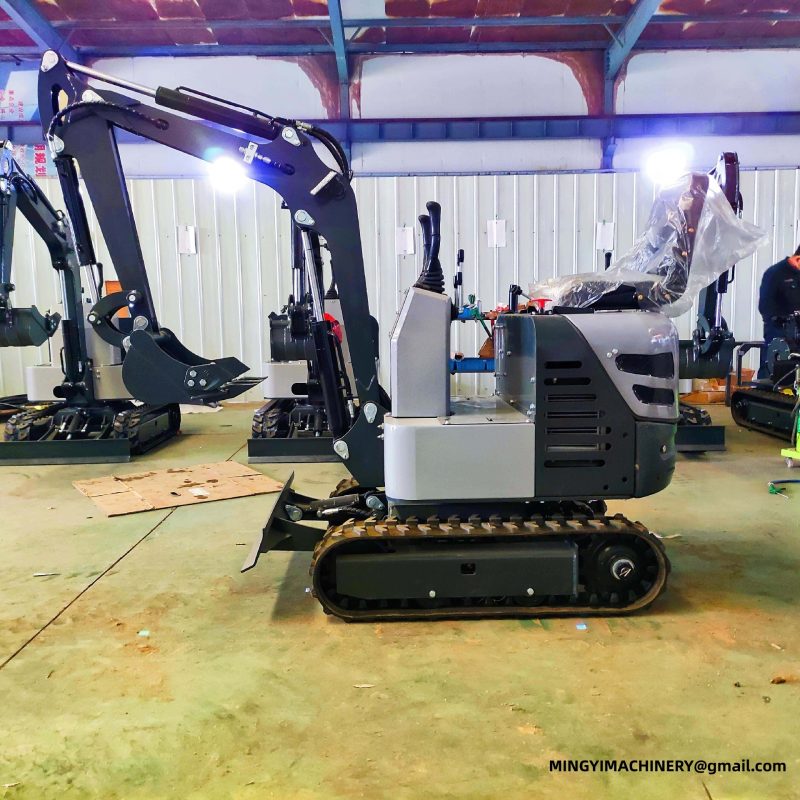
Reference specification — mini excavator range 09W 13W 30-2W 20-2L Operating weight 1100 kg (2425.08 lb) 1300 kg (2866.01 lb) 2700 kg (5952.48 lb) 1900 kg (4188.78 lb) Transport size (L×W×H) 1800 × 750 × 1970 mm 2200 × 930 × 2250 mm 3000 × 1100 × 2700 mm 2600 × 1300 × 2344 mm Max digging depth 1250 mm (49.21 in) 1630 mm (64.17 in) 2200 mm (86.61 in) 2100 mm (82.68 in) Max digging height 2800 mm (110.24 in) 2750 mm (108.27 in) 3000 mm (118.11 in) 2880 mm (113.39 in) Max dumping height 1700 mm (66.93 in) 1960 mm (77.17 in) 2000 mm (78.74 in) 2100 mm (82.68 in) Max digging radius 2570 mm (101.18 in) 2900 mm (114.17 in) 3800 mm (149.61 in) 3215 mm (126.57 in) Max digging distance 1869 mm (73.58 in) 2100 mm (82.68 in) 3050 mm (120.08 in) 2460 mm (96.85 in) Minimum turning radius 1000 mm (39.37 in) 1300 mm (51.18 in) 1750 mm (68.9 in) 1587 mm (62.48 in) Travel speed 3 km/h (1.86 mph) 3 km/h (1.86 mph) 7 km/h (4.35 mph) 5 km/h (3.11 mph) Gradeability 30° 30° 30° 30° Fuel consumption 1-1.3 L/h (0.264—0.343 gal) 1-1.3 L/h (0.264—0.343 gal) 2-3 L/h (0.528—0.793 gal) 2-3 L/h (0.528—0.793 gal) Fuel tank capacity 8 L (2.11 gal) 10 L (2.64 gal) 16 L (4.23 gal) 16 L (4.23 gal) Hydraulic oil tank 16 L (4.23 gal) 16 L (4.23 gal) 20 L (5.28 gal) 18 L (4.76 gal) Dozer blade lift height 180 mm (7.09 in) 180 mm (7.09 in) 230 mm (9.06 in) 180 mm (7.09 in) Dozer blade drop depth 210 mm (8.27 in) 210 mm (8.27 in) 280 mm (11.02 in) 210 mm (8.27 in)
LINE ( ID ): mingyicn
Mingyi Machinery mini excavators are trusted by contractors and dealers worldwide.
Handover and getting familiar with the unit on the job
A good handover covers the awkward cases, not just the easy ones. Starting a machine built for the work on a slope, turning in a confined space and recovering from soft ground are the situations an operator should meet first with someone beside them.
Commissioning the equipment in service on site
Transport shakes things loose. A short check of this class of machine after the crate is opened, covering the same points the pre-delivery inspection covered, is the most useful insurance available on delivery day.
E-mail:sales@mingycn.com
LINE(ID):mingyicn
Related pages
mini excavator rubber track replacement · hydraulic mini digger · mini excavator in daily site work · PRODUCTS









