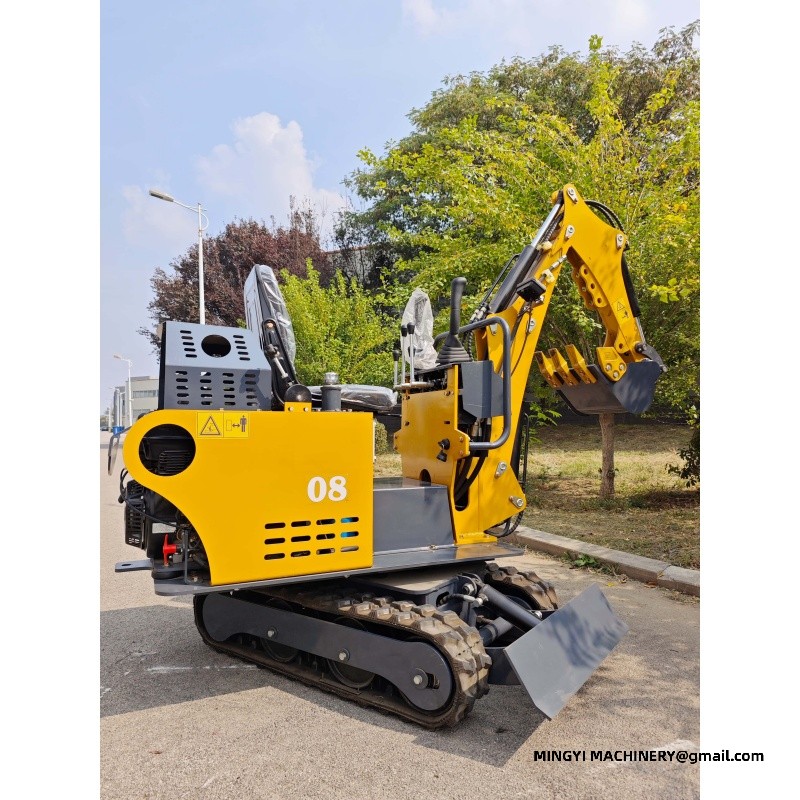
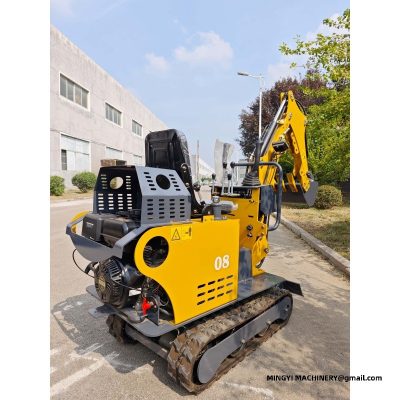
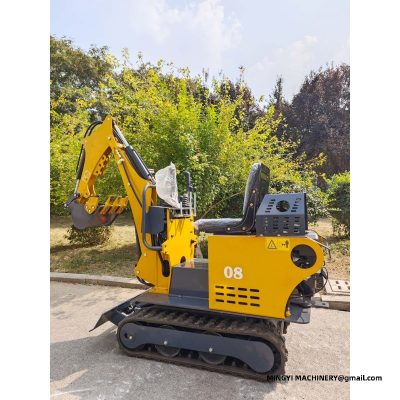
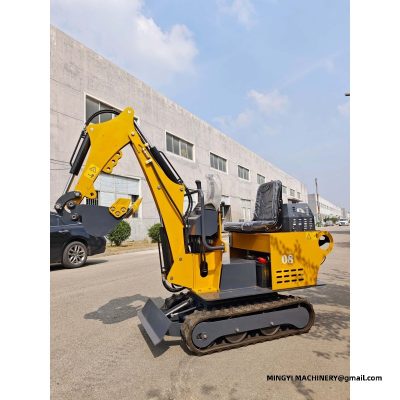
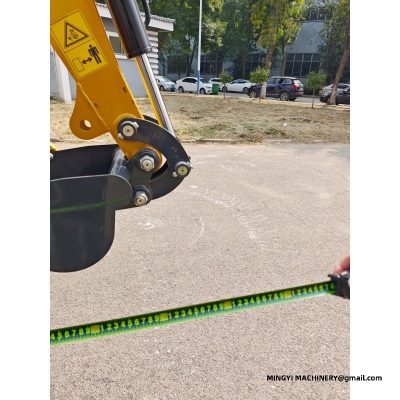
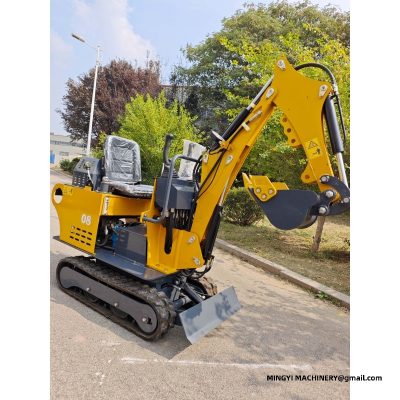
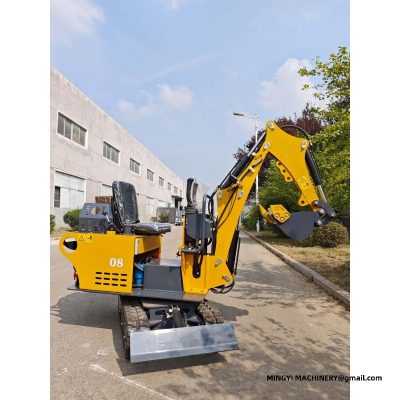
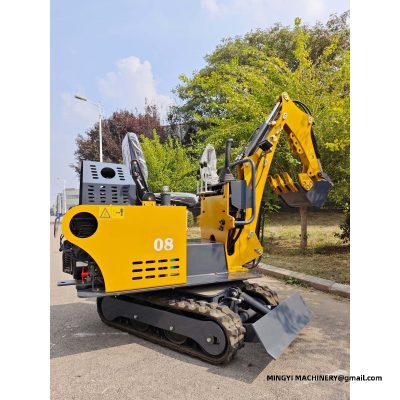
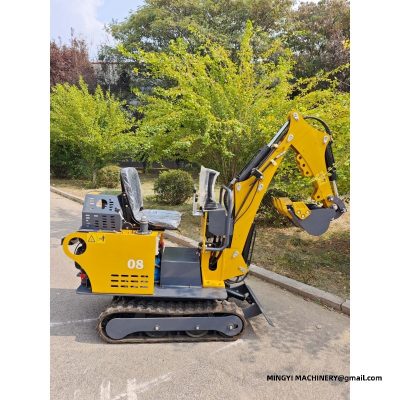
Refurbishment inside a building imposes limits that open sites do not: a fixed entry width, a finished floor to protect and a ceiling that rules out a raised boom. A compact mini excavator that passes through a service door and works under a low soffit solves a problem no larger machine can.
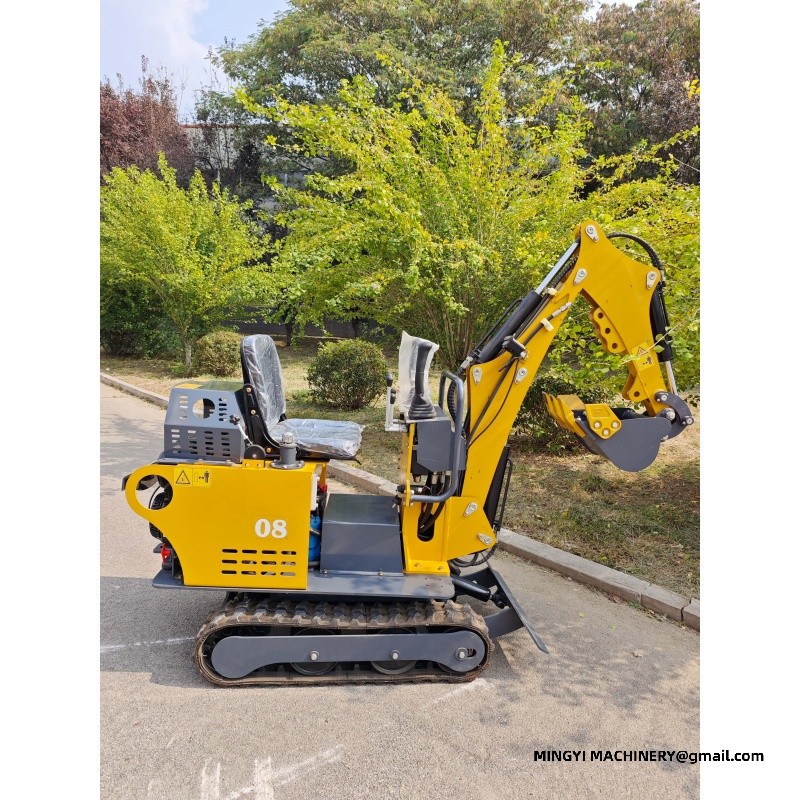
MINGYI builds machines in the smaller end of its range for exactly this work. A narrow undercarriage with rubber tracks lets the unit be driven through a doorway and across a floor without leaving marks, and a short tail swing keeps the rear clear of walls.
Strip-out work inside occupied buildings
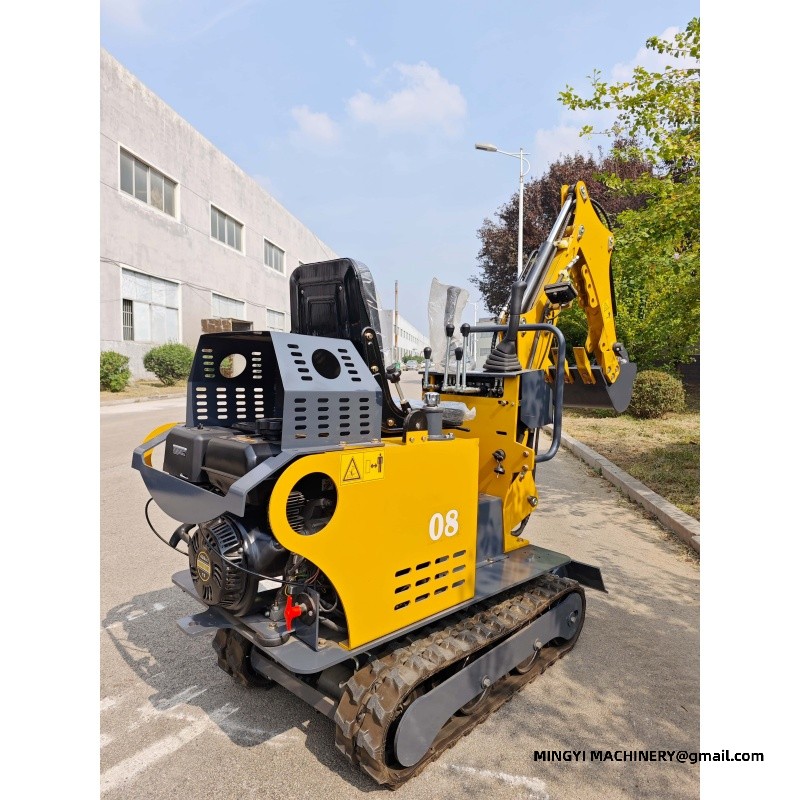
The first constraint is access, so the machine is chosen against the narrowest opening on the route rather than the size of the demolition. A detachable or extended boom helps where the entry is low and the work sits deeper inside.
The second constraint is the demolition itself. Interior strip-out means reducing slabs, partitions and screed to a size that can be carried out by hand or a small dumper, and a breaker hammer on a compact machine does that without undermining the structure.
Attachments for interior renovation and strip-out
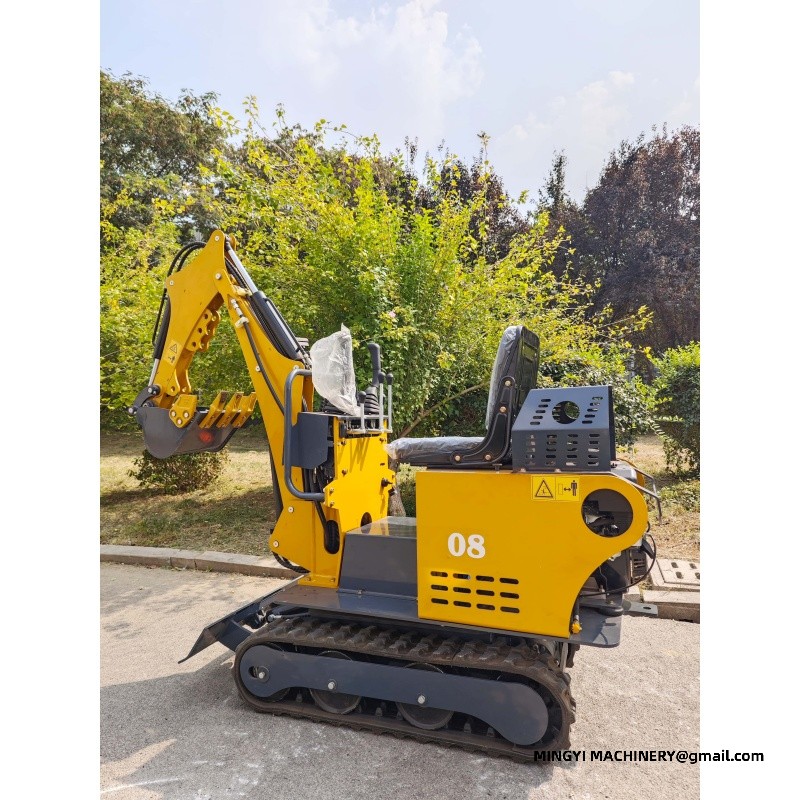
A breaker hammer and a crusher hammer are the usual first tools, with a skeleton bucket to separate rubble from fines before it leaves the floor. A quick coupler lets the operator change between breaking and clearing.
Where the work involves lifting rather than breaking, a thumb bucket or front fork handles lengths of timber, ducting and panels. A grab or grass rake clears the last loose material into a pile.
Indoor demolition is a question of access and control rather than power. A compact mini excavator that fits through the opening and carries a breaker and a clearing bucket strips an interior faster than hand methods.
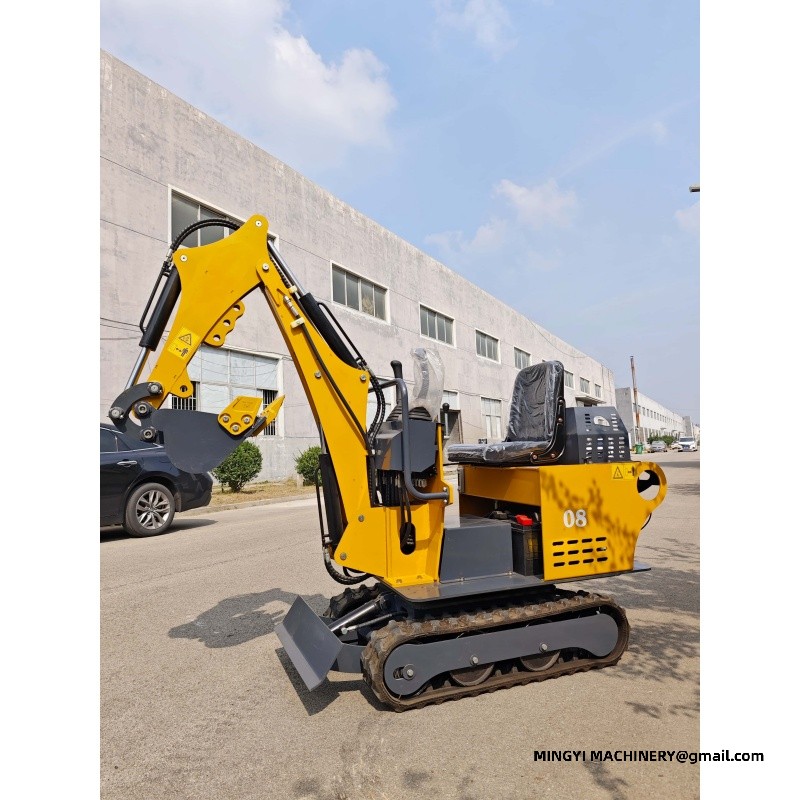
Interior and light demolition with mini excavator for interior strip-out Interior demolition is an access and a weight question. The excavator that fits through a doorway and works on a suspended floor does jobs that would otherwise be done by hand or by a larger machine that cannot enter. Dust, debris clearance and floor loading all argue for a compact machine indoors. This class of machine spreads its weight over a wider track footprint than a wheeled machine of similar capacity. Export packing and shipping of mini excavator for interior strip-out Machines leave the factory prepared for container or flat rack shipment. The unit in daily use is normally shipped with the attachment set and the spare parts list agreed in advance so the container is planned once. Export documentation, decals and paint are settled before packing. Asking for them with the a machine of this size order avoids a second handling session and keeps the machine on the booked vessel. Landscaping and ground care with mini excavator for interior strip-out Grass cutting heads, rakes and tillers extend the equipment on site into ground care. The same carrier that digs a border in spring can cut and clear the same area later in the season. On soft landscape work the surface is the constraint. The machine itself on rubber tracks crosses turf without stripping it, which is why the same jobs are not given to a wheeled machine. What owners should plan for beyond the mini excavator for interior strip-out Purchase decision is the visible part of the effort. Fuel, filters, tracks or tyres, the operator and the transport between sites are the items that decide what the model in question actually demands over a few seasons, and they are worth listing before the order. Downtime is the hidden line item. The machine in that duty waiting on a part earns nothing while it stands, so parts availability and service access belong in the plan as much as fuel does. Working on slopes and uneven ground with mini excavator for interior strip-out Ground that looks level often is not. The unit on the job crossing a filled trench, a soft edge or a hidden void behaves differently from one on undisturbed ground, and those are the places worth walking before driving. Planning the direction of travel helps. Working so that the A machine built for the work is stable under load and not required to turn on a slope is a decision made before the job starts, not a correction made during it. Parts, service and support for mini excavator for interior strip-out Support after delivery is a parts question. Wearing items for the equipment in service - filters, belts, track components, bucket teeth and pins - are the items a buyer should plan to hold before the first service interval. Remote support is handled by video. The excavator fault can often be diagnosed on a walk-around call with the panel open, which is faster than waiting for a visit and avoids shipping a part that is not needed. Municipal and public works with this class of machine Municipal crews work on streets, footpaths and parks where the public is present. The unit in daily use is specified because it occupies little space, works inside a small exclusion zone and can be moved on a standard trailer. Noise and surface protection matter on public work. A machine of this size on rubber tracks across paving, with a sealed cab for the operator, suits the conditions better than a larger tracked machine. Boom configuration for the equipment on site A swing boom lets the machine dig parallel to its tracks without repositioning, which is what makes trenching beside a wall or a fence practical. On the machine itself this is often the option that decides whether a job is possible at all. Extended and offset boom configurations change reach and working range. The model in question with a longer arm reaches further but lifts less at full extension, so the specification is set against the deepest and furthest point on the job list. Orchard, vineyard and farm use of the machine in that duty Ditching, fertilising and drainage on farmland suit the unit on the job because the work is spread over a large area in short bursts. The machine travels behind a pickup and works where it stops. Farms also use a machine built for the work for general maintenance - clearing a watercourse, repairing a track, loading a spreader. One carrier with a few attachments covers most of the jobs that would otherwise wait for a contractor. Working the equipment in service in confined spaces Clearance above matters as much as around. Door heights, pipework and overhead services set the limit for the excavator indoors, and measuring them first avoids a machine that arrives and cannot be used. Ventilation is the other indoor constraint. Running this class of machine inside a closed structure needs air movement, and that is a planning item rather than something to discover after the first hour. Road and paving work for the unit in daily use Patching and reinstatement favour a machine that can work in a lane closure. A machine of this size occupies less road than a full-size excavator, which reduces the traffic management needed and the length of the closure. Breaking out a failed slab and backfilling the same hole in one visit is normal work for the equipment on site. The breaker and the bucket come off the same coupler, so the road is reopened the same day. Specification data for the machine itself Buyers comparing the model in question usually start from four numbers - weight, digging depth, reach and transport width - because those are the ones that decide whether the machine can be delivered and whether it can do the job once it is there. Every value shown is as built for the machine in that duty; options such as cab, side swing or a telescopic undercarriage change the transport dimensions and are confirmed at order stage. Track tension is the item most often neglected. The unit on the job run with slack tracks wears the undercarriage and can throw a track on a turn; run too tight, the same components wear from the other direction. Greasing is the second item. The slew ring, the boom and arm pins and the bucket linkage on a machine built for the work take grease daily in dusty work, and the intervals shorten further when the machine is used in water or mud.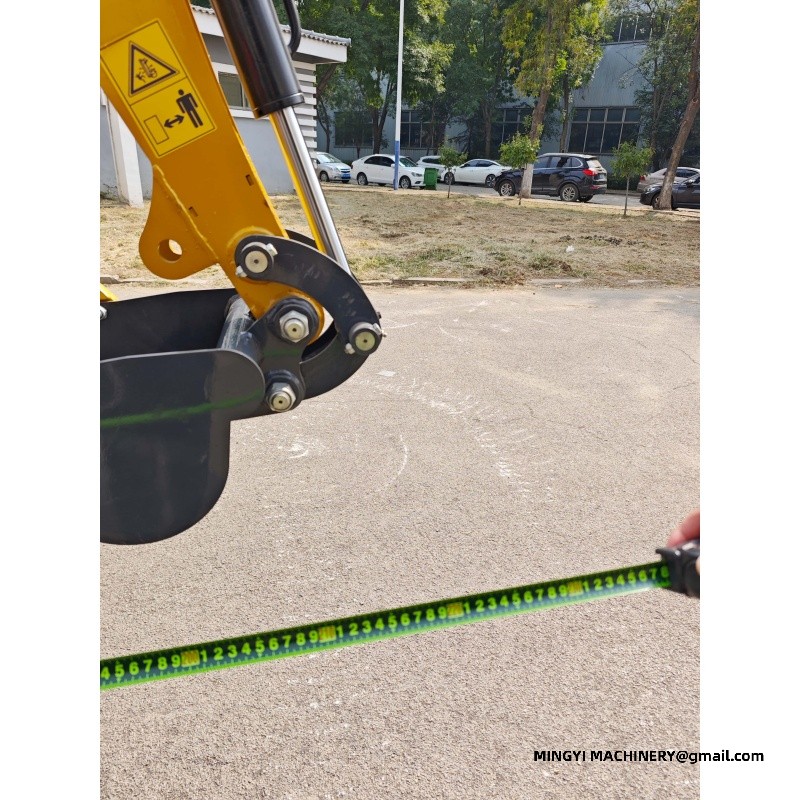
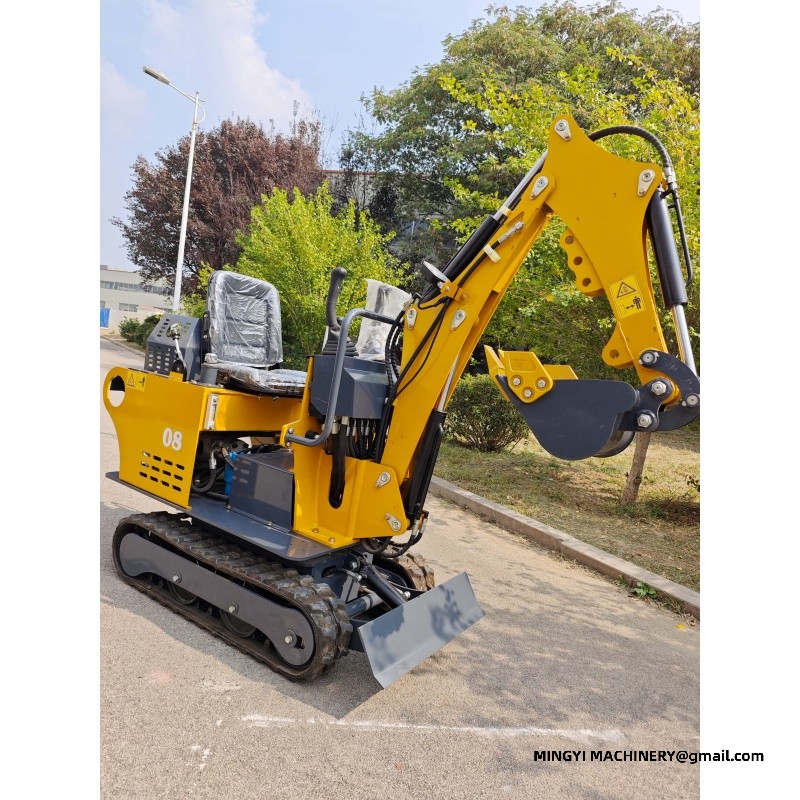
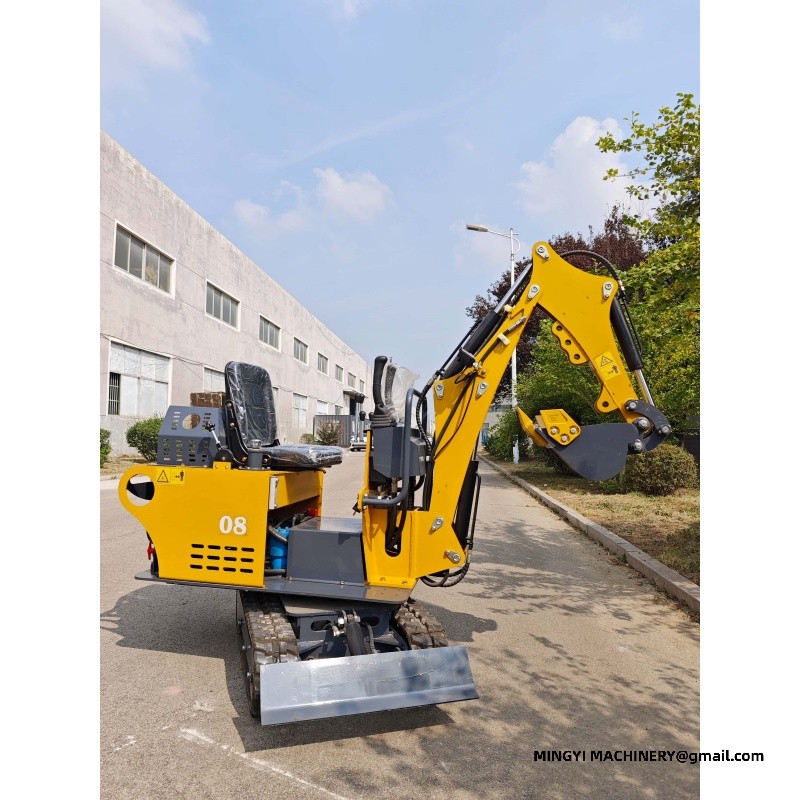
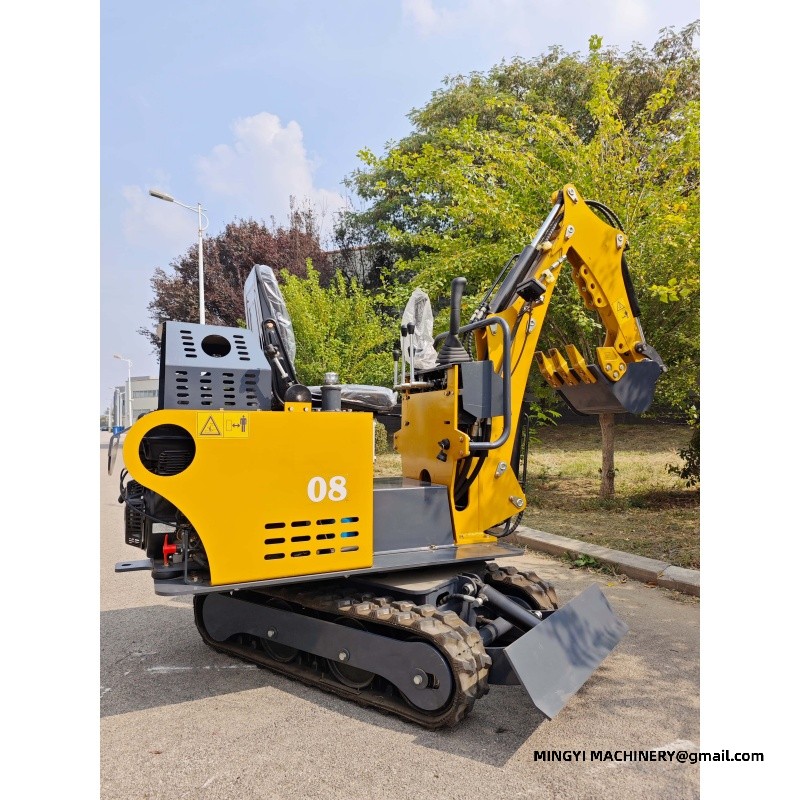
Reference specification — mini excavator range 09L 12L 15L 20-2L Operating weight 1100 kg (2425.08 lb) 1200 kg (2645.55 lb) 1400 kg (3086.47 lb) 1900 kg (4188.78 lb) Transport size (L×W×H) 2300 × 720 × 1870 mm 2200 × 930 × 2250 mm 2200 × 930 × 2250 mm 2600 × 1300 × 2344 mm Max digging depth 1400 mm (55.12 in) 1700 mm (66.93 in) 1700 mm (66.93 in) 2100 mm (82.68 in) Max digging height 2800 mm (110.24 in) 2600 mm (102.36 in) 2750 mm (108.27 in) 2880 mm (113.39 in) Max dumping height 1880 mm (74.02 in) 1800 mm (70.87 in) 1960 mm (77.17 in) 2100 mm (82.68 in) Max digging radius 2490 mm (98.03 in) 2900 mm (114.17 in) 2900 mm (114.17 in) 3215 mm (126.57 in) Max digging distance 2000 mm (78.74 in) 2300 mm (90.55 in) 2300 mm (90.55 in) 2460 mm (96.85 in) Minimum turning radius 1400 mm (55.12 in) 1450 mm (57.09 in) 1450 mm (57.09 in) 1587 mm (62.48 in) Travel speed 3 km/h (1.86 mph) 3 km/h (1.86 mph) 3 km/h (1.86 mph) 5 km/h (3.11 mph) Gradeability 30° 30° 30° 30° Fuel consumption 1-1.3 L/h (0.264—0.343 gal) 1-1.3 L/h (0.264—0.343 gal) 1-1.3 L/h (0.264—0.343 gal) 2-3 L/h (0.528—0.793 gal) Fuel tank capacity 8 L (2.11 gal) 10 L (2.64 gal) 10 L (2.64 gal) 16 L (4.23 gal) Hydraulic oil tank 16 L (4.23 gal) 16 L (4.23 gal) 16 L (4.23 gal) 18 L (4.76 gal) Dozer blade lift height 180 mm (7.09 in) 180 mm (7.09 in) 180 mm (7.09 in) 180 mm (7.09 in) Dozer blade drop depth 210 mm (8.27 in) 210 mm (8.27 in) 210 mm (8.27 in) 210 mm (8.27 in)
Q. Who chooses the equipment in service?
A. Compact demolition is layered work - break the structure in passes, clutch the spoil with a thumb, load out, repeat - and the small machine keeps doing it indoors and beside occupied buildings. Indoors, zero tail swing keeps the counterweight off the walls and a thumb turns the bucket into a sorting hand. For interior strip-out applications the practical route is to send the job list to the factory and let the build sheet answer it - which is exactly what this page invites.
Q. How does a small machine demolish safely?
A. By working in layers and sorting as it goes: break, clutch with the thumb, load out, repeat. Zero tail swing keeps the counterweight off the standing structure, and sequential strip-out protects the crew and the building that remains.
Q. Which models does MINGYI build?
A. The 08, 12 and 18 models cover the 0.8 to 6 tonne class with engine, track, cab and attachment options across the range - dealer programmes can mix models in one shipment, and each interior strip-out machine is confirmed on its own build sheet.
Cold weather and winter care for the excavator
A cold start is easier when the machine is prepared the night before. The routine that keeps this class of machine working through winter is mostly a matter of fuel, battery and patience in the first ten minutes of the day.
Storage and long idle periods for the unit in daily use
A stored machine should be brought back carefully. Before a machine of this size returns to work the fluids, the brakes and the controls are checked, because months of standing change more than a weekend does.
Planning the season around the equipment on site
Workload is rarely even across the year, and the machine should be specified for the busy weeks. The machine itself sized only for the average month will be the limiting factor exactly when the work is worth the most.
E-mail : sales@mingycn.com
LINE ( ID ): mingyicn
Related pages
mini excavator for indoor demolition · mini excavator for interior renovation · Agricultural Wheel Loader: Access, Attachments and Light Builds · Mini Excavators









