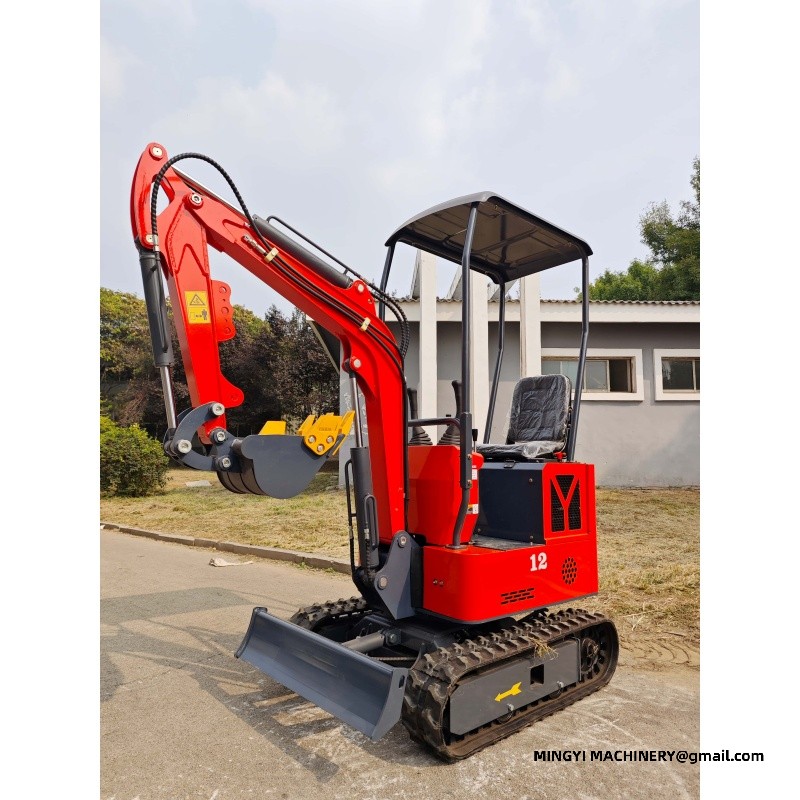
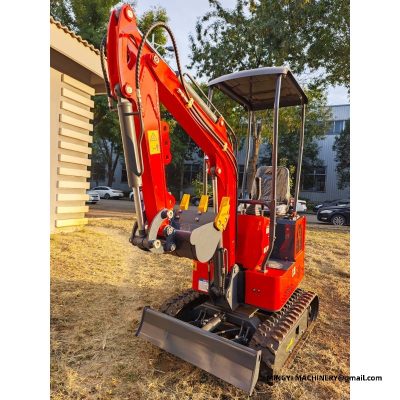
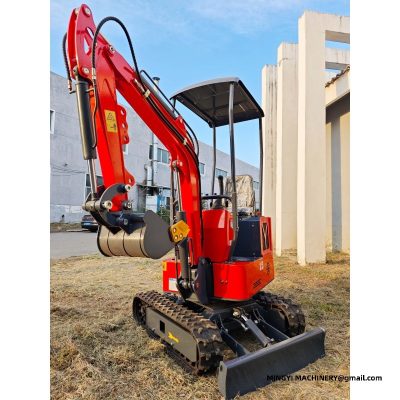
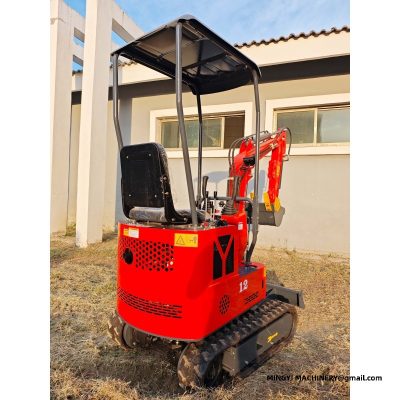
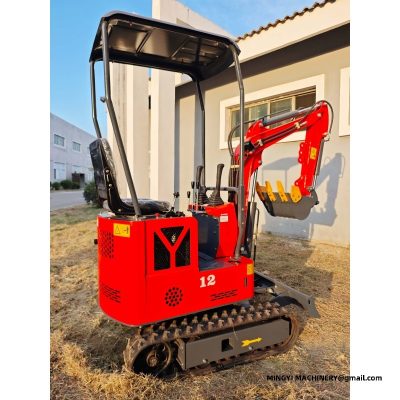
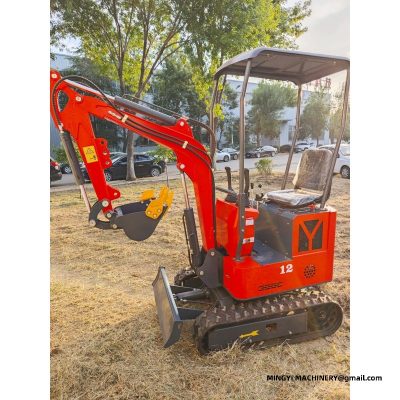
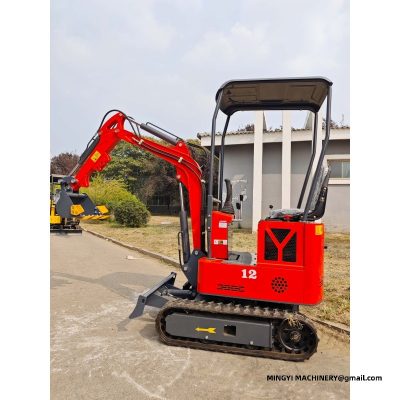
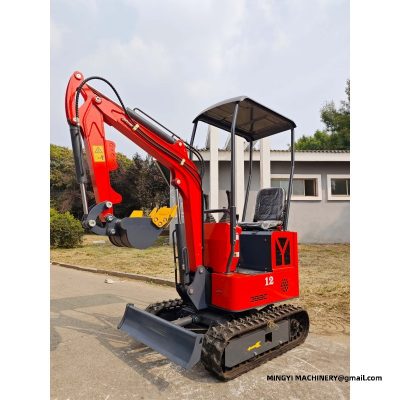
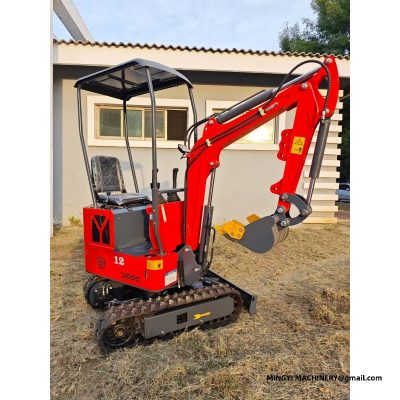
Footings, strip foundations and pad bases set the line for everything built above them. The digging has to be accurate at the bottom of the trench, and the machine must reach that depth without disturbing the ground on either side.
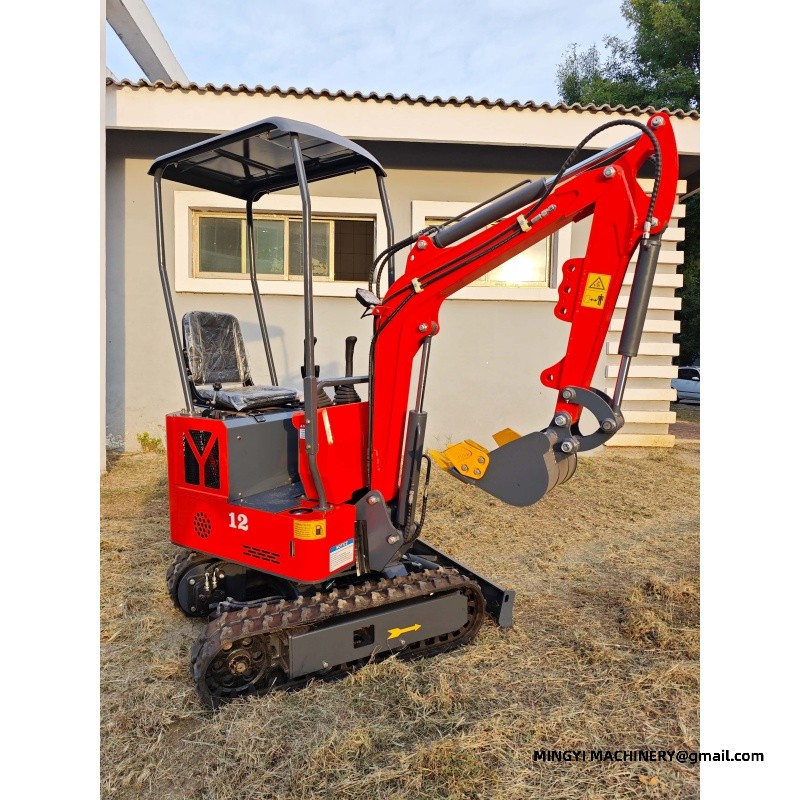
A mini crawler excavator in the 1 to 3.5 tonnes class is often the right tool for this stage of a house or extension. MINGYI builds these machines to order, so bucket width, track type and boom arrangement can be matched to the foundation drawing.
Digging strip footings to line and level
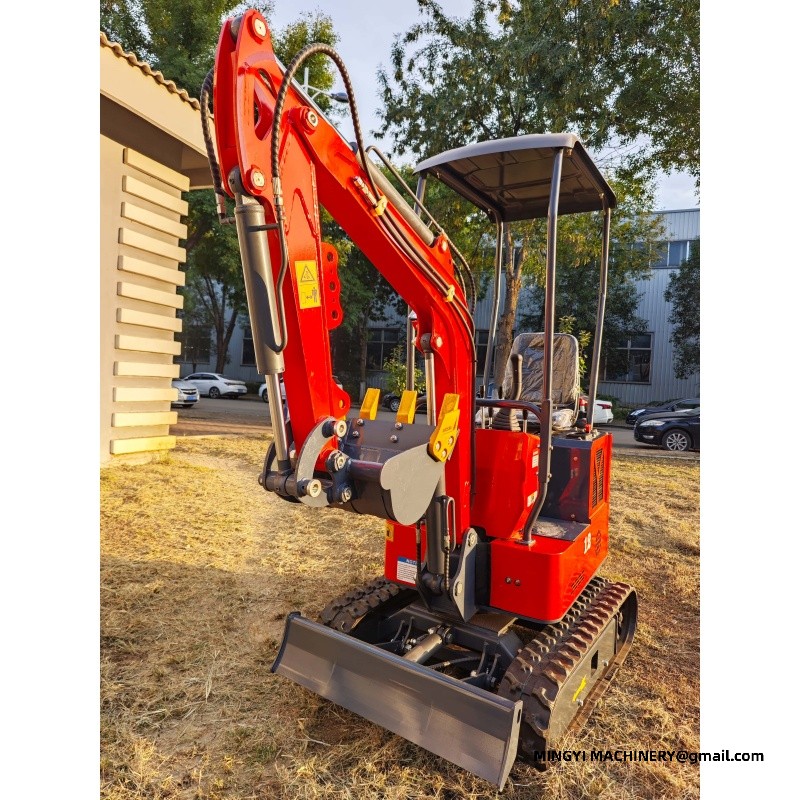
Foundation trenches are shallow but long, and the operator works to a string line for most of the day. A clean trench bottom matters more than speed, because loose spoil left in the base has to be lifted out before concrete is poured.
A bucket matched to the trench width keeps the sides straight and reduces trimming. In firm ground the cut can be taken in one pass; in softer ground a wider bucket with a flatter cutting edge gives steadier control of depth.
Working close to formwork, props and services
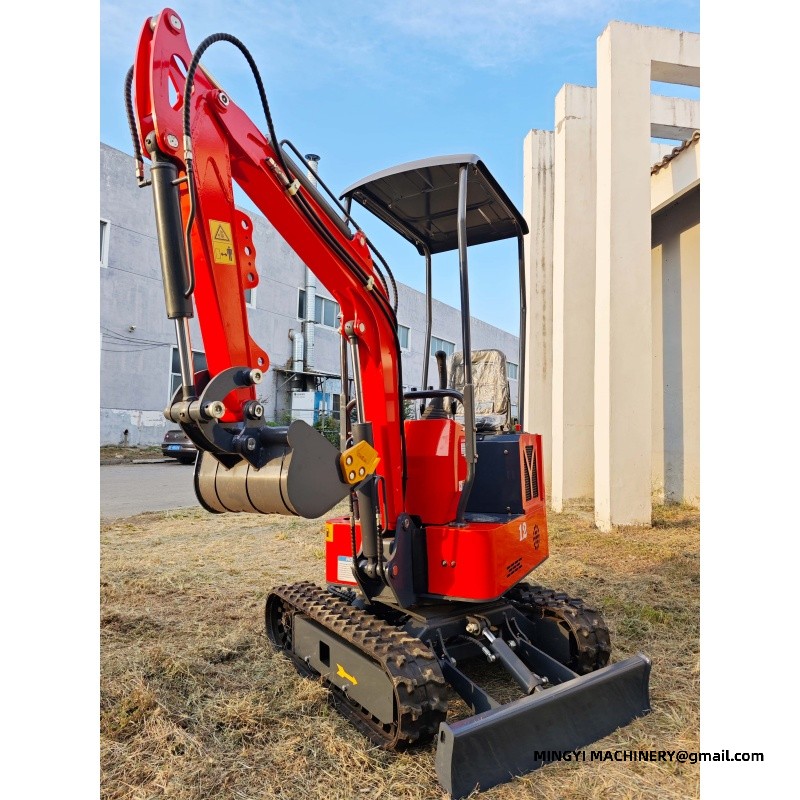
Foundation work usually happens around existing structures, so tail swing and boom offset decide how close the machine can stand. An offset boom lets the operator cut alongside a wall while keeping the tracks clear of the excavation edge.
Service runs often cross the same ground as the footings. A quick coupler allows a narrow trenching bucket to be exchanged for a wider one without the operator leaving the cab, and every attachment is recorded against the machine so the right pins arrive with it.
For foundation work the priority is repeatable accuracy rather than capacity. A compact excavator specified for the trench width and the access on site usually finishes the footings in fewer passes and leaves less hand trimming behind for the groundworks gang.
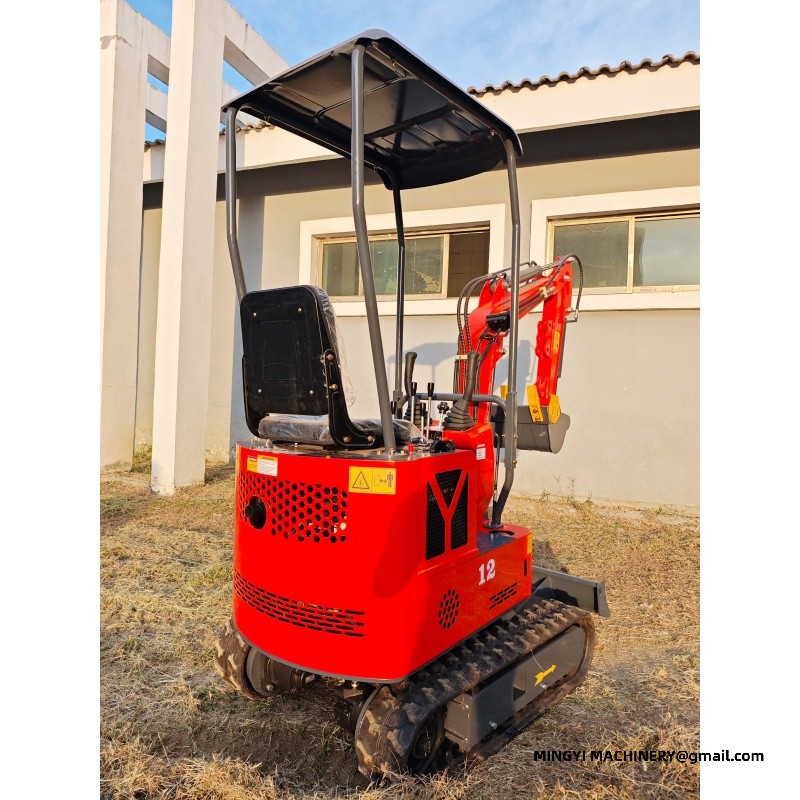
Trenching work with mini excavator for strip footings Trench quality depends on the bucket width and the operator, not on machine size. The excavator with a narrow bucket and a swing boom cuts a clean run along a boundary without disturbing the ground either side of it. Depth control matters more on service work than speed. This class of machine working beside live services is chosen because it can be placed precisely and stopped instantly, which is what the job actually requires. Road and paving work for mini excavator for strip footings Patching and reinstatement favour a machine that can work in a lane closure. The unit in daily use occupies less road than a full-size excavator, which reduces the traffic management needed and the length of the closure. Breaking out a failed slab and backfilling the same hole in one visit is normal work for a machine of this size. The breaker and the bucket come off the same coupler, so the road is reopened the same day. Municipal and public works with mini excavator for strip footings Municipal crews work on streets, footpaths and parks where the public is present. The equipment on site is specified because it occupies little space, works inside a small exclusion zone and can be moved on a standard trailer. Drainage repair, tree planting, footway reconstruction and cemetery work are all within the range of the machine itself. The jobs are small individually and continuous across the year. Specifying mini excavator for strip footings against a job list Buyers who skip this step either over-buy or under-buy. The model in question specified only from machine size tends to arrive without the coupler, the circuits or the track type the work actually needs. Useful information to send with an enquiry includes working width, required digging depth, ground conditions and the attachment set. Those four items let the factory specify the machine in that duty that fits rather than a generic build. Landscaping and ground care with mini excavator for strip footings Landscape contractors use the unit on the job for planting holes, pond excavation, grading and retaining work. The machine is light enough to cross finished lawn and narrow enough to work between established trees. On soft landscape work the surface is the constraint. A machine built for the work on rubber tracks crosses turf without stripping it, which is why the same jobs are not given to a wheeled machine. Running mini excavator for strip footings in a rental fleet The specification that rents best is usually the simplest one to explain at the counter. The equipment in service with rubber tracks, a canopy and a coupler covers the majority of weekend and short-term hires. Fleet buyers also weigh transport. The excavator that a customer can tow on a normal licence and a standard trailer is a hire that does not need a delivery truck, which changes how often it goes out. Orchard, vineyard and farm use of this class of machine Ditching, fertilising and drainage on farmland suit the unit in daily use because the work is spread over a large area in short bursts. The machine travels behind a pickup and works where it stops. Farms also use a machine of this size for general maintenance - clearing a watercourse, repairing a track, loading a spreader. One carrier with a few attachments covers most of the jobs that would otherwise wait for a contractor. Acceptance checks when the equipment on site arrives Delivery day is the best time to find a problem. Checking the specification against the order, the fluid levels, the fasteners and any transport damage while the model in question is still on the trailer is faster than claiming later. A function check before the machine goes to work is worth the hour. Running through the controls, the travel and the attachment circuit on the machine itself confirms it is set up as specified and ready for the site. Daily checks and maintenance on the machine in that duty Daily maintenance on the unit on the job is a short list: engine oil level, coolant, track tension, hydraulic oil level and a look at the hoses. Ten minutes at the start of the shift prevents most of the failures that stop a machine. Track tension is the item most often neglected. A machine built for the work run with slack tracks wears the undercarriage and can throw a track on a turn; run too tight, the same components wear from the other direction. Quick coupler practice on the equipment in service Couplers are specified early because they affect the arm and the hydraulic kit. Adding one to the excavator after delivery means new pins, new hoses and a fitment session; adding it at build time is a line on the sheet. For a fleet that shares attachments between machines, a common coupler standard matters more than the coupler brand. This class of machine that picks up the same tools as the larger machines keeps the rack usable across the yard. Operator technique for the unit in daily use Output on a compact machine comes from placement rather than power. An experienced operator keeps a machine of this size working inside the swing arc, positions once and digs a full run instead of repositioning for every bucket. The second habit is tool discipline. Running the equipment on site with the right bucket width for the trench means less spoil, less reinstatement and a cleaner job than a wide bucket and a lot of trimming. Track choice for the machine itself Undercarriage selection is a ground question, not a preference question. The model in question running on finished paving needs rubber; the same machine on demolition rubble or rock wears rubber quickly, so steel with rubber blocks becomes the better answer over a full season. Specification data for the machine in that duty Buyers comparing the unit on the job usually start from four numbers - weight, digging depth, reach and transport width - because those are the ones that decide whether the machine can be delivered and whether it can do the job once it is there. Figures are factory figures and are confirmed on the build sheet for a machine built for the work. Where a job sits between two models, the larger machine usually takes less time than the smaller one spends on rework. Rubber tracks suit paved and landscaped ground because they spread the machine weight and leave the surface intact. Steel tracks with rubber blocks are specified where the ground is rougher or the working day is longer, and the choice can be made per machine rather than accepted as a factory default. Track type changes what the machine can cross and what it leaves behind. Buyers specify rubber for lawns, driveways and municipal work, and steel with rubber blocks for sites where sharp material would cut a rubber belt in a week.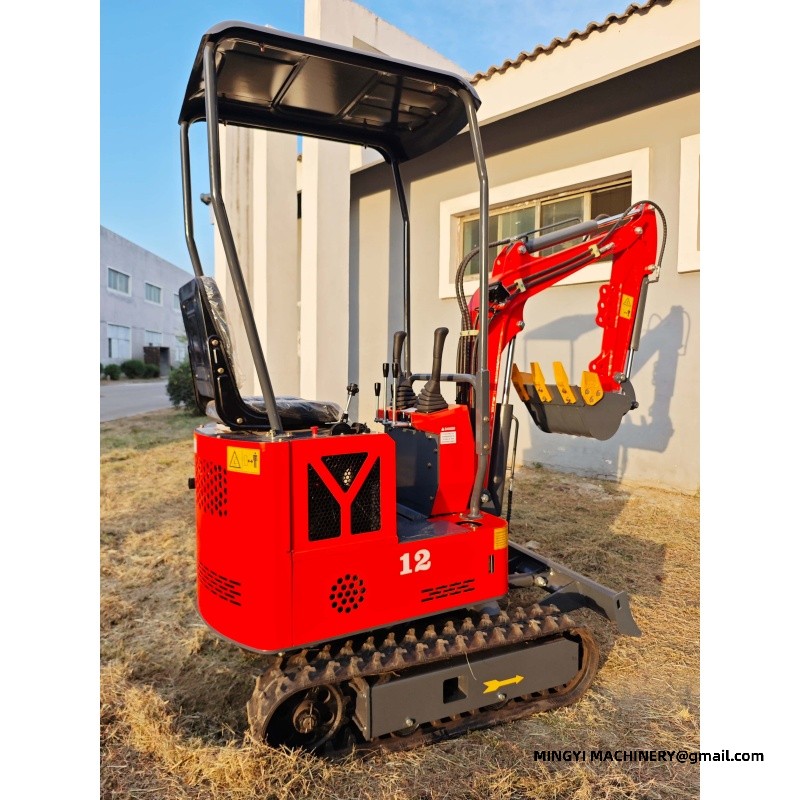
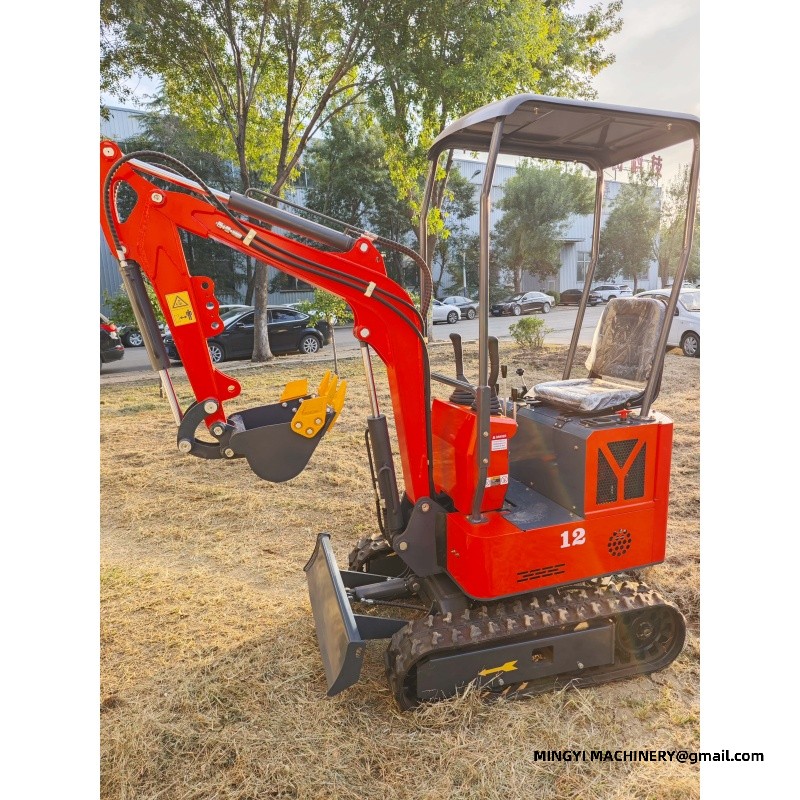
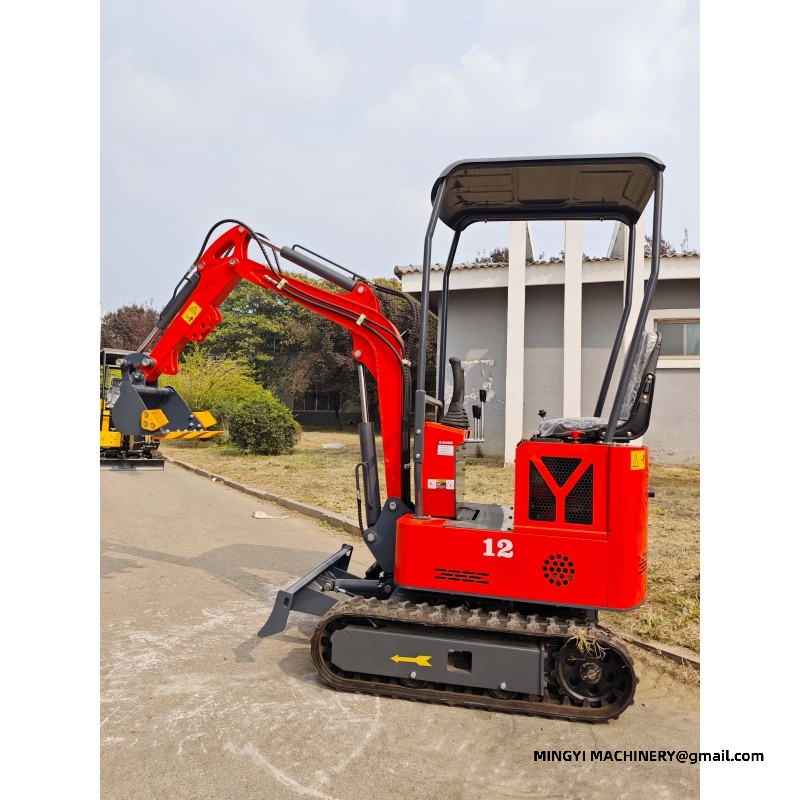
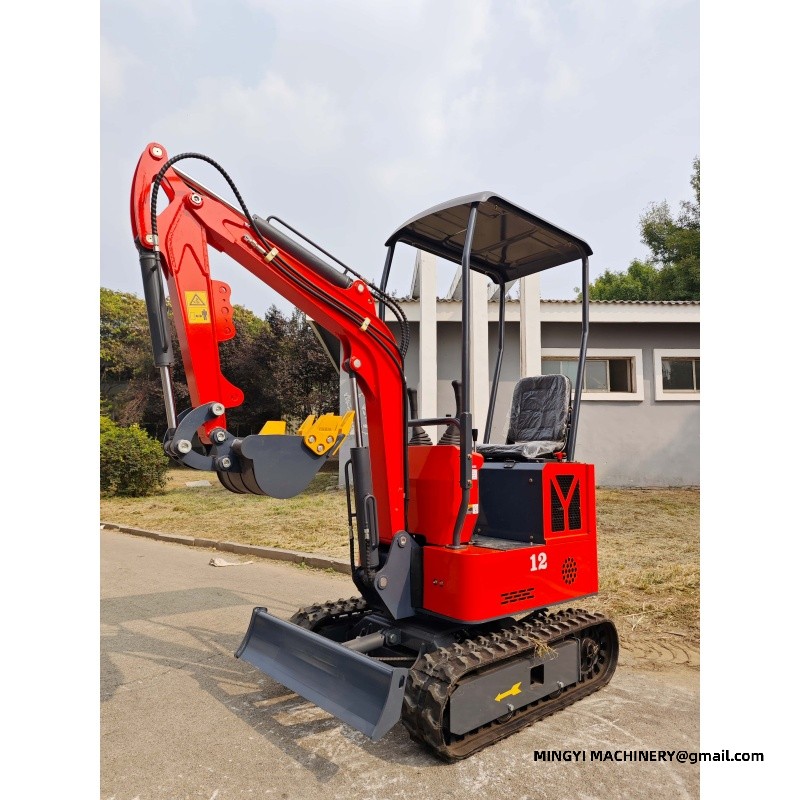
Reference specification — mini excavator range 20-1WL 12L 15L 30-2L Operating weight 1900 kg (4188.78 lb) 1200 kg (2645.55 lb) 1400 kg (3086.47 lb) 2400 kg (5291 lb) Transport size (L×W×H) 2550 × 1100 × 2200 mm 2200 × 930 × 2250 mm 2200 × 930 × 2250 mm 2800 × 1500 × 2500 mm Max digging depth 1800 mm (70.87 in) 1700 mm (66.93 in) 1700 mm (66.93 in) 2200 mm (86.61 in) Max digging height 2820 mm (111.02 in) 2600 mm (102.36 in) 2750 mm (108.27 in) 2900 mm (114.17 in) Max dumping height 2050 mm (80.71 in) 1800 mm (70.87 in) 1960 mm (77.17 in) 2100 mm (82.68 in) Max digging radius 3050 mm (120.08 in) 2900 mm (114.17 in) 2900 mm (114.17 in) 3330 mm (131.1 in) Max digging distance 2300 mm (90.55 in) 2300 mm (90.55 in) 2300 mm (90.55 in) 2700 mm (106.3 in) Minimum turning radius 1450 mm (57.09 in) 1450 mm (57.09 in) 1450 mm (57.09 in) 1555 mm (61.22 in) Travel speed 5 km/h (3.11 mph) 3 km/h (1.86 mph) 3 km/h (1.86 mph) 7 km/h (4.35 mph) Gradeability 30° 30° 30° 30° Fuel consumption 2-3 L/h (0.528—0.793 gal) 1-1.3 L/h (0.264—0.343 gal) 1-1.3 L/h (0.264—0.343 gal) 2-3 L/h (0.528—0.793 gal) Fuel tank capacity 16 L (4.23 gal) 10 L (2.64 gal) 10 L (2.64 gal) 16 L (4.23 gal) Hydraulic oil tank 18 L (4.76 gal) 16 L (4.23 gal) 16 L (4.23 gal) 18 L (4.76 gal) Dozer blade lift height 180 mm (7.09 in) 180 mm (7.09 in) 180 mm (7.09 in) 230 mm (9.06 in) Dozer blade drop depth 210 mm (8.27 in) 210 mm (8.27 in) 210 mm (8.27 in) 280 mm (11.02 in)
Q. Who uses the equipment in service?
A. In strip-out and demolition the compact digger does the work that used to need crews with hand tools, at a rate hand work cannot touch. Steel tracks earn their place once the floor is rubble, and dust discipline protects the crew and the structure that stays. MINGYI builds the 08, 12 and 18 models covering the 0.8 to 6 tonne class, and the excavator is where that range meets strip footings.
Q. How does a small machine demolish safely?
A. By working in layers and sorting as it goes: break, clutch with the thumb, load out, repeat. Zero tail swing keeps the counterweight off the standing structure, and sequential strip-out protects the crew and the building that remains.
Q. Which models does MINGYI build?
A. The 08, 12 and 18 models cover the 0.8 to 6 tonne class with engine, track, cab and attachment options across the range - dealer programmes can mix models in one shipment, and each strip footings machine is confirmed on its own build sheet.
Planning the season around this class of machine
Downtime is simplest when it is planned. Booking the service for the unit in daily use in the quiet part of the season takes nothing from the schedule, while the same work in the busy weeks gives up a day of output every time.
Hot, humid and dusty conditions around a machine of this size
Dust is the enemy of every rotating joint. Keeping the radiator and the air intake of the equipment on site clean, and cleaning them before they are blocked rather than after, is what separates a machine that lasts from one that overheats.
Reading the early symptoms on the machine itself
The symptom is usually not at the fault. A hydraulic function that has become sluggish on the model in question may point to a filter, a relief setting or a pump, and starting with the simple checks avoids the wrong guess.
E-mail : sales@mingycn.com
LINE ( ID ): mingyicn
Related pages
mini excavator for shaping ground · mini excavator for municipal work · Construction Wheel Loader: Dump Height Comes Before Capacity · Mini Excavators









