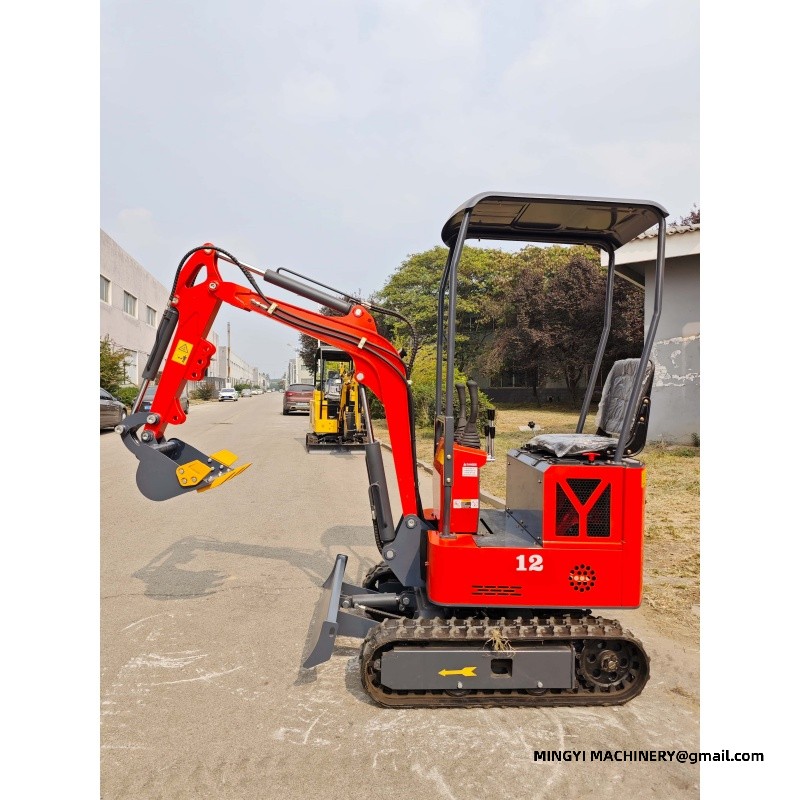
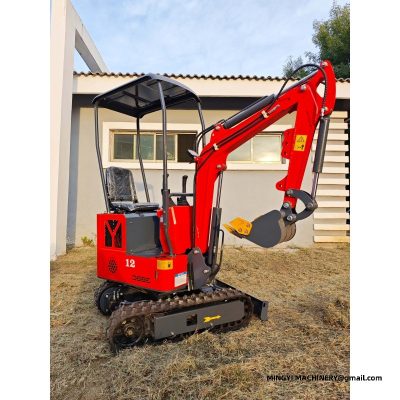
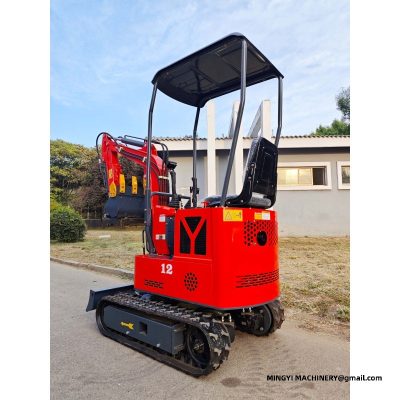
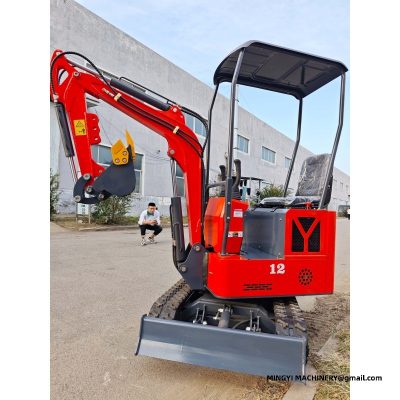
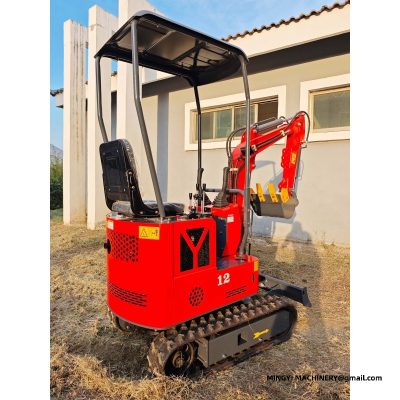
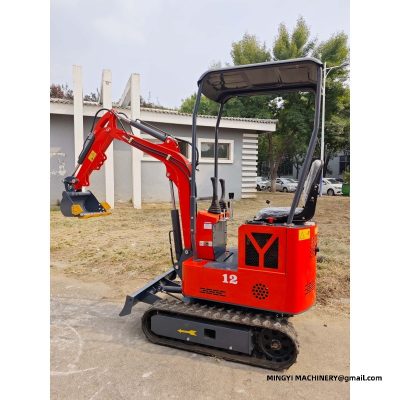
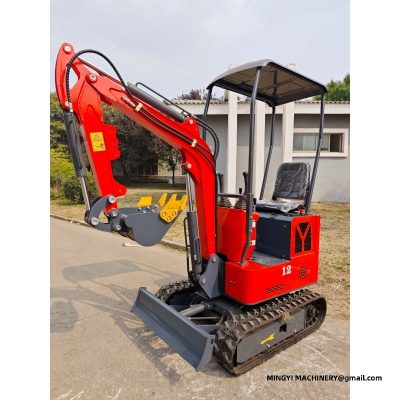
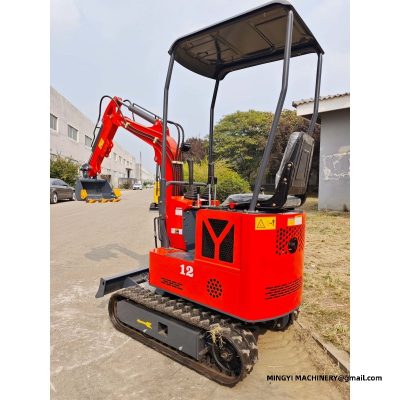
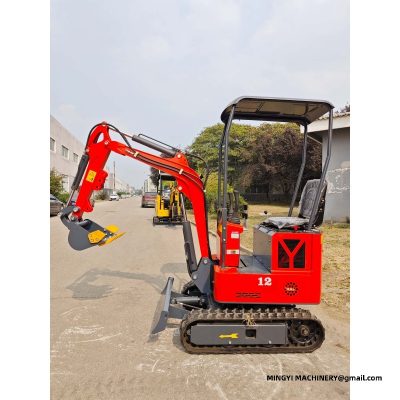
Landscaping work is rarely about moving large volumes of soil. It is about shaping ground around features that must stay untouched. A mini excavator suits that because it sits close to the cut and works in short, controlled passes.
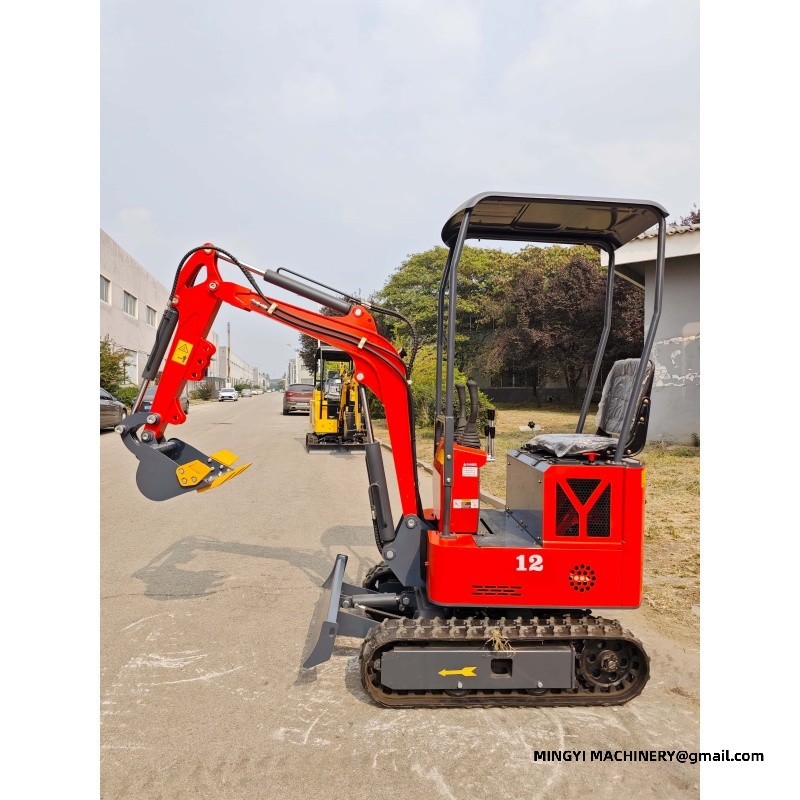
MINGYI builds compact crawler machines for this kind of site. Each unit is built to order, so undercarriage, bucket and attachment package are settled before production. One landscaper can then cover planting, drainage and light demolition in the same week.
Landscaping jobs a compact excavator is asked to cover
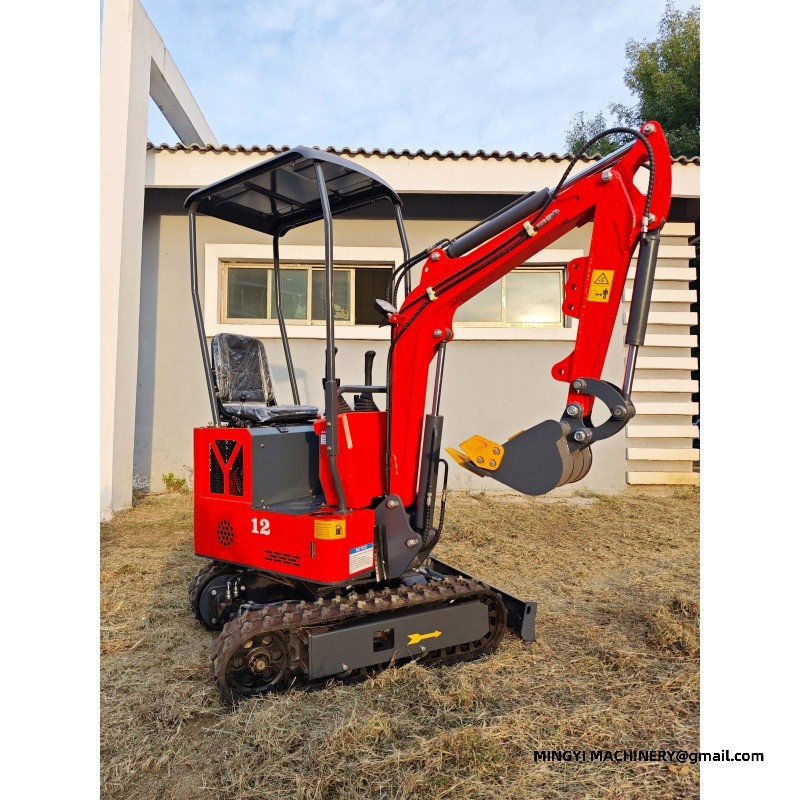
A landscaping job runs in small stages. Planting beds, drainage runs, low retaining features and hard standing each need digging at a different depth, often inside a garden that is already finished. The machine must cut, then move on without disturbing the surroundings.
Low ground pressure is often the deciding point. Rubber tracks are the usual choice on lawns and borders, while steel tracks with rubber blocks are specified where more traction is wanted on firm, uneven ground.
Undercarriage and bucket choices for garden excavation
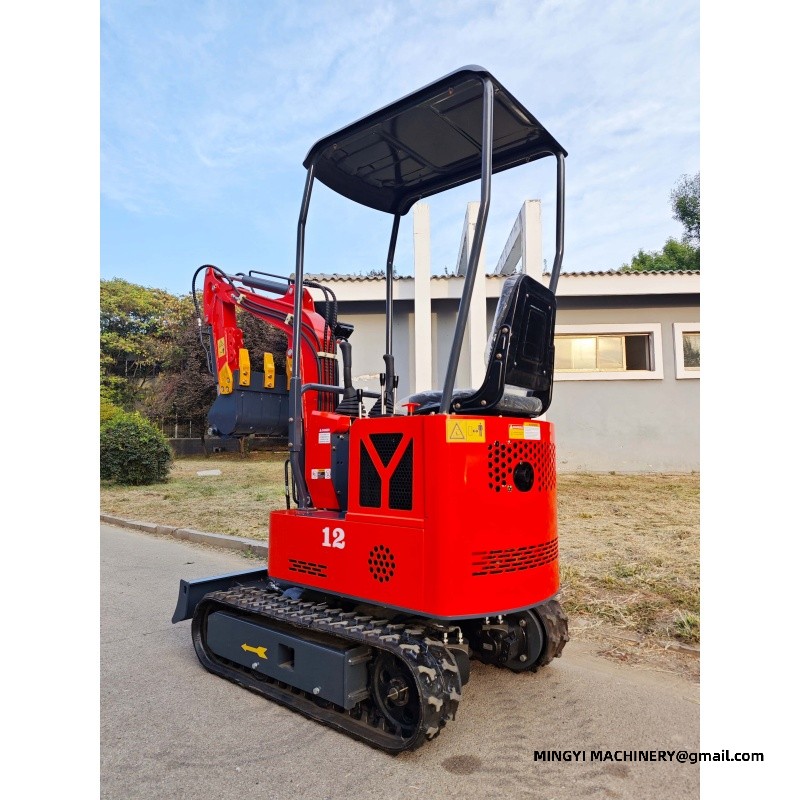
Bucket width drives the finish. A narrow digging bucket opens planting trenches cleanly, and a wider grading bucket levels topsoil once digging is complete. Many landscapers keep both so one machine carries the shaping pass as well.
On tight boundaries a swing boom lets the operator cut along a fence line without repositioning. Confirm track type, bucket widths and coupler style when ordering, plus any hydraulic lines needed for attachments added later.
A mini excavator earns its place in landscaping when it moves between cramped, detailed jobs without marking finished work. MINGYI supplies these machines built to order, with attachments matched to the buyer's list.
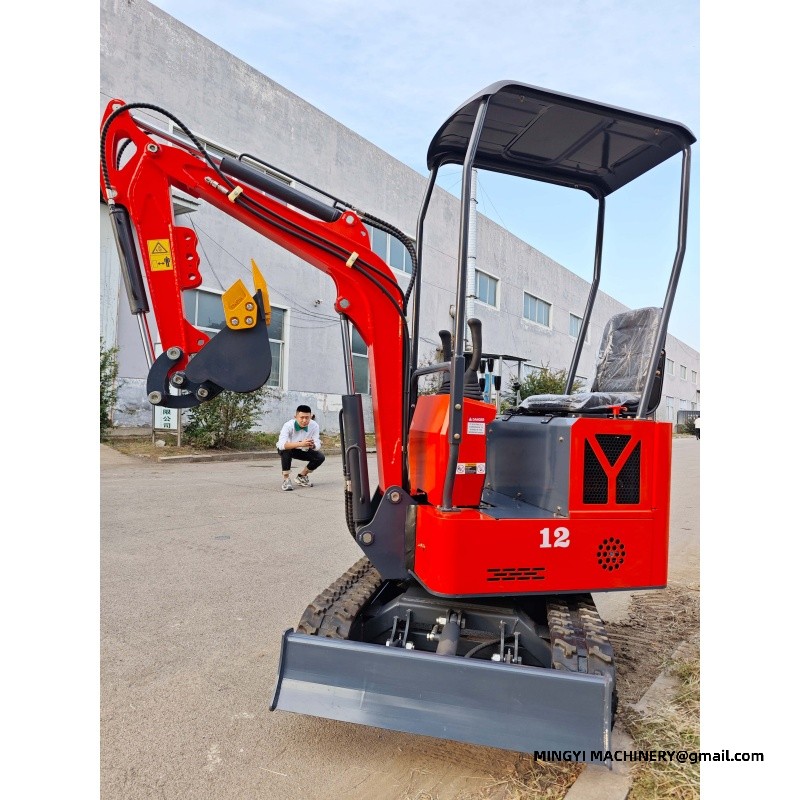
Export packing and shipping of mini excavator for shaping ground Machines leave the factory prepared for container or flat rack shipment. The excavator is normally shipped with the attachment set and the spare parts list agreed in advance so the container is planned once. Export documentation, decals and paint are settled before packing. Asking for them with the this class of machine order avoids a second handling session and keeps the machine on the booked vessel. Parts, service and support for mini excavator for shaping ground Engine parts availability usually drives the engine choice. The unit in daily use built with an engine the local network already carries is serviced from stock rather than from an international order. Remote support is handled by video. A machine of this size fault can often be diagnosed on a walk-around call with the panel open, which is faster than waiting for a visit and avoids shipping a part that is not needed. Attachments that turn mini excavator for shaping ground into several machines Attachment lists are best written before delivery. Specifying the equipment on site with the tools the job list needs avoids the work and delay of adding hydraulics later, and a quick coupler makes the swap a few minutes instead of a workshop job. Most of the daily variety on the machine itself comes from the attachment rack rather than from the machine itself. Bucket, breaker, auger, ripper, rake and grab cover the large majority of the work a contractor will see. Canopy or enclosed cab on a mini excavator for shaping ground The cab decision follows the climate and the hours. Operators working a full shift in the model in question benefit from a sealed cab with wipers and heating; operators stepping on and off every few minutes usually prefer the canopy for the visibility and the quick exit. Enclosure also changes noise and dust exposure. A sealed cab on the machine in that duty keeps dust out on dry sites and lets the machine work through weather that would otherwise stop a canopy machine for the day. Hiring versus owning a mini excavator for shaping ground Availability is part of the decision. Owning the unit on the job means it is there on the day the ground is ready; hiring means competing for the same machine at the same time as everyone else in the season. Ownership brings obligations that hiring does not. Storage, servicing, insurance and an operator are the items to set against the hire rate before deciding which way a machine built for the work should be supplied. Lifting and material handling with a mini excavator for shaping ground Stability changes with reach. A load the equipment in service handles close in becomes a different proposition at full extension, so the working radius belongs in the plan before the lift rather than during it. Ground condition under the machine is part of every lift. Soft or uneven support is the common factor in handling incidents, and checking it takes less time than recovering the excavator that has settled. Working this class of machine through the seasons Weather decides which days are productive. Rain turns some ground unusable and cold changes how the unit in daily use starts and warms up, so planning the wet months around maintenance is more useful than planning around output. Seasonal planning smooths the workload. Machines that are busy for a few months and idle for the rest benefit from a service slot in the quiet period, and a machine of this size prepared in the off-season starts the busy months reliably. Road and paving work for the equipment on site Road repair generates short, interrupted jobs - a patch, a drainage connection, a kerb line. The machine itself is economical here because it travels on a small trailer and starts working minutes after arriving. Breaking out a failed slab and backfilling the same hole in one visit is normal work for the model in question. The breaker and the bucket come off the same coupler, so the road is reopened the same day. Trenching work with the machine in that duty Service trenches are the most common reason the unit on the job is hired. Water, sewage, cable and gas runs are narrow, shallow and often close to existing services, which is exactly the work a full-size machine cannot do safely. Trench quality depends on the bucket width and the operator, not on machine size. A machine built for the work with a narrow bucket and a swing boom cuts a clean run along a boundary without disturbing the ground either side of it. What owners should plan for beyond the equipment in service Purchase decision is the visible part of the effort. Fuel, filters, tracks or tyres, the operator and the transport between sites are the items that decide what the excavator actually demands over a few seasons, and they are worth listing before the order. Downtime is the hidden line item. This class of machine waiting on a part earns nothing while it stands, so parts availability and service access belong in the plan as much as fuel does. Orchard, vineyard and farm use of the unit in daily use Orchard and vineyard work is carried out between rows. A machine of this size with a narrow chassis and a swing boom works down the row without damaging the trees, which is the reason a full-size machine is not used at all. Ditching, fertilising and drainage on farmland suit the equipment on site because the work is spread over a large area in short bursts. The machine travels behind a pickup and works where it stops. Getting the machine itself through a narrow gap Contractors who buy the model in question normally have one job in mind that nothing else reaches. The purchase order follows the access measurement, not the other way round, and the build sheet is then settled around it. Specification data for the machine in that duty Where the unit on the job is being specified for a job list, the table below gives the factory figures that matter most: what the machine weighs, how deep and how far it works, and what it measures on a trailer. Figures are factory figures and are confirmed on the build sheet for a machine built for the work. Where a job sits between two models, the larger machine usually takes less time than the smaller one spends on rework. The first question on most job lists is whether the machine can reach the work at all. The equipment in service is chosen against the narrowest point on the route - a garden gate, a doorway, a gap between two walls - because a machine that arrives and then cannot pass loses a day, not an hour. Access decides the machine before output does. With the excavator the limiting dimension is usually the widest point on the way in, so measuring the gate, the corridor and the turning space first saves a wasted delivery and a second visit.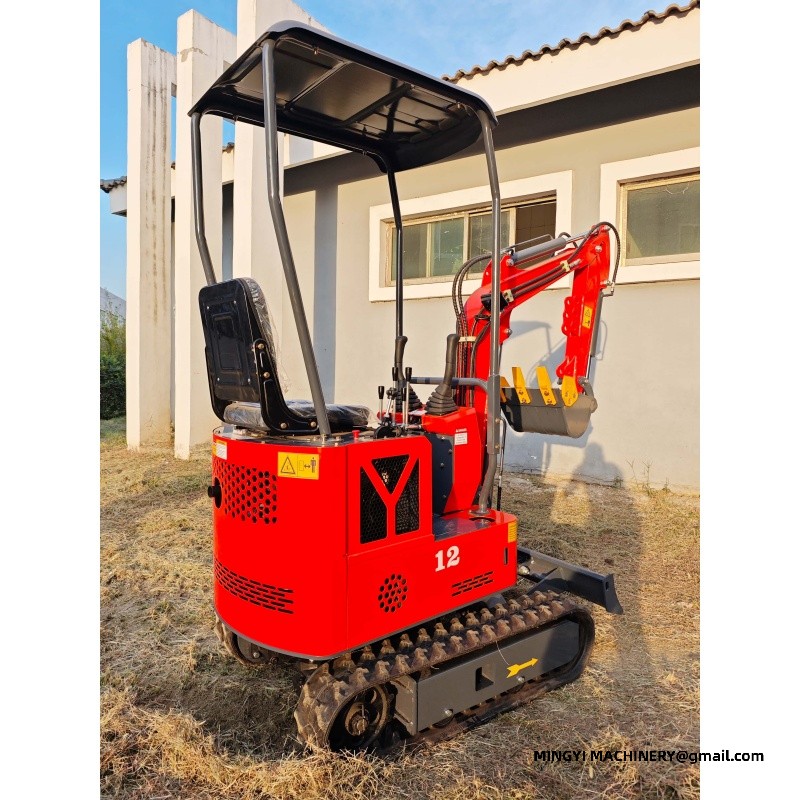
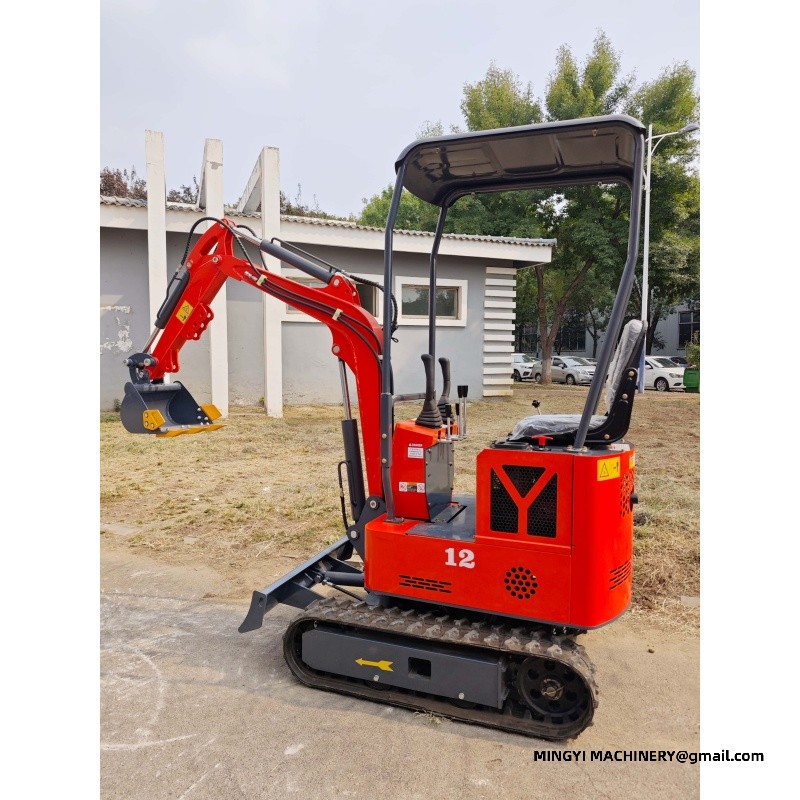
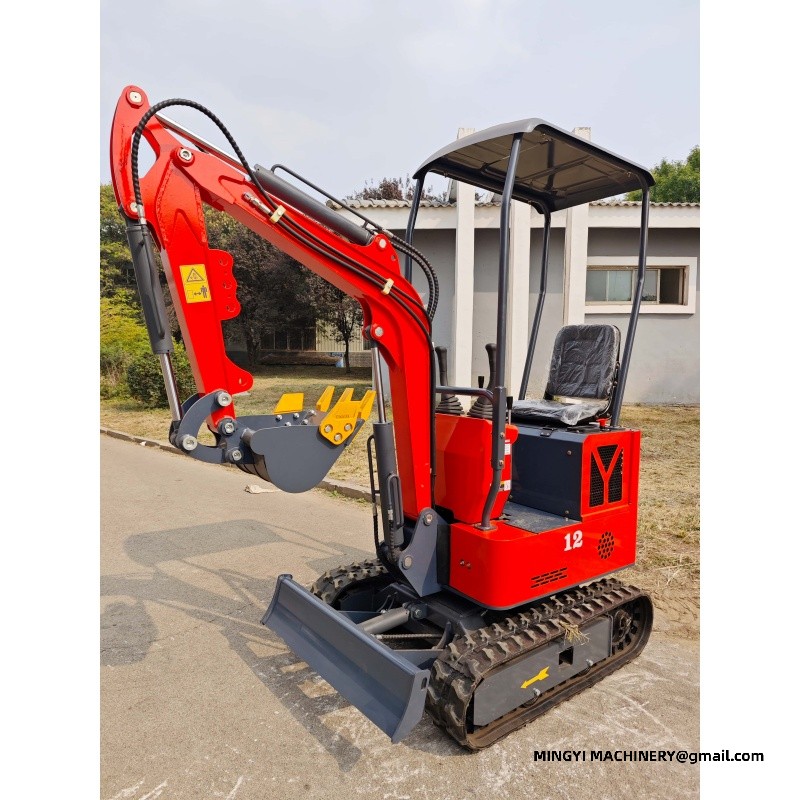
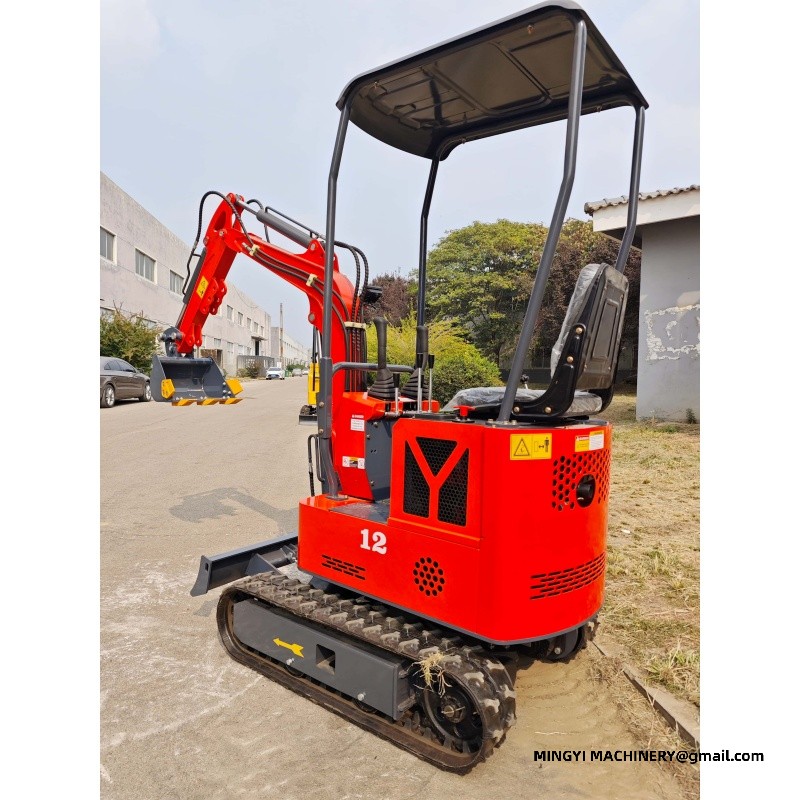
Reference specification — mini excavator range 13W 15W 30-1W 12L Operating weight 1300 kg (2866.01 lb) 1400 kg (3086.47 lb) 2900 kg (6393.41 lb) 1200 kg (2645.55 lb) Transport size (L×W×H) 2200 × 930 × 2250 mm 2200 × 930 × 2250 mm 3000 × 1250 × 2780 mm 2200 × 930 × 2250 mm Max digging depth 1630 mm (64.17 in) 1630 mm (64.17 in) 2200 mm (86.61 in) 1700 mm (66.93 in) Max digging height 2750 mm (108.27 in) 2750 mm (108.27 in) 3400 mm (133.86 in) 2600 mm (102.36 in) Max dumping height 1960 mm (77.17 in) 1960 mm (77.17 in) 2400 mm (94.49 in) 1800 mm (70.87 in) Max digging radius 2900 mm (114.17 in) 2900 mm (114.17 in) 4000 mm (157.48 in) 2900 mm (114.17 in) Max digging distance 2100 mm (82.68 in) 2100 mm (82.68 in) 2800 mm (110.24 in) 2300 mm (90.55 in) Minimum turning radius 1300 mm (51.18 in) 1300 mm (51.18 in) 2000 mm (78.74 in) 1450 mm (57.09 in) Travel speed 3 km/h (1.86 mph) 3 km/h (1.86 mph) 5 km/h (3.11 mph) 3 km/h (1.86 mph) Gradeability 30° 30° 30° 30° Fuel consumption 1-1.3 L/h (0.264—0.343 gal) 1-1.3 L/h (0.264—0.343 gal) 2-3 L/h (0.528—0.793 gal) 1-1.3 L/h (0.264—0.343 gal) Fuel tank capacity 10 L (2.64 gal) 10 L (2.64 gal) 16 L (4.23 gal) 10 L (2.64 gal) Hydraulic oil tank 16 L (4.23 gal) 16 L (4.23 gal) 20 L (5.28 gal) 16 L (4.23 gal) Dozer blade lift height 180 mm (7.09 in) 180 mm (7.09 in) 420 mm (16.54 in) 180 mm (7.09 in) Dozer blade drop depth 210 mm (8.27 in) 210 mm (8.27 in) 210 mm (8.27 in) 210 mm (8.27 in)
Q. What is this class of machine?
A. One machine, one trailer, one operator and a full week of varied work is the whole idea behind the compact excavator class. The limit is reach and lift, not willingness: within its envelope the compact machine holds a full-size work rate. Read the unit in daily use together with the engine, track and attachment pages: jobs around shaping ground are decided by how those choices line up, not by any single number on the sheet.
Q. Where does the compact class stop making sense?
A. When the jobs need full-size reach or mass digging for weeks on end - within its envelope, though, the compact machine holds a work rate that surprises first-time buyers.
Q. Can I see the machine before it ships?
A. Inspection is arranged at the factory, in person or by a scheduled video walk-around - the same session covers paint, decals and attachment fitment for the shaping ground specification, so the machine inspected is the machine that ships.
Handover and getting familiar with a machine of this size
The first day with a new machine sets the pattern for the next five years. Handover for the equipment on site covers the control layout, the daily check points and the limits the operator needs to know before the first real load is lifted or carried.
Hot, humid and dusty conditions around the machine itself
Tropical operation is a specification question as much as a maintenance one. The cooling capacity, the sealing and the corrosion protection fitted to the model in question are what make the difference once the ambient temperature rises.
Reading the early symptoms on the machine in that duty
Machines rarely fail without warning. A change in sound, a slower function or a new leak on the unit on the job is the machine saying something early, and listening then takes a fraction of the time that waiting does.
E-mail : sales@mingycn.com
LINE ( ID ): mingyicn
Related pages
mini excavator for municipal work · mini excavator for garden grading · Front End Loader Manufacturer: Boom, Hinge and Frame Records · Mini Excavators









