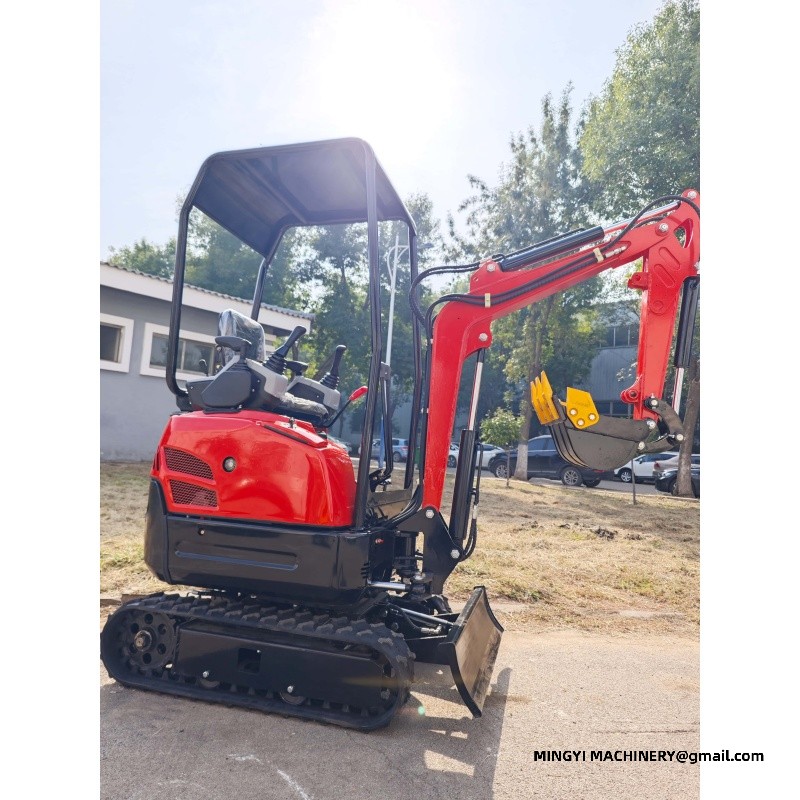
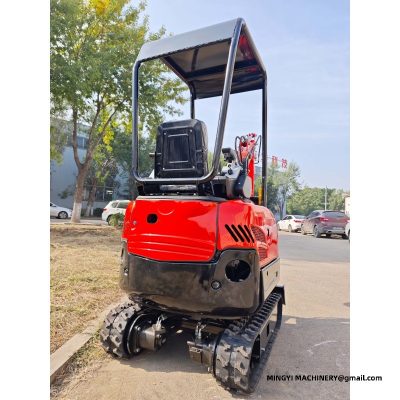
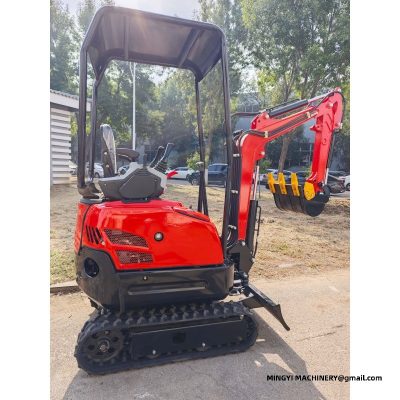
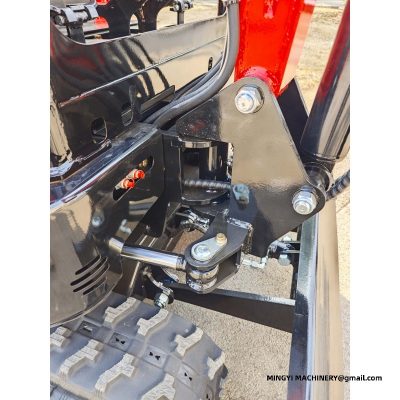
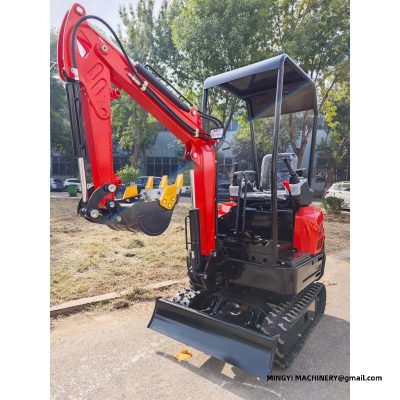
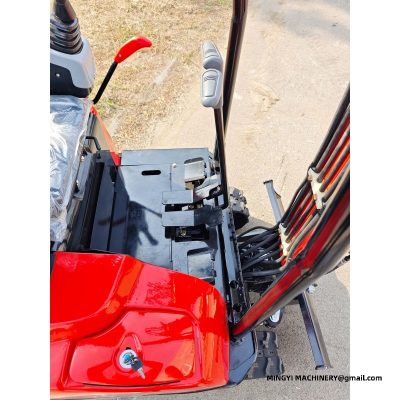
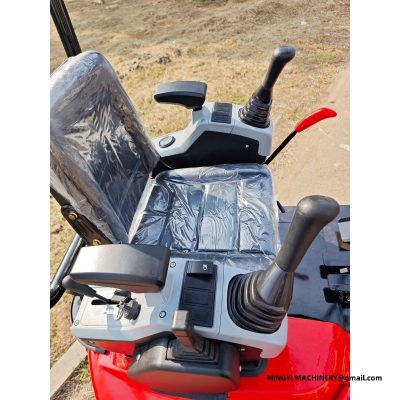
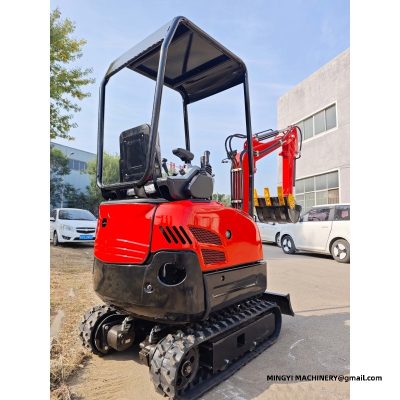
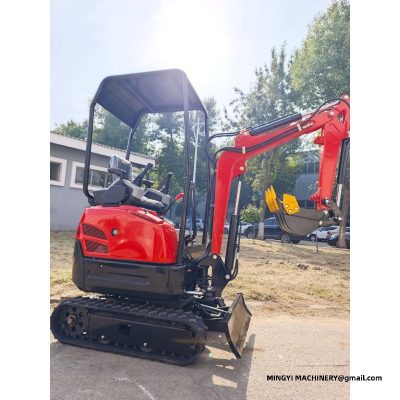
Grading a garden is a fine tolerance job. Falls have to run away from a building, beds have to sit level, and a lawn base must be flat enough to mow. A mini excavator with a grading bucket shapes that ground far faster than hand tools while still holding the small adjustments a garden needs.
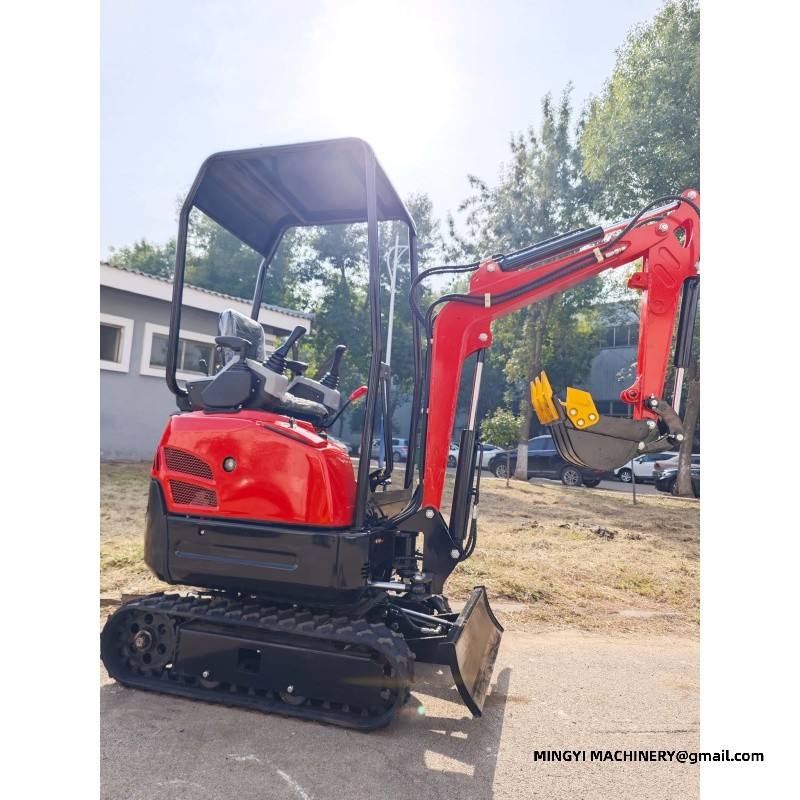
MINGYI compact excavators used for this work are normally specified with a grading bucket and a swing boom. Because the machine is built to order, the bucket width, coupler and track type can be matched to the plot before it is made.
How grading accuracy is held on garden ground
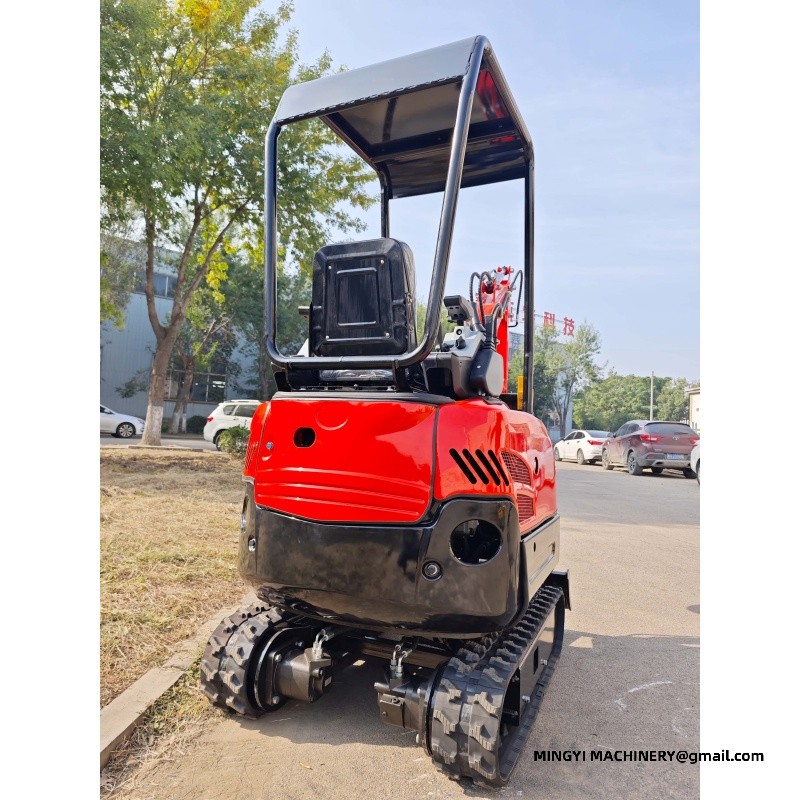
Accuracy comes from small movements, not from power. On garden ground the operator works the bucket flat and feathers the last pass by hand, using the swing boom to reach along edges and around beds. A compact machine with a smooth hydraulic response makes those final shaves repeatable.
Ground conditions change quickly in a garden. Loose topsoil, buried services and old planting pockets all interrupt the pass. Working in short runs and checking levels often is more reliable than trying to grade a whole plot in one movement.
Buckets and control setup for shaping garden levels
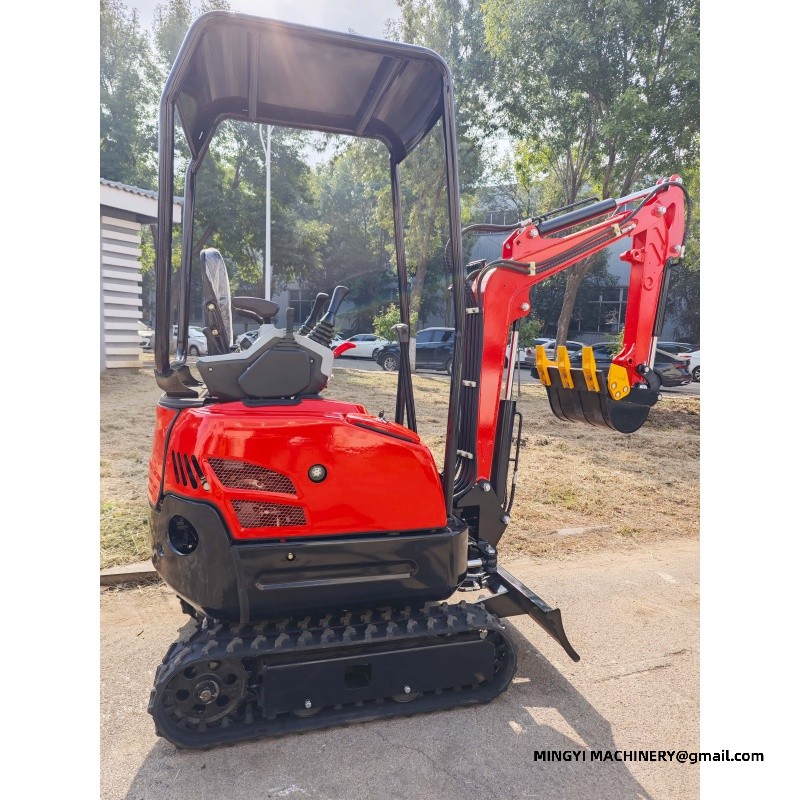
A wide, flat grading bucket leaves a cleaner surface than a digging bucket, but it is the bucket edge angle that decides how the material rolls. Buyers should order a bucket that suits the soil, not one that merely fits the machine.
For slopes and lawn edges a tilting bucket can be added so the cutting edge angles without moving the machine. Confirm coupler type, tilt plumbing and bucket width at the ordering stage so the grading set arrives ready to use.
Garden grading rewards control more than size. MINGYI supplies compact excavators built to order, with grading buckets and tilt options chosen for the plots the buyer actually works.
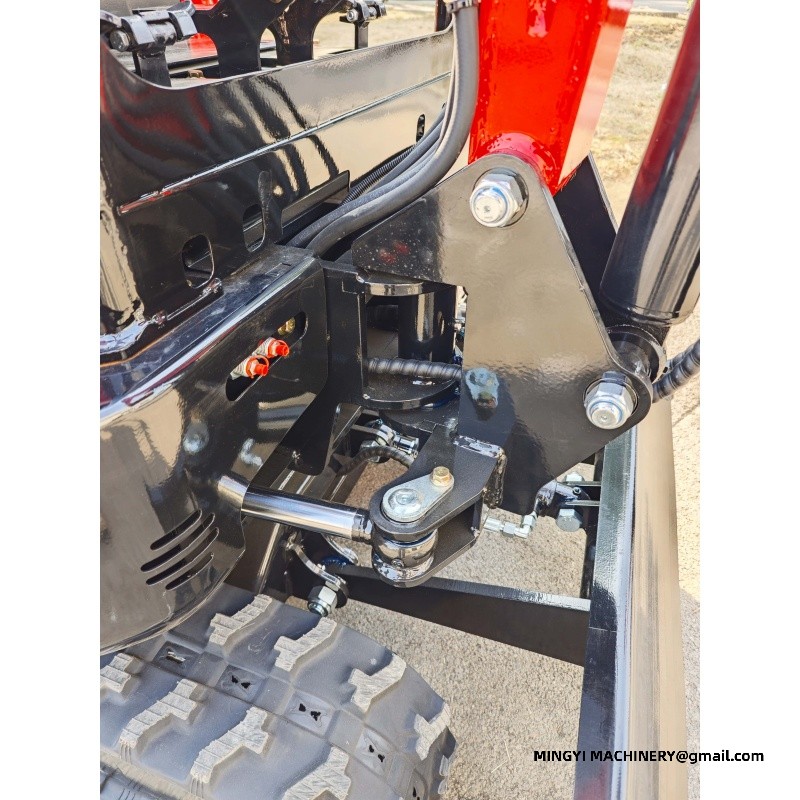
Working a mini excavator for garden grading in confined spaces Confined sites are decided by dimensions. Overall width, tail swing and the space needed to work the arm are what let the excavator operate inside a building, between walls or in a courtyard. Ventilation is the other indoor constraint. Running this class of machine inside a closed structure needs air movement, and that is a planning item rather than something to discover after the first hour. Parts, service and support for mini excavator for garden grading Support after delivery is a parts question. Wearing items for the unit in daily use - filters, belts, track components, bucket teeth and pins - are the items a buyer should plan to hold before the first service interval. Engine parts availability usually drives the engine choice. A machine of this size built with an engine the local network already carries is serviced from stock rather than from an international order. Operator technique for mini excavator for garden grading The second habit is tool discipline. Running the equipment on site with the right bucket width for the trench means less spoil, less reinstatement and a cleaner job than a wide bucket and a lot of trimming. Stability is the third. The machine itself working across the tracks rather than over the corners keeps the machine steady and the undercarriage loaded evenly, which shows up as track life at the end of the season. Landscaping and ground care with mini excavator for garden grading Landscape contractors use the model in question for planting holes, pond excavation, grading and retaining work. The machine is light enough to cross finished lawn and narrow enough to work between established trees. Grass cutting heads, rakes and tillers extend the machine in that duty into ground care. The same carrier that digs a border in spring can cut and clear the same area later in the season. Canopy or enclosed cab on a mini excavator for garden grading A canopy keeps the machine light and the operator aware of the surroundings, which suits short jobs in warm weather. A fully enclosed cab is specified where rain, dust or cold are part of the working year, and it can be added to the unit on the job as a retrofit rather than only at build time. Enclosure also changes noise and dust exposure. A sealed cab on a machine built for the work keeps dust out on dry sites and lets the machine work through weather that would otherwise stop a canopy machine for the day. Working a mini excavator for garden grading through the seasons Seasonal planning smooths the workload. Machines that are busy for a few months and idle for the rest benefit from a service slot in the quiet period, and the equipment in service prepared in the off-season starts the busy months reliably. Heat and dust are as limiting as rain. Air intake condition and cooling cleanliness decide how the excavator behaves in a dry season, and both are checked in a minute rather than repaired later. Hiring versus owning this class of machine The choice follows the hours. Work that fills a few weeks a year is usually better hired, while the unit in daily use that would be on site most weeks starts to justify ownership once the transport and booking time is counted. Ownership brings obligations that hiring does not. Storage, servicing, insurance and an operator are the items to set against the hire rate before deciding which way a machine of this size should be supplied. Specifying the equipment on site against a job list The practical way to specify is to write the job list first: the narrowest access, the deepest trench, the heaviest tool and the surfaces the machine must cross. The machine itself is then matched to those four numbers. Useful information to send with an enquiry includes working width, required digging depth, ground conditions and the attachment set. Those four items let the factory specify the model in question that fits rather than a generic build. Orchard, vineyard and farm use of the machine in that duty Orchard and vineyard work is carried out between rows. The unit on the job with a narrow chassis and a swing boom works down the row without damaging the trees, which is the reason a full-size machine is not used at all. Farms also use a machine built for the work for general maintenance - clearing a watercourse, repairing a track, loading a spreader. One carrier with a few attachments covers most of the jobs that would otherwise wait for a contractor. Matching the equipment in service to ground conditions Hard and abrasive ground reverses the specification. On rock, demolition rubble or sharp gravel, steel tracks with rubber blocks on the excavator survive conditions that cut a rubber belt quickly. Mixed sites are common and argue for a compromise specification. Most buyers choose rubber for this class of machine and accept the wear, unless the majority of the work is on material that will damage it. Daily checks and maintenance on the unit in daily use Daily maintenance on a machine of this size is a short list: engine oil level, coolant, track tension, hydraulic oil level and a look at the hoses. Ten minutes at the start of the shift prevents most of the failures that stop a machine. Greasing is the second item. The slew ring, the boom and arm pins and the bucket linkage on the equipment on site take grease daily in dusty work, and the intervals shorten further when the machine is used in water or mud. Specification data for the machine itself Buyers comparing the model in question usually start from four numbers - weight, digging depth, reach and transport width - because those are the ones that decide whether the machine can be delivered and whether it can do the job once it is there. Figures are factory figures and are confirmed on the build sheet for the machine in that duty. Where a job sits between two models, the larger machine usually takes less time than the smaller one spends on rework. Road repair generates short, interrupted jobs - a patch, a drainage connection, a kerb line. The unit on the job is economical here because it travels on a small trailer and starts working minutes after arriving. Patching and reinstatement favour a machine that can work in a lane closure. A machine built for the work occupies less road than a full-size excavator, which reduces the traffic management needed and the length of the closure.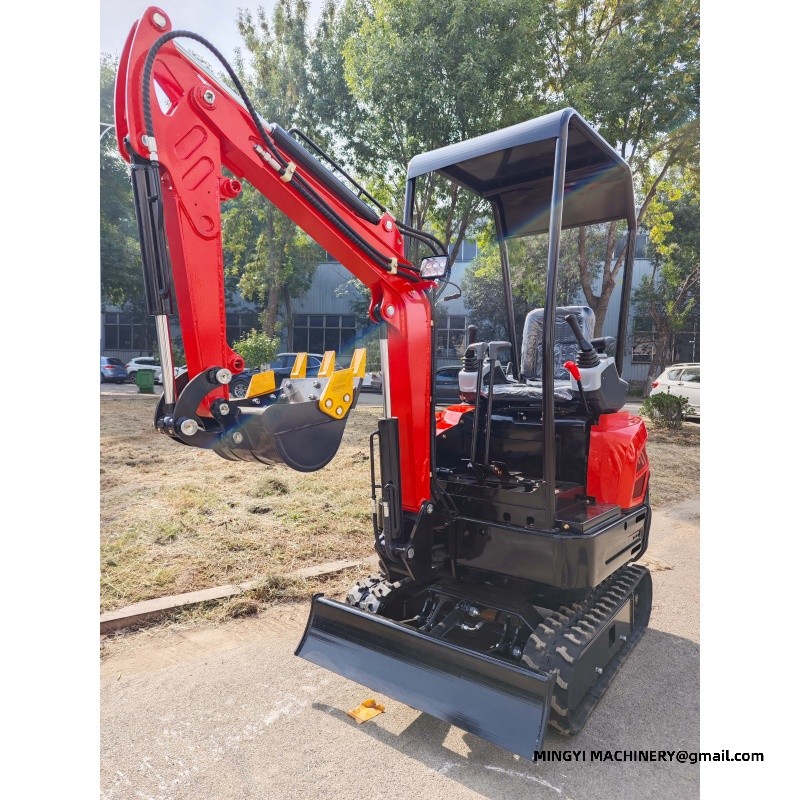
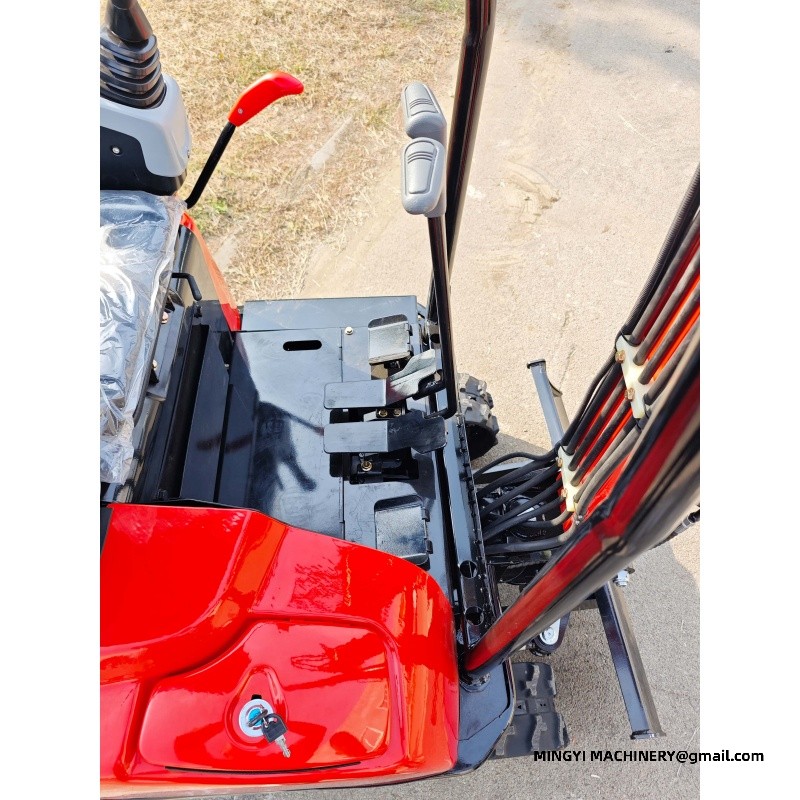
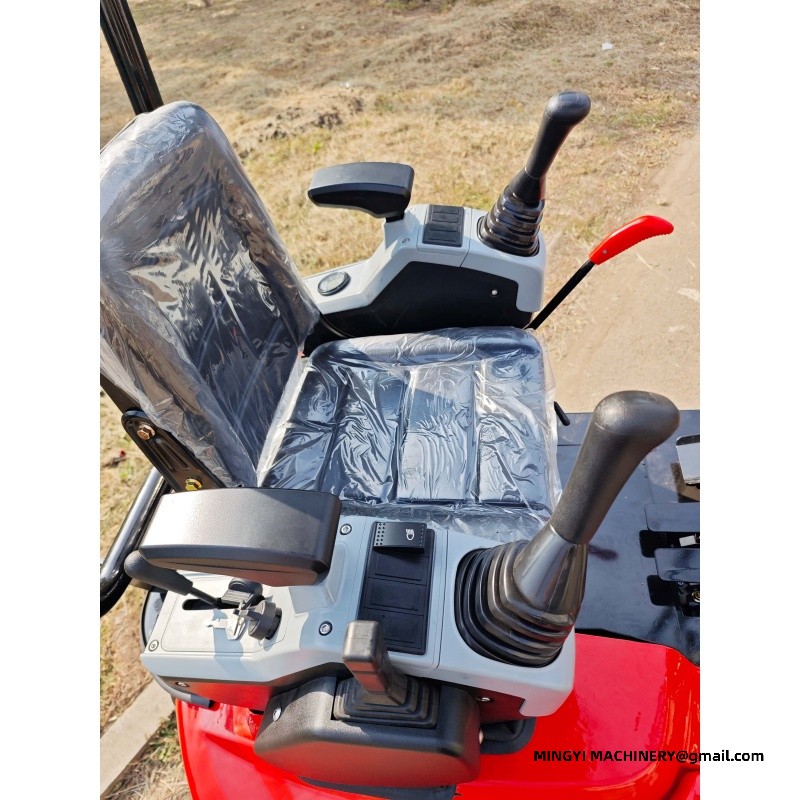
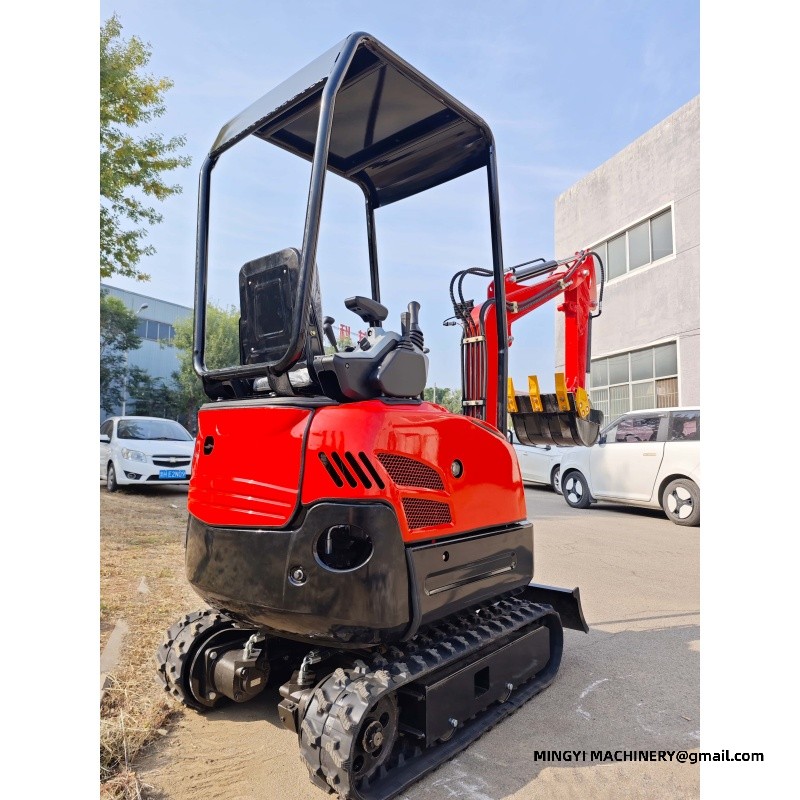
Reference specification — mini excavator range 20-1WL 30-2W 12L 30-2L Operating weight 1900 kg (4188.78 lb) 2700 kg (5952.48 lb) 1200 kg (2645.55 lb) 2400 kg (5291 lb) Transport size (L×W×H) 2550 × 1100 × 2200 mm 3000 × 1100 × 2700 mm 2200 × 930 × 2250 mm 2800 × 1500 × 2500 mm Max digging depth 1800 mm (70.87 in) 2200 mm (86.61 in) 1700 mm (66.93 in) 2200 mm (86.61 in) Max digging height 2820 mm (111.02 in) 3000 mm (118.11 in) 2600 mm (102.36 in) 2900 mm (114.17 in) Max dumping height 2050 mm (80.71 in) 2000 mm (78.74 in) 1800 mm (70.87 in) 2100 mm (82.68 in) Max digging radius 3050 mm (120.08 in) 3800 mm (149.61 in) 2900 mm (114.17 in) 3330 mm (131.1 in) Max digging distance 2300 mm (90.55 in) 3050 mm (120.08 in) 2300 mm (90.55 in) 2700 mm (106.3 in) Minimum turning radius 1450 mm (57.09 in) 1750 mm (68.9 in) 1450 mm (57.09 in) 1555 mm (61.22 in) Travel speed 5 km/h (3.11 mph) 7 km/h (4.35 mph) 3 km/h (1.86 mph) 7 km/h (4.35 mph) Gradeability 30° 30° 30° 30° Fuel consumption 2-3 L/h (0.528—0.793 gal) 2-3 L/h (0.528—0.793 gal) 1-1.3 L/h (0.264—0.343 gal) 2-3 L/h (0.528—0.793 gal) Fuel tank capacity 16 L (4.23 gal) 16 L (4.23 gal) 10 L (2.64 gal) 16 L (4.23 gal) Hydraulic oil tank 18 L (4.76 gal) 20 L (5.28 gal) 16 L (4.23 gal) 18 L (4.76 gal) Dozer blade lift height 180 mm (7.09 in) 230 mm (9.06 in) 180 mm (7.09 in) 230 mm (9.06 in) Dozer blade drop depth 210 mm (8.27 in) 280 mm (11.02 in) 210 mm (8.27 in) 280 mm (11.02 in)
Q. Who chooses the equipment in service?
A. Softscape and turf work judge a machine by what it leaves behind, which is why compact excavators with the right tracks and valves own this trade. A fine-control valve lets the operator grade to the line the plan asks for, on the first pass. The excavator is one of the pages buyers land on when comparing machines for garden grading, and the factory treats it as a specification conversation rather than a catalogue line.
Q. How do you avoid damaging finished ground?
A. Rubber tracks, boards or mats under the machine, and a dig plan that treads where the hard surface will be. A fine-control valve grades to the line on the first pass, which is where the care shows.
Q. How do I get a specification?
A. Send the model, the destination and the attachment list by email or LINE - the channels listed just below this section. The reply covers the specification, lead time, packing and freight in one document, with the garden grading build sheet attached.
Pre-delivery inspection before this class of machine leaves the shop
Inspection is a list, not a glance. Before the unit in daily use is released the fluid levels, belt tension, electrical connections and safety decals are each ticked off, and anything that fails stays in the shop rather than travelling with the machine.
Moving a machine of this size between sites
A machine that works on one site still has to reach the next. The overall dimensions and the operating weight of the equipment on site decide what trailer or truck is needed, and that decision belongs before the job is booked.
E-mail : sales@mingycn.com
LINE ( ID ): mingyicn
Slope working and stability with mini excavator for garden grading
Rated capacity is measured on level ground, and once the machine works across a gradient the safe figure follows the slope and the load position.
Ground that looks firm after a dry week can carry a different load after rain, and that difference is worth a walk-over each morning.
Related pages
mini excavator for agriculture · oem mini excavator manufacturing · Compact Wheel Loader: Small-Frame Builds for Tight Sites · Mini Excavators









