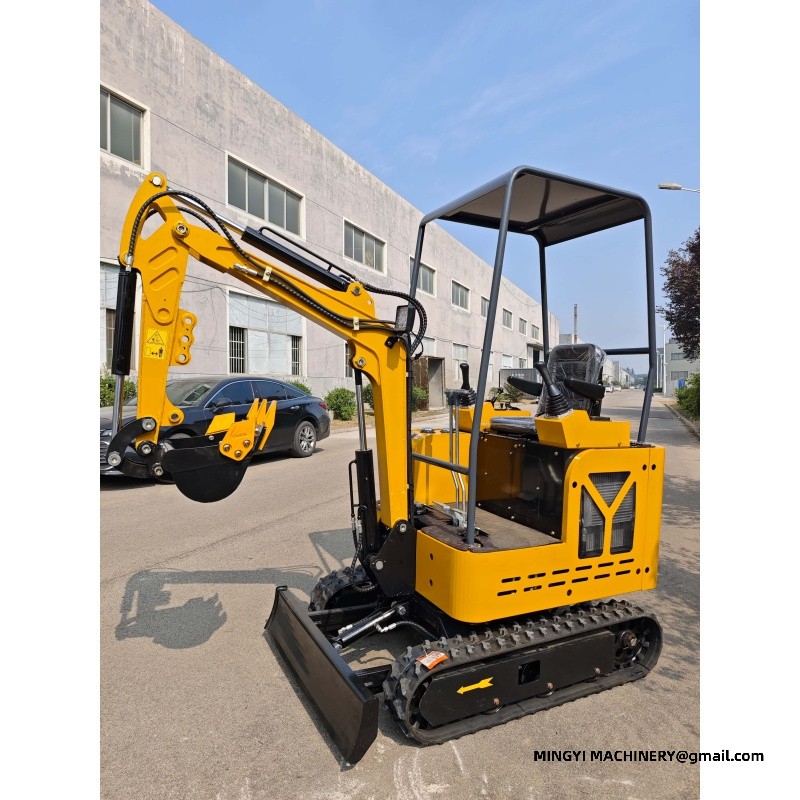
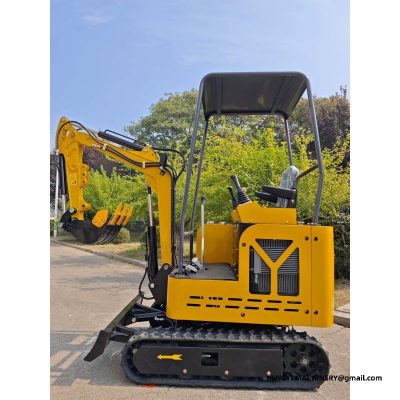
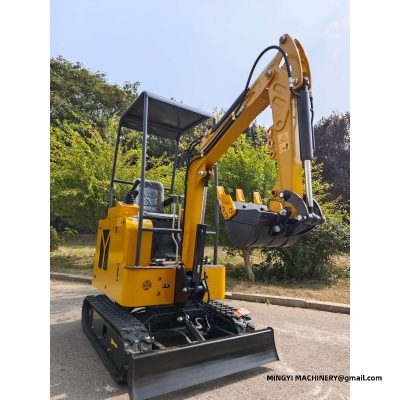
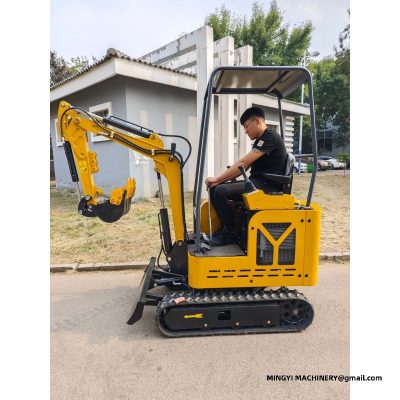
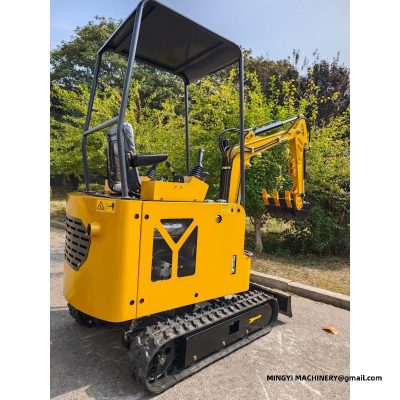
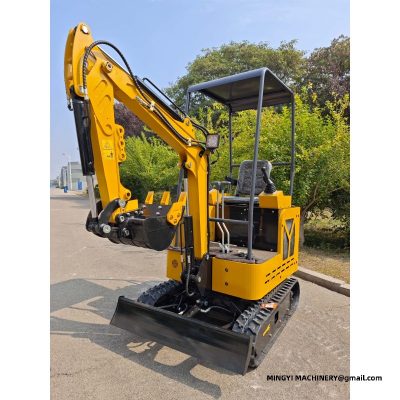
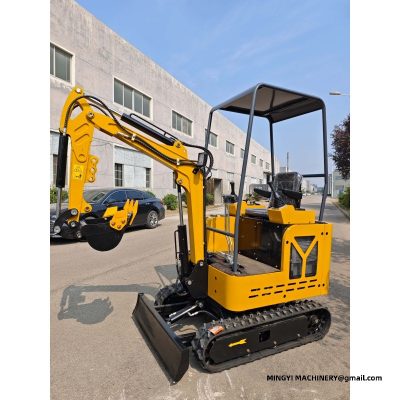
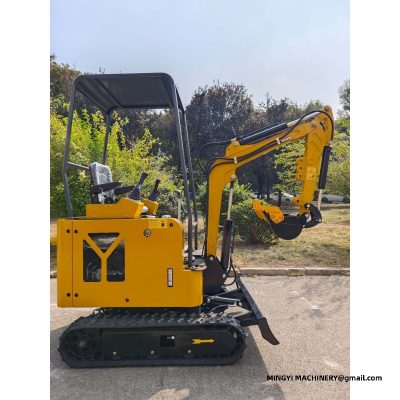
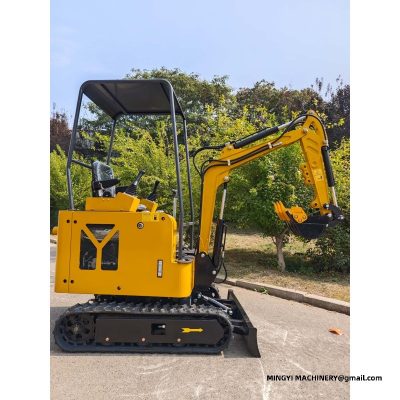
A garden pond is dug with more care than its size suggests. Shelves for planting, a clean edge line and a firm base all depend on the excavator being able to cut to a set profile and leave the bank tidy. A mini excavator reaches over the edge without driving into the finished basin.
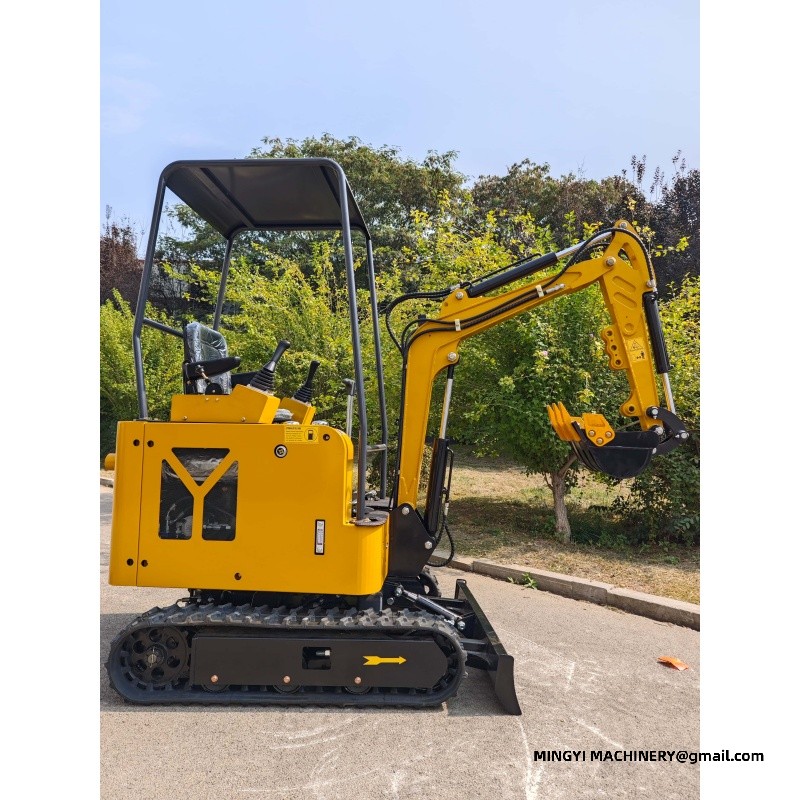
MINGYI compact crawler machines suit this work because the boom reaches well beyond the tracks. With rubber tracks the machine can sit on a lawn or a paved surround and still reach a pond basin beyond its own footprint.
Pond shaping work a mini excavator can carry out
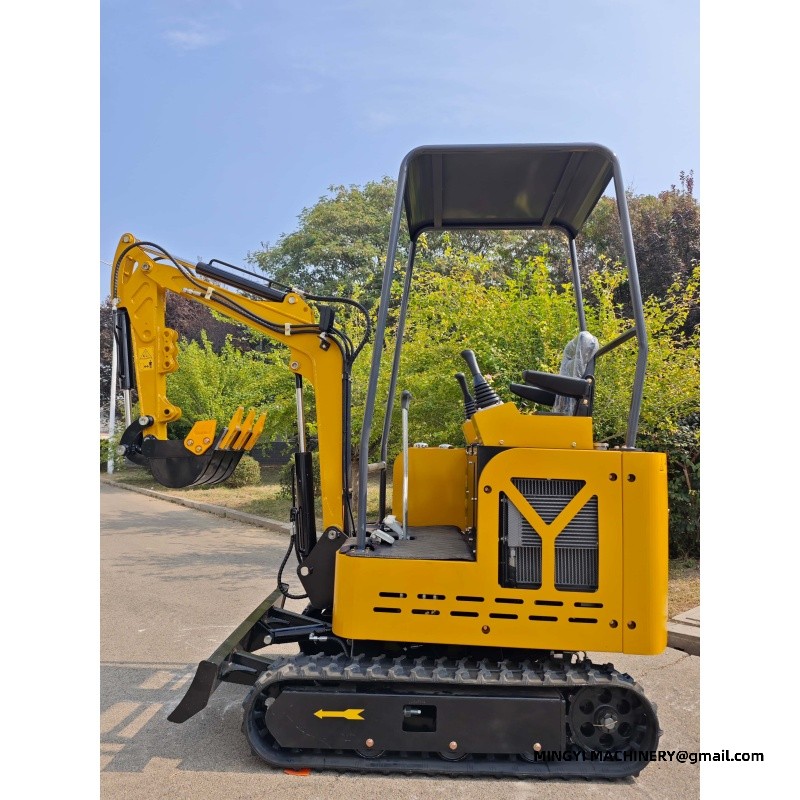
Most pond work is done from the bank. The operator cuts the outline, removes the centre to depth, then trims the planting shelves in stages. Working in layers keeps the profile consistent and avoids over-digging a section that then has to be backfilled.
Spoil handling matters as much as digging. Barrows and a small dumper slow the job, so many owners place the excavated soil directly with the bucket or load a trailer at the edge, keeping the site clean and the access route open.
Working soft edges and finished pond banks
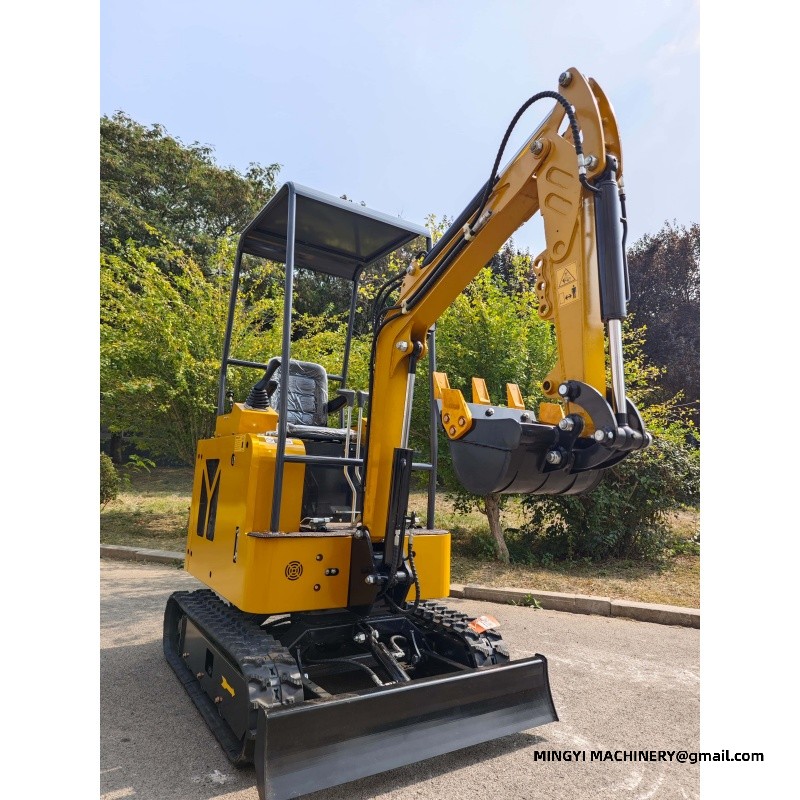
Soft banks are the main risk. A machine can slip or cut into a profile that has already been dressed, so the operator keeps the tracks back from the lip and lets the boom do the reach. Rubber tracks spread the load better on damp ground than steel.
Before ordering, buyers should match bucket width to the shelf dimensions they want and decide whether a thumb or grab is needed for stones and roots lifted from the bottom. A clean, gently sloped bank is easier to line afterwards.
Pond excavation is a precision task carried out from an awkward position. MINGYI builds compact excavators to order so the reach, bucket width and track type match the basin being dug.
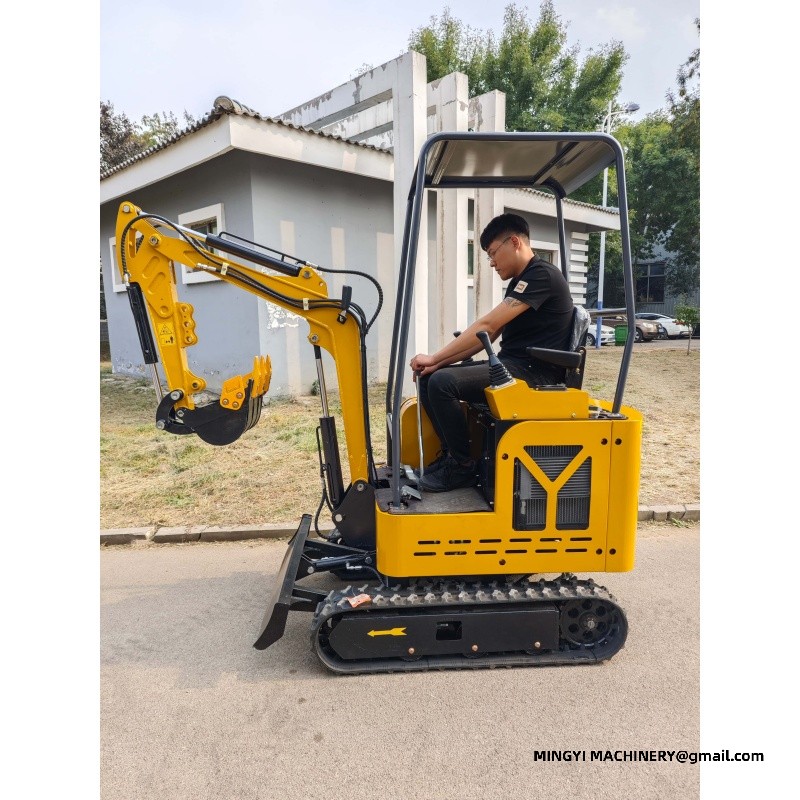
Noise, dust and working near occupied buildings Work near housing or occupied premises brings constraints that open sites do not. Start times, exhaust condition and how often the excavator needs to reverse are the practical limits that neighbours notice. Enclosure and machine condition both reduce noise. This class of machine with intact panels, sound mounts and a maintained exhaust is measurably quieter than the same machine with loose guards, and the difference matters on restricted sites. Engine options behind mini excavator for pond excavation Two buyers can order the same a machine of this size and receive different engines. The decision is rarely about peak power; it is about which parts counter is closest to the site and which engine the local mechanic already knows. Engine choice is also an emissions and documentation question for some markets. Listing the available units with the unit in daily use enquiry lets the factory confirm what can be supplied and documented for the destination country. Lifting and material handling with a mini excavator for pond excavation Stability changes with reach. A load the equipment on site handles close in becomes a different proposition at full extension, so the working radius belongs in the plan before the lift rather than during it. Ground condition under the machine is part of every lift. Soft or uneven support is the common factor in handling incidents, and checking it takes less time than recovering the machine itself that has settled. Attachments that turn mini excavator for pond excavation into several machines Attachment lists are best written before delivery. Specifying the model in question with the tools the job list needs avoids the work and delay of adding hydraulics later, and a quick coupler makes the swap a few minutes instead of a workshop job. Most of the daily variety on the machine in that duty comes from the attachment rack rather than from the machine itself. Bucket, breaker, auger, ripper, rake and grab cover the large majority of the work a contractor will see. Landscaping and ground care with mini excavator for pond excavation Landscape contractors use the unit on the job for planting holes, pond excavation, grading and retaining work. The machine is light enough to cross finished lawn and narrow enough to work between established trees. On soft landscape work the surface is the constraint. A machine built for the work on rubber tracks crosses turf without stripping it, which is why the same jobs are not given to a wheeled machine. Municipal and public works with mini excavator for pond excavation Municipal crews work on streets, footpaths and parks where the public is present. The equipment in service is specified because it occupies little space, works inside a small exclusion zone and can be moved on a standard trailer. Drainage repair, tree planting, footway reconstruction and cemetery work are all within the range of the excavator. The jobs are small individually and continuous across the year. Export packing and shipping of this class of machine Machines leave the factory prepared for container or flat rack shipment. The unit in daily use is normally shipped with the attachment set and the spare parts list agreed in advance so the container is planned once. Export documentation, decals and paint are settled before packing. Asking for them with the a machine of this size order avoids a second handling session and keeps the machine on the booked vessel. Working near live services with the equipment on site The risk on utility work is not machine power but machine placement. The machine itself that fits the working width leaves the surrounding ground undisturbed, which keeps the trench stable and the reinstatement small. Utility crews specify the model in question with a narrow bucket and good visibility for exactly this reason: the machine has to stop at the service, not at the edge of the operator's view. OEM and fleet customisation of the machine in that duty Customisation also covers the specification sheet. A fleet buyer may want every machine built for the work delivered with the same coupler, the same engine and the same tool kit so training and parts stock stay simple. Documentation can be prepared to suit the importer. Manuals, parts books and decal sets for the unit on the job can be supplied with the buyer's own branding where the order size justifies it. Hydraulic circuits on the equipment in service Flow and pressure are matched to the tool, not to the machine size. Asking for the attachment list first means the excavator leaves the factory with circuits that suit the heaviest tool the buyer intends to run. Hydraulic specification is easier to settle at build time than to correct later. This class of machine delivered without auxiliary lines can still dig, but every additional tool becomes a retrofit project. Road and paving work for the unit in daily use Patching and reinstatement favour a machine that can work in a lane closure. A machine of this size occupies less road than a full-size excavator, which reduces the traffic management needed and the length of the closure. Breaking out a failed slab and backfilling the same hole in one visit is normal work for the equipment on site. The breaker and the bucket come off the same coupler, so the road is reopened the same day. Acceptance checks when the machine itself arrives Delivery day is the best time to find a problem. Checking the specification against the order, the fluid levels, the fasteners and any transport damage while the machine in that duty is still on the trailer is faster than claiming later. A function check before the machine goes to work is worth the hour. Running through the controls, the travel and the attachment circuit on the model in question confirms it is set up as specified and ready for the site. Specification data for the unit on the job The figures below are the factory figures for the models most often matched to a machine built for the work. They are the numbers to check against the site: the depth the work needs, the reach from one position, and the width of the narrowest point on the route in. Figures are factory figures and are confirmed on the build sheet for the equipment in service. Where a job sits between two models, the larger machine usually takes less time than the smaller one spends on rework. The cab decision follows the climate and the hours. Operators working a full shift in the excavator benefit from a sealed cab with wipers and heating; operators stepping on and off every few minutes usually prefer the canopy for the visibility and the quick exit. Enclosure also changes noise and dust exposure. A sealed cab on this class of machine keeps dust out on dry sites and lets the machine work through weather that would otherwise stop a canopy machine for the day.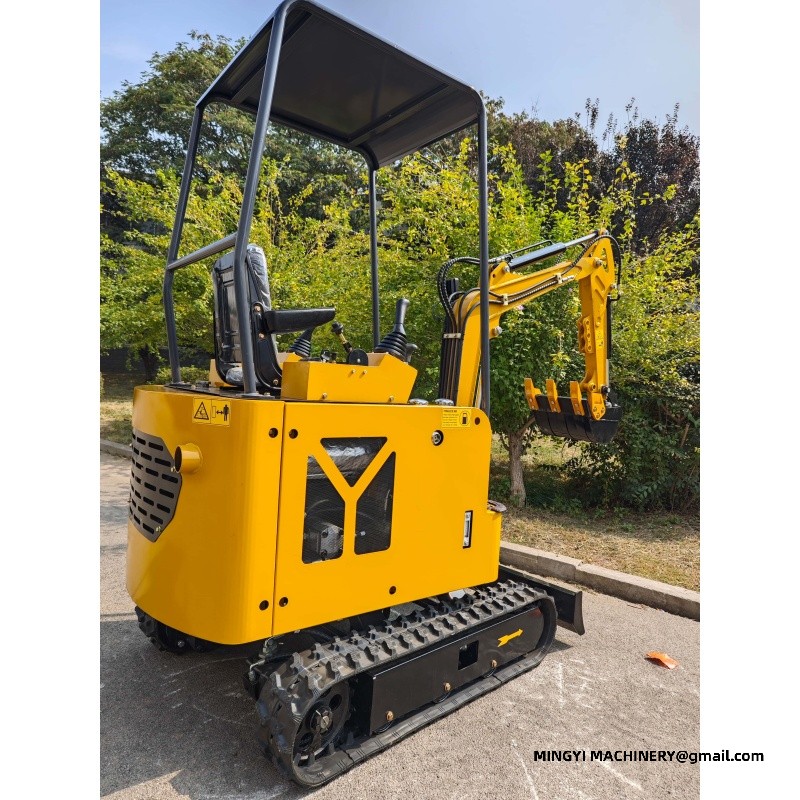
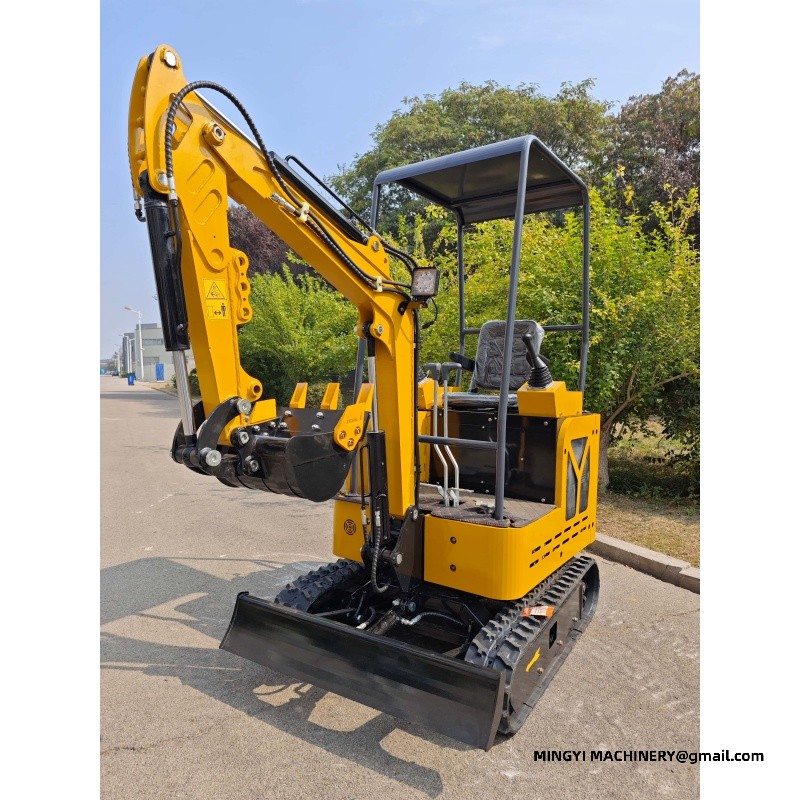
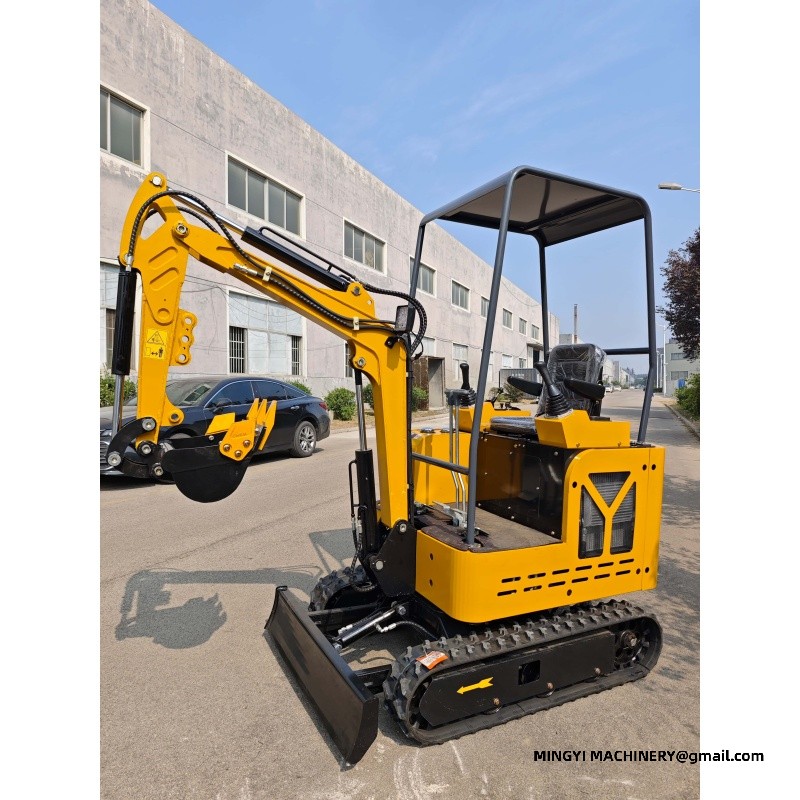
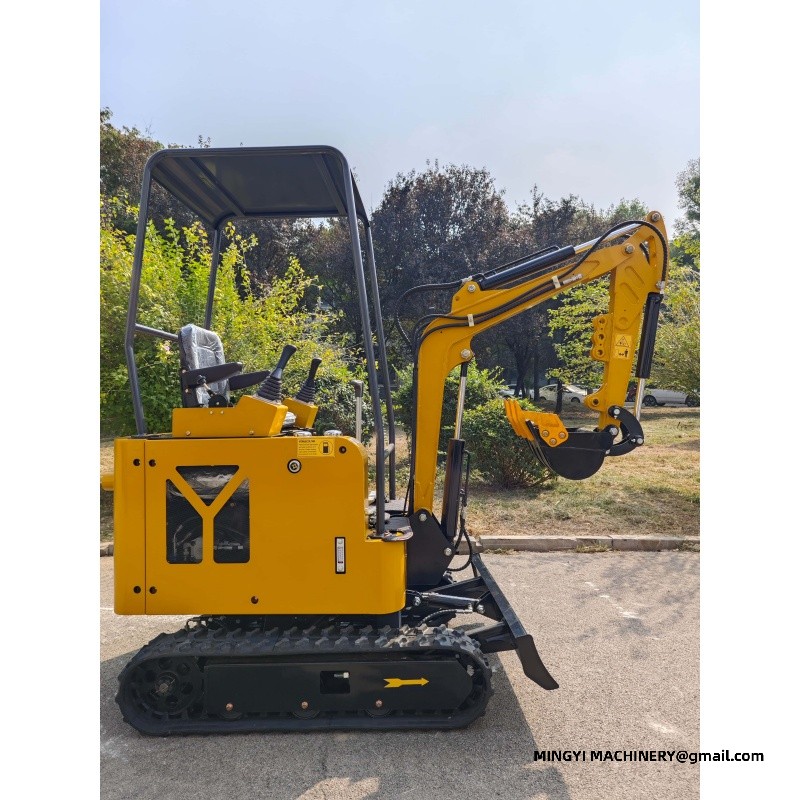
Reference specification — mini excavator range 15W 09L 25L 30-2L Operating weight 1400 kg (3086.47 lb) 1100 kg (2425.08 lb) 2200 kg (4850.17 lb) 2400 kg (5291 lb) Transport size (L×W×H) 2200 × 930 × 2250 mm 2300 × 720 × 1870 mm 3000 × 1300 × 2700 mm 2800 × 1500 × 2500 mm Max digging depth 1630 mm (64.17 in) 1400 mm (55.12 in) 2300 mm (90.55 in) 2200 mm (86.61 in) Max digging height 2750 mm (108.27 in) 2800 mm (110.24 in) 3100 mm (122.05 in) 2900 mm (114.17 in) Max dumping height 1960 mm (77.17 in) 1880 mm (74.02 in) 2050 mm (80.71 in) 2100 mm (82.68 in) Max digging radius 2900 mm (114.17 in) 2490 mm (98.03 in) 3900 mm (153.54 in) 3330 mm (131.1 in) Max digging distance 2100 mm (82.68 in) 2000 mm (78.74 in) 3100 mm (125.05 in) 2700 mm (106.3 in) Minimum turning radius 1300 mm (51.18 in) 1400 mm (55.12 in) 1800 mm (70.87 in) 1555 mm (61.22 in) Travel speed 3 km/h (1.86 mph) 3 km/h (1.86 mph) 7 km/h (4.35 mph) 7 km/h (4.35 mph) Gradeability 30° 30° 30° 30° Fuel consumption 1-1.3 L/h (0.264—0.343 gal) 1-1.3 L/h (0.264—0.343 gal) 2-3 L/h (0.528—0.793 gal) 2-3 L/h (0.528—0.793 gal) Fuel tank capacity 10 L (2.64 gal) 8 L (2.11 gal) 16 L (4.23 gal) 16 L (4.23 gal) Hydraulic oil tank 16 L (4.23 gal) 16 L (4.23 gal) 18 L (4.76 gal) 18 L (4.76 gal) Dozer blade lift height 180 mm (7.09 in) 180 mm (7.09 in) 230 mm (9.06 in) 230 mm (9.06 in) Dozer blade drop depth 210 mm (8.27 in) 210 mm (8.27 in) 280 mm (11.02 in) 280 mm (11.02 in)
Q. What is the unit in daily use?
A. Compact excavators win work by being there: small enough to reach the job, strong enough to finish it. Trenching on Monday, loading and grading through the week, fence posts and drainage to finish - the attachment set specifications the work. Read a machine of this size together with the engine, track and attachment pages: jobs around pond excavation are decided by how those choices line up, not by any single number on the sheet.
Q. What can I expect from a compact excavator in a normal week?
A. Trenching one day, loading and grading the next, fence posts and drainage through the rest - one machine, one trailer, one operator, and the attachment set specifications the work.
Q. What support follows the sale?
A. Spare-part kits, wear items and service documentation ship with the programme, and the parts team works from the serial plate to match components exactly. Warranty and support terms for the pond excavation order are confirmed in writing before the machine leaves.
Keeping a service record for the equipment on site
Patterns show up in the record before they show up in the machine. Rising oil consumption or a filter that keeps blocking on the machine itself is obvious on paper long before it becomes a failure on site.
Reading the early symptoms on the model in question
Machines rarely fail without warning. A change in sound, a slower function or a new leak on the machine in that duty is the machine saying something early, and listening then takes a fraction of the time that waiting does.
E-mail : sales@mingycn.com
LINE ( ID ): mingyicn
Related pages
mini excavator for drainage and fencing · mini digger for garden sites · Front End Loader Log Grapple: Section Widths and Pin Geometry · Mini Excavators









