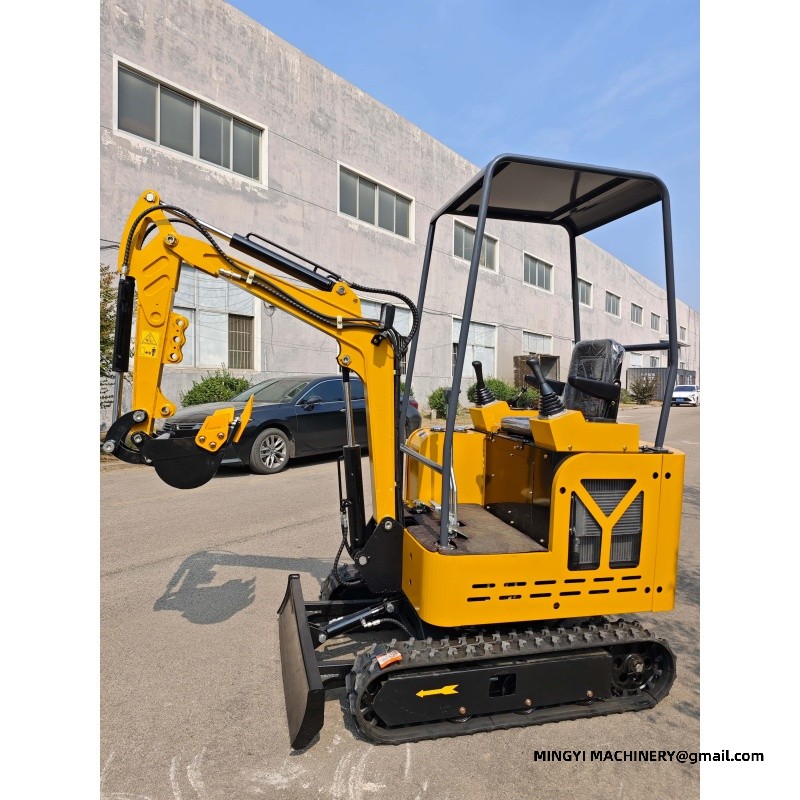
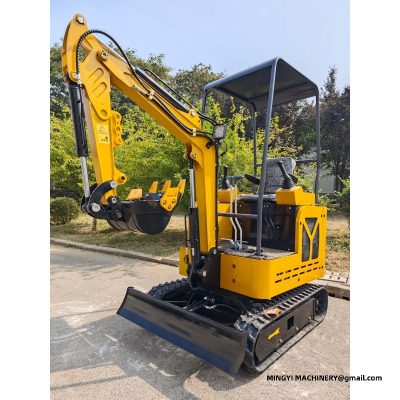
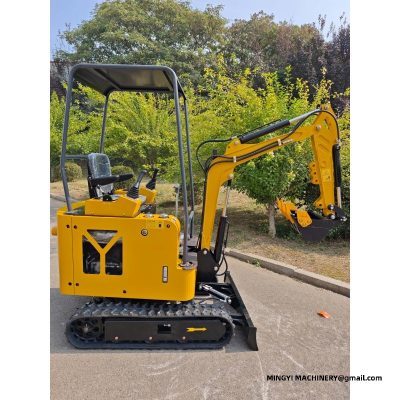
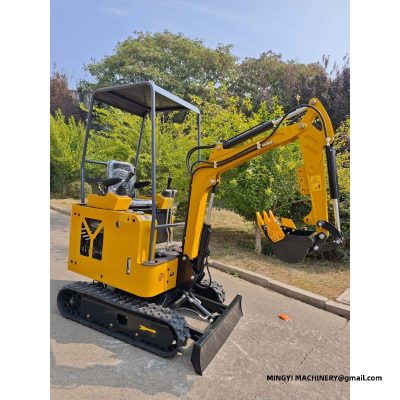
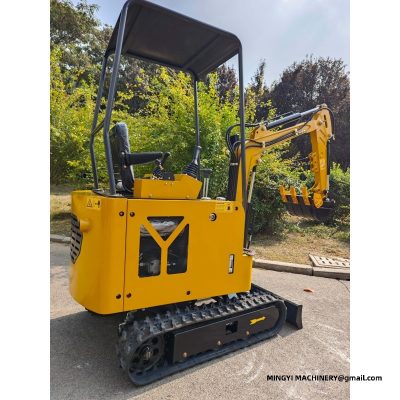
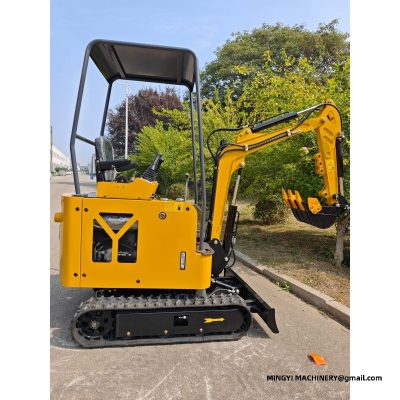
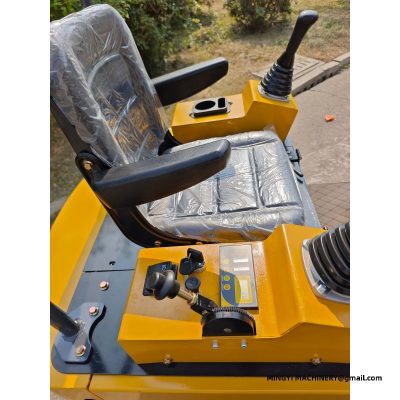
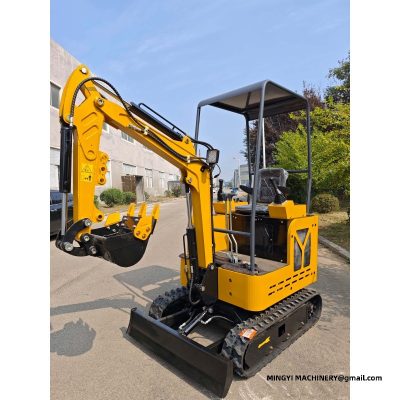
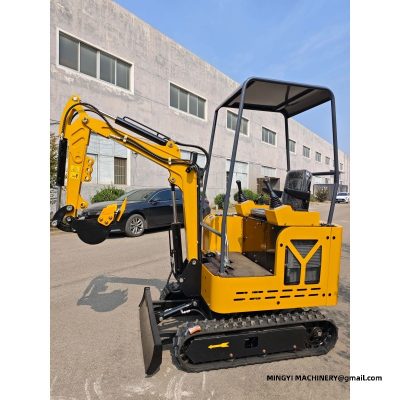
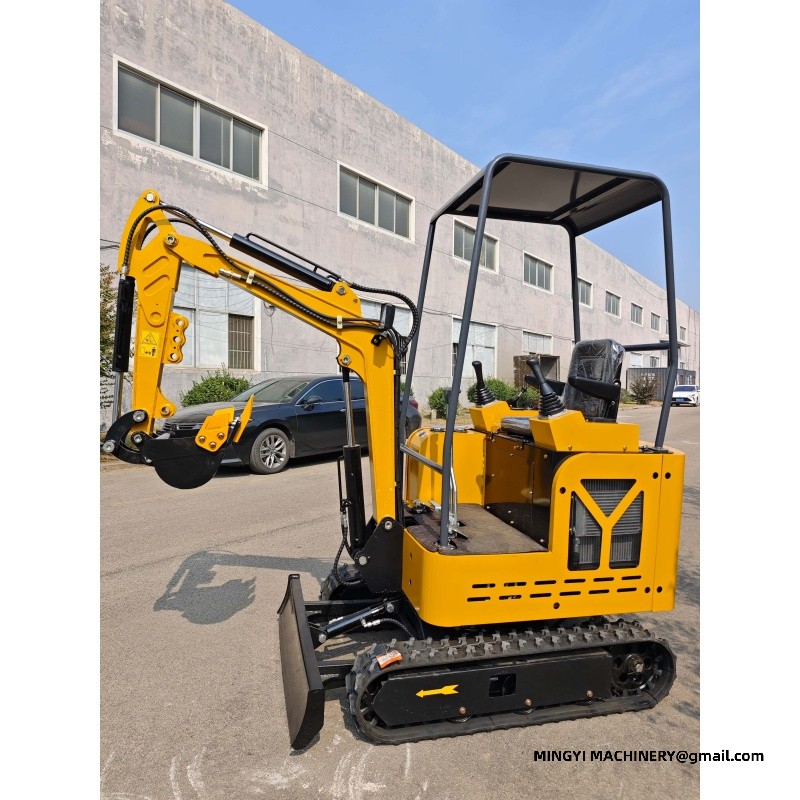
On a farm the compact excavator earns its place on jobs that are too small for a full size machine and too heavy for hand labour: drainage runs, fence post holes, clearing, loading and small earthworks. MINGYI builds mini excavators for this mixed farm workload.
Farm use is varied, so the machine is usually bought to cover several tasks rather than one. That is why the attachment list often matters as much as the excavator itself.
The farm jobs a compact excavator covers
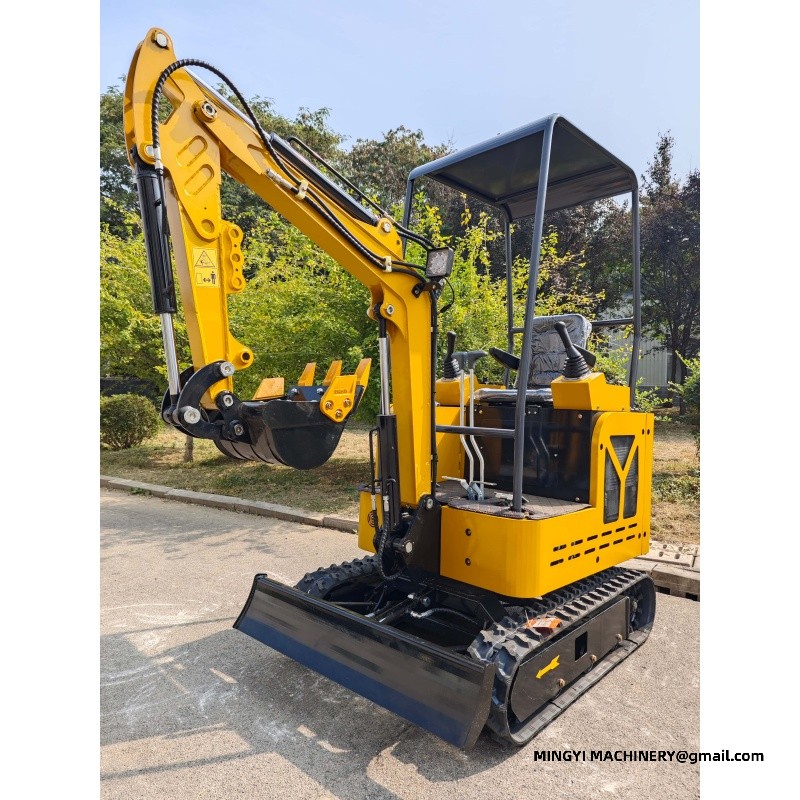
Drainage and ditching run through the year, opening wet ground so fields can be worked. Trenching for water or power lines, digging out fence post holes with an auger, and clearing scrub or stones around buildings all fall to the same machine.
In livestock and mixed farming the excavator is also used for muck handling, bedding and general loading when a front fork or bucket is fitted. The aim is one machine that keeps moving rather than several single purpose tools.
Choosing a farm excavator that fits the yard
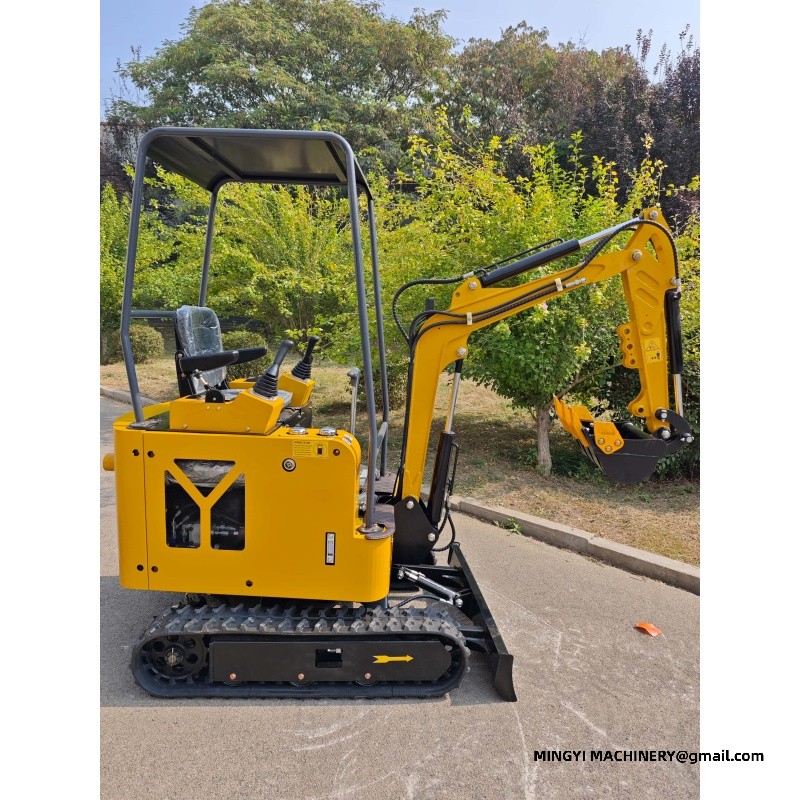
Because farm buildings, gates and tracks are often narrow, the working width of the machine matters as much as its digging depth. Rubber tracks are common on farm work since they travel across grass and yards with less damage than steel.
Engine choice and the attachment set are confirmed with the order, and MINGYI records the configuration against the machine so replacement parts can be matched later. The compact size lets the excavator be moved between fields without a large transport setup.
A farm enquiry should list the jobs the machine will do, the narrowest gap it must pass and the attachments needed, and MINGYI will propose a mini excavator built around that mix.
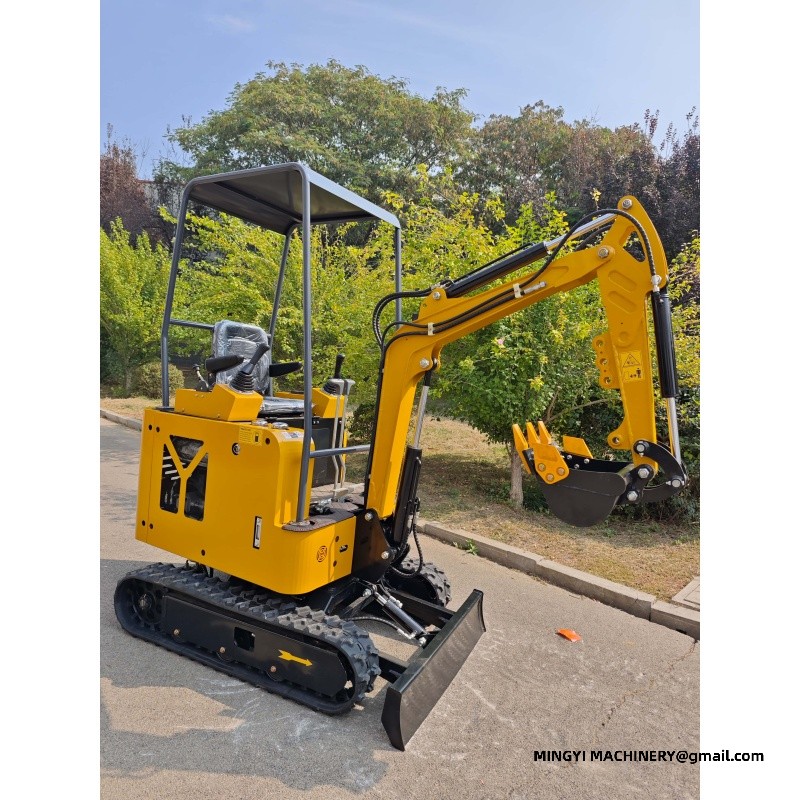
Landscaping and ground care with mini excavator for drainage and fencing Grass cutting heads, rakes and tillers extend the excavator into ground care. The same carrier that digs a border in spring can cut and clear the same area later in the season. On soft landscape work the surface is the constraint. This class of machine on rubber tracks crosses turf without stripping it, which is why the same jobs are not given to a wheeled machine. Hydraulic circuits on a mini excavator for drainage and fencing Auxiliary hydraulic lines are what let a machine drive a tool rather than only a bucket. The unit in daily use specified with the right circuits and flow runs a breaker or an auger without an add-on power pack bolted to the frame. Flow and pressure are matched to the tool, not to the machine size. Asking for the attachment list first means a machine of this size leaves the factory with circuits that suit the heaviest tool the buyer intends to run. What owners should plan for beyond the mini excavator for drainage and fencing Purchase decision is the visible part of the effort. Fuel, filters, tracks or tyres, the operator and the transport between sites are the items that decide what the equipment on site actually demands over a few seasons, and they are worth listing before the order. The useful comparison is demand per working hour, not demand per machine. The machine itself that works more hours a year spreads its standing takes over more output, which is why utilisation usually matters more than the invoice figure. Operator technique for mini excavator for drainage and fencing Output on a compact machine comes from placement rather than power. An experienced operator keeps the model in question working inside the swing arc, positions once and digs a full run instead of repositioning for every bucket. Stability is the third. The machine in that duty working across the tracks rather than over the corners keeps the machine steady and the undercarriage loaded evenly, which shows up as track life at the end of the season. Getting mini excavator for drainage and fencing through a narrow gap The first question on most job lists is whether the machine can reach the work at all. The unit on the job is chosen against the narrowest point on the route - a garden gate, a doorway, a gap between two walls - because a machine that arrives and then cannot pass loses a day, not an hour. Access decides the machine before output does. With a machine built for the work the limiting dimension is usually the widest point on the way in, so measuring the gate, the corridor and the turning space first saves a wasted delivery and a second visit. Municipal and public works with mini excavator for drainage and fencing Municipal crews work on streets, footpaths and parks where the public is present. The equipment in service is specified because it occupies little space, works inside a small exclusion zone and can be moved on a standard trailer. Noise and surface protection matter on public work. The excavator on rubber tracks across paving, with a sealed cab for the operator, suits the conditions better than a larger tracked machine. Running this class of machine in a rental fleet Rental fleets buy for utilisation, not for a single job. The unit in daily use with a quick coupler and a common attachment standard is hired more often because it suits more of the calls that come in. Fleet buyers also weigh transport. A machine of this size that a customer can tow on a normal licence and a standard trailer is a hire that does not need a delivery truck, which changes how often it goes out. OEM and fleet customisation of the equipment on site Distributors and rental fleets usually need the machine to look like theirs. Paint, decals, seat colour and attachment branding can be specified on the machine itself at build time rather than applied after import. Customisation also covers the specification sheet. A fleet buyer may want every model in question delivered with the same coupler, the same engine and the same tool kit so training and parts stock stay simple. Road and paving work for the machine in that duty Road repair generates short, interrupted jobs - a patch, a drainage connection, a kerb line. The unit on the job is economical here because it travels on a small trailer and starts working minutes after arriving. Breaking out a failed slab and backfilling the same hole in one visit is normal work for a machine built for the work. The breaker and the bucket come off the same coupler, so the road is reopened the same day. Orchard, vineyard and farm use of the equipment in service Orchard and vineyard work is carried out between rows. The excavator with a narrow chassis and a swing boom works down the row without damaging the trees, which is the reason a full-size machine is not used at all. Ditching, fertilising and drainage on farmland suit this class of machine because the work is spread over a large area in short bursts. The machine travels behind a pickup and works where it stops. Track choice for the unit in daily use Undercarriage selection is a ground question, not a preference question. A machine of this size running on finished paving needs rubber; the same machine on demolition rubble or rock wears rubber quickly, so steel with rubber blocks becomes the better answer over a full season. Track type changes what the machine can cross and what it leaves behind. Buyers specify rubber for lawns, driveways and municipal work, and steel with rubber blocks for sites where sharp material would cut a rubber belt in a week. Specification data for the equipment on site Buyers comparing the machine itself usually start from four numbers - weight, digging depth, reach and transport width - because those are the ones that decide whether the machine can be delivered and whether it can do the job once it is there. Figures are factory figures and are confirmed on the build sheet for the model in question. Where a job sits between two models, the larger machine usually takes less time than the smaller one spends on rework. A swing boom lets the machine dig parallel to its tracks without repositioning, which is what makes trenching beside a wall or a fence practical. On the machine in that duty this is often the option that decides whether a job is possible at all. Detachable boom sections are used where transport length matters. The unit on the job that has to travel on a standard trailer can be built so the arm comes off for the road and goes back on at the site.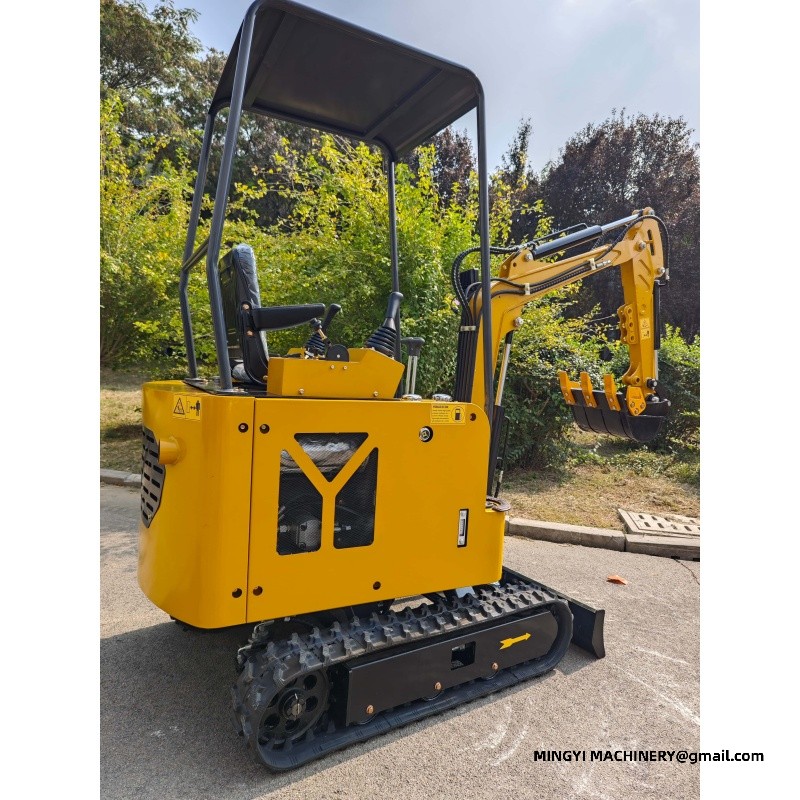
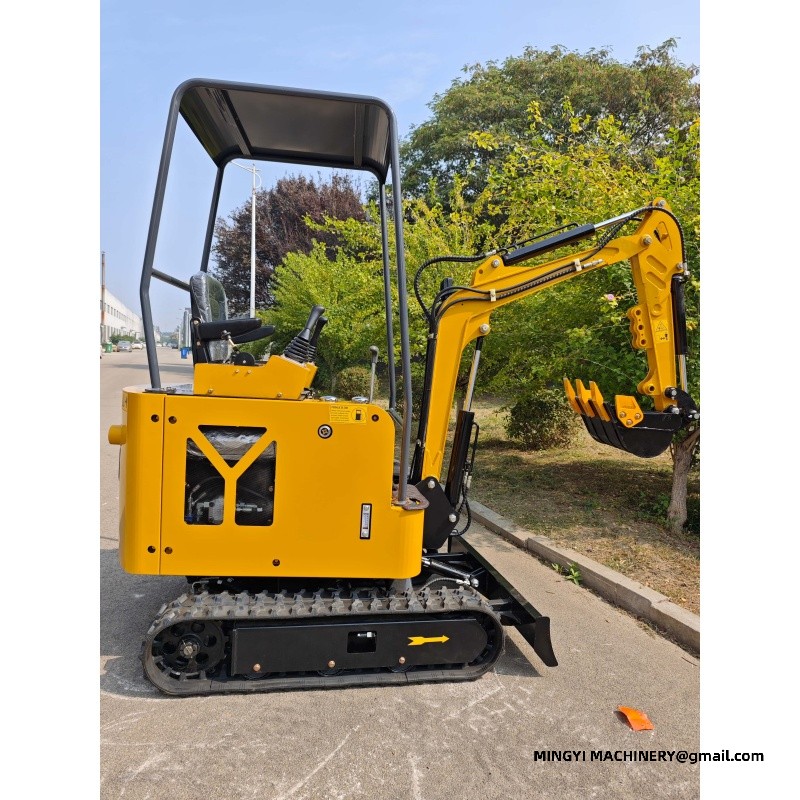
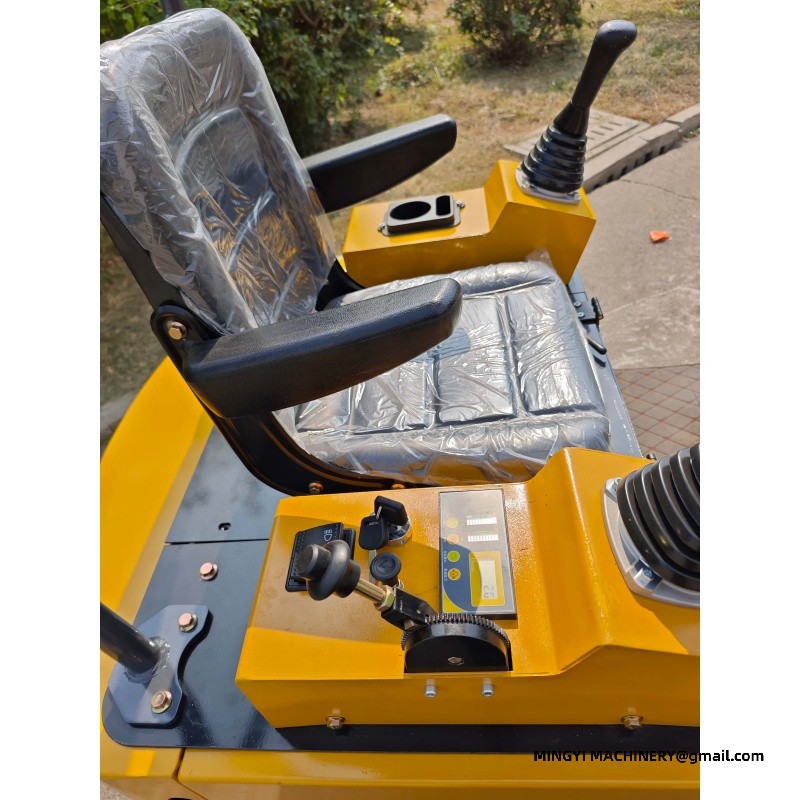
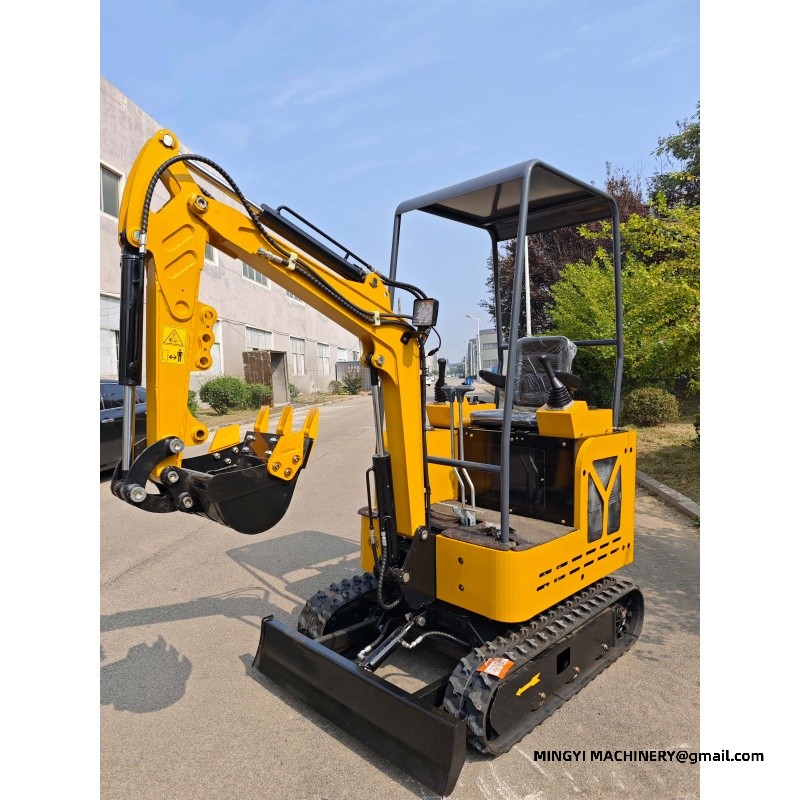
Reference specification — mini excavator range 12W 20-3W 09L 20-2L Operating weight 1200 kg (2645.55 lb) 1900 kg (4188.78 lb) 1100 kg (2425.08 lb) 1900 kg (4188.78 lb) Transport size (L×W×H) 2200 × 930 × 2250 mm 2550 × 1100 × 2200 mm 2300 × 720 × 1870 mm 2600 × 1300 × 2344 mm Max digging depth 1630 mm (64.17 in) 1800 mm (70.87 in) 1400 mm (55.12 in) 2100 mm (82.68 in) Max digging height 2750 mm (108.27 in) 2820 mm (111.02 in) 2800 mm (110.24 in) 2880 mm (113.39 in) Max dumping height 1960 mm (77.17 in) 2050 mm (80.71 in) 1880 mm (74.02 in) 2100 mm (82.68 in) Max digging radius 2900 mm (114.17 in) 3050 mm (120.08 in) 2490 mm (98.03 in) 3215 mm (126.57 in) Max digging distance 2100 mm (82.68 in) 2300 mm (90.55 in) 2000 mm (78.74 in) 2460 mm (96.85 in) Minimum turning radius 1300 mm (51.18 in) 1450 mm (57.09 in) 1400 mm (55.12 in) 1587 mm (62.48 in) Travel speed 3 km/h (1.86 mph) 5 km/h (3.11 mph) 3 km/h (1.86 mph) 5 km/h (3.11 mph) Gradeability 30° 30° 30° 30° Fuel consumption 1-1.3 L/h (0.264—0.343 gal) 2-3 L/h (0.528—0.793 gal) 1-1.3 L/h (0.264—0.343 gal) 2-3 L/h (0.528—0.793 gal) Fuel tank capacity 10 L (2.64 gal) 16 L (4.23 gal) 8 L (2.11 gal) 16 L (4.23 gal) Hydraulic oil tank 16 L (4.23 gal) 18 L (4.76 gal) 16 L (4.23 gal) 18 L (4.76 gal) Dozer blade lift height 180 mm (7.09 in) 180 mm (7.09 in) 180 mm (7.09 in) 180 mm (7.09 in) Dozer blade drop depth 210 mm (8.27 in) 210 mm (8.27 in) 210 mm (8.27 in) 210 mm (8.27 in)
Q. Who chooses a machine built for the work?
A. A trench is judged by what happens after the dig: a straight line, a stable wall and a backfill that settles without sinking - all set by bucket width and machine control. Working back along the line keeps spoil clear and the sightline open, which is how the trench stays straight without marking every metre. MINGYI builds the 08, 12 and 18 models covering the 0.8 to 6 tonne class, and the equipment in service is where that range meets drainage and fencing.
Q. Which bucket digs a clean trench?
A. A narrow trenching bucket matched to the pipe or cable, with teeth only when the ground is hard. MINGYI specifications bucket widths with the machine, so the trench and the tool arrive matched instead of guessed.
Q. How do I get a specification?
A. Send the model, the destination and the attachment list by email or LINE - the channels listed just below this section. The reply covers the specification, lead time, packing and freight in one document, with the drainage and fencing build sheet attached.
Hot, humid and dusty conditions around the excavator
Heat and dust shorten service intervals rather than machine life. In these conditions the filters on this class of machine need attention more often, and the cooling surfaces need to be kept clear to hold the working temperature.
Packing, loading and shipment of the unit in daily use
Container loading is a planning exercise. The overall dimensions and the operating weight of a machine of this size decide whether it ships whole, partly disassembled or with the attachment removed, and that decision is made before the booking.
E-mail : sales@mingycn.com
LINE ( ID ): mingyicn
Related pages
mini digger for garden sites · steel tracked ditching mini excavator · Hydraulic Wheel Loader Log Grapple: Circuit and Cylinders · Mini Excavators









