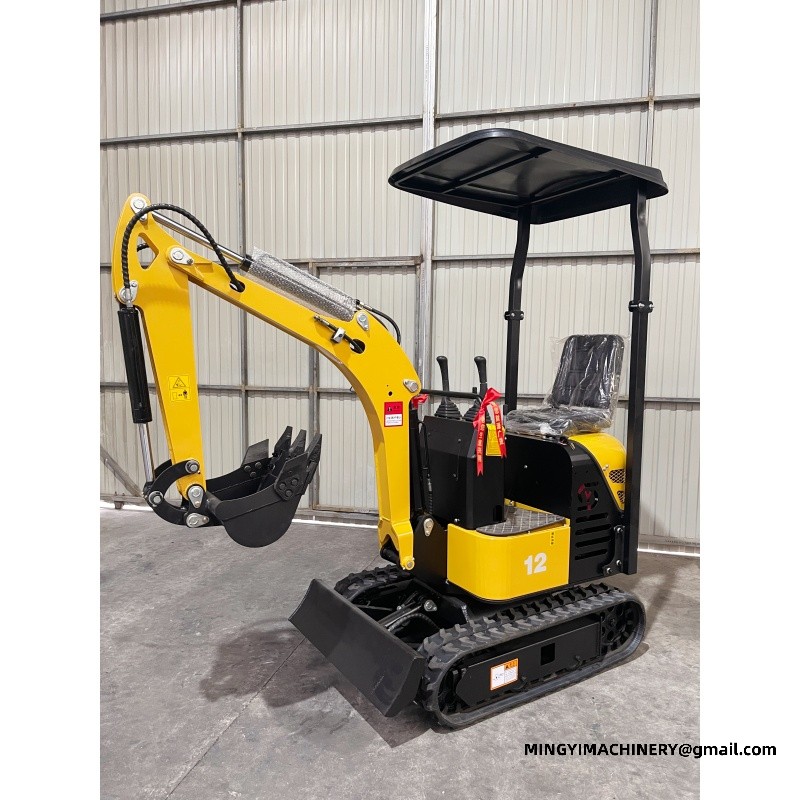
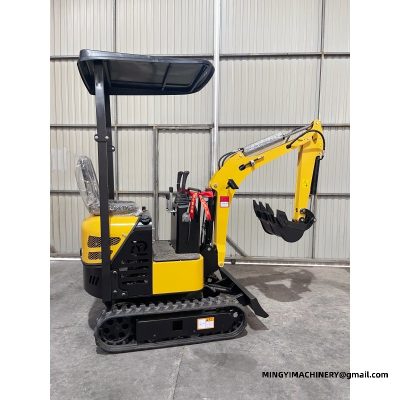
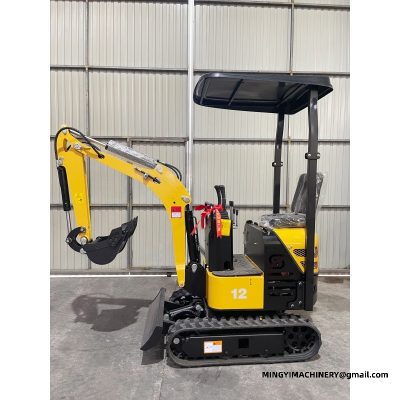
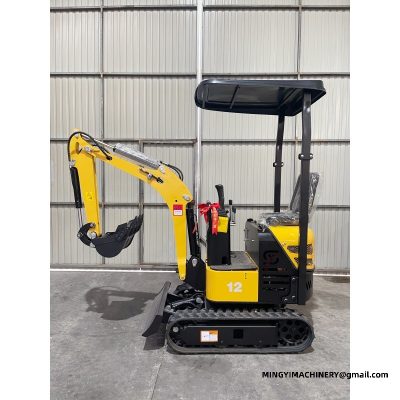
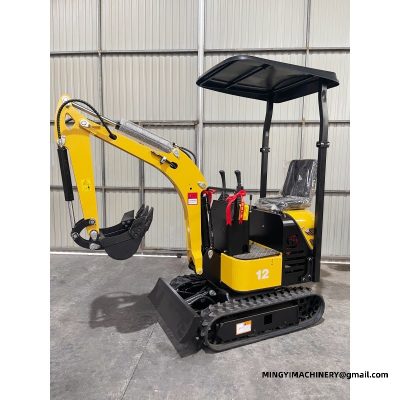
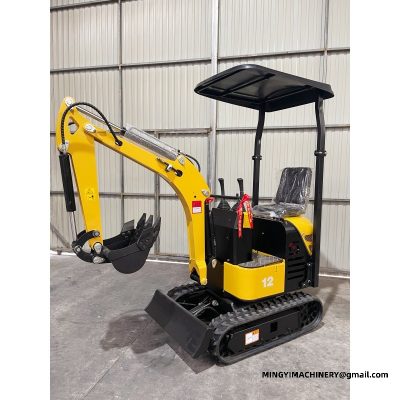
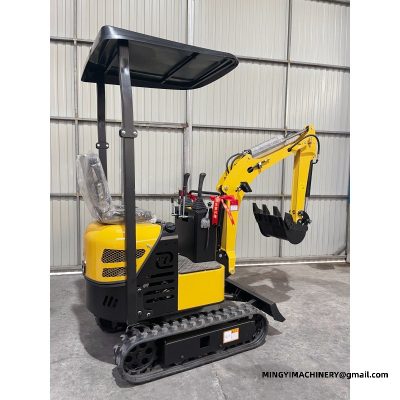
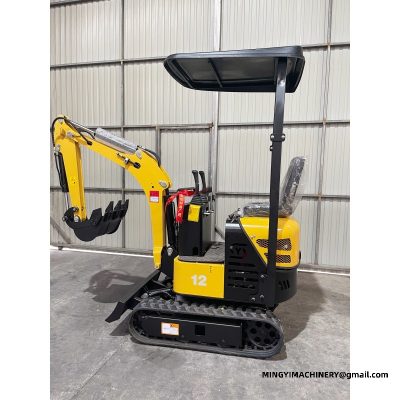
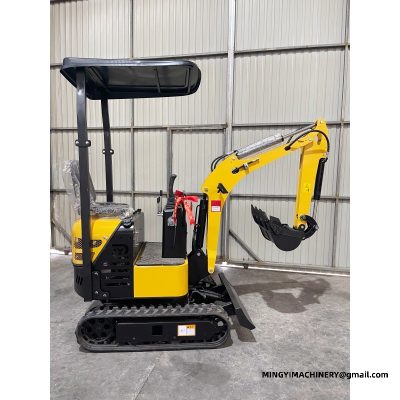
The excavator is the machine that handles work a full size carrier cannot reach. It digs footings, opens service runs and clears ground in gardens, yards and narrow plots, and it travels on an ordinary trailer.
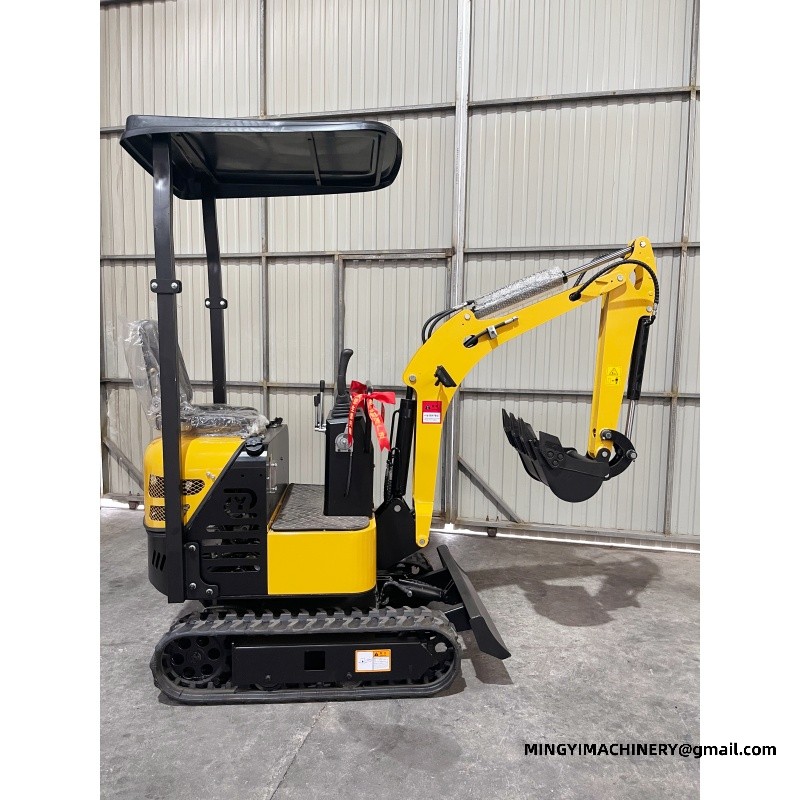
MINGYI builds compact crawler excavators across the 0.8 to 6 tonnes band and supplies them to order. The class is defined at ordering through the engine, the track type, the cab form and the attachment list.
What defines the small excavator class
The class sits below the full size machines and above the micro end, so it has enough mass to dig serviceable trenches yet stays light enough to be moved without a low loader. That balance suits scattered sites.
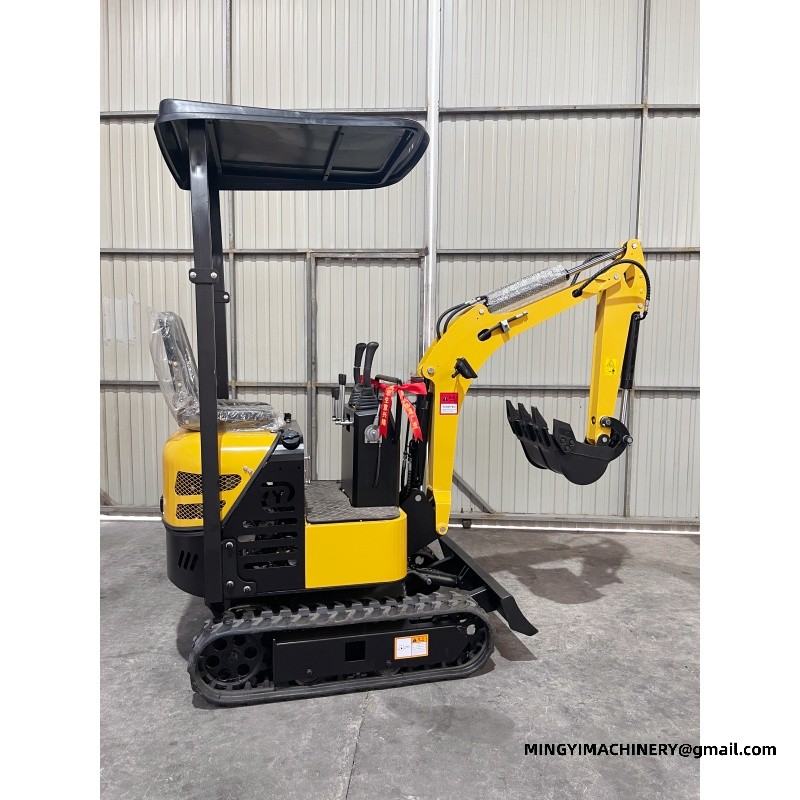
Within the band, the working weight drives reach, lift and stability. A buyer who knows the deepest dig and the heaviest lift can choose the smallest machine that covers both rather than over-specifying.
Configuring a small excavator for the job
Rubber tracks suit paved surfaces and grass, while steel tracks with rubber blocks suit firmer ground and repeated work. The choice affects both the surface left behind and the grip available on site.
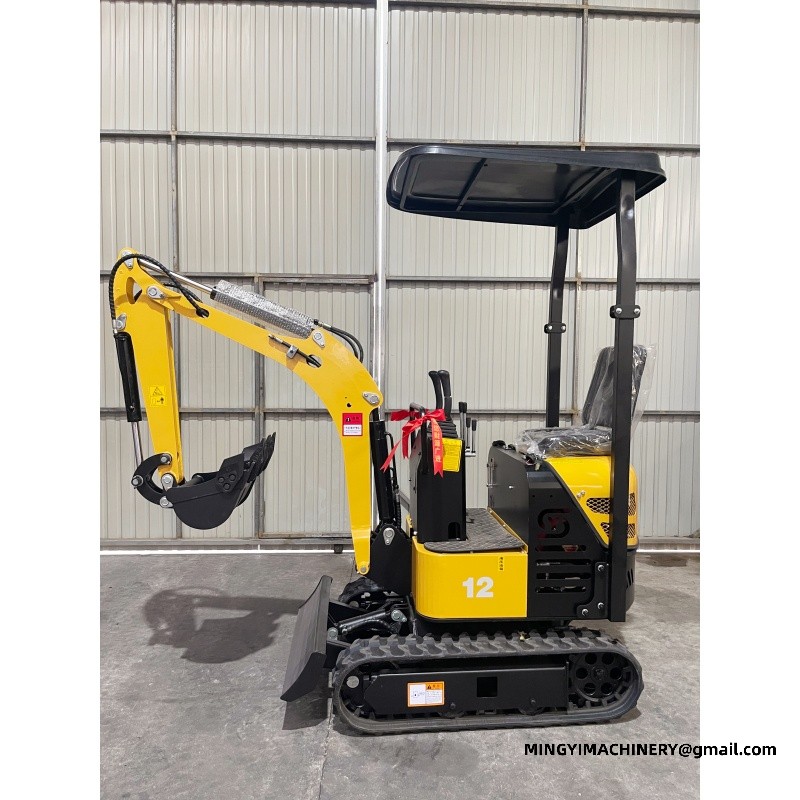
Attachments turn the carrier into a multi-purpose machine. A quick coupler allows a digging bucket, breaker hammer or auger to be changed quickly, so one unit covers excavation, breaking and drilling.
Working weight, track type and the attachment package are the choices this class of machine order turns on. Settling them during ordering keeps the delivered machine matched to the work it will actually do.
What owners should plan for beyond the small excavator Purchase decision is the visible part of the effort. Fuel, filters, tracks or tyres, the operator and the transport between sites are the items that decide what the unit in daily use actually demands over a few seasons, and they are worth listing before the order. The useful comparison is demand per working hour, not demand per machine. A machine of this size that works more hours a year spreads its standing takes over more output, which is why utilisation usually matters more than the invoice figure. Municipal and public works with small excavator Municipal crews work on streets, footpaths and parks where the public is present. The equipment on site is specified because it occupies little space, works inside a small exclusion zone and can be moved on a standard trailer. Drainage repair, tree planting, footway reconstruction and cemetery work are all within the range of the machine itself. The jobs are small individually and continuous across the year. Interior and light demolition with small excavator Interior demolition is an access and a weight question. The model in question that fits through a doorway and works on a suspended floor does jobs that would otherwise be done by hand or by a larger machine that cannot enter. Breaking out a floor slab, a wall footing or a concrete step is routine work for the machine in that duty with a breaker. The machine is small enough to work inside and heavy enough to run the tool at a practical rate. Engine options behind small excavator Power unit selection is settled against the service network the buyer already uses. MINGYI offers Kubota D722, Kubota D902, YANMAR, Changchai, Laidong, Runtong, YARMAX, Youpu 2V80 and Youpu 195, so a fleet running one brand of engine can keep the same filters, the same parts supplier and the same mechanic. Two buyers can order the same the unit on the job and receive different engines. The decision is rarely about peak power; it is about which parts counter is closest to the site and which engine the local mechanic already knows. Matching small excavator to ground conditions Soft ground is a flotation problem, not a power problem. A machine built for the work on wide rubber tracks crosses lawn, sand and cultivated soil that would stop a narrower machine or a wheeled unit of the same capacity. Mixed sites are common and argue for a compromise specification. Most buyers choose rubber for the equipment in service and accept the wear, unless the majority of the work is on material that will damage it. Hiring versus owning a small excavator Availability is part of the decision. Owning the excavator means it is there on the day the ground is ready; hiring means competing for the same machine at the same time as everyone else in the season. Ownership brings obligations that hiring does not. Storage, servicing, insurance and an operator are the items to set against the hire rate before deciding which way this class of machine should be supplied. Track choice for the unit in daily use Undercarriage selection is a ground question, not a preference question. A machine of this size running on finished paving needs rubber; the same machine on demolition rubble or rock wears rubber quickly, so steel with rubber blocks becomes the better answer over a full season. Track type changes what the machine can cross and what it leaves behind. Buyers specify rubber for lawns, driveways and municipal work, and steel with rubber blocks for sites where sharp material would cut a rubber belt in a week. Specifying the equipment on site against a job list The practical way to specify is to write the job list first: the narrowest access, the deepest trench, the heaviest tool and the surfaces the machine must cross. The machine itself is then matched to those four numbers. Buyers who skip this step either over-buy or under-buy. The model in question specified only from machine size tends to arrive without the coupler, the circuits or the track type the work actually needs. Lifting and material handling with the machine in that duty Stability changes with reach. A load the unit on the job handles close in becomes a different proposition at full extension, so the working radius belongs in the plan before the lift rather than during it. Ground condition under the machine is part of every lift. Soft or uneven support is the common factor in handling incidents, and checking it takes less time than recovering a machine built for the work that has settled. Operator technique for the equipment in service Output on a compact machine comes from placement rather than power. An experienced operator keeps the excavator working inside the swing arc, positions once and digs a full run instead of repositioning for every bucket. Stability is the third. This class of machine working across the tracks rather than over the corners keeps the machine steady and the undercarriage loaded evenly, which shows up as track life at the end of the season. Working on slopes and uneven ground with the unit in daily use Slope work is a stability question before it is a traction question. Knowing the gradient a machine of this size is rated for, and working across rather than straight up where the ground allows, removes most of the risk. Planning the direction of travel helps. Working so that the equipment on site is stable under load and not required to turn on a slope is a decision made before the job starts, not a correction made during it. Parts, service and support for the machine itself Engine parts availability usually drives the engine choice. The model in question built with an engine the local network already carries is serviced from stock rather than from an international order. Remote support is handled by video. The machine in that duty fault can often be diagnosed on a walk-around call with the panel open, which is faster than waiting for a visit and avoids shipping a part that is not needed. Road and paving work for the unit on the job Patching and reinstatement favour a machine that can work in a lane closure. A machine built for the work occupies less road than a full-size excavator, which reduces the traffic management needed and the length of the closure. Breaking out a failed slab and backfilling the same hole in one visit is normal work for the equipment in service. The breaker and the bucket come off the same coupler, so the road is reopened the same day. Specification data for the excavator Where this class of machine is being specified for a job list, the table below gives the factory figures that matter most: what the machine weighs, how deep and how far it works, and what it measures on a trailer. Every value shown is as built for the unit in daily use; options such as cab, side swing or a telescopic undercarriage change the transport dimensions and are confirmed at order stage. Orchard and vineyard work is carried out between rows. A machine of this size with a narrow chassis and a swing boom works down the row without damaging the trees, which is the reason a full-size machine is not used at all. Ditching, fertilising and drainage on farmland suit the equipment on site because the work is spread over a large area in short bursts. The machine travels behind a pickup and works where it stops.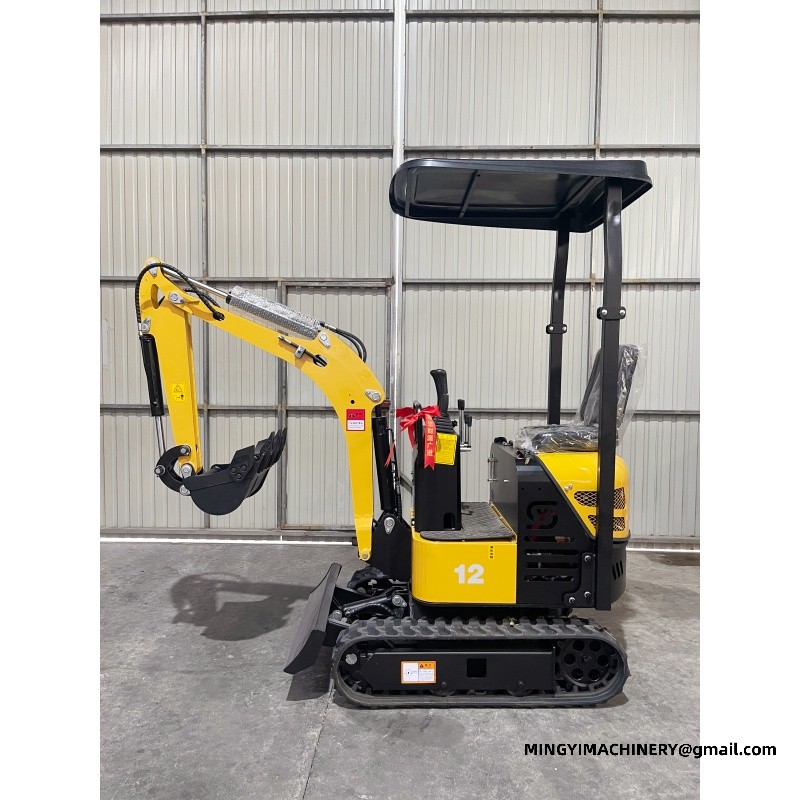
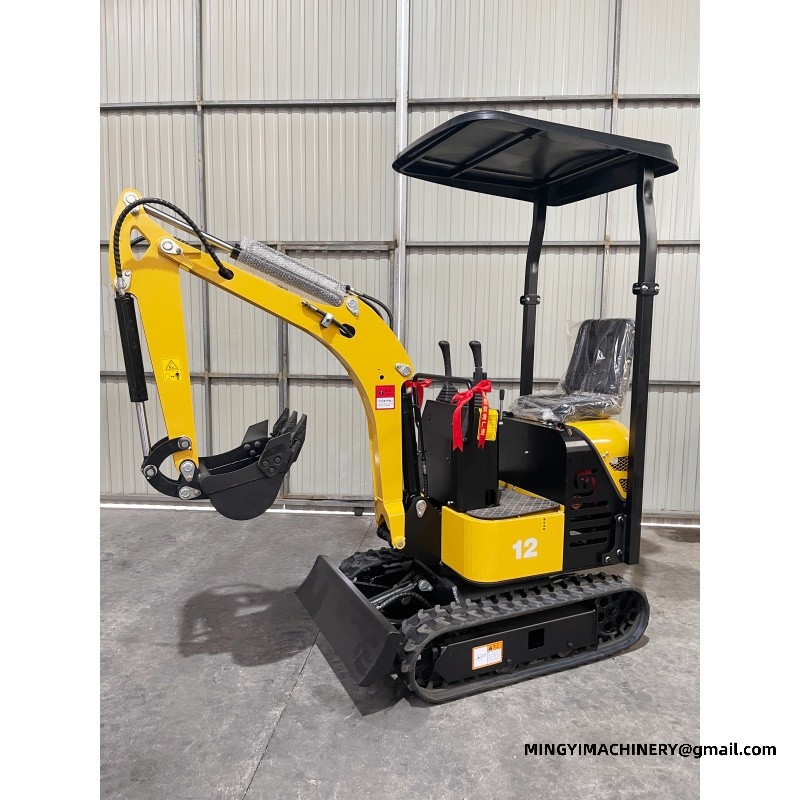
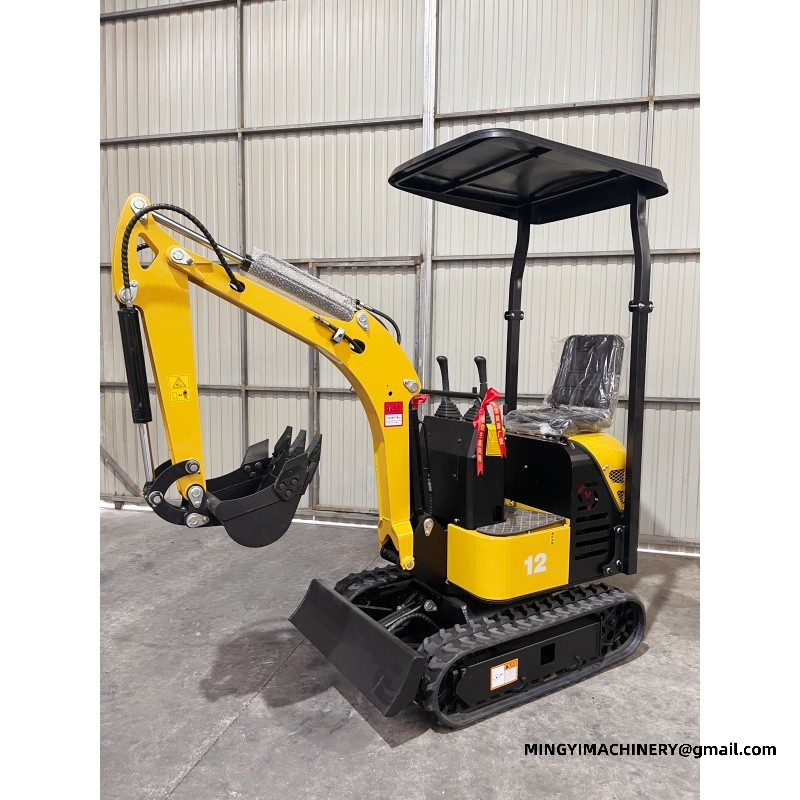
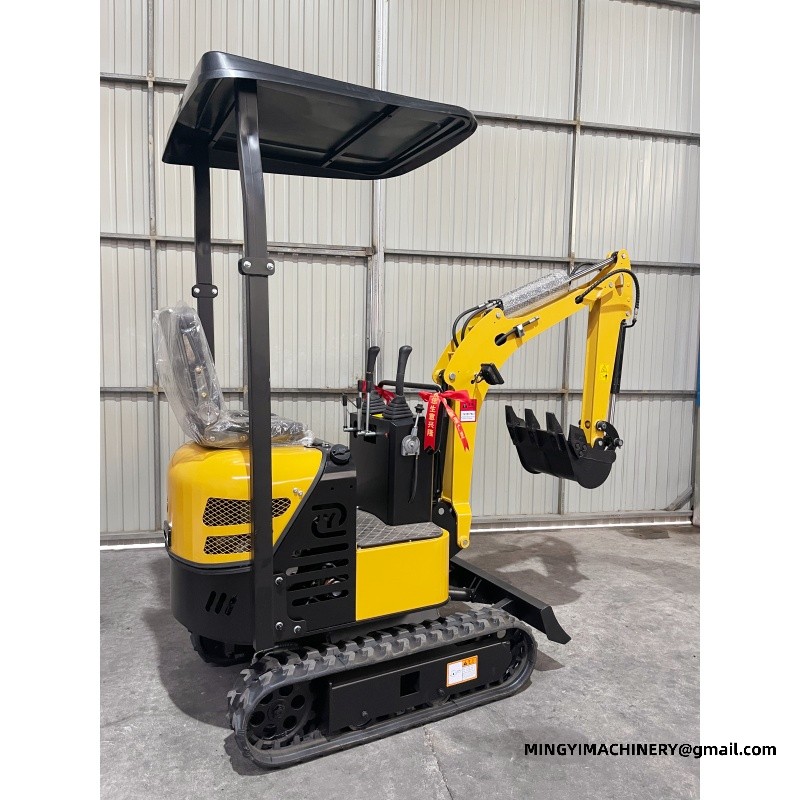
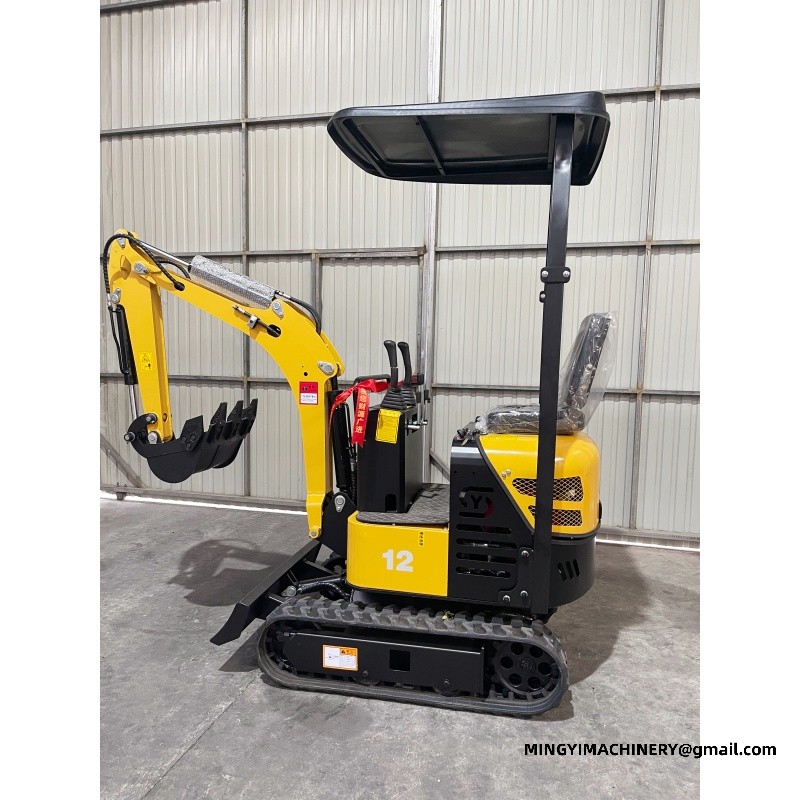
Reference specification — mini excavator range 20-3W 09L 12L 30-2L Operating weight 1900 kg (4188.78 lb) 1100 kg (2425.08 lb) 1200 kg (2645.55 lb) 2400 kg (5291 lb) Transport size (L×W×H) 2550 × 1100 × 2200 mm 2300 × 720 × 1870 mm 2200 × 930 × 2250 mm 2800 × 1500 × 2500 mm Max digging depth 1800 mm (70.87 in) 1400 mm (55.12 in) 1700 mm (66.93 in) 2200 mm (86.61 in) Max digging height 2820 mm (111.02 in) 2800 mm (110.24 in) 2600 mm (102.36 in) 2900 mm (114.17 in) Max dumping height 2050 mm (80.71 in) 1880 mm (74.02 in) 1800 mm (70.87 in) 2100 mm (82.68 in) Max digging radius 3050 mm (120.08 in) 2490 mm (98.03 in) 2900 mm (114.17 in) 3330 mm (131.1 in) Max digging distance 2300 mm (90.55 in) 2000 mm (78.74 in) 2300 mm (90.55 in) 2700 mm (106.3 in) Minimum turning radius 1450 mm (57.09 in) 1400 mm (55.12 in) 1450 mm (57.09 in) 1555 mm (61.22 in) Travel speed 5 km/h (3.11 mph) 3 km/h (1.86 mph) 3 km/h (1.86 mph) 7 km/h (4.35 mph) Gradeability 30° 30° 30° 30° Fuel consumption 2-3 L/h (0.528—0.793 gal) 1-1.3 L/h (0.264—0.343 gal) 1-1.3 L/h (0.264—0.343 gal) 2-3 L/h (0.528—0.793 gal) Fuel tank capacity 16 L (4.23 gal) 8 L (2.11 gal) 10 L (2.64 gal) 16 L (4.23 gal) Hydraulic oil tank 18 L (4.76 gal) 16 L (4.23 gal) 16 L (4.23 gal) 18 L (4.76 gal) Dozer blade lift height 180 mm (7.09 in) 180 mm (7.09 in) 180 mm (7.09 in) 230 mm (9.06 in) Dozer blade drop depth 210 mm (8.27 in) 210 mm (8.27 in) 210 mm (8.27 in) 280 mm (11.02 in)
Q. Who chooses the machine itself?
A. One machine, one trailer, one operator and a full week of varied work is the whole idea behind the compact excavator class. The limit is reach and lift, not willingness: within its envelope the compact machine holds a full-size work rate. The model in question is one of the pages buyers land on when comparing machines for general site, and the factory treats it as a specification conversation rather than a catalogue line.
Q. How do I choose the right machine for mixed work?
A. List the jobs in a normal month, find the narrowest access and the deepest dig, then size the machine to both. Send the list to the factory by email or LINE and the recommendation comes back matched to the work, not to the stock.
Q. What support follows the sale?
A. Spare-part kits, wear items and service documentation ship with the programme, and the parts team works from the serial plate to match components exactly. Warranty and support terms for the general site order are confirmed in writing before the machine leaves.
Cold weather and winter care for the machine in that duty
Starting is only the first problem. Until the unit on the job reaches working temperature the hydraulic response is slower and the seals are stiffer, and warming the machine before asking for full output avoids unnecessary strain.
A second operator for a machine built for the work
Training is simpler than repair. An hour spent with a new operator on the equipment in service, covering the limits and the awkward cases, is the least lengthy hour in the whole ownership.
Reading the early symptoms on the excavator
The symptom is usually not at the fault. A hydraulic function that has become sluggish on this class of machine may point to a filter, a relief setting or a pump, and starting with the simple checks avoids the wrong guess.
E-mail : sales@mingycn.com
LINE ( ID ): mingyicn
Related pages
mini crawler excavator · micro excavator · China Wheel Loader Factory Supplier: Specs and Order Process · Mini Excavators









