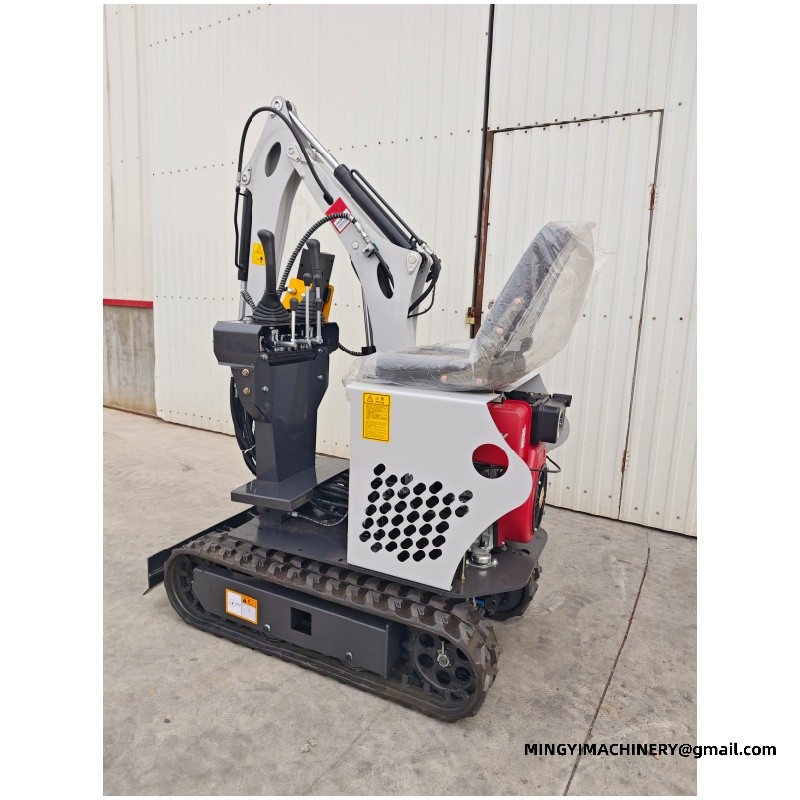
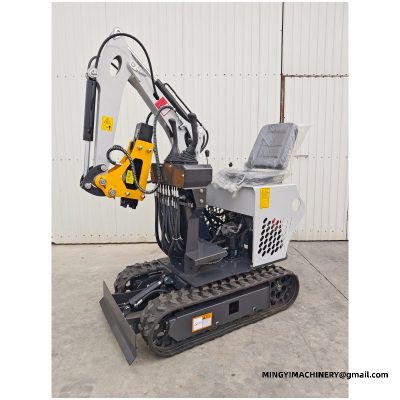
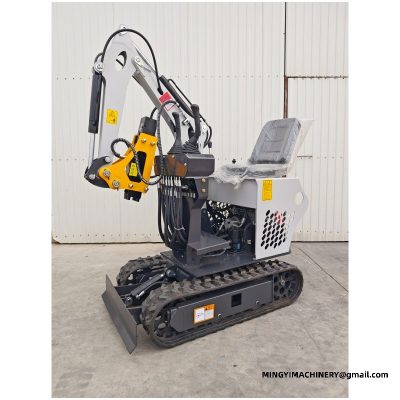
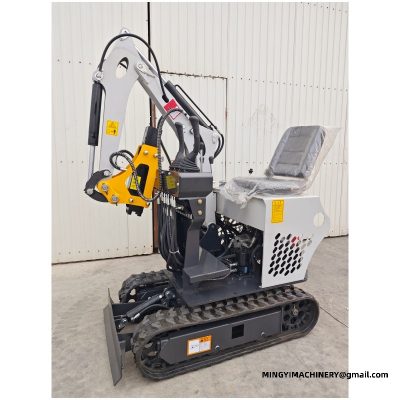
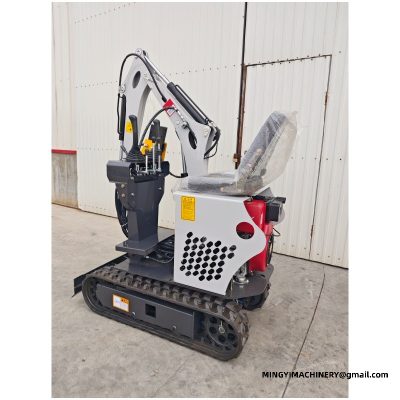
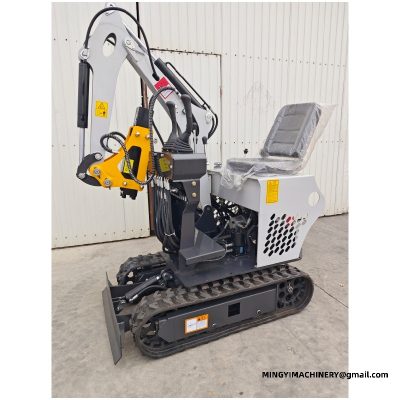
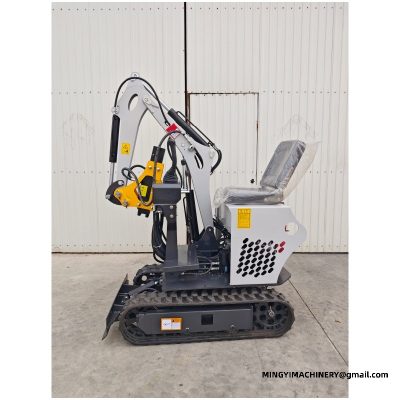
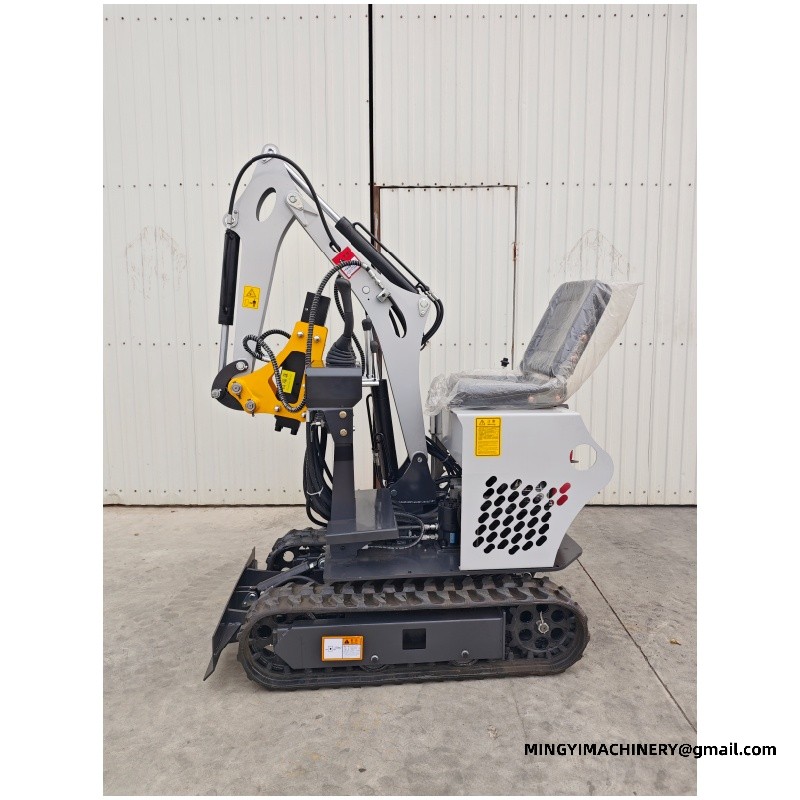
Rubber tracks change where a small digger can go. Instead of being kept to bare ground, it can cross paving, kerbs, driveways and finished surfaces without levering them up or leaving a trail of marks behind it.
MINGYI fits rubber tracks as an option across its small crawler range, and each unit is assembled to order. Track type is settled at the ordering stage together with the attachment package, so the machine arrives set up for the surfaces on site.
Rubber tracks on finished and public surfaces
The advantage is contact area. A rubber track spreads the weight of the machine over a longer, wider footprint, which lowers the pressure on the surface beneath and reduces the rutting that steel tracks can cause on asphalt or block paving.
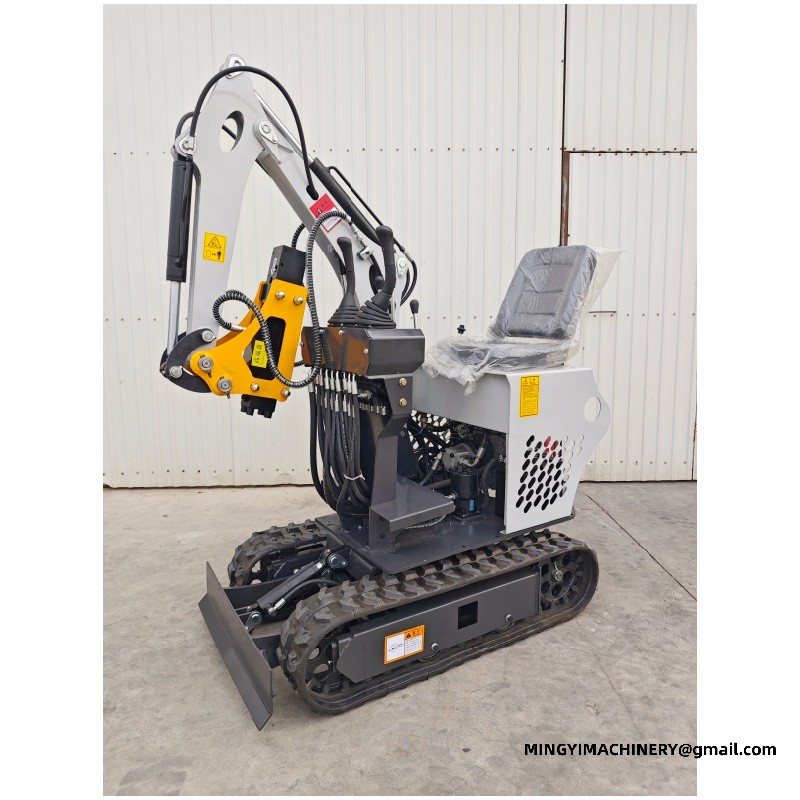
That makes the machine usable in places where steel would not be acceptable: footpaths, shared courtyards, school grounds and the frontage of an occupied building. Work can continue without closing the access that residents or staff use.
Track choice and undercarriage care
Rubber is not always the right answer. On wet, soft or root-filled ground a steel track with rubber blocks gives more grip, and the blocks can be replaced as they wear rather than renewing the whole track.
Whichever is fitted, track condition affects the rest of the undercarriage. Checking tension, cleaning out packed material and watching for uneven wear are ordinary daily habits, and replacement tracks and rollers are supplied with the machine's spare parts information.
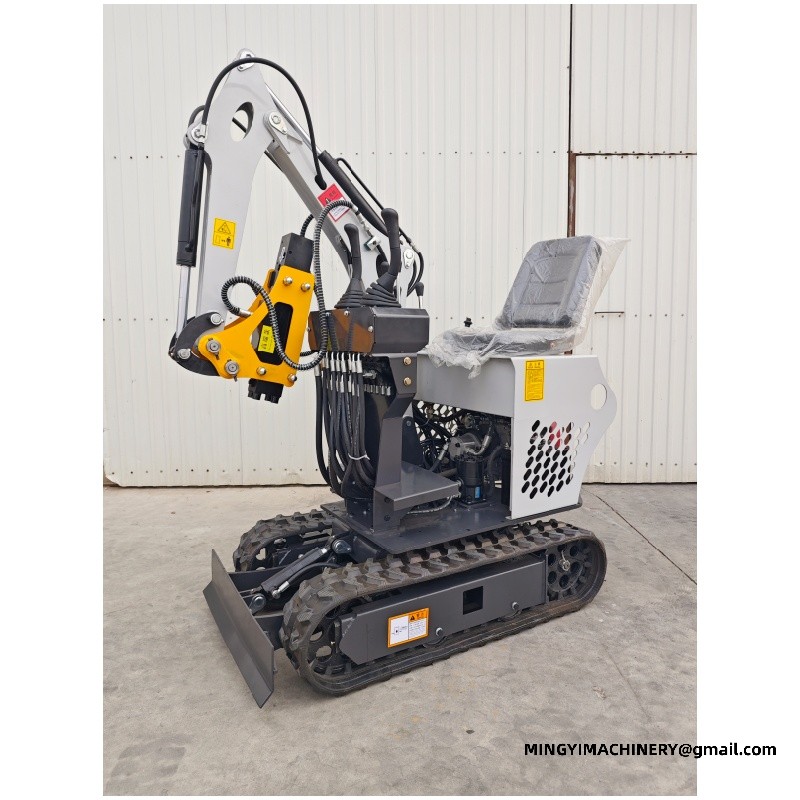
Choosing rubber tracks is really a decision about the working environment rather than the machine. Where a small digger has to move between finished surfaces and open ground, rubber tracks usually keep the job open that steel tracks would close.
Matching small digger machine with rubber tracks to ground conditions Soft ground is a flotation problem, not a power problem. The excavator on wide rubber tracks crosses lawn, sand and cultivated soil that would stop a narrower machine or a wheeled unit of the same capacity. Mixed sites are common and argue for a compromise specification. Most buyers choose rubber for this class of machine and accept the wear, unless the majority of the work is on material that will damage it. Municipal and public works with small digger machine with rubber tracks Municipal crews work on streets, footpaths and parks where the public is present. The unit in daily use is specified because it occupies little space, works inside a small exclusion zone and can be moved on a standard trailer. Drainage repair, tree planting, footway reconstruction and cemetery work are all within the range of a machine of this size. The jobs are small individually and continuous across the year. Getting small digger machine with rubber tracks through a narrow gap Access decides the machine before output does. With the equipment on site the limiting dimension is usually the widest point on the way in, so measuring the gate, the corridor and the turning space first saves a wasted delivery and a second visit. Contractors who buy the machine itself normally have one job in mind that nothing else reaches. The purchase order follows the access measurement, not the other way round, and the build sheet is then settled around it. Hydraulic circuits on a small digger machine with rubber tracks Flow and pressure are matched to the tool, not to the machine size. Asking for the attachment list first means the model in question leaves the factory with circuits that suit the heaviest tool the buyer intends to run. Hydraulic specification is easier to settle at build time than to correct later. The machine in that duty delivered without auxiliary lines can still dig, but every additional tool becomes a retrofit project. Boom configuration for small digger machine with rubber tracks A swing boom lets the machine dig parallel to its tracks without repositioning, which is what makes trenching beside a wall or a fence practical. On the unit on the job this is often the option that decides whether a job is possible at all. Extended and offset boom configurations change reach and working range. A machine built for the work with a longer arm reaches further but lifts less at full extension, so the specification is set against the deepest and furthest point on the job list. Working near live services with small digger machine with rubber tracks The risk on utility work is not machine power but machine placement. The equipment in service that fits the working width leaves the surrounding ground undisturbed, which keeps the trench stable and the reinstatement small. Utility crews specify the excavator with a narrow bucket and good visibility for exactly this reason: the machine has to stop at the service, not at the edge of the operator's view. Working this class of machine through the seasons Weather decides which days are productive. Rain turns some ground unusable and cold changes how the unit in daily use starts and warms up, so planning the wet months around maintenance is more useful than planning around output. Seasonal planning smooths the workload. Machines that are busy for a few months and idle for the rest benefit from a service slot in the quiet period, and a machine of this size prepared in the off-season starts the busy months reliably. Daily checks and maintenance on the equipment on site Track tension is the item most often neglected. The machine itself run with slack tracks wears the undercarriage and can throw a track on a turn; run too tight, the same components wear from the other direction. Greasing is the second item. The slew ring, the boom and arm pins and the bucket linkage on the model in question take grease daily in dusty work, and the intervals shorten further when the machine is used in water or mud. Trenching work with the machine in that duty Service trenches are the most common reason the unit on the job is hired. Water, sewage, cable and gas runs are narrow, shallow and often close to existing services, which is exactly the work a full-size machine cannot do safely. Trench quality depends on the bucket width and the operator, not on machine size. A machine built for the work with a narrow bucket and a swing boom cuts a clean run along a boundary without disturbing the ground either side of it. Operator technique for the equipment in service Output on a compact machine comes from placement rather than power. An experienced operator keeps the excavator working inside the swing arc, positions once and digs a full run instead of repositioning for every bucket. Stability is the third. This class of machine working across the tracks rather than over the corners keeps the machine steady and the undercarriage loaded evenly, which shows up as track life at the end of the season. Hiring versus owning the unit in daily use Availability is part of the decision. Owning a machine of this size means it is there on the day the ground is ready; hiring means competing for the same machine at the same time as everyone else in the season. Ownership brings obligations that hiring does not. Storage, servicing, insurance and an operator are the items to set against the hire rate before deciding which way the equipment on site should be supplied. Specification data for the machine itself The figures below are the factory figures for the models most often matched to the model in question. They are the numbers to check against the site: the depth the work needs, the reach from one position, and the width of the narrowest point on the route in. Every value shown is as built for the machine in that duty; options such as cab, side swing or a telescopic undercarriage change the transport dimensions and are confirmed at order stage. The base machine is a carrier; the tool on the end of the arm decides the task. The unit on the job fitted with a toothed bucket digs, and the same machine with a breaker, an auger or a grab does work that would otherwise need a second unit on site. Most of the daily variety on a machine built for the work comes from the attachment rack rather than from the machine itself. Bucket, breaker, auger, ripper, rake and grab cover the large majority of the work a contractor will see.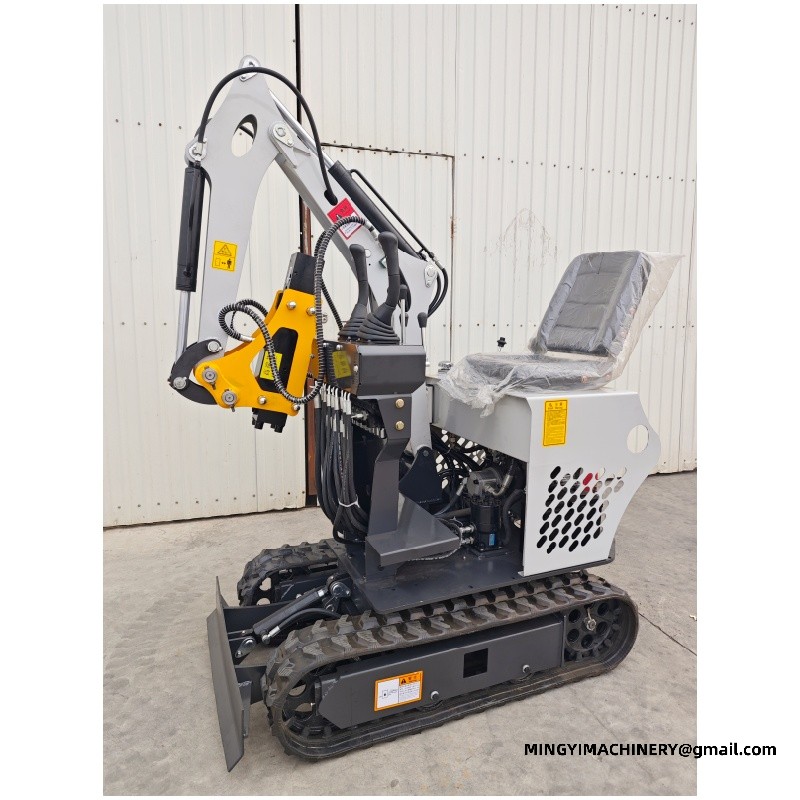
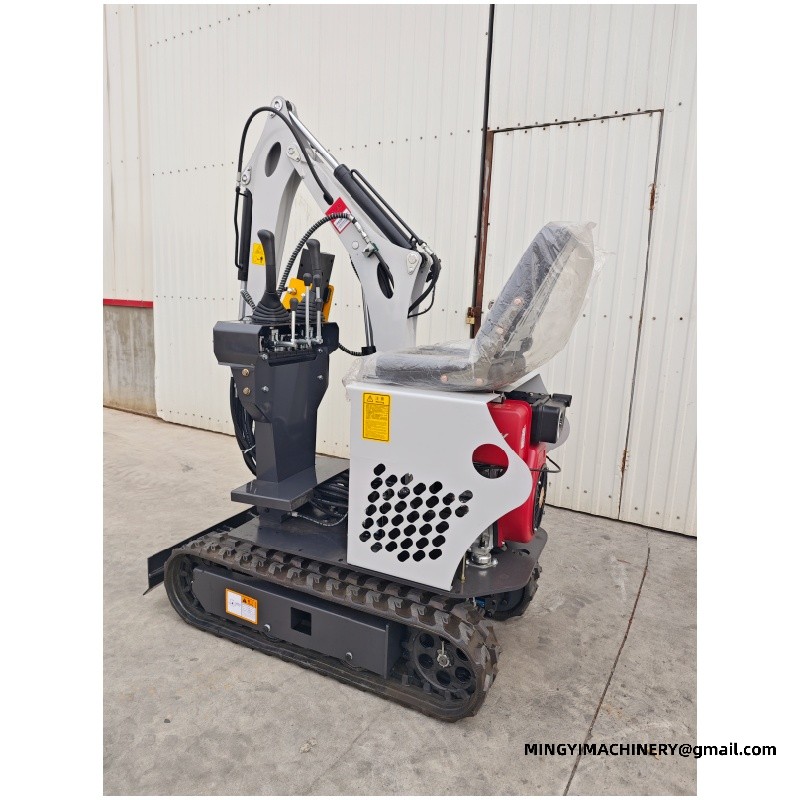
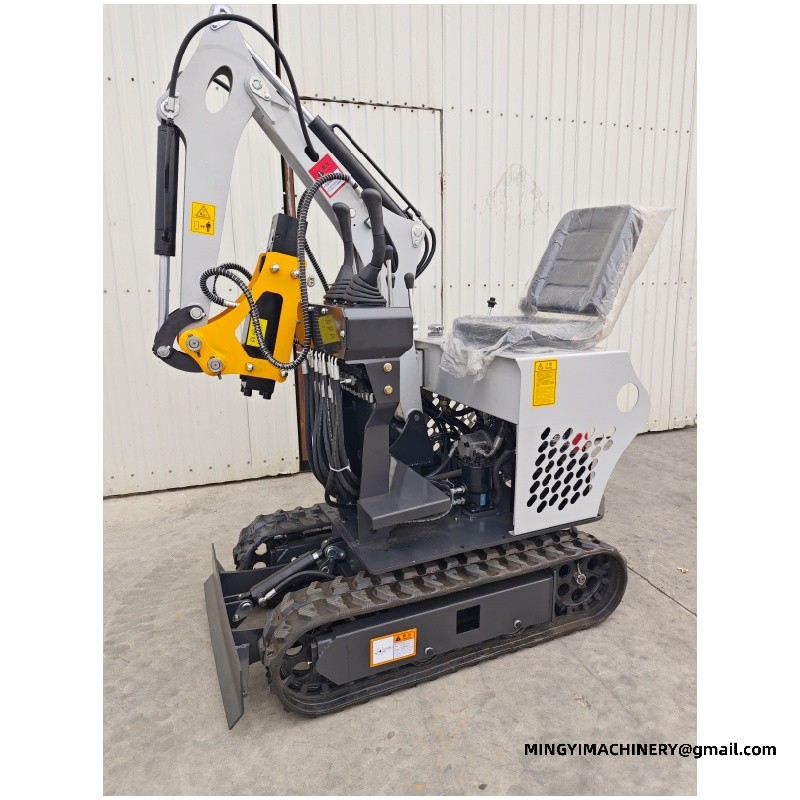
Reference specification — mini excavator range 13W 20-1WL 20-3W 30-1W Operating weight 1300 kg (2866.01 lb) 1900 kg (4188.78 lb) 1900 kg (4188.78 lb) 2900 kg (6393.41 lb) Transport size (L×W×H) 2200 × 930 × 2250 mm 2550 × 1100 × 2200 mm 2550 × 1100 × 2200 mm 3000 × 1250 × 2780 mm Max digging depth 1630 mm (64.17 in) 1800 mm (70.87 in) 1800 mm (70.87 in) 2200 mm (86.61 in) Max digging height 2750 mm (108.27 in) 2820 mm (111.02 in) 2820 mm (111.02 in) 3400 mm (133.86 in) Max dumping height 1960 mm (77.17 in) 2050 mm (80.71 in) 2050 mm (80.71 in) 2400 mm (94.49 in) Max digging radius 2900 mm (114.17 in) 3050 mm (120.08 in) 3050 mm (120.08 in) 4000 mm (157.48 in) Max digging distance 2100 mm (82.68 in) 2300 mm (90.55 in) 2300 mm (90.55 in) 2800 mm (110.24 in) Minimum turning radius 1300 mm (51.18 in) 1450 mm (57.09 in) 1450 mm (57.09 in) 2000 mm (78.74 in) Travel speed 3 km/h (1.86 mph) 5 km/h (3.11 mph) 5 km/h (3.11 mph) 5 km/h (3.11 mph) Gradeability 30° 30° 30° 30° Fuel consumption 1-1.3 L/h (0.264—0.343 gal) 2-3 L/h (0.528—0.793 gal) 2-3 L/h (0.528—0.793 gal) 2-3 L/h (0.528—0.793 gal) Fuel tank capacity 10 L (2.64 gal) 16 L (4.23 gal) 16 L (4.23 gal) 16 L (4.23 gal) Hydraulic oil tank 16 L (4.23 gal) 18 L (4.76 gal) 18 L (4.76 gal) 20 L (5.28 gal) Dozer blade lift height 180 mm (7.09 in) 180 mm (7.09 in) 180 mm (7.09 in) 420 mm (16.54 in) Dozer blade drop depth 210 mm (8.27 in) 210 mm (8.27 in) 210 mm (8.27 in) 210 mm (8.27 in)
Q. Who uses the equipment in service?
A. Track type sets ground pressure, grip and how the site looks when the machine leaves - the trade-off between rubber and steel is what the track decision comes down to. Most owners change ground through the year, and a machine that moves between track types keeps earning on both. The excavator is one of the pages buyers land on when comparing machines for rubber tracks, and the factory treats it as a specification conversation rather than a catalogue line.
Q. Which track should I run on my ground?
A. Rubber for lawns, paving and finished surfaces; steel for gravel, demolition rubble and slopes that eat rubber. Where the year takes the machine across both, the conversion and options pages describe moving between them, and MINGYI specifications both track types with the carrier.
Q. What about colours and branding?
A. OEM colours and decals are part of the build: private-label machines carry the buyer brand on the standard MINGYI platform, and the rubber tracks order confirms colours, marks and documents before production starts.
Storage and long idle periods for this class of machine
A stored machine should be brought back carefully. Before the unit in daily use returns to work the fluids, the brakes and the controls are checked, because months of standing change more than a weekend does.
Later additions and retrofits on a machine of this size
Retrofitting is limited by the base machine. Before anything is added to the equipment on site the hydraulic flow, the mounting interface and the stability allowance have to be checked, because those limits are what decide what is sensible.
E-mail : sales@mingycn.com
LINE ( ID ): mingyicn
Working alongside other plant with small digger machine with rubber tracks
A loading plan sets the spot where the truck waits, the direction it approaches from and the signal for it to leave.
Radio discipline saves more time than any other single measure, and one channel with agreed words is enough.
Matching the cycle counts matters too, because a fast loader feeding a slow haulage route simply builds a queue, and the queue is where the risk sits.
Related pages
mini excavator for sale from the factory · micro hydraulic excavator for indoor work · Construction Equipment Loader: Sizing for Site and Yard Work · Mini Excavators









