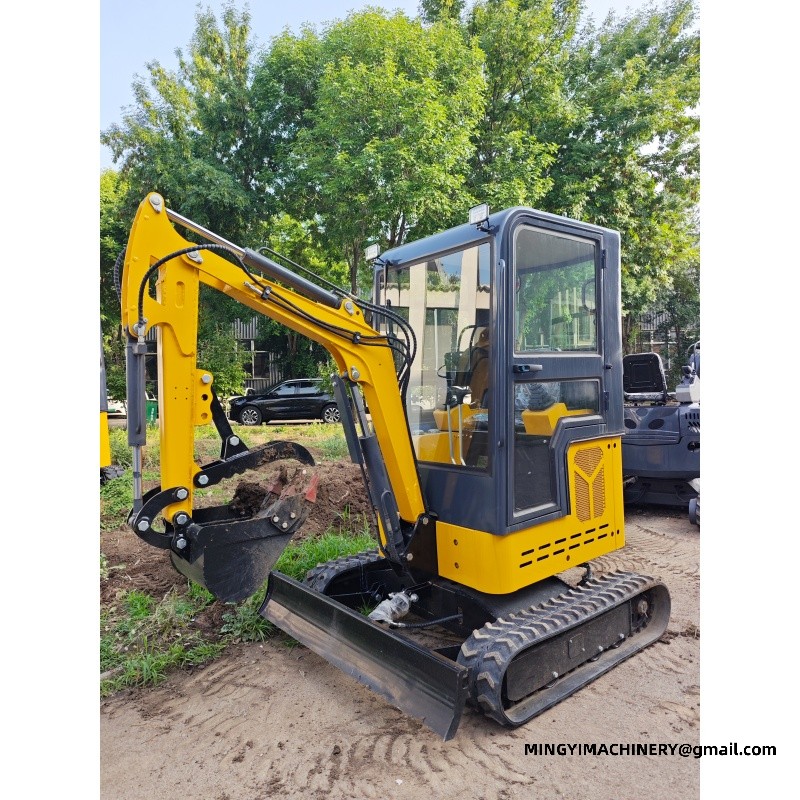
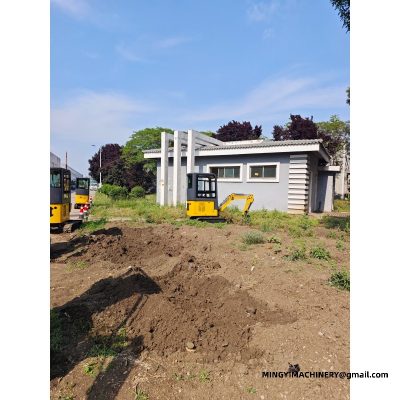
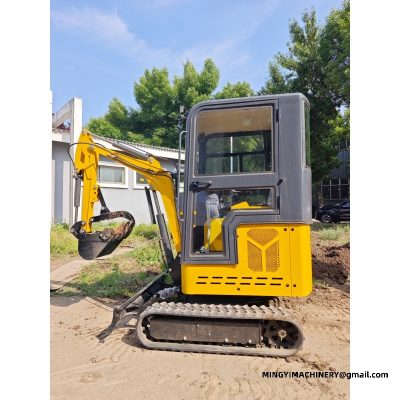
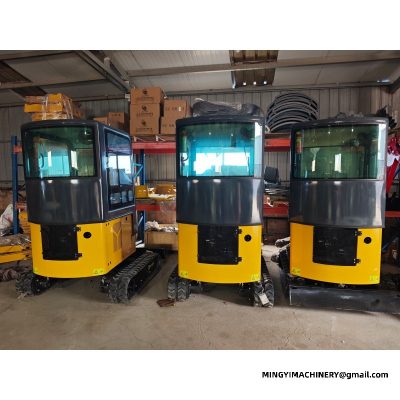
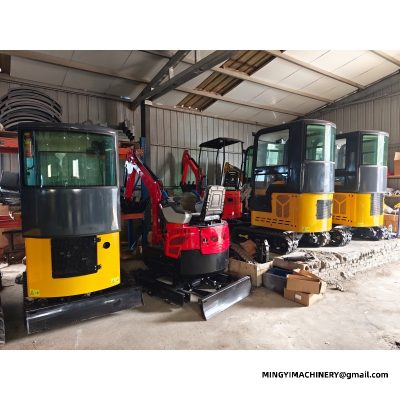
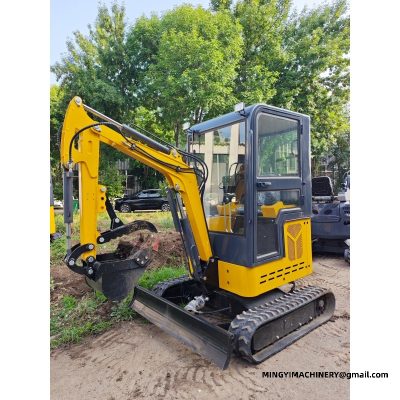
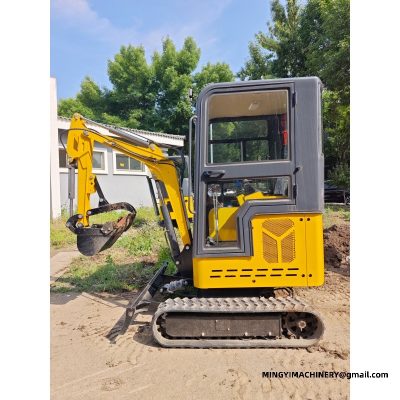
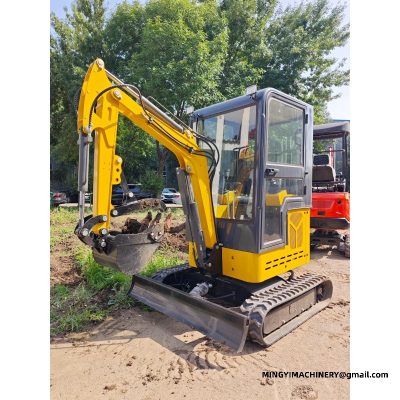
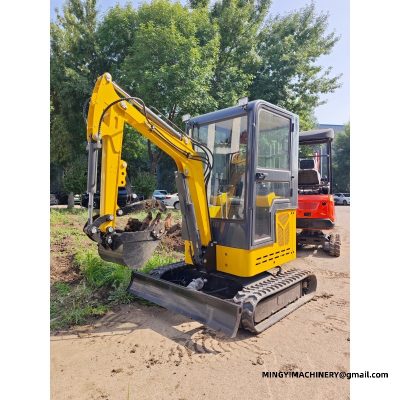
The excavator is bought by contractors whose operators spend long days in the seat. The cab is the part of the machine the operator lives in, so its layout and protection matter to how long a shift can run.
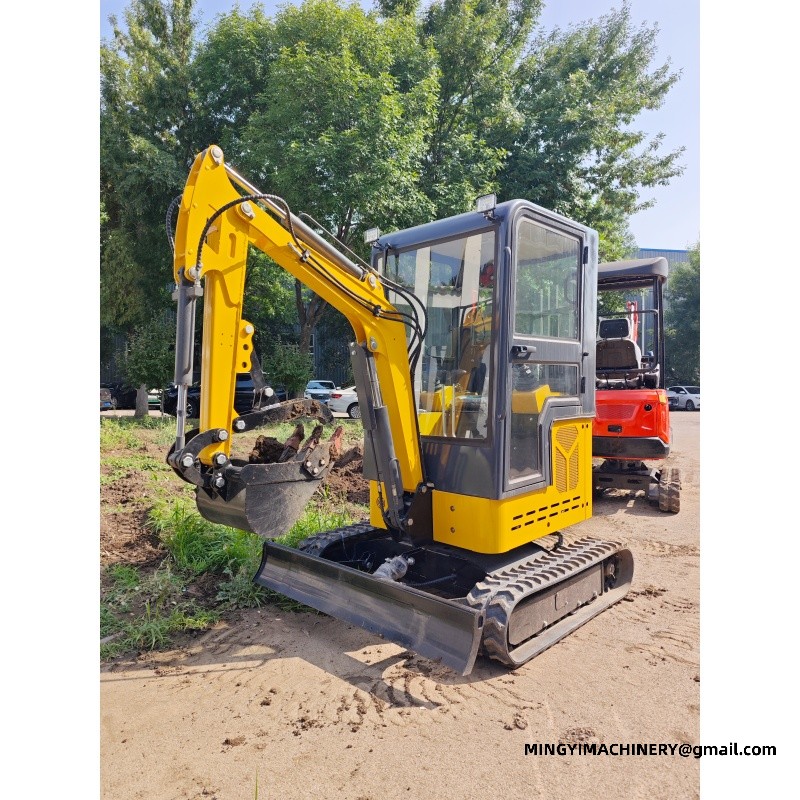
MINGYI supplies compact crawler excavators with an enclosed cab format, with the interior arranged around the controls and the attachments fitted to the machine.
What a comfort cab changes for the operator
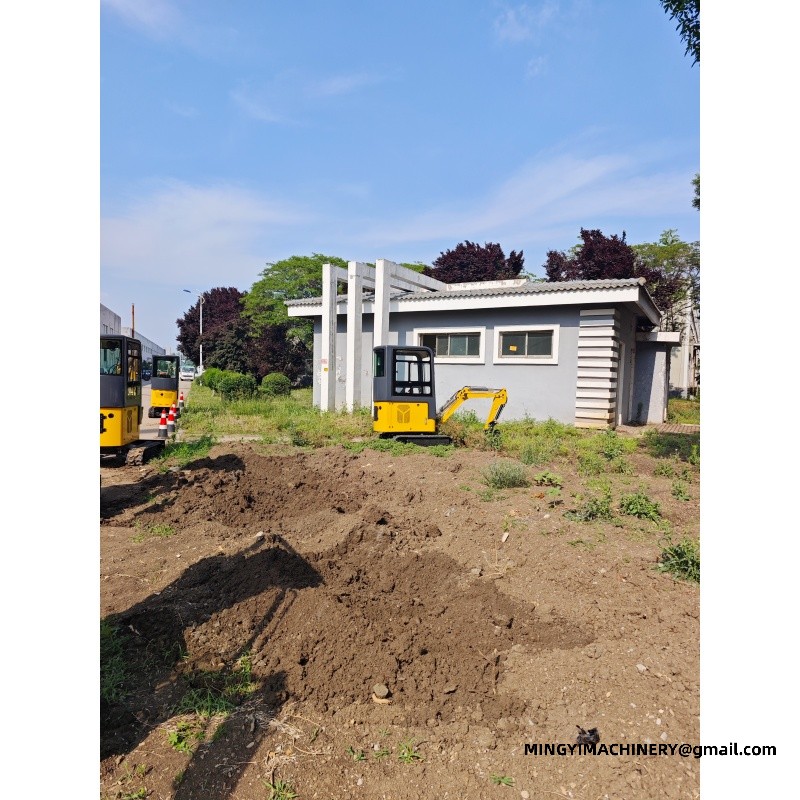
A cab keeps weather, dust and noise away from the operator, which turns a machine that is tolerable in good conditions into one that can be used all day. On a long shift that difference shows in how much work gets done before fatigue sets in.
The cab also gives the operator a place for the controls of the machine and its attachments. Switches for a quick coupler, an extra hydraulic circuit or a work light can be laid out where they can be reached without leaving the seat.
Cab controls and long shifts
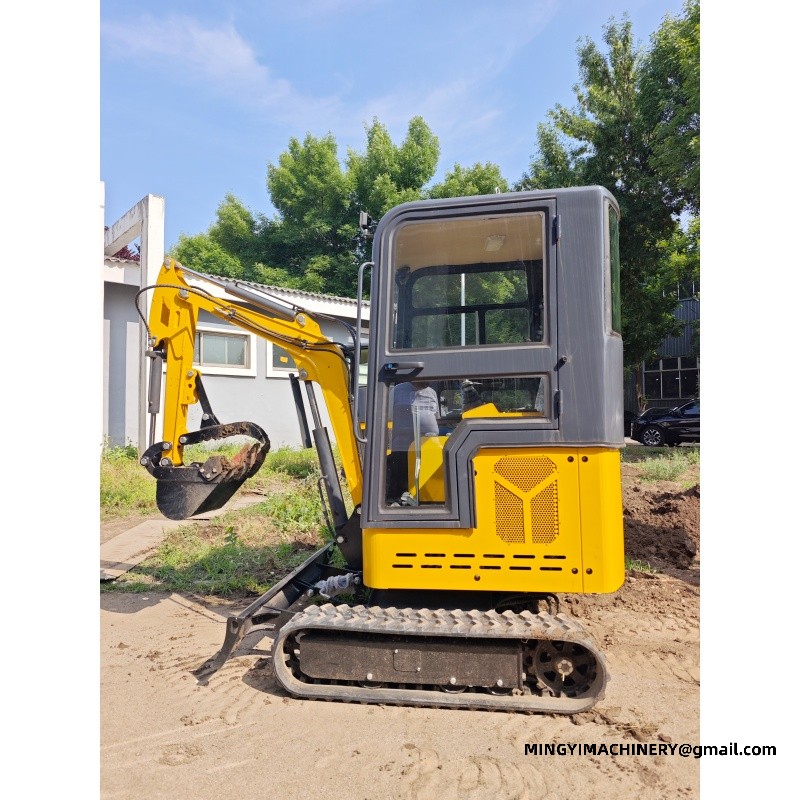
A cab is judged by small details over a full day. Seat adjustment, the position of the joysticks, the view through the windows and the reach to the pedals all decide whether the operator stays comfortable or starts shifting position.
Visibility matters most of all. The operator has to watch the bucket, the trench edge and the tracks, so the glazing and the mirror arrangement are set to keep those areas in view without the operator leaning forward.
A comfort cab machine is chosen for the hours it will be used, not for the day it is bought. Getting the interior and the controls right keeps an operator productive through the season.
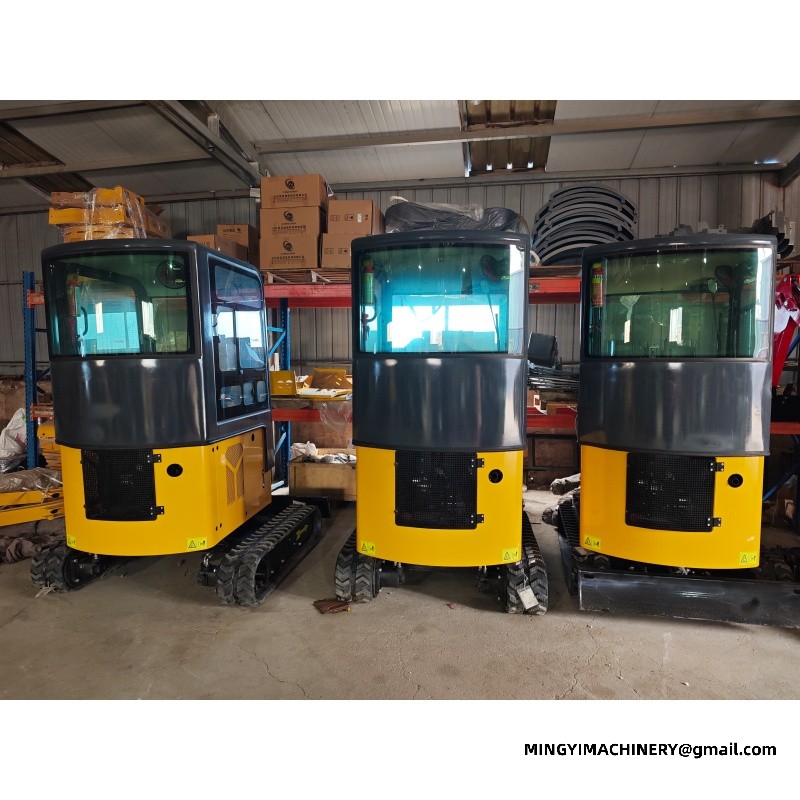
Running comfort cab mini crawler excavator in a rental fleet Rental fleets buy for utilisation, not for a single job. This class of machine with a quick coupler and a common attachment standard is hired more often because it suits more of the calls that come in. Fleet buyers also weigh transport. The unit in daily use that a customer can tow on a normal licence and a standard trailer is a hire that does not need a delivery truck, which changes how often it goes out. Boom configuration for comfort cab mini crawler excavator A swing boom lets the machine dig parallel to its tracks without repositioning, which is what makes trenching beside a wall or a fence practical. On a machine of this size this is often the option that decides whether a job is possible at all. Detachable boom sections are used where transport length matters. The equipment on site that has to travel on a standard trailer can be built so the arm comes off for the road and goes back on at the site. Lifting and material handling with a comfort cab mini crawler excavator Stability changes with reach. A load the machine itself handles close in becomes a different proposition at full extension, so the working radius belongs in the plan before the lift rather than during it. Ground condition under the machine is part of every lift. Soft or uneven support is the common factor in handling incidents, and checking it takes less time than recovering the model in question that has settled. Municipal and public works with comfort cab mini crawler excavator Municipal crews work on streets, footpaths and parks where the public is present. The machine in that duty is specified because it occupies little space, works inside a small exclusion zone and can be moved on a standard trailer. Noise and surface protection matter on public work. The unit on the job on rubber tracks across paving, with a sealed cab for the operator, suits the conditions better than a larger tracked machine. OEM and fleet customisation of comfort cab mini crawler excavator Distributors and rental fleets usually need the machine to look like theirs. Paint, decals, seat colour and attachment branding can be specified on a machine built for the work at build time rather than applied after import. Customisation also covers the specification sheet. A fleet buyer may want every equipment in service delivered with the same coupler, the same engine and the same tool kit so training and parts stock stay simple. Operator technique for comfort cab mini crawler excavator Output on a compact machine comes from placement rather than power. An experienced operator keeps the excavator working inside the swing arc, positions once and digs a full run instead of repositioning for every bucket. Stability is the third. This class of machine working across the tracks rather than over the corners keeps the machine steady and the undercarriage loaded evenly, which shows up as track life at the end of the season. Road and paving work for the unit in daily use Road repair generates short, interrupted jobs - a patch, a drainage connection, a kerb line. A machine of this size is economical here because it travels on a small trailer and starts working minutes after arriving. Breaking out a failed slab and backfilling the same hole in one visit is normal work for the equipment on site. The breaker and the bucket come off the same coupler, so the road is reopened the same day. Export packing and shipping of the machine itself Machines leave the factory prepared for container or flat rack shipment. The model in question is normally shipped with the attachment set and the spare parts list agreed in advance so the container is planned once. Buyers who import regularly plan the spare parts with the machine. The machine in that duty ordered with a wearing-parts kit arrives ready to work rather than ready to wait for the first service interval. Working the unit on the job through the seasons Weather decides which days are productive. Rain turns some ground unusable and cold changes how a machine built for the work starts and warms up, so planning the wet months around maintenance is more useful than planning around output. Heat and dust are as limiting as rain. Air intake condition and cooling cleanliness decide how the equipment in service behaves in a dry season, and both are checked in a minute rather than repaired later. Trenching work with the excavator Service trenches are the most common reason this class of machine is hired. Water, sewage, cable and gas runs are narrow, shallow and often close to existing services, which is exactly the work a full-size machine cannot do safely. Trench quality depends on the bucket width and the operator, not on machine size. The unit in daily use with a narrow bucket and a swing boom cuts a clean run along a boundary without disturbing the ground either side of it. Hiring versus owning a machine of this size Availability is part of the decision. Owning the equipment on site means it is there on the day the ground is ready; hiring means competing for the same machine at the same time as everyone else in the season. Ownership brings obligations that hiring does not. Storage, servicing, insurance and an operator are the items to set against the hire rate before deciding which way the machine itself should be supplied. Engine options behind the model in question Two buyers can order the same the unit on the job and receive different engines. The decision is rarely about peak power; it is about which parts counter is closest to the site and which engine the local mechanic already knows. Engine choice is also an emissions and documentation question for some markets. Listing the available units with the machine in that duty enquiry lets the factory confirm what can be supplied and documented for the destination country. Specification data for a machine built for the work Buyers comparing the equipment in service usually start from four numbers - weight, digging depth, reach and transport width - because those are the ones that decide whether the machine can be delivered and whether it can do the job once it is there. These are the reference figures for the excavator. MINGYI confirms the final build sheet, including engine and attachment choices, against the destination and the job list before production. The base machine is a carrier; the tool on the end of the arm decides the task. This class of machine fitted with a toothed bucket digs, and the same machine with a breaker, an auger or a grab does work that would otherwise need a second unit on site. Most of the daily variety on the unit in daily use comes from the attachment rack rather than from the machine itself. Bucket, breaker, auger, ripper, rake and grab cover the large majority of the work a contractor will see.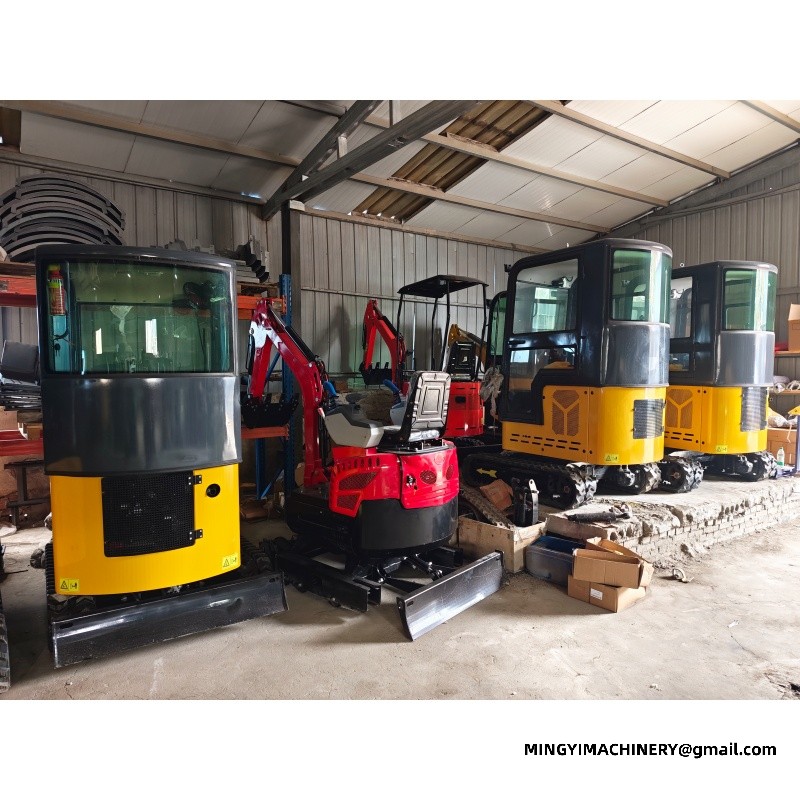
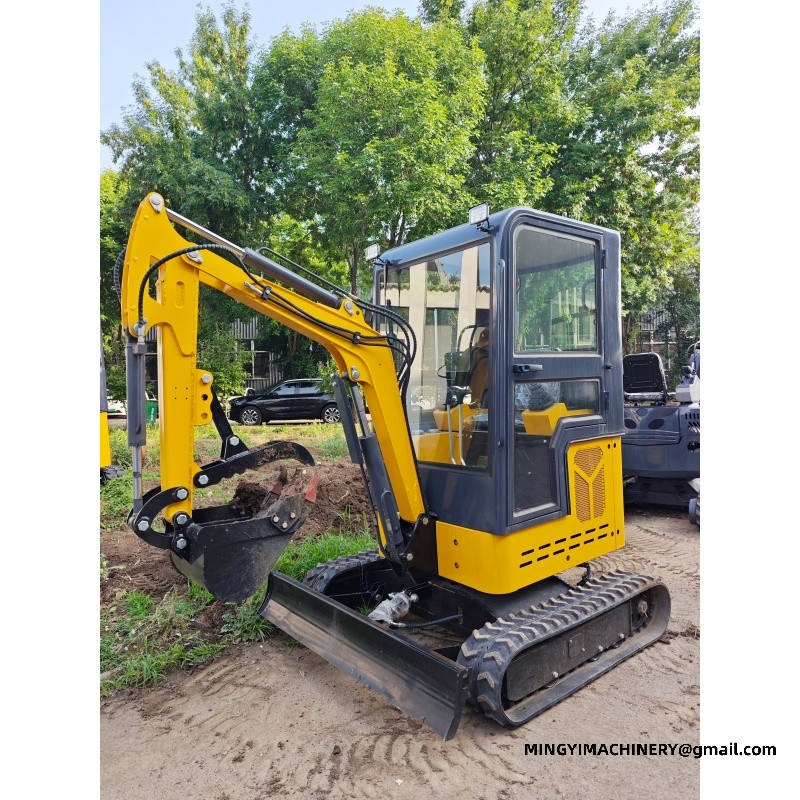
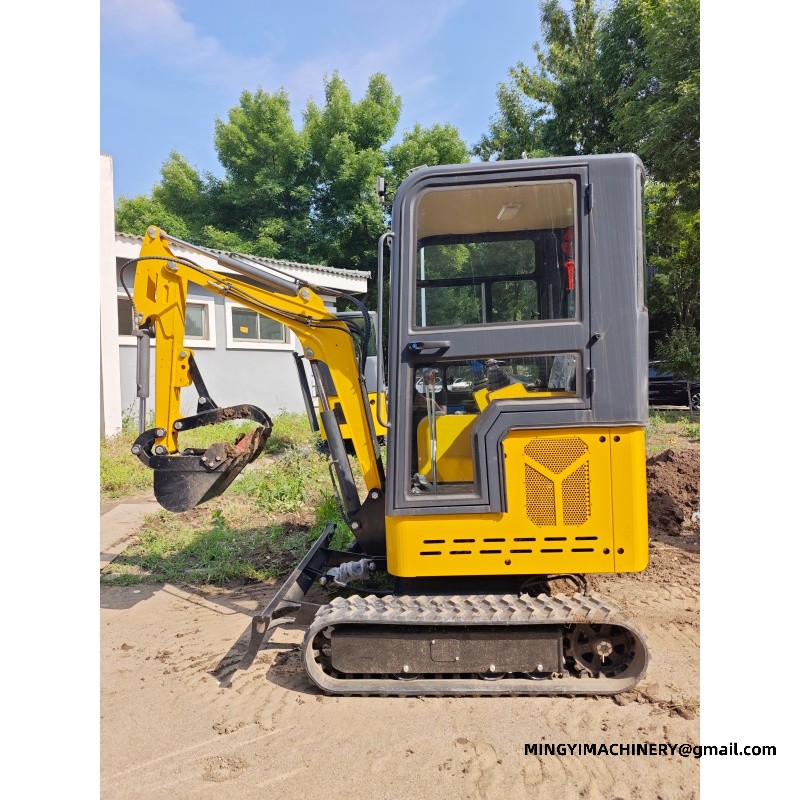
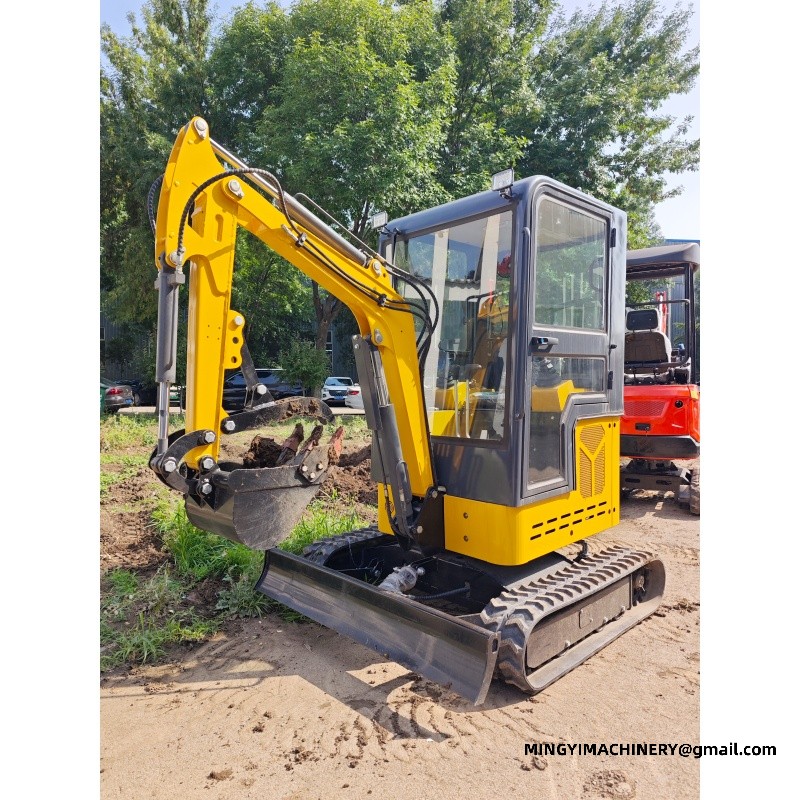
Reference specification — mini excavator range 09W 12W 09L 20-2L Operating weight 1100 kg (2425.08 lb) 1200 kg (2645.55 lb) 1100 kg (2425.08 lb) 1900 kg (4188.78 lb) Transport size (L×W×H) 1800 × 750 × 1970 mm 2200 × 930 × 2250 mm 2300 × 720 × 1870 mm 2600 × 1300 × 2344 mm Max digging depth 1250 mm (49.21 in) 1630 mm (64.17 in) 1400 mm (55.12 in) 2100 mm (82.68 in) Max digging height 2800 mm (110.24 in) 2750 mm (108.27 in) 2800 mm (110.24 in) 2880 mm (113.39 in) Max dumping height 1700 mm (66.93 in) 1960 mm (77.17 in) 1880 mm (74.02 in) 2100 mm (82.68 in) Max digging radius 2570 mm (101.18 in) 2900 mm (114.17 in) 2490 mm (98.03 in) 3215 mm (126.57 in) Max digging distance 1869 mm (73.58 in) 2100 mm (82.68 in) 2000 mm (78.74 in) 2460 mm (96.85 in) Minimum turning radius 1000 mm (39.37 in) 1300 mm (51.18 in) 1400 mm (55.12 in) 1587 mm (62.48 in) Travel speed 3 km/h (1.86 mph) 3 km/h (1.86 mph) 3 km/h (1.86 mph) 5 km/h (3.11 mph) Gradeability 30° 30° 30° 30° Fuel consumption 1-1.3 L/h (0.264—0.343 gal) 1-1.3 L/h (0.264—0.343 gal) 1-1.3 L/h (0.264—0.343 gal) 2-3 L/h (0.528—0.793 gal) Fuel tank capacity 8 L (2.11 gal) 10 L (2.64 gal) 8 L (2.11 gal) 16 L (4.23 gal) Hydraulic oil tank 16 L (4.23 gal) 16 L (4.23 gal) 16 L (4.23 gal) 18 L (4.76 gal) Dozer blade lift height 180 mm (7.09 in) 180 mm (7.09 in) 180 mm (7.09 in) 180 mm (7.09 in) Dozer blade drop depth 210 mm (8.27 in) 210 mm (8.27 in) 210 mm (8.27 in) 210 mm (8.27 in)
Q. What is a machine of this size?
A. Cab or canopy is a specification decision tied to headroom, weather and operator retention - not a comfort afterthought. Suspension seats and sensible control layout decide how the operator feels at hour eight, which decides how the work looks. Read the equipment on site together with the engine, track and attachment pages: jobs around comfort cab are decided by how those choices line up, not by any single number on the sheet.
Q. Canopy or cab - how do I choose?
A. Headroom and climate decide: the canopy keeps the machine light and low for indoor and warm-climate work, the cab adds glass, heat and air for year-round shifts. Both run the same hydraulics, so nothing is lost either way.
Q. Does MINGYI supply attachments with the machine?
A. Yes - buckets, breakers, augers, rakes and the rest of the working set ship with the carrier, matched to the hydraulic flow and the coupler. For comfort cab the package is confirmed on the build sheet, so machine and tools arrive together and start work together.
Handover and getting familiar with the machine itself
Familiarisation is not the same as reading the manual. Sitting on the model in question, working through the controls at low speed and learning where the machine balances takes an hour, and that hour is what keeps the first week uneventful.
Documents that travel with the machine in that duty
Documentation should match the machine that was actually built. The sheet supplied with the unit on the job records the configuration as delivered, because the generic catalogue description is not what the customer needs when ordering a part.
E-mail : sales@mingycn.com
LINE ( ID ): mingyicn
Related pages
full rotation mini digging machine · mini excavator kubota d902 engine · Front Wheel Loader: Weight Transfer, Boom Length and Axle Choice · Mini Excavators









