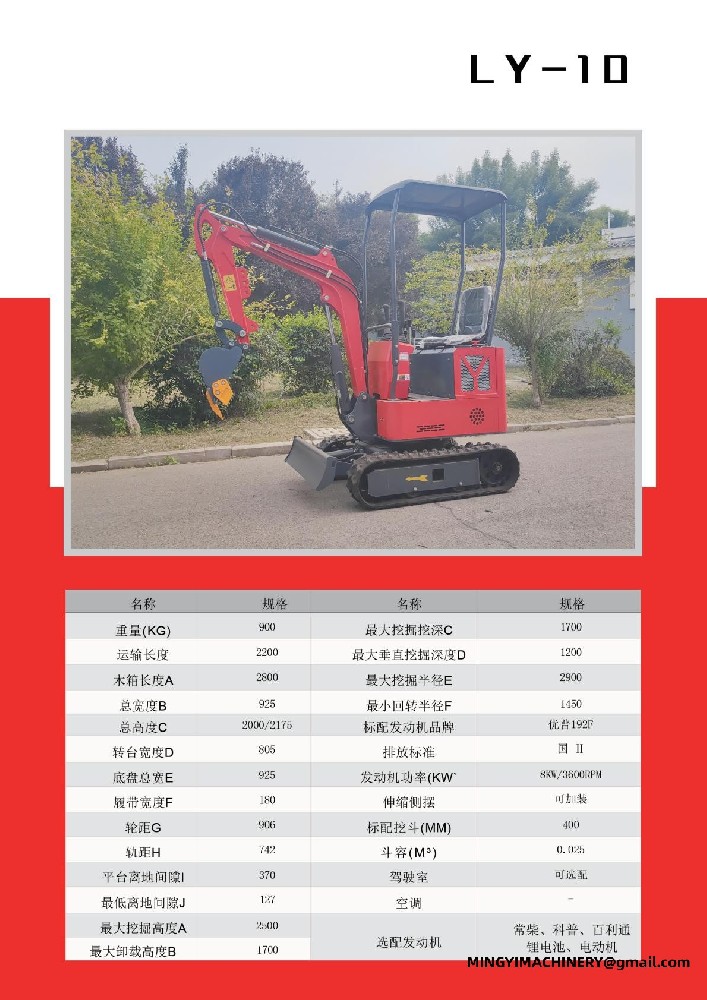
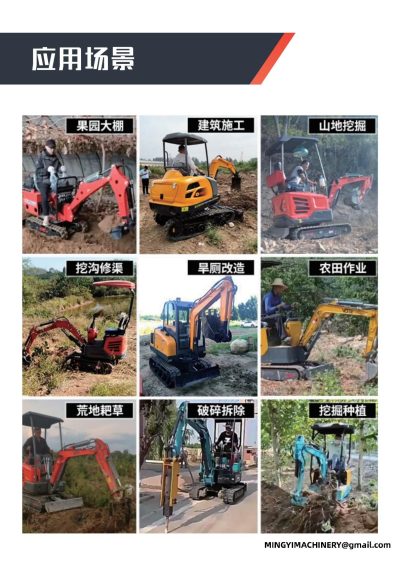
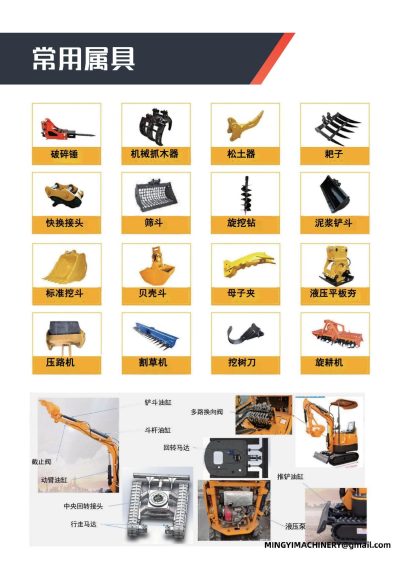
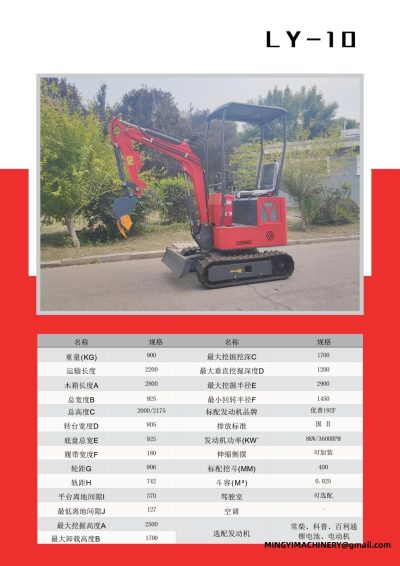
Orchard Mini Excavator, Trenching Machine, Agriculture Digger
Orchard work happens between the trees. Trenching for irrigation, digging drainage, planting new rows and removing old stumps all have to fit the spacing and the soil, without damaging the trees that stay. MINGYI configures its machines for orchard and vineyard work on that basis.
The compact classes, including the 12 series within the 1 to 3.5 tonnes band, match the row widths and the access paths common in modern orchards. This page covers the orchard task list and the specification choices that follow.
Work between the rows
The core jobs are trenching irrigation and fertigation lines along the rows, digging drainage where water sits between the trees, and cutting the planting holes for new stock. An auger handles the post holes for trellis and fencing work in the same pass through the orchard.
Renovation work brings the tree grabber and the root digger into play, clearing old stumps and roots without a wider excavation, and a hedge pruner keeps the shelter belts and headland hedges in shape. The machine leaves the alleys ready for the mowing and spraying that follow.
Specifying for orchard conditions
Track choice follows the orchard floor. Grass alleys between tree rows suit rubber tracks, while orchards on heavier soils where the winter work runs wet point toward steel tracks with rubber blocks for grip on the slopes and soft headlands.
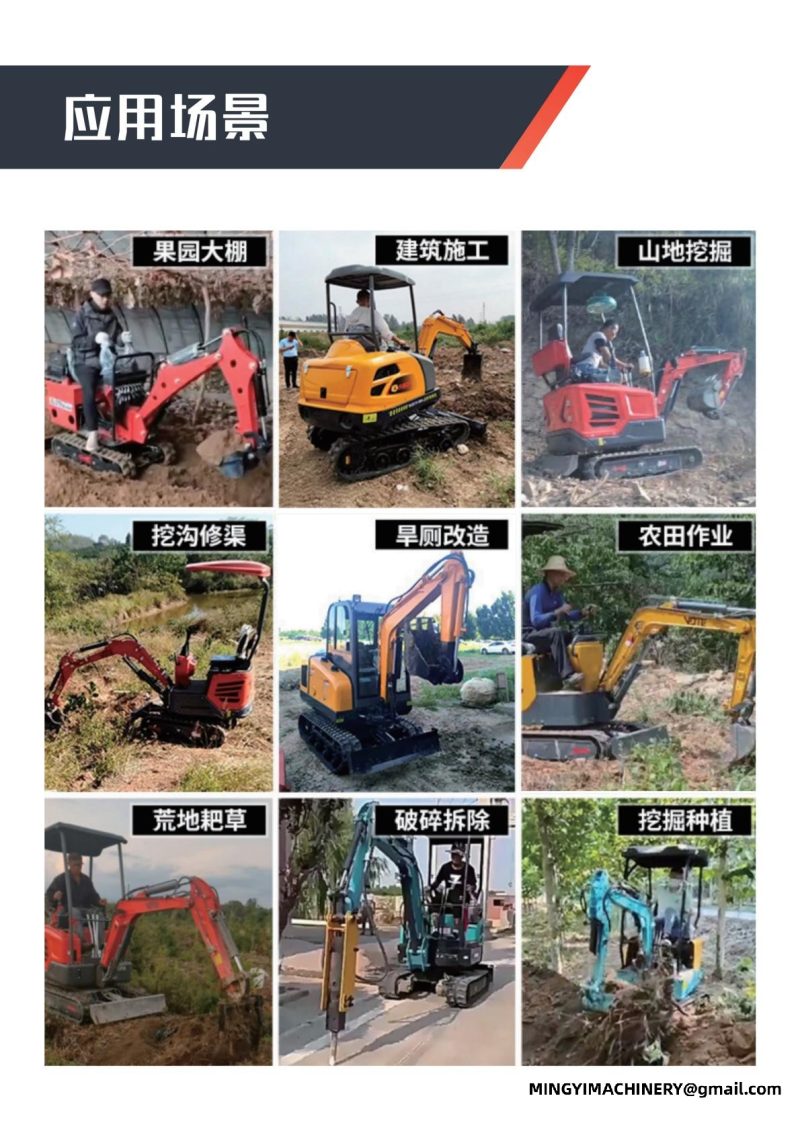
A swing boom helps where the trench runs beside trunks or trellis posts and the tracks should stay in the alley centre. Confirm the row spacing and the irrigation trench depth at the ordering stage, and the machine will be recorded against those dimensions.
Send the row spacing, the soils and the trench depths you run, and the orchard trencher will be specified to fit between them. Mingyi Machinery packs each machine with the spare parts and service information for the working season.
Daily checks and maintenance on orchard trenching mini excavator Daily maintenance on the excavator is a short list: engine oil level, coolant, track tension, hydraulic oil level and a look at the hoses. Ten minutes at the start of the shift prevents most of the failures that stop a machine. Greasing is the second item. The slew ring, the boom and arm pins and the bucket linkage on this class of machine take grease daily in dusty work, and the intervals shorten further when the machine is used in water or mud. Export packing and shipping of orchard trenching mini excavator Export documentation, decals and paint are settled before packing. Asking for them with the machine of this size order avoids a second handling session and keeps the machine on the booked vessel. Buyers who import regularly plan the spare parts with the machine. The unit in daily use ordered with a wearing-parts kit arrives ready to work rather than ready to wait for the first service interval. Track choice for orchard trenching mini excavator Rubber tracks suit paved and landscaped ground because they spread the machine weight and leave the surface intact. Steel tracks with rubber blocks are specified where the ground is rougher or the working day is longer, and the choice can be made per machine rather than accepted as a factory default. Undercarriage selection is a ground question, not a preference question. The equipment on site running on finished paving needs rubber; the same machine on demolition rubble or rock wears rubber quickly, so steel with rubber blocks becomes the better answer over a full season. Running orchard trenching mini excavator in a rental fleet Rental fleets buy for utilisation, not for a single job. The machine itself with a quick coupler and a common attachment standard is hired more often because it suits more of the calls that come in. The specification that rents best is usually the simplest one to explain at the counter. The model in question with rubber tracks, a canopy and a coupler covers the majority of weekend and short-term hires. Parts, service and support for orchard trenching mini excavator Support after delivery is a parts question. Wearing items for the machine in that duty - filters, belts, track components, bucket teeth and pins - are the items a buyer should plan to hold before the first service interval. Engine parts availability usually drives the engine choice. The unit on the job built with an engine the local network already carries is serviced from stock rather than from an international order. Interior and light demolition with orchard trenching mini excavator Breaking out a floor slab, a wall footing or a concrete step is routine work for a machine built for the work with a breaker. The machine is small enough to work inside and heavy enough to run the tool at a practical rate. Dust, debris clearance and floor loading all argue for a compact machine indoors. The equipment in service spreads its weight over a wider track footprint than a wheeled machine of similar capacity. Canopy or enclosed cab on the excavator The cab decision follows the climate and the hours. Operators working a full shift in this class of machine benefit from a sealed cab with wipers and heating; operators stepping on and off every few minutes usually prefer the canopy for the visibility and the quick exit. Enclosure also changes noise and dust exposure. A sealed cab on the unit in daily use keeps dust out on dry sites and lets the machine work through weather that would otherwise stop a canopy machine for the day. Specifying a machine of this size against a job list Buyers who skip this step either over-buy or under-buy. The equipment on site specified only from machine size tends to arrive without the coupler, the circuits or the track type the work actually needs. Useful information to send with an enquiry includes working width, required digging depth, ground conditions and the attachment set. Those four items let the factory specify the machine itself that fits rather than a generic build. Hiring versus owning the model in question The choice follows the hours. Work that fills a few weeks a year is usually better hired, while the machine in that duty that would be on site most weeks starts to justify ownership once the transport and booking time is counted. Ownership brings obligations that hiring does not. Storage, servicing, insurance and an operator are the items to set against the hire rate before deciding which way the unit on the job should be supplied. Orchard, vineyard and farm use of a machine built for the work Ditching, fertilising and drainage on farmland suit the equipment in service because the work is spread over a large area in short bursts. The machine travels behind a pickup and works where it stops. Farms also use the excavator for general maintenance - clearing a watercourse, repairing a track, loading a spreader. One carrier with a few attachments covers most of the jobs that would otherwise wait for a contractor. Lifting and material handling with this class of machine Lifting with a machine built to dig needs a plan. The load, the radius and the ground under the machine of this size all matter, and the safe figure is the one on the chart rather than the one that looks possible. Stability changes with reach. A load the unit in daily use handles close in becomes a different proposition at full extension, so the working radius belongs in the plan before the lift rather than during it. Operator technique for the equipment on site The second habit is tool discipline. Running the machine itself with the right bucket width for the trench means less spoil, less reinstatement and a cleaner job than a wide bucket and a lot of trimming. Stability is the third. The model in question working across the tracks rather than over the corners keeps the machine steady and the undercarriage loaded evenly, which shows up as track life at the end of the season. Specification data for the machine in that duty The figures below are the factory figures for the models most often matched to the unit on the job. They are the numbers to check against the site: the depth the work needs, the reach from one position, and the width of the narrowest point on the route in. Every value shown is as built for a machine built for the work; options such as cab, side swing or a telescopic undercarriage change the transport dimensions and are confirmed at order stage. Seasonal planning smooths the workload. Machines that are busy for a few months and idle for the rest benefit from a service slot in the quiet period, and the equipment in service prepared in the off-season starts the busy months reliably. Heat and dust are as limiting as rain. Air intake condition and cooling cleanliness decide how the excavator behaves in a dry season, and both are checked in a minute rather than repaired later.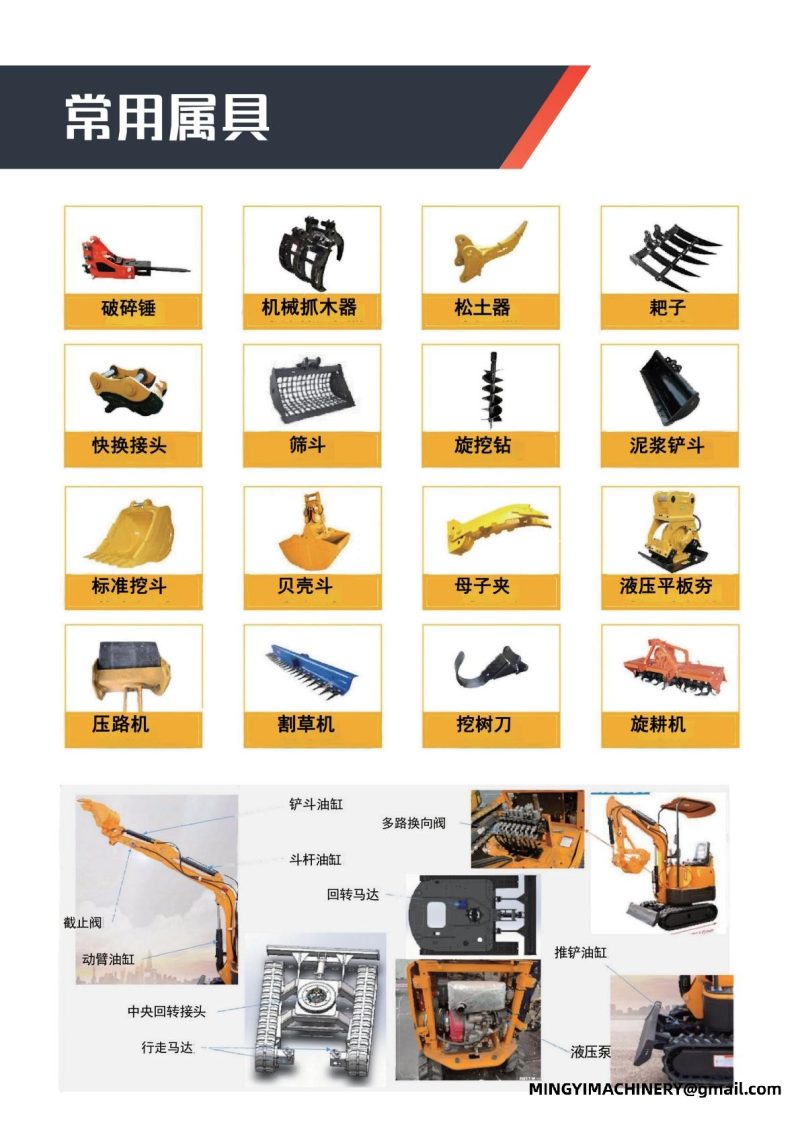
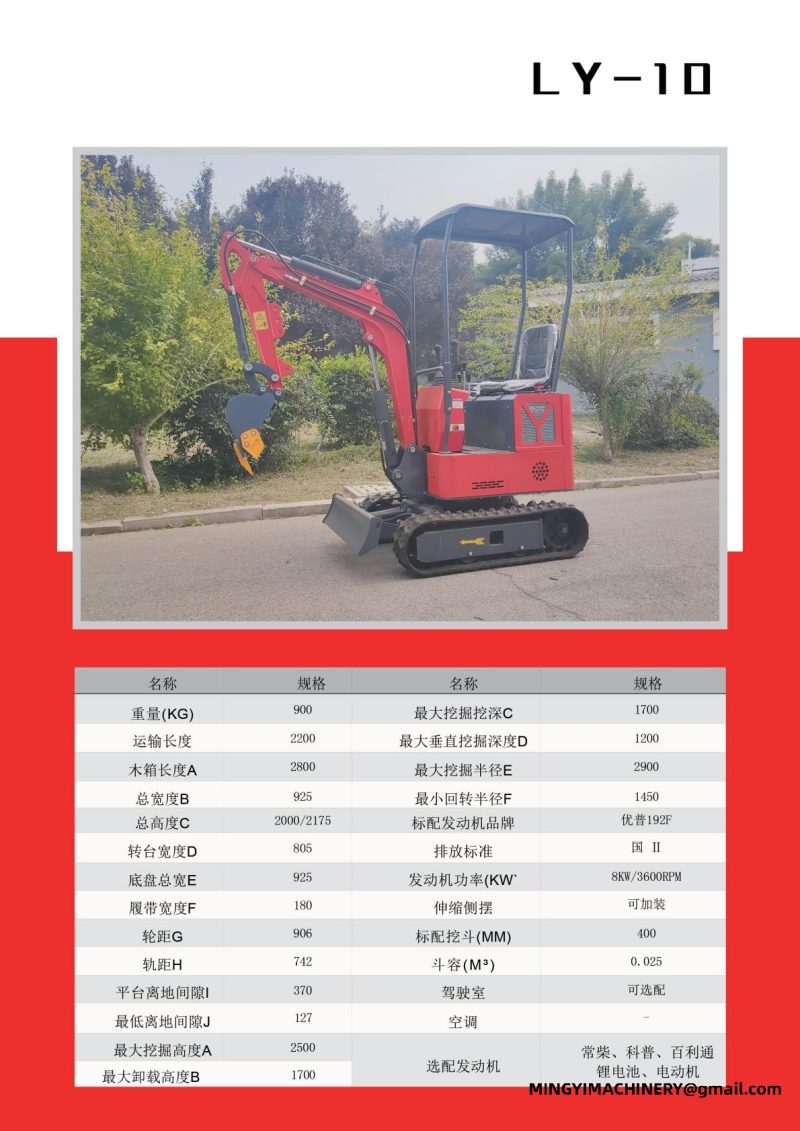
Reference specification — mini excavator range 30-2W 20-2L 25L 30-2L Operating weight 2700 kg (5952.48 lb) 1900 kg (4188.78 lb) 2200 kg (4850.17 lb) 2400 kg (5291 lb) Transport size (L×W×H) 3000 × 1100 × 2700 mm 2600 × 1300 × 2344 mm 3000 × 1300 × 2700 mm 2800 × 1500 × 2500 mm Max digging depth 2200 mm (86.61 in) 2100 mm (82.68 in) 2300 mm (90.55 in) 2200 mm (86.61 in) Max digging height 3000 mm (118.11 in) 2880 mm (113.39 in) 3100 mm (122.05 in) 2900 mm (114.17 in) Max dumping height 2000 mm (78.74 in) 2100 mm (82.68 in) 2050 mm (80.71 in) 2100 mm (82.68 in) Max digging radius 3800 mm (149.61 in) 3215 mm (126.57 in) 3900 mm (153.54 in) 3330 mm (131.1 in) Max digging distance 3050 mm (120.08 in) 2460 mm (96.85 in) 3100 mm (125.05 in) 2700 mm (106.3 in) Minimum turning radius 1750 mm (68.9 in) 1587 mm (62.48 in) 1800 mm (70.87 in) 1555 mm (61.22 in) Travel speed 7 km/h (4.35 mph) 5 km/h (3.11 mph) 7 km/h (4.35 mph) 7 km/h (4.35 mph) Gradeability 30° 30° 30° 30° Fuel consumption 2-3 L/h (0.528—0.793 gal) 2-3 L/h (0.528—0.793 gal) 2-3 L/h (0.528—0.793 gal) 2-3 L/h (0.528—0.793 gal) Fuel tank capacity 16 L (4.23 gal) 16 L (4.23 gal) 16 L (4.23 gal) 16 L (4.23 gal) Hydraulic oil tank 20 L (5.28 gal) 18 L (4.76 gal) 18 L (4.76 gal) 18 L (4.76 gal) Dozer blade lift height 230 mm (9.06 in) 180 mm (7.09 in) 230 mm (9.06 in) 230 mm (9.06 in) Dozer blade drop depth 280 mm (11.02 in) 210 mm (8.27 in) 280 mm (11.02 in) 280 mm (11.02 in)
Q. Who chooses this class of machine?
A. A trench is judged by what happens after the dig: a straight line, a stable wall and a backfill that settles without sinking - all set by bucket width and machine control. A bucket too wide pulls more spoil than the job needs and leaves a messy backfill; a bucket matched to the service keeps the cut clean. The unit in daily use is one of the pages buyers land on when comparing machines for orchard trenching, and the factory treats it as a specification conversation rather than a catalogue line.
Q. What about trenches across soft ground?
A. Wider shoes or longer tracks spread the load, and working from mats keeps the trench wall intact while the machine digs alongside it - the same rules the soft-ground pages set out.
Q. Does MINGYI supply attachments with the machine?
A. Yes - buckets, breakers, augers, rakes and the rest of the working set ship with the carrier, matched to the hydraulic flow and the coupler. For orchard trenching the package is confirmed on the build sheet, so machine and tools arrive together and start work together.
Keeping a service record for a machine of this size
A written record is worth more than a good memory. Dates, hours and the parts fitted on the equipment on site turn a guess about the next service into a fact, and they are the first thing a buyer asks to see.
Documents that travel with the machine itself
A clear parts book saves more time than any other document. When the model in question needs a replacement, the illustration and the part number are what turn a phone call into a shipment instead of a description.
E-mail : sales@mingycn.com
LINE ( ID ): mingyicn
Related pages
micro excavator for basement demolition · turf-friendly rubber track mini excavator · Wheel Loader for Agriculture: Gate Widths, Sheds and Wagons · Mini Excavators









