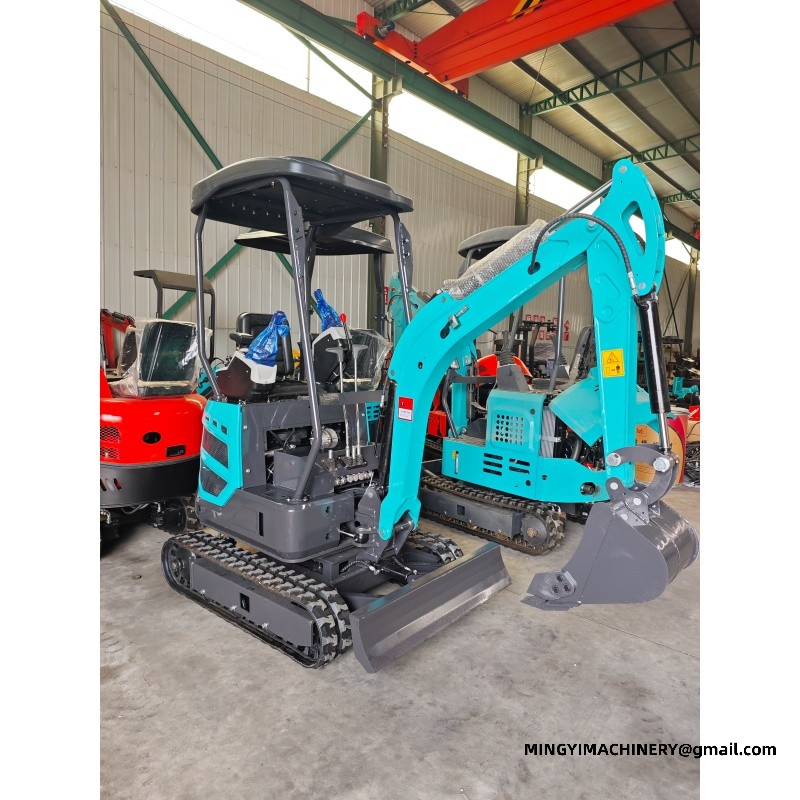
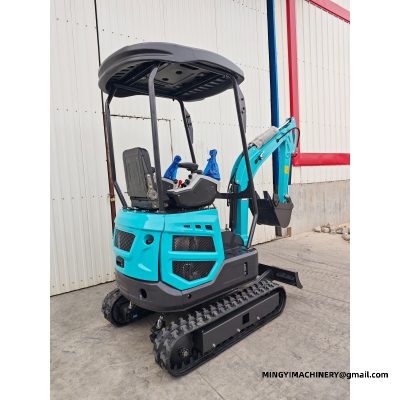
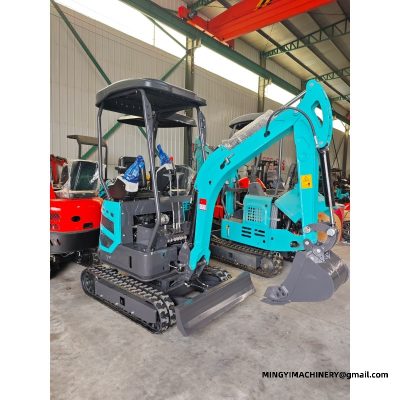
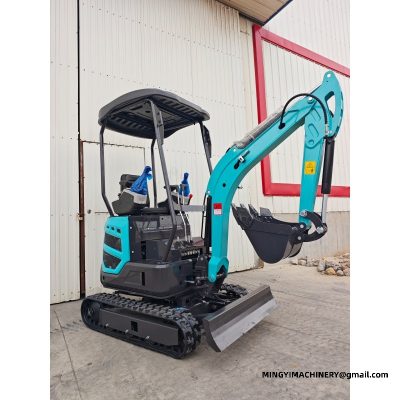
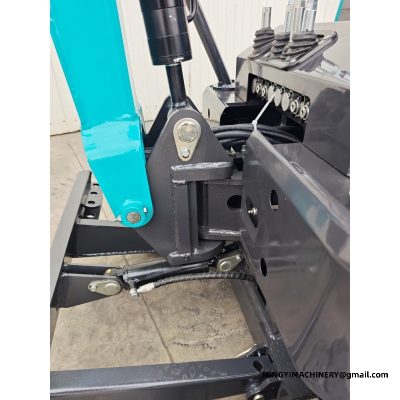
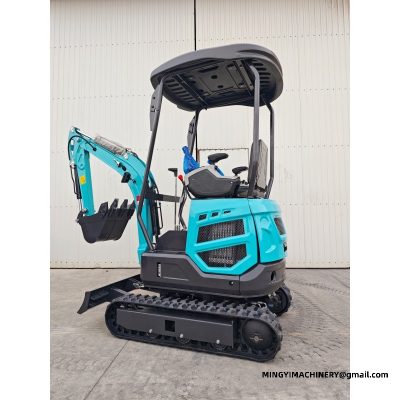
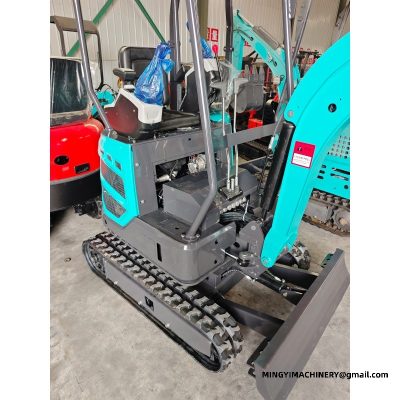
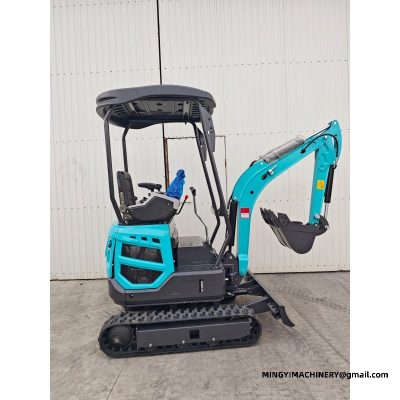
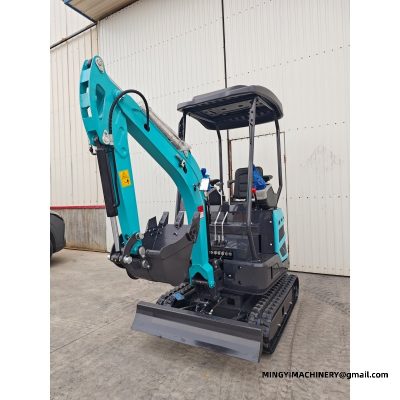
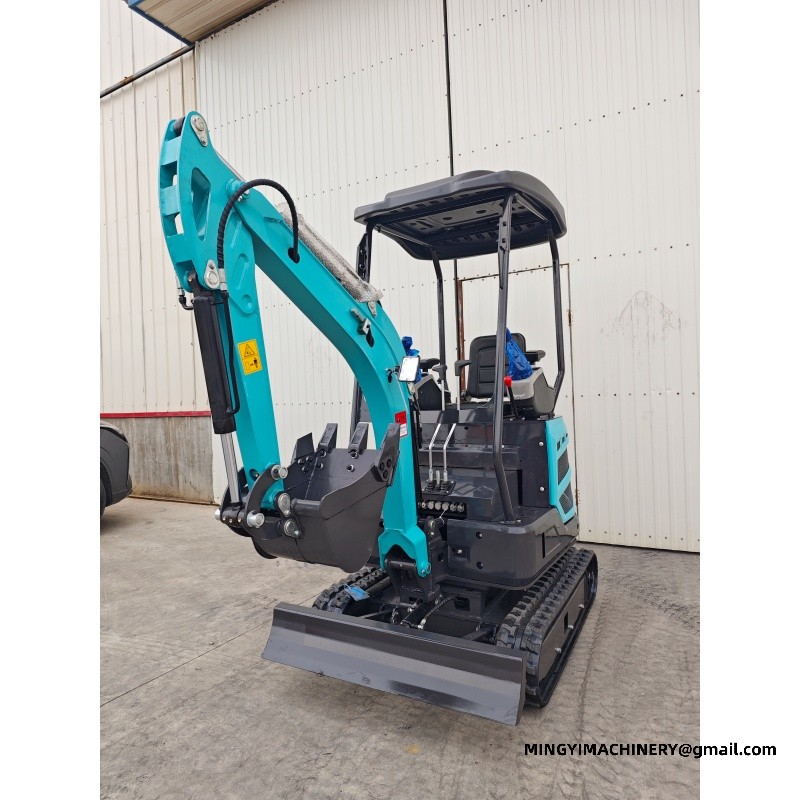
Equipped with a high-performance hydraulic flail mower attachment. Perfect for clearing thick brush, managing roadside vegetation, and maintaining steep embankments.
A flail mower mounted on a compact excavator cuts ground that a tractor mower cannot reach. The carrier sits on level ground while the boom carries the head out across a bank, a ditch or a strip beside a wall.
MINGYI builds compact excavators to order and matches the hydraulic package to the head being run. The mower, the coupler and the undercarriage are agreed at the ordering stage rather than bought separately.
Flail mowing on a compact excavator
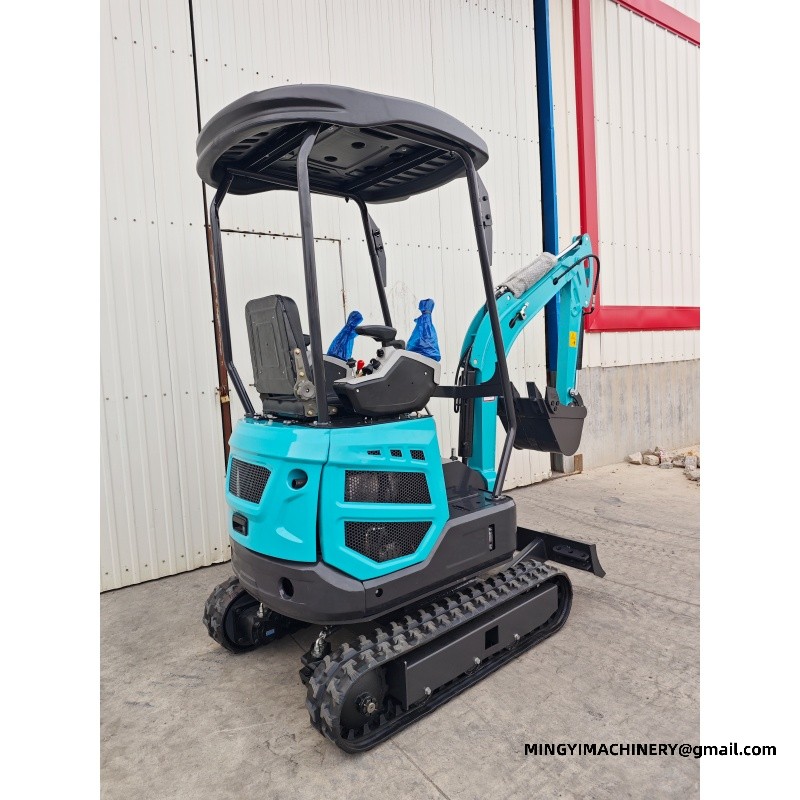
The flail head cuts by rotating the grass against a fixed hood, which leaves the cuttings shorter and more evenly distributed than a rotary mower. That suits roadside verges and embankments where the cut has to be repeated through the season.
Because the head is on the end of a boom, the machine can mow a slope it could never drive on. The carrier stays level while the head follows the ground, which is what makes steep verges workable.
Reach, tilt and head choice for verge mowing
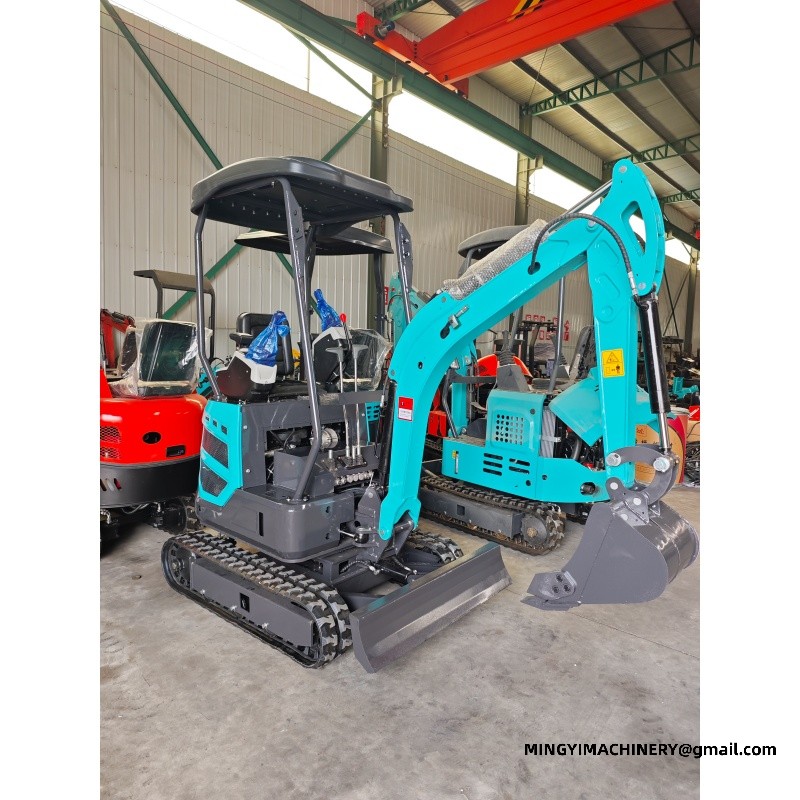
Reach decides how much of a bank can be cut from one position. A longer arm reduces repositioning along a long verge, while a tilting head lets the operator follow the slope of the ground.
Head width is a compromise between coverage and control. Narrower heads cut cleaner on uneven banks, while wider ones cover open verges faster. The choice is made with the flow available from the machine.
A flail mower turns a compact excavator into a verge maintenance machine for part of the year. Specifying the mower, the coupler and the hydraulics together is what makes the combination work from the first cut.
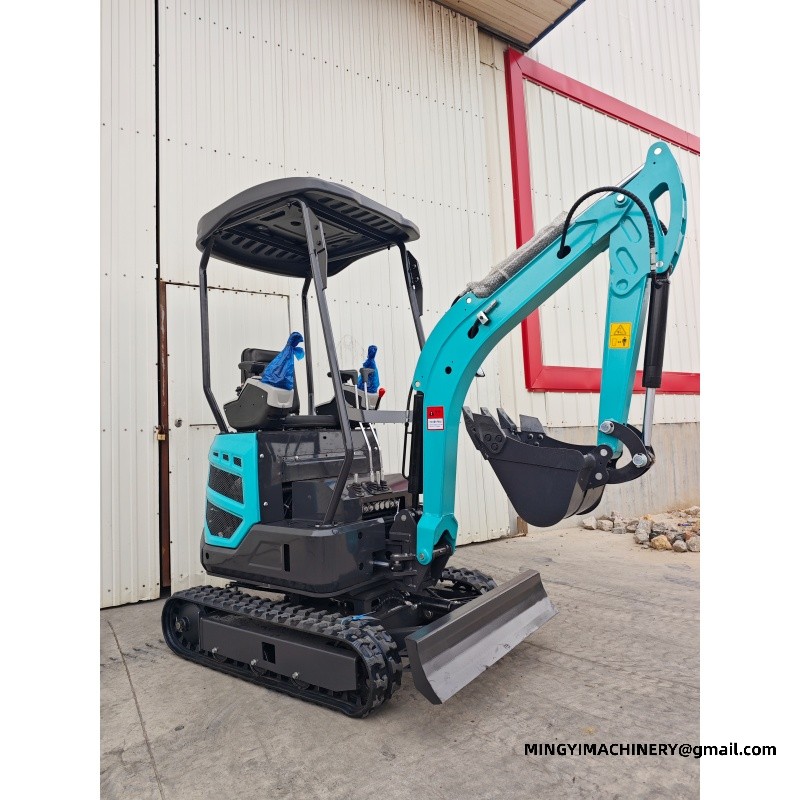
Running flail mower mini excavator in a rental fleet The specification that rents best is usually the simplest one to explain at the counter. The excavator with rubber tracks, a canopy and a coupler covers the majority of weekend and short-term hires. Fleet buyers also weigh transport. This class of machine that a customer can tow on a normal licence and a standard trailer is a hire that does not need a delivery truck, which changes how often it goes out. Landscaping and ground care with flail mower mini excavator Landscape contractors use the unit in daily use for planting holes, pond excavation, grading and retaining work. The machine is light enough to cross finished lawn and narrow enough to work between established trees. On soft landscape work the surface is the constraint. A machine of this size on rubber tracks crosses turf without stripping it, which is why the same jobs are not given to a wheeled machine. What owners should plan for beyond the flail mower mini excavator Purchase decision is the visible part of the effort. Fuel, filters, tracks or tyres, the operator and the transport between sites are the items that decide what the equipment on site actually demands over a few seasons, and they are worth listing before the order. Downtime is the hidden line item. The machine itself waiting on a part earns nothing while it stands, so parts availability and service access belong in the plan as much as fuel does. Getting flail mower mini excavator through a narrow gap Access decides the machine before output does. With the model in question the limiting dimension is usually the widest point on the way in, so measuring the gate, the corridor and the turning space first saves a wasted delivery and a second visit. Contractors who buy the machine in that duty normally have one job in mind that nothing else reaches. The purchase order follows the access measurement, not the other way round, and the build sheet is then settled around it. Working on slopes and uneven ground with flail mower mini excavator Ground that looks level often is not. The unit on the job crossing a filled trench, a soft edge or a hidden void behaves differently from one on undisturbed ground, and those are the places worth walking before driving. Planning the direction of travel helps. Working so that the a machine built for the work is stable under load and not required to turn on a slope is a decision made before the job starts, not a correction made during it. Trenching work with flail mower mini excavator Trench quality depends on the bucket width and the operator, not on machine size. The equipment in service with a narrow bucket and a swing boom cuts a clean run along a boundary without disturbing the ground either side of it. Depth control matters more on service work than speed. The excavator working beside live services is chosen because it can be placed precisely and stopped instantly, which is what the job actually requires. Working this class of machine in confined spaces Clearance above matters as much as around. Door heights, pipework and overhead services set the limit for the unit in daily use indoors, and measuring them first avoids a machine that arrives and cannot be used. Ventilation is the other indoor constraint. Running a machine of this size inside a closed structure needs air movement, and that is a planning item rather than something to discover after the first hour. Export packing and shipping of the equipment on site Machines leave the factory prepared for container or flat rack shipment. The machine itself is normally shipped with the attachment set and the spare parts list agreed in advance so the container is planned once. Export documentation, decals and paint are settled before packing. Asking for them with the model in question order avoids a second handling session and keeps the machine on the booked vessel. Working the machine in that duty through the seasons Weather decides which days are productive. Rain turns some ground unusable and cold changes how the unit on the job starts and warms up, so planning the wet months around maintenance is more useful than planning around output. Seasonal planning smooths the workload. Machines that are busy for a few months and idle for the rest benefit from a service slot in the quiet period, and a machine built for the work prepared in the off-season starts the busy months reliably. Interior and light demolition with the equipment in service Interior demolition is an access and a weight question. The excavator that fits through a doorway and works on a suspended floor does jobs that would otherwise be done by hand or by a larger machine that cannot enter. Dust, debris clearance and floor loading all argue for a compact machine indoors. This class of machine spreads its weight over a wider track footprint than a wheeled machine of similar capacity. Matching the unit in daily use to ground conditions Soft ground is a flotation problem, not a power problem. A machine of this size on wide rubber tracks crosses lawn, sand and cultivated soil that would stop a narrower machine or a wheeled unit of the same capacity. Hard and abrasive ground reverses the specification. On rock, demolition rubble or sharp gravel, steel tracks with rubber blocks on the equipment on site survive conditions that cut a rubber belt quickly. Operator technique for the machine itself Output on a compact machine comes from placement rather than power. An experienced operator keeps the model in question working inside the swing arc, positions once and digs a full run instead of repositioning for every bucket. The second habit is tool discipline. Running the machine in that duty with the right bucket width for the trench means less spoil, less reinstatement and a cleaner job than a wide bucket and a lot of trimming. Specification data for the unit on the job Where a machine built for the work is being specified for a job list, the table below gives the factory figures that matter most: what the machine weighs, how deep and how far it works, and what it measures on a trailer. Figures are factory figures and are confirmed on the build sheet for the equipment in service. Where a job sits between two models, the larger machine usually takes less time than the smaller one spends on rework. Lifting with a machine built to dig needs a plan. The load, the radius and the ground under the class of machine all matter, and the safe figure is the one on the chart rather than the one that looks possible. Ground condition under the machine is part of every lift. Soft or uneven support is the common factor in handling incidents, and checking it takes less time than recovering the excavator that has settled.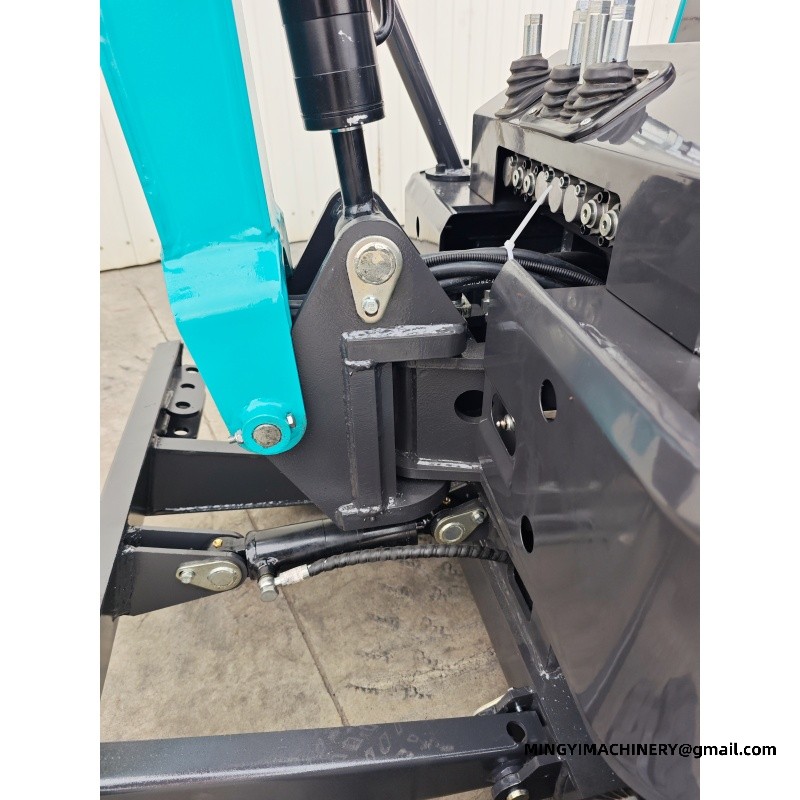
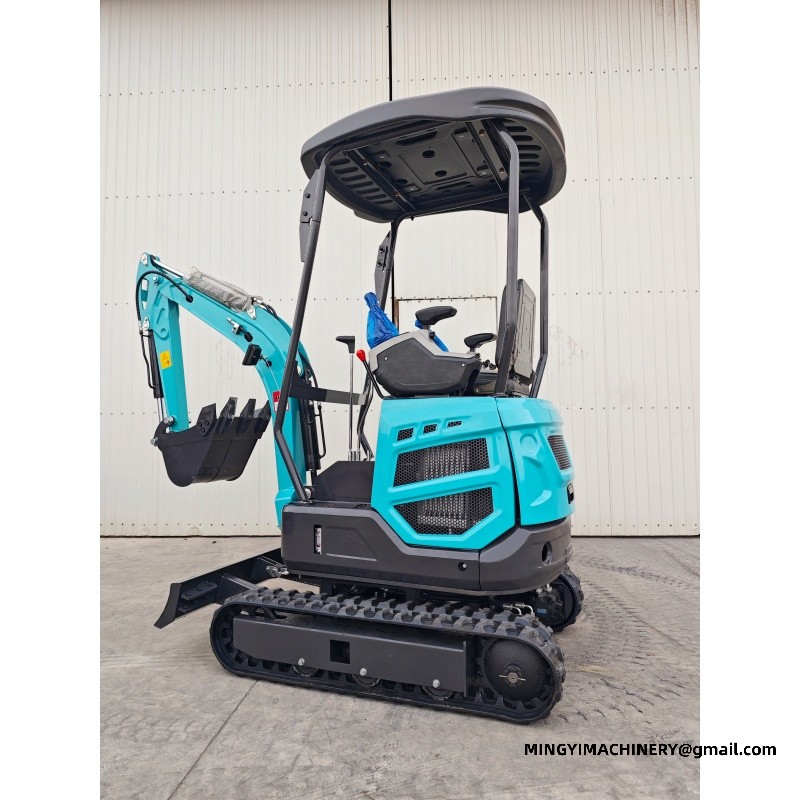
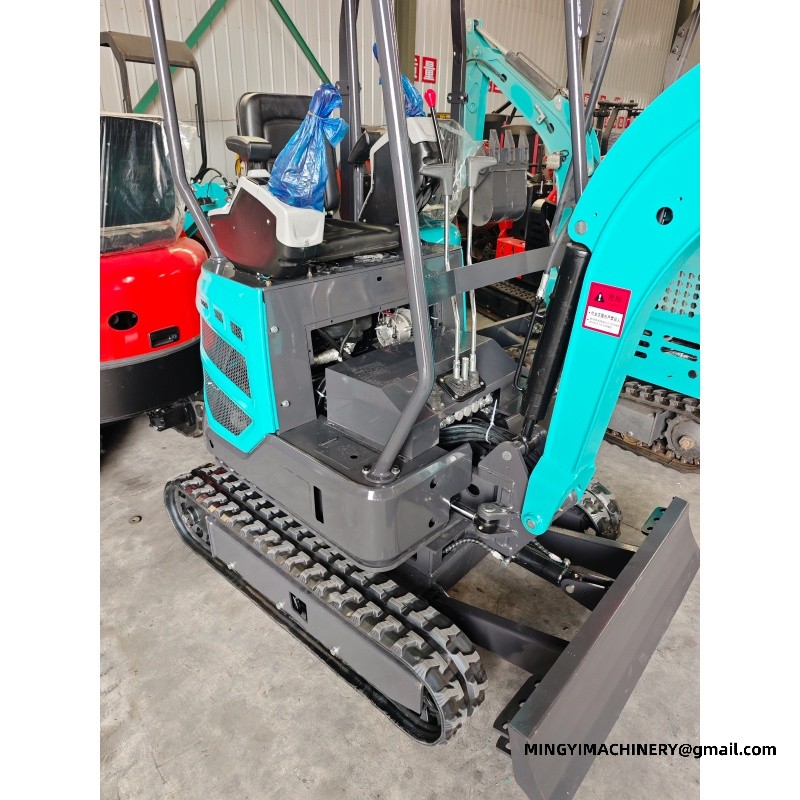
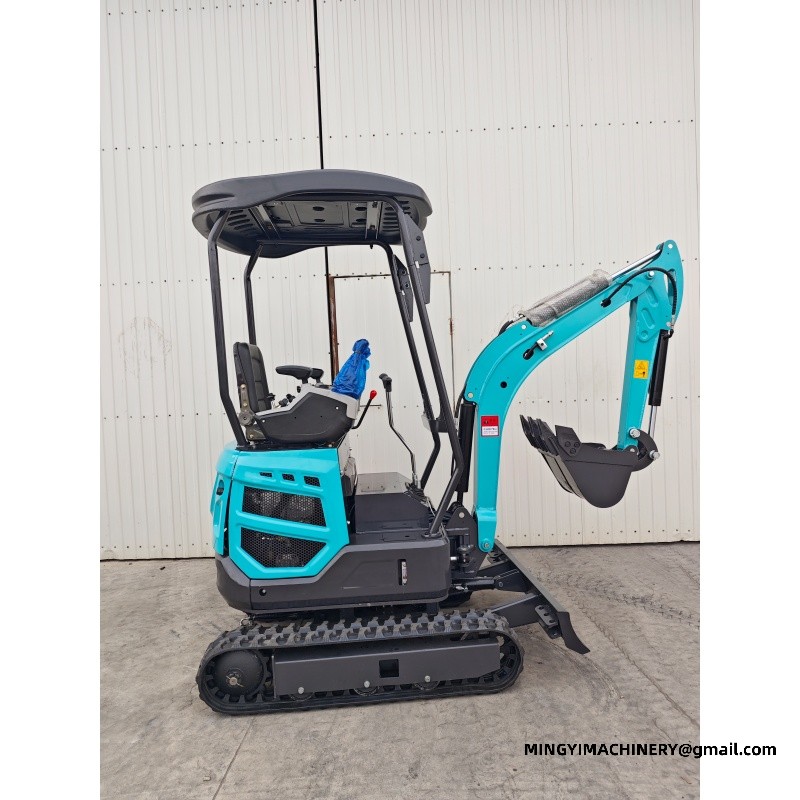
Reference specification — mini excavator range 15W 20-3W 09L 20-2L Operating weight 1400 kg (3086.47 lb) 1900 kg (4188.78 lb) 1100 kg (2425.08 lb) 1900 kg (4188.78 lb) Transport size (L×W×H) 2200 × 930 × 2250 mm 2550 × 1100 × 2200 mm 2300 × 720 × 1870 mm 2600 × 1300 × 2344 mm Max digging depth 1630 mm (64.17 in) 1800 mm (70.87 in) 1400 mm (55.12 in) 2100 mm (82.68 in) Max digging height 2750 mm (108.27 in) 2820 mm (111.02 in) 2800 mm (110.24 in) 2880 mm (113.39 in) Max dumping height 1960 mm (77.17 in) 2050 mm (80.71 in) 1880 mm (74.02 in) 2100 mm (82.68 in) Max digging radius 2900 mm (114.17 in) 3050 mm (120.08 in) 2490 mm (98.03 in) 3215 mm (126.57 in) Max digging distance 2100 mm (82.68 in) 2300 mm (90.55 in) 2000 mm (78.74 in) 2460 mm (96.85 in) Minimum turning radius 1300 mm (51.18 in) 1450 mm (57.09 in) 1400 mm (55.12 in) 1587 mm (62.48 in) Travel speed 3 km/h (1.86 mph) 5 km/h (3.11 mph) 3 km/h (1.86 mph) 5 km/h (3.11 mph) Gradeability 30° 30° 30° 30° Fuel consumption 1-1.3 L/h (0.264—0.343 gal) 2-3 L/h (0.528—0.793 gal) 1-1.3 L/h (0.264—0.343 gal) 2-3 L/h (0.528—0.793 gal) Fuel tank capacity 10 L (2.64 gal) 16 L (4.23 gal) 8 L (2.11 gal) 16 L (4.23 gal) Hydraulic oil tank 16 L (4.23 gal) 18 L (4.76 gal) 16 L (4.23 gal) 18 L (4.76 gal) Dozer blade lift height 180 mm (7.09 in) 180 mm (7.09 in) 180 mm (7.09 in) 180 mm (7.09 in) Dozer blade drop depth 210 mm (8.27 in) 210 mm (8.27 in) 210 mm (8.27 in) 210 mm (8.27 in)
Q. What is the unit in daily use used for?
A. An attachment widens the range of jobs a single compact excavator can specification and win, which is why the working set matters as much as the base machine. Every attachment on this page runs on the same carrier the machine ships with, matched to its hydraulic flow and coupler. A machine of this size is one of the pages buyers land on when comparing machines for flail mower, and the factory treats it as a specification conversation rather than a catalogue line.
Q. How is the attachment fitted and swapped?
A. Through the quick coupler on the dipper: seat the tool, lock it, plug the hydraulics where the design needs them. Mechanical attachments need no lines at all, so a bucket-to-rake change is a minute job at the trench edge.
Q. Which models does MINGYI build?
A. The 08, 12 and 18 models cover the 0.8 to 6 tonne class with engine, track, cab and attachment options across the range - dealer programmes can mix models in one shipment, and each flail mower machine is confirmed on its own build sheet.
Keeping a service record for the equipment on site
The record should follow the machine, not the owner. When the machine itself changes hands the service history travels with it, and a complete folder is often the difference between a quick sale and a long one.
Documents that travel with the model in question
Documentation should match the machine that was actually built. The sheet supplied with the machine in that duty records the configuration as delivered, because the generic catalogue description is not what the customer needs when ordering a part.
Cold weather and winter care for the unit on the job
Cold exposes weak batteries, thick oil and water in the fuel. Preparing a machine built for the work for winter means the right grade of oil, a battery in good condition and fuel that will not wax in the tank overnight.
E-mail : sales@mingycn.com
LINE ( ID ): mingyicn
Related pages
ripper and frost tooth mini excavator · skeleton bucket screening excavator · Construction Wheel Loader: Truck Board Heights and Cycle Work · Mini Excavators









