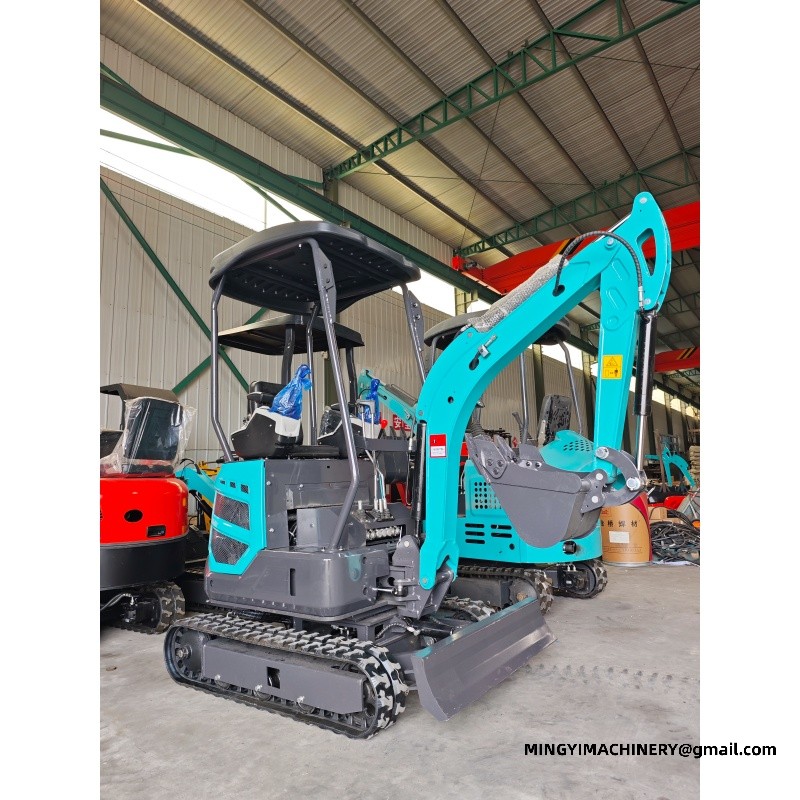
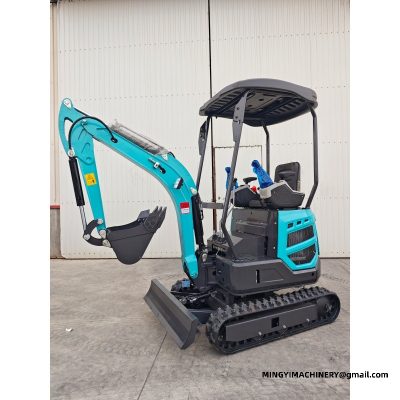
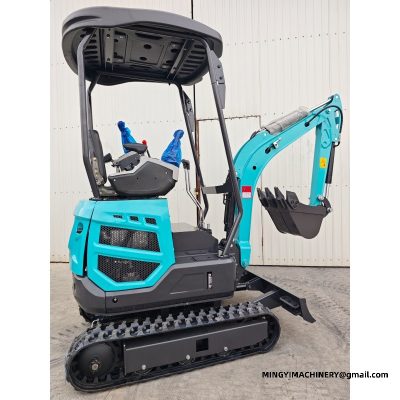
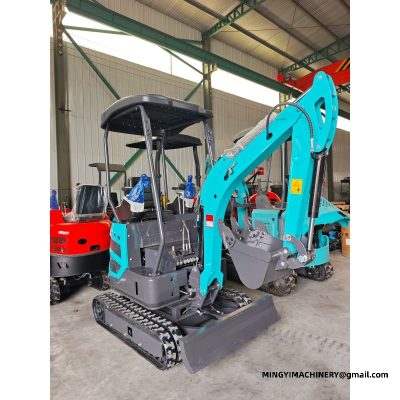
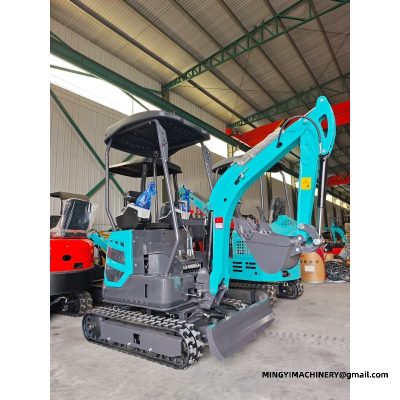
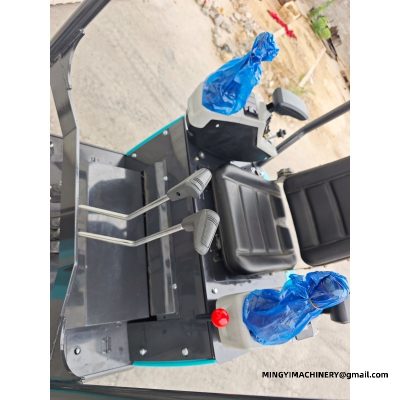
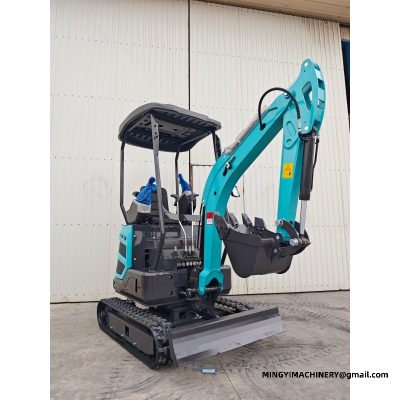
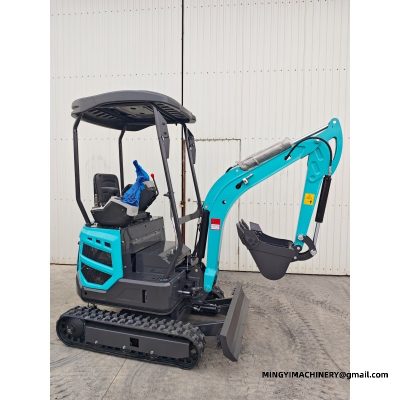
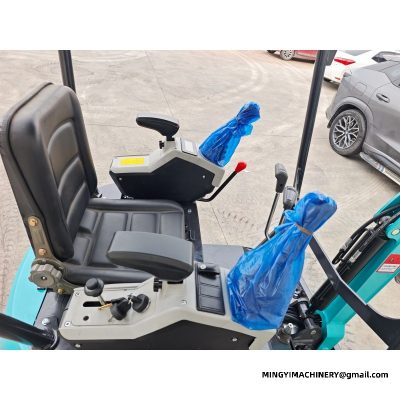
Works seamlessly with a hydraulic compaction wheel or plate vibrator, ensuring trenches and foundations are densely packed to meet strict construction standards.
Once a trench is backfilled, the ground has to be compacted before the surface is restored. Doing that with a separate walk-behind machine means a second pass and a second operator.
A compaction wheel on the carrier lets the same machine close the trench as it works along the run, which is why it is a common addition to drainage and utility orders.
Closing trenches with a compaction wheel
The wheel rolls the fill in layers as the operator moves the boom along the trench, leaving the surface level enough for the next layer to be placed.
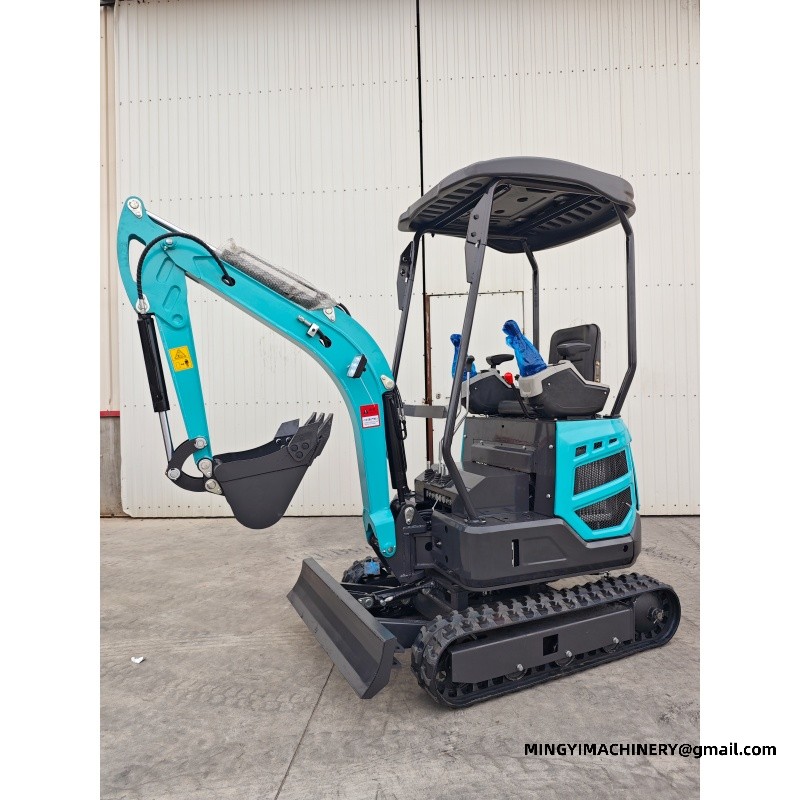
Because the tool hangs on the coupler, the crew can switch back to the digging bucket at any point and then refit the wheel without leaving the machine.
Compaction wheels in utility and road reinstatement
Utility and drainage contractors use the attachment on verges, footways and carriageway reinstatement, where the trench has to be brought back to grade after the pipe is laid.
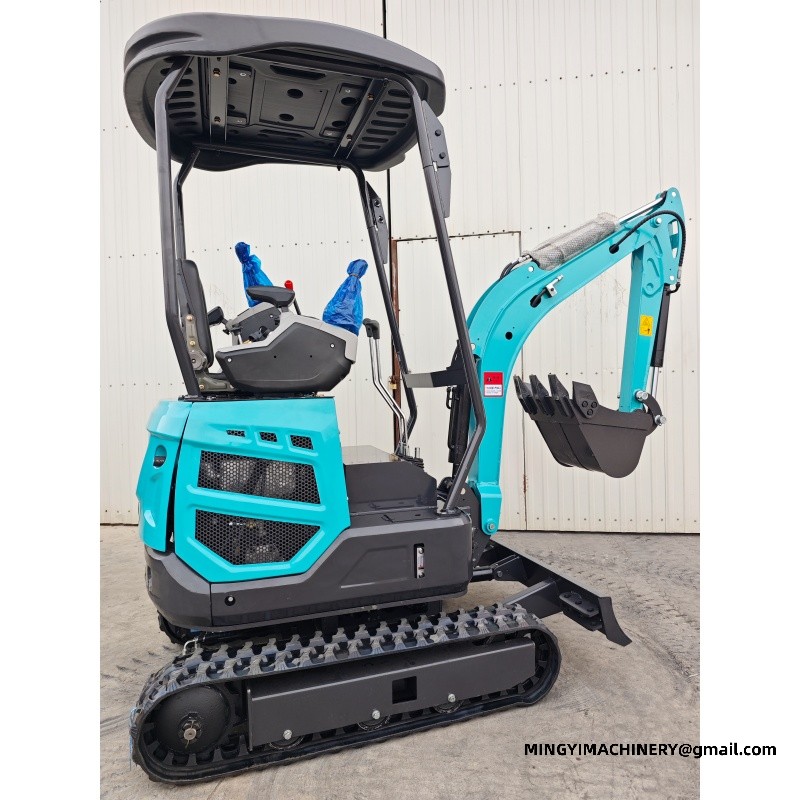
Rubber tracks are kept for finished surfaces, and steel tracks with rubber blocks are used where the route to the trench crosses rough or soft ground.
The wheel width, the coupler type and the undercarriage are confirmed against the trench work the buyer expects, so the attachment and the machine are matched.
Operator technique for mini excavator with compaction wheel The second habit is tool discipline. Running the excavator with the right bucket width for the trench means less spoil, less reinstatement and a cleaner job than a wide bucket and a lot of trimming. Stability is the third. This class of machine working across the tracks rather than over the corners keeps the machine steady and the undercarriage loaded evenly, which shows up as track life at the end of the season. Working a mini excavator with compaction wheel in confined spaces Confined sites are decided by dimensions. Overall width, tail swing and the space needed to work the arm are what let the unit in daily use operate inside a building, between walls or in a courtyard. Ventilation is the other indoor constraint. Running a machine of this size inside a closed structure needs air movement, and that is a planning item rather than something to discover after the first hour. What owners should plan for beyond the mini excavator with compaction wheel The useful comparison is demand per working hour, not demand per machine. The equipment on site that works more hours a year spreads its standing takes over more output, which is why utilisation usually matters more than the invoice figure. Downtime is the hidden line item. The machine itself waiting on a part earns nothing while it stands, so parts availability and service access belong in the plan as much as fuel does. Working a mini excavator with compaction wheel through the seasons Weather decides which days are productive. Rain turns some ground unusable and cold changes how the model in question starts and warms up, so planning the wet months around maintenance is more useful than planning around output. Heat and dust are as limiting as rain. Air intake condition and cooling cleanliness decide how the machine in that duty behaves in a dry season, and both are checked in a minute rather than repaired later. Boom configuration for mini excavator with compaction wheel Extended and offset boom configurations change reach and working range. The unit on the job with a longer arm reaches further but lifts less at full extension, so the specification is set against the deepest and furthest point on the job list. Detachable boom sections are used where transport length matters. A machine built for the work that has to travel on a standard trailer can be built so the arm comes off for the road and goes back on at the site. Interior and light demolition with mini excavator with compaction wheel Breaking out a floor slab, a wall footing or a concrete step is routine work for the equipment in service with a breaker. The machine is small enough to work inside and heavy enough to run the tool at a practical rate. Dust, debris clearance and floor loading all argue for a compact machine indoors. The excavator spreads its weight over a wider track footprint than a wheeled machine of similar capacity. Working near live services with this class of machine Digging near water, gas and cable is a precision job. The unit in daily use is used here because the operator can work in short controlled cuts and because the machine can be positioned without driving over the run being exposed. Utility crews specify a machine of this size with a narrow bucket and good visibility for exactly this reason: the machine has to stop at the service, not at the edge of the operator's view. Acceptance checks when the equipment on site arrives Delivery day is the best time to find a problem. Checking the specification against the order, the fluid levels, the fasteners and any transport damage while the model in question is still on the trailer is faster than claiming later. Documentation should arrive with the machine. Parts list, service schedule and any certificates for the machine itself are what the workshop needs later, and they are much easier to obtain at delivery than in month six. Trenching work with the machine in that duty Service trenches are the most common reason the unit on the job is hired. Water, sewage, cable and gas runs are narrow, shallow and often close to existing services, which is exactly the work a full-size machine cannot do safely. Trench quality depends on the bucket width and the operator, not on machine size. A machine built for the work with a narrow bucket and a swing boom cuts a clean run along a boundary without disturbing the ground either side of it. Trailering and moving the equipment in service Transport weight and width decide whether a machine needs a specialist haulier. The excavator sized to travel on a standard plant trailer behind a suitable vehicle moves with the crew rather than on a scheduled low loader. Detachable components reduce transport length. This class of machine built with a removable arm section or a folding step fits a shorter trailer and may avoid an oversize movement permit. Getting the unit in daily use through a narrow gap The first question on most job lists is whether the machine can reach the work at all. A machine of this size is chosen against the narrowest point on the route - a garden gate, a doorway, a gap between two walls - because a machine that arrives and then cannot pass loses a day, not an hour. Contractors who buy the equipment on site normally have one job in mind that nothing else reaches. The purchase order follows the access measurement, not the other way round, and the build sheet is then settled around it. Parts, service and support for the machine itself Support after delivery is a parts question. Wearing items for the model in question - filters, belts, track components, bucket teeth and pins - are the items a buyer should plan to hold before the first service interval. Engine parts availability usually drives the engine choice. The machine in that duty built with an engine the local network already carries is serviced from stock rather than from an international order. Specification data for the unit on the job Where a machine built for the work is being specified for a job list, the table below gives the factory figures that matter most: what the machine weighs, how deep and how far it works, and what it measures on a trailer. Every value shown is as built for the equipment in service; options such as cab, side swing or a telescopic undercarriage change the transport dimensions and are confirmed at order stage. A canopy keeps the machine light and the operator aware of the surroundings, which suits short jobs in warm weather. A fully enclosed cab is specified where rain, dust or cold are part of the working year, and it can be added to the excavator as a retrofit rather than only at build time. Enclosure also changes noise and dust exposure. A sealed cab on this class of machine keeps dust out on dry sites and lets the machine work through weather that would otherwise stop a canopy machine for the day.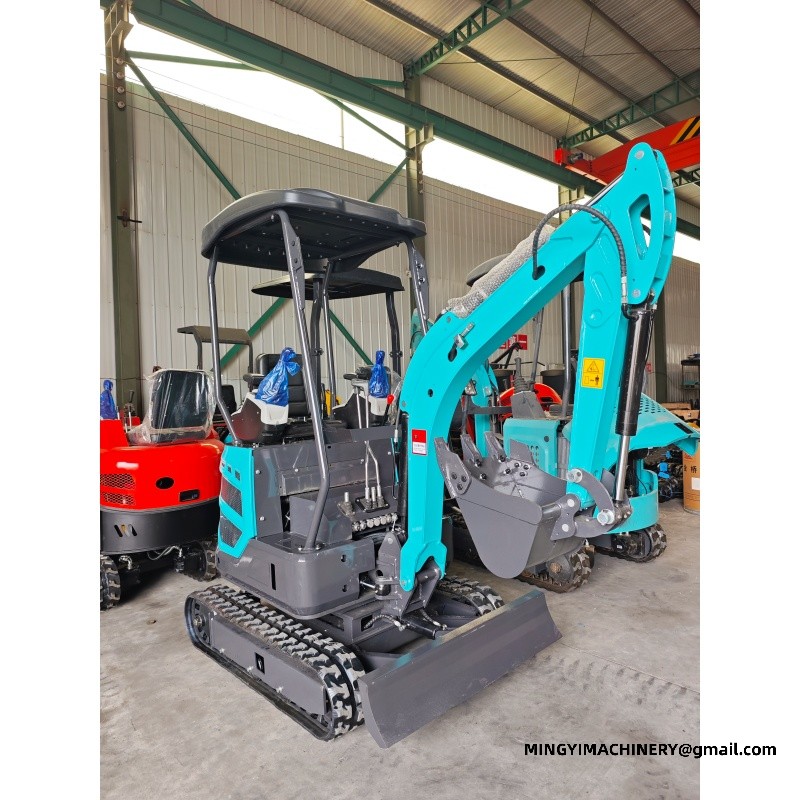
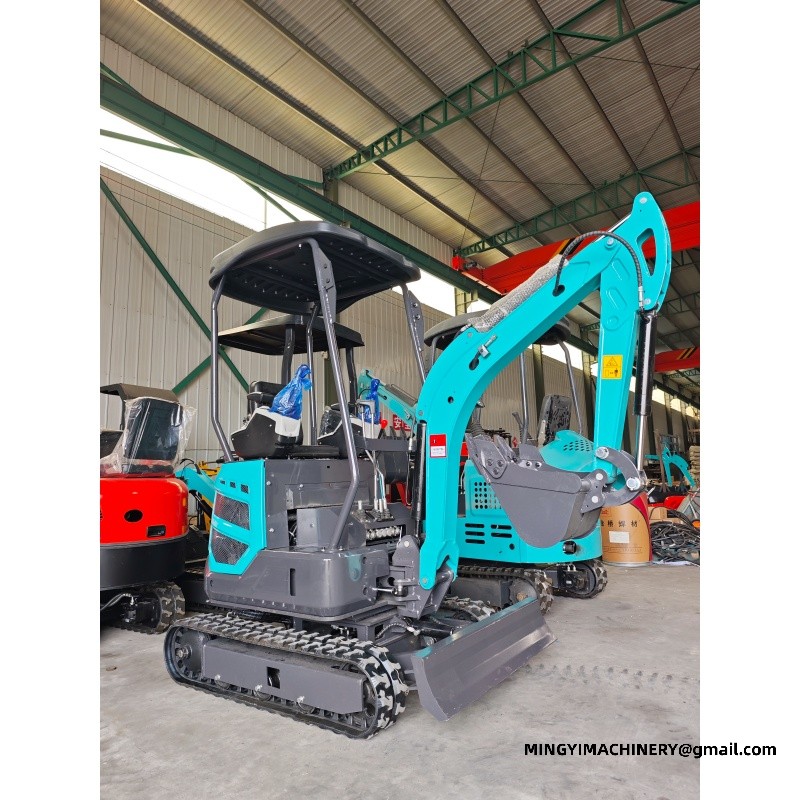
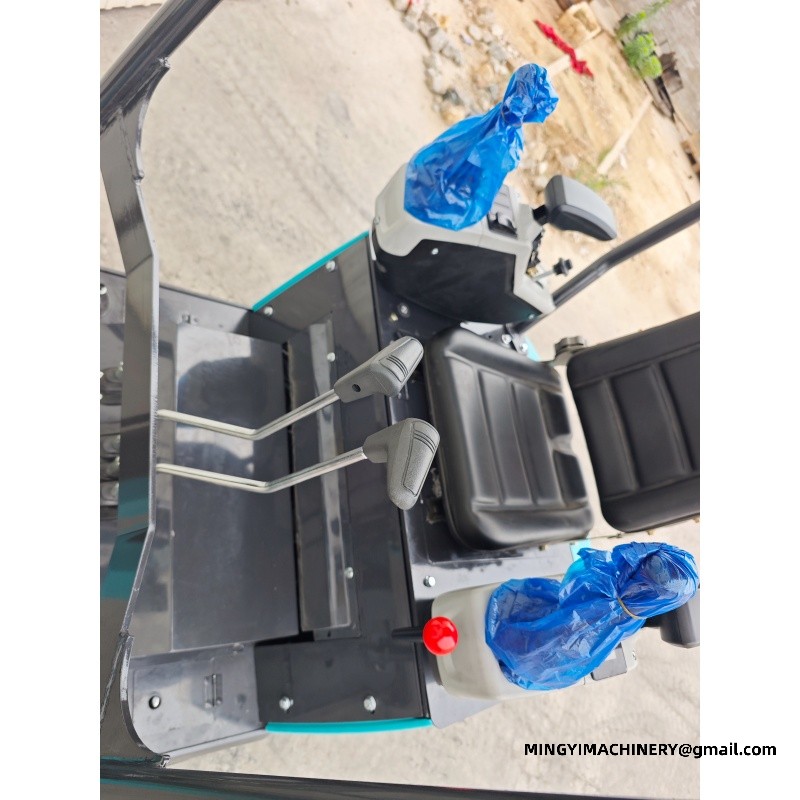
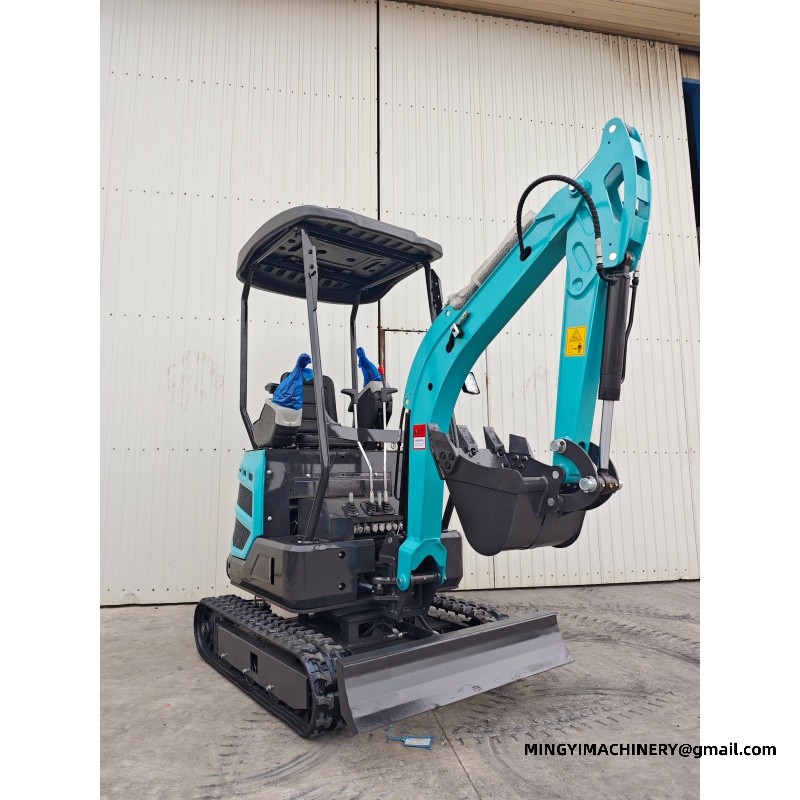
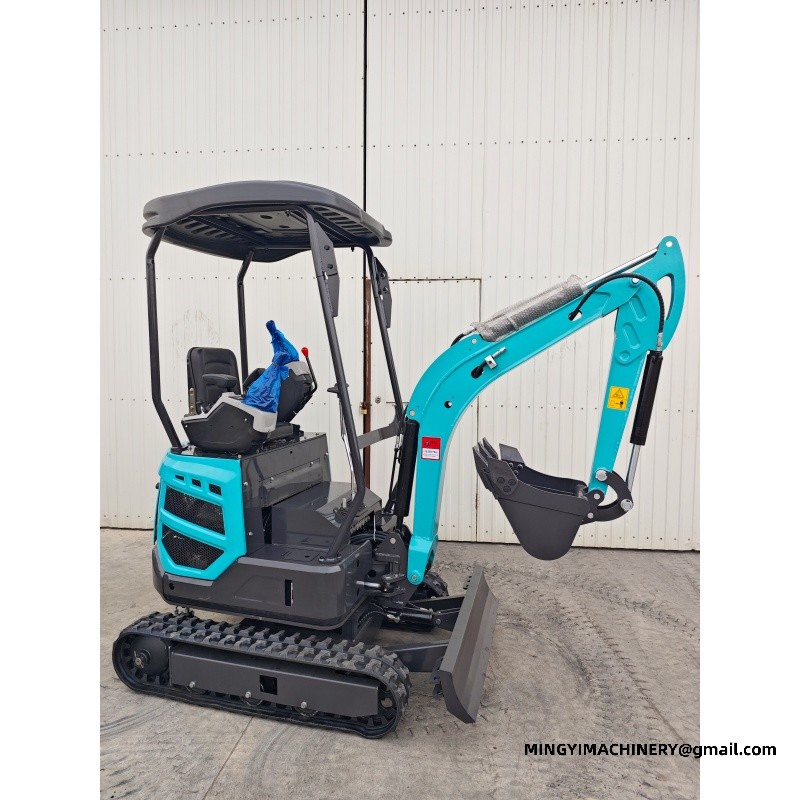
Reference specification — mini excavator range 09W 13W 15W 20-1W Operating weight 1100 kg (2425.08 lb) 1300 kg (2866.01 lb) 1400 kg (3086.47 lb) 1800 kg (3968.32 lb) Transport size (L×W×H) 1800 × 750 × 1970 mm 2200 × 930 × 2250 mm 2200 × 930 × 2250 mm 2550 × 1100 × 2200 mm Max digging depth 1250 mm (49.21 in) 1630 mm (64.17 in) 1630 mm (64.17 in) 1800 mm (70.87 in) Max digging height 2800 mm (110.24 in) 2750 mm (108.27 in) 2750 mm (108.27 in) 2820 mm (111.02 in) Max dumping height 1700 mm (66.93 in) 1960 mm (77.17 in) 1960 mm (77.17 in) 2050 mm (80.71 in) Max digging radius 2570 mm (101.18 in) 2900 mm (114.17 in) 2900 mm (114.17 in) 3050 mm (120.08 in) Max digging distance 1869 mm (73.58 in) 2100 mm (82.68 in) 2100 mm (82.68 in) 2300 mm (90.55 in) Minimum turning radius 1000 mm (39.37 in) 1300 mm (51.18 in) 1300 mm (51.18 in) 1450 mm (57.09 in) Travel speed 3 km/h (1.86 mph) 3 km/h (1.86 mph) 3 km/h (1.86 mph) 5 km/h (3.11 mph) Gradeability 30° 30° 30° 30° Fuel consumption 1-1.3 L/h (0.264—0.343 gal) 1-1.3 L/h (0.264—0.343 gal) 1-1.3 L/h (0.264—0.343 gal) 2-3 L/h (0.528—0.793 gal) Fuel tank capacity 8 L (2.11 gal) 10 L (2.64 gal) 10 L (2.64 gal) 16 L (4.23 gal) Hydraulic oil tank 16 L (4.23 gal) 16 L (4.23 gal) 16 L (4.23 gal) 18 L (4.76 gal) Dozer blade lift height 180 mm (7.09 in) 180 mm (7.09 in) 180 mm (7.09 in) 180 mm (7.09 in) Dozer blade drop depth 210 mm (8.27 in) 210 mm (8.27 in) 210 mm (8.27 in) 210 mm (8.27 in)
Q. What is the unit in daily use used for?
A. An attachment widens the range of jobs a single compact excavator can specification and win, which is why the working set matters as much as the base machine. The quick coupler makes the changeover a minute job at the trench edge, and mechanical tools need no hydraulic lines at all. For compaction wheel applications the practical route is to send the job list to the factory and let the build sheet answer it - which is exactly what this page invites.
Q. How is the attachment fitted and swapped?
A. Through the quick coupler on the dipper: seat the tool, lock it, plug the hydraulics where the design needs them. Mechanical attachments need no lines at all, so a bucket-to-rake change is a minute job at the trench edge.
Q. How do I get a specification?
A. Send the model, the destination and the attachment list by email or LINE - the channels listed just below this section. The reply covers the specification, lead time, packing and freight in one document, with the compaction wheel build sheet attached.
Commissioning a machine of this size on site
Commissioning is where the specification meets the ground. The settings chosen for the equipment on site are confirmed against the actual site, and the working pattern is adjusted before the machine is asked for a full day.
Handover and getting familiar with the machine itself
A good handover covers the awkward cases, not just the easy ones. Starting the model in question on a slope, turning in a confined space and recovering from soft ground are the situations an operator should meet first with someone beside them.
E-mail : sales@mingycn.com
LINE ( ID ): mingyicn
Night work and lighting on mini excavator with compaction wheel
Reflective markings on the machine help everyone else on site, and they are simple to add and easy to replace.
A lighting check belongs at the start of every night shift, together with a look at the warning beacon and the brake lights.
Neighbouring properties and public roads change the plan as well, so the light layout and the working hours are settled together.
Related pages
extended dipper mini excavator · mini excavator with twin line hydraulics · Payloader Machine: What the Name Covers and How to Specify One · Mini Excavators









