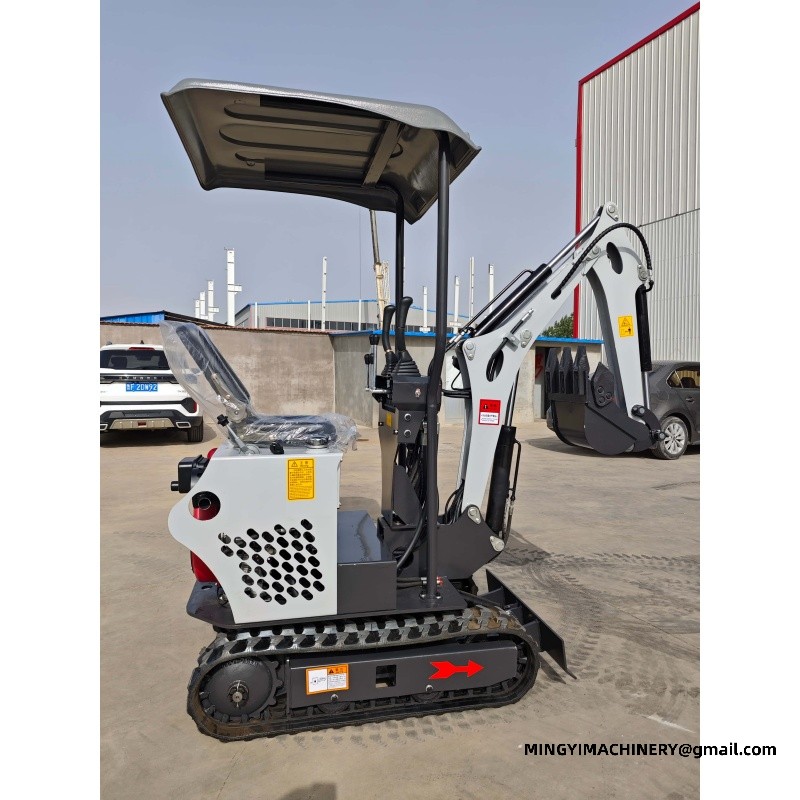
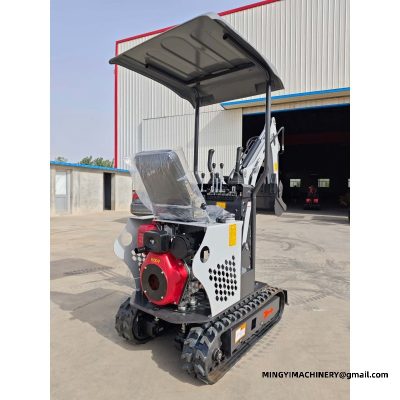
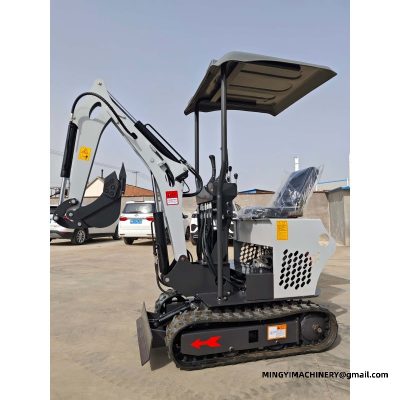
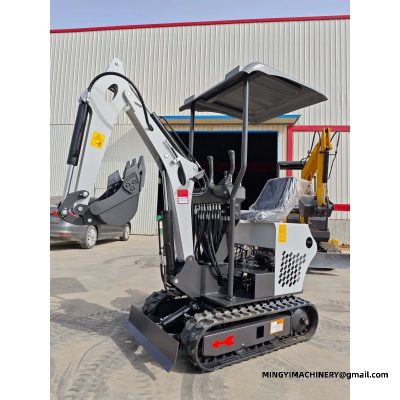
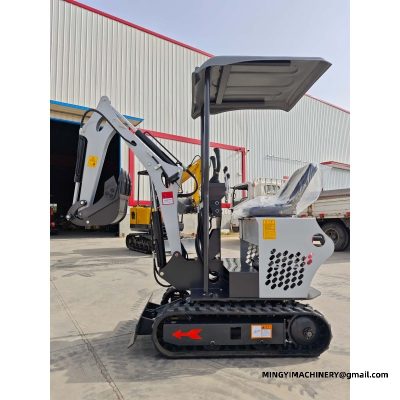
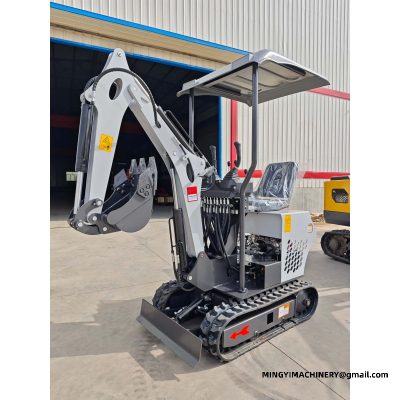
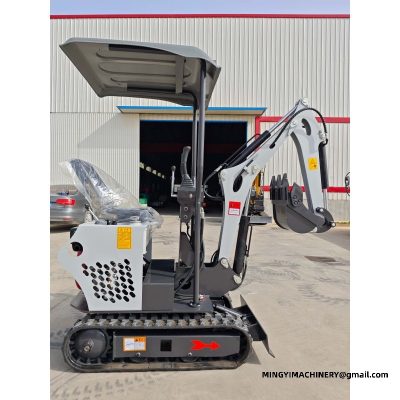
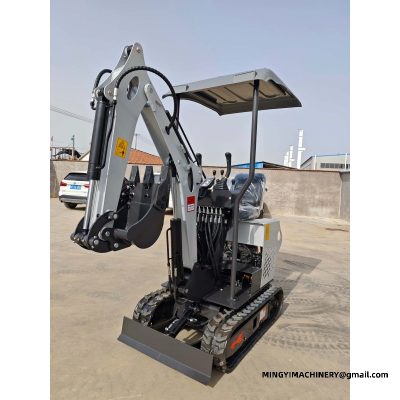
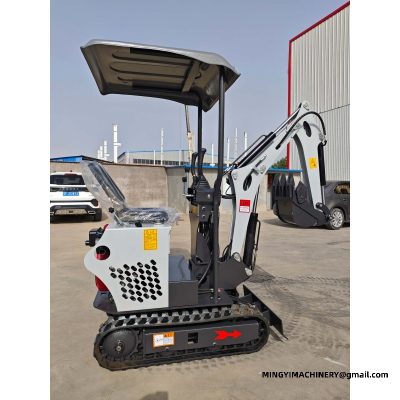
Working conditions across many African markets place particular demands on a small excavator: heat, dust, abrasive ground and long distances between service workshops. Buyers for these conditions tend to choose simplicity and parts availability over complexity.
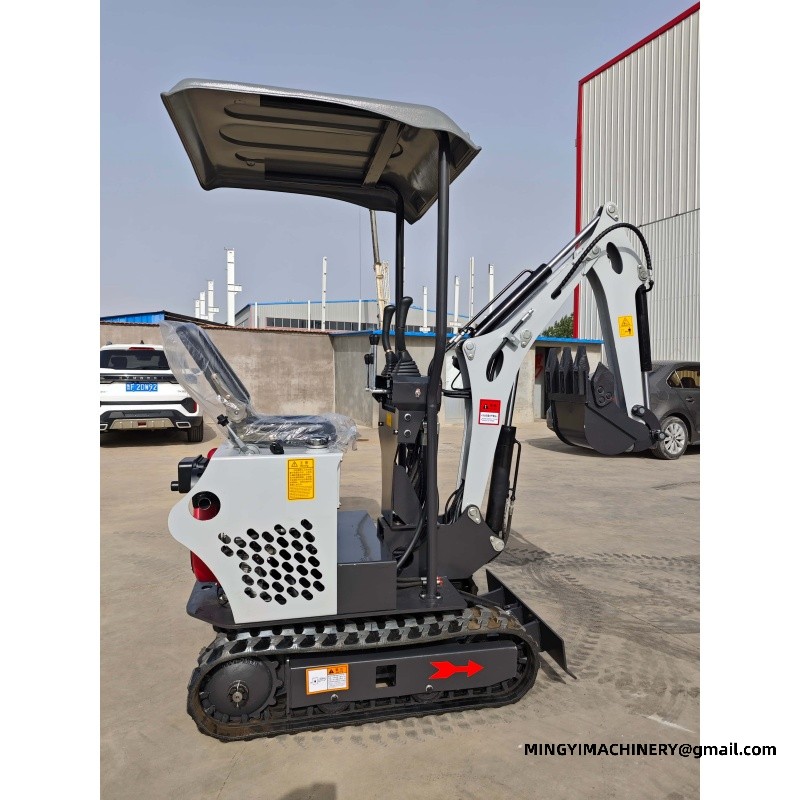
MINGYI builds mini excavators to order and configures them for the conditions described by the buyer. Machines for hot, dusty duty can be specified with filtration and cooling for the climate, and engines whose parts are widely handled at the destination.
Conditions that shape the specification
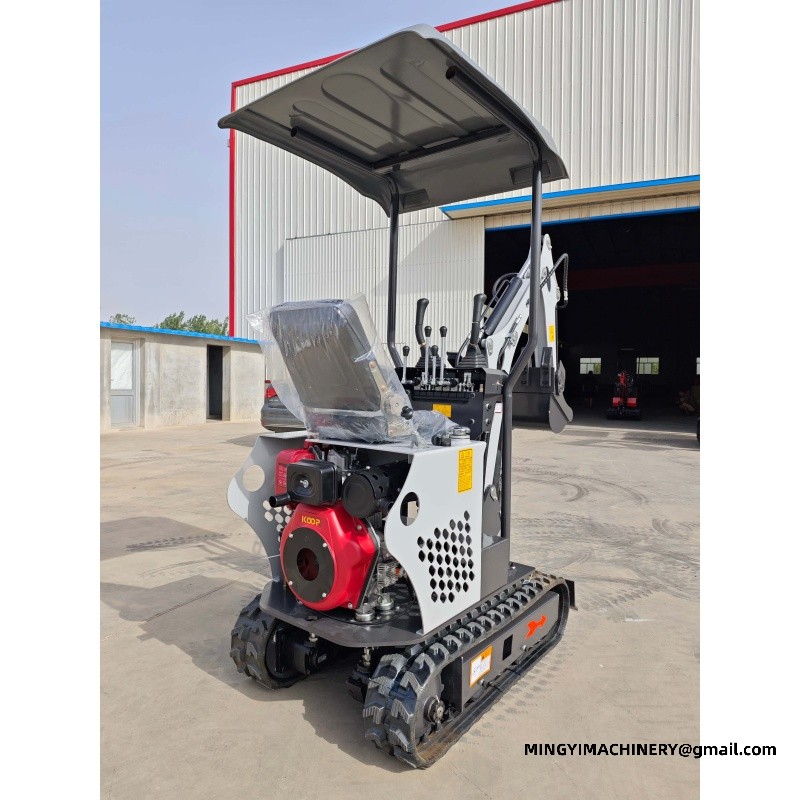
Dust loads filters quickly and abrasive soils wear edges and undercarriage fast, so the specification should lean towards serviceability: accessible filters, straightforward greasing and wear parts held rather than ordered. Heat adds its own load on cooling, accounted for when the duty is stated.
Track choice follows the ground: rubber tracks for finished and sandy surfaces, steel tracks with rubber blocks where rocky ground would cut rubber. A canopy machine keeps weight and service count down where conditions allow.
Specifying machines for hot and dusty sites
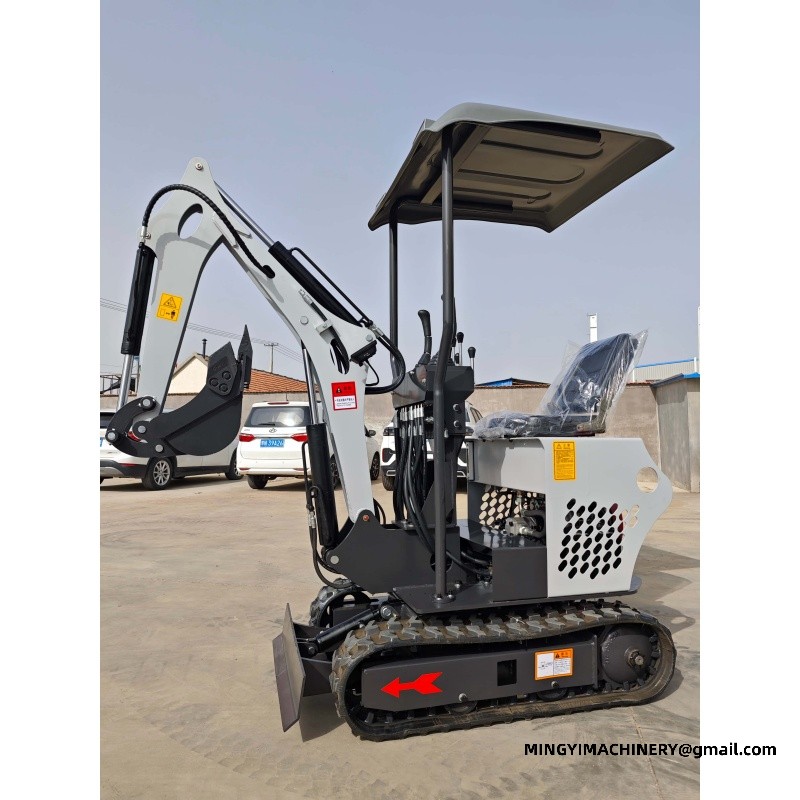
Engine selection matters most for long term support: the range includes Changchai, Laidong, Runtong and YARMAX units alongside Youpu 195 and smaller Kubota options, and the choice is usually made on which family local workshops know and can supply.
When ordering, describe the climate, the ground and the distance to service support, and add a spares bundle: filters and wear parts supplied with the machine keep the unit working between freight cycles.
A machine for hot, dusty, remote duty is bought on serviceability. MINGYI configures to the conditions you describe and ships the parts to match, so distance from the factory takes days rather than seasons.
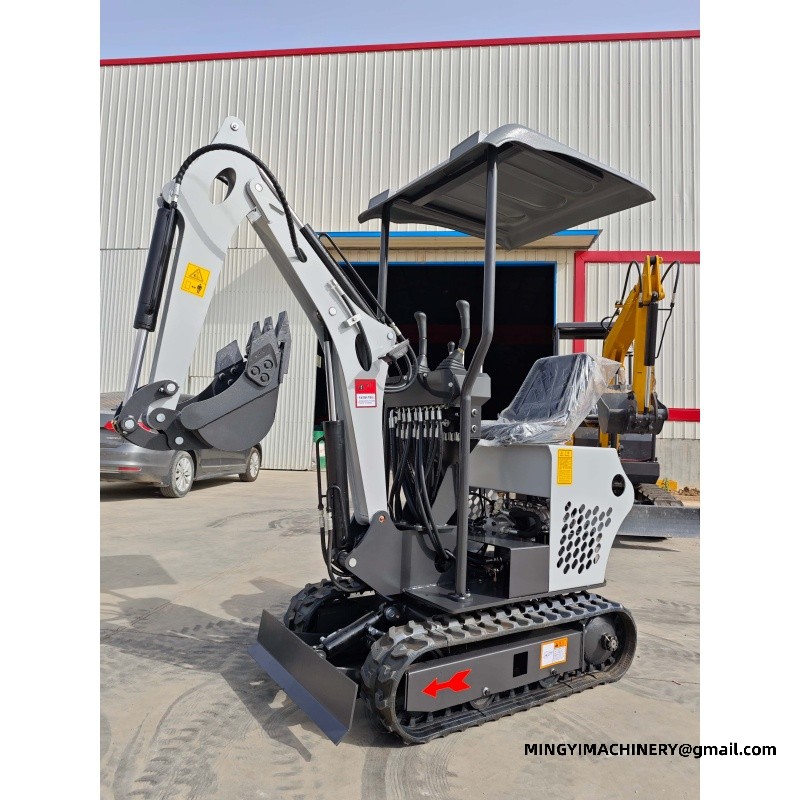
Noise, dust and working near occupied buildings Work near housing or occupied premises brings constraints that open sites do not. Start times, exhaust condition and how often the excavator needs to reverse are the practical limits that neighbours notice. Enclosure and machine condition both reduce noise. This class of machine with intact panels, sound mounts and a maintained exhaust is measurably quieter than the same machine with loose guards, and the difference matters on restricted sites. Parts, service and support for mini excavator for the africa market Support after delivery is a parts question. Wearing items for the unit in daily use - filters, belts, track components, bucket teeth and pins - are the items a buyer should plan to hold before the first service interval. Remote support is handled by video. A machine of this size fault can often be diagnosed on a walk-around call with the panel open, which is faster than waiting for a visit and avoids shipping a part that is not needed. Running mini excavator for the africa market in a rental fleet Rental fleets buy for utilisation, not for a single job. The equipment on site with a quick coupler and a common attachment standard is hired more often because it suits more of the calls that come in. Fleet buyers also weigh transport. The machine itself that a customer can tow on a normal licence and a standard trailer is a hire that does not need a delivery truck, which changes how often it goes out. Attachments that turn mini excavator for the africa market into several machines The base machine is a carrier; the tool on the end of the arm decides the task. The model in question fitted with a toothed bucket digs, and the same machine with a breaker, an auger or a grab does work that would otherwise need a second unit on site. Most of the daily variety on the machine in that duty comes from the attachment rack rather than from the machine itself. Bucket, breaker, auger, ripper, rake and grab cover the large majority of the work a contractor will see. Getting mini excavator for the africa market through a narrow gap The first question on most job lists is whether the machine can reach the work at all. The unit on the job is chosen against the narrowest point on the route - a garden gate, a doorway, a gap between two walls - because a machine that arrives and then cannot pass loses a day, not an hour. Access decides the machine before output does. With a machine built for the work the limiting dimension is usually the widest point on the way in, so measuring the gate, the corridor and the turning space first saves a wasted delivery and a second visit. Export packing and shipping of mini excavator for the africa market Machines leave the factory prepared for container or flat rack shipment. The equipment in service is normally shipped with the attachment set and the spare parts list agreed in advance so the container is planned once. Buyers who import regularly plan the spare parts with the machine. The excavator ordered with a wearing-parts kit arrives ready to work rather than ready to wait for the first service interval. Daily checks and maintenance on this class of machine Track tension is the item most often neglected. The unit in daily use run with slack tracks wears the undercarriage and can throw a track on a turn; run too tight, the same components wear from the other direction. Greasing is the second item. The slew ring, the boom and arm pins and the bucket linkage on a machine of this size take grease daily in dusty work, and the intervals shorten further when the machine is used in water or mud. Specifying the equipment on site against a job list The practical way to specify is to write the job list first: the narrowest access, the deepest trench, the heaviest tool and the surfaces the machine must cross. The machine itself is then matched to those four numbers. Buyers who skip this step either over-buy or under-buy. The model in question specified only from machine size tends to arrive without the coupler, the circuits or the track type the work actually needs. Hiring versus owning the machine in that duty Availability is part of the decision. Owning the unit on the job means it is there on the day the ground is ready; hiring means competing for the same machine at the same time as everyone else in the season. Ownership brings obligations that hiring does not. Storage, servicing, insurance and an operator are the items to set against the hire rate before deciding which way a machine built for the work should be supplied. Orchard, vineyard and farm use of the equipment in service Orchard and vineyard work is carried out between rows. The excavator with a narrow chassis and a swing boom works down the row without damaging the trees, which is the reason a full-size machine is not used at all. Ditching, fertilising and drainage on farmland suit this class of machine because the work is spread over a large area in short bursts. The machine travels behind a pickup and works where it stops. Track choice for the unit in daily use Undercarriage selection is a ground question, not a preference question. A machine of this size running on finished paving needs rubber; the same machine on demolition rubble or rock wears rubber quickly, so steel with rubber blocks becomes the better answer over a full season. Track type changes what the machine can cross and what it leaves behind. Buyers specify rubber for lawns, driveways and municipal work, and steel with rubber blocks for sites where sharp material would cut a rubber belt in a week. Specification data for the equipment on site Buyers comparing the machine itself usually start from four numbers - weight, digging depth, reach and transport width - because those are the ones that decide whether the machine can be delivered and whether it can do the job once it is there. Every value shown is as built for the model in question; options such as cab, side swing or a telescopic undercarriage change the transport dimensions and are confirmed at order stage. Two buyers can order the same the unit on the job and receive different engines. The decision is rarely about peak power; it is about which parts counter is closest to the site and which engine the local mechanic already knows. Engine choice is also an emissions and documentation question for some markets. Listing the available units with the machine in that duty enquiry lets the factory confirm what can be supplied and documented for the destination country.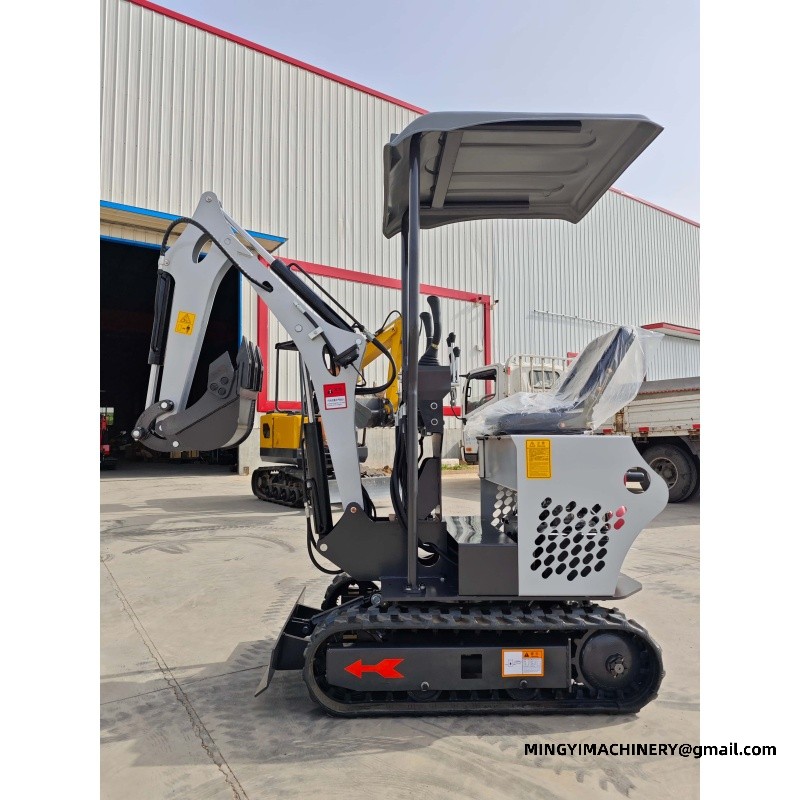
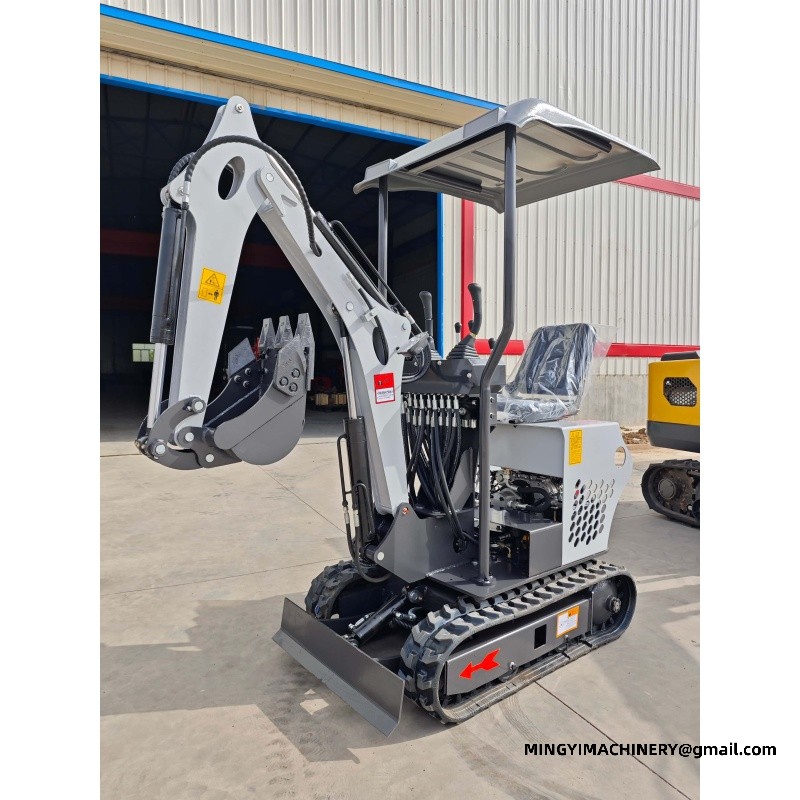
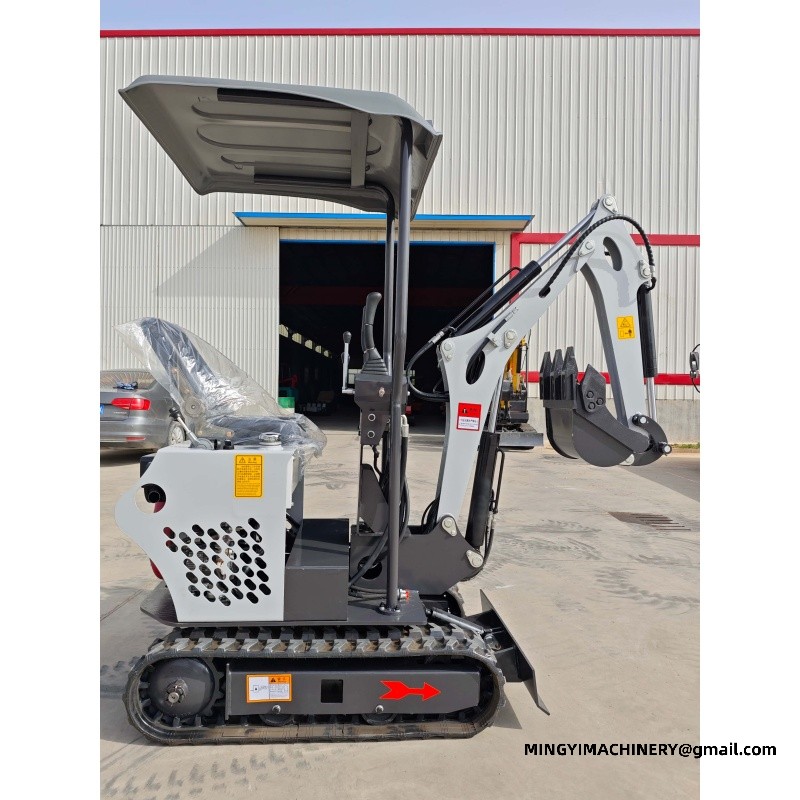
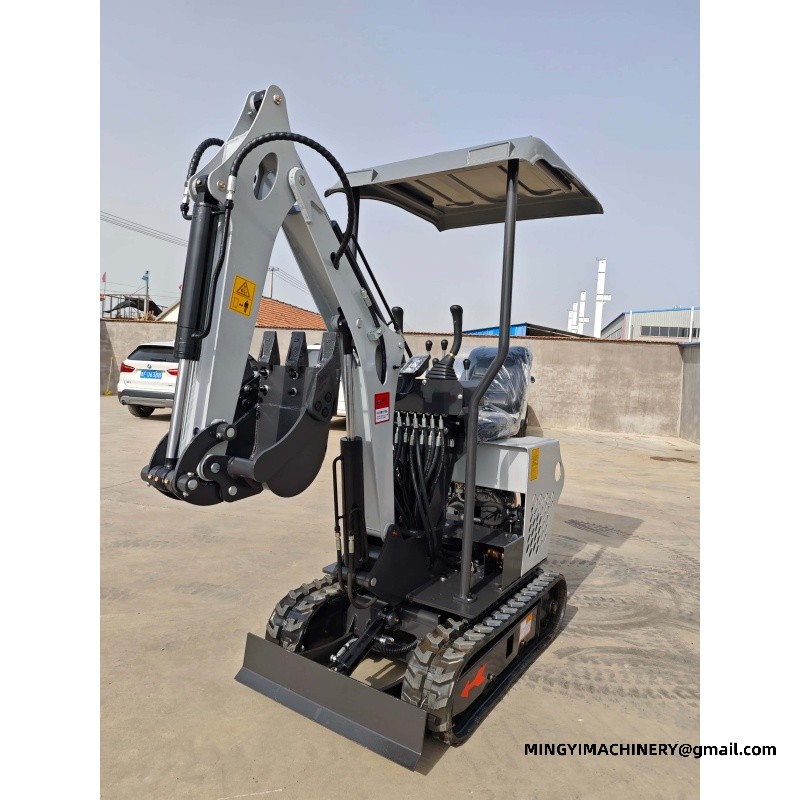
Reference specification — mini excavator range 09W 12W 30-2W 09L Operating weight 1100 kg (2425.08 lb) 1200 kg (2645.55 lb) 2700 kg (5952.48 lb) 1100 kg (2425.08 lb) Transport size (L×W×H) 1800 × 750 × 1970 mm 2200 × 930 × 2250 mm 3000 × 1100 × 2700 mm 2300 × 720 × 1870 mm Max digging depth 1250 mm (49.21 in) 1630 mm (64.17 in) 2200 mm (86.61 in) 1400 mm (55.12 in) Max digging height 2800 mm (110.24 in) 2750 mm (108.27 in) 3000 mm (118.11 in) 2800 mm (110.24 in) Max dumping height 1700 mm (66.93 in) 1960 mm (77.17 in) 2000 mm (78.74 in) 1880 mm (74.02 in) Max digging radius 2570 mm (101.18 in) 2900 mm (114.17 in) 3800 mm (149.61 in) 2490 mm (98.03 in) Max digging distance 1869 mm (73.58 in) 2100 mm (82.68 in) 3050 mm (120.08 in) 2000 mm (78.74 in) Minimum turning radius 1000 mm (39.37 in) 1300 mm (51.18 in) 1750 mm (68.9 in) 1400 mm (55.12 in) Travel speed 3 km/h (1.86 mph) 3 km/h (1.86 mph) 7 km/h (4.35 mph) 3 km/h (1.86 mph) Gradeability 30° 30° 30° 30° Fuel consumption 1-1.3 L/h (0.264—0.343 gal) 1-1.3 L/h (0.264—0.343 gal) 2-3 L/h (0.528—0.793 gal) 1-1.3 L/h (0.264—0.343 gal) Fuel tank capacity 8 L (2.11 gal) 10 L (2.64 gal) 16 L (4.23 gal) 8 L (2.11 gal) Hydraulic oil tank 16 L (4.23 gal) 16 L (4.23 gal) 20 L (5.28 gal) 16 L (4.23 gal) Dozer blade lift height 180 mm (7.09 in) 180 mm (7.09 in) 230 mm (9.06 in) 180 mm (7.09 in) Dozer blade drop depth 210 mm (8.27 in) 210 mm (8.27 in) 280 mm (11.02 in) 210 mm (8.27 in)
Q. What is a machine built for the work?
A. Dealer, importer and fleet buyers judge a factory by what follows the machine - packing, documentation, parts - and the programme sets out how that works. OEM and ODM build options cover colour, decals, engine choice, cab layout and attachment packages, confirmed on the build sheet before production. Read the equipment in service together with the engine, track and attachment pages: jobs around the Africa market are decided by how those choices line up, not by any single number on the sheet.
Q. How do I start an order?
A. Send the models, quantities and destination by email or LINE. The factory replies with lead time, packing and freight terms in one specification, and documentation and inspection are arranged at the same time so the shipment and the paperwork travel together.
Q. What about colours and branding?
A. OEM colours and decals are part of the build: private-label machines carry the buyer brand on the standard MINGYI platform, and the Africa market order confirms colours, marks and documents before production starts.
Documents that travel with the excavator
The machine is only half of what arrives. The parts book, the service schedule and the declarations that come with this class of machine are what let the owner register, insure and maintain it without a second round of emails.
Storage and long idle periods for the unit in daily use
The battery and the fuel are the first things to suffer in storage. Preparing a machine of this size properly at the start of the idle period avoids the flat battery and the contaminated tank that greet an unprepared machine.
E-mail : sales@mingycn.com
LINE ( ID ): mingyicn
Visibility and blind spots around mini excavator for the africa market
Mirrors, cameras and a signal person cover what the seat cannot. Walk the route before the first load and mark the corners where sight is lost.
A machine working in a yard with people on foot needs a rule about who moves first, agreed before the shift rather than during it.
Related pages
mini excavator for middle east projects · mini excavator for australian sites · Construction Wheel Loader: Dump Height Comes Before Capacity · Mini Excavators









