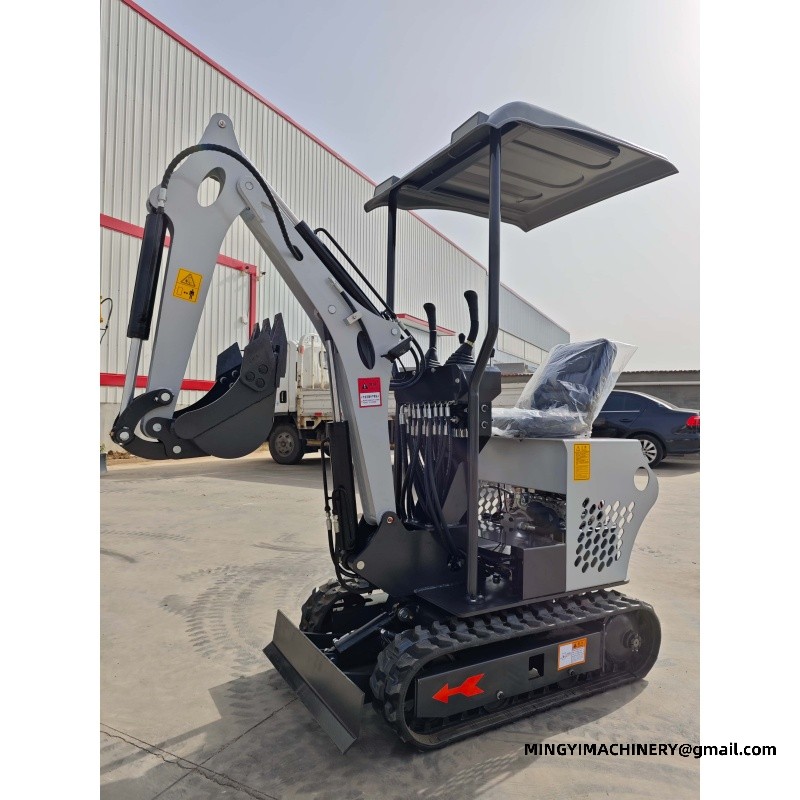
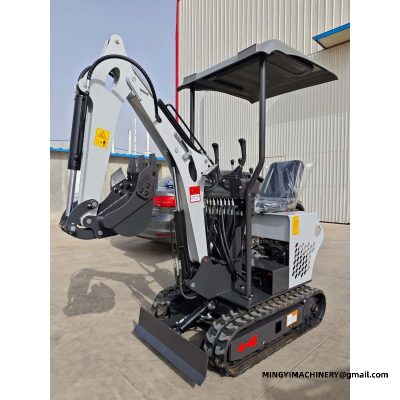
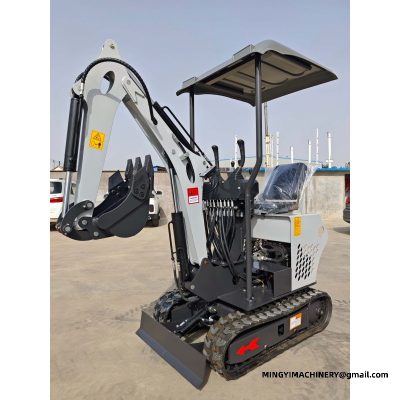
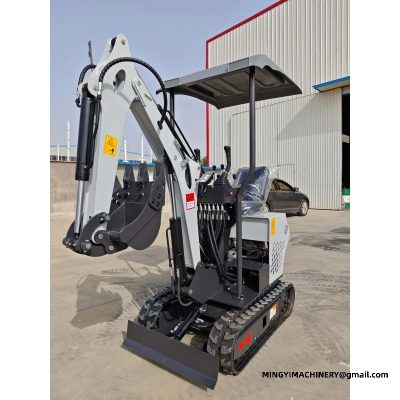
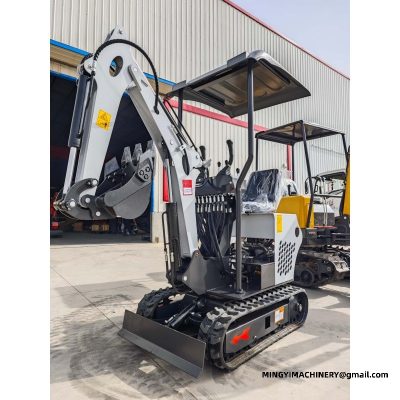
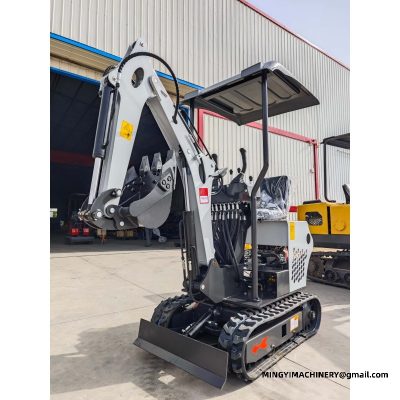
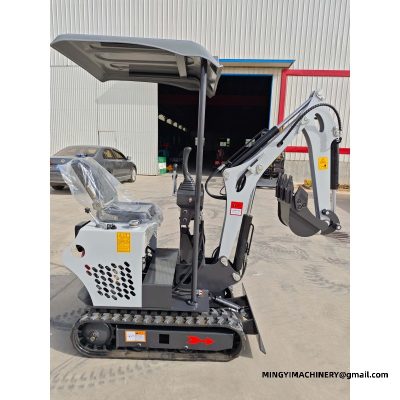
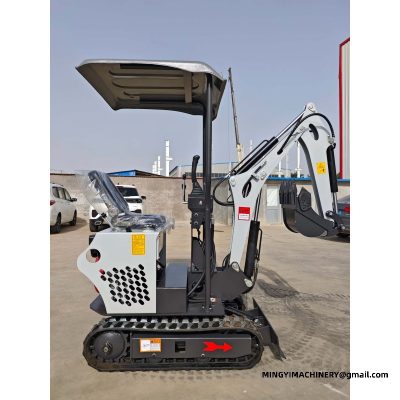
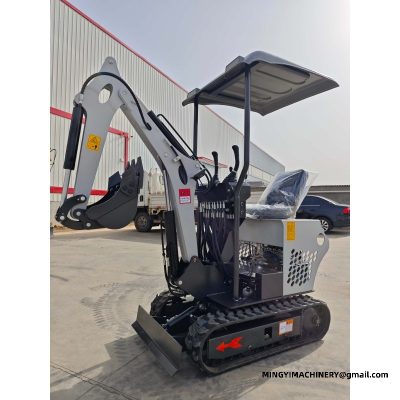
Work in hot, dusty regions puts different demands on a compact excavator than a temperate site does. Airborne dust, hard dry ground and long shifts in high temperatures all shape which machine a buyer should order.
MINGYI builds compact crawler excavators to order, so the elements that matter in these conditions are specified at the ordering stage rather than added later. The engine, cooling package and filtration are agreed with the rest of the machine.
Dust, heat and hard ground on site
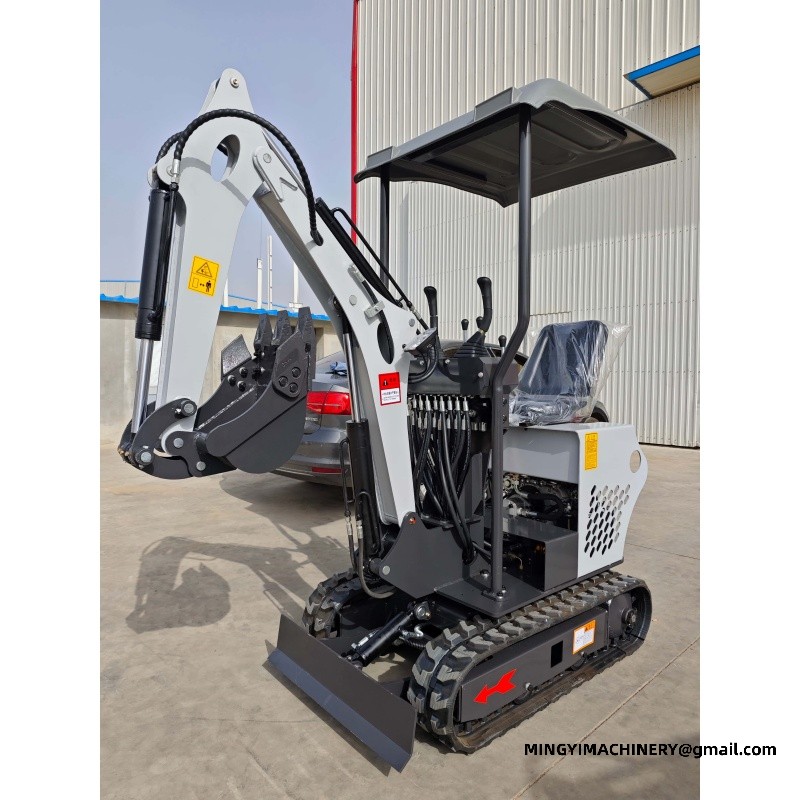
Dust reaches every joint and filter, so service access matters as much as performance. A machine whose daily checks can be carried out quickly and whose filters are easy to reach stays in work through a long hot season.
Ground that has baked hard resists a digging bucket. On these sites an operator may need a ripper or a breaker to open the surface before the bucket can cut it, which changes the attachment list for the order.
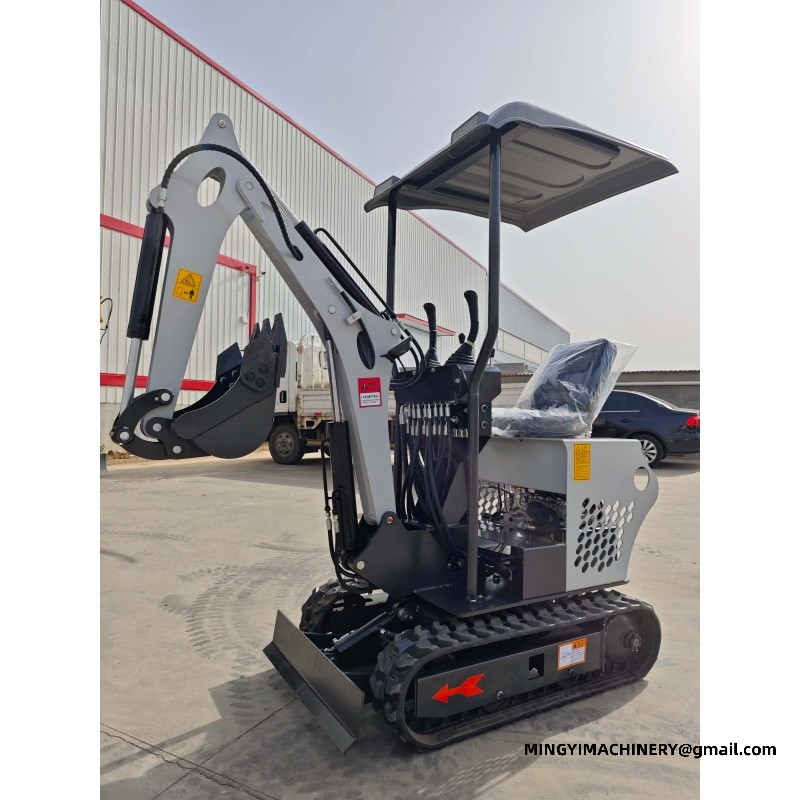
Mini excavators for hot climate working
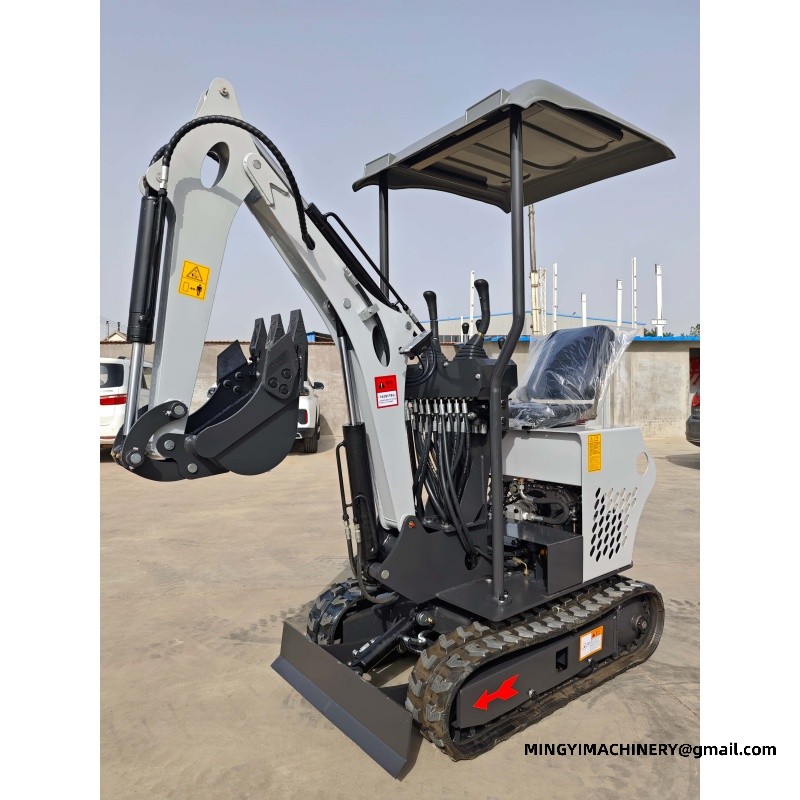
High ambient temperatures affect hydraulics more than the digging cycle itself. Oil that runs hot thins and loses its protective film, so a cooling package sized for the conditions is part of the specification on machines bound for these markets.
An enclosed cab with effective air handling keeps the operator alert through a full shift, while a canopy version suits buyers who prefer the simpler machine and work early or late to avoid the worst of the day.
For hot climate buyers the machine is chosen against the ground and the weather as much as the workload. A compact excavator specified at the start for dust, heat and hard ground needs fewer repairs once it is in service.
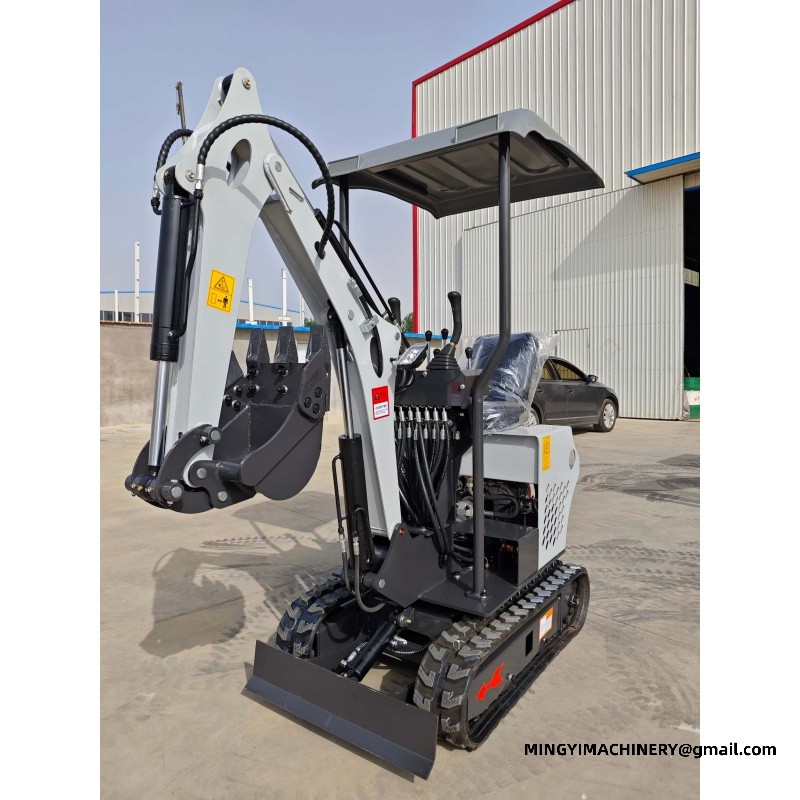
Orchard, vineyard and farm use of mini excavator for middle east projects Orchard and vineyard work is carried out between rows. The excavator with a narrow chassis and a swing boom works down the row without damaging the trees, which is the reason a full-size machine is not used at all. Farms also use this class of machine for general maintenance - clearing a watercourse, repairing a track, loading a spreader. One carrier with a few attachments covers most of the jobs that would otherwise wait for a contractor. Interior and light demolition with mini excavator for middle east projects Interior demolition is an access and a weight question. The unit in daily use that fits through a doorway and works on a suspended floor does jobs that would otherwise be done by hand or by a larger machine that cannot enter. Breaking out a floor slab, a wall footing or a concrete step is routine work for a machine of this size with a breaker. The machine is small enough to work inside and heavy enough to run the tool at a practical rate. What owners should plan for beyond the mini excavator for middle east projects Purchase decision is the visible part of the effort. Fuel, filters, tracks or tyres, the operator and the transport between sites are the items that decide what the equipment on site actually demands over a few seasons, and they are worth listing before the order. The useful comparison is demand per working hour, not demand per machine. The machine itself that works more hours a year spreads its standing takes over more output, which is why utilisation usually matters more than the invoice figure. Track choice for mini excavator for middle east projects Rubber tracks suit paved and landscaped ground because they spread the machine weight and leave the surface intact. Steel tracks with rubber blocks are specified where the ground is rougher or the working day is longer, and the choice can be made per machine rather than accepted as a factory default. Undercarriage selection is a ground question, not a preference question. The model in question running on finished paving needs rubber; the same machine on demolition rubble or rock wears rubber quickly, so steel with rubber blocks becomes the better answer over a full season. Canopy or enclosed cab on a mini excavator for middle east projects A canopy keeps the machine light and the operator aware of the surroundings, which suits short jobs in warm weather. A fully enclosed cab is specified where rain, dust or cold are part of the working year, and it can be added to the machine in that duty as a retrofit rather than only at build time. The cab decision follows the climate and the hours. Operators working a full shift in the unit on the job benefit from a sealed cab with wipers and heating; operators stepping on and off every few minutes usually prefer the canopy for the visibility and the quick exit. Trailering and moving mini excavator for middle east projects Loading practice matters as much as the numbers. A machine built for the work is driven up ramps under its own power with the boom lowered and the tracks aligned, and secured at the points the manufacturer specifies. Detachable components reduce transport length. The equipment in service built with a removable arm section or a folding step fits a shorter trailer and may avoid an oversize movement permit. OEM and fleet customisation of the excavator Distributors and rental fleets usually need the machine to look like theirs. Paint, decals, seat colour and attachment branding can be specified on this class of machine at build time rather than applied after import. Documentation can be prepared to suit the importer. Manuals, parts books and decal sets for the unit in daily use can be supplied with the buyer's own branding where the order size justifies it. Daily checks and maintenance on a machine of this size Daily maintenance on the equipment on site is a short list: engine oil level, coolant, track tension, hydraulic oil level and a look at the hoses. Ten minutes at the start of the shift prevents most of the failures that stop a machine. Greasing is the second item. The slew ring, the boom and arm pins and the bucket linkage on the machine itself take grease daily in dusty work, and the intervals shorten further when the machine is used in water or mud. Working near live services with the model in question The risk on utility work is not machine power but machine placement. The machine in that duty that fits the working width leaves the surrounding ground undisturbed, which keeps the trench stable and the reinstatement small. Utility crews specify the unit on the job with a narrow bucket and good visibility for exactly this reason: the machine has to stop at the service, not at the edge of the operator's view. Municipal and public works with a machine built for the work Municipal crews work on streets, footpaths and parks where the public is present. The equipment in service is specified because it occupies little space, works inside a small exclusion zone and can be moved on a standard trailer. Noise and surface protection matter on public work. The excavator on rubber tracks across paving, with a sealed cab for the operator, suits the conditions better than a larger tracked machine. Landscaping and ground care with this class of machine Grass cutting heads, rakes and tillers extend the unit in daily use into ground care. The same carrier that digs a border in spring can cut and clear the same area later in the season. On soft landscape work the surface is the constraint. A machine of this size on rubber tracks crosses turf without stripping it, which is why the same jobs are not given to a wheeled machine. Specification data for the equipment on site Where the machine itself is being specified for a job list, the table below gives the factory figures that matter most: what the machine weighs, how deep and how far it works, and what it measures on a trailer. Every value shown is as built for the model in question; options such as cab, side swing or a telescopic undercarriage change the transport dimensions and are confirmed at order stage. Road repair generates short, interrupted jobs - a patch, a drainage connection, a kerb line. The machine in that duty is economical here because it travels on a small trailer and starts working minutes after arriving. Breaking out a failed slab and backfilling the same hole in one visit is normal work for the unit on the job. The breaker and the bucket come off the same coupler, so the road is reopened the same day.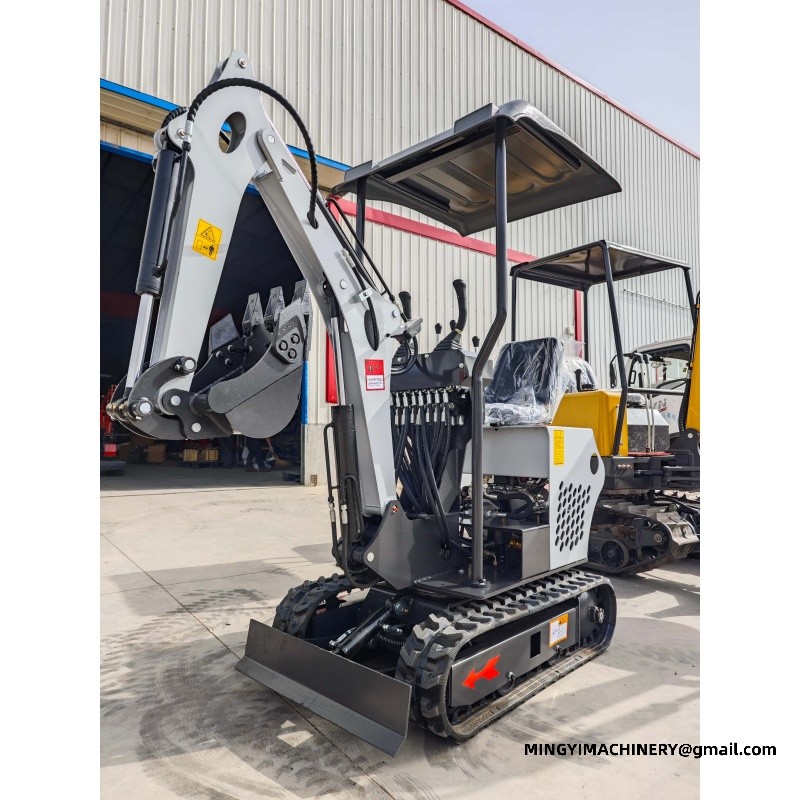
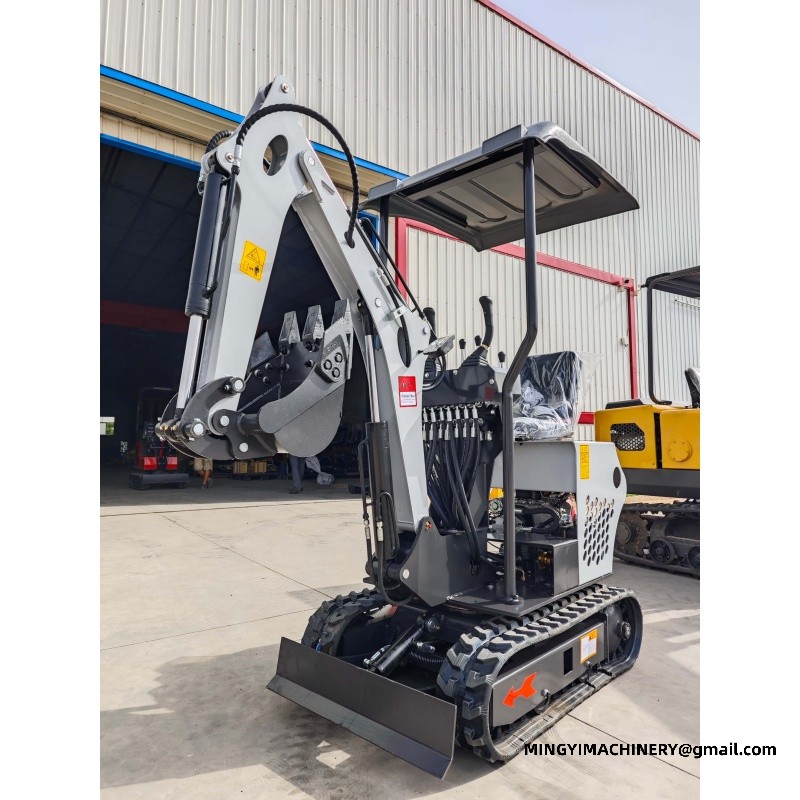
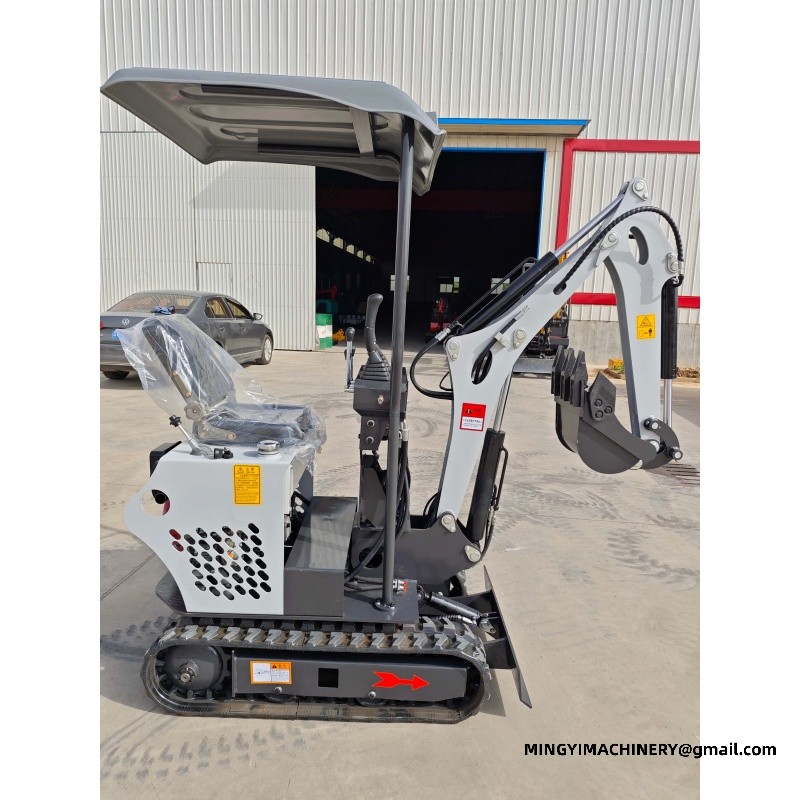
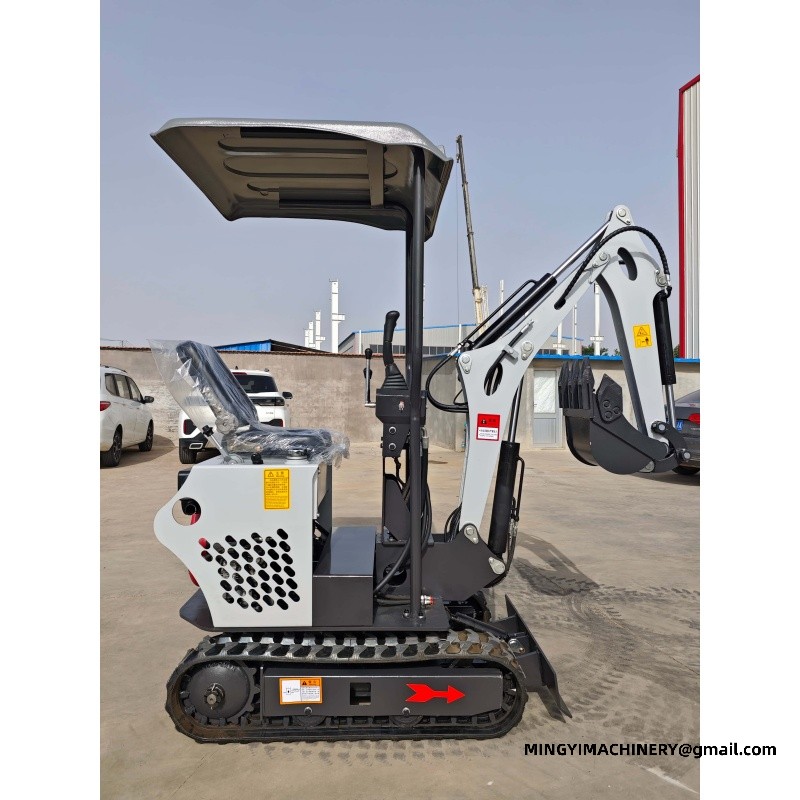
Reference specification — mini excavator range 09W 12W 30-2W 12L Operating weight 1100 kg (2425.08 lb) 1200 kg (2645.55 lb) 2700 kg (5952.48 lb) 1200 kg (2645.55 lb) Transport size (L×W×H) 1800 × 750 × 1970 mm 2200 × 930 × 2250 mm 3000 × 1100 × 2700 mm 2200 × 930 × 2250 mm Max digging depth 1250 mm (49.21 in) 1630 mm (64.17 in) 2200 mm (86.61 in) 1700 mm (66.93 in) Max digging height 2800 mm (110.24 in) 2750 mm (108.27 in) 3000 mm (118.11 in) 2600 mm (102.36 in) Max dumping height 1700 mm (66.93 in) 1960 mm (77.17 in) 2000 mm (78.74 in) 1800 mm (70.87 in) Max digging radius 2570 mm (101.18 in) 2900 mm (114.17 in) 3800 mm (149.61 in) 2900 mm (114.17 in) Max digging distance 1869 mm (73.58 in) 2100 mm (82.68 in) 3050 mm (120.08 in) 2300 mm (90.55 in) Minimum turning radius 1000 mm (39.37 in) 1300 mm (51.18 in) 1750 mm (68.9 in) 1450 mm (57.09 in) Travel speed 3 km/h (1.86 mph) 3 km/h (1.86 mph) 7 km/h (4.35 mph) 3 km/h (1.86 mph) Gradeability 30° 30° 30° 30° Fuel consumption 1-1.3 L/h (0.264—0.343 gal) 1-1.3 L/h (0.264—0.343 gal) 2-3 L/h (0.528—0.793 gal) 1-1.3 L/h (0.264—0.343 gal) Fuel tank capacity 8 L (2.11 gal) 10 L (2.64 gal) 16 L (4.23 gal) 10 L (2.64 gal) Hydraulic oil tank 16 L (4.23 gal) 16 L (4.23 gal) 20 L (5.28 gal) 16 L (4.23 gal) Dozer blade lift height 180 mm (7.09 in) 180 mm (7.09 in) 230 mm (9.06 in) 180 mm (7.09 in) Dozer blade drop depth 210 mm (8.27 in) 210 mm (8.27 in) 280 mm (11.02 in) 210 mm (8.27 in)
Q. What are the machine built for the work?
A. Dealer, importer and fleet buyers judge a factory by what follows the machine - packing, documentation, parts - and the programme sets out how that works. OEM and ODM build options cover colour, decals, engine choice, cab layout and attachment packages, confirmed on the build sheet before production. MINGYI builds the 08, 12 and 18 models covering the 0.8 to 6 tonne class, and the equipment in service is where that range meets Middle East projects.
Q. How are machines packed and shipped?
A. Complete units travel in containers on timber cradles; CKD packing parts the machine for volume. Documents, marks and routing follow the order, and the destination port decides the packing plan.
Q. Can I see the machine before it ships?
A. Inspection is arranged at the factory, in person or by a scheduled video walk-around - the same session covers paint, decals and attachment fitment for the Middle East projects specification, so the machine inspected is the machine that ships.
Moving the excavator between sites
Loading is where most damage happens. Ramps, angle of approach and the condition of the ground under them matter more than the machine when this class of machine is being loaded, and a careful driver is worth more than a fast one.
Pre-delivery inspection before the unit in daily use leaves the shop
Inspection is a list, not a glance. Before a machine of this size is released the fluid levels, belt tension, electrical connections and safety decals are each ticked off, and anything that fails stays in the shop rather than travelling with the machine.
E-mail : sales@mingycn.com
LINE ( ID ): mingyicn
Planning utilisation for mini excavator for middle east projects
A machine booked for a job it is too large for wastes capacity, while one that is too small loses the day to rework.
Keeping one machine as the planned spare is simpler than scheduling around an unplanned stop in the middle of a programme.
Related pages
mini excavator for australian sites · mini excavator for north america · Front End Loader Manufacturer: Boom, Hinge and Frame Records · Mini Excavators









