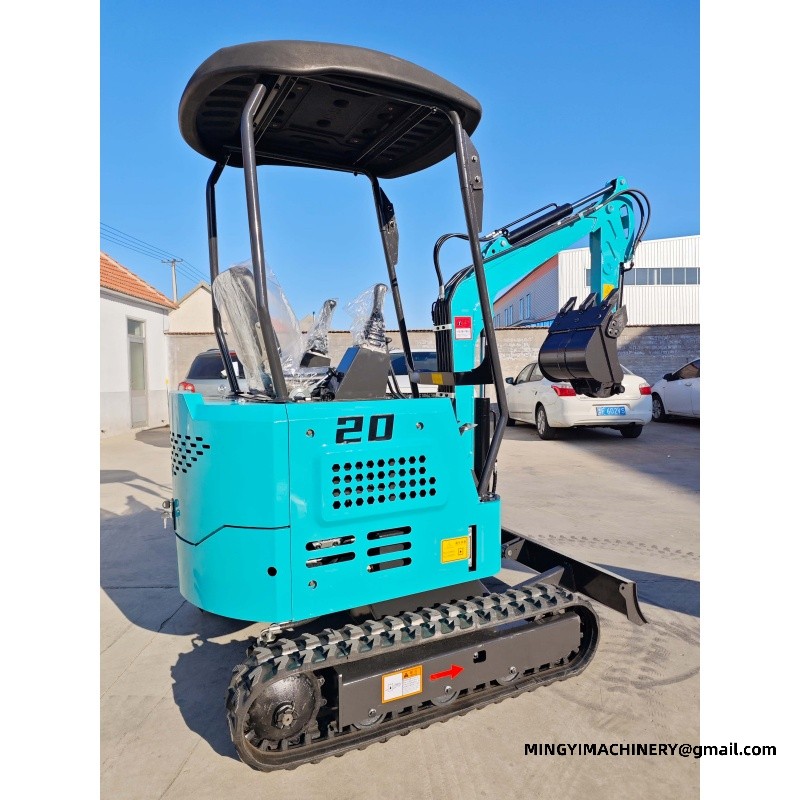
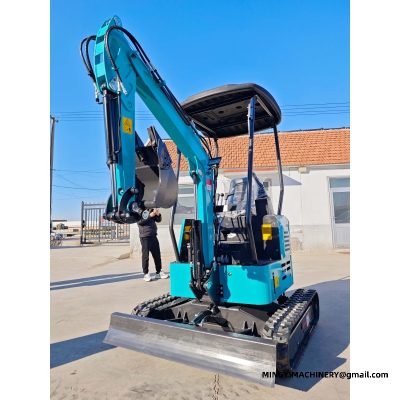
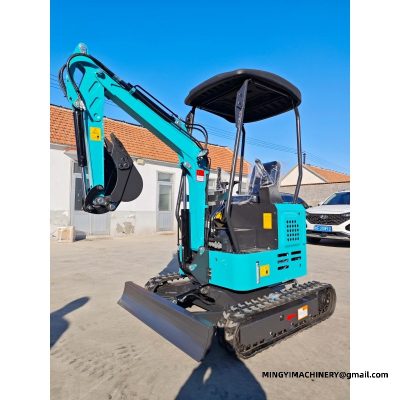
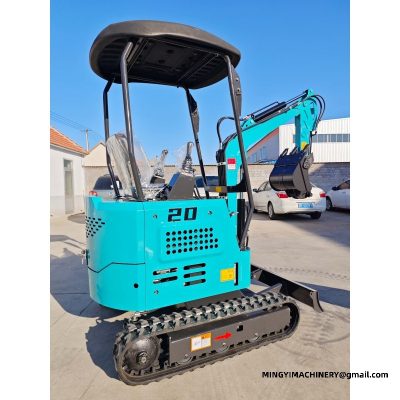
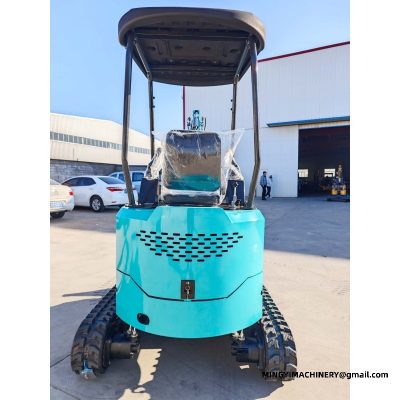
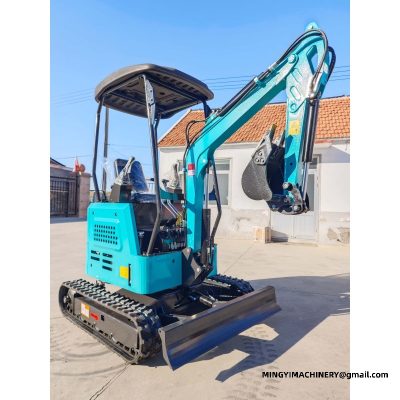
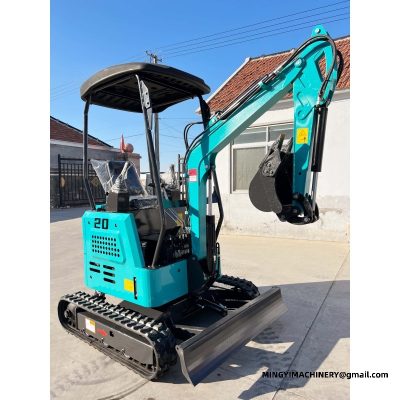
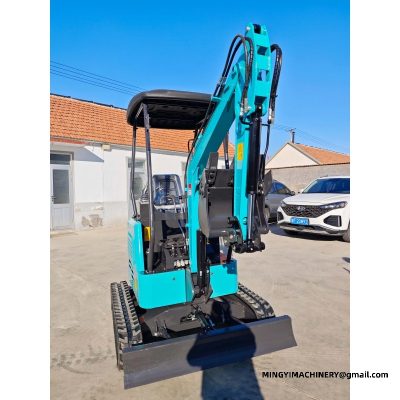
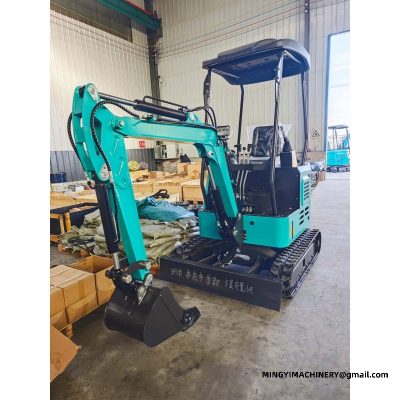
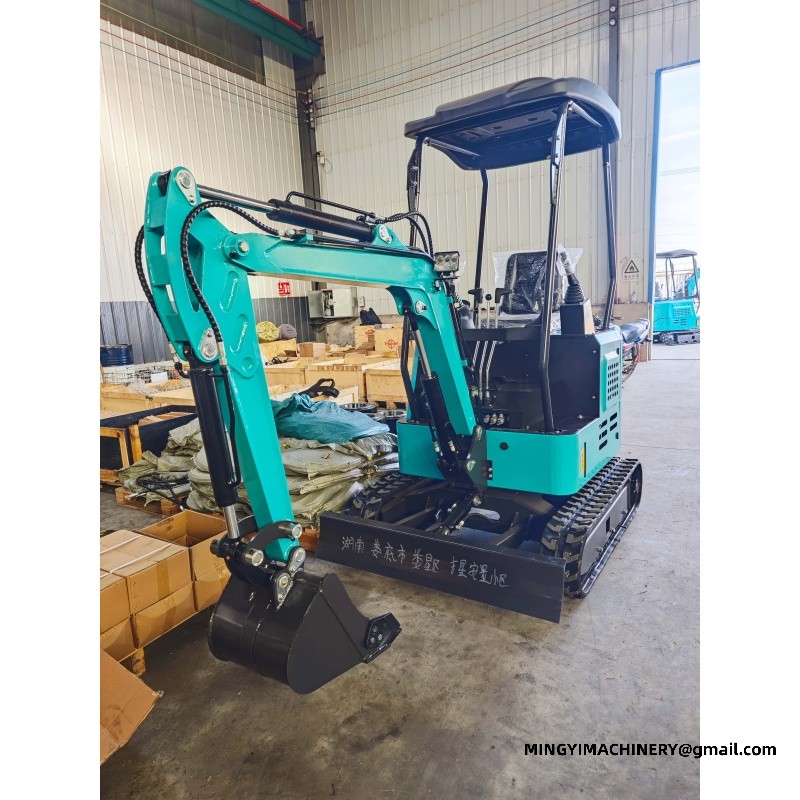
A canopy excavator keeps the operator out of the weather but leaves the station open to the site. That layout suits work where the machine is moved often, where headroom is limited, or where the operator steps off the machine repeatedly to check levels and place materials.
MINGYI builds compact crawler excavators with either a canopy or an enclosed cab. The choice is fixed when the order is placed, so the hydraulic layout, seat and control arrangement are set for the version the buyer wants.
What an open canopy changes on site
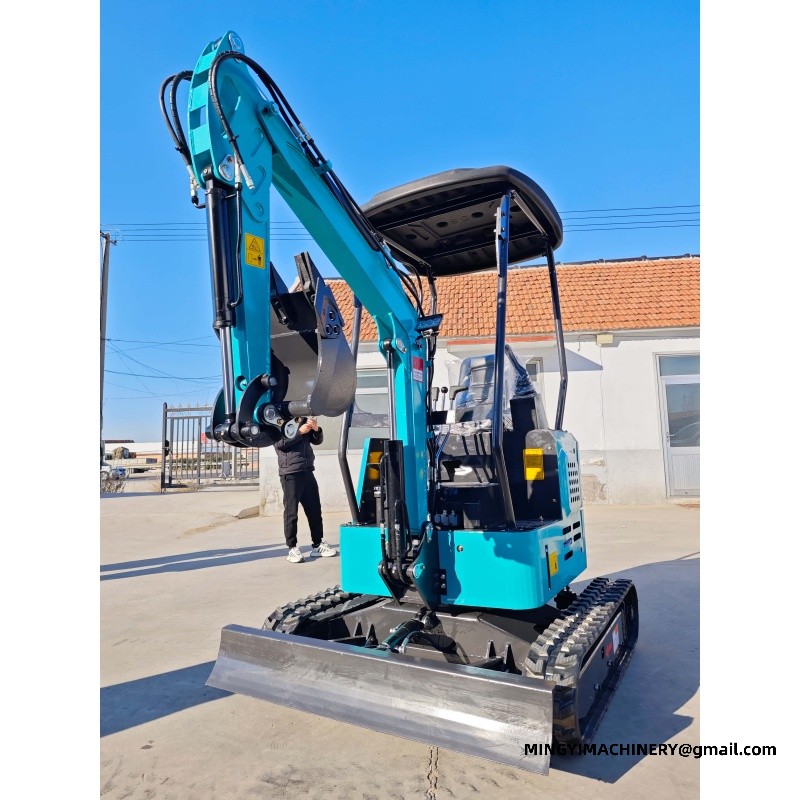
The canopy protects against falling material and gives a defined operator position, while leaving the sides open for a clear view of the bucket and the trench edge. For detailed work close to walls, that sight line is a practical advantage.
An open station is also easier to enter and leave. On jobs where the operator is constantly off the seat to check services, set pipes or guide a load, a canopy machine keeps the working rhythm uninterrupted.
Canopy and cab versions when ordering a compact machine
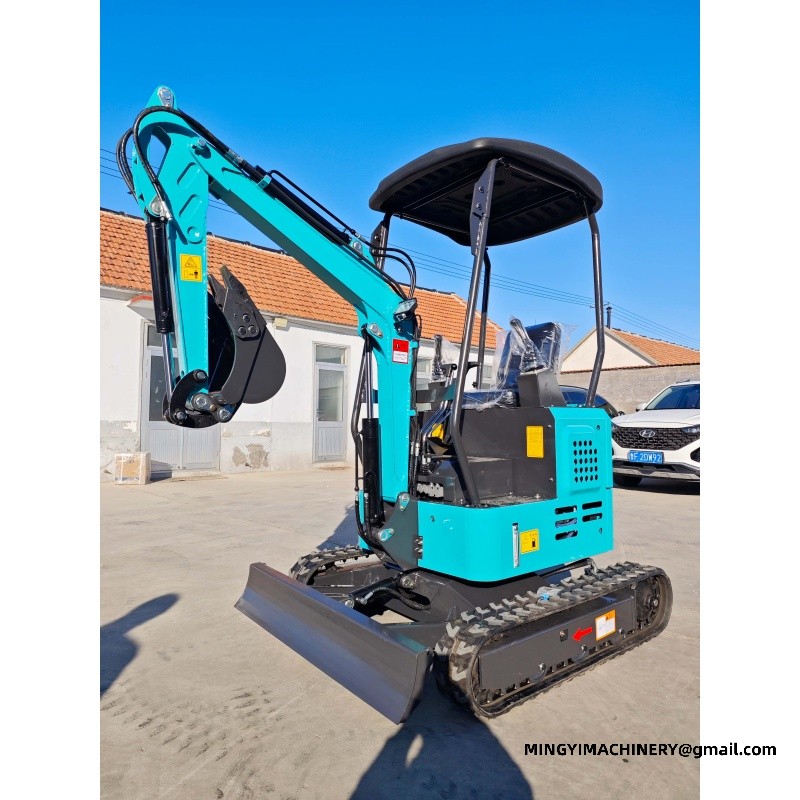
An enclosed cab adds weather protection and reduces noise for long shifts, but it raises the machine height and adds weight. A canopy keeps overall height lower, which matters when the excavator travels on a small trailer or works under a structure.
Buyers should decide the version before production rather than after, because the structure, glazing and control positions differ. Confirm canopy or cab, track type and attachment package together so the machine arrives complete.
A canopy machine is chosen for visibility and easy access rather than weather protection. MINGYI supplies compact excavators built to order in either open or enclosed form.
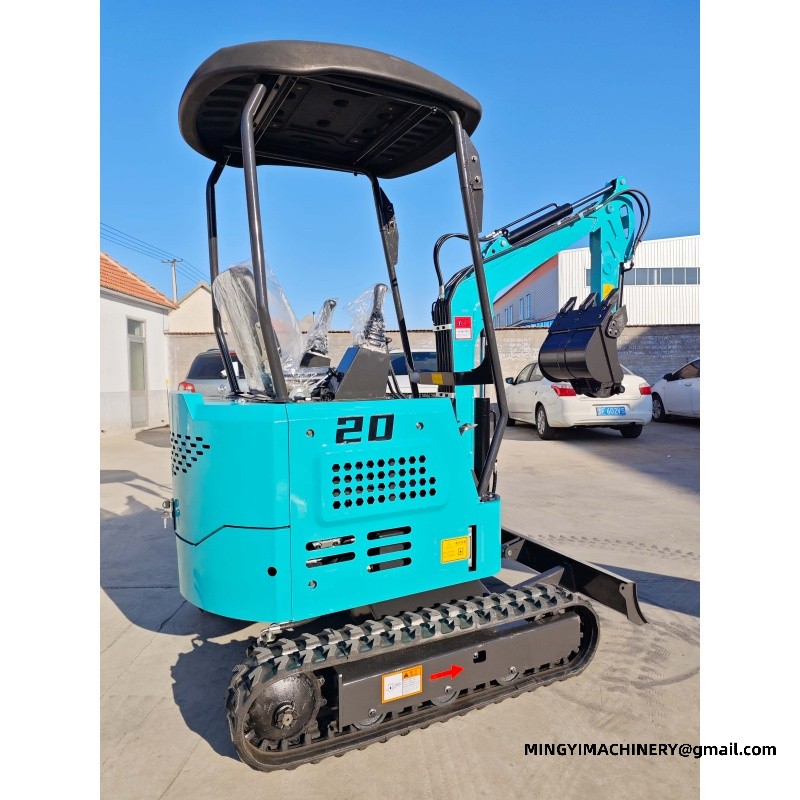
What owners should plan for beyond the canopy mini excavator for low headroom The useful comparison is demand per working hour, not demand per machine. The excavator that works more hours a year spreads its standing takes over more output, which is why utilisation usually matters more than the invoice figure. Downtime is the hidden line item. This class of machine waiting on a part earns nothing while it stands, so parts availability and service access belong in the plan as much as fuel does. Municipal and public works with canopy mini excavator for low headroom Drainage repair, tree planting, footway reconstruction and cemetery work are all within the range of the unit in daily use. The jobs are small individually and continuous across the year. Noise and surface protection matter on public work. A machine of this size on rubber tracks across paving, with a sealed cab for the operator, suits the conditions better than a larger tracked machine. Boom configuration for canopy mini excavator for low headroom Extended and offset boom configurations change reach and working range. The equipment on site with a longer arm reaches further but lifts less at full extension, so the specification is set against the deepest and furthest point on the job list. Detachable boom sections are used where transport length matters. The machine itself that has to travel on a standard trailer can be built so the arm comes off for the road and goes back on at the site. Trailering and moving canopy mini excavator for low headroom Transport weight and width decide whether a machine needs a specialist haulier. The model in question sized to travel on a standard plant trailer behind a suitable vehicle moves with the crew rather than on a scheduled low loader. Detachable components reduce transport length. The machine in that duty built with a removable arm section or a folding step fits a shorter trailer and may avoid an oversize movement permit. Export packing and shipping of canopy mini excavator for low headroom Export documentation, decals and paint are settled before packing. Asking for them with the machine built for the work order avoids a second handling session and keeps the machine on the booked vessel. Buyers who import regularly plan the spare parts with the machine. The unit on the job ordered with a wearing-parts kit arrives ready to work rather than ready to wait for the first service interval. Engine options behind canopy mini excavator for low headroom Power unit selection is settled against the service network the buyer already uses. MINGYI offers Kubota D722, Kubota D902, YANMAR, Changchai, Laidong, Runtong, YARMAX, Youpu 2V80 and Youpu 195, so a fleet running one brand of engine can keep the same filters, the same parts supplier and the same mechanic. Engine choice is also an emissions and documentation question for some markets. Listing the available units with the equipment in service enquiry lets the factory confirm what can be supplied and documented for the destination country. Attachments that turn the excavator into several machines The base machine is a carrier; the tool on the end of the arm decides the task. This class of machine fitted with a toothed bucket digs, and the same machine with a breaker, an auger or a grab does work that would otherwise need a second unit on site. Attachment lists are best written before delivery. Specifying the unit in daily use with the tools the job list needs avoids the work and delay of adding hydraulics later, and a quick coupler makes the swap a few minutes instead of a workshop job. Matching a machine of this size to ground conditions Hard and abrasive ground reverses the specification. On rock, demolition rubble or sharp gravel, steel tracks with rubber blocks on the equipment on site survive conditions that cut a rubber belt quickly. Mixed sites are common and argue for a compromise specification. Most buyers choose rubber for the machine itself and accept the wear, unless the majority of the work is on material that will damage it. Operator technique for the model in question The second habit is tool discipline. Running the machine in that duty with the right bucket width for the trench means less spoil, less reinstatement and a cleaner job than a wide bucket and a lot of trimming. Stability is the third. The unit on the job working across the tracks rather than over the corners keeps the machine steady and the undercarriage loaded evenly, which shows up as track life at the end of the season. Getting a machine built for the work through a narrow gap The first question on most job lists is whether the machine can reach the work at all. The equipment in service is chosen against the narrowest point on the route - a garden gate, a doorway, a gap between two walls - because a machine that arrives and then cannot pass loses a day, not an hour. Contractors who buy the excavator normally have one job in mind that nothing else reaches. The purchase order follows the access measurement, not the other way round, and the build sheet is then settled around it. Running this class of machine in a rental fleet Rental fleets buy for utilisation, not for a single job. The unit in daily use with a quick coupler and a common attachment standard is hired more often because it suits more of the calls that come in. The specification that rents best is usually the simplest one to explain at the counter. A machine of this size with rubber tracks, a canopy and a coupler covers the majority of weekend and short-term hires. Specification data for the equipment on site Buyers comparing the machine itself usually start from four numbers - weight, digging depth, reach and transport width - because those are the ones that decide whether the machine can be delivered and whether it can do the job once it is there. These are the reference figures for the model in question. MINGYI confirms the final build sheet, including engine and attachment choices, against the destination and the job list before production. Rubber tracks suit paved and landscaped ground because they spread the machine weight and leave the surface intact. Steel tracks with rubber blocks are specified where the ground is rougher or the working day is longer, and the choice can be made per machine rather than accepted as a factory default. Undercarriage selection is a ground question, not a preference question. The machine in that duty running on finished paving needs rubber; the same machine on demolition rubble or rock wears rubber quickly, so steel with rubber blocks becomes the better answer over a full season.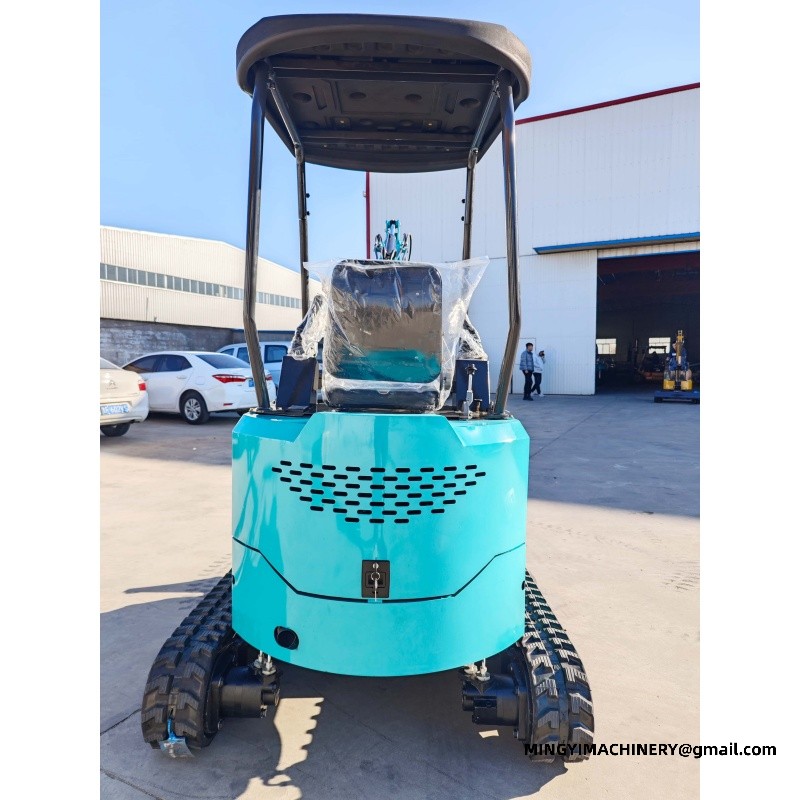
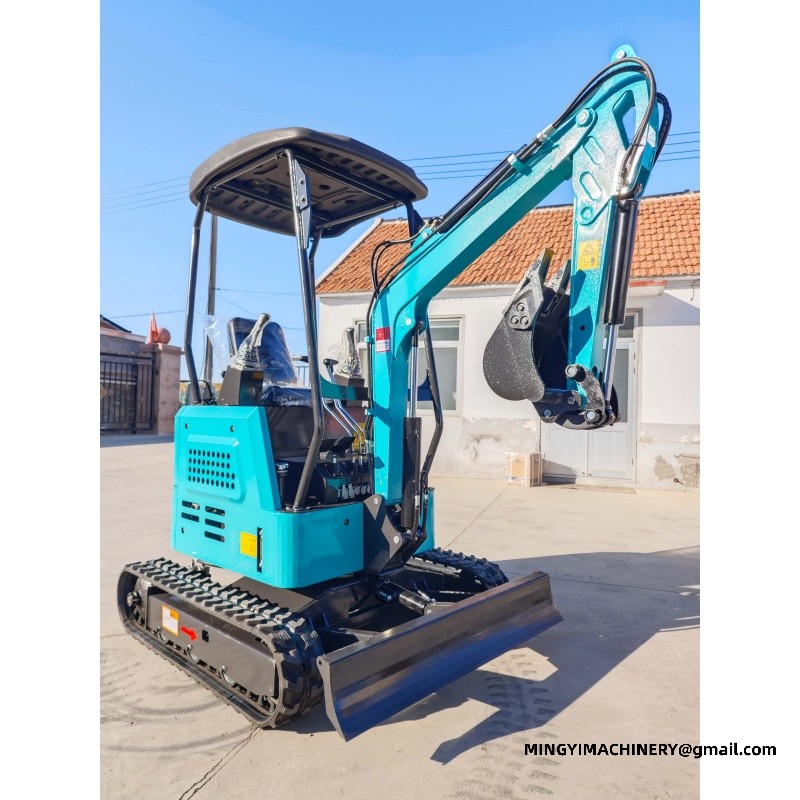
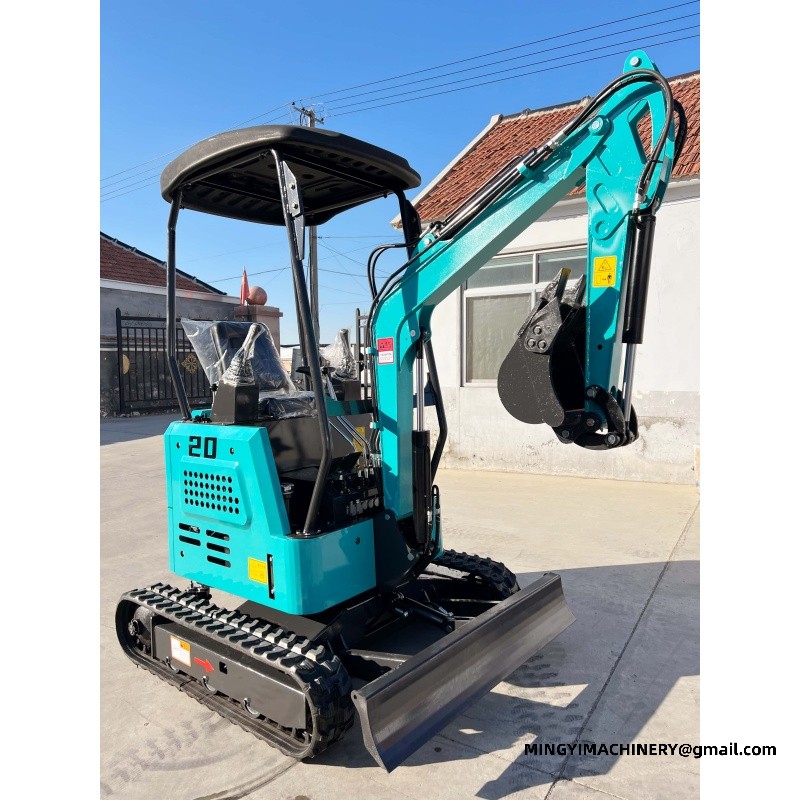
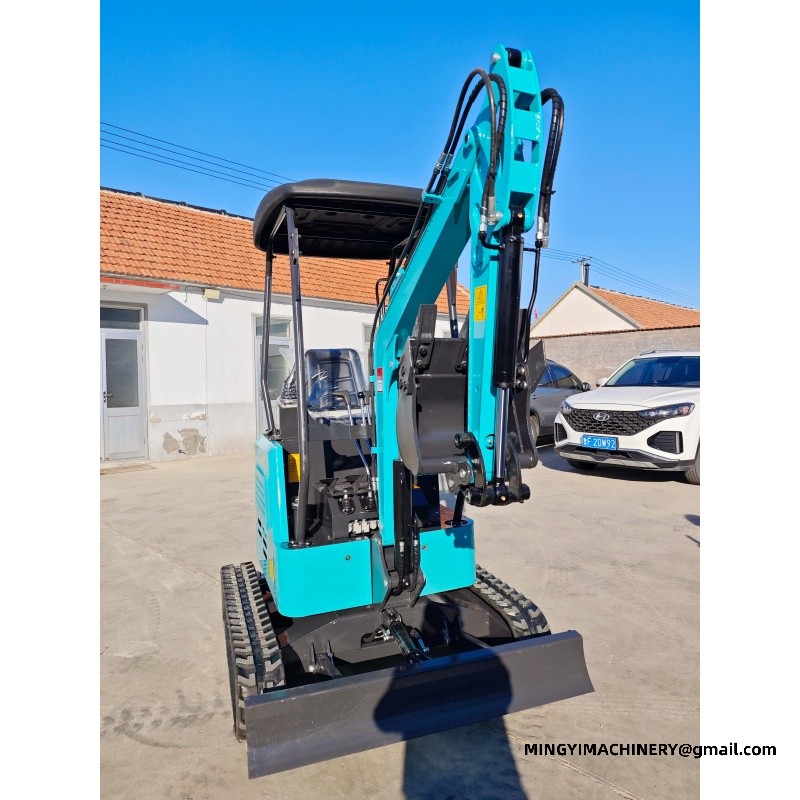
Reference specification — mini excavator range 09W 30-2W 12L 15L Operating weight 1100 kg (2425.08 lb) 2700 kg (5952.48 lb) 1200 kg (2645.55 lb) 1400 kg (3086.47 lb) Transport size (L×W×H) 1800 × 750 × 1970 mm 3000 × 1100 × 2700 mm 2200 × 930 × 2250 mm 2200 × 930 × 2250 mm Max digging depth 1250 mm (49.21 in) 2200 mm (86.61 in) 1700 mm (66.93 in) 1700 mm (66.93 in) Max digging height 2800 mm (110.24 in) 3000 mm (118.11 in) 2600 mm (102.36 in) 2750 mm (108.27 in) Max dumping height 1700 mm (66.93 in) 2000 mm (78.74 in) 1800 mm (70.87 in) 1960 mm (77.17 in) Max digging radius 2570 mm (101.18 in) 3800 mm (149.61 in) 2900 mm (114.17 in) 2900 mm (114.17 in) Max digging distance 1869 mm (73.58 in) 3050 mm (120.08 in) 2300 mm (90.55 in) 2300 mm (90.55 in) Minimum turning radius 1000 mm (39.37 in) 1750 mm (68.9 in) 1450 mm (57.09 in) 1450 mm (57.09 in) Travel speed 3 km/h (1.86 mph) 7 km/h (4.35 mph) 3 km/h (1.86 mph) 3 km/h (1.86 mph) Gradeability 30° 30° 30° 30° Fuel consumption 1-1.3 L/h (0.264—0.343 gal) 2-3 L/h (0.528—0.793 gal) 1-1.3 L/h (0.264—0.343 gal) 1-1.3 L/h (0.264—0.343 gal) Fuel tank capacity 8 L (2.11 gal) 16 L (4.23 gal) 10 L (2.64 gal) 10 L (2.64 gal) Hydraulic oil tank 16 L (4.23 gal) 20 L (5.28 gal) 16 L (4.23 gal) 16 L (4.23 gal) Dozer blade lift height 180 mm (7.09 in) 230 mm (9.06 in) 180 mm (7.09 in) 180 mm (7.09 in) Dozer blade drop depth 210 mm (8.27 in) 280 mm (11.02 in) 210 mm (8.27 in) 210 mm (8.27 in)
Q. What is the unit on the job?
A. The whole point of the smallest classes is presence - a digging machine that reaches work nothing bigger can enter. Measure the doorway, gate or stairwell first, then match the machine to the gap - the smallest classes pass where a wheelbarrow would struggle. MINGYI builds the 08, 12 and 18 models covering the 0.8 to 6 tonne class, and a machine built for the work is where that range meets low headroom.
Q. What can such a small digger actually do?
A. More than its size suggests: inside a basement or behind a boundary it digs footings, breaks floors and grades the sub-base at rates hand digging cannot touch. The limit is reach and lift, not willingness.
Q. Can I see the machine before it ships?
A. Inspection is arranged at the factory, in person or by a scheduled video walk-around - the same session covers paint, decals and attachment fitment for the low headroom specification, so the machine inspected is the machine that ships.
Wear items and spares worth holding for the equipment in service
The parts that stop a machine are rarely the parts that are hardest to find. Filters, belts, seals and the ground engaging tools on the excavator are easy to hold and slow to replace, which is why they belong on the shelf rather than on an order.
Handover and getting familiar with this class of machine
The first day with a new machine sets the pattern for the next five years. Handover for the unit in daily use covers the control layout, the daily check points and the limits the operator needs to know before the first real load is lifted or carried.
E-mail : sales@mingycn.com
LINE ( ID ): mingyicn
Slope working and stability with canopy mini excavator for low headroom
Rated capacity is measured on level ground, and once the machine works across a gradient the safe figure follows the slope and the load position.
Tracks or tyres, the contact patch is what holds the machine, and worn or wrongly inflated running gear reduces it more than most operators expect.
Related pages
cabin mini excavator for year round work · zero tail swing digger for narrow lanes · Compact Wheel Loader: Small-Frame Builds for Tight Sites · Mini Excavators









