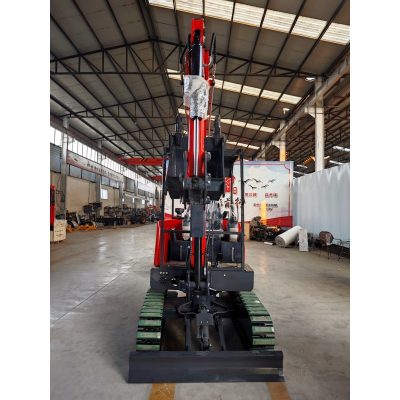
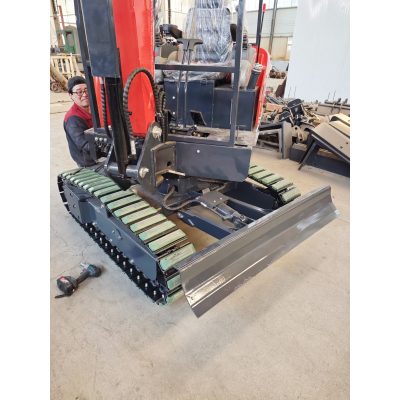
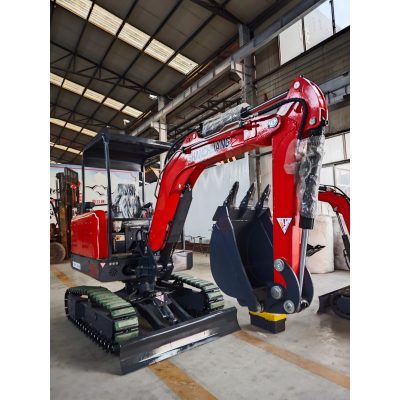
Tracks are the part of a compact excavator that touches the ground on every job, and the choice between rubber and steel changes both the life of the undercarriage and the condition of the surface left behind.
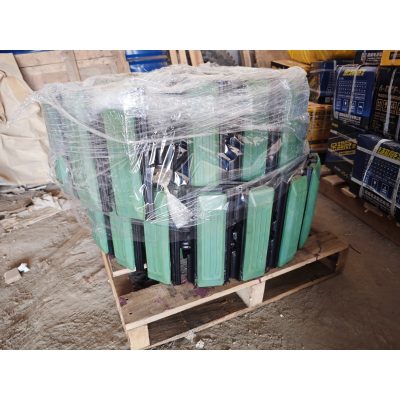
MINGYI supplies small excavators with either rubber tracks or steel tracks with rubber blocks, and the option is recorded against the machine at the ordering stage.
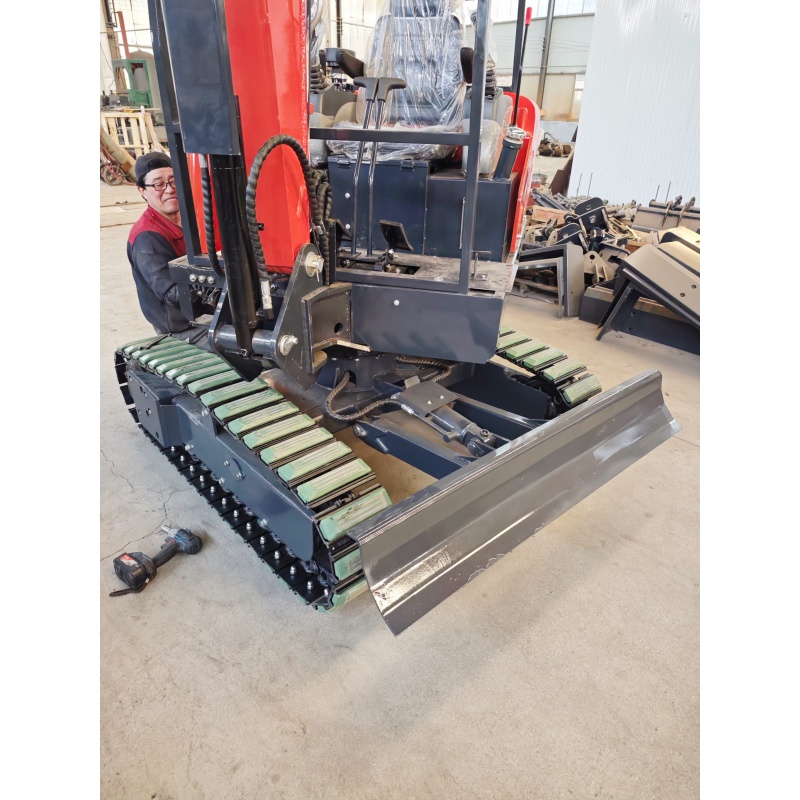
When to fit steel tracks with rubber blocks
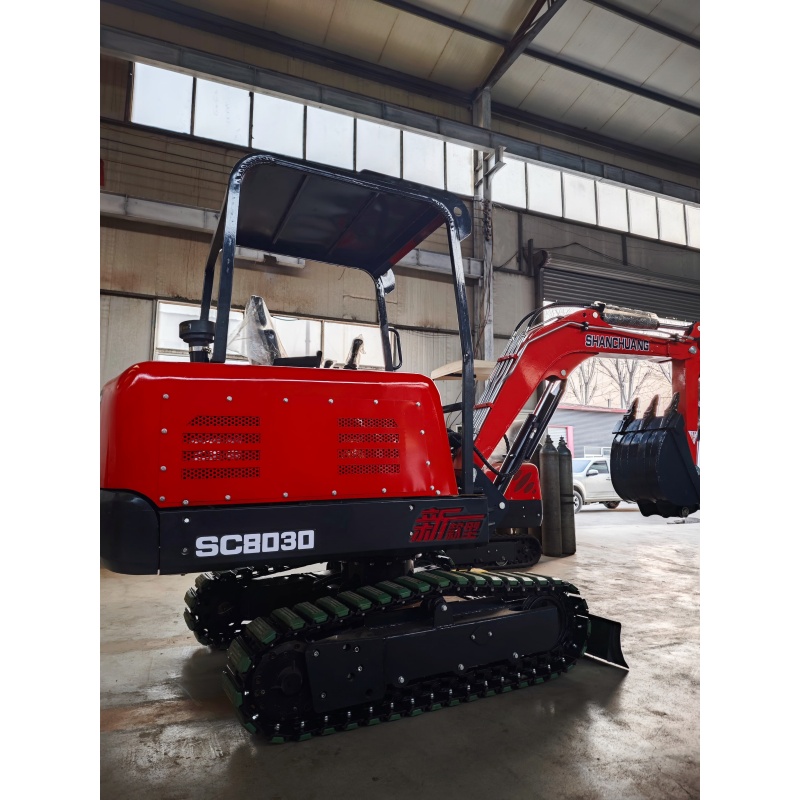
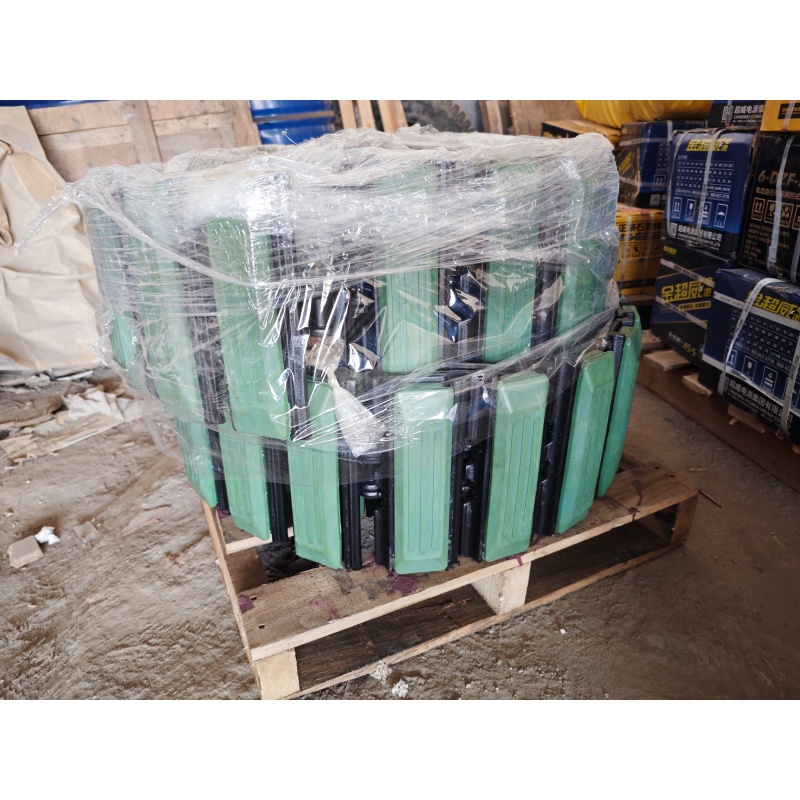
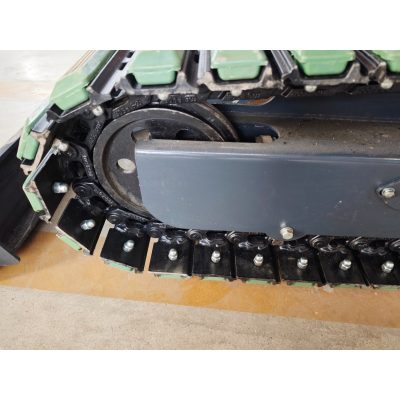
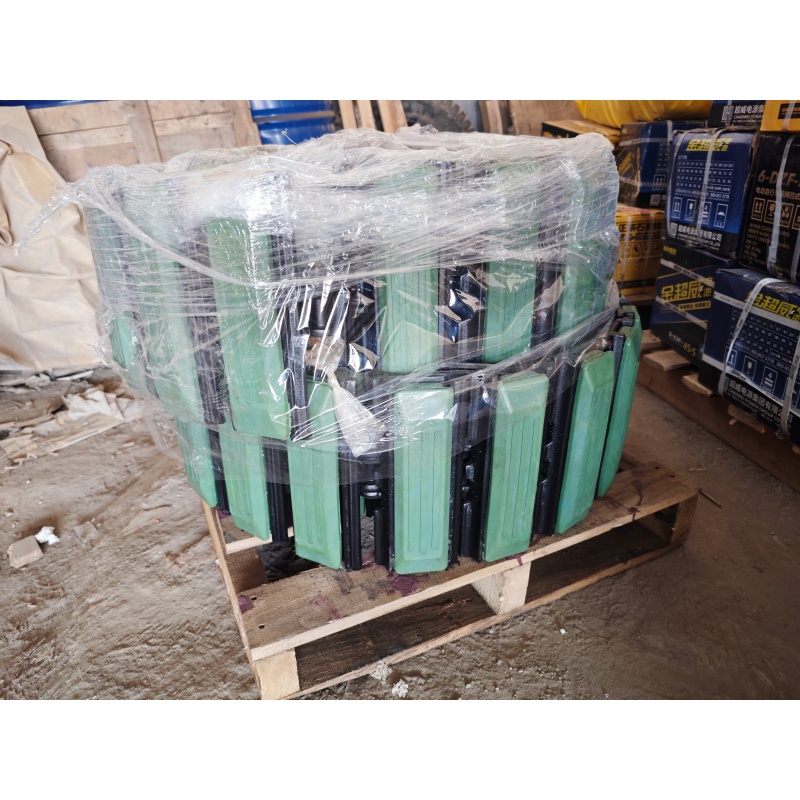
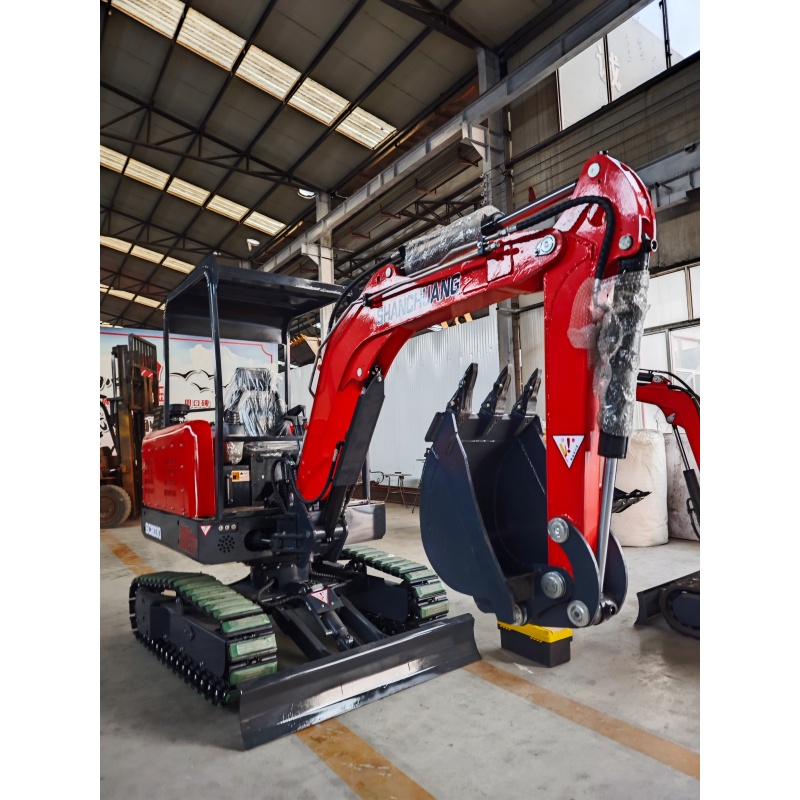
Steel tracks with rubber blocks suit ground that would destroy a plain rubber track. Broken concrete, stony site ground and demolition debris cut and tear rubber quickly, so a steel base lasts longer where the surface is rough.
The rubber blocks on the outer face restore the benefit that bare steel loses on hard surfaces. They let the machine cross paving and roads without the damage a plain steel shoe would cause, which is useful for a unit that travels between sites.
Fitting and servicing tracks on a compact machine
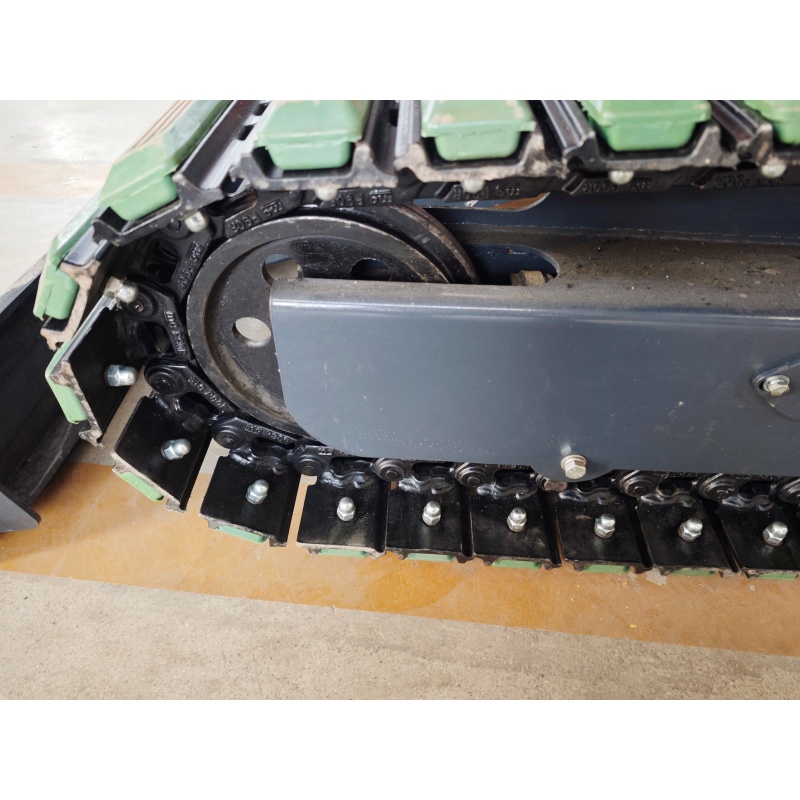
Track tension is the setting that most affects track life. A track that runs too loose can walk off the sprocket on a turn, and one that is too tight loads the bearings, so the tension is checked against the machine rather than by eye.
When a track is replaced, the condition of the sprocket, idler and rollers is worth checking at the same time. A new track on a worn drive still wears quickly, so the undercarriage is treated as a set rather than as single parts.
The right track choice depends on where the machine works, not on a general preference. Buying the correct format with the excavator, and keeping the undercarriage maintained as a system, gives the longest service.
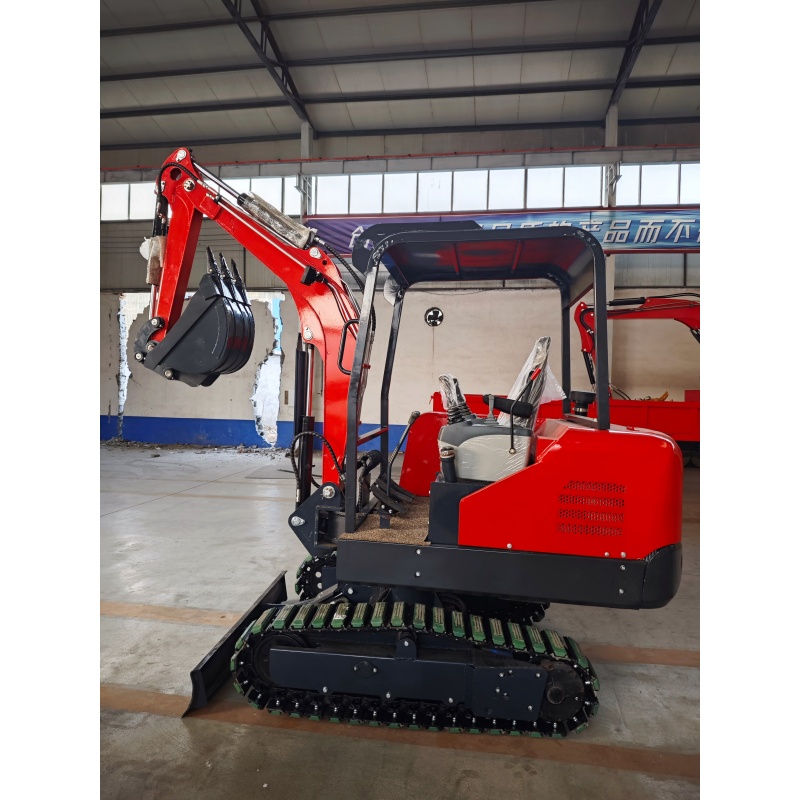
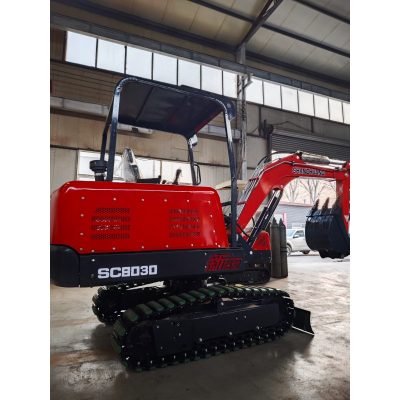
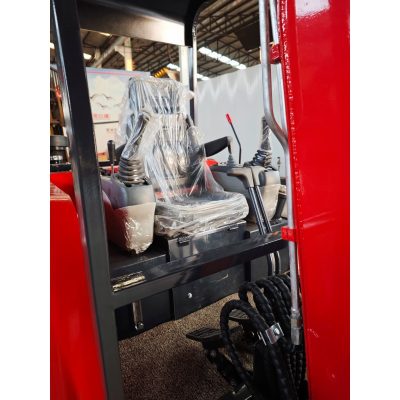
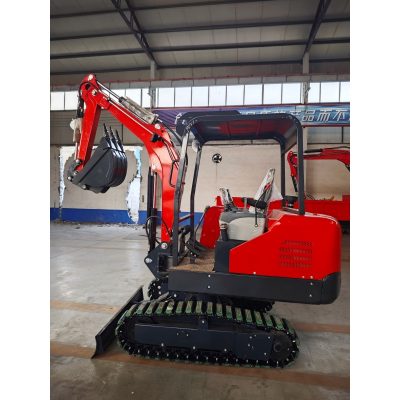
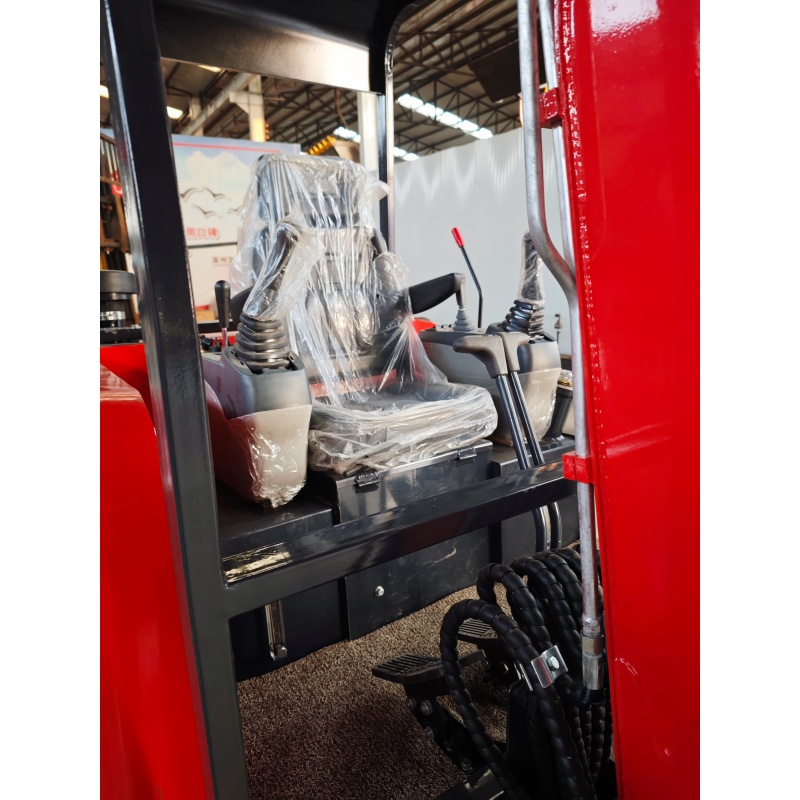
Canopy or enclosed cab on a steel track for small excavators A canopy keeps the machine light and the operator aware of the surroundings, which suits short jobs in warm weather. A fully enclosed cab is specified where rain, dust or cold are part of the working year, and it can be added to the excavator as a retrofit rather than only at build time. Enclosure also changes noise and dust exposure. A sealed cab on this class of machine keeps dust out on dry sites and lets the machine work through weather that would otherwise stop a canopy machine for the day. OEM and fleet customisation of steel track for small excavators Distributors and rental fleets usually need the machine to look like theirs. Paint, decals, seat colour and attachment branding can be specified on the unit in daily use at build time rather than applied after import. Documentation can be prepared to suit the importer. Manuals, parts books and decal sets for a machine of this size can be supplied with the buyer's own branding where the order size justifies it. Acceptance checks when a steel track for small excavators arrives A function check before the machine goes to work is worth the hour. Running through the controls, the travel and the attachment circuit on the equipment on site confirms it is set up as specified and ready for the site. Documentation should arrive with the machine. Parts list, service schedule and any certificates for the machine itself are what the workshop needs later, and they are much easier to obtain at delivery than in month six. Working near live services with steel track for small excavators Digging near water, gas and cable is a precision job. The model in question is used here because the operator can work in short controlled cuts and because the machine can be positioned without driving over the run being exposed. Utility crews specify the machine in that duty with a narrow bucket and good visibility for exactly this reason: the machine has to stop at the service, not at the edge of the operator's view. Boom configuration for steel track for small excavators Extended and offset boom configurations change reach and working range. The unit on the job with a longer arm reaches further but lifts less at full extension, so the specification is set against the deepest and furthest point on the job list. Detachable boom sections are used where transport length matters. A machine built for the work that has to travel on a standard trailer can be built so the arm comes off for the road and goes back on at the site. Getting steel track for small excavators through a narrow gap The first question on most job lists is whether the machine can reach the work at all. The equipment in service is chosen against the narrowest point on the route - a garden gate, a doorway, a gap between two walls - because a machine that arrives and then cannot pass loses a day, not an hour. Contractors who buy the excavator normally have one job in mind that nothing else reaches. The purchase order follows the access measurement, not the other way round, and the build sheet is then settled around it. Specifying this class of machine against a job list The practical way to specify is to write the job list first: the narrowest access, the deepest trench, the heaviest tool and the surfaces the machine must cross. The unit in daily use is then matched to those four numbers. Useful information to send with an enquiry includes working width, required digging depth, ground conditions and the attachment set. Those four items let the factory specify a machine of this size that fits rather than a generic build. Working the equipment on site through the seasons Seasonal planning smooths the workload. Machines that are busy for a few months and idle for the rest benefit from a service slot in the quiet period, and the machine itself prepared in the off-season starts the busy months reliably. Heat and dust are as limiting as rain. Air intake condition and cooling cleanliness decide how the model in question behaves in a dry season, and both are checked in a minute rather than repaired later. Orchard, vineyard and farm use of the machine in that duty Orchard and vineyard work is carried out between rows. The unit on the job with a narrow chassis and a swing boom works down the row without damaging the trees, which is the reason a full-size machine is not used at all. Farms also use a machine built for the work for general maintenance - clearing a watercourse, repairing a track, loading a spreader. One carrier with a few attachments covers most of the jobs that would otherwise wait for a contractor. Working the equipment in service in confined spaces Confined sites are decided by dimensions. Overall width, tail swing and the space needed to work the arm are what let the excavator operate inside a building, between walls or in a courtyard. Ventilation is the other indoor constraint. Running this class of machine inside a closed structure needs air movement, and that is a planning item rather than something to discover after the first hour. Operator technique for the unit in daily use Output on a compact machine comes from placement rather than power. An experienced operator keeps a machine of this size working inside the swing arc, positions once and digs a full run instead of repositioning for every bucket. Specification data for the equipment on site Buyers comparing the machine itself usually start from four numbers - weight, digging depth, reach and transport width - because those are the ones that decide whether the machine can be delivered and whether it can do the job once it is there. These are the reference figures for the model in question. MINGYI confirms the final build sheet, including engine and attachment choices, against the destination and the job list before production. The second habit is tool discipline. Running the machine in that duty with the right bucket width for the trench means less spoil, less reinstatement and a cleaner job than a wide bucket and a lot of trimming. Stability is the third. The unit on the job working across the tracks rather than over the corners keeps the machine steady and the undercarriage loaded evenly, which shows up as track life at the end of the season.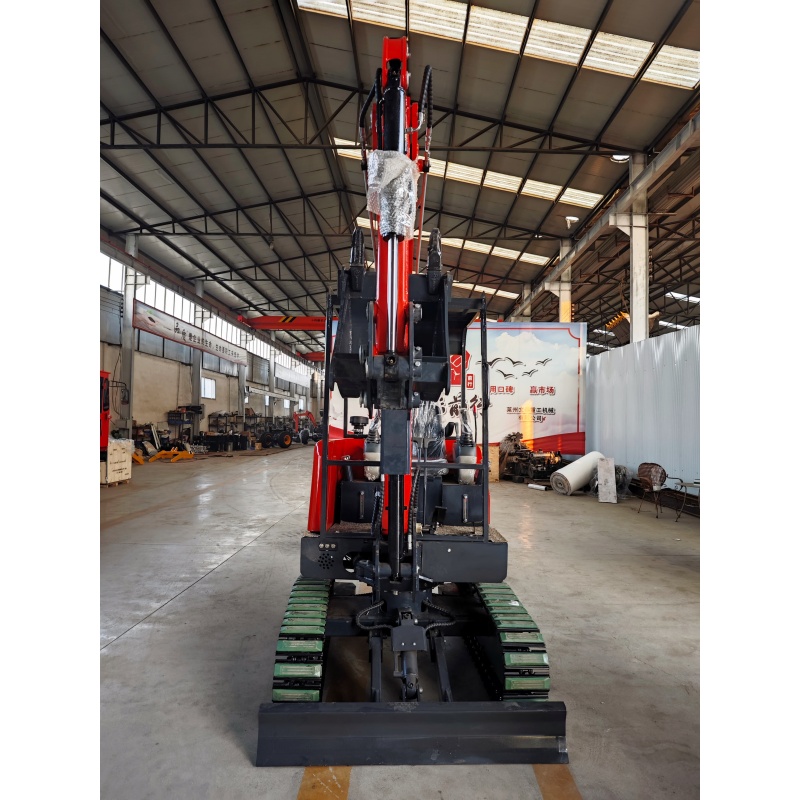
Reference specification — mini excavator range 13W 20-3W 09L 30-2L Operating weight 1300 kg (2866.01 lb) 1900 kg (4188.78 lb) 1100 kg (2425.08 lb) 2400 kg (5291 lb) Transport size (L×W×H) 2200 × 930 × 2250 mm 2550 × 1100 × 2200 mm 2300 × 720 × 1870 mm 2800 × 1500 × 2500 mm Max digging depth 1630 mm (64.17 in) 1800 mm (70.87 in) 1400 mm (55.12 in) 2200 mm (86.61 in) Max digging height 2750 mm (108.27 in) 2820 mm (111.02 in) 2800 mm (110.24 in) 2900 mm (114.17 in) Max dumping height 1960 mm (77.17 in) 2050 mm (80.71 in) 1880 mm (74.02 in) 2100 mm (82.68 in) Max digging radius 2900 mm (114.17 in) 3050 mm (120.08 in) 2490 mm (98.03 in) 3330 mm (131.1 in) Max digging distance 2100 mm (82.68 in) 2300 mm (90.55 in) 2000 mm (78.74 in) 2700 mm (106.3 in) Minimum turning radius 1300 mm (51.18 in) 1450 mm (57.09 in) 1400 mm (55.12 in) 1555 mm (61.22 in) Travel speed 3 km/h (1.86 mph) 5 km/h (3.11 mph) 3 km/h (1.86 mph) 7 km/h (4.35 mph) Gradeability 30° 30° 30° 30° Fuel consumption 1-1.3 L/h (0.264—0.343 gal) 2-3 L/h (0.528—0.793 gal) 1-1.3 L/h (0.264—0.343 gal) 2-3 L/h (0.528—0.793 gal) Fuel tank capacity 10 L (2.64 gal) 16 L (4.23 gal) 8 L (2.11 gal) 16 L (4.23 gal) Hydraulic oil tank 16 L (4.23 gal) 18 L (4.76 gal) 16 L (4.23 gal) 18 L (4.76 gal) Dozer blade lift height 180 mm (7.09 in) 180 mm (7.09 in) 180 mm (7.09 in) 230 mm (9.06 in) Dozer blade drop depth 210 mm (8.27 in) 210 mm (8.27 in) 210 mm (8.27 in) 280 mm (11.02 in)
Q. Who uses the machine built for the work?
A. The undercarriage is the most lengthy part of a compact digger to replace, which makes track choice a buying decision rather than an accessory. Tension checks and a walk-around for wrapped debris are the whole of daily track care, and they protect the part of the digger that is hardest to put right. For small excavators applications the practical route is to send the job list to the factory and let the build sheet answer it - which is exactly what this page invites.
Q. Which track should I run on my ground?
A. Rubber for lawns, paving and finished surfaces; steel for gravel, demolition rubble and slopes that eat rubber. Where the year takes the machine across both, the conversion and options pages describe moving between them, and MINGYI specifications both track types with the carrier.
Q. Does MINGYI supply attachments with the machine?
A. Yes - buckets, breakers, augers, rakes and the rest of the working set ship with the carrier, matched to the hydraulic flow and the coupler. For small excavators the package is confirmed on the build sheet, so machine and tools arrive together and start work together.
Commissioning the equipment in service on site
Transport shakes things loose. A short check of the excavator after the crate is opened, covering the same points the pre-delivery inspection covered, is the most useful insurance available on delivery day.
Hot, humid and dusty conditions around this class of machine
Heat and dust shorten service intervals rather than machine life. In these conditions the filters on the unit in daily use need attention more often, and the cooling surfaces need to be kept clear to hold the working temperature.
Handover and getting familiar with a machine of this size
Familiarisation is not the same as reading the manual. Sitting on the equipment on site, working through the controls at low speed and learning where the machine balances takes an hour, and that hour is what keeps the first week uneventful.
Reading the early symptoms on the machine itself
Machines rarely fail without warning. A change in sound, a slower function or a new leak on the model in question is the machine saying something early, and listening then takes a fraction of the time that waiting does.
E-mail : sales@mingycn.com
LINE ( ID ): mingyicn
Related pages
small excavator with loading bucket · mini excavator log grab and buckets · Wheel Loader for Sale: How to Read a Specification Before You Sign · Mini Excavators









