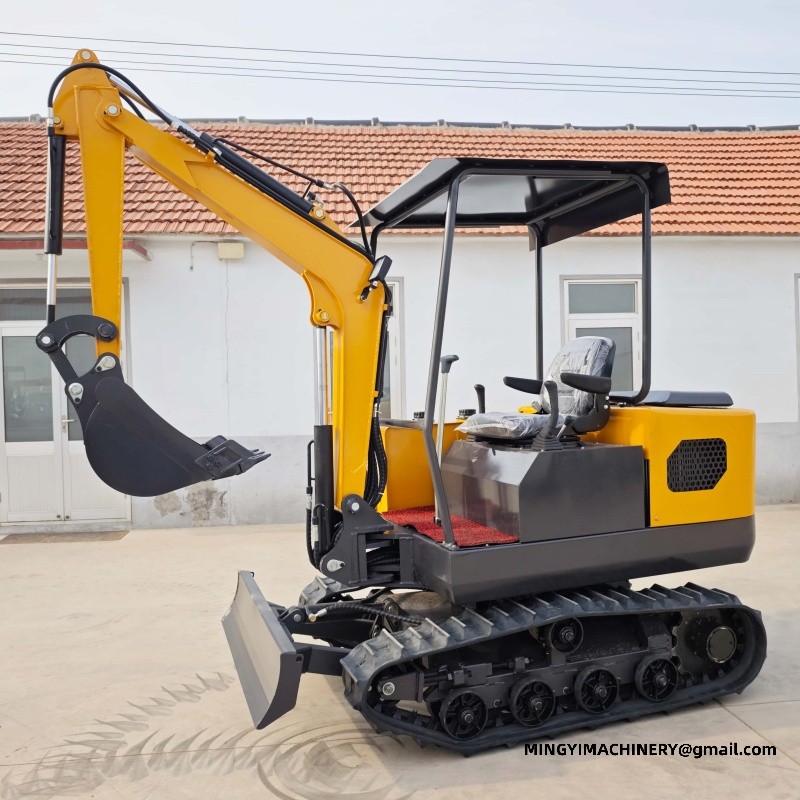
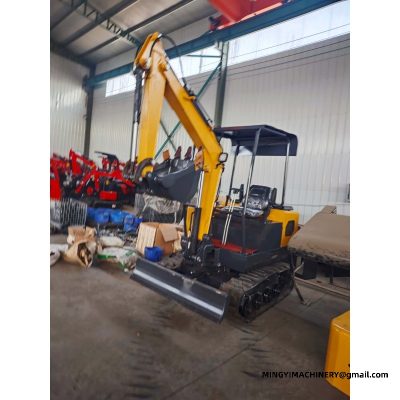
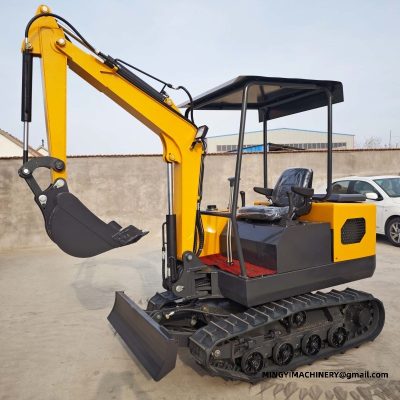

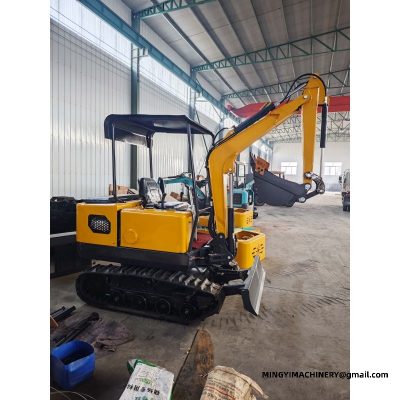
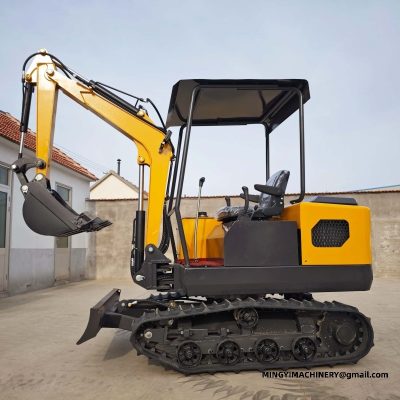
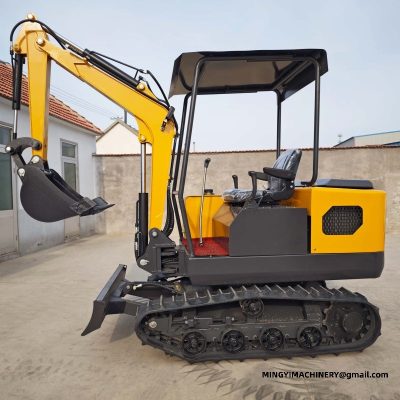
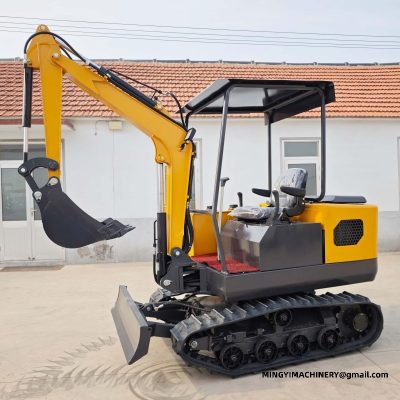
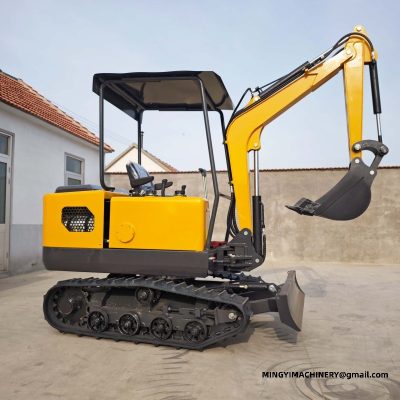
Breaking concrete, rock and old masonry is one of the most common reasons a contractor fits an attachment to a compact excavator. A hydraulic hammer delivers the blows at the point the operator chooses, without the handling effort of a hand-held breaker.
MINGYI supplies the hydraulic hammer as an attachment for its compact crawler machines, matched to the size of the unit. The hammer shares the quick coupler with the digging bucket, so the machine can break out a slab and then load the rubble.
Breaking work with a mini excavator hammer
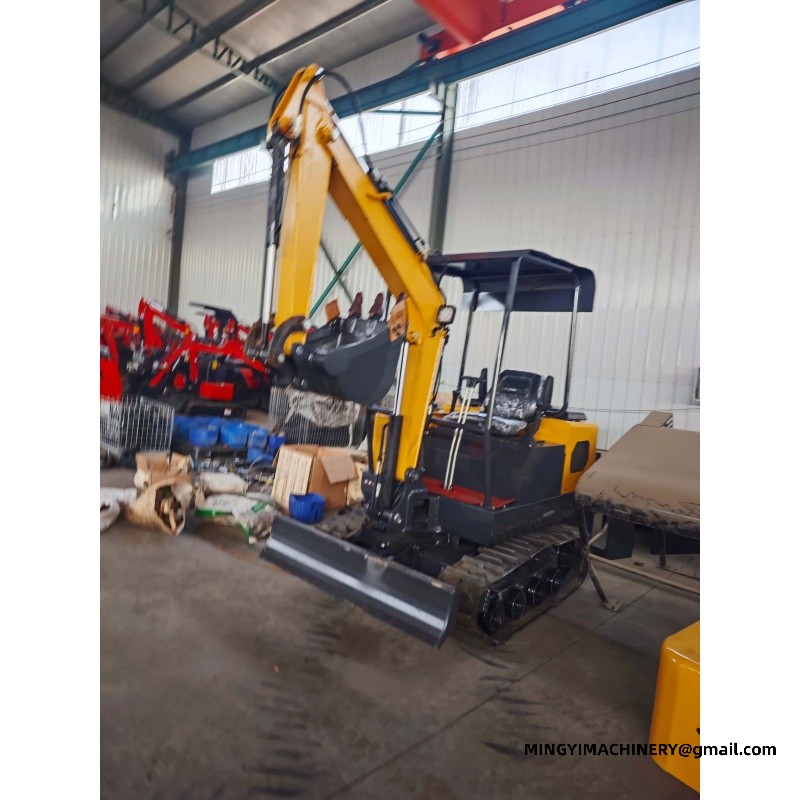
The hammer is most effective when the operator lets the tool do the work and resists the temptation to lever with the boom. Working a pattern across a slab breaks it into manageable pieces, which keeps the spoil within reach of the same machine.
Ground conditions decide the working angle. A vertical blow into concrete is straightforward, while breaking a trench face or a wall footing needs the operator to find an edge that lets the tool bite instead of glancing off.
Hammer attachments and job matching
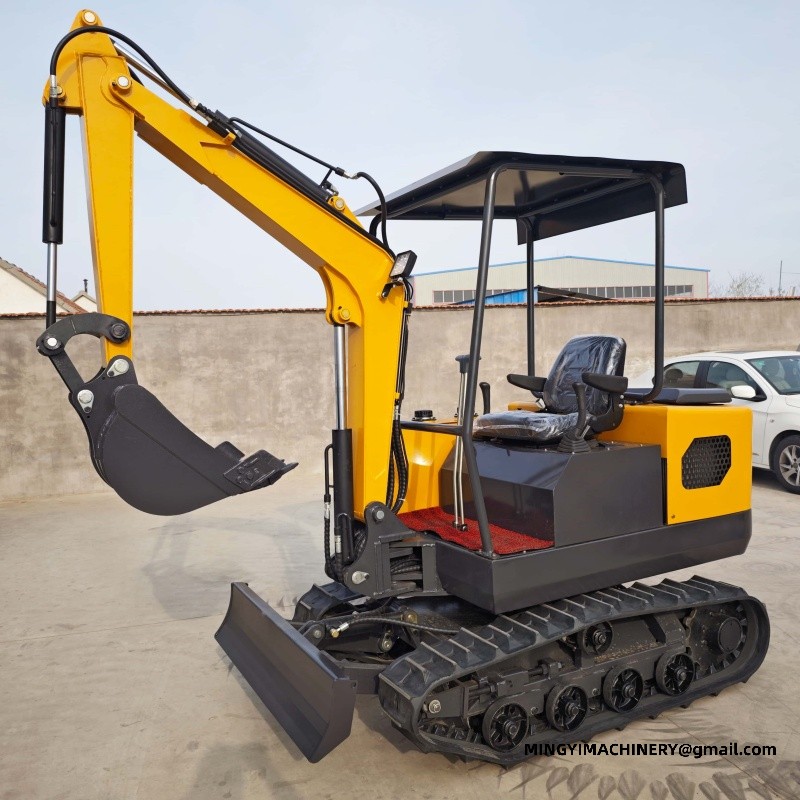
Hammer size is chosen against the machine rather than against the job, because a tool too heavy for the carrier will wear the boom and strain the hydraulic circuit. A compact excavator is matched with a hammer suited to its own class.
Many buyers pair the hammer with a crusher hammer for secondary reduction and a skeleton bucket for separating rubble from fines. That combination lets one machine reduce, sort and load without a separate crusher on site.
A hydraulic hammer gives a compact excavator a capability no bucket can replace, and it fits the same coupler as the rest of the attachment set. Specifying it with the machine keeps breaking and clearing on one unit.
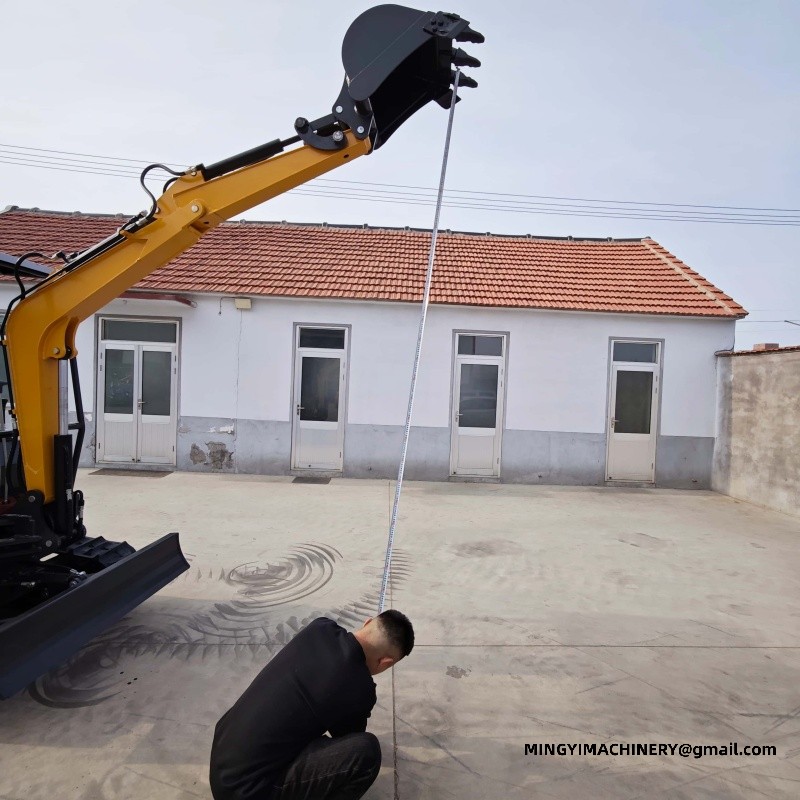
Hydraulic circuits on a mini excavator hammer for demolition Auxiliary hydraulic lines are what let a machine drive a tool rather than only a bucket. The excavator specified with the right circuits and flow runs a breaker or an auger without an add-on power pack bolted to the frame. Flow and pressure are matched to the tool, not to the machine size. Asking for the attachment list first means this class of machine leaves the factory with circuits that suit the heaviest tool the buyer intends to run. Daily checks and maintenance on mini excavator hammer for demolition Track tension is the item most often neglected. The unit in daily use run with slack tracks wears the undercarriage and can throw a track on a turn; run too tight, the same components wear from the other direction. Greasing is the second item. The slew ring, the boom and arm pins and the bucket linkage on a machine of this size take grease daily in dusty work, and the intervals shorten further when the machine is used in water or mud. Road and paving work for mini excavator hammer for demolition Road repair generates short, interrupted jobs - a patch, a drainage connection, a kerb line. The equipment on site is economical here because it travels on a small trailer and starts working minutes after arriving. Breaking out a failed slab and backfilling the same hole in one visit is normal work for the machine itself. The breaker and the bucket come off the same coupler, so the road is reopened the same day. Quick coupler practice on mini excavator hammer for demolition A quick coupler is the single option that changes how a machine is used day to day. Fitted to the model in question, it turns an attachment change from a two-person workshop job into a task the operator does alone in minutes. For a fleet that shares attachments between machines, a common coupler standard matters more than the coupler brand. The machine in that duty that picks up the same tools as the larger machines keeps the rack usable across the yard. Boom configuration for mini excavator hammer for demolition A swing boom lets the machine dig parallel to its tracks without repositioning, which is what makes trenching beside a wall or a fence practical. On the unit on the job this is often the option that decides whether a job is possible at all. Detachable boom sections are used where transport length matters. A machine built for the work that has to travel on a standard trailer can be built so the arm comes off for the road and goes back on at the site. Working near live services with mini excavator hammer for demolition The risk on utility work is not machine power but machine placement. The equipment in service that fits the working width leaves the surrounding ground undisturbed, which keeps the trench stable and the reinstatement small. Utility crews specify the excavator with a narrow bucket and good visibility for exactly this reason: the machine has to stop at the service, not at the edge of the operator's view. Working this class of machine in confined spaces Confined sites are decided by dimensions. Overall width, tail swing and the space needed to work the arm are what let the unit in daily use operate inside a building, between walls or in a courtyard. Clearance above matters as much as around. Door heights, pipework and overhead services set the limit for a machine of this size indoors, and measuring them first avoids a machine that arrives and cannot be used. Specifying the equipment on site against a job list The practical way to specify is to write the job list first: the narrowest access, the deepest trench, the heaviest tool and the surfaces the machine must cross. The machine itself is then matched to those four numbers. Buyers who skip this step either over-buy or under-buy. The model in question specified only from machine size tends to arrive without the coupler, the circuits or the track type the work actually needs. Engine options behind the machine in that duty Two buyers can order the same a machine built for the work and receive different engines. The decision is rarely about peak power; it is about which parts counter is closest to the site and which engine the local mechanic already knows. Engine choice is also an emissions and documentation question for some markets. Listing the available units with the unit on the job enquiry lets the factory confirm what can be supplied and documented for the destination country. Trailering and moving the equipment in service Loading practice matters as much as the numbers. The excavator is driven up ramps under its own power with the boom lowered and the tracks aligned, and secured at the points the manufacturer specifies. Detachable components reduce transport length. This class of machine built with a removable arm section or a folding step fits a shorter trailer and may avoid an oversize movement permit. Canopy or enclosed cab on the unit in daily use A canopy keeps the machine light and the operator aware of the surroundings, which suits short jobs in warm weather. A fully enclosed cab is specified where rain, dust or cold are part of the working year, and it can be added to a machine of this size as a retrofit rather than only at build time. The cab decision follows the climate and the hours. Operators working a full shift in the equipment on site benefit from a sealed cab with wipers and heating; operators stepping on and off every few minutes usually prefer the canopy for the visibility and the quick exit. Specification data for the machine itself Where the model in question is being specified for a job list, the table below gives the factory figures that matter most: what the machine weighs, how deep and how far it works, and what it measures on a trailer. Every value shown is as built for the machine in that duty; options such as cab, side swing or a telescopic undercarriage change the transport dimensions and are confirmed at order stage. Purchase decision is the visible part of the effort. Fuel, filters, tracks or tyres, the operator and the transport between sites are the items that decide what the unit on the job actually demands over a few seasons, and they are worth listing before the order. The useful comparison is demand per working hour, not demand per machine. A machine built for the work that works more hours a year spreads its standing takes over more output, which is why utilisation usually matters more than the invoice figure.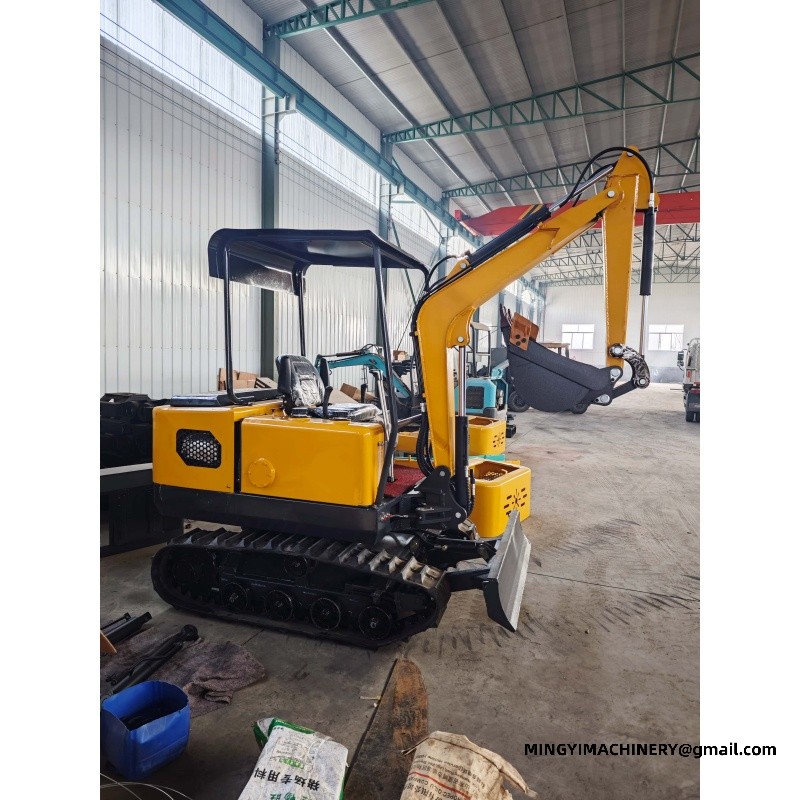
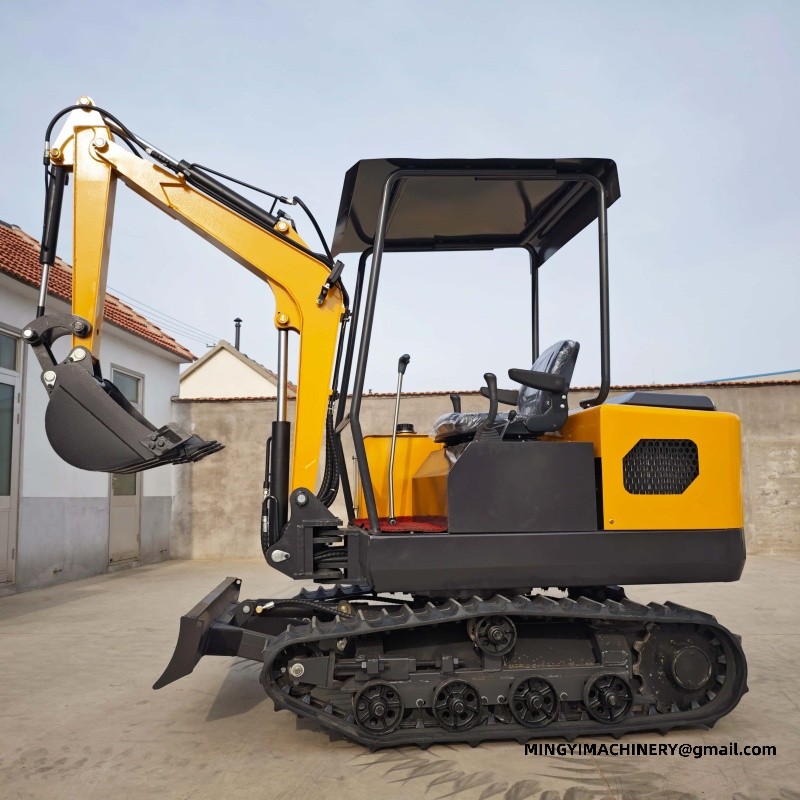
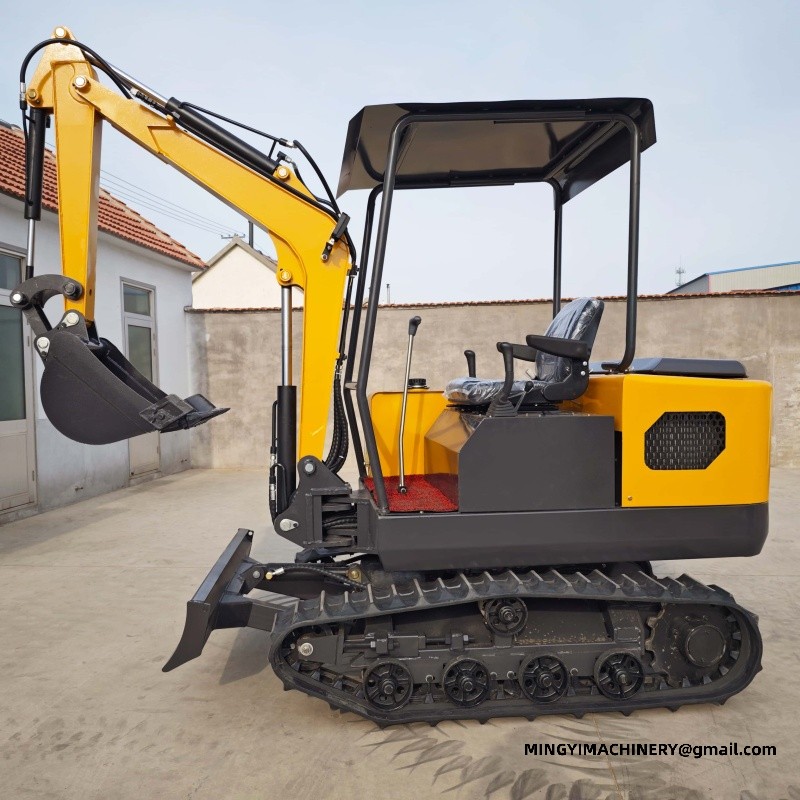
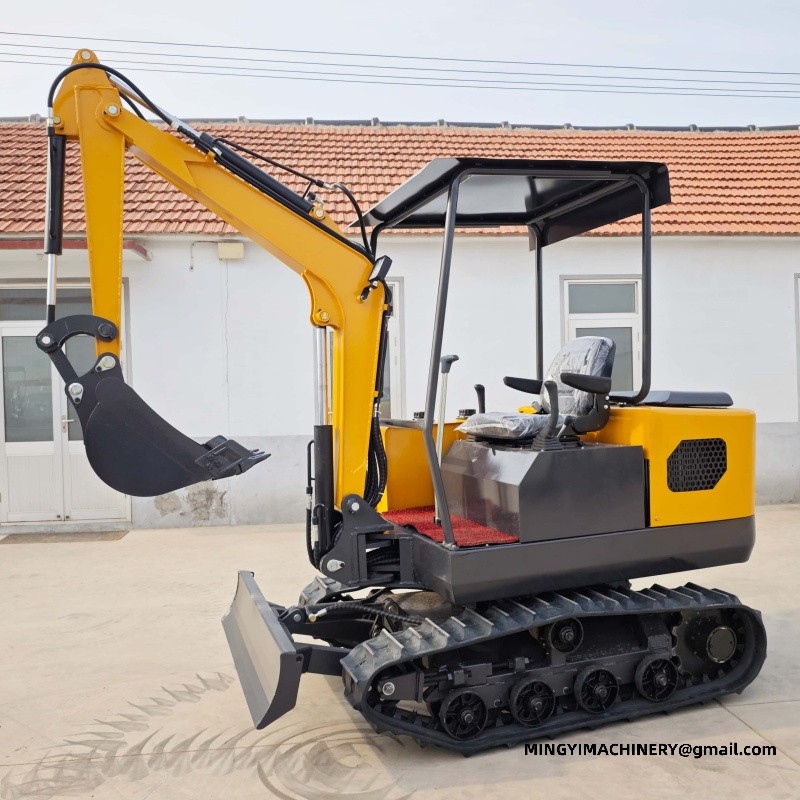
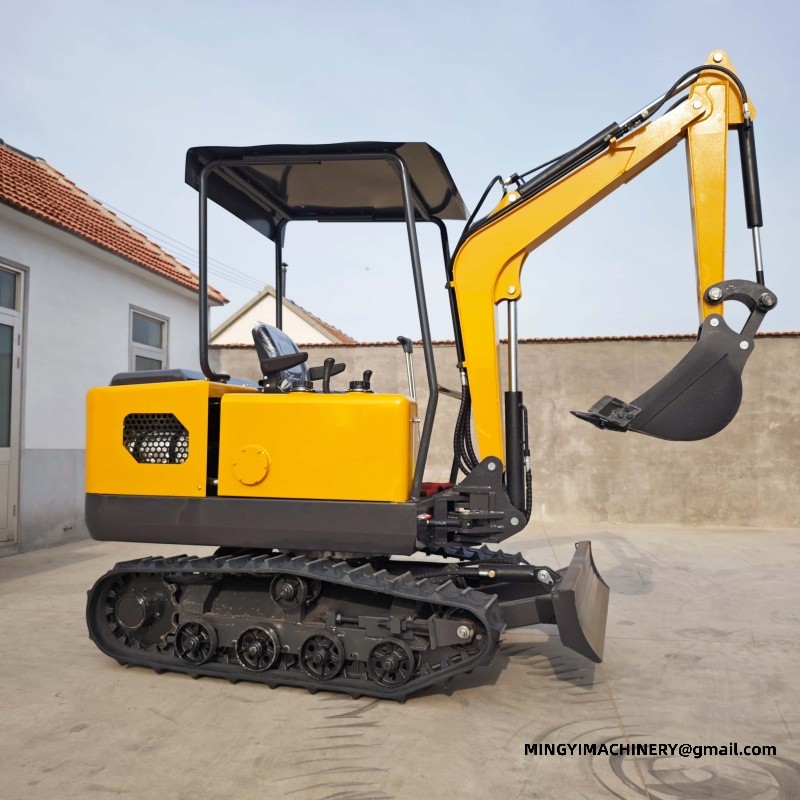
Reference specification — mini excavator range 15W 20-1W 20-3W 15L Operating weight 1400 kg (3086.47 lb) 1800 kg (3968.32 lb) 1900 kg (4188.78 lb) 1400 kg (3086.47 lb) Transport size (L×W×H) 2200 × 930 × 2250 mm 2550 × 1100 × 2200 mm 2550 × 1100 × 2200 mm 2200 × 930 × 2250 mm Max digging depth 1630 mm (64.17 in) 1800 mm (70.87 in) 1800 mm (70.87 in) 1700 mm (66.93 in) Max digging height 2750 mm (108.27 in) 2820 mm (111.02 in) 2820 mm (111.02 in) 2750 mm (108.27 in) Max dumping height 1960 mm (77.17 in) 2050 mm (80.71 in) 2050 mm (80.71 in) 1960 mm (77.17 in) Max digging radius 2900 mm (114.17 in) 3050 mm (120.08 in) 3050 mm (120.08 in) 2900 mm (114.17 in) Max digging distance 2100 mm (82.68 in) 2300 mm (90.55 in) 2300 mm (90.55 in) 2300 mm (90.55 in) Minimum turning radius 1300 mm (51.18 in) 1450 mm (57.09 in) 1450 mm (57.09 in) 1450 mm (57.09 in) Travel speed 3 km/h (1.86 mph) 5 km/h (3.11 mph) 5 km/h (3.11 mph) 3 km/h (1.86 mph) Gradeability 30° 30° 30° 30° Fuel consumption 1-1.3 L/h (0.264—0.343 gal) 2-3 L/h (0.528—0.793 gal) 2-3 L/h (0.528—0.793 gal) 1-1.3 L/h (0.264—0.343 gal) Fuel tank capacity 10 L (2.64 gal) 16 L (4.23 gal) 16 L (4.23 gal) 10 L (2.64 gal) Hydraulic oil tank 16 L (4.23 gal) 18 L (4.76 gal) 18 L (4.76 gal) 16 L (4.23 gal) Dozer blade lift height 180 mm (7.09 in) 180 mm (7.09 in) 180 mm (7.09 in) 180 mm (7.09 in) Dozer blade drop depth 210 mm (8.27 in) 210 mm (8.27 in) 210 mm (8.27 in) 210 mm (8.27 in)
Q. What is the equipment in service?
A. An attachment widens the range of jobs a single compact excavator can specification and win, which is why the working set matters as much as the base machine. Every attachment on this page runs on the same carrier the machine ships with, matched to its hydraulic flow and coupler. The excavator is one of the pages buyers land on when comparing machines for demolition, and the factory treats it as a specification conversation rather than a catalogue line.
Q. What does the attachment add to daily work?
A. Reach into jobs the bucket alone cannot specification: grading with a tilting bucket, clearing with a rake, drilling with an auger, lifting with a thumb. One carrier, several trades - the machine stays on site earning instead of waiting for a specialist.
Q. Can I see the machine before it ships?
A. Inspection is arranged at the factory, in person or by a scheduled video walk-around - the same session covers paint, decals and attachment fitment for the demolition specification, so the machine inspected is the machine that ships.
Handover and getting familiar with this class of machine
Familiarisation is not the same as reading the manual. Sitting on the unit in daily use, working through the controls at low speed and learning where the machine balances takes an hour, and that hour is what keeps the first week uneventful.
Wear items and spares worth holding for a machine of this size
The parts that stop a machine are rarely the parts that are hardest to find. Filters, belts, seals and the ground engaging tools on the equipment on site are easy to hold and slow to replace, which is why they belong on the shelf rather than on an order.
E-mail : sales@mingycn.com
LINE ( ID ): mingyicn
Related pages
tracked mini excavator for construction · rubber track excavator for paved travel · OEM Wheel Loader Manufacturer: Build Options and Labelling · Mini Excavators









