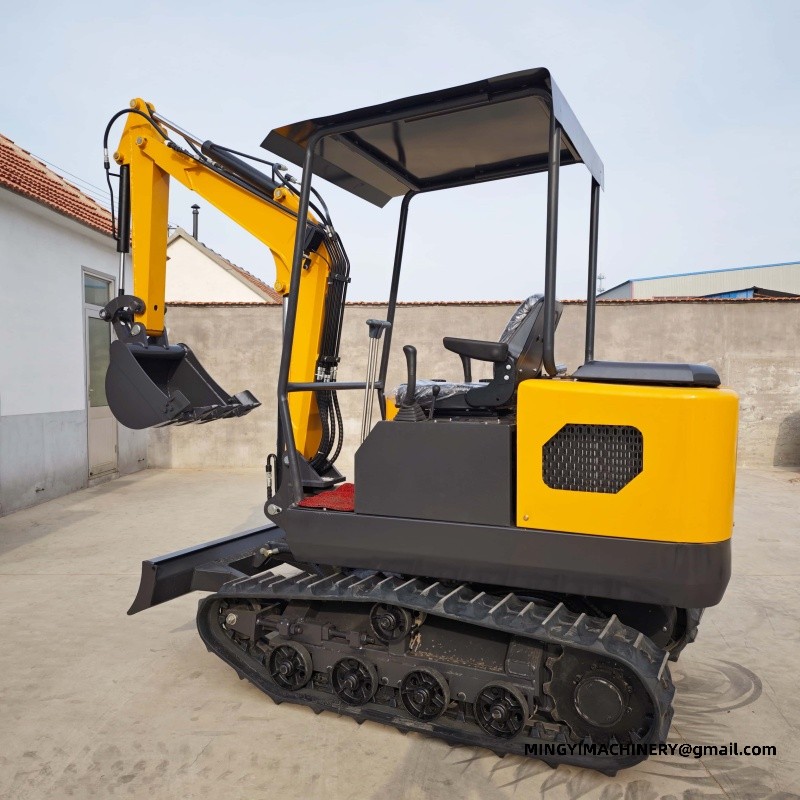
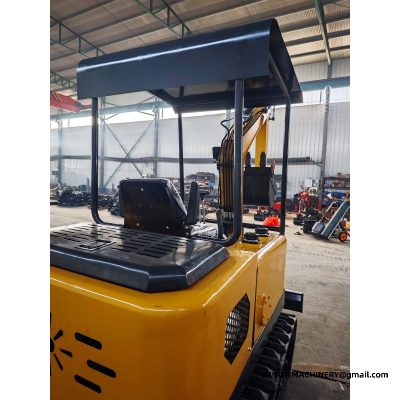
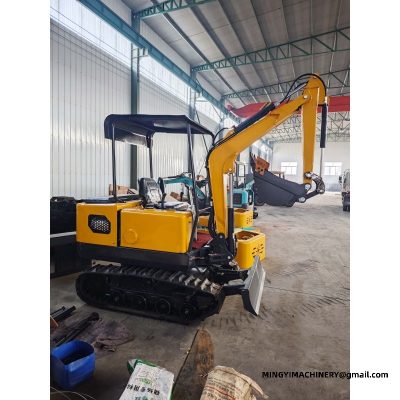
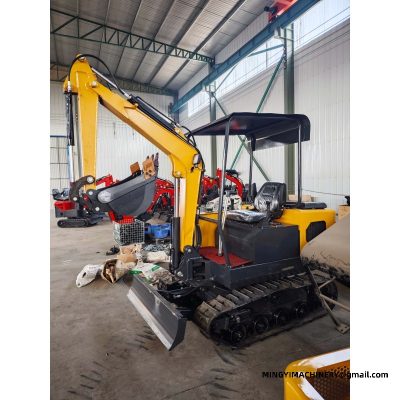
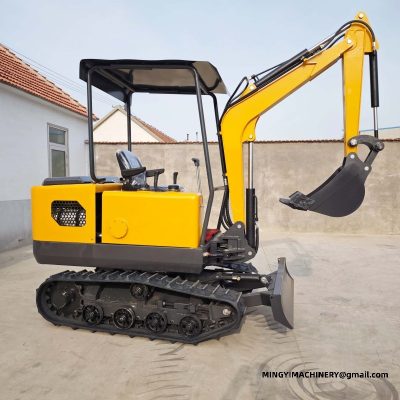
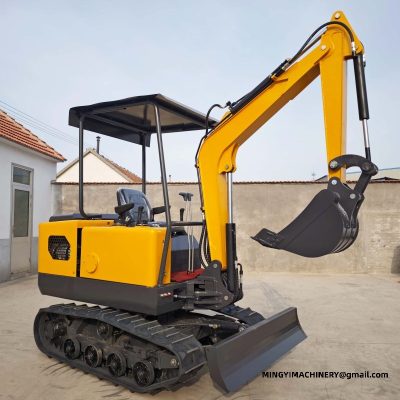
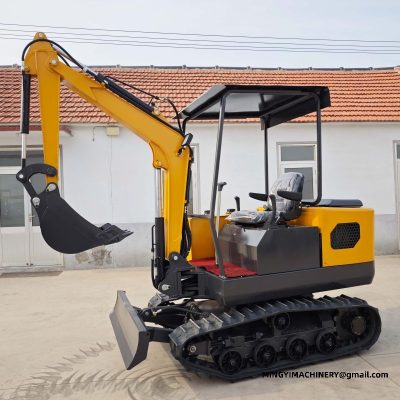
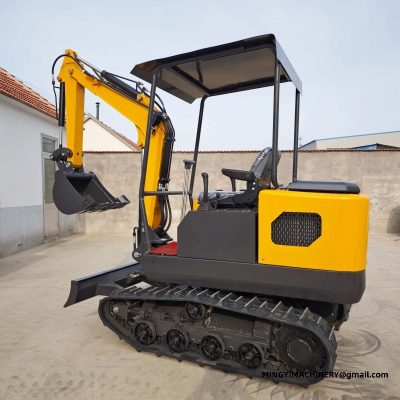
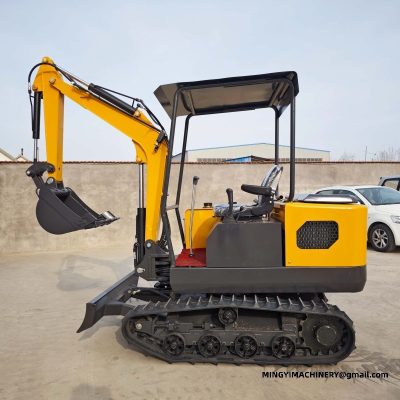
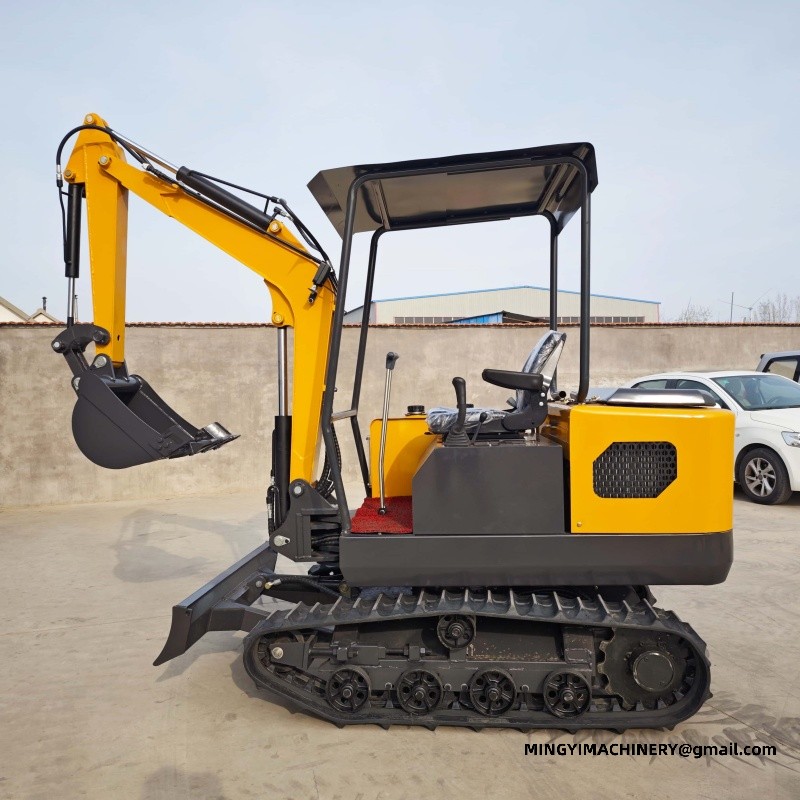
On a construction site the tracked mini excavator handles the tasks that sit between hand work and a full size machine: footings, service trenches, backfilling, breaking out and site clearance. MINGYI builds tracked mini excavators for this kind of building work.
Because the work changes through the project, the machine is usually bought with a set of attachments that carries it from excavation to demolition.
Construction duties for a tracked mini excavator
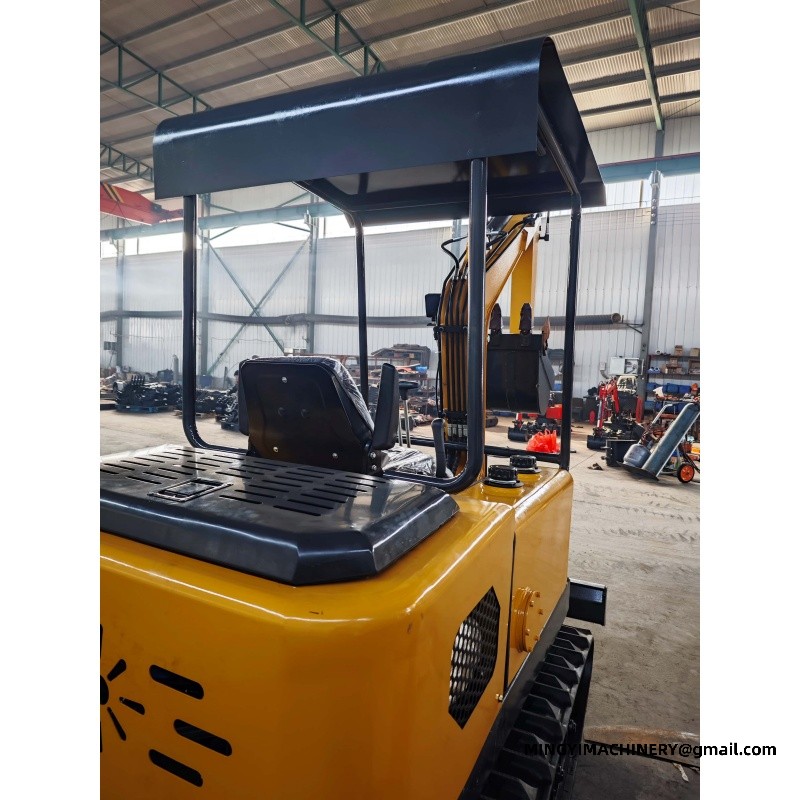
Excavation for footings and trenches is the core task, and a bucket matched to the required width and depth does most of it. Because the machine is tracked, it keeps its footing on the uneven ground that surrounds an active site.
Backfilling follows the excavation, with the bucket placing and spreading the spoil. A grading bucket or a compactor attachment tidies the surface once the fill is in place.
Attachments that extend a construction machine
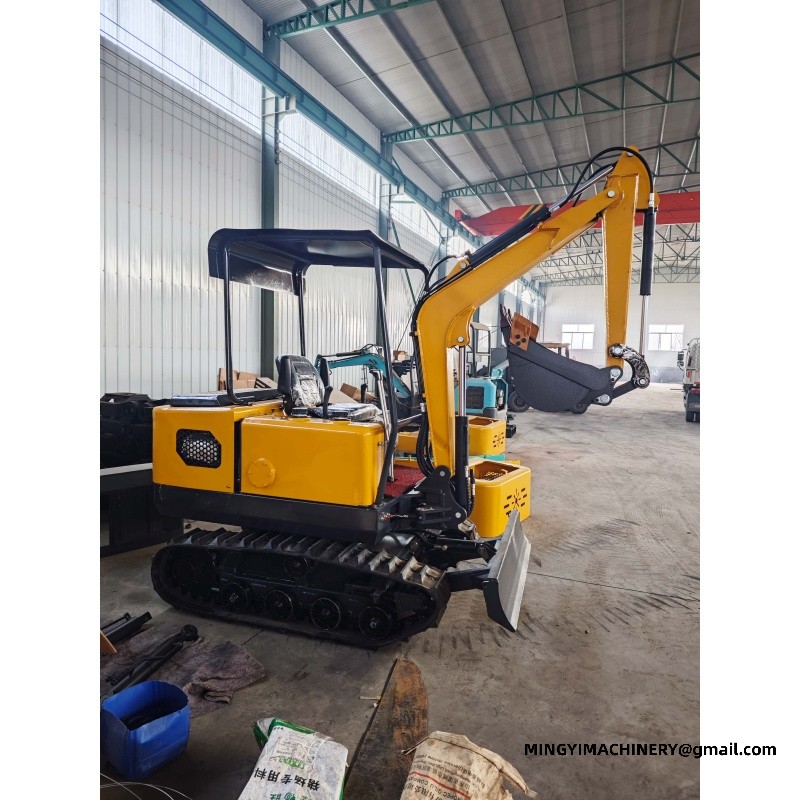
Where the project involves breaking slabs or concrete, a breaker hammer is fitted to the same carrier, and a crusher hammer is used where material has to be reduced. A grabber or front fork handles timber and general site debris.
All of these are ordered with the machine, so the hydraulic lines and mounting are prepared for each tool. MINGYI keeps the configuration on file to keep later parts supply consistent.
For construction work, a buyer should list the excavation, breaking and handling tasks expected, and MINGYI will confirm the tracked mini excavator and attachment set that covers them.
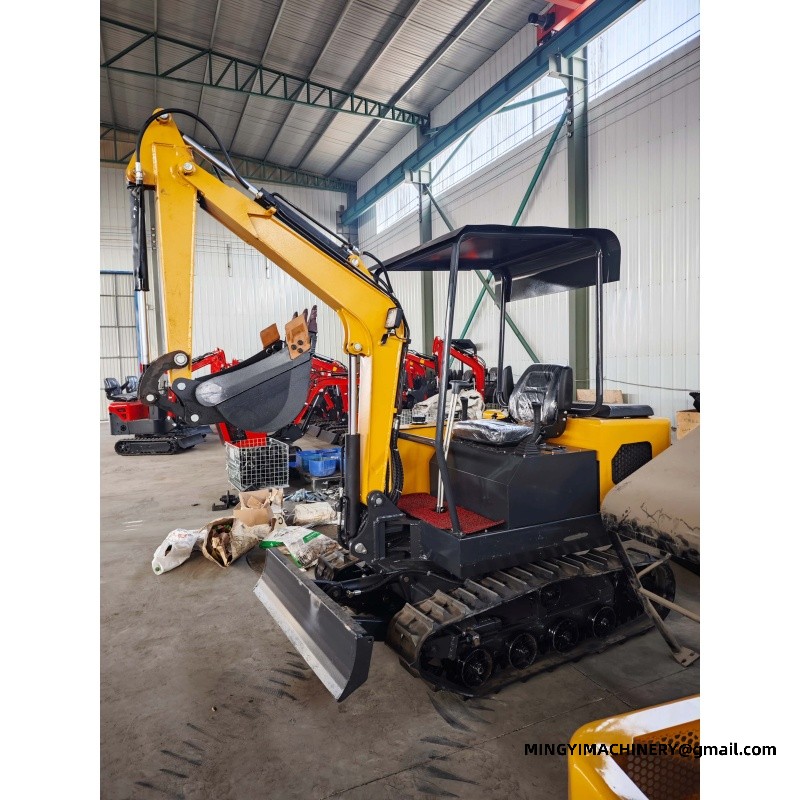
Attachments that turn tracked mini excavator for construction into several machines The base machine is a carrier; the tool on the end of the arm decides the task. The excavator fitted with a toothed bucket digs, and the same machine with a breaker, an auger or a grab does work that would otherwise need a second unit on site. Most of the daily variety on this class of machine comes from the attachment rack rather than from the machine itself. Bucket, breaker, auger, ripper, rake and grab cover the large majority of the work a contractor will see. Trailering and moving tracked mini excavator for construction Transport weight and width decide whether a machine needs a specialist haulier. The unit in daily use sized to travel on a standard plant trailer behind a suitable vehicle moves with the crew rather than on a scheduled low loader. Detachable components reduce transport length. A machine of this size built with a removable arm section or a folding step fits a shorter trailer and may avoid an oversize movement permit. Getting tracked mini excavator for construction through a narrow gap The first question on most job lists is whether the machine can reach the work at all. The equipment on site is chosen against the narrowest point on the route - a garden gate, a doorway, a gap between two walls - because a machine that arrives and then cannot pass loses a day, not an hour. Access decides the machine before output does. With the machine itself the limiting dimension is usually the widest point on the way in, so measuring the gate, the corridor and the turning space first saves a wasted delivery and a second visit. Road and paving work for tracked mini excavator for construction Road repair generates short, interrupted jobs - a patch, a drainage connection, a kerb line. The model in question is economical here because it travels on a small trailer and starts working minutes after arriving. Patching and reinstatement favour a machine that can work in a lane closure. The machine in that duty occupies less road than a full-size excavator, which reduces the traffic management needed and the length of the closure. Specifying tracked mini excavator for construction against a job list The practical way to specify is to write the job list first: the narrowest access, the deepest trench, the heaviest tool and the surfaces the machine must cross. The unit on the job is then matched to those four numbers. Useful information to send with an enquiry includes working width, required digging depth, ground conditions and the attachment set. Those four items let the factory specify a machine built for the work that fits rather than a generic build. Track choice for tracked mini excavator for construction Rubber tracks suit paved and landscaped ground because they spread the machine weight and leave the surface intact. Steel tracks with rubber blocks are specified where the ground is rougher or the working day is longer, and the choice can be made per machine rather than accepted as a factory default. Undercarriage selection is a ground question, not a preference question. The equipment in service running on finished paving needs rubber; the same machine on demolition rubble or rock wears rubber quickly, so steel with rubber blocks becomes the better answer over a full season. What owners should plan for beyond the excavator The useful comparison is demand per working hour, not demand per machine. This class of machine that works more hours a year spreads its standing takes over more output, which is why utilisation usually matters more than the invoice figure. Downtime is the hidden line item. The unit in daily use waiting on a part earns nothing while it stands, so parts availability and service access belong in the plan as much as fuel does. Working on slopes and uneven ground with a machine of this size Slope work is a stability question before it is a traction question. Knowing the gradient the equipment on site is rated for, and working across rather than straight up where the ground allows, removes most of the risk. Planning the direction of travel helps. Working so that the machine itself is stable under load and not required to turn on a slope is a decision made before the job starts, not a correction made during it. Working near live services with the model in question Digging near water, gas and cable is a precision job. The machine in that duty is used here because the operator can work in short controlled cuts and because the machine can be positioned without driving over the run being exposed. Utility crews specify the unit on the job with a narrow bucket and good visibility for exactly this reason: the machine has to stop at the service, not at the edge of the operator's view. Orchard, vineyard and farm use of a machine built for the work Orchard and vineyard work is carried out between rows. The equipment in service with a narrow chassis and a swing boom works down the row without damaging the trees, which is the reason a full-size machine is not used at all. Farms also use the excavator for general maintenance - clearing a watercourse, repairing a track, loading a spreader. One carrier with a few attachments covers most of the jobs that would otherwise wait for a contractor. Daily checks and maintenance on this class of machine Daily maintenance on the unit in daily use is a short list: engine oil level, coolant, track tension, hydraulic oil level and a look at the hoses. Ten minutes at the start of the shift prevents most of the failures that stop a machine. Greasing is the second item. The slew ring, the boom and arm pins and the bucket linkage on a machine of this size take grease daily in dusty work, and the intervals shorten further when the machine is used in water or mud. Municipal and public works with the equipment on site Drainage repair, tree planting, footway reconstruction and cemetery work are all within the range of the machine itself. The jobs are small individually and continuous across the year. Noise and surface protection matter on public work. The model in question on rubber tracks across paving, with a sealed cab for the operator, suits the conditions better than a larger tracked machine. Specification data for the machine in that duty The figures below are the factory figures for the models most often matched to the unit on the job. They are the numbers to check against the site: the depth the work needs, the reach from one position, and the width of the narrowest point on the route in. Every value shown is as built for a machine built for the work; options such as cab, side swing or a telescopic undercarriage change the transport dimensions and are confirmed at order stage. Breaking out a floor slab, a wall footing or a concrete step is routine work for the equipment in service with a breaker. The machine is small enough to work inside and heavy enough to run the tool at a practical rate. Dust, debris clearance and floor loading all argue for a compact machine indoors. The excavator spreads its weight over a wider track footprint than a wheeled machine of similar capacity.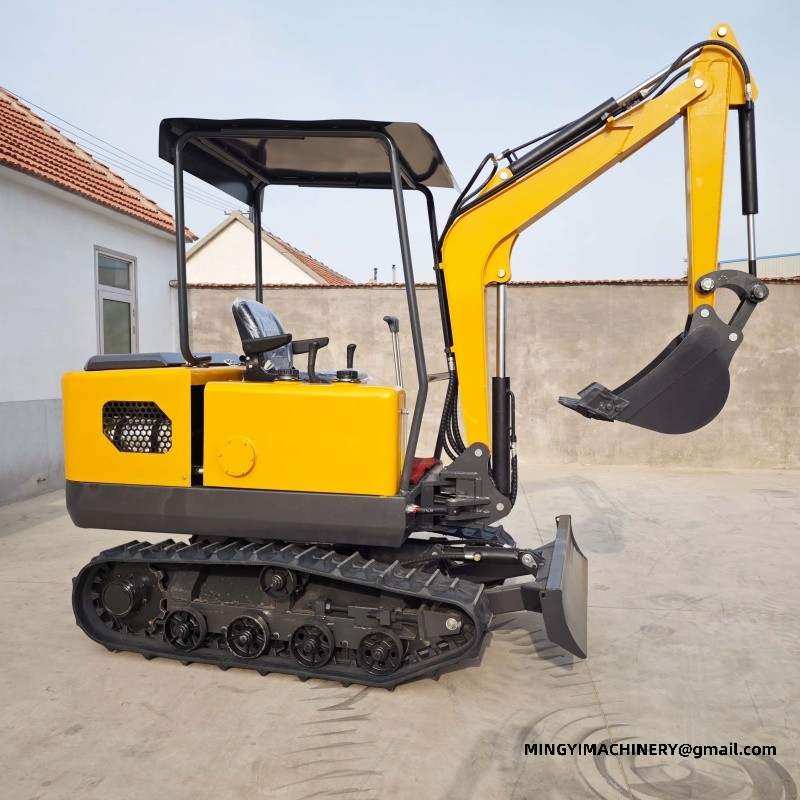
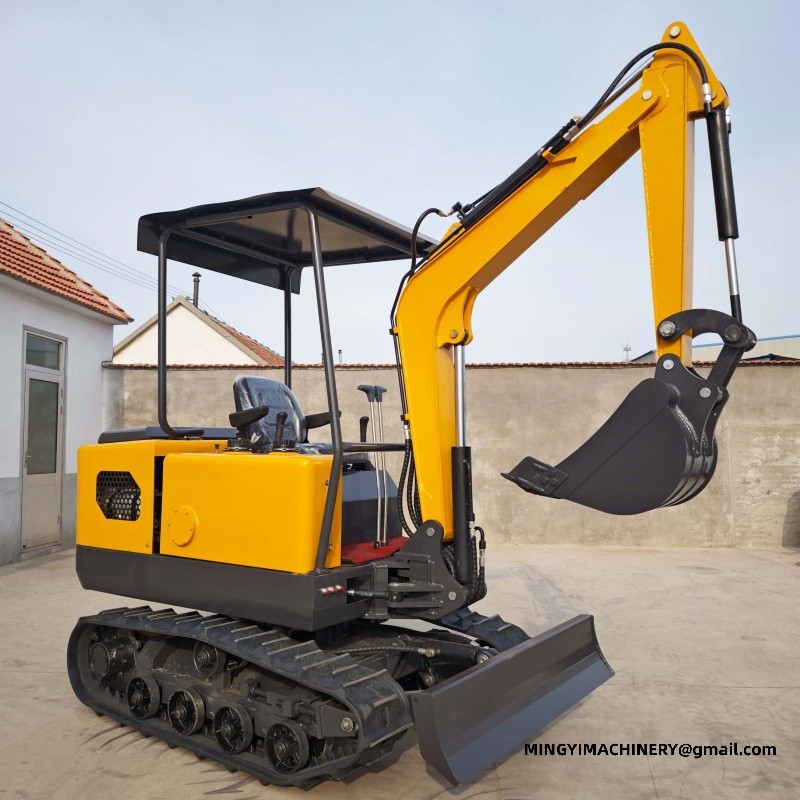
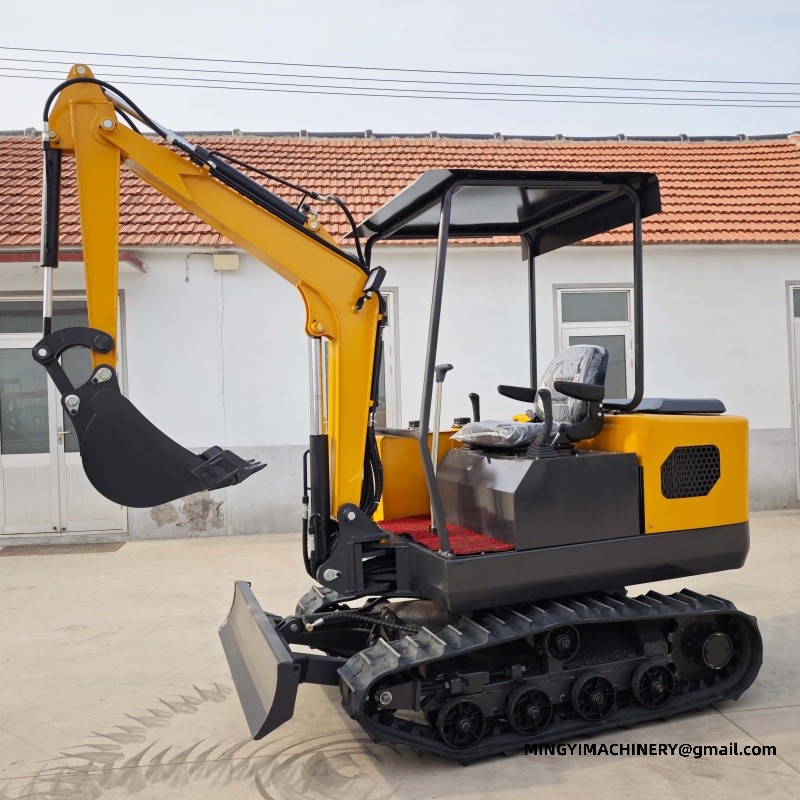
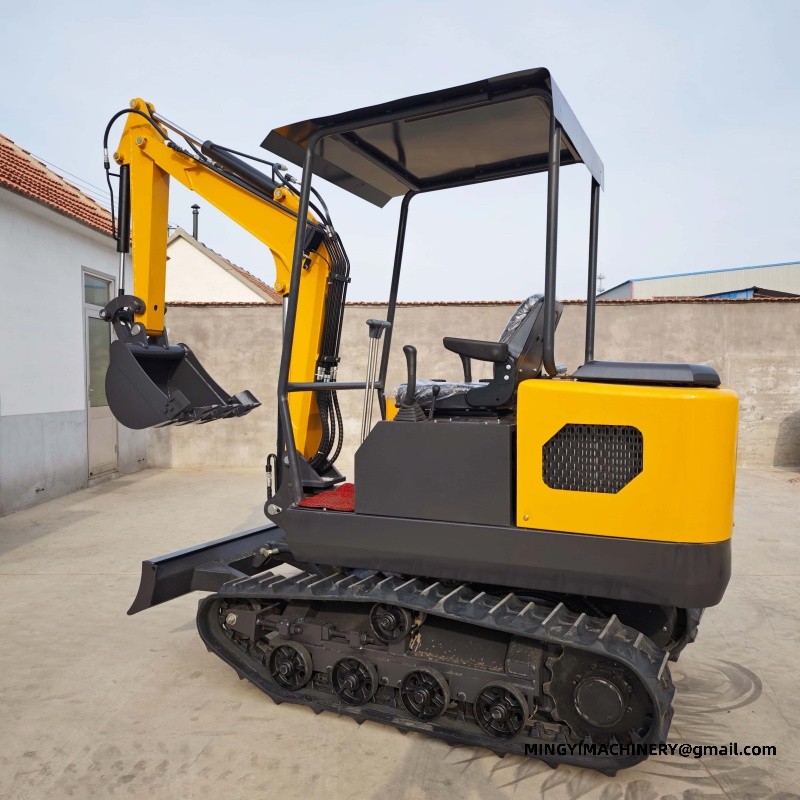
Reference specification — mini excavator range 15W 20-1W 30-1W 09L Operating weight 1400 kg (3086.47 lb) 1800 kg (3968.32 lb) 2900 kg (6393.41 lb) 1100 kg (2425.08 lb) Transport size (L×W×H) 2200 × 930 × 2250 mm 2550 × 1100 × 2200 mm 3000 × 1250 × 2780 mm 2300 × 720 × 1870 mm Max digging depth 1630 mm (64.17 in) 1800 mm (70.87 in) 2200 mm (86.61 in) 1400 mm (55.12 in) Max digging height 2750 mm (108.27 in) 2820 mm (111.02 in) 3400 mm (133.86 in) 2800 mm (110.24 in) Max dumping height 1960 mm (77.17 in) 2050 mm (80.71 in) 2400 mm (94.49 in) 1880 mm (74.02 in) Max digging radius 2900 mm (114.17 in) 3050 mm (120.08 in) 4000 mm (157.48 in) 2490 mm (98.03 in) Max digging distance 2100 mm (82.68 in) 2300 mm (90.55 in) 2800 mm (110.24 in) 2000 mm (78.74 in) Minimum turning radius 1300 mm (51.18 in) 1450 mm (57.09 in) 2000 mm (78.74 in) 1400 mm (55.12 in) Travel speed 3 km/h (1.86 mph) 5 km/h (3.11 mph) 5 km/h (3.11 mph) 3 km/h (1.86 mph) Gradeability 30° 30° 30° 30° Fuel consumption 1-1.3 L/h (0.264—0.343 gal) 2-3 L/h (0.528—0.793 gal) 2-3 L/h (0.528—0.793 gal) 1-1.3 L/h (0.264—0.343 gal) Fuel tank capacity 10 L (2.64 gal) 16 L (4.23 gal) 16 L (4.23 gal) 8 L (2.11 gal) Hydraulic oil tank 16 L (4.23 gal) 18 L (4.76 gal) 20 L (5.28 gal) 16 L (4.23 gal) Dozer blade lift height 180 mm (7.09 in) 180 mm (7.09 in) 420 mm (16.54 in) 180 mm (7.09 in) Dozer blade drop depth 210 mm (8.27 in) 210 mm (8.27 in) 210 mm (8.27 in) 210 mm (8.27 in)
Q. What is this class of machine?
A. The compact class exists for the jobs in between - too much for hand tools, too tight or too short for a full-size machine. Trenching on Monday, loading and grading through the week, fence posts and drainage to finish - the attachment set specifications the work. MINGYI builds the 08, 12 and 18 models covering the 0.8 to 6 tonne class, and the unit in daily use is where that range meets construction.
Q. What can I expect from a compact excavator in a normal week?
A. Trenching one day, loading and grading the next, fence posts and drainage through the rest - one machine, one trailer, one operator, and the attachment set specifications the work.
Q. Which models does MINGYI build?
A. The 08, 12 and 18 models cover the 0.8 to 6 tonne class with engine, track, cab and attachment options across the range - dealer programmes can mix models in one shipment, and each construction machine is confirmed on its own build sheet.
Commissioning a machine of this size on site
Commissioning is where the specification meets the ground. The settings chosen for the equipment on site are confirmed against the actual site, and the working pattern is adjusted before the machine is asked for a full day.
Planning the season around the machine itself
Workload is rarely even across the year, and the machine should be specified for the busy weeks. The model in question sized only for the average month will be the limiting factor exactly when the work is worth the most.
E-mail : sales@mingycn.com
LINE ( ID ): mingyicn
Related pages
rubber track excavator for paved travel · fully hydraulic mini excavator · China Wheel Loader Factory Supplier: Specs and Order Process · Mini Excavators









