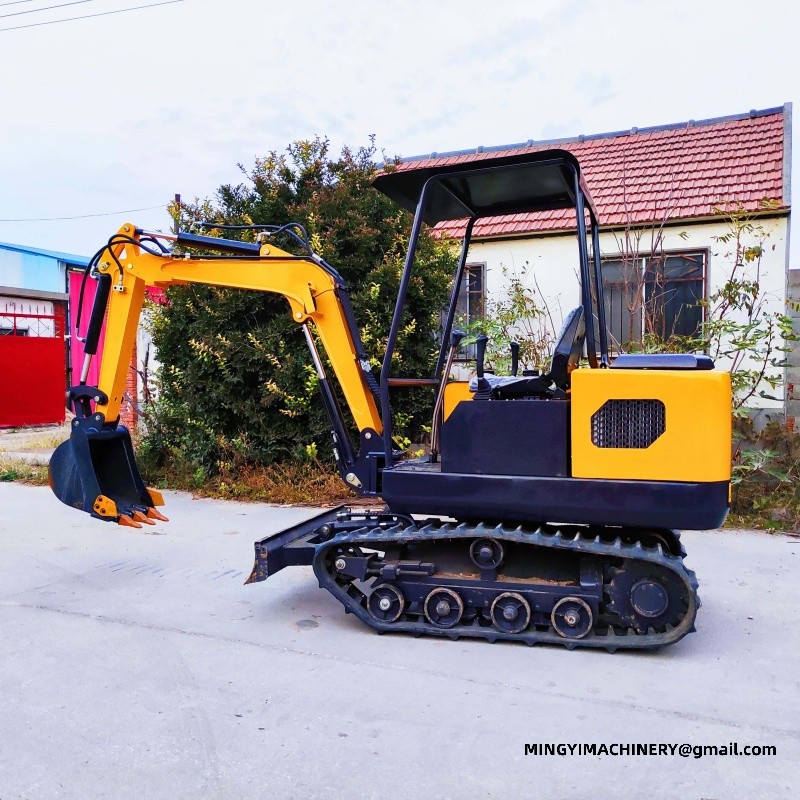
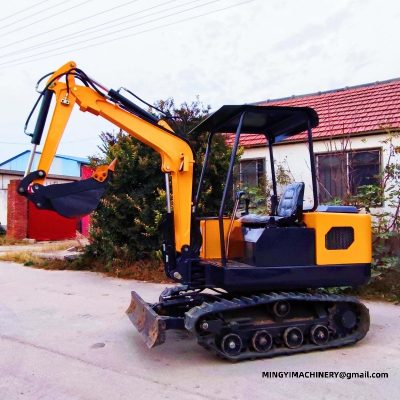
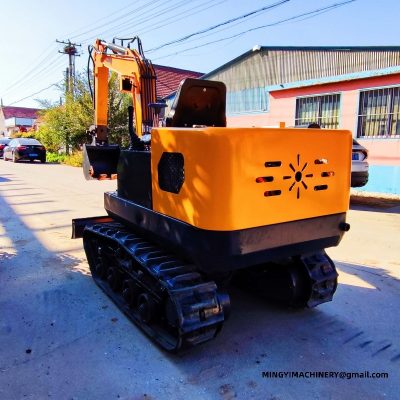
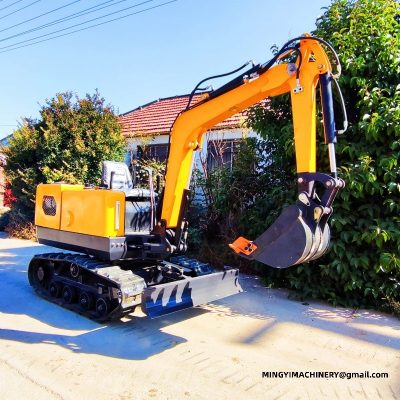
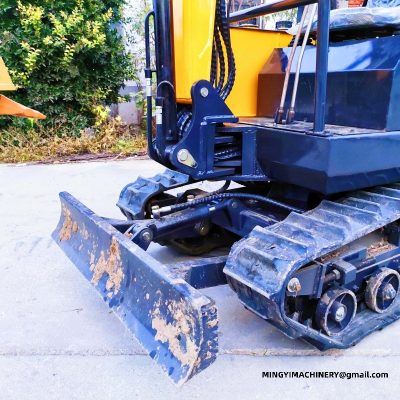
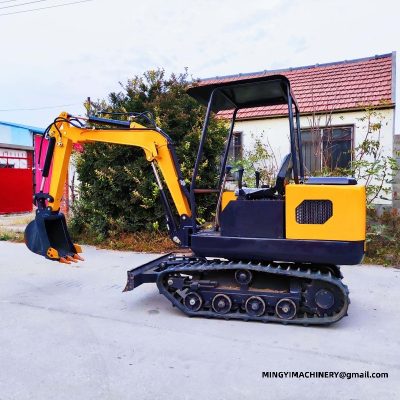
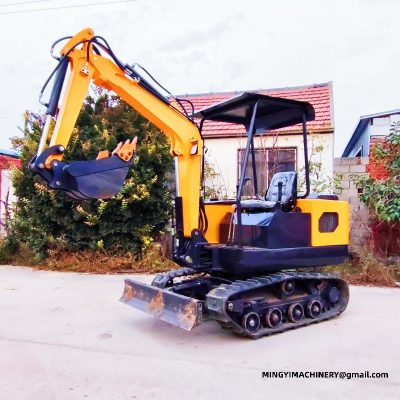
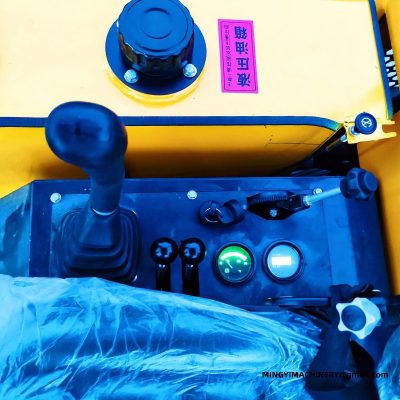
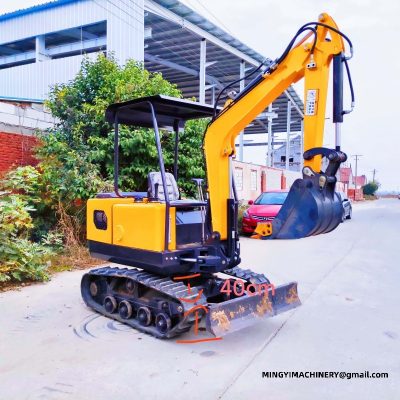
Interior demolition has its own machine rules: the unit has to pass through a doorway, turn inside a room and swing without touching the walls. MINGYI zero tail diggers are built for this indoor duty, slewing fully within their own track width.
Contractors use them to strip floor slabs, remove old tile beds and dig service channels inside standing buildings. The same machine carries the debris out and grades the base for the new floor, which keeps the job on one unit.
Demolition work inside standing buildings
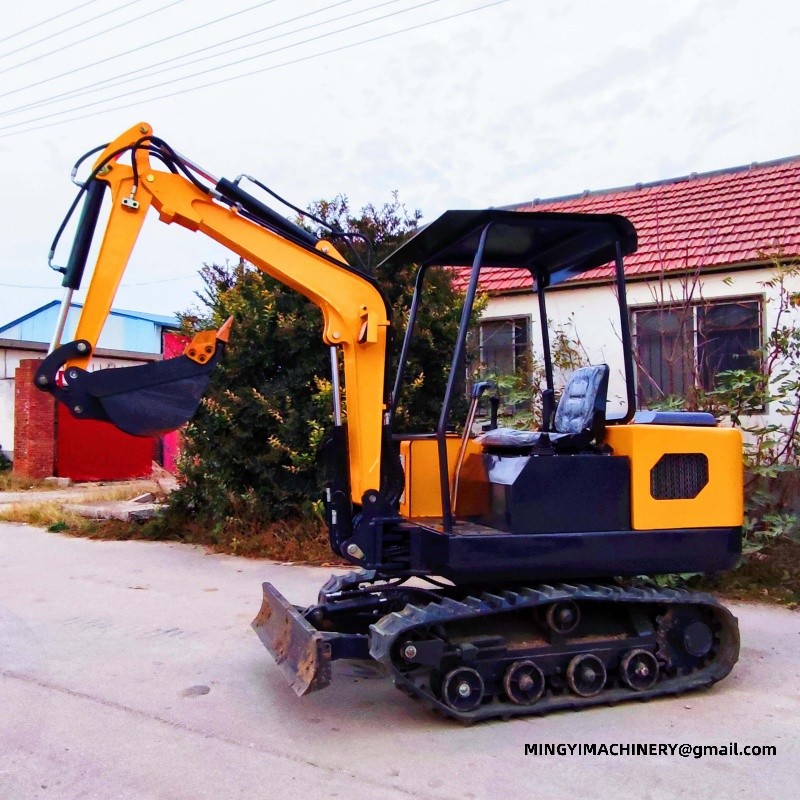
Once through the opening, the zero tail body can slew through a full circle with the walls clear, which allows continuous slab removal instead of careful half turns. The breaker hammer takes the floor while a narrow bucket digs the service trenches alongside.
Dust and debris are part of the environment, so the hydraulic layout and coupler are chosen for frequent tool changes at the working face. Rubble is grabbed with a thumb bucket and loaded onto barrows or a small hauler staged at the doorway.
Fixing the indoor machine configuration
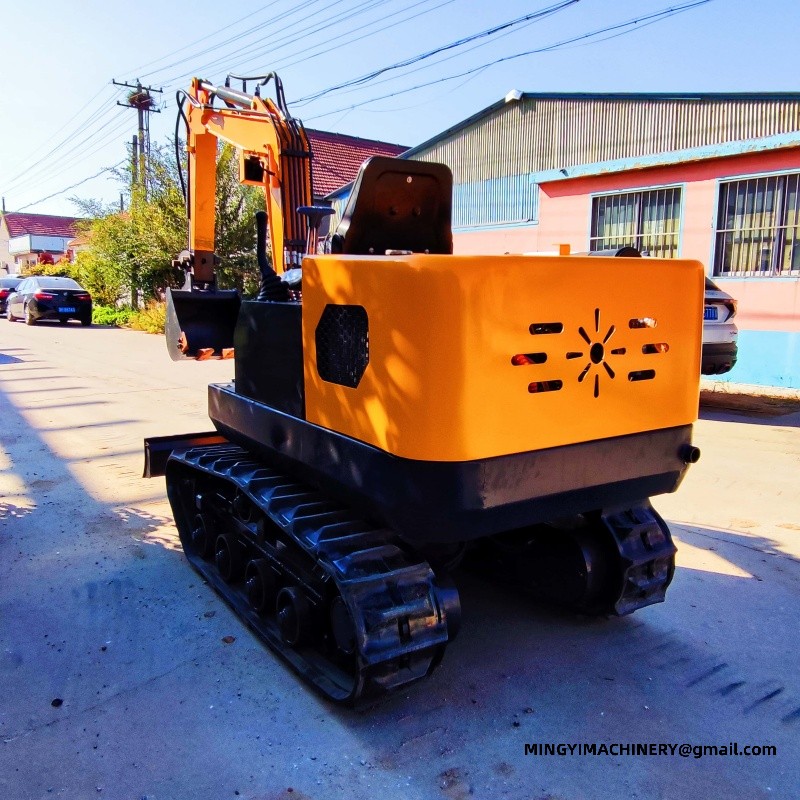
The doorway width and the ceiling height of the working rooms are the numbers that shape the order, and MINGYI confirms them at the ordering stage with the configuration recorded against the machine. A canopy build is common where headroom is the constraint.
Rubber tracks protect finished floors on the route in, and the tool package usually pairs the breaker with a narrow bucket and a tilting bucket for the finishing passes. Service information and spare wear parts ship with the machine for the demolition cycle.
For contractors whose workplace is a room rather than a site, the zero tail digger is the unit that fits the brief. MINGYI reviews the building openings and the demolition scope with the buyer before the build is fixed.
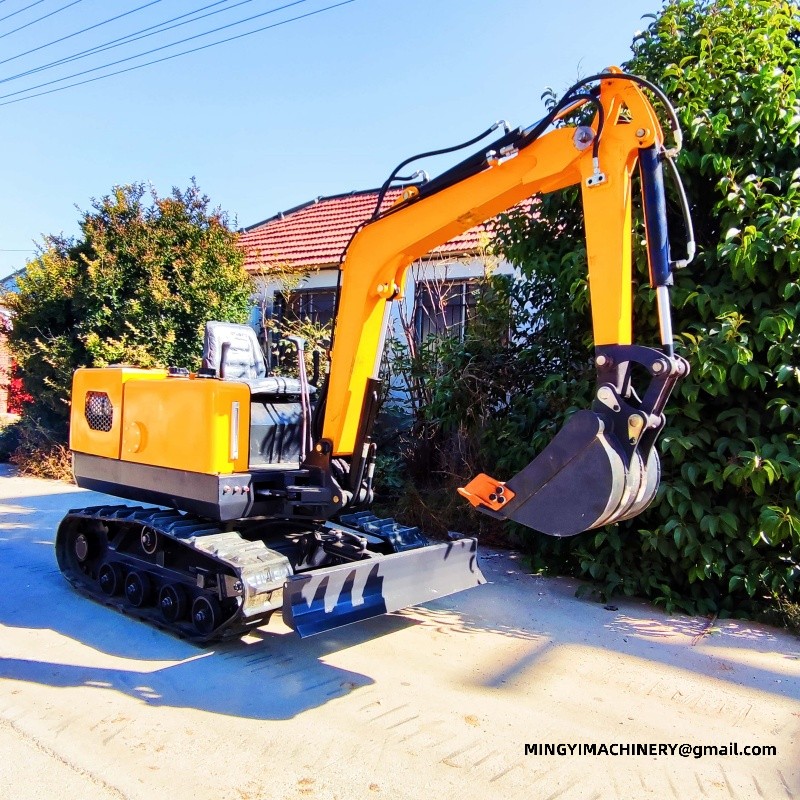
Road and paving work for zero tail digger for indoor work Road repair generates short, interrupted jobs - a patch, a drainage connection, a kerb line. The excavator is economical here because it travels on a small trailer and starts working minutes after arriving. Patching and reinstatement favour a machine that can work in a lane closure. This class of machine occupies less road than a full-size excavator, which reduces the traffic management needed and the length of the closure. What owners should plan for beyond the zero tail digger for indoor work The useful comparison is demand per working hour, not demand per machine. The unit in daily use that works more hours a year spreads its standing takes over more output, which is why utilisation usually matters more than the invoice figure. Downtime is the hidden line item. A machine of this size waiting on a part earns nothing while it stands, so parts availability and service access belong in the plan as much as fuel does. Track choice for zero tail digger for indoor work Rubber tracks suit paved and landscaped ground because they spread the machine weight and leave the surface intact. Steel tracks with rubber blocks are specified where the ground is rougher or the working day is longer, and the choice can be made per machine rather than accepted as a factory default. Undercarriage selection is a ground question, not a preference question. The equipment on site running on finished paving needs rubber; the same machine on demolition rubble or rock wears rubber quickly, so steel with rubber blocks becomes the better answer over a full season. Trailering and moving zero tail digger for indoor work Transport weight and width decide whether a machine needs a specialist haulier. The machine itself sized to travel on a standard plant trailer behind a suitable vehicle moves with the crew rather than on a scheduled low loader. Loading practice matters as much as the numbers. The model in question is driven up ramps under its own power with the boom lowered and the tracks aligned, and secured at the points the manufacturer specifies. Working a zero tail digger for indoor work through the seasons Seasonal planning smooths the workload. Machines that are busy for a few months and idle for the rest benefit from a service slot in the quiet period, and the machine in that duty prepared in the off-season starts the busy months reliably. Heat and dust are as limiting as rain. Air intake condition and cooling cleanliness decide how the unit on the job behaves in a dry season, and both are checked in a minute rather than repaired later. Attachments that turn zero tail digger for indoor work into several machines The base machine is a carrier; the tool on the end of the arm decides the task. A machine built for the work fitted with a toothed bucket digs, and the same machine with a breaker, an auger or a grab does work that would otherwise need a second unit on site. Attachment lists are best written before delivery. Specifying the equipment in service with the tools the job list needs avoids the work and delay of adding hydraulics later, and a quick coupler makes the swap a few minutes instead of a workshop job. Working near live services with the excavator Digging near water, gas and cable is a precision job. This class of machine is used here because the operator can work in short controlled cuts and because the machine can be positioned without driving over the run being exposed. Utility crews specify the unit in daily use with a narrow bucket and good visibility for exactly this reason: the machine has to stop at the service, not at the edge of the operator's view. Matching a machine of this size to ground conditions Hard and abrasive ground reverses the specification. On rock, demolition rubble or sharp gravel, steel tracks with rubber blocks on the equipment on site survive conditions that cut a rubber belt quickly. Mixed sites are common and argue for a compromise specification. Most buyers choose rubber for the machine itself and accept the wear, unless the majority of the work is on material that will damage it. Getting the model in question through a narrow gap The first question on most job lists is whether the machine can reach the work at all. The machine in that duty is chosen against the narrowest point on the route - a garden gate, a doorway, a gap between two walls - because a machine that arrives and then cannot pass loses a day, not an hour. Contractors who buy the unit on the job normally have one job in mind that nothing else reaches. The purchase order follows the access measurement, not the other way round, and the build sheet is then settled around it. Boom configuration for a machine built for the work Extended and offset boom configurations change reach and working range. The equipment in service with a longer arm reaches further but lifts less at full extension, so the specification is set against the deepest and furthest point on the job list. Detachable boom sections are used where transport length matters. The excavator that has to travel on a standard trailer can be built so the arm comes off for the road and goes back on at the site. Specification data for this class of machine The figures below are the factory figures for the models most often matched to the unit in daily use. They are the numbers to check against the site: the depth the work needs, the reach from one position, and the width of the narrowest point on the route in. These are the reference figures for a machine of this size. MINGYI confirms the final build sheet, including engine and attachment choices, against the destination and the job list before production. Lifting with a machine built to dig needs a plan. The load, the radius and the ground under the machine itself all matter, and the safe figure is the one on the chart rather than the one that looks possible. Ground condition under the machine is part of every lift. Soft or uneven support is the common factor in handling incidents, and checking it takes less time than recovering the equipment on site that has settled.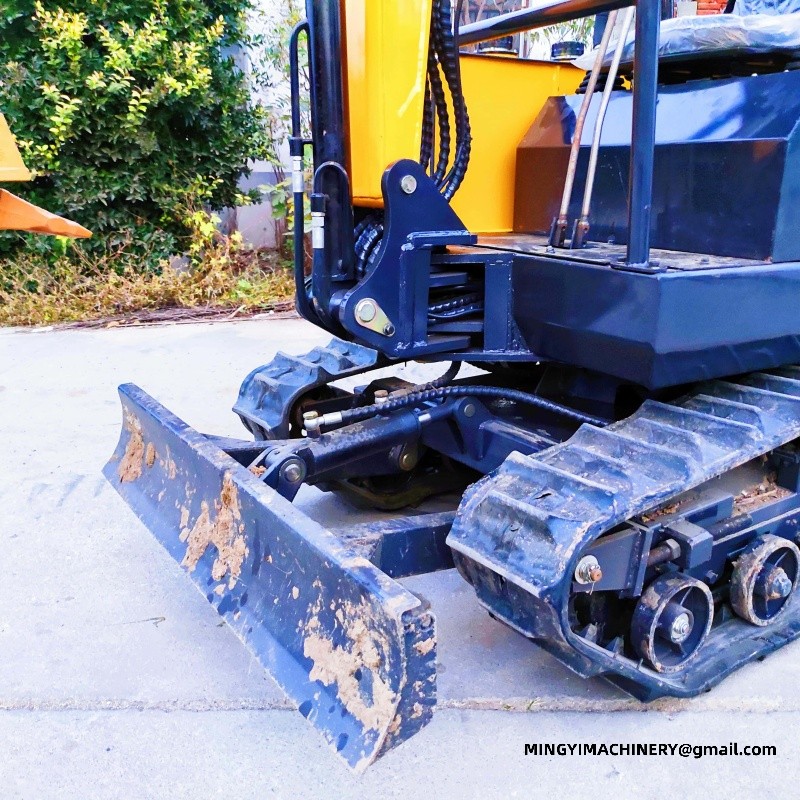
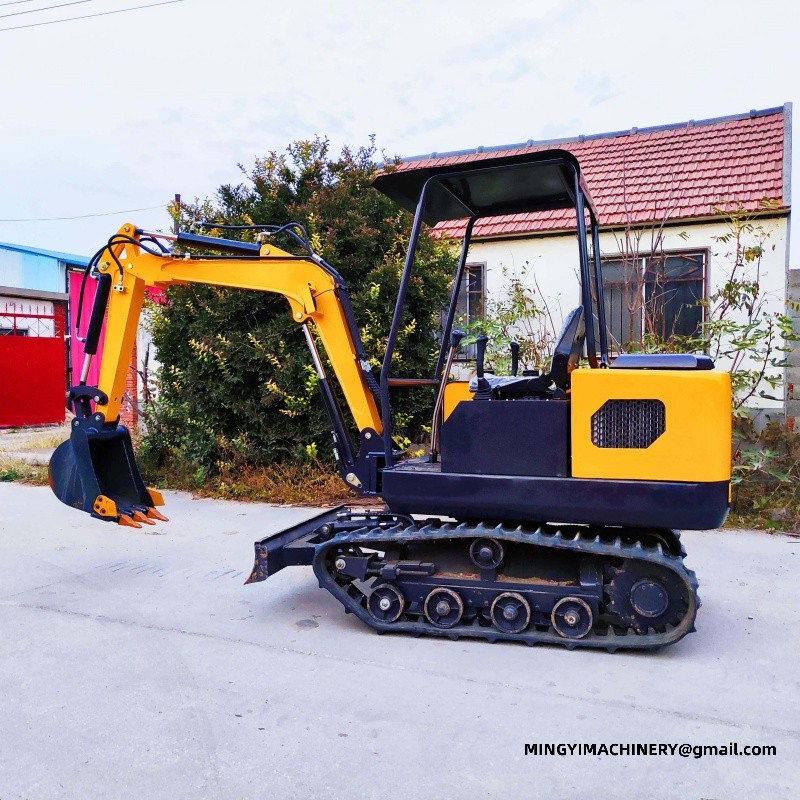
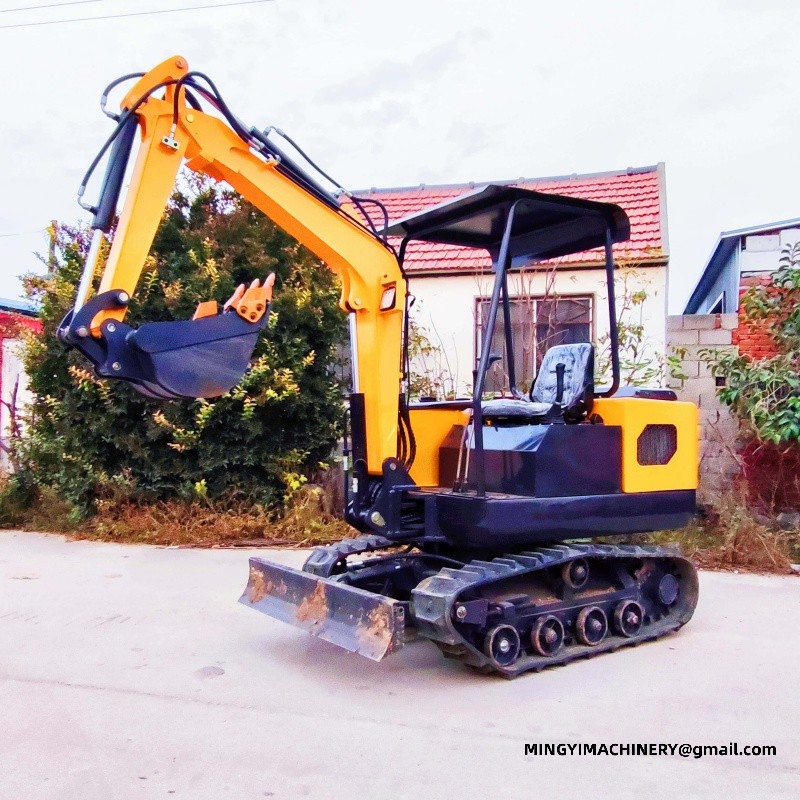
Reference specification — mini excavator range 09W 12W 13W 15L Operating weight 1100 kg (2425.08 lb) 1200 kg (2645.55 lb) 1300 kg (2866.01 lb) 1400 kg (3086.47 lb) Transport size (L×W×H) 1800 × 750 × 1970 mm 2200 × 930 × 2250 mm 2200 × 930 × 2250 mm 2200 × 930 × 2250 mm Max digging depth 1250 mm (49.21 in) 1630 mm (64.17 in) 1630 mm (64.17 in) 1700 mm (66.93 in) Max digging height 2800 mm (110.24 in) 2750 mm (108.27 in) 2750 mm (108.27 in) 2750 mm (108.27 in) Max dumping height 1700 mm (66.93 in) 1960 mm (77.17 in) 1960 mm (77.17 in) 1960 mm (77.17 in) Max digging radius 2570 mm (101.18 in) 2900 mm (114.17 in) 2900 mm (114.17 in) 2900 mm (114.17 in) Max digging distance 1869 mm (73.58 in) 2100 mm (82.68 in) 2100 mm (82.68 in) 2300 mm (90.55 in) Minimum turning radius 1000 mm (39.37 in) 1300 mm (51.18 in) 1300 mm (51.18 in) 1450 mm (57.09 in) Travel speed 3 km/h (1.86 mph) 3 km/h (1.86 mph) 3 km/h (1.86 mph) 3 km/h (1.86 mph) Gradeability 30° 30° 30° 30° Fuel consumption 1-1.3 L/h (0.264—0.343 gal) 1-1.3 L/h (0.264—0.343 gal) 1-1.3 L/h (0.264—0.343 gal) 1-1.3 L/h (0.264—0.343 gal) Fuel tank capacity 8 L (2.11 gal) 10 L (2.64 gal) 10 L (2.64 gal) 10 L (2.64 gal) Hydraulic oil tank 16 L (4.23 gal) 16 L (4.23 gal) 16 L (4.23 gal) 16 L (4.23 gal) Dozer blade lift height 180 mm (7.09 in) 180 mm (7.09 in) 180 mm (7.09 in) 180 mm (7.09 in) Dozer blade drop depth 210 mm (8.27 in) 210 mm (8.27 in) 210 mm (8.27 in) 210 mm (8.27 in)
Q. What is the model in question?
A. The whole point of the smallest classes is presence - a digging machine that reaches work nothing bigger can enter. Measure the doorway, gate or stairwell first, then match the machine to the gap - the smallest classes pass where a wheelbarrow would struggle. The machine in that duty is one of the pages buyers land on when comparing machines for indoor work, and the factory treats it as a specification conversation rather than a catalogue line.
Q. What can such a small digger actually do?
A. More than its size suggests: inside a basement or behind a boundary it digs footings, breaks floors and grades the sub-base at rates hand digging cannot touch. The limit is reach and lift, not willingness.
Q. Does MINGYI supply attachments with the machine?
A. Yes - buckets, breakers, augers, rakes and the rest of the working set ship with the carrier, matched to the hydraulic flow and the coupler. For indoor work the package is confirmed on the build sheet, so machine and tools arrive together and start work together.
Packing, loading and shipment of the unit on the job
The paperwork matters as much as the packing. Serial numbers, dimensions and weights recorded for a machine built for the work at loading are the same figures the destination needs, and a mismatch here loses more days than the voyage itself.
Reading the early symptoms on the equipment in service
The symptom is usually not at the fault. A hydraulic function that has become sluggish on the excavator may point to a filter, a relief setting or a pump, and starting with the simple checks avoids the wrong guess.
Handover and getting familiar with this class of machine
The first day with a new machine sets the pattern for the next five years. Handover for the unit in daily use covers the control layout, the daily check points and the limits the operator needs to know before the first real load is lifted or carried.
E-mail : sales@mingycn.com
LINE ( ID ): mingyicn
Slope working and stability with zero tail digger for indoor work
Rated capacity is measured on level ground, and once the machine works across a gradient the safe figure follows the slope and the load position.
Related pages
swing boom digger for roadside ditches · mini excavator for demolition on site · Hydraulic Wheel Loader: Cylinders, Pumps and Circuit Options · Mini Excavators









