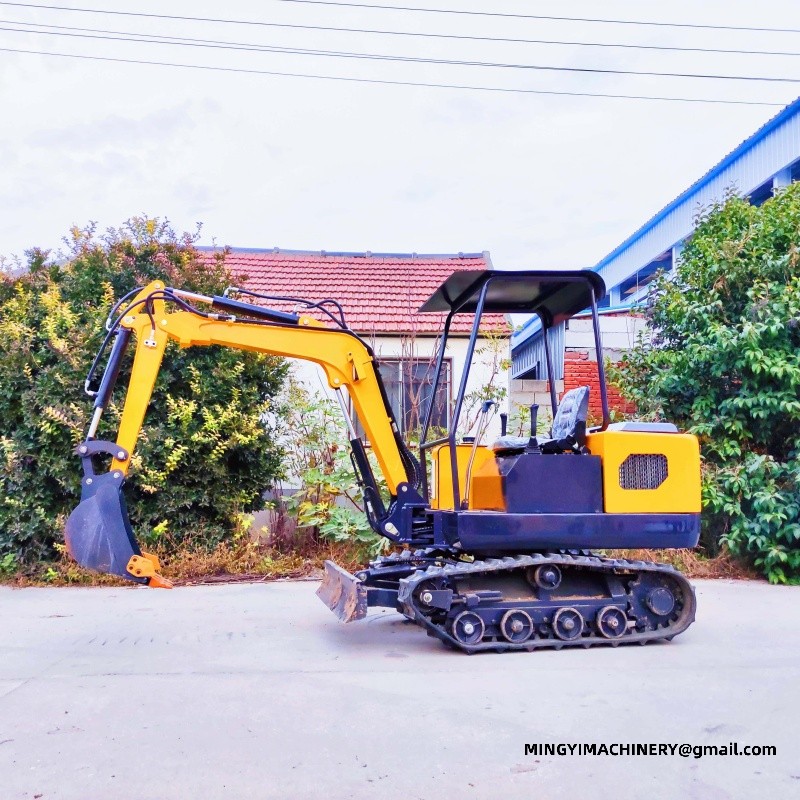
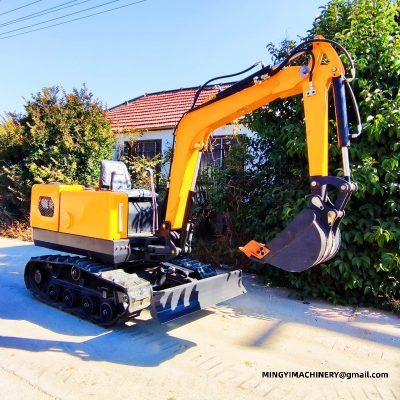
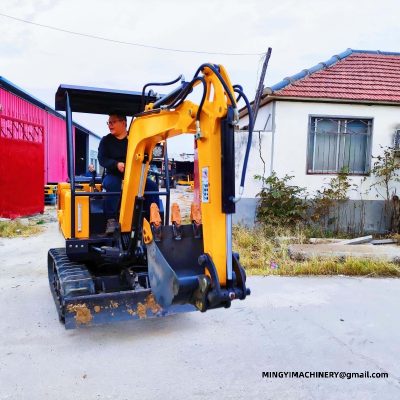
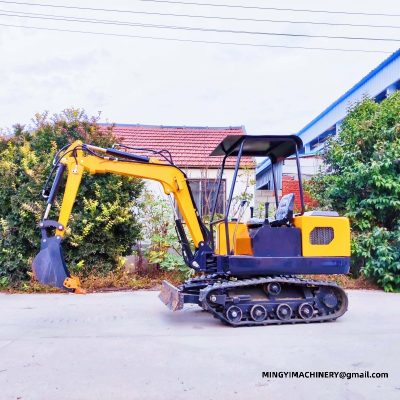
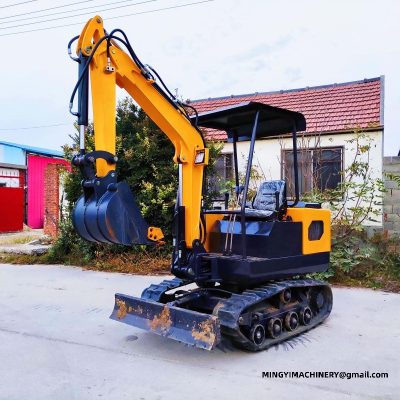
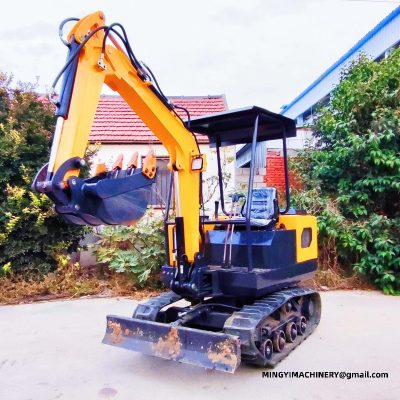
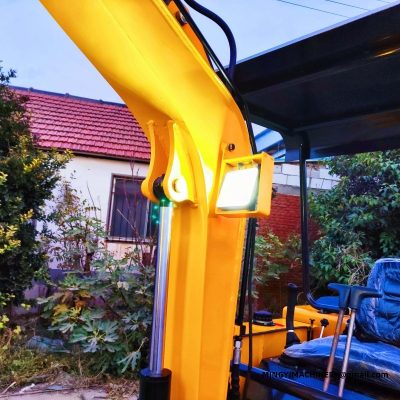
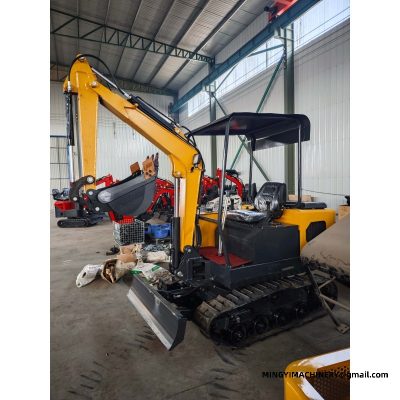
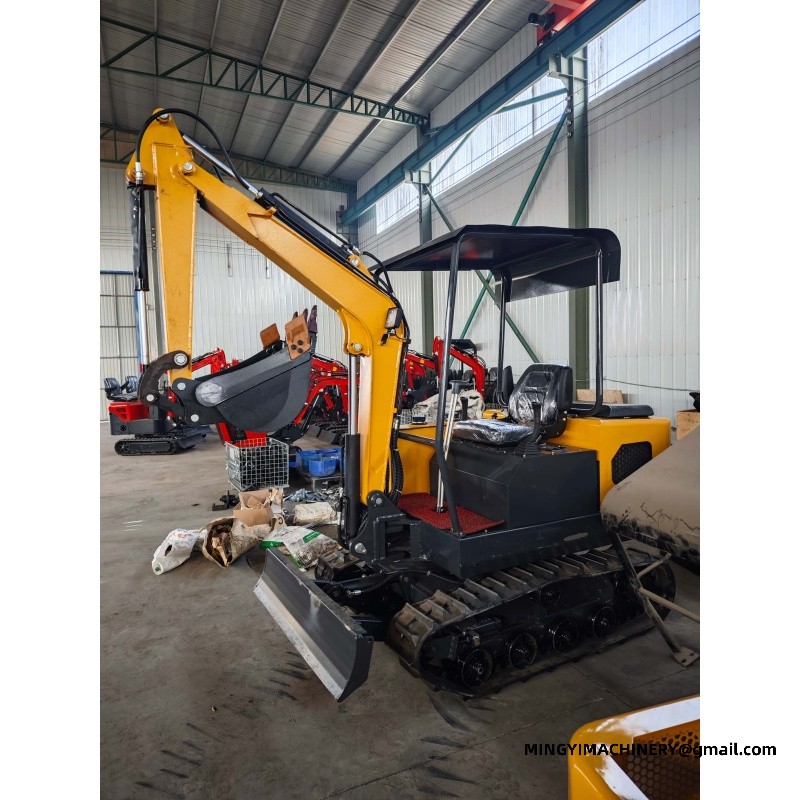
Roadside ditch maintenance has a fixed problem: the ditch is beside live traffic and the machine cannot straddle the line. MINGYI swing boom diggers are configured for this duty, digging verge drains and culvert approaches while the carrier stays off the carriageway.
Municipal crews use the offset boom to clean silted ditches, re-cut shallow drains and clear culvert mouths on rural roads and estate tracks. One machine covers the cleaning, the loading and the light grading of the verge.
Ditch cleaning with the carrier on the shoulder
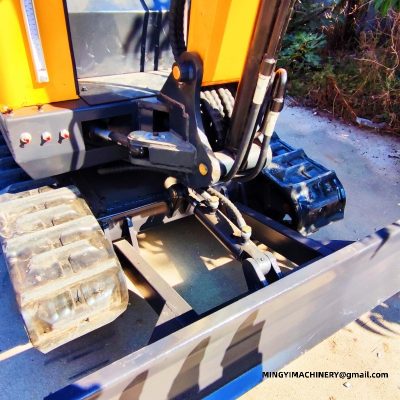
The swing boom places the bucket over the ditch line while the tracks remain on the shoulder, which keeps the operation off the traffic lane. Where the verge is soft, steel tracks with rubber blocks spread the load and still grip without tearing up the surface.
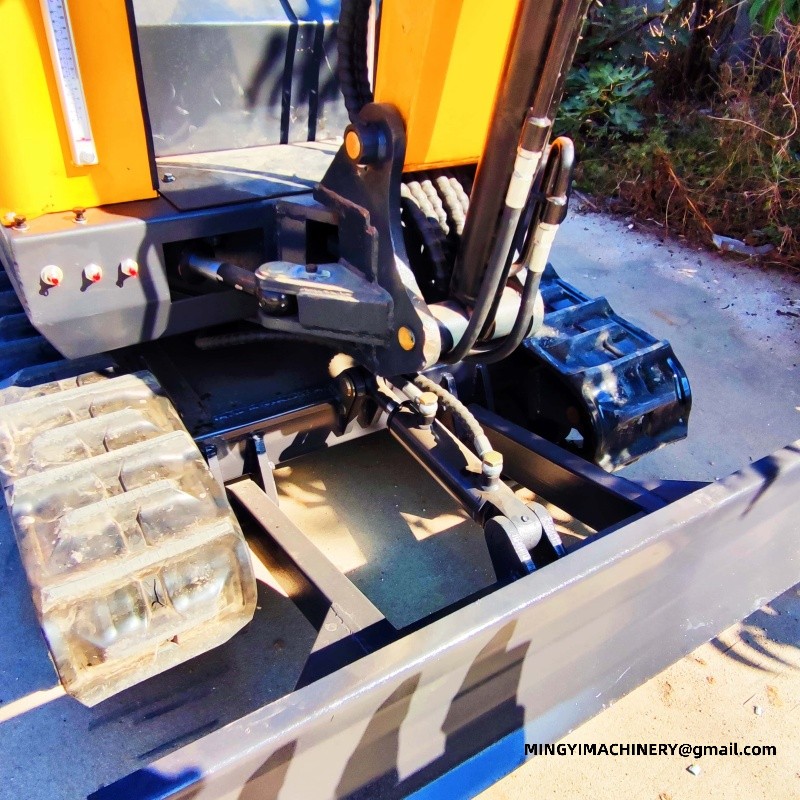
Re-cutting a shallow drain along the verge is the same motion extended along the road, and the offset geometry handles culvert mouths and drive entrances where the line breaks. Silt and vegetation go onto the truck with a standard bucket or a shell bucket in stony ground.
Configuring a municipal ditch machine
Municipal buyers usually order the swing boom with an enclosed cab for all-weather work and a mechanical quick coupler for bucket changes at the roadside. The full configuration is recorded against the machine when the order is placed.
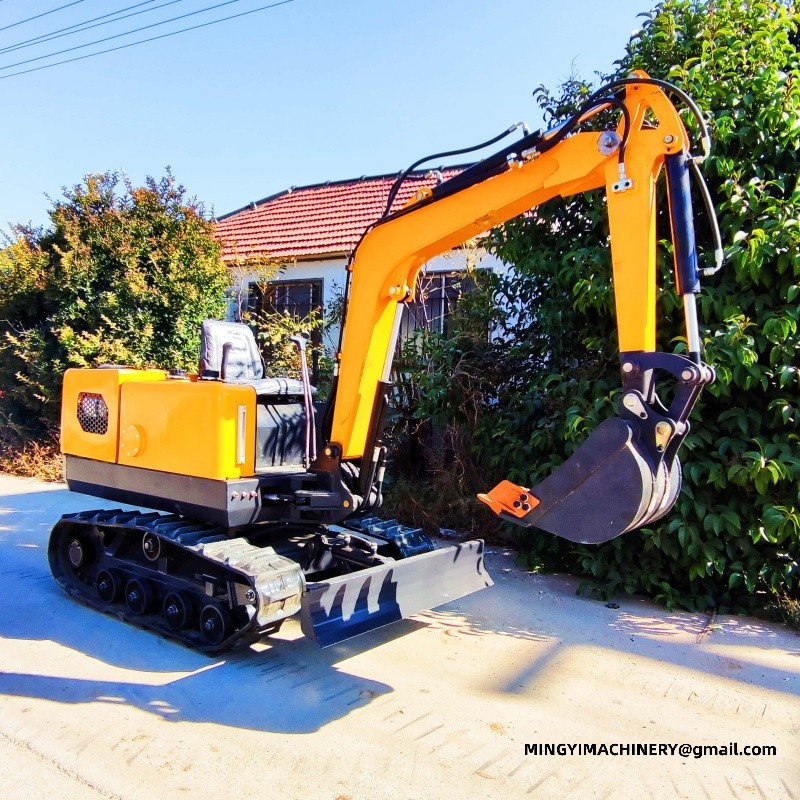
Bucket selection leans toward ditching profiles and skeleton buckets that separate silt from stones for haul away. MINGYI reviews the road types and ditch depths with the buyer before fixing the tool set.
For councils whose season is defined by ditch runs, the swing boom digger is the machine shaped around that job. MINGYI builds the offset configuration to order and matches the bucket set to the road conditions described.
Attachments that turn swing boom digger for roadside ditches into several machines Attachment lists are best written before delivery. Specifying the excavator with the tools the job list needs avoids the work and delay of adding hydraulics later, and a quick coupler makes the swap a few minutes instead of a workshop job. Most of the daily variety on this class of machine comes from the attachment rack rather than from the machine itself. Bucket, breaker, auger, ripper, rake and grab cover the large majority of the work a contractor will see. What owners should plan for beyond the swing boom digger for roadside ditches Purchase decision is the visible part of the effort. Fuel, filters, tracks or tyres, the operator and the transport between sites are the items that decide what the unit in daily use actually demands over a few seasons, and they are worth listing before the order. Downtime is the hidden line item. A machine of this size waiting on a part earns nothing while it stands, so parts availability and service access belong in the plan as much as fuel does. Working a swing boom digger for roadside ditches through the seasons Weather decides which days are productive. Rain turns some ground unusable and cold changes how the equipment on site starts and warms up, so planning the wet months around maintenance is more useful than planning around output. Seasonal planning smooths the workload. Machines that are busy for a few months and idle for the rest benefit from a service slot in the quiet period, and the machine itself prepared in the off-season starts the busy months reliably. Hiring versus owning a swing boom digger for roadside ditches The choice follows the hours. Work that fills a few weeks a year is usually better hired, while the model in question that would be on site most weeks starts to justify ownership once the transport and booking time is counted. Availability is part of the decision. Owning the machine in that duty means it is there on the day the ground is ready; hiring means competing for the same machine at the same time as everyone else in the season. Parts, service and support for swing boom digger for roadside ditches Engine parts availability usually drives the engine choice. The unit on the job built with an engine the local network already carries is serviced from stock rather than from an international order. Remote support is handled by video. A machine built for the work fault can often be diagnosed on a walk-around call with the panel open, which is faster than waiting for a visit and avoids shipping a part that is not needed. Daily checks and maintenance on swing boom digger for roadside ditches Daily maintenance on the equipment in service is a short list: engine oil level, coolant, track tension, hydraulic oil level and a look at the hoses. Ten minutes at the start of the shift prevents most of the failures that stop a machine. Track tension is the item most often neglected. The excavator run with slack tracks wears the undercarriage and can throw a track on a turn; run too tight, the same components wear from the other direction. Landscaping and ground care with this class of machine Landscape contractors use the unit in daily use for planting holes, pond excavation, grading and retaining work. The machine is light enough to cross finished lawn and narrow enough to work between established trees. On soft landscape work the surface is the constraint. A machine of this size on rubber tracks crosses turf without stripping it, which is why the same jobs are not given to a wheeled machine. Municipal and public works with the equipment on site Municipal crews work on streets, footpaths and parks where the public is present. The machine itself is specified because it occupies little space, works inside a small exclusion zone and can be moved on a standard trailer. Drainage repair, tree planting, footway reconstruction and cemetery work are all within the range of the model in question. The jobs are small individually and continuous across the year. Interior and light demolition with the machine in that duty Interior demolition is an access and a weight question. The unit on the job that fits through a doorway and works on a suspended floor does jobs that would otherwise be done by hand or by a larger machine that cannot enter. Dust, debris clearance and floor loading all argue for a compact machine indoors. A machine built for the work spreads its weight over a wider track footprint than a wheeled machine of similar capacity. Export packing and shipping of the equipment in service Machines leave the factory prepared for container or flat rack shipment. The excavator is normally shipped with the attachment set and the spare parts list agreed in advance so the container is planned once. Export documentation, decals and paint are settled before packing. Asking for them with the this class of machine order avoids a second handling session and keeps the machine on the booked vessel. Hydraulic circuits on the unit in daily use Flow and pressure are matched to the tool, not to the machine size. Asking for the attachment list first means a machine of this size leaves the factory with circuits that suit the heaviest tool the buyer intends to run. Hydraulic specification is easier to settle at build time than to correct later. The equipment on site delivered without auxiliary lines can still dig, but every additional tool becomes a retrofit project. Specification data for the machine itself Buyers comparing the model in question usually start from four numbers - weight, digging depth, reach and transport width - because those are the ones that decide whether the machine can be delivered and whether it can do the job once it is there. These are the reference figures for the machine in that duty. MINGYI confirms the final build sheet, including engine and attachment choices, against the destination and the job list before production. Clearance above matters as much as around. Door heights, pipework and overhead services set the limit for the unit on the job indoors, and measuring them first avoids a machine that arrives and cannot be used. Ventilation is the other indoor constraint. Running a machine built for the work inside a closed structure needs air movement, and that is a planning item rather than something to discover after the first hour.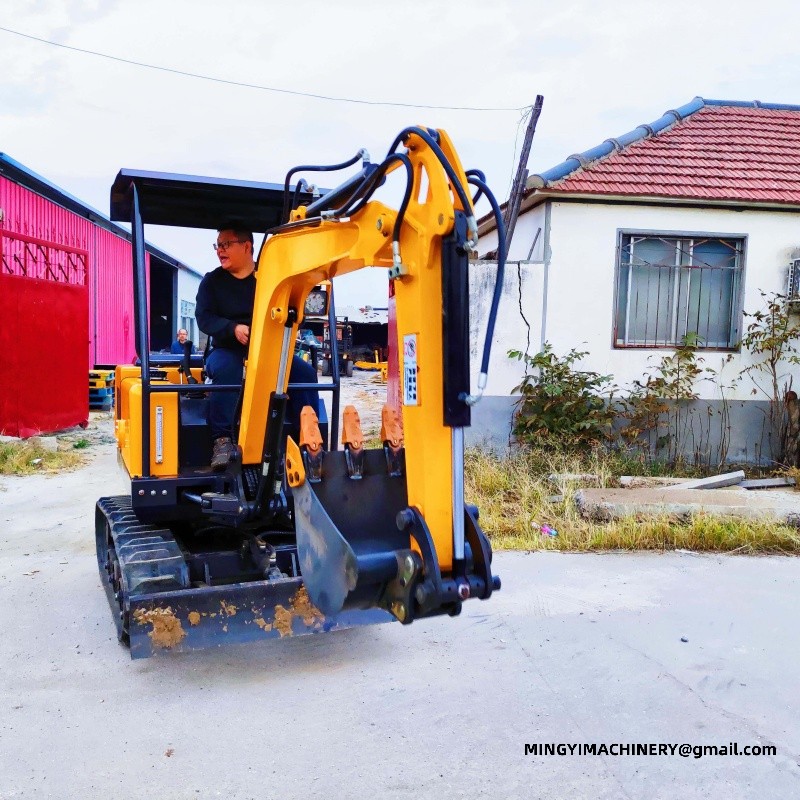
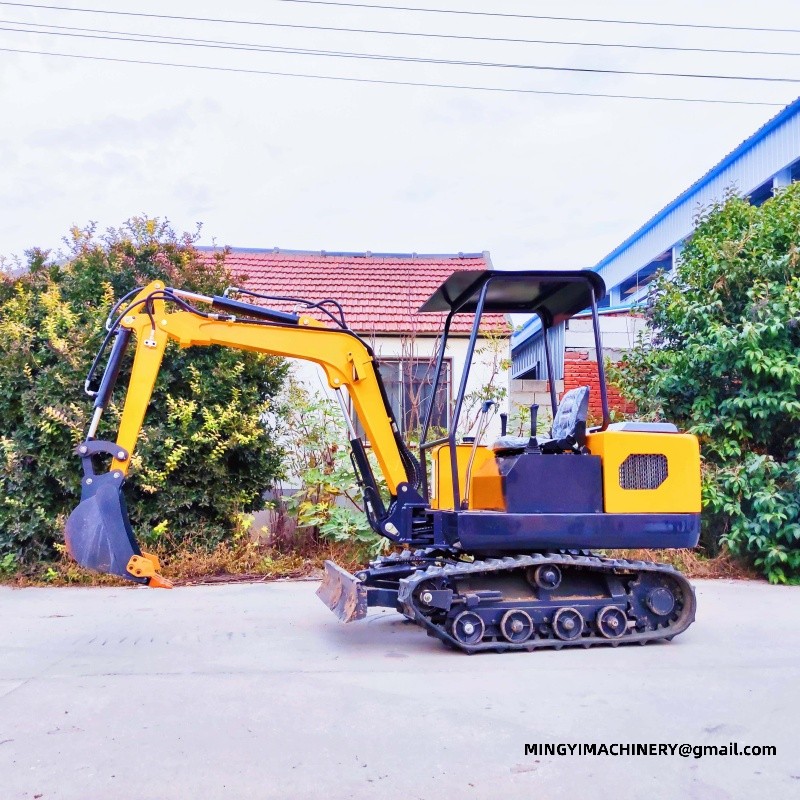
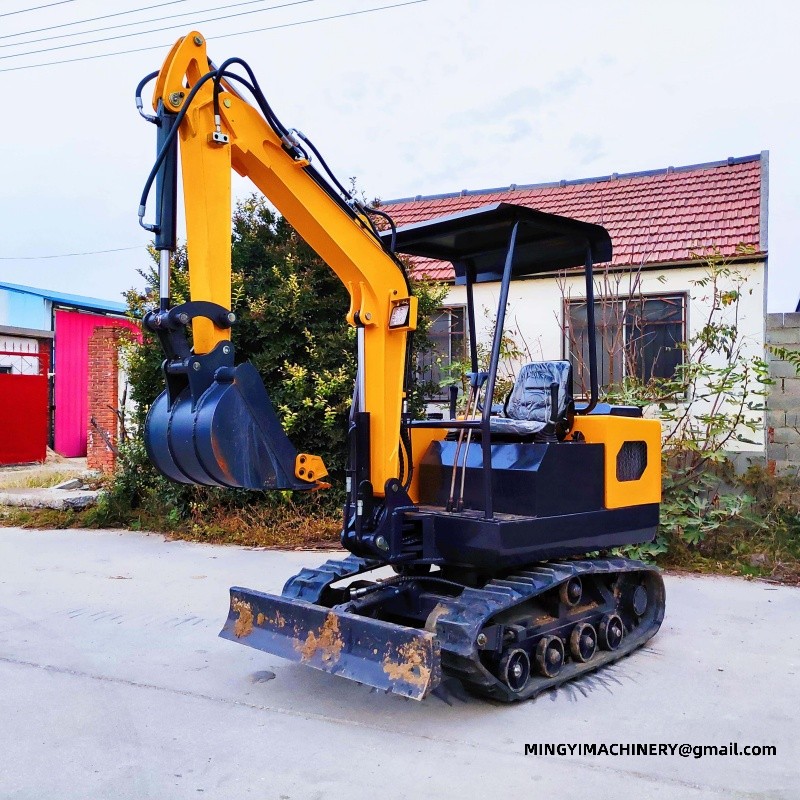
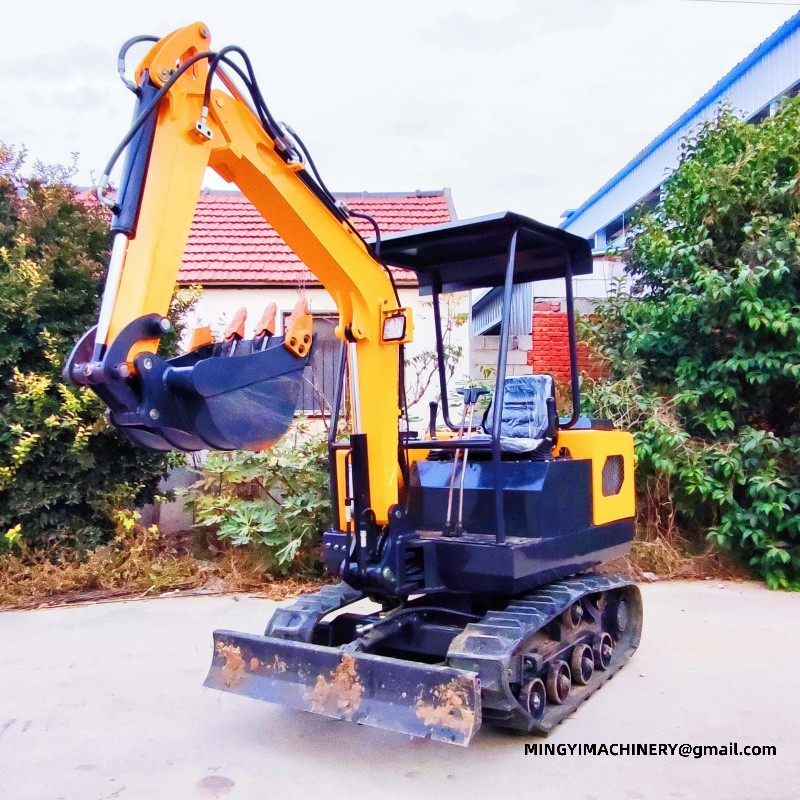
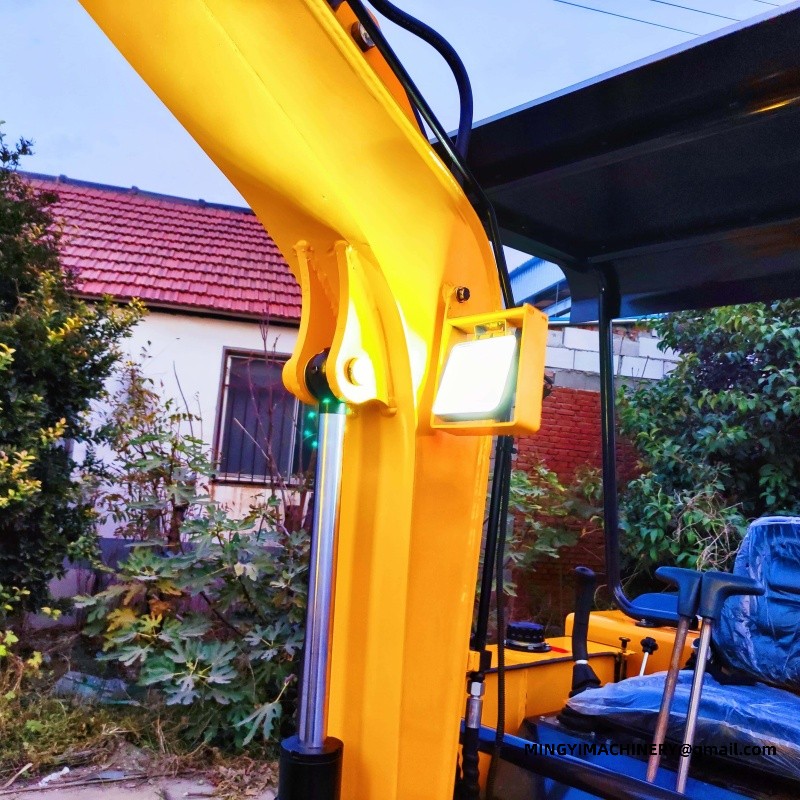
Reference specification — mini excavator range 20-1W 20-3W 30-2W 09L Operating weight 1800 kg (3968.32 lb) 1900 kg (4188.78 lb) 2700 kg (5952.48 lb) 1100 kg (2425.08 lb) Transport size (L×W×H) 2550 × 1100 × 2200 mm 2550 × 1100 × 2200 mm 3000 × 1100 × 2700 mm 2300 × 720 × 1870 mm Max digging depth 1800 mm (70.87 in) 1800 mm (70.87 in) 2200 mm (86.61 in) 1400 mm (55.12 in) Max digging height 2820 mm (111.02 in) 2820 mm (111.02 in) 3000 mm (118.11 in) 2800 mm (110.24 in) Max dumping height 2050 mm (80.71 in) 2050 mm (80.71 in) 2000 mm (78.74 in) 1880 mm (74.02 in) Max digging radius 3050 mm (120.08 in) 3050 mm (120.08 in) 3800 mm (149.61 in) 2490 mm (98.03 in) Max digging distance 2300 mm (90.55 in) 2300 mm (90.55 in) 3050 mm (120.08 in) 2000 mm (78.74 in) Minimum turning radius 1450 mm (57.09 in) 1450 mm (57.09 in) 1750 mm (68.9 in) 1400 mm (55.12 in) Travel speed 5 km/h (3.11 mph) 5 km/h (3.11 mph) 7 km/h (4.35 mph) 3 km/h (1.86 mph) Gradeability 30° 30° 30° 30° Fuel consumption 2-3 L/h (0.528—0.793 gal) 2-3 L/h (0.528—0.793 gal) 2-3 L/h (0.528—0.793 gal) 1-1.3 L/h (0.264—0.343 gal) Fuel tank capacity 16 L (4.23 gal) 16 L (4.23 gal) 16 L (4.23 gal) 8 L (2.11 gal) Hydraulic oil tank 18 L (4.76 gal) 18 L (4.76 gal) 20 L (5.28 gal) 16 L (4.23 gal) Dozer blade lift height 180 mm (7.09 in) 180 mm (7.09 in) 230 mm (9.06 in) 180 mm (7.09 in) Dozer blade drop depth 210 mm (8.27 in) 210 mm (8.27 in) 280 mm (11.02 in) 210 mm (8.27 in)
Q. What are the equipment in service?
A. The boom decides where the bucket works while the carrier stays put - across a wall, along a trench line, or over a row of crop. Extended and detachable reach turns one compact carrier into a long-reach machine for ponds, foundations and finish grading. Read the excavator together with the engine, track and attachment pages: jobs around roadside ditches are decided by how those choices line up, not by any single number on the sheet.
Q. Which boom suits working along walls and kerbs?
A. An offset or swing boom keeps the carrier square to the trench while the stick tracks the line - no repositioning, no leaning the machine at the structure. For straight runs beside fences and foundations it is the difference between a clean day and a slow one.
Q. What about colours and branding?
A. OEM colours and decals are part of the build: private-label machines carry the buyer brand on the standard MINGYI platform, and the roadside ditches order confirms colours, marks and documents before production starts.
Cold weather and winter care for this class of machine
Cold exposes weak batteries, thick oil and water in the fuel. Preparing the unit in daily use for winter means the right grade of oil, a battery in good condition and fuel that will not wax in the tank overnight.
A second operator for a machine of this size
Shared machines need shared habits. Two operators on the equipment on site should do the same daily checks in the same order, because the check that one person skips is the check that eventually matters.
E-mail : sales@mingycn.com
LINE ( ID ): mingyicn
Heat and hydraulic temperature in swing boom digger for roadside ditches
Continuous high-flow work in high ambient temperature is where a duty cycle helps, because a short pause every hour cools the system more than a long stop at midday.
Oil analysis is more useful than a calendar, because it shows what is actually in the system rather than what should be.
A temperature gauge that reads differently from week to week is itself a fault, and it is worth checking before the season turns.
Fire prevention and emergency steps for swing boom digger for roadside ditches
Refuelling is done with the engine stopped, the nozzle earthed and a spill kit within reach.
Related pages
mini excavator for demolition on site · mini excavator for retaining walls · Compact Wheel Loader: Access, Track Width and Small-Frame Builds · Mini Excavators









