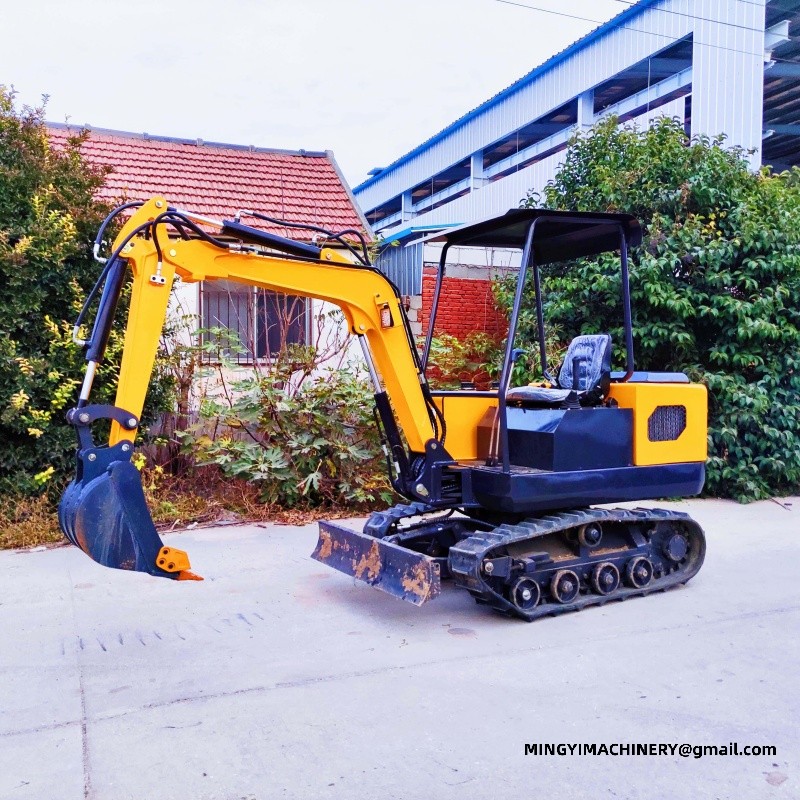
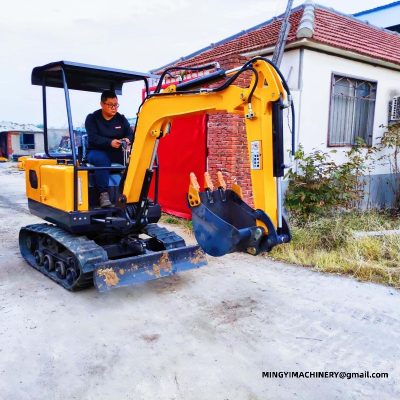
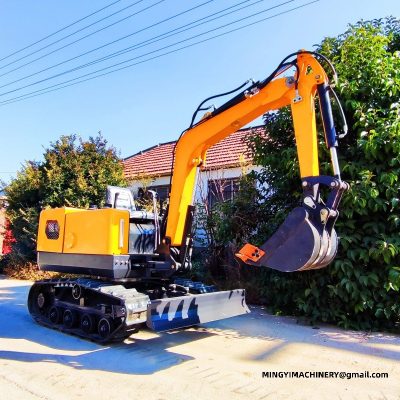
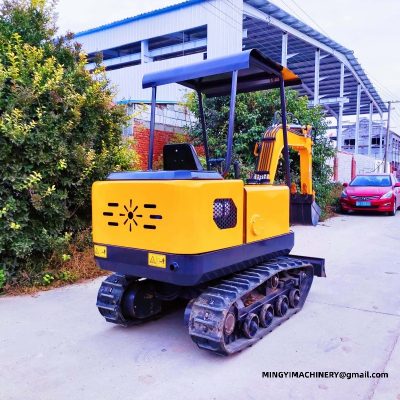
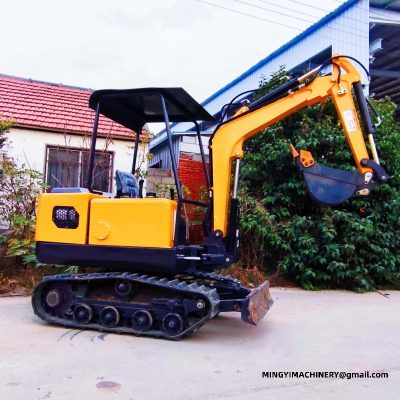
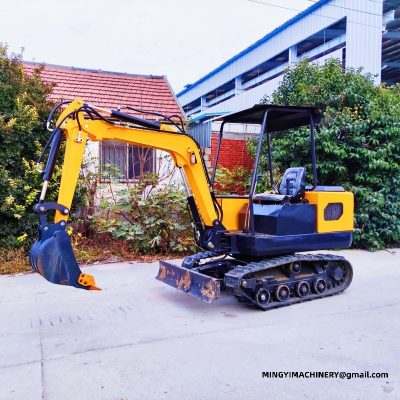
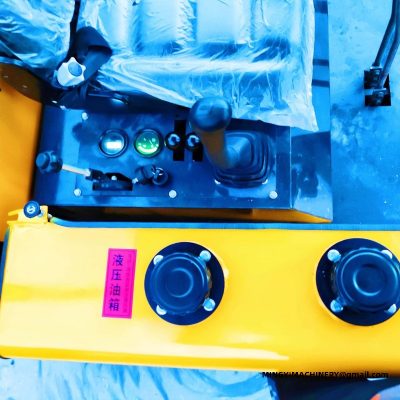
Building a retaining wall begins below ground. The footing trench has to be level and narrow, the terrace behind it has to be cut back to the right profile, and on a sloping garden there is rarely room to bring in a larger machine. A mini excavator digs the footing and trims the bank from a safe position.
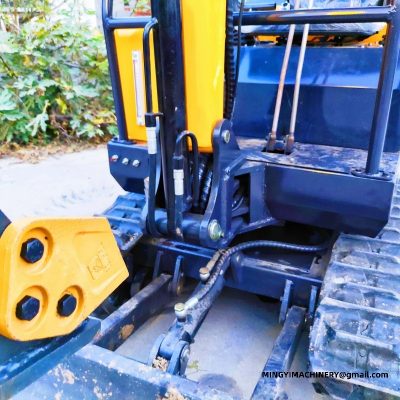
MINGYI compact excavators are often chosen for wall work because a swing boom cuts parallel to the wall line. The machine is built to order, so the dipper, bucket and coupler are set for the trench width and reach the site requires.
Digging footings and terraces for garden walls
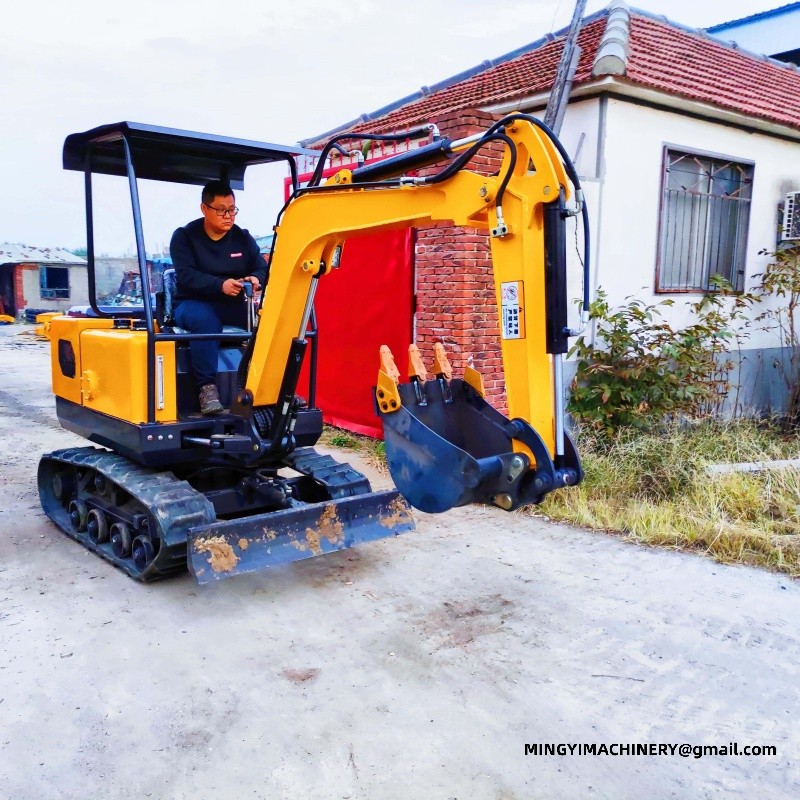
A footing trench is a narrow, straight cut, and it has to be dug to a consistent depth along its length. A compact digging bucket with a sharp edge gives a cleaner trench wall than a wide bucket, which saves concrete and keeps the block line true.
Behind the wall the ground is usually cut back in steps to create a terrace. Working the bank down in shallow passes lets the operator follow the intended profile rather than cutting too deep and rebuilding the slope afterwards.
Spoil handling and access on sloping ground
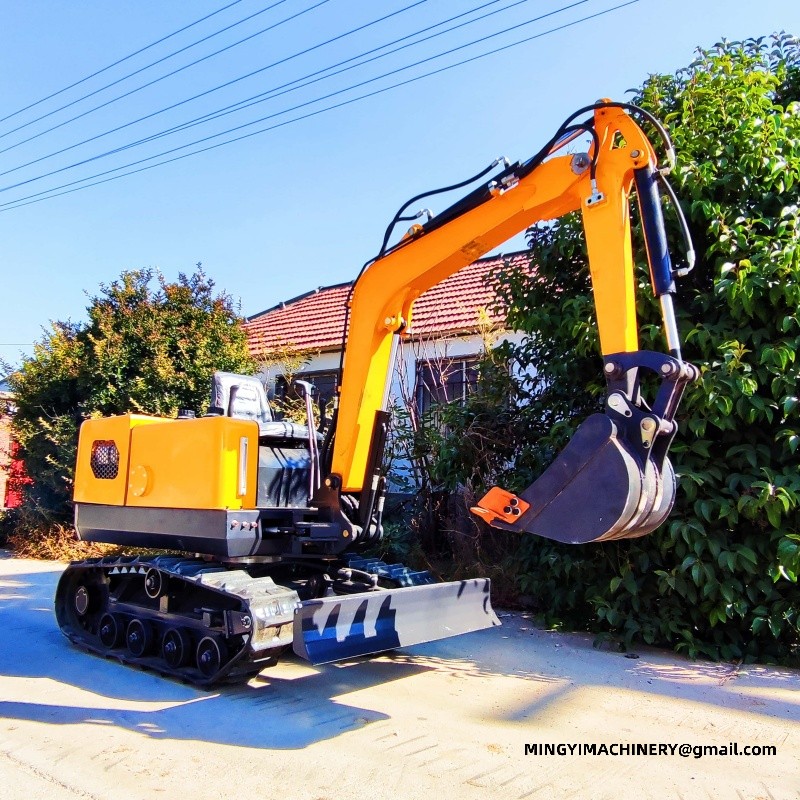
Sloped gardens limit where a machine can stand. On firm ground a short tail swing machine can be set parallel to the wall and still swing without striking the bank, and rubber tracks hold better than steel on a damp lawn.
Spoil is usually placed straight into a trailer or onto the lower terrace rather than stockpiled against the wall line. Buyers should confirm reach, tail swing and bucket width before ordering so the excavator works the whole wall from one or two positions.
Retaining wall work is decided by the quality of the trench and the shape of the cut bank. MINGYI supplies compact excavators built to order for wall and terrace projects.
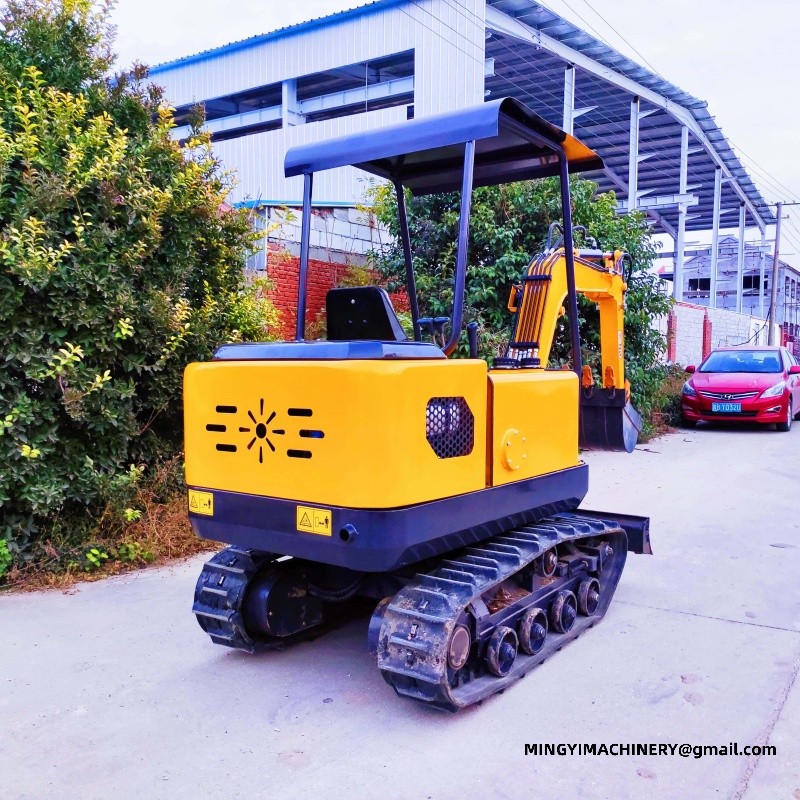
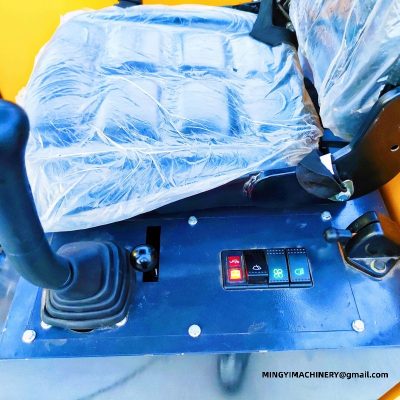
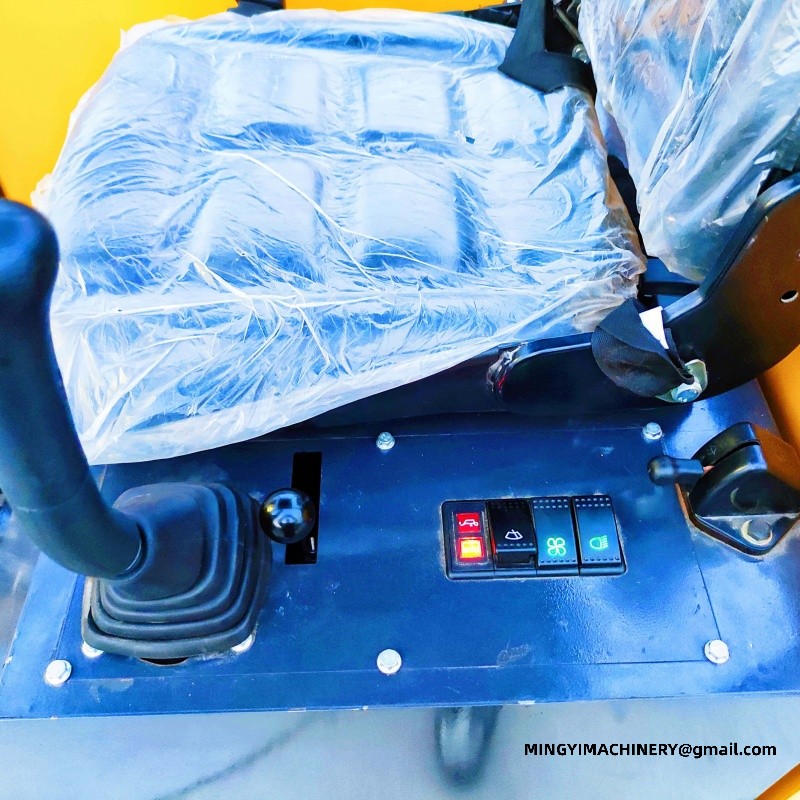
Working on slopes and uneven ground with mini excavator for retaining walls Slope work is a stability question before it is a traction question. Knowing the gradient the excavator is rated for, and working across rather than straight up where the ground allows, removes most of the risk. Ground that looks level often is not. This class of machine crossing a filled trench, a soft edge or a hidden void behaves differently from one on undisturbed ground, and those are the places worth walking before driving. Parts, service and support for mini excavator for retaining walls Support after delivery is a parts question. Wearing items for the unit in daily use - filters, belts, track components, bucket teeth and pins - are the items a buyer should plan to hold before the first service interval. Remote support is handled by video. A machine of this size fault can often be diagnosed on a walk-around call with the panel open, which is faster than waiting for a visit and avoids shipping a part that is not needed. Attachments that turn mini excavator for retaining walls into several machines The base machine is a carrier; the tool on the end of the arm decides the task. The equipment on site fitted with a toothed bucket digs, and the same machine with a breaker, an auger or a grab does work that would otherwise need a second unit on site. Attachment lists are best written before delivery. Specifying the machine itself with the tools the job list needs avoids the work and delay of adding hydraulics later, and a quick coupler makes the swap a few minutes instead of a workshop job. Road and paving work for mini excavator for retaining walls Road repair generates short, interrupted jobs - a patch, a drainage connection, a kerb line. The model in question is economical here because it travels on a small trailer and starts working minutes after arriving. Breaking out a failed slab and backfilling the same hole in one visit is normal work for the machine in that duty. The breaker and the bucket come off the same coupler, so the road is reopened the same day. Trailering and moving mini excavator for retaining walls Loading practice matters as much as the numbers. The unit on the job is driven up ramps under its own power with the boom lowered and the tracks aligned, and secured at the points the manufacturer specifies. Detachable components reduce transport length. A machine built for the work built with a removable arm section or a folding step fits a shorter trailer and may avoid an oversize movement permit. Canopy or enclosed cab on a mini excavator for retaining walls A canopy keeps the machine light and the operator aware of the surroundings, which suits short jobs in warm weather. A fully enclosed cab is specified where rain, dust or cold are part of the working year, and it can be added to the equipment in service as a retrofit rather than only at build time. The cab decision follows the climate and the hours. Operators working a full shift in the excavator benefit from a sealed cab with wipers and heating; operators stepping on and off every few minutes usually prefer the canopy for the visibility and the quick exit. Hiring versus owning this class of machine Availability is part of the decision. Owning the unit in daily use means it is there on the day the ground is ready; hiring means competing for the same machine at the same time as everyone else in the season. Ownership brings obligations that hiring does not. Storage, servicing, insurance and an operator are the items to set against the hire rate before deciding which way a machine of this size should be supplied. Noise, dust and working near occupied buildings Work near housing or occupied premises brings constraints that open sites do not. Start times, exhaust condition and how often the equipment on site needs to reverse are the practical limits that neighbours notice. Enclosure and machine condition both reduce noise. The machine itself with intact panels, sound mounts and a maintained exhaust is measurably quieter than the same machine with loose guards, and the difference matters on restricted sites. Acceptance checks when the model in question arrives Delivery day is the best time to find a problem. Checking the specification against the order, the fluid levels, the fasteners and any transport damage while the unit on the job is still on the trailer is faster than claiming later. Documentation should arrive with the machine. Parts list, service schedule and any certificates for the machine in that duty are what the workshop needs later, and they are much easier to obtain at delivery than in month six. Getting a machine built for the work through a narrow gap The first question on most job lists is whether the machine can reach the work at all. The equipment in service is chosen against the narrowest point on the route - a garden gate, a doorway, a gap between two walls - because a machine that arrives and then cannot pass loses a day, not an hour. Access decides the machine before output does. With the excavator the limiting dimension is usually the widest point on the way in, so measuring the gate, the corridor and the turning space first saves a wasted delivery and a second visit. Track choice for this class of machine Undercarriage selection is a ground question, not a preference question. The unit in daily use running on finished paving needs rubber; the same machine on demolition rubble or rock wears rubber quickly, so steel with rubber blocks becomes the better answer over a full season. Track type changes what the machine can cross and what it leaves behind. Buyers specify rubber for lawns, driveways and municipal work, and steel with rubber blocks for sites where sharp material would cut a rubber belt in a week. Specification data for a machine of this size The figures below are the factory figures for the models most often matched to the equipment on site. They are the numbers to check against the site: the depth the work needs, the reach from one position, and the width of the narrowest point on the route in. Figures are factory figures and are confirmed on the build sheet for the machine itself. Where a job sits between two models, the larger machine usually takes less time than the smaller one spends on rework. The risk on utility work is not machine power but machine placement. The model in question that fits the working width leaves the surrounding ground undisturbed, which keeps the trench stable and the reinstatement small. Utility crews specify the machine in that duty with a narrow bucket and good visibility for exactly this reason: the machine has to stop at the service, not at the edge of the operator's view.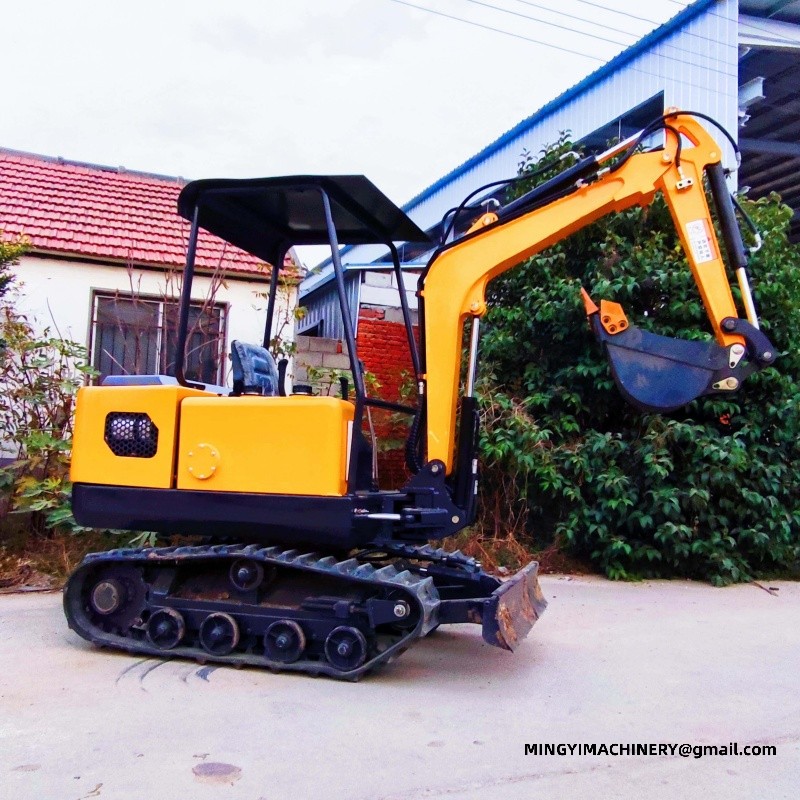
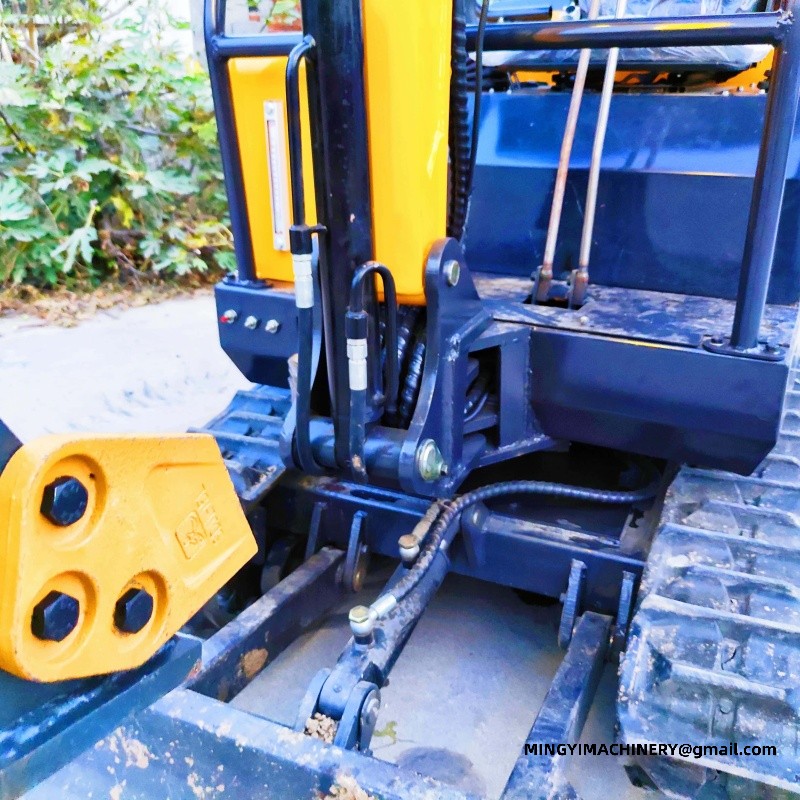
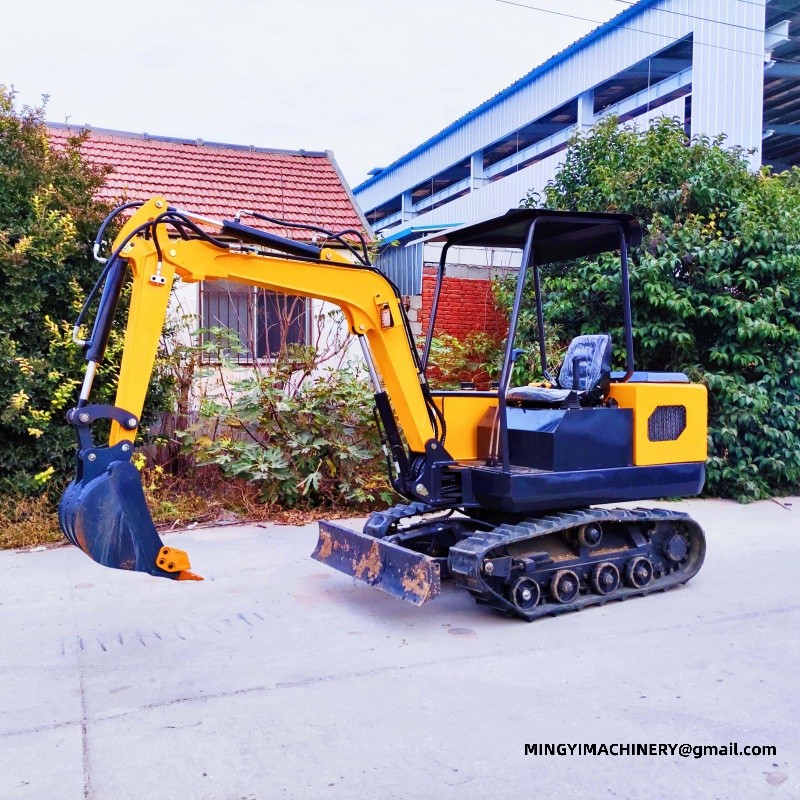
Reference specification — mini excavator range 13W 30-2W 09L 30-2L Operating weight 1300 kg (2866.01 lb) 2700 kg (5952.48 lb) 1100 kg (2425.08 lb) 2400 kg (5291 lb) Transport size (L×W×H) 2200 × 930 × 2250 mm 3000 × 1100 × 2700 mm 2300 × 720 × 1870 mm 2800 × 1500 × 2500 mm Max digging depth 1630 mm (64.17 in) 2200 mm (86.61 in) 1400 mm (55.12 in) 2200 mm (86.61 in) Max digging height 2750 mm (108.27 in) 3000 mm (118.11 in) 2800 mm (110.24 in) 2900 mm (114.17 in) Max dumping height 1960 mm (77.17 in) 2000 mm (78.74 in) 1880 mm (74.02 in) 2100 mm (82.68 in) Max digging radius 2900 mm (114.17 in) 3800 mm (149.61 in) 2490 mm (98.03 in) 3330 mm (131.1 in) Max digging distance 2100 mm (82.68 in) 3050 mm (120.08 in) 2000 mm (78.74 in) 2700 mm (106.3 in) Minimum turning radius 1300 mm (51.18 in) 1750 mm (68.9 in) 1400 mm (55.12 in) 1555 mm (61.22 in) Travel speed 3 km/h (1.86 mph) 7 km/h (4.35 mph) 3 km/h (1.86 mph) 7 km/h (4.35 mph) Gradeability 30° 30° 30° 30° Fuel consumption 1-1.3 L/h (0.264—0.343 gal) 2-3 L/h (0.528—0.793 gal) 1-1.3 L/h (0.264—0.343 gal) 2-3 L/h (0.528—0.793 gal) Fuel tank capacity 10 L (2.64 gal) 16 L (4.23 gal) 8 L (2.11 gal) 16 L (4.23 gal) Hydraulic oil tank 16 L (4.23 gal) 20 L (5.28 gal) 16 L (4.23 gal) 18 L (4.76 gal) Dozer blade lift height 180 mm (7.09 in) 230 mm (9.06 in) 180 mm (7.09 in) 230 mm (9.06 in) Dozer blade drop depth 210 mm (8.27 in) 280 mm (11.02 in) 210 mm (8.27 in) 280 mm (11.02 in)
Q. Who uses the unit on the job?
A. Roadside and municipal jobs are small in size and large in number: kerbs, gutters, retaining walls, reinstatement after utility work. The quick coupler and a planned trailer keep the crew self-sufficient, with no traffic management beyond cones. A machine built for the work is one of the pages buyers land on when comparing machines for retaining walls, and the factory treats it as a specification conversation rather than a catalogue line.
Q. How does one machine cover a day of small municipal works?
A. By swapping attachments at the kerbside: bucket to dig, grab to place kerbs, compaction wheel to reinstate. The coupler and a planned trailer keep the crew self-sufficient all shift.
Q. Which models does MINGYI build?
A. The 08, 12 and 18 models cover the 0.8 to 6 tonne class with engine, track, cab and attachment options across the range - dealer programmes can mix models in one shipment, and each retaining walls machine is confirmed on its own build sheet.
Keeping a service record for the equipment in service
Service history also protects the warranty position. Evidence that the excavator was maintained at the specified intervals and with the specified fluids settles questions that would otherwise be argued.
Documents that travel with this class of machine
The machine is only half of what arrives. The parts book, the service schedule and the declarations that come with the unit in daily use are what let the owner register, insure and maintain it without a second round of emails.
E-mail : sales@mingycn.com
LINE ( ID ): mingyicn
Related pages
mini excavator for vineyard rows · mini excavator for garden bed preparation · Wheel Loader for Sale: How to Read a Specification Before You Sign · Mini Excavators









