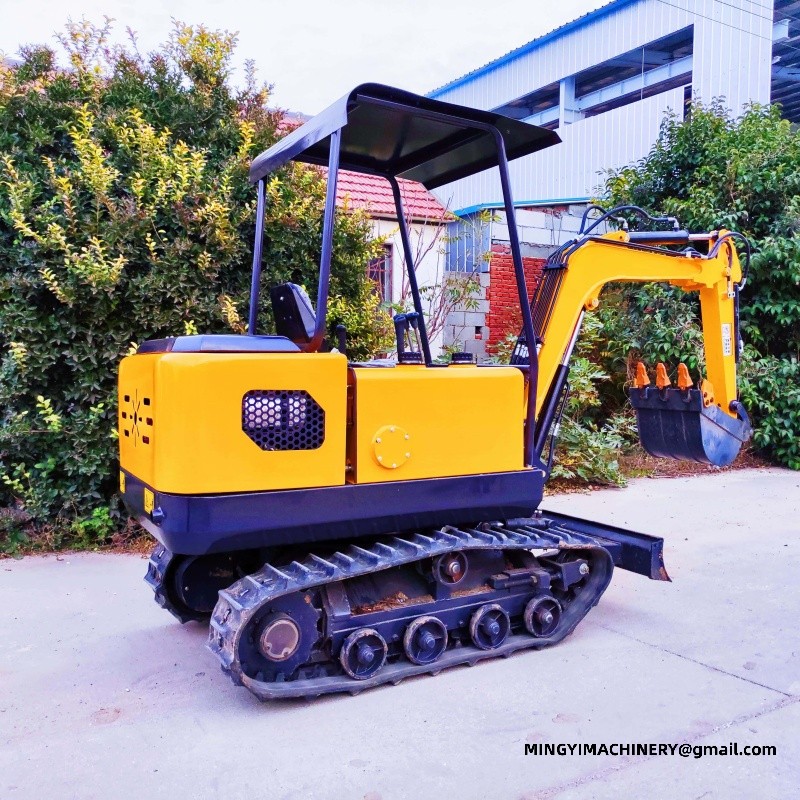
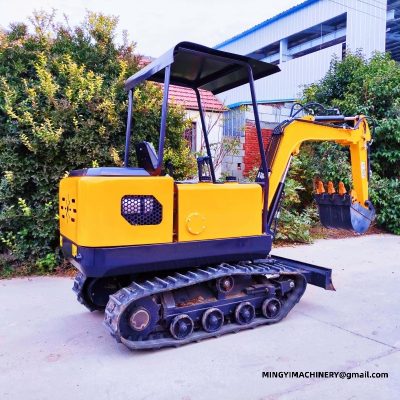
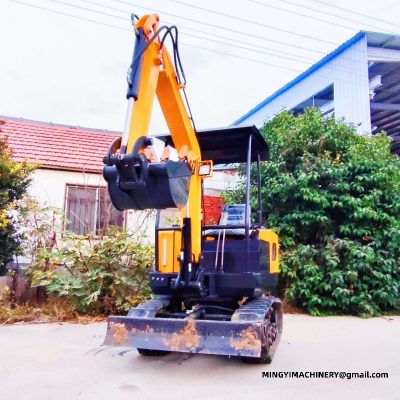
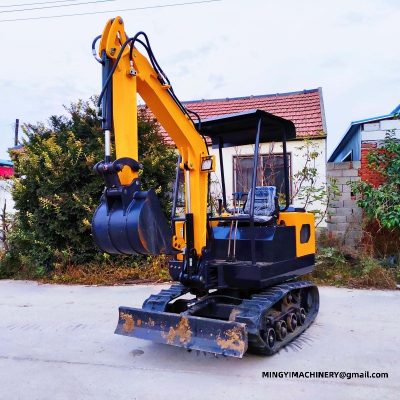
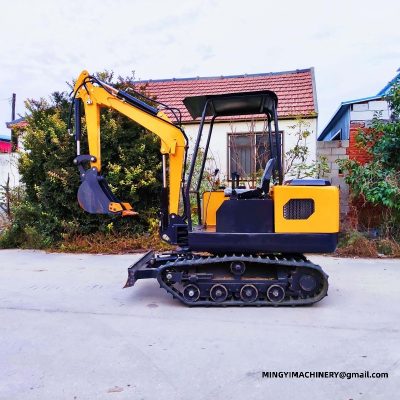
Bed preparation is less about deep digging and more about controlled soil handling: lifting old turf, removing stones and rubble, blending compost into native soil and leaving a surface that plants straight into. A mini excavator set up for this work turns a slow manual rebuild into a short machine cycle.
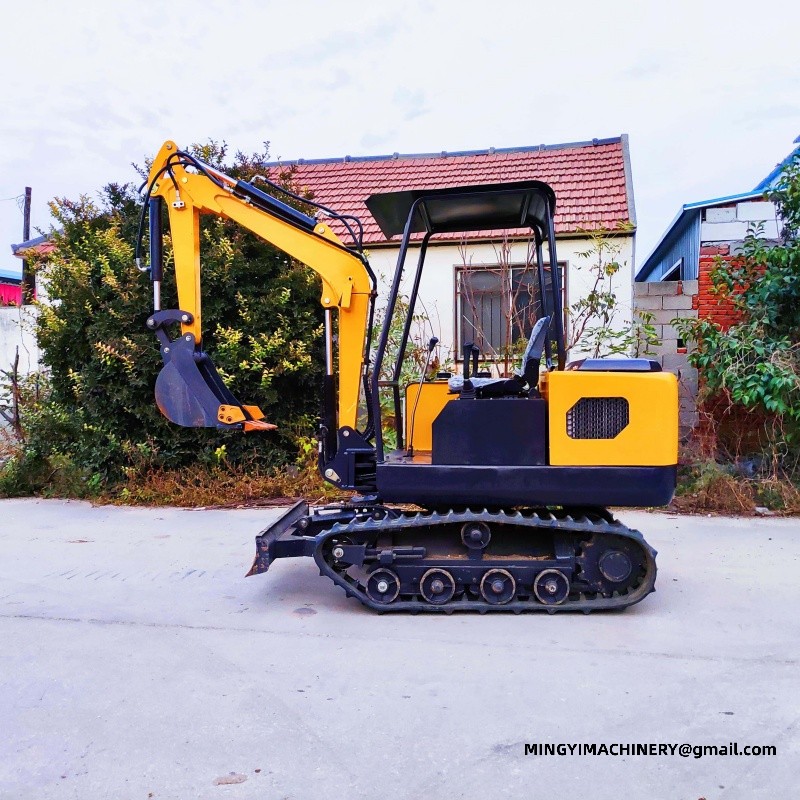
Contractors preparing new beds and building raised growing areas often find the small classes from 1 to 3.5 tonnes the most practical, carrying enough bucket force for compacted ground while staying light enough to work beside plants that stay.
Preparing beds with controlled soil handling
A typical sequence strips the worn turf, lifts stones and rubble, then mixes imported topsoil and organic matter into the strip. A skeleton bucket proves useful here, sieving soil as it is lifted so roots, clumps and debris stay behind while clean material passes.
For raised beds the machine places and shapes imported soil, then trims the edges square with a tilting bucket. Beds that would take a small team days of spade work are left finished within a single visit.
Machine setup for bed preparation work
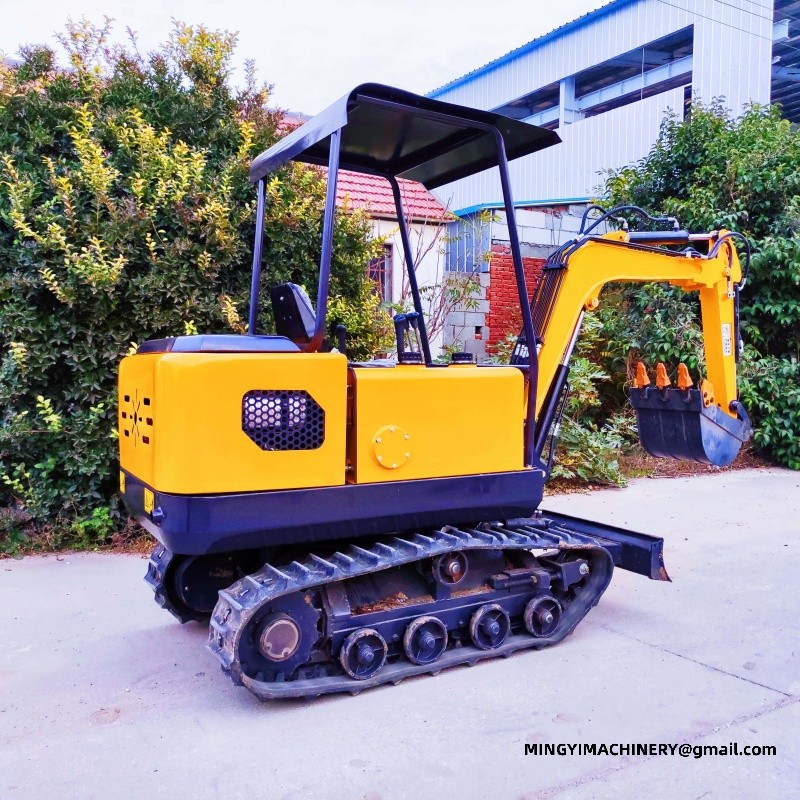
Rubber tracks are the usual choice on established plots, spreading the load and protecting paths and adjoining lawn. A swing boom grades the far edge of a finished bed without tracking over freshly placed soil.
Because beds are dug shallow, buyers often trade size for access and pick a narrow machine that fits side gates. At the ordering stage, list every bucket width you expect to use, along with a rake and auger, so the coupler suits the full set.
Good bed preparation shows in the planting that follows. Telling MINGYI how your beds are built, what soil you start with and which tools the job demands results in a machine specified for soil work.
Parts, service and support for mini excavator for garden bed preparation Support after delivery is a parts question. Wearing items for the excavator - filters, belts, track components, bucket teeth and pins - are the items a buyer should plan to hold before the first service interval. Engine parts availability usually drives the engine choice. This class of machine built with an engine the local network already carries is serviced from stock rather than from an international order. Matching mini excavator for garden bed preparation to ground conditions Soft ground is a flotation problem, not a power problem. The unit in daily use on wide rubber tracks crosses lawn, sand and cultivated soil that would stop a narrower machine or a wheeled unit of the same capacity. Hard and abrasive ground reverses the specification. On rock, demolition rubble or sharp gravel, steel tracks with rubber blocks on a machine of this size survive conditions that cut a rubber belt quickly. Working near live services with mini excavator for garden bed preparation Digging near water, gas and cable is a precision job. The equipment on site is used here because the operator can work in short controlled cuts and because the machine can be positioned without driving over the run being exposed. The risk on utility work is not machine power but machine placement. The machine itself that fits the working width leaves the surrounding ground undisturbed, which keeps the trench stable and the reinstatement small. Hydraulic circuits on a mini excavator for garden bed preparation Auxiliary hydraulic lines are what let a machine drive a tool rather than only a bucket. The model in question specified with the right circuits and flow runs a breaker or an auger without an add-on power pack bolted to the frame. Hydraulic specification is easier to settle at build time than to correct later. The machine in that duty delivered without auxiliary lines can still dig, but every additional tool becomes a retrofit project. Quick coupler practice on mini excavator for garden bed preparation A quick coupler is the single option that changes how a machine is used day to day. Fitted to the unit on the job, it turns an attachment change from a two-person workshop job into a task the operator does alone in minutes. Couplers are specified early because they affect the arm and the hydraulic kit. Adding one to a machine built for the work after delivery means new pins, new hoses and a fitment session; adding it at build time is a line on the sheet. Acceptance checks when a mini excavator for garden bed preparation arrives Delivery day is the best time to find a problem. Checking the specification against the order, the fluid levels, the fasteners and any transport damage while the excavator is still on the trailer is faster than claiming later. A function check before the machine goes to work is worth the hour. Running through the controls, the travel and the attachment circuit on the equipment in service confirms it is set up as specified and ready for the site. Working this class of machine in confined spaces Confined sites are decided by dimensions. Overall width, tail swing and the space needed to work the arm are what let the unit in daily use operate inside a building, between walls or in a courtyard. Ventilation is the other indoor constraint. Running a machine of this size inside a closed structure needs air movement, and that is a planning item rather than something to discover after the first hour. Landscaping and ground care with the equipment on site Landscape contractors use the machine itself for planting holes, pond excavation, grading and retaining work. The machine is light enough to cross finished lawn and narrow enough to work between established trees. Grass cutting heads, rakes and tillers extend the model in question into ground care. The same carrier that digs a border in spring can cut and clear the same area later in the season. Boom configuration for the machine in that duty A swing boom lets the machine dig parallel to its tracks without repositioning, which is what makes trenching beside a wall or a fence practical. On the unit on the job this is often the option that decides whether a job is possible at all. Extended and offset boom configurations change reach and working range. A machine built for the work with a longer arm reaches further but lifts less at full extension, so the specification is set against the deepest and furthest point on the job list. Municipal and public works with the equipment in service Drainage repair, tree planting, footway reconstruction and cemetery work are all within the range of the excavator. The jobs are small individually and continuous across the year. Noise and surface protection matter on public work. This class of machine on rubber tracks across paving, with a sealed cab for the operator, suits the conditions better than a larger tracked machine. Running the unit in daily use in a rental fleet The specification that rents best is usually the simplest one to explain at the counter. A machine of this size with rubber tracks, a canopy and a coupler covers the majority of weekend and short-term hires. Fleet buyers also weigh transport. The equipment on site that a customer can tow on a normal licence and a standard trailer is a hire that does not need a delivery truck, which changes how often it goes out. Working on slopes and uneven ground with the machine itself Ground that looks level often is not. The model in question crossing a filled trench, a soft edge or a hidden void behaves differently from one on undisturbed ground, and those are the places worth walking before driving. Planning the direction of travel helps. Working so that the machine in that duty is stable under load and not required to turn on a slope is a decision made before the job starts, not a correction made during it. Specification data for the unit on the job Where a machine built for the work is being specified for a job list, the table below gives the factory figures that matter most: what the machine weighs, how deep and how far it works, and what it measures on a trailer. Figures are factory figures and are confirmed on the build sheet for the equipment in service. Where a job sits between two models, the larger machine usually takes less time than the smaller one spends on rework. The first question on most job lists is whether the machine can reach the work at all. The excavator is chosen against the narrowest point on the route - a garden gate, a doorway, a gap between two walls - because a machine that arrives and then cannot pass loses a day, not an hour. Contractors who buy this class of machine normally have one job in mind that nothing else reaches. The purchase order follows the access measurement, not the other way round, and the build sheet is then settled around it.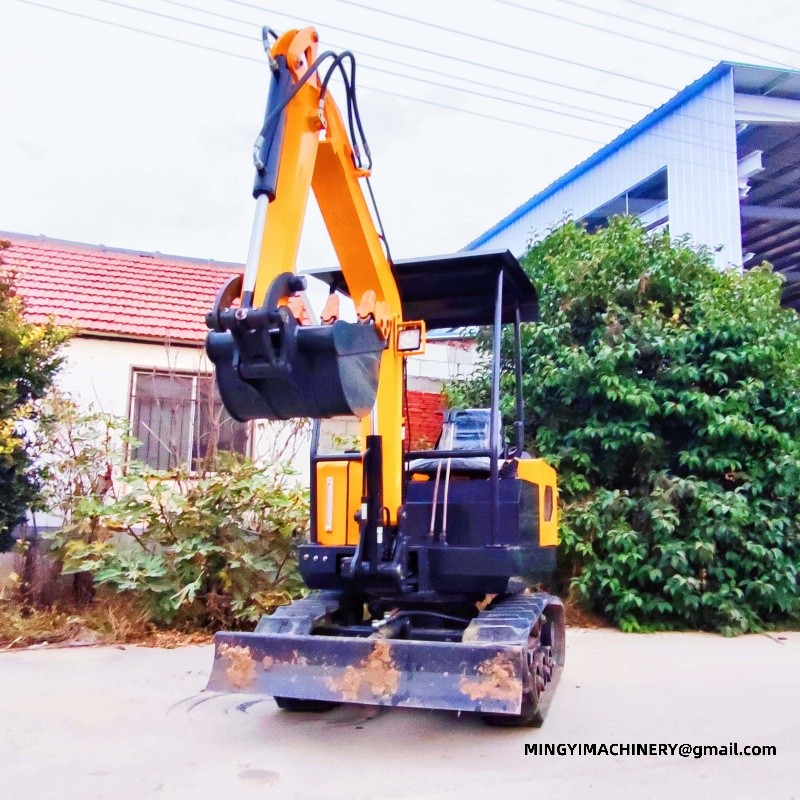
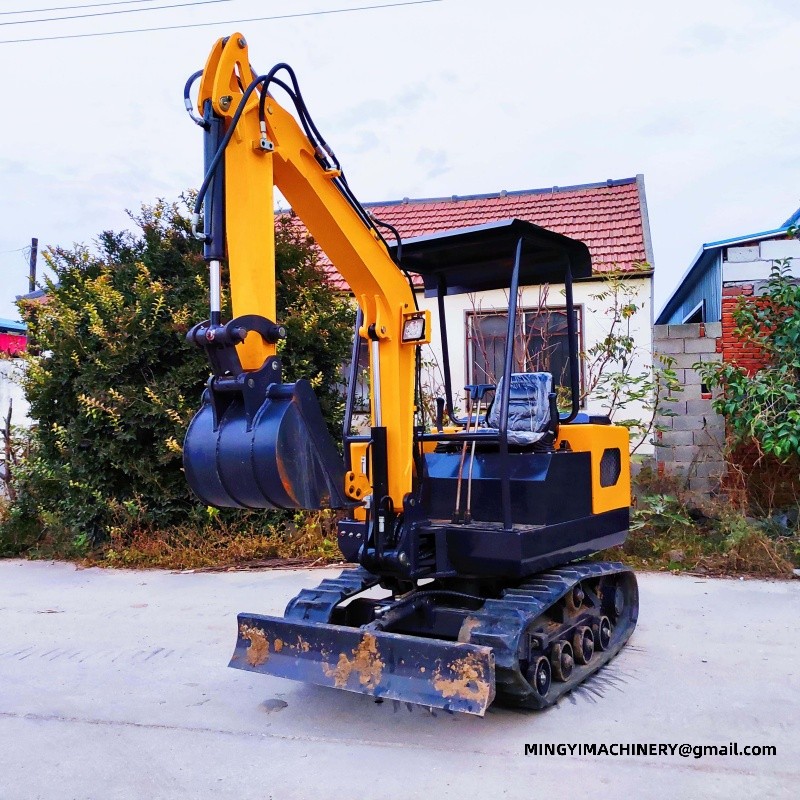
Reference specification — mini excavator range 30-1W 12L 15L 25L Operating weight 2900 kg (6393.41 lb) 1200 kg (2645.55 lb) 1400 kg (3086.47 lb) 2200 kg (4850.17 lb) Transport size (L×W×H) 3000 × 1250 × 2780 mm 2200 × 930 × 2250 mm 2200 × 930 × 2250 mm 3000 × 1300 × 2700 mm Max digging depth 2200 mm (86.61 in) 1700 mm (66.93 in) 1700 mm (66.93 in) 2300 mm (90.55 in) Max digging height 3400 mm (133.86 in) 2600 mm (102.36 in) 2750 mm (108.27 in) 3100 mm (122.05 in) Max dumping height 2400 mm (94.49 in) 1800 mm (70.87 in) 1960 mm (77.17 in) 2050 mm (80.71 in) Max digging radius 4000 mm (157.48 in) 2900 mm (114.17 in) 2900 mm (114.17 in) 3900 mm (153.54 in) Max digging distance 2800 mm (110.24 in) 2300 mm (90.55 in) 2300 mm (90.55 in) 3100 mm (125.05 in) Minimum turning radius 2000 mm (78.74 in) 1450 mm (57.09 in) 1450 mm (57.09 in) 1800 mm (70.87 in) Travel speed 5 km/h (3.11 mph) 3 km/h (1.86 mph) 3 km/h (1.86 mph) 7 km/h (4.35 mph) Gradeability 30° 30° 30° 30° Fuel consumption 2-3 L/h (0.528—0.793 gal) 1-1.3 L/h (0.264—0.343 gal) 1-1.3 L/h (0.264—0.343 gal) 2-3 L/h (0.528—0.793 gal) Fuel tank capacity 16 L (4.23 gal) 10 L (2.64 gal) 10 L (2.64 gal) 16 L (4.23 gal) Hydraulic oil tank 20 L (5.28 gal) 16 L (4.23 gal) 16 L (4.23 gal) 18 L (4.76 gal) Dozer blade lift height 420 mm (16.54 in) 180 mm (7.09 in) 180 mm (7.09 in) 230 mm (9.06 in) Dozer blade drop depth 210 mm (8.27 in) 210 mm (8.27 in) 210 mm (8.27 in) 280 mm (11.02 in)
Q. What is the unit in daily use?
A. The landscape digger balances output with care: track choice, bucket control and a light footprint matter as much as digging speed. Plan the dig so the machine treads where the hard surface will be, and lay boards where the ground is soft. A machine of this size is one of the pages buyers land on when comparing machines for garden bed preparation, and the factory treats it as a specification conversation rather than a catalogue line.
Q. What does a landscape crew actually dig in a week?
A. Bed preparation, path base, drainage, planting holes and the odd tree - varied, light, and judged by the finish. That mix is exactly what the compact class is built around.
Q. Does MINGYI supply attachments with the machine?
A. Yes - buckets, breakers, augers, rakes and the rest of the working set ship with the carrier, matched to the hydraulic flow and the coupler. For garden bed preparation the package is confirmed on the build sheet, so machine and tools arrive together and start work together.
Handover and getting familiar with the equipment on site
Operators who come from a different machine need a short conversion. The controls on the machine itself follow the usual pattern, but the response, the sightlines and the stopping distance are learned by doing rather than by reading.
Documents that travel with the model in question
Documentation should match the machine that was actually built. The sheet supplied with the machine in that duty records the configuration as delivered, because the generic catalogue description is not what the customer needs when ordering a part.
E-mail : sales@mingycn.com
LINE ( ID ): mingyicn
Related pages
mini excavator built to order · sourcing a mini excavator from china · Wheel Loader Supplier: Spares, Lead Times and Container Plans · Mini Excavators









