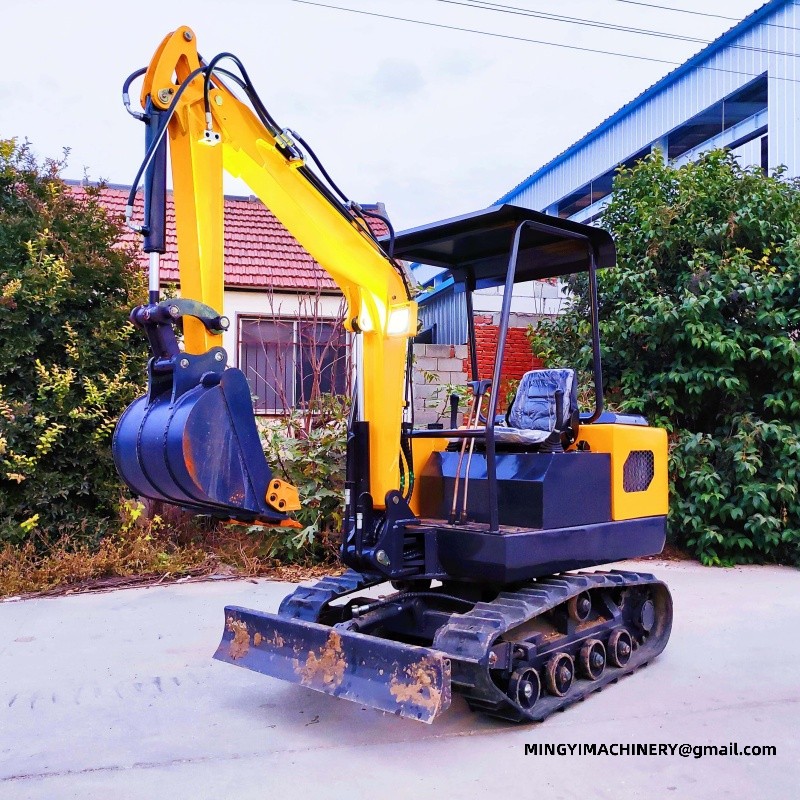
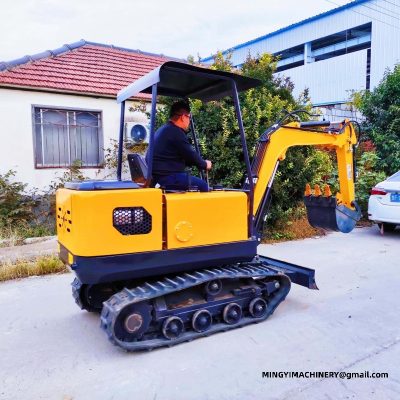
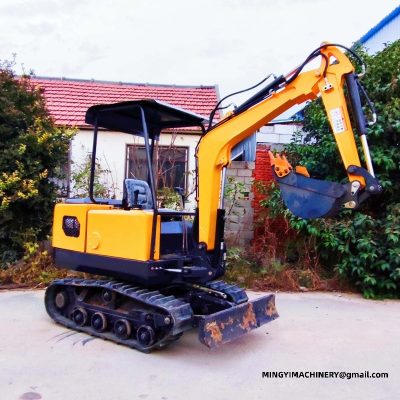
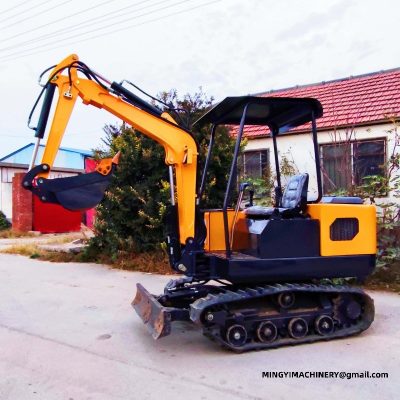
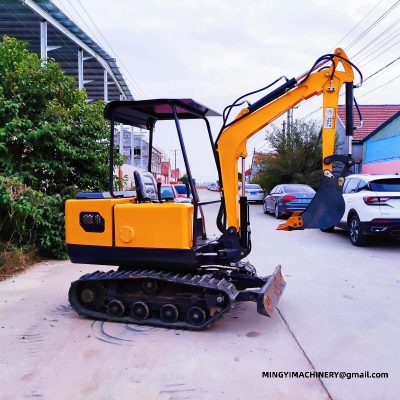
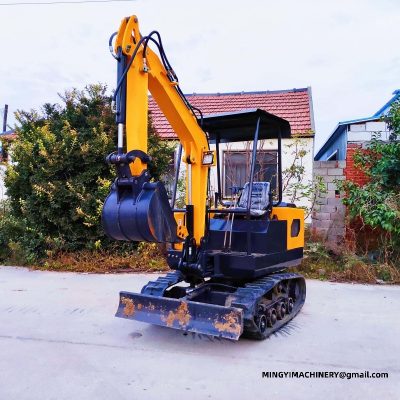
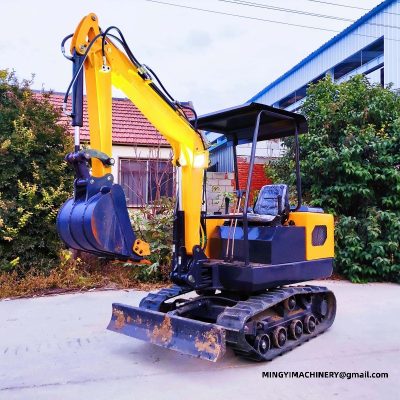
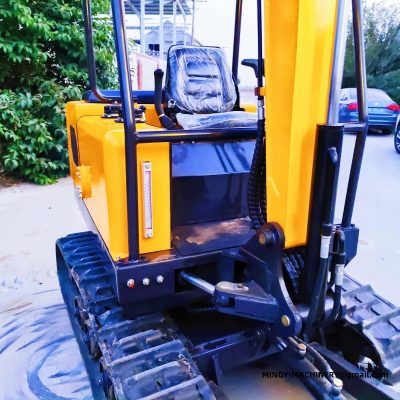
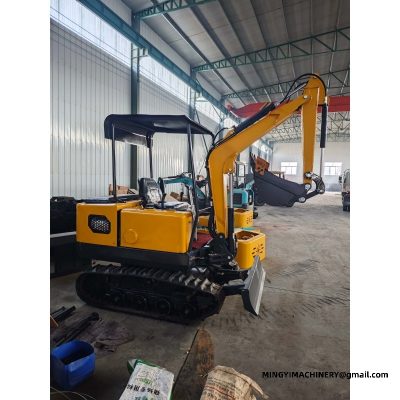
Orchard and vineyard work puts a compact excavator into a corridor of trees or vines, where the machine must pass along the rows without damaging trunks, trellis or drip lines. MINGYI builds mini excavators that are used in this kind of planted ground.
The tasks are seasonal and varied, from weeding and tilling between rows to digging out old roots and maintaining drainage, so the machine is judged on how well it fits the row as much as on its digging power.
Working along vineyard and orchard rows
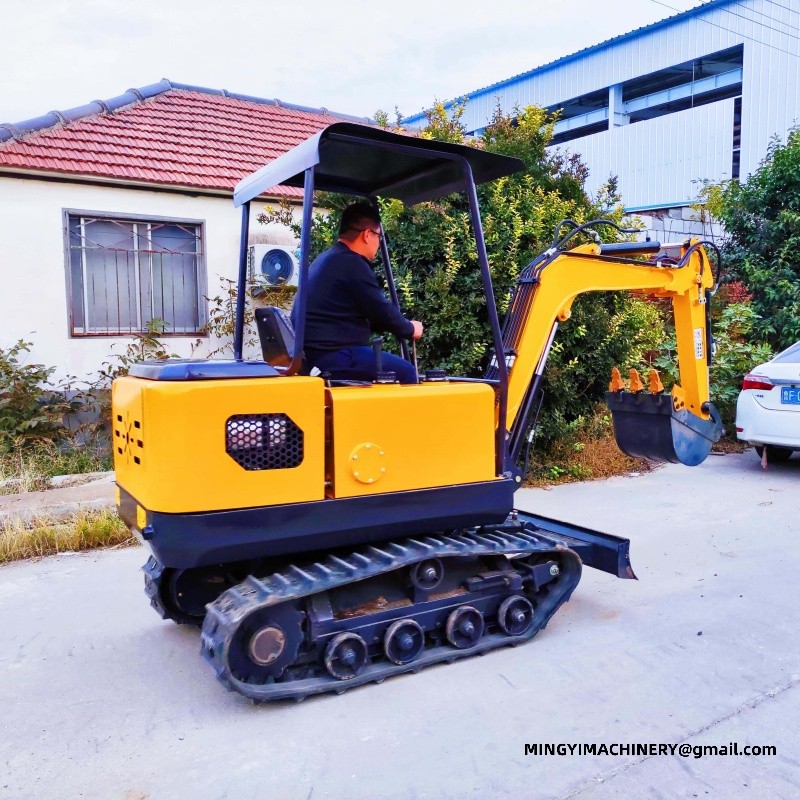
The row spacing sets the limit on machine width, and a narrow compact excavator can travel the length of a block without turning out of the row. Rubber tracks are the usual choice because they cross the orchard floor and root zone with less damage than steel.
For cultivation, a rotary tiller or soil loosener fitted to the excavator prepares the strip under the vines, while a grass rake or mower keeps the alley clear. The same carrier then handles the heavier seasonal jobs.
Orchard digging and clearance tasks
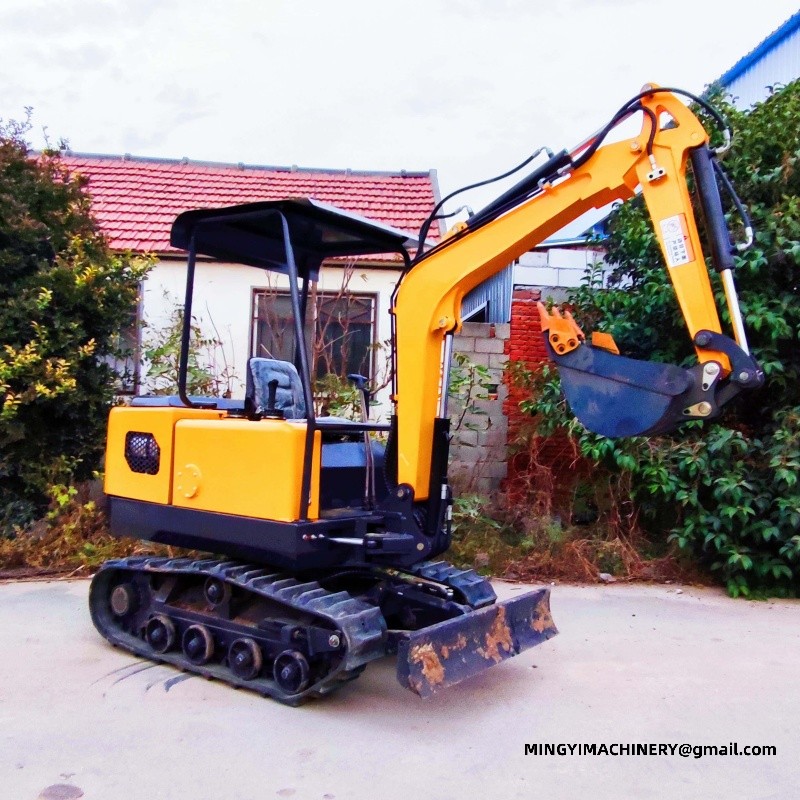
Root digging, replanting and stump removal are handled with a bucket or a root digger attachment, and a grabber helps move cut branches and prunings. Drainage and irrigation trenches along the rows are opened with the standard digging bucket.
Because the machine is compact, it can be moved along the rows and between blocks without a large transporter. The configuration is settled at the ordering stage so the attachments match the work in the block.
For orchard and vineyard use, the points worth confirming with MINGYI are the row width, the ground under the trees and the tillage or digging attachments required.
Hiring versus owning a mini excavator for vineyard rows The choice follows the hours. Work that fills a few weeks a year is usually better hired, while the excavator that would be on site most weeks starts to justify ownership once the transport and booking time is counted. Ownership brings obligations that hiring does not. Storage, servicing, insurance and an operator are the items to set against the hire rate before deciding which way this class of machine should be supplied. Trailering and moving mini excavator for vineyard rows Transport weight and width decide whether a machine needs a specialist haulier. The unit in daily use sized to travel on a standard plant trailer behind a suitable vehicle moves with the crew rather than on a scheduled low loader. Detachable components reduce transport length. A machine of this size built with a removable arm section or a folding step fits a shorter trailer and may avoid an oversize movement permit. Working near live services with mini excavator for vineyard rows Digging near water, gas and cable is a precision job. The equipment on site is used here because the operator can work in short controlled cuts and because the machine can be positioned without driving over the run being exposed. Utility crews specify the machine itself with a narrow bucket and good visibility for exactly this reason: the machine has to stop at the service, not at the edge of the operator's view. Road and paving work for mini excavator for vineyard rows Road repair generates short, interrupted jobs - a patch, a drainage connection, a kerb line. The model in question is economical here because it travels on a small trailer and starts working minutes after arriving. Patching and reinstatement favour a machine that can work in a lane closure. The machine in that duty occupies less road than a full-size excavator, which reduces the traffic management needed and the length of the closure. Specifying mini excavator for vineyard rows against a job list The practical way to specify is to write the job list first: the narrowest access, the deepest trench, the heaviest tool and the surfaces the machine must cross. The unit on the job is then matched to those four numbers. Useful information to send with an enquiry includes working width, required digging depth, ground conditions and the attachment set. Those four items let the factory specify a machine built for the work that fits rather than a generic build. Running mini excavator for vineyard rows in a rental fleet Rental fleets buy for utilisation, not for a single job. The equipment in service with a quick coupler and a common attachment standard is hired more often because it suits more of the calls that come in. The specification that rents best is usually the simplest one to explain at the counter. The excavator with rubber tracks, a canopy and a coupler covers the majority of weekend and short-term hires. Daily checks and maintenance on this class of machine Daily maintenance on the unit in daily use is a short list: engine oil level, coolant, track tension, hydraulic oil level and a look at the hoses. Ten minutes at the start of the shift prevents most of the failures that stop a machine. Greasing is the second item. The slew ring, the boom and arm pins and the bucket linkage on a machine of this size take grease daily in dusty work, and the intervals shorten further when the machine is used in water or mud. Lifting and material handling with the equipment on site Lifting with a machine built to dig needs a plan. The load, the radius and the ground under the model in question all matter, and the safe figure is the one on the chart rather than the one that looks possible. Stability changes with reach. A load the machine itself handles close in becomes a different proposition at full extension, so the working radius belongs in the plan before the lift rather than during it. Acceptance checks when the machine in that duty arrives A function check before the machine goes to work is worth the hour. Running through the controls, the travel and the attachment circuit on the unit on the job confirms it is set up as specified and ready for the site. Documentation should arrive with the machine. Parts list, service schedule and any certificates for a machine built for the work are what the workshop needs later, and they are much easier to obtain at delivery than in month six. Track choice for the equipment in service Rubber tracks suit paved and landscaped ground because they spread the machine weight and leave the surface intact. Steel tracks with rubber blocks are specified where the ground is rougher or the working day is longer, and the choice can be made per machine rather than accepted as a factory default. Undercarriage selection is a ground question, not a preference question. The excavator running on finished paving needs rubber; the same machine on demolition rubble or rock wears rubber quickly, so steel with rubber blocks becomes the better answer over a full season. Interior and light demolition with this class of machine Breaking out a floor slab, a wall footing or a concrete step is routine work for the unit in daily use with a breaker. The machine is small enough to work inside and heavy enough to run the tool at a practical rate. Dust, debris clearance and floor loading all argue for a compact machine indoors. A machine of this size spreads its weight over a wider track footprint than a wheeled machine of similar capacity. Export packing and shipping of the equipment on site Export documentation, decals and paint are settled before packing. Asking for them with the model in question order avoids a second handling session and keeps the machine on the booked vessel. Buyers who import regularly plan the spare parts with the machine. The machine itself ordered with a wearing-parts kit arrives ready to work rather than ready to wait for the first service interval. Specification data for the machine in that duty Buyers comparing the unit on the job usually start from four numbers - weight, digging depth, reach and transport width - because those are the ones that decide whether the machine can be delivered and whether it can do the job once it is there. Figures are factory figures and are confirmed on the build sheet for a machine built for the work. Where a job sits between two models, the larger machine usually takes less time than the smaller one spends on rework. A canopy keeps the machine light and the operator aware of the surroundings, which suits short jobs in warm weather. A fully enclosed cab is specified where rain, dust or cold are part of the working year, and it can be added to the equipment in service as a retrofit rather than only at build time. Enclosure also changes noise and dust exposure. A sealed cab on the excavator keeps dust out on dry sites and lets the machine work through weather that would otherwise stop a canopy machine for the day.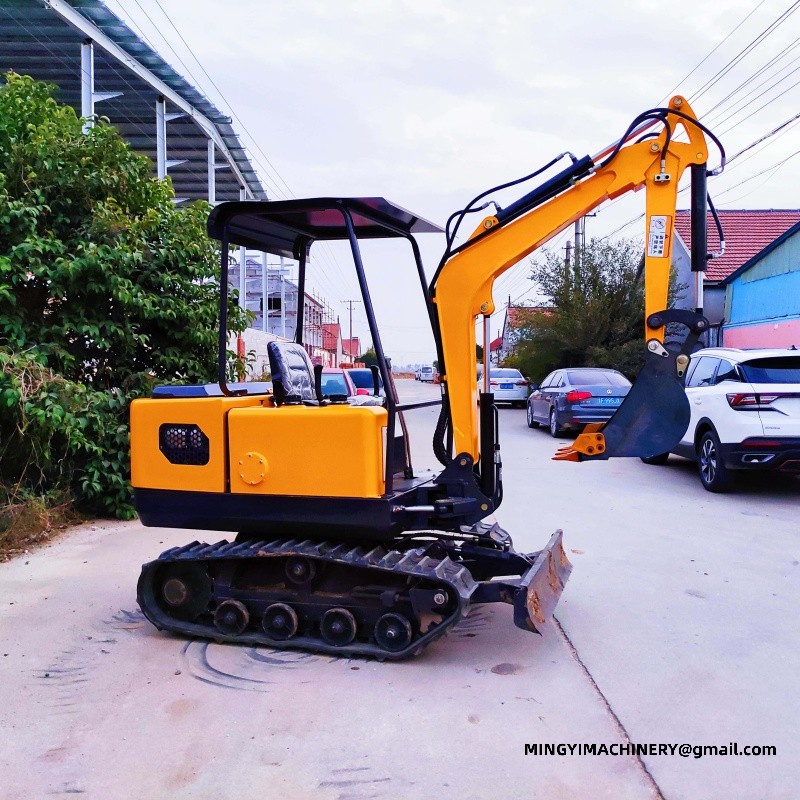
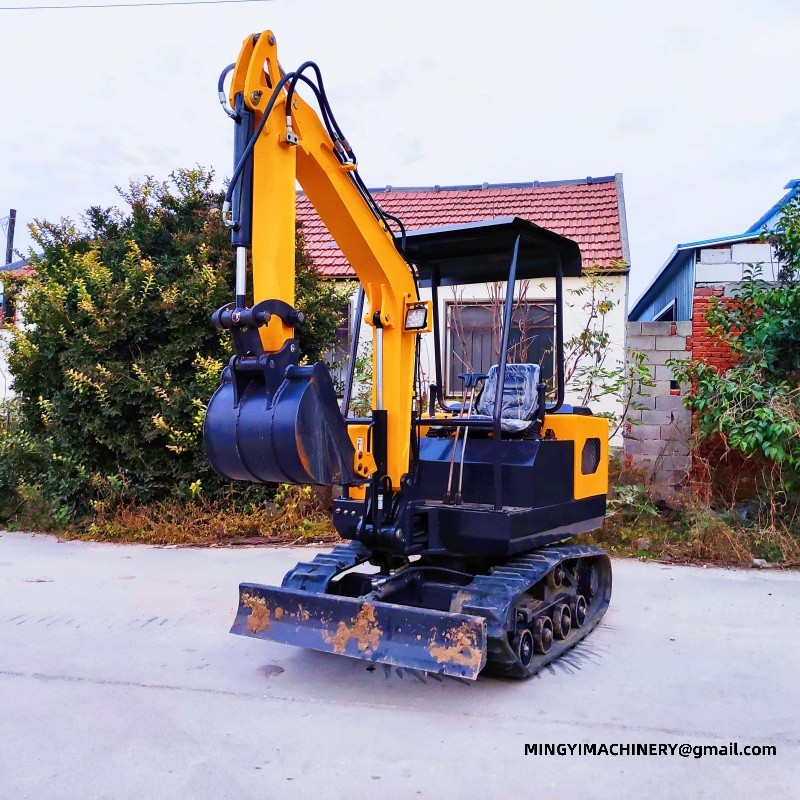
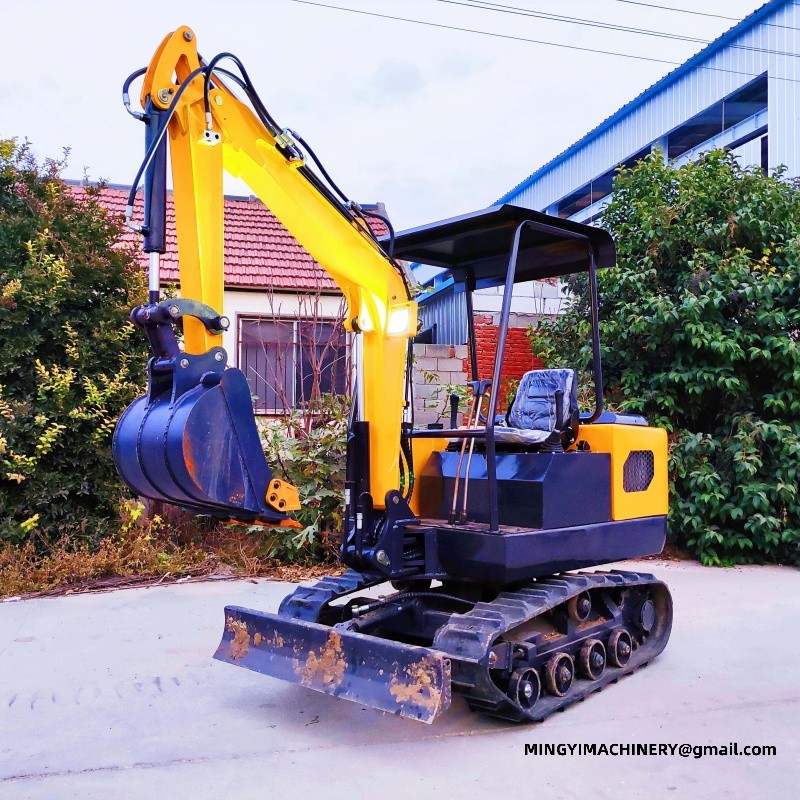
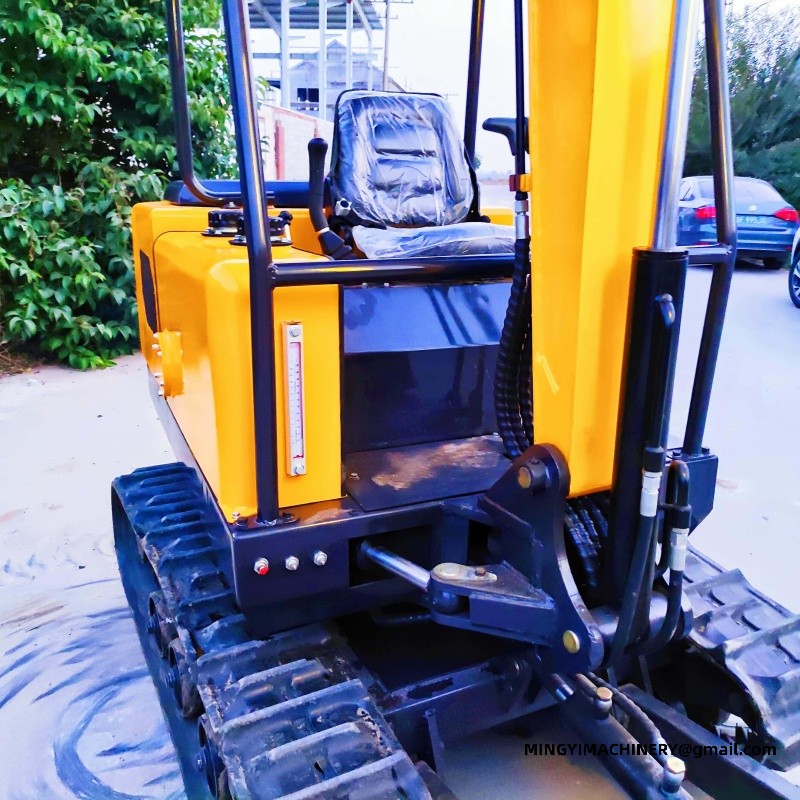
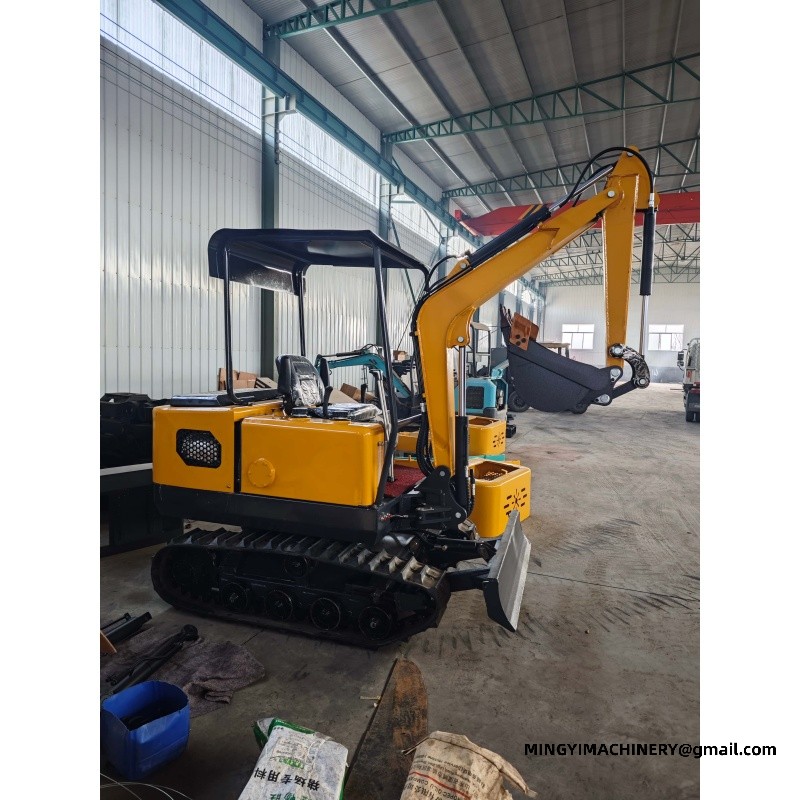
Reference specification — mini excavator range 20-1WL 30-1W 15L 25L Operating weight 1900 kg (4188.78 lb) 2900 kg (6393.41 lb) 1400 kg (3086.47 lb) 2200 kg (4850.17 lb) Transport size (L×W×H) 2550 × 1100 × 2200 mm 3000 × 1250 × 2780 mm 2200 × 930 × 2250 mm 3000 × 1300 × 2700 mm Max digging depth 1800 mm (70.87 in) 2200 mm (86.61 in) 1700 mm (66.93 in) 2300 mm (90.55 in) Max digging height 2820 mm (111.02 in) 3400 mm (133.86 in) 2750 mm (108.27 in) 3100 mm (122.05 in) Max dumping height 2050 mm (80.71 in) 2400 mm (94.49 in) 1960 mm (77.17 in) 2050 mm (80.71 in) Max digging radius 3050 mm (120.08 in) 4000 mm (157.48 in) 2900 mm (114.17 in) 3900 mm (153.54 in) Max digging distance 2300 mm (90.55 in) 2800 mm (110.24 in) 2300 mm (90.55 in) 3100 mm (125.05 in) Minimum turning radius 1450 mm (57.09 in) 2000 mm (78.74 in) 1450 mm (57.09 in) 1800 mm (70.87 in) Travel speed 5 km/h (3.11 mph) 5 km/h (3.11 mph) 3 km/h (1.86 mph) 7 km/h (4.35 mph) Gradeability 30° 30° 30° 30° Fuel consumption 2-3 L/h (0.528—0.793 gal) 2-3 L/h (0.528—0.793 gal) 1-1.3 L/h (0.264—0.343 gal) 2-3 L/h (0.528—0.793 gal) Fuel tank capacity 16 L (4.23 gal) 16 L (4.23 gal) 10 L (2.64 gal) 16 L (4.23 gal) Hydraulic oil tank 18 L (4.76 gal) 20 L (5.28 gal) 16 L (4.23 gal) 18 L (4.76 gal) Dozer blade lift height 180 mm (7.09 in) 420 mm (16.54 in) 180 mm (7.09 in) 230 mm (9.06 in) Dozer blade drop depth 210 mm (8.27 in) 210 mm (8.27 in) 210 mm (8.27 in) 280 mm (11.02 in)
Q. What are the class of machine?
A. Between crops and livestock, the compact excavator earns its place as the farm utility machine. One compact excavator with a bucket, an auger and a rake covers most of the farm calendar without hiring specialists. Read the unit in daily use together with the engine, track and attachment pages: jobs around vineyard rows are decided by how those choices line up, not by any single number on the sheet.
Q. Which farm jobs come first?
A. Drainage before the rains, trenching for water and power at planting, then clearing, grading and post-hole work through the season. One compact excavator with a bucket, an auger and a rake covers most of that calendar.
Q. What about colours and branding?
A. OEM colours and decals are part of the build: private-label machines carry the buyer brand on the standard MINGYI platform, and the vineyard rows order confirms colours, marks and documents before production starts.
Planning the season around a machine of this size
Downtime is simplest when it is planned. Booking the service for the equipment on site in the quiet part of the season takes nothing from the schedule, while the same work in the busy weeks gives up a day of output every time.
Fuel, oil and fluid quality for the machine itself
Fluid quality is a storage problem before it is a machine problem. Water and sediment in a drum will find the injection system of the model in question eventually, and a settling period is nothing compared with a pump.
E-mail : sales@mingycn.com
LINE ( ID ): mingyicn
Related pages
mini excavator for garden bed preparation · mini excavator built to order · Wheel Loader Manufacturer: What the Factory Should Publish · Mini Excavators









