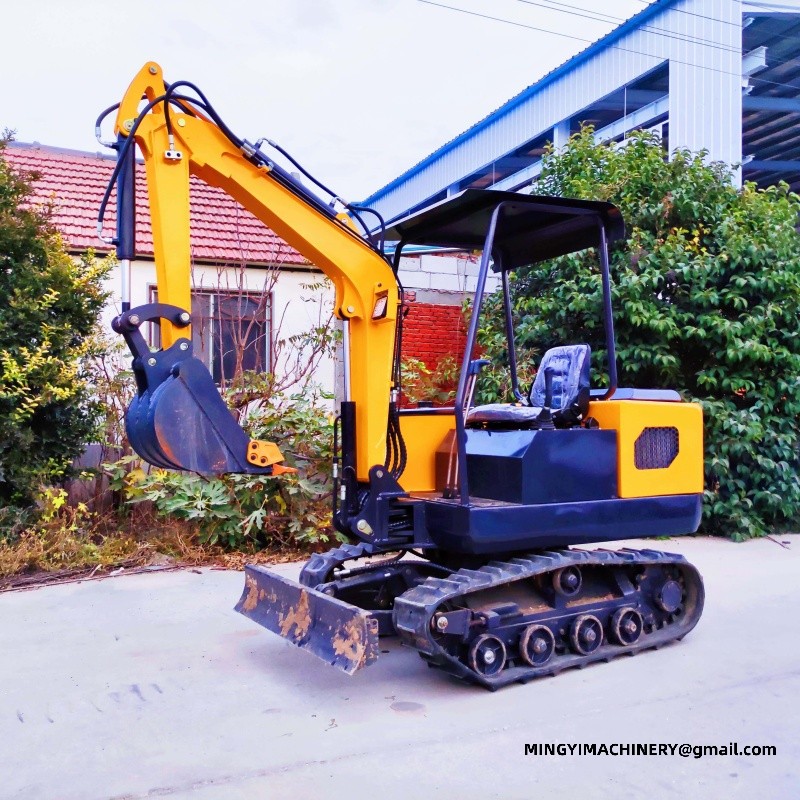
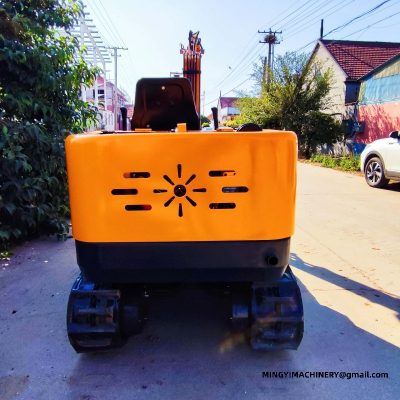
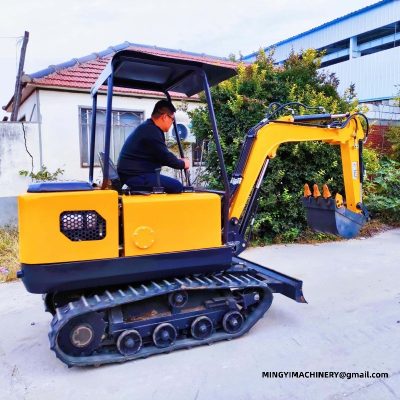
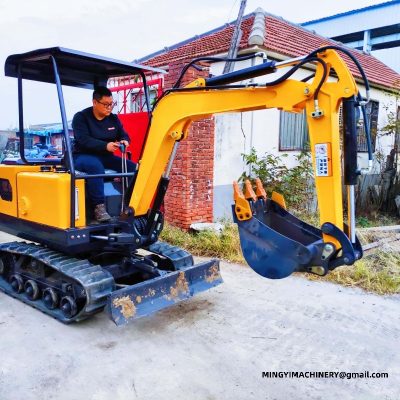
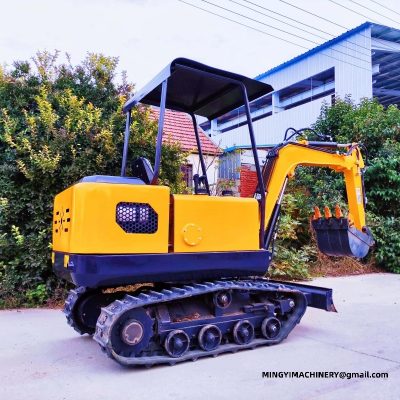
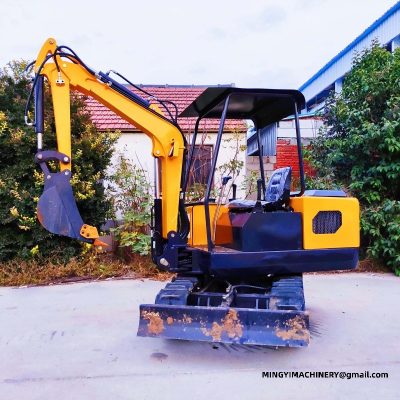
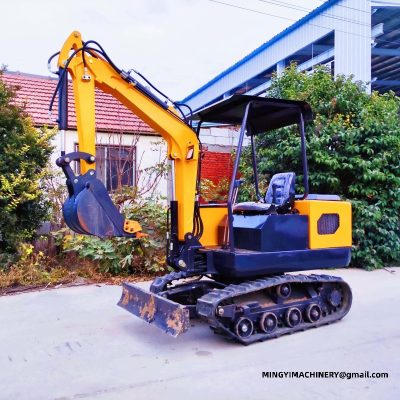
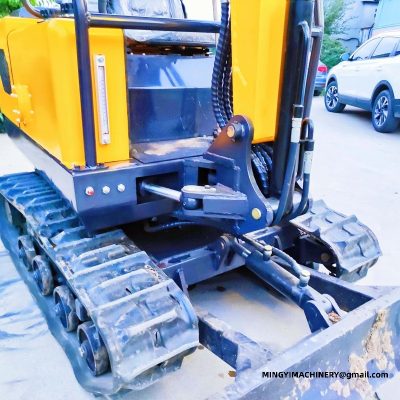
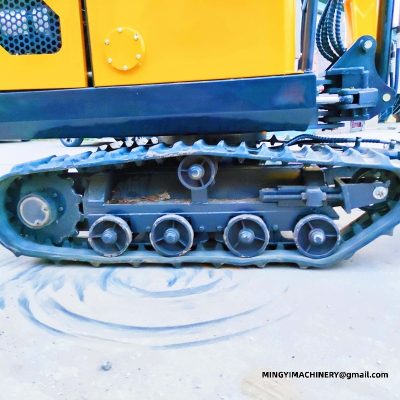
Selective demolition inside a standing building is cramped, dusty and often carried out while other trades are still working nearby. The machine has to break material down in place, then lift it out through a doorway rather than across a wall.
Compact crawler excavators in the 0.8 to 6 tonnes class are used for this kind of soft strip and internal takedown. MINGYI builds to order, so a machine intended for demolition can be specified with the right tracks and attachment set from the start.
Selective demolition inside a standing frame
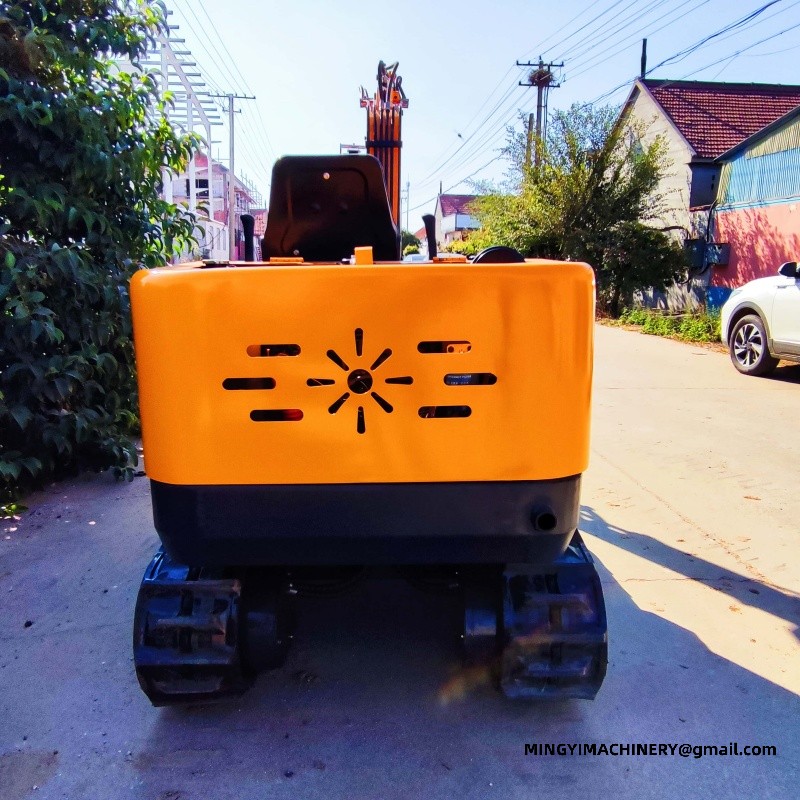
Internal work means low headroom, narrow openings and floors that must not be overloaded. A short tail swing keeps the counterweight inside the machine's own footprint, so the operator can turn in a corridor without striking a wall or a column.
The usual first cut is to break up slab, screed and masonry into pieces small enough to be carried out. A breaker hammer on a quick coupler lets the same machine dig, break and load without a second operator being brought in.
Breaker work and handling the arisings
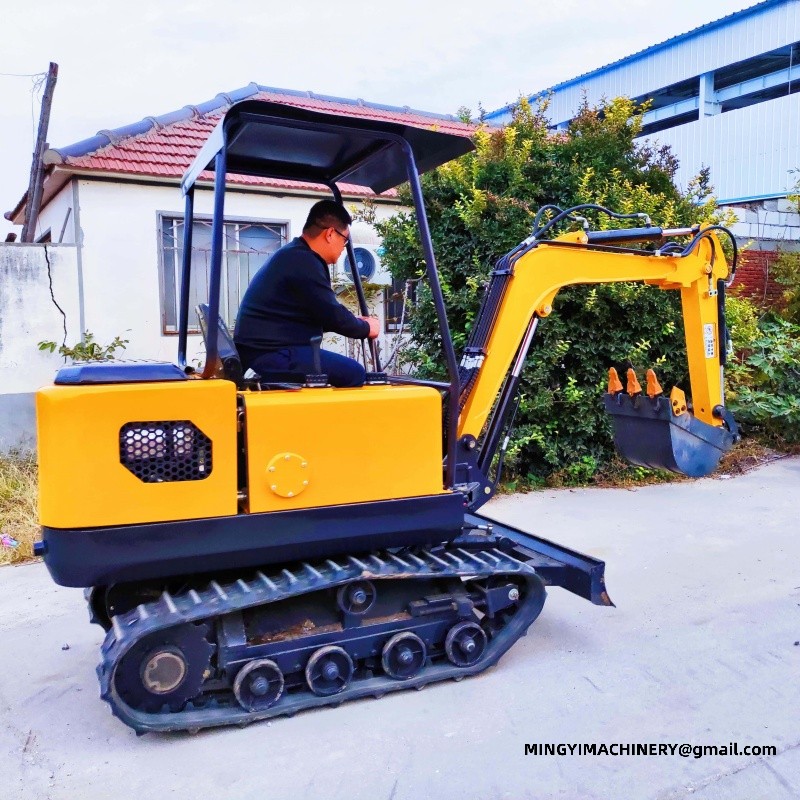
Concrete and rock come away faster when the hammer is matched to the carrier, because impact energy that the machine cannot absorb works against the operator instead of the material. Sizing the hammer to the tonnage is part of settling the order.
Broken material is then sorted on the spot. A skeleton bucket separates rubble from soil, and a thumb bucket or front fork lifts timber and pallets clear, which keeps the waste stream ready for loading out.
Demolition rewards a machine that is stable when it is working and narrow enough to leave through the same door it came in. A compact excavator with a breaker on a coupler covers most of that ground without needing extra plant on site.
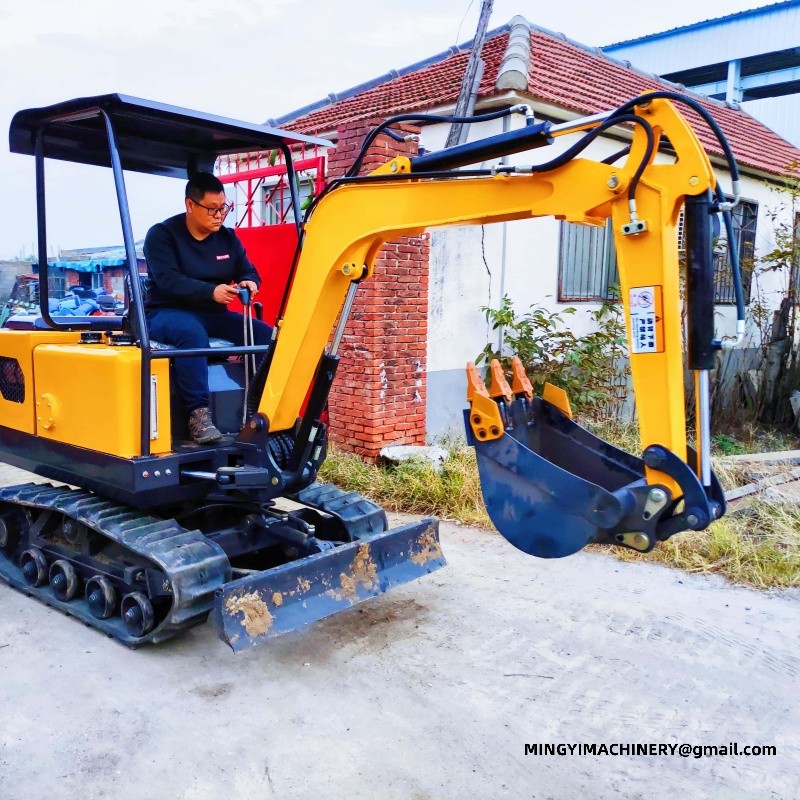
OEM and fleet customisation of mini excavator for demolition on site Distributors and rental fleets usually need the machine to look like theirs. Paint, decals, seat colour and attachment branding can be specified on the excavator at build time rather than applied after import. Customisation also covers the specification sheet. A fleet buyer may want every this class of machine delivered with the same coupler, the same engine and the same tool kit so training and parts stock stay simple. Quick coupler practice on mini excavator for demolition on site A quick coupler is the single option that changes how a machine is used day to day. Fitted to the unit in daily use, it turns an attachment change from a two-person workshop job into a task the operator does alone in minutes. For a fleet that shares attachments between machines, a common coupler standard matters more than the coupler brand. A machine of this size that picks up the same tools as the larger machines keeps the rack usable across the yard. Acceptance checks when a mini excavator for demolition on site arrives Delivery day is the best time to find a problem. Checking the specification against the order, the fluid levels, the fasteners and any transport damage while the machine itself is still on the trailer is faster than claiming later. A function check before the machine goes to work is worth the hour. Running through the controls, the travel and the attachment circuit on the equipment on site confirms it is set up as specified and ready for the site. Orchard, vineyard and farm use of mini excavator for demolition on site Orchard and vineyard work is carried out between rows. The model in question with a narrow chassis and a swing boom works down the row without damaging the trees, which is the reason a full-size machine is not used at all. Ditching, fertilising and drainage on farmland suit the machine in that duty because the work is spread over a large area in short bursts. The machine travels behind a pickup and works where it stops. Engine options behind mini excavator for demolition on site Two buyers can order the same a machine built for the work and receive different engines. The decision is rarely about peak power; it is about which parts counter is closest to the site and which engine the local mechanic already knows. Engine choice is also an emissions and documentation question for some markets. Listing the available units with the unit on the job enquiry lets the factory confirm what can be supplied and documented for the destination country. Working on slopes and uneven ground with mini excavator for demolition on site Slope work is a stability question before it is a traction question. Knowing the gradient the equipment in service is rated for, and working across rather than straight up where the ground allows, removes most of the risk. Planning the direction of travel helps. Working so that the excavator is stable under load and not required to turn on a slope is a decision made before the job starts, not a correction made during it. Canopy or enclosed cab on this class of machine The cab decision follows the climate and the hours. Operators working a full shift in the unit in daily use benefit from a sealed cab with wipers and heating; operators stepping on and off every few minutes usually prefer the canopy for the visibility and the quick exit. Enclosure also changes noise and dust exposure. A sealed cab on a machine of this size keeps dust out on dry sites and lets the machine work through weather that would otherwise stop a canopy machine for the day. Hydraulic circuits on the equipment on site Auxiliary hydraulic lines are what let a machine drive a tool rather than only a bucket. The machine itself specified with the right circuits and flow runs a breaker or an auger without an add-on power pack bolted to the frame. Flow and pressure are matched to the tool, not to the machine size. Asking for the attachment list first means the model in question leaves the factory with circuits that suit the heaviest tool the buyer intends to run. Working the machine in that duty in confined spaces Confined sites are decided by dimensions. Overall width, tail swing and the space needed to work the arm are what let the unit on the job operate inside a building, between walls or in a courtyard. Clearance above matters as much as around. Door heights, pipework and overhead services set the limit for a machine built for the work indoors, and measuring them first avoids a machine that arrives and cannot be used. What owners should plan for beyond the equipment in service Purchase decision is the visible part of the effort. Fuel, filters, tracks or tyres, the operator and the transport between sites are the items that decide what the excavator actually demands over a few seasons, and they are worth listing before the order. The useful comparison is demand per working hour, not demand per machine. This class of machine that works more hours a year spreads its standing takes over more output, which is why utilisation usually matters more than the invoice figure. Running the unit in daily use in a rental fleet The specification that rents best is usually the simplest one to explain at the counter. A machine of this size with rubber tracks, a canopy and a coupler covers the majority of weekend and short-term hires. Fleet buyers also weigh transport. The equipment on site that a customer can tow on a normal licence and a standard trailer is a hire that does not need a delivery truck, which changes how often it goes out. Specification data for the machine itself Where the model in question is being specified for a job list, the table below gives the factory figures that matter most: what the machine weighs, how deep and how far it works, and what it measures on a trailer. These are the reference figures for the machine in that duty. MINGYI confirms the final build sheet, including engine and attachment choices, against the destination and the job list before production. Output on a compact machine comes from placement rather than power. An experienced operator keeps the unit on the job working inside the swing arc, positions once and digs a full run instead of repositioning for every bucket. Stability is the third. A machine built for the work working across the tracks rather than over the corners keeps the machine steady and the undercarriage loaded evenly, which shows up as track life at the end of the season.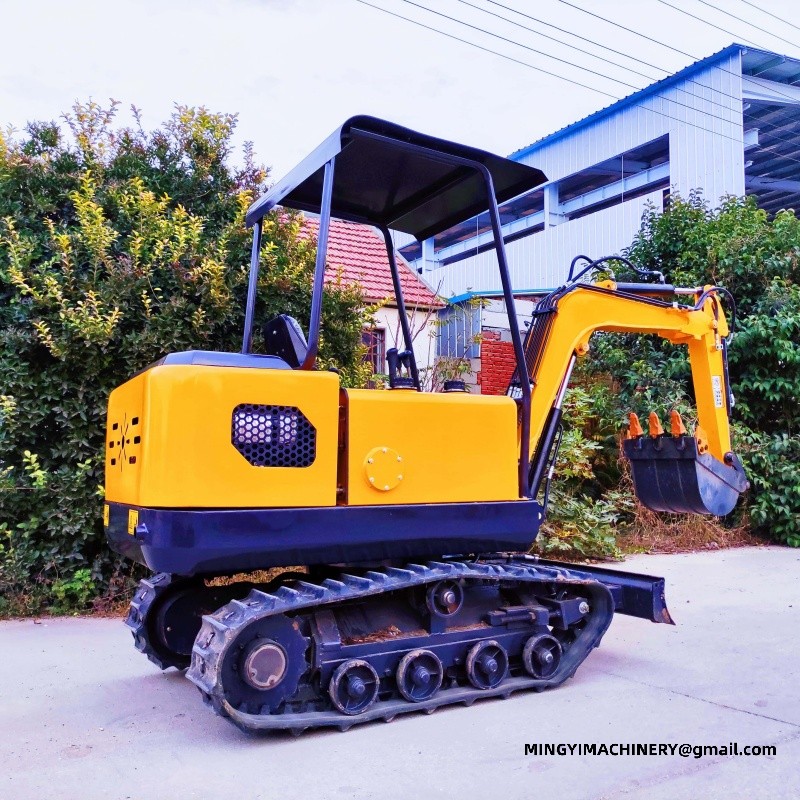
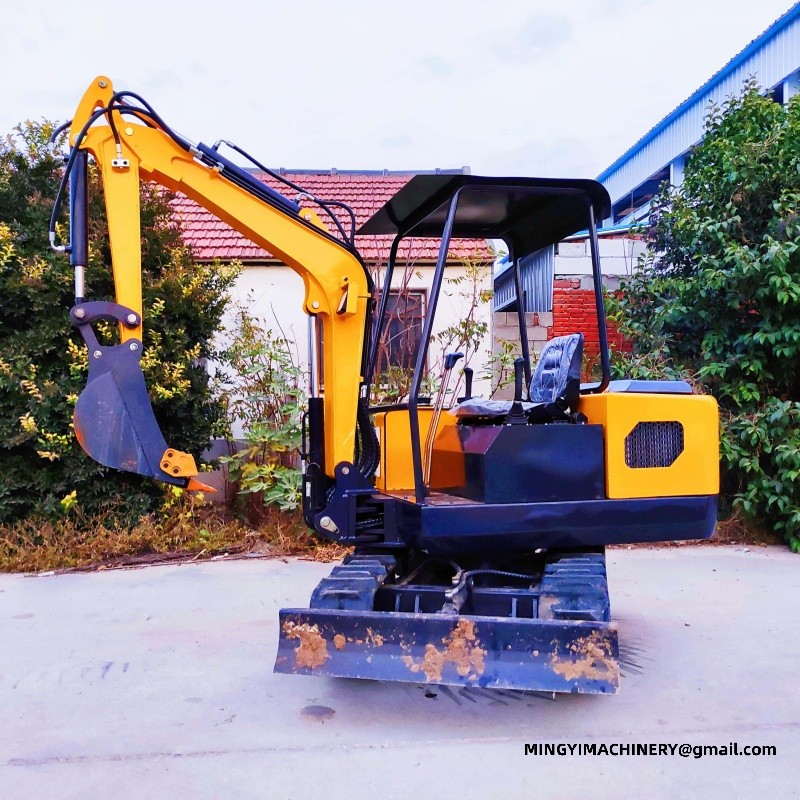
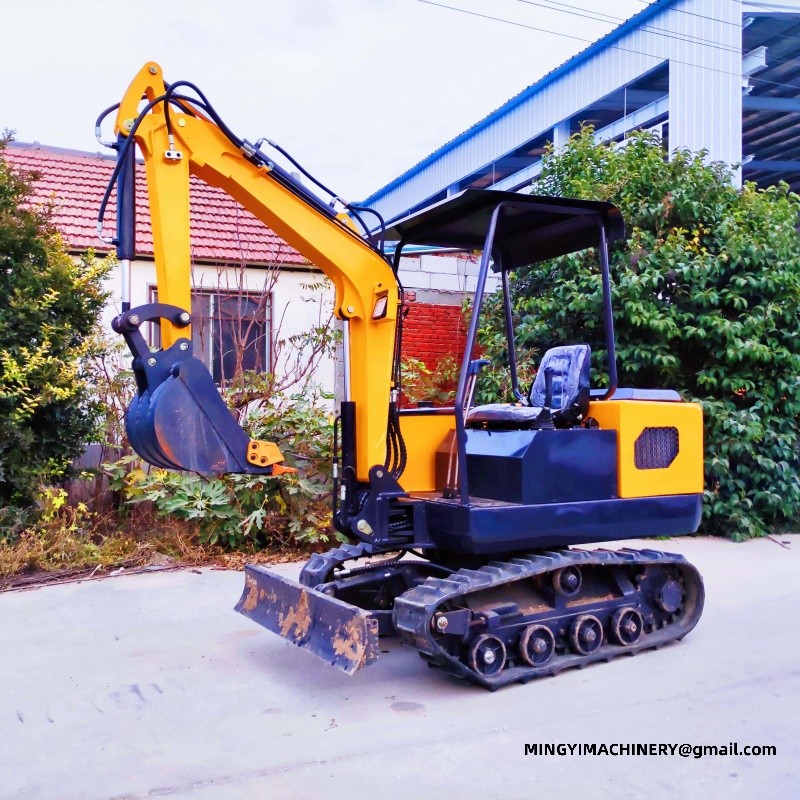
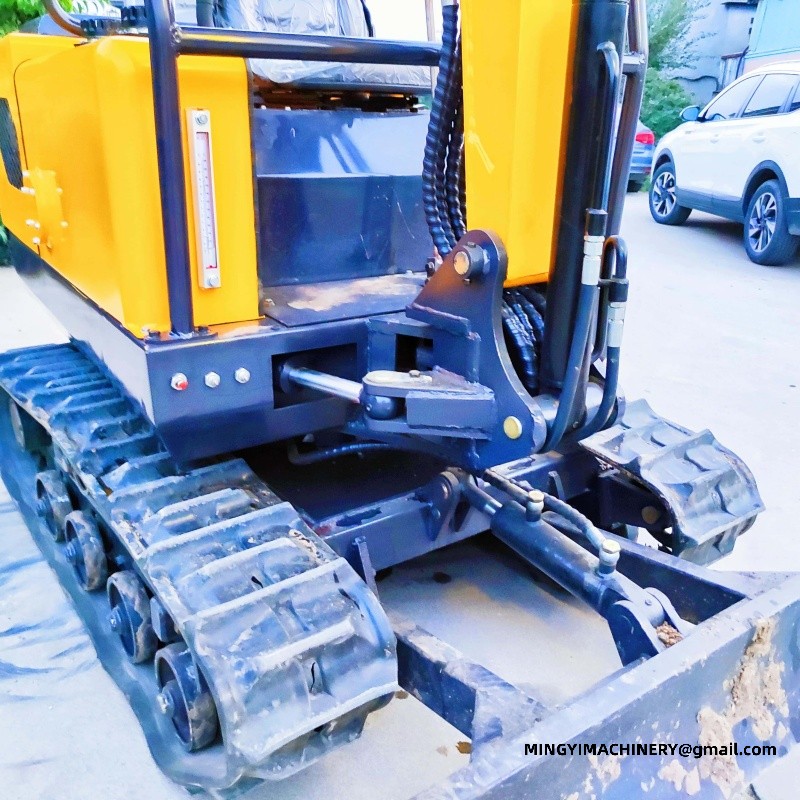
Reference specification — mini excavator range 09W 13W 09L 20-2L Operating weight 1100 kg (2425.08 lb) 1300 kg (2866.01 lb) 1100 kg (2425.08 lb) 1900 kg (4188.78 lb) Transport size (L×W×H) 1800 × 750 × 1970 mm 2200 × 930 × 2250 mm 2300 × 720 × 1870 mm 2600 × 1300 × 2344 mm Max digging depth 1250 mm (49.21 in) 1630 mm (64.17 in) 1400 mm (55.12 in) 2100 mm (82.68 in) Max digging height 2800 mm (110.24 in) 2750 mm (108.27 in) 2800 mm (110.24 in) 2880 mm (113.39 in) Max dumping height 1700 mm (66.93 in) 1960 mm (77.17 in) 1880 mm (74.02 in) 2100 mm (82.68 in) Max digging radius 2570 mm (101.18 in) 2900 mm (114.17 in) 2490 mm (98.03 in) 3215 mm (126.57 in) Max digging distance 1869 mm (73.58 in) 2100 mm (82.68 in) 2000 mm (78.74 in) 2460 mm (96.85 in) Minimum turning radius 1000 mm (39.37 in) 1300 mm (51.18 in) 1400 mm (55.12 in) 1587 mm (62.48 in) Travel speed 3 km/h (1.86 mph) 3 km/h (1.86 mph) 3 km/h (1.86 mph) 5 km/h (3.11 mph) Gradeability 30° 30° 30° 30° Fuel consumption 1-1.3 L/h (0.264—0.343 gal) 1-1.3 L/h (0.264—0.343 gal) 1-1.3 L/h (0.264—0.343 gal) 2-3 L/h (0.528—0.793 gal) Fuel tank capacity 8 L (2.11 gal) 10 L (2.64 gal) 8 L (2.11 gal) 16 L (4.23 gal) Hydraulic oil tank 16 L (4.23 gal) 16 L (4.23 gal) 16 L (4.23 gal) 18 L (4.76 gal) Dozer blade lift height 180 mm (7.09 in) 180 mm (7.09 in) 180 mm (7.09 in) 180 mm (7.09 in) Dozer blade drop depth 210 mm (8.27 in) 210 mm (8.27 in) 210 mm (8.27 in) 210 mm (8.27 in)
Q. Who chooses the equipment in service?
A. Demolition work rewards control rather than raw power: break, sort and load without swinging into what has to stay standing. Indoors, zero tail swing keeps the counterweight off the walls and a thumb turns the bucket into a sorting hand. Read the excavator together with the engine, track and attachment pages: jobs around demolition on site are decided by how those choices line up, not by any single number on the sheet.
Q. How does a small machine demolish safely?
A. By working in layers and sorting as it goes: break, clutch with the thumb, load out, repeat. Zero tail swing keeps the counterweight off the standing structure, and sequential strip-out protects the crew and the building that remains.
Q. Does MINGYI supply attachments with the machine?
A. Yes - buckets, breakers, augers, rakes and the rest of the working set ship with the carrier, matched to the hydraulic flow and the coupler. For demolition on site the package is confirmed on the build sheet, so machine and tools arrive together and start work together.
Later additions and retrofits on this class of machine
Later changes are easier when they were anticipated. Asking for the extra hydraulic circuit or the heavier mounting plate on the unit in daily use at build time adds little and leaves the option open.
Keeping a service record for a machine of this size
A written record is worth more than a good memory. Dates, hours and the parts fitted on the equipment on site turn a guess about the next service into a fact, and they are the first thing a buyer asks to see.
E-mail : sales@mingycn.com
LINE ( ID ): mingyicn
Heat and hydraulic temperature in mini excavator for demolition on site
Oil that runs hotter than the design range loses its film strength, and the first symptom is usually slower, softer movement rather than a leak.
Hoses age faster next to hot manifolds, so routing and clearance are checked at the same time as the oil level.
Related pages
mini excavator for retaining walls · mini excavator for vineyard rows · Small Wheel Loader: Where the Compact Builds Earn Their Keep · Mini Excavators









